Leaving Santiago for the Atacama
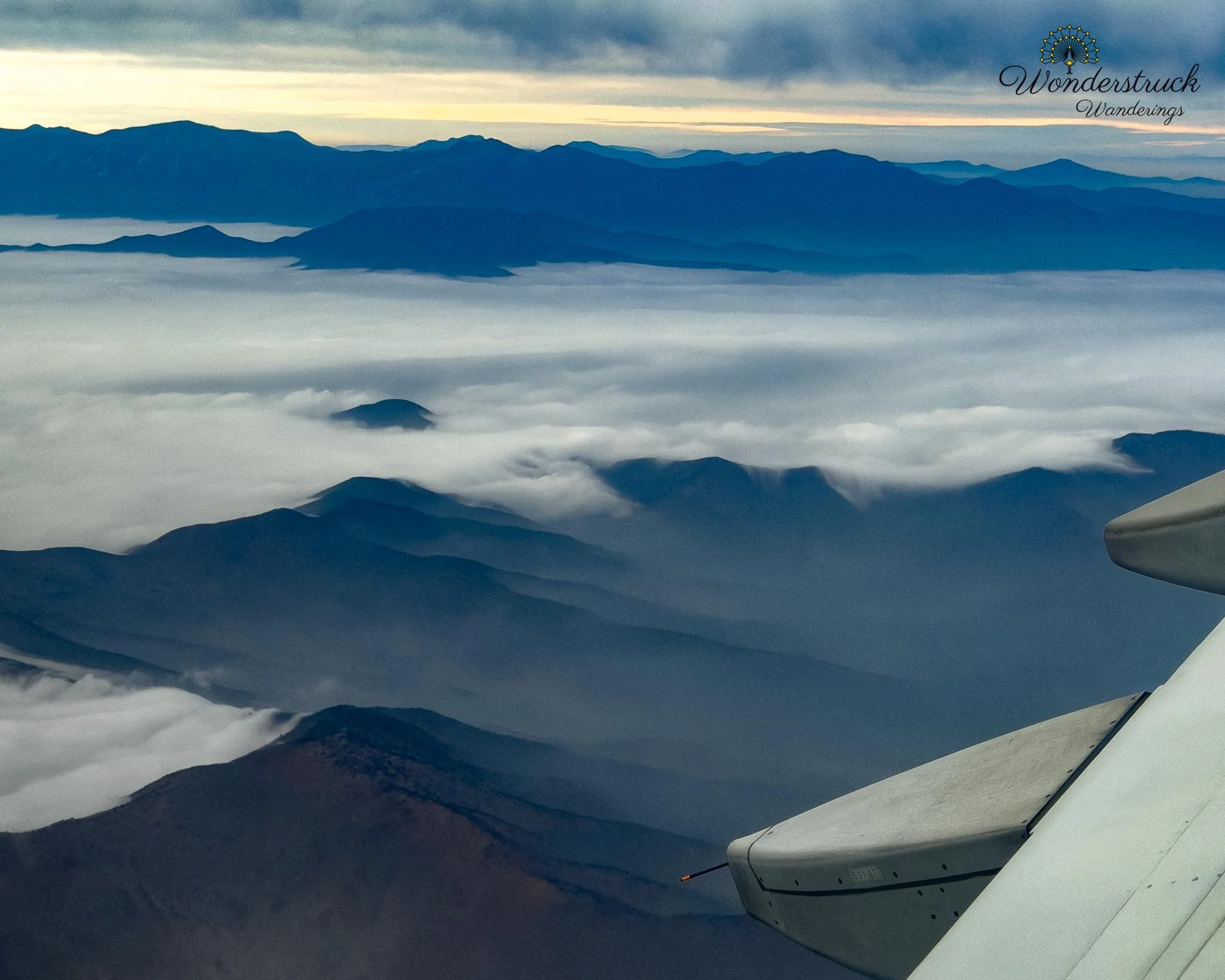
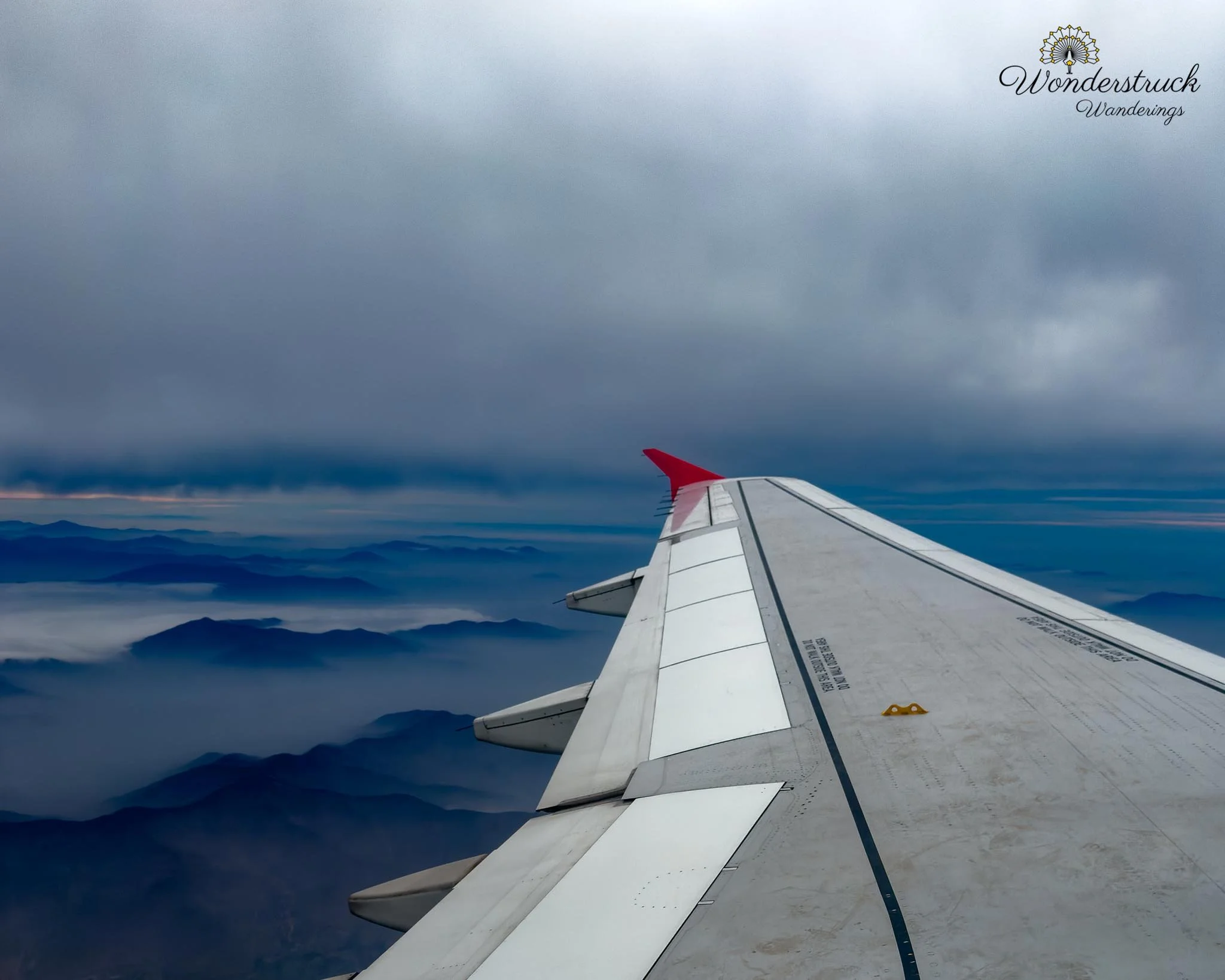
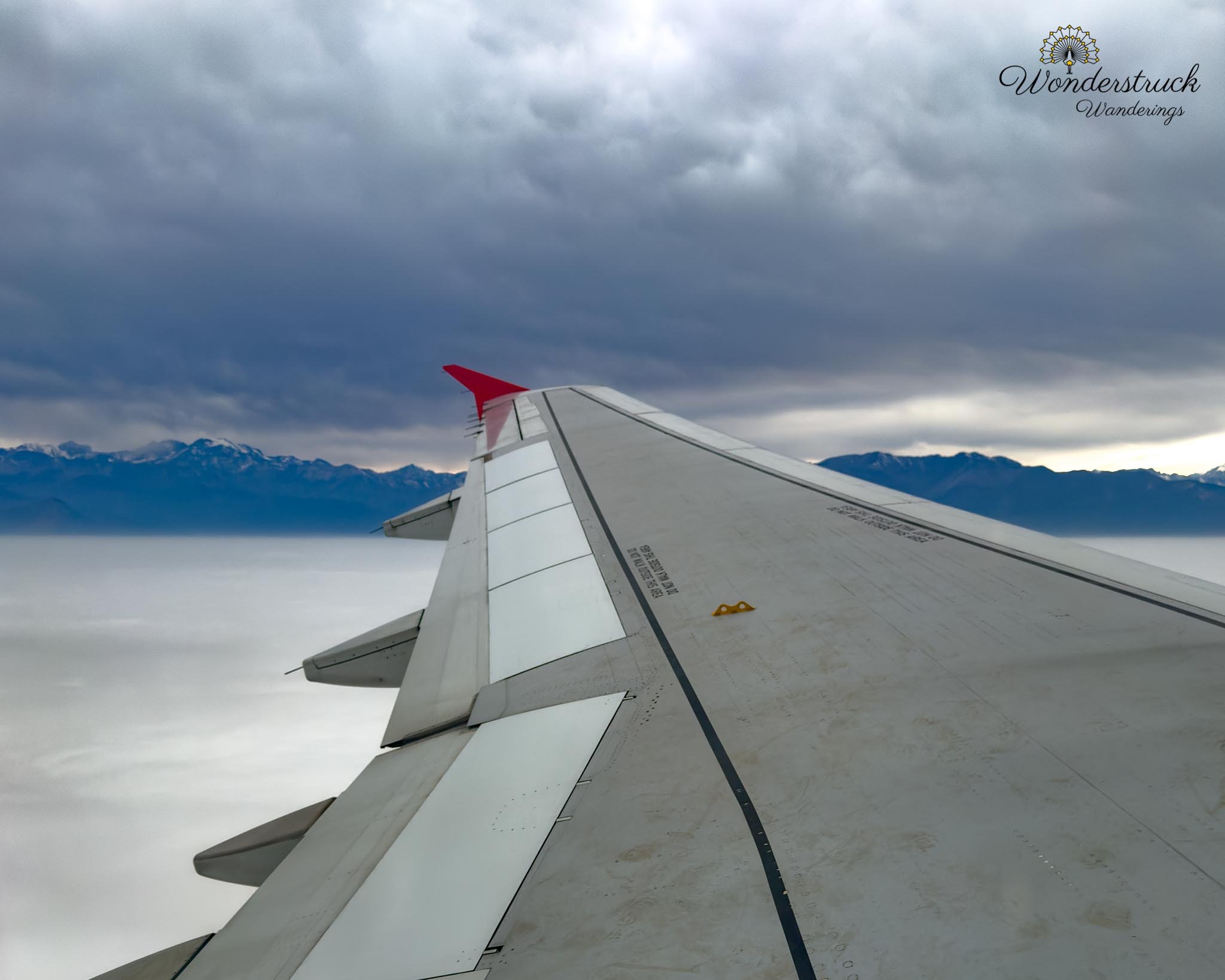
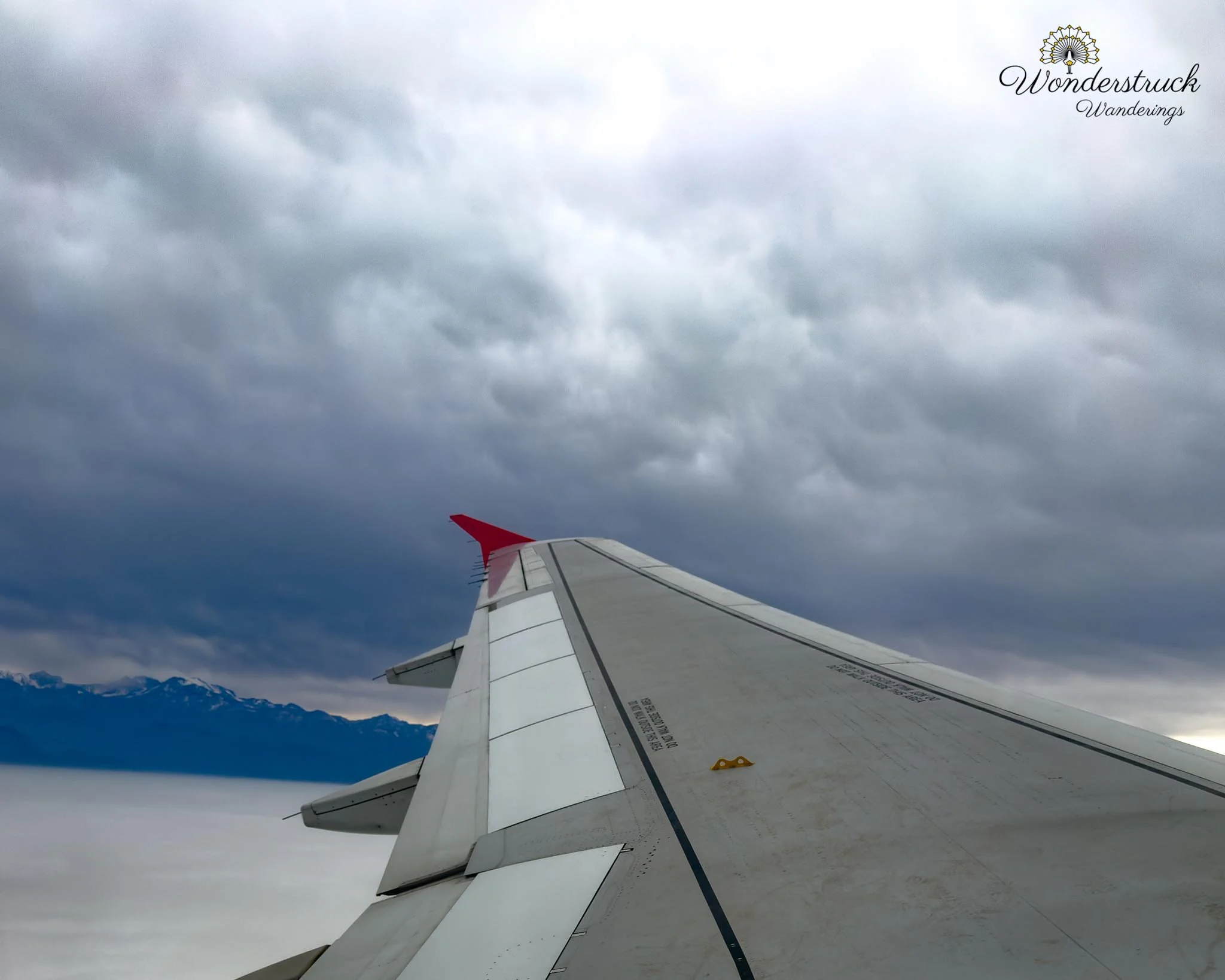
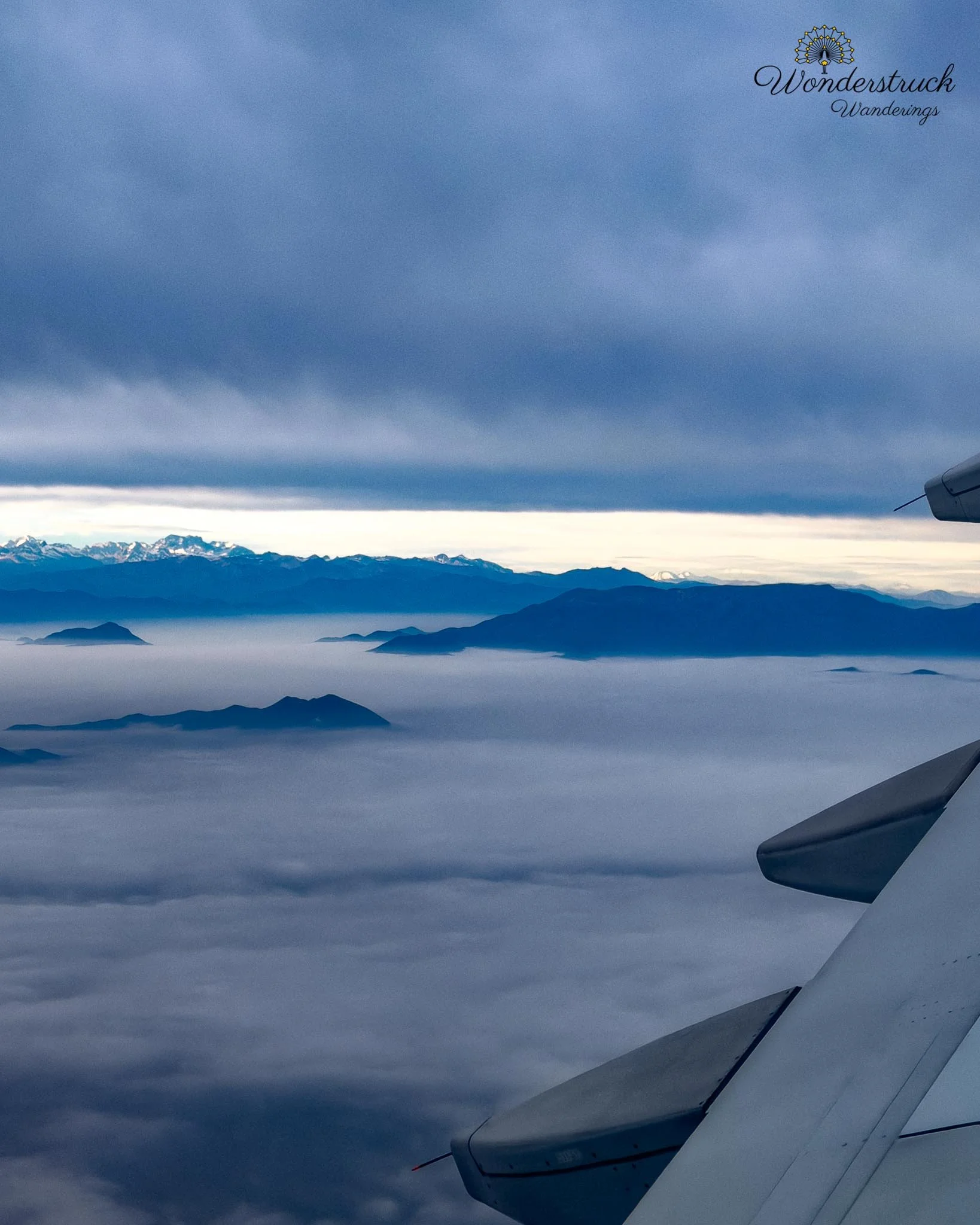
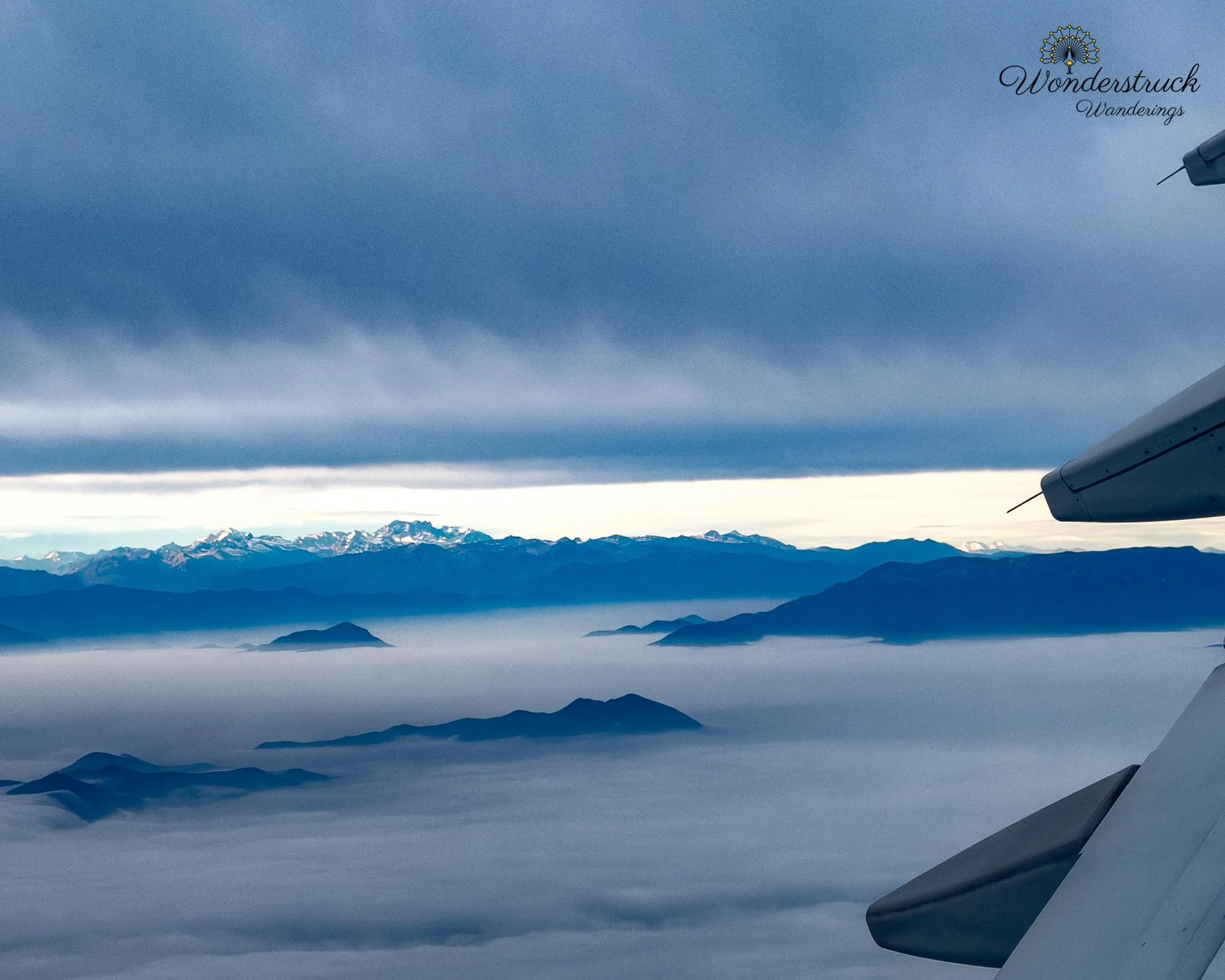
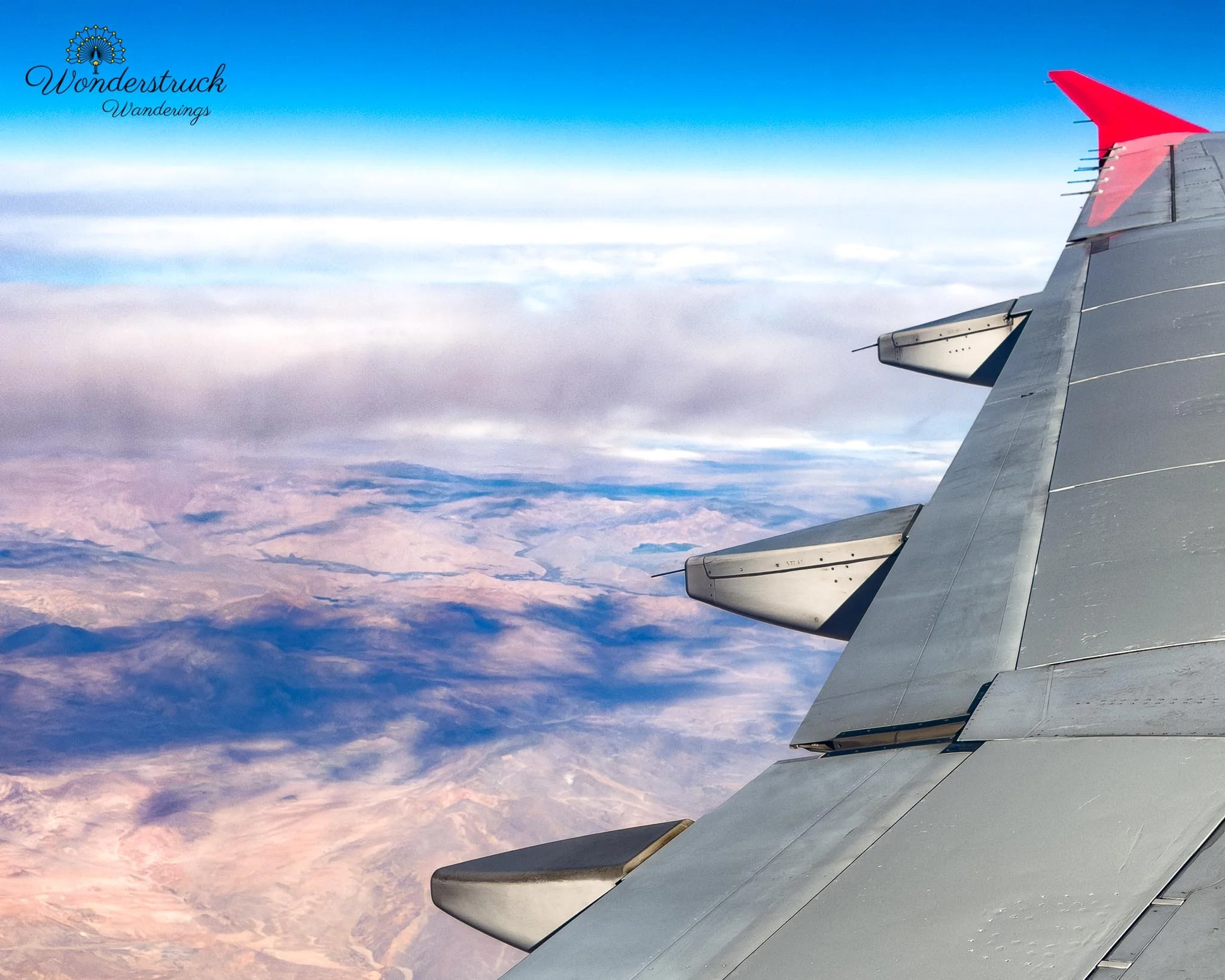
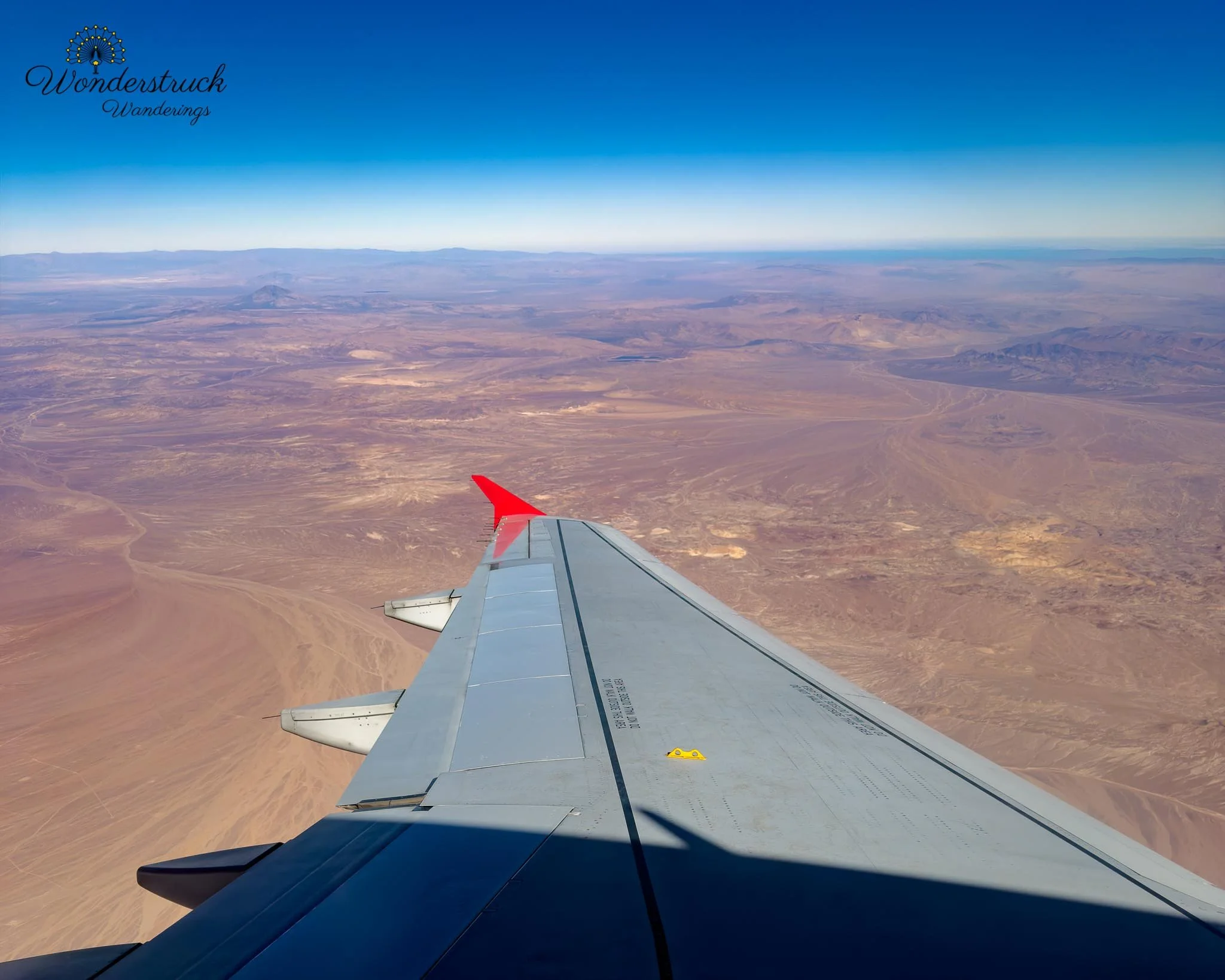
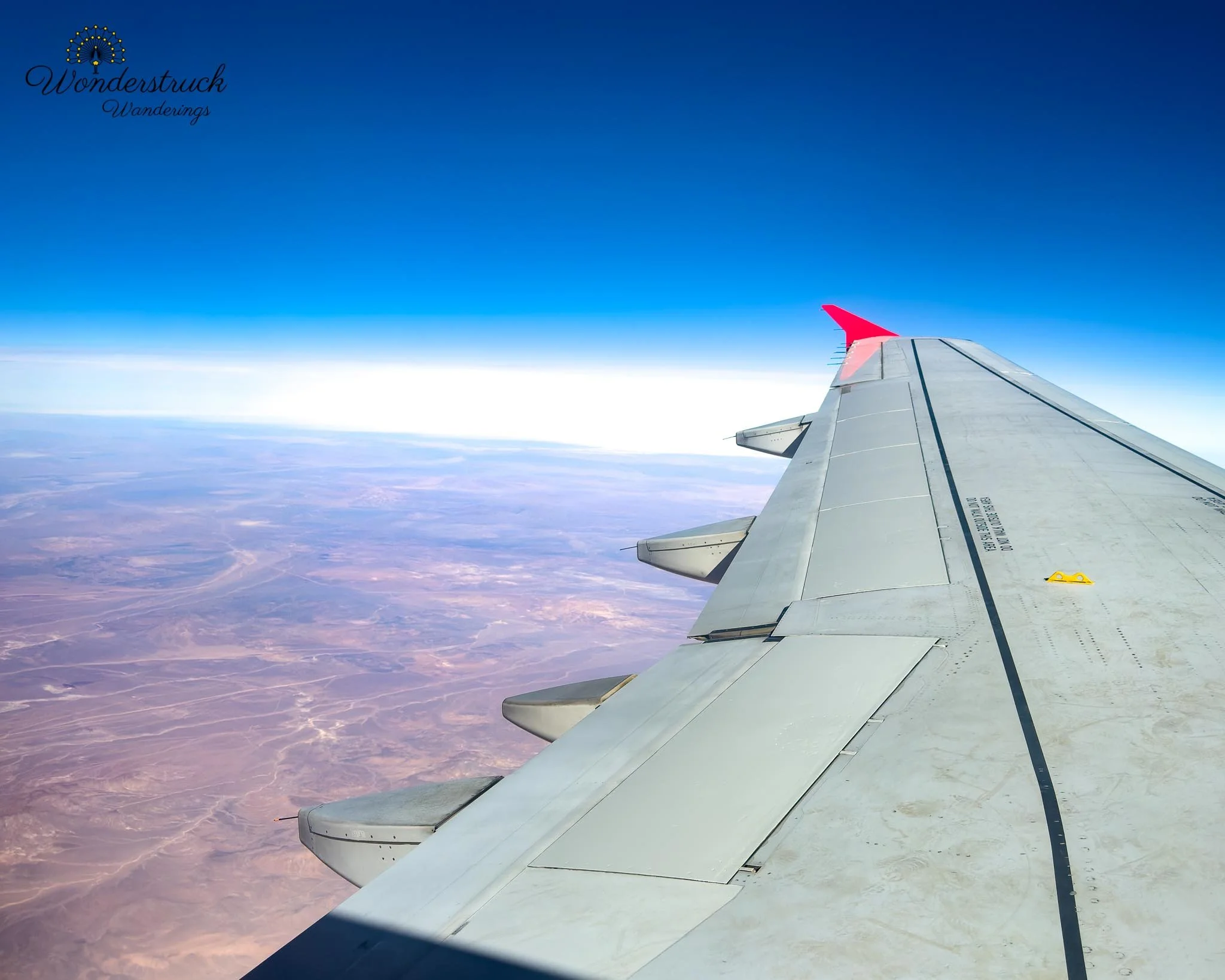
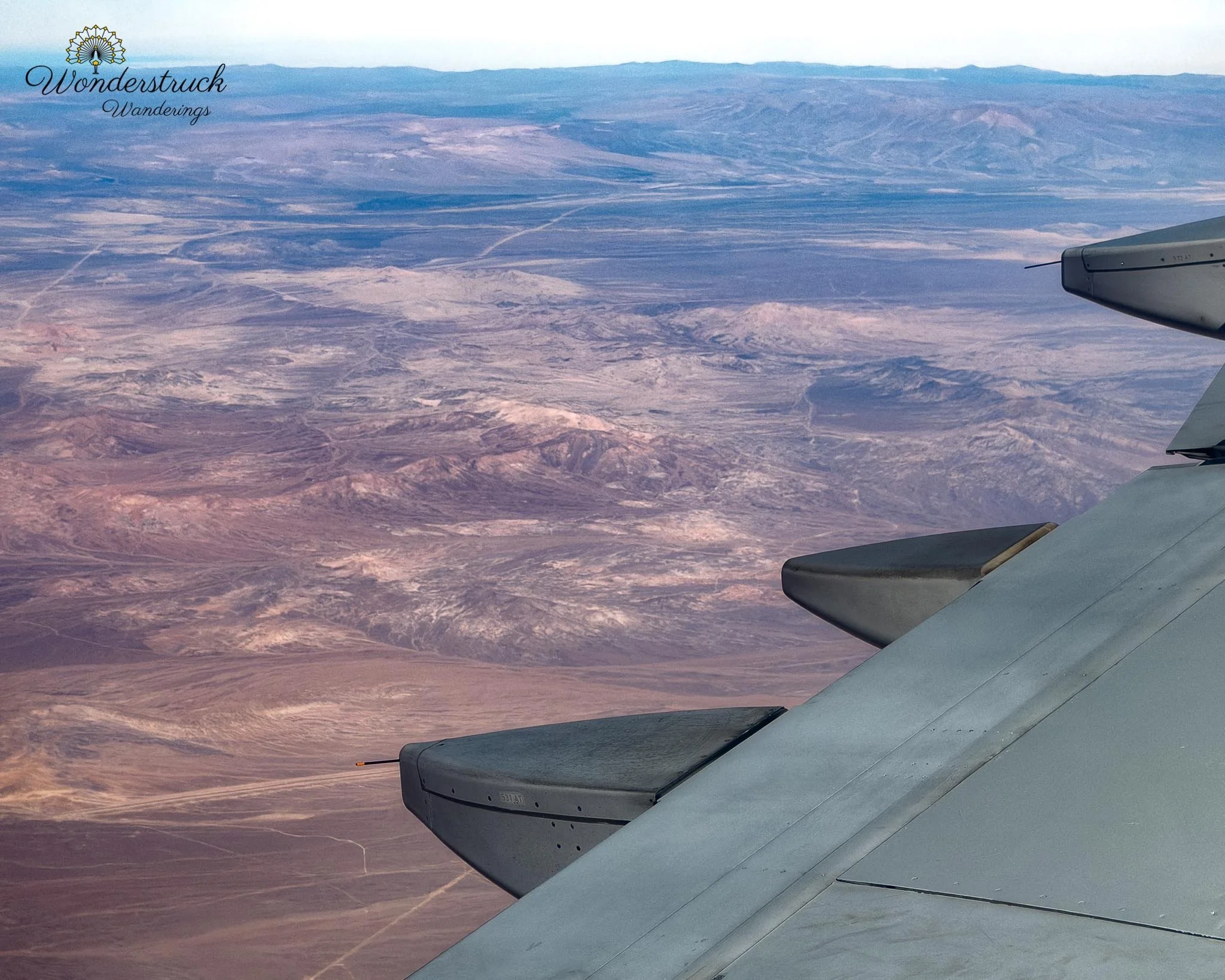
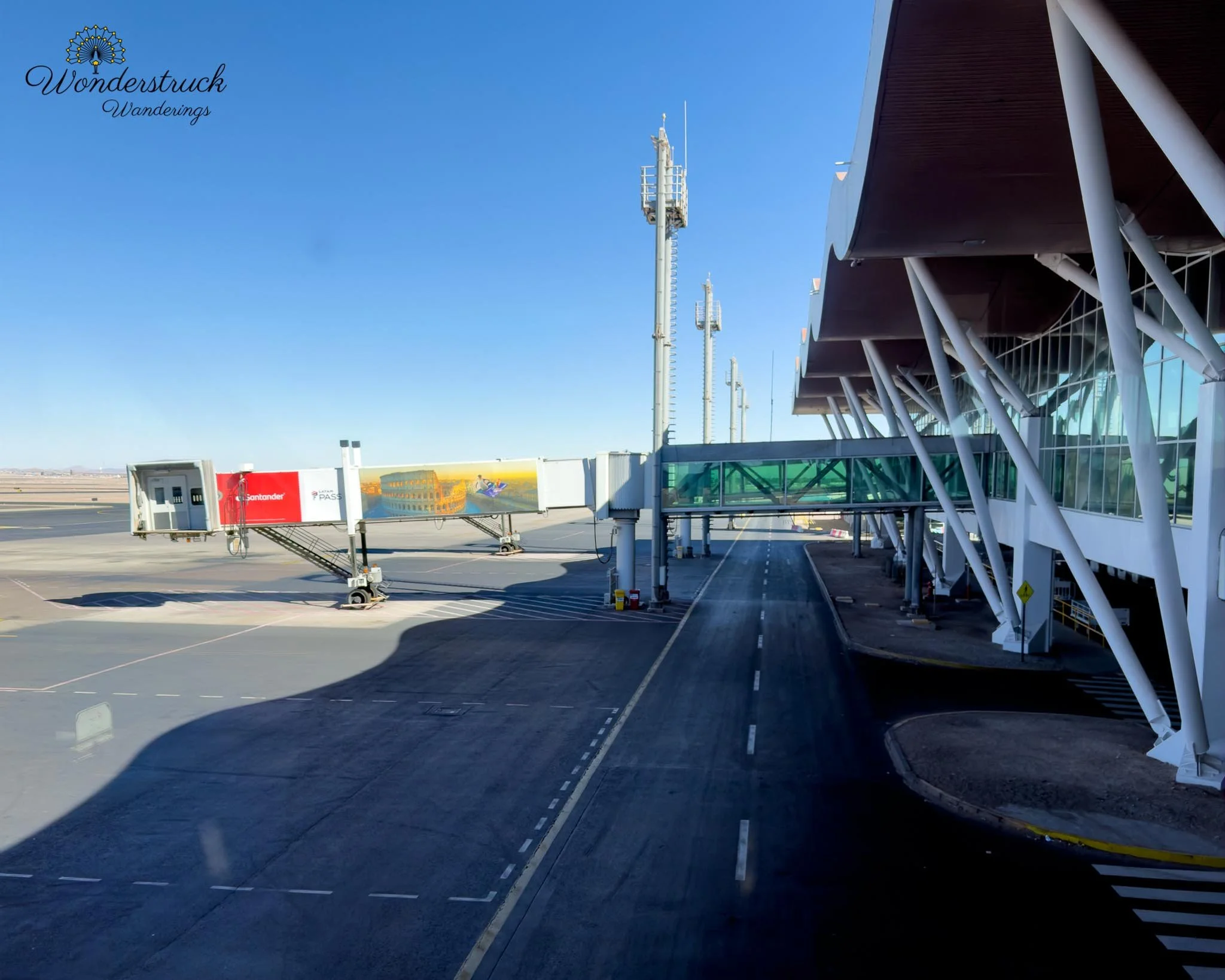
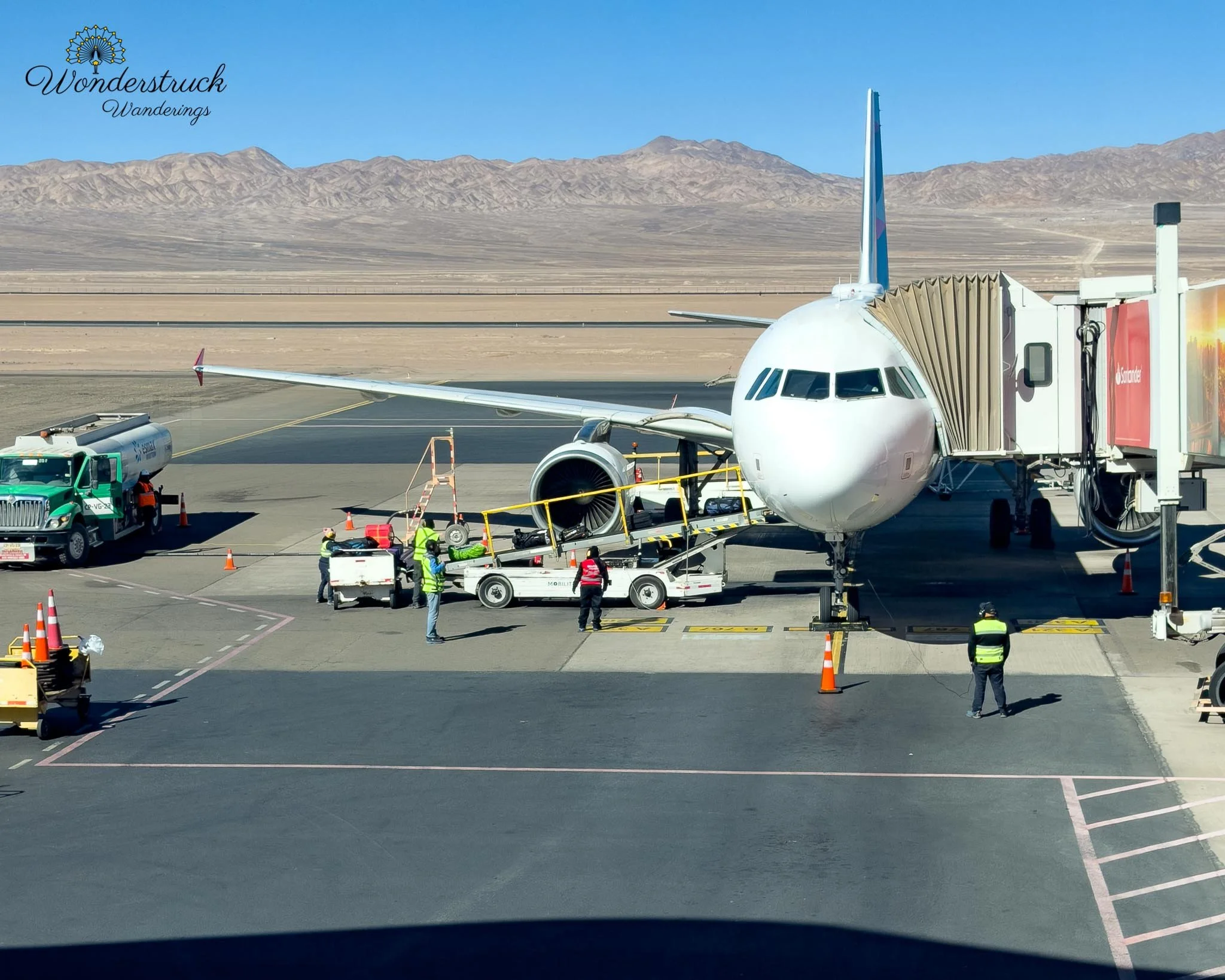
We left Hotel Bidasoa at 6 a.m., still carrying the tiredness of the previous day but also the fresh energy that comes when a trip is about to shift landscapes completely. Santiago had been our opening chapter - fog, chocolate, city plazas, San Cristobal, and one cloudy sunset attempt - but Day 2 was the real transition into the Atacama. We were heading north to Calama, picking up a rental car, and driving into the desert that would be our base for the next five nights. Our flight to Calama was at 8:38 a.m. I had originally thought about booking the 5:30 a.m. flight, which would have sounded efficient on paper but would have been a terrible idea in real life. After arriving in Chile the previous morning, spending the entire day roaming Santiago, and staying up late at dinner, a 5:30 a.m. flight would have meant almost no sleep. Thankfully, I did not do that to us. Travel planning always looks cleaner when you are sitting at home with a laptop; the body has its own opinion once the trip begins and since we are no longer spring chickens we need sleep at least after every couple of days. The original plan had been to take an Uber to the airport, but Uber around Santiago airport is not exactly straightforward, and we did not want to gamble with legality, pickup confusion, or any last-minute stress before a domestic flight. So we arranged a hotel cab through Bidasoa. That turned out to be the right decision. The morning was quiet, the streets were still waking up, and we reached the airport with enough time to check in without feeling rushed. Santiago was still cloudy when we took off. From the plane window, the city looked muted and gray below us, the kind of morning where the mountains hide and the sky feels heavy. But by the time we landed in Calama, the entire mood had changed. The Atacama greeted us with sun, dry air, and an immediate sense of openness. It did not feel like a soft landscape. It felt exposed, bright, and elemental.
Chiu Chiu and Pukara de Lasana
After landing, we picked up our pre-booked rental car from Avis and officially entered the road-trip portion of the trip. Our first stop was not scenic at all, but it was necessary: Lider, basically Walmart in Chile. We stocked up on sliced meats, pan ( bread), big jugs of water, and snacks for the next few days. In the Atacama, water is not something to casually forget. Between the dryness, altitude, and long driving days, having supplies in the car becomes part of the travel strategy. Since it was still too early to head straight to the hotel, we decided to use the extra time for a detour toward Chiu Chiu. This added time to the drive, but it gave us a better first look at the wider Calama region rather than just treating the airport as a transfer point. The road out toward Chiu Chiu was our first taste of desert driving: broad, dusty space, mining-country edges, and a palette of browns, tans, and mineral grays under the sharp northern Chile sun.
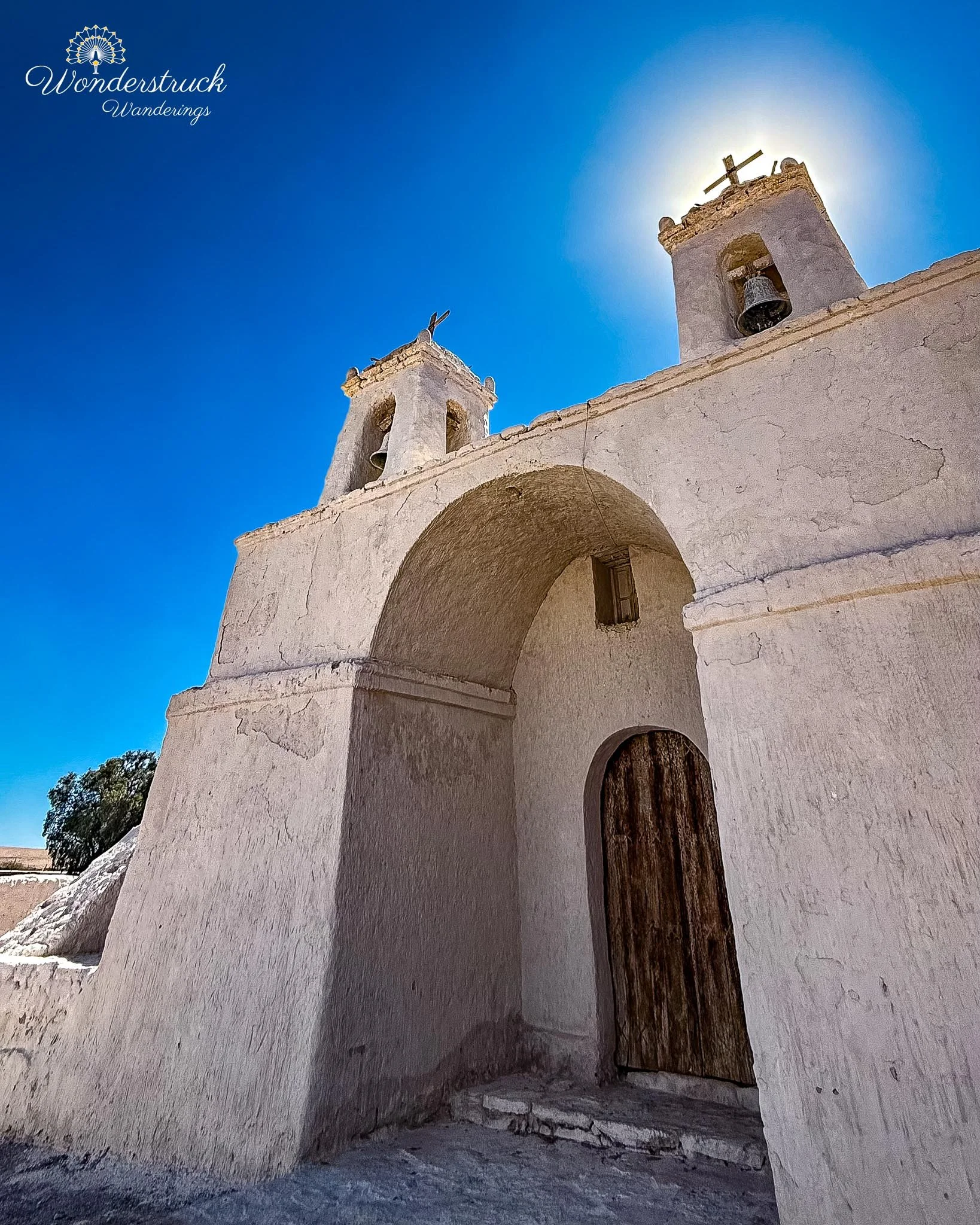
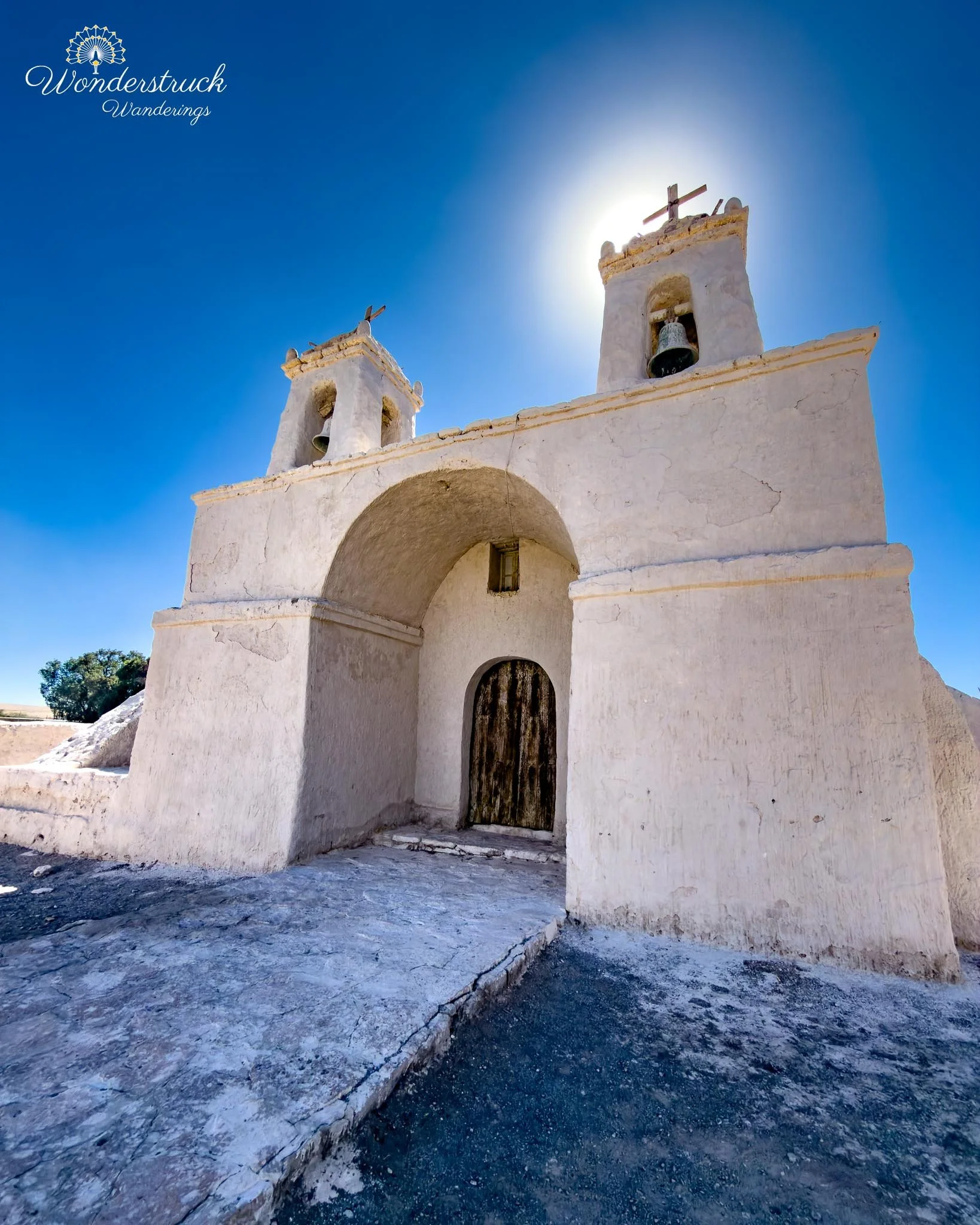
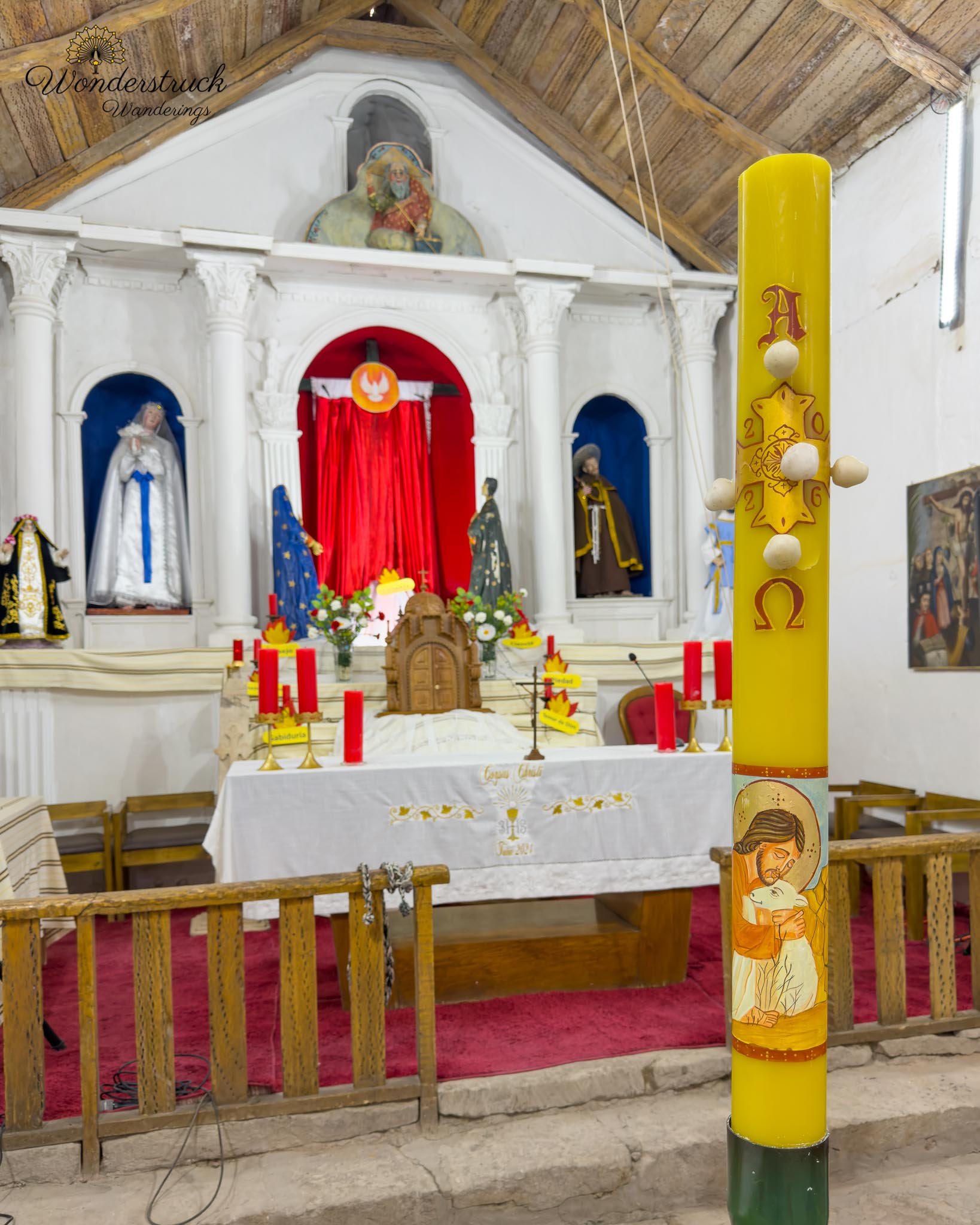
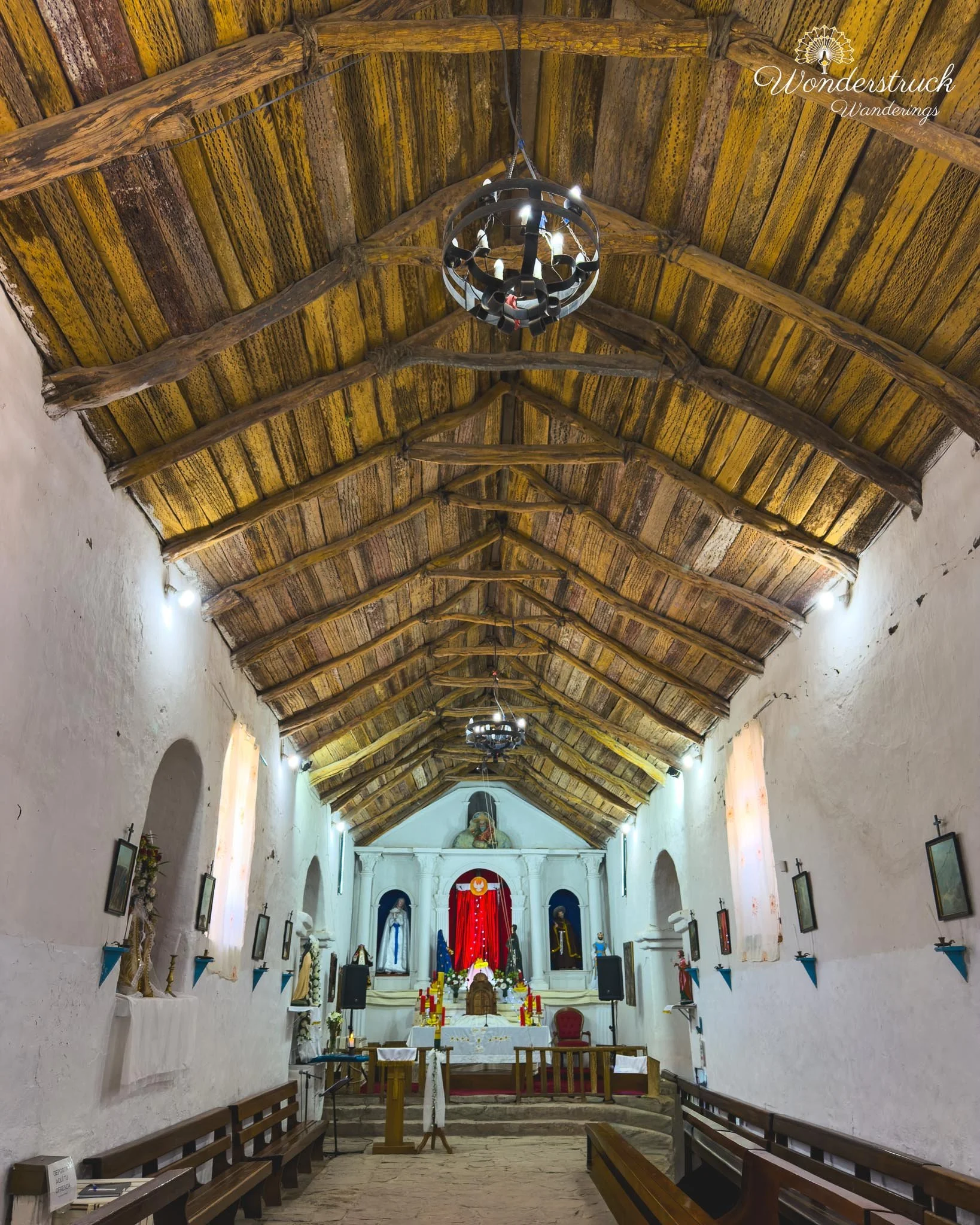
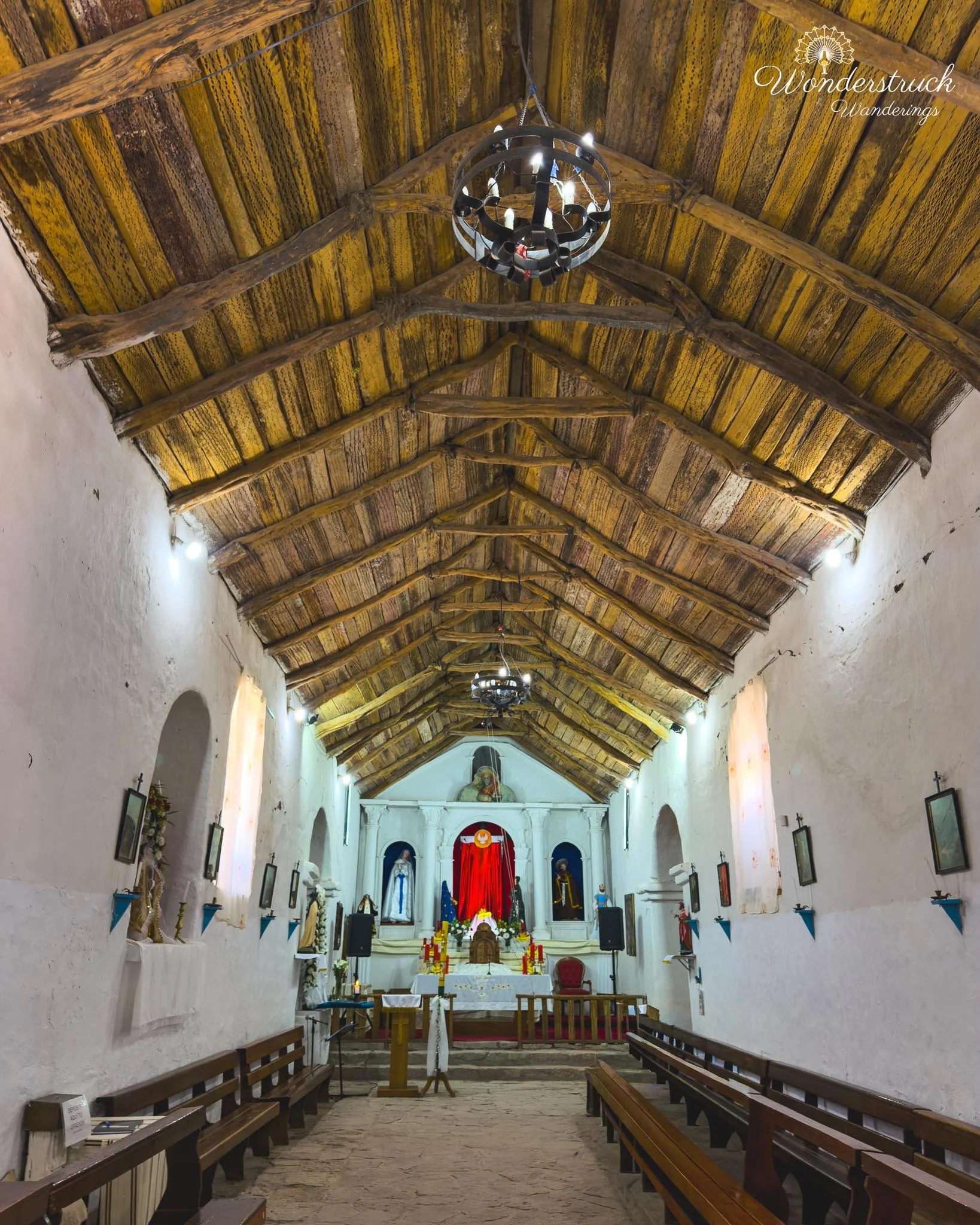
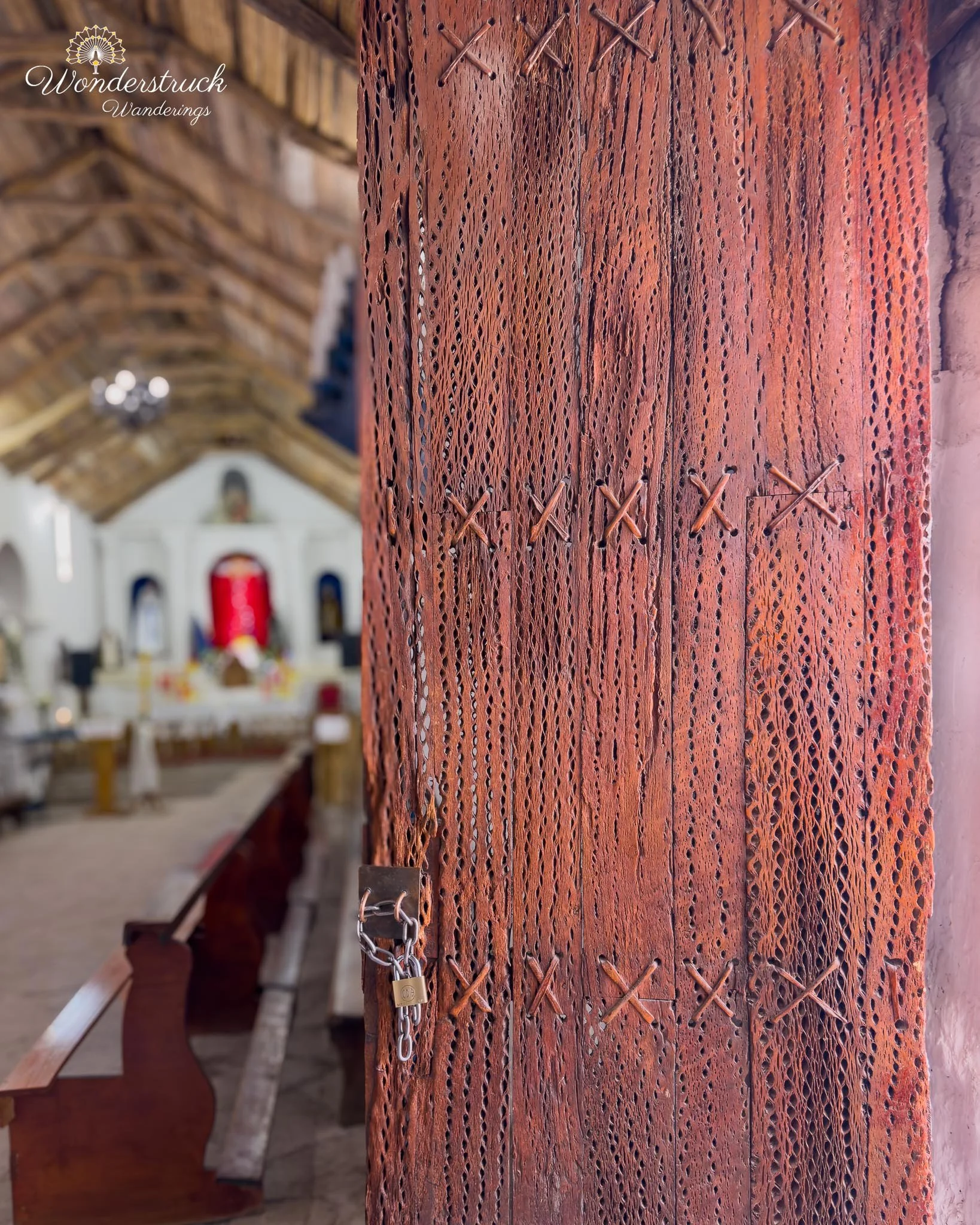
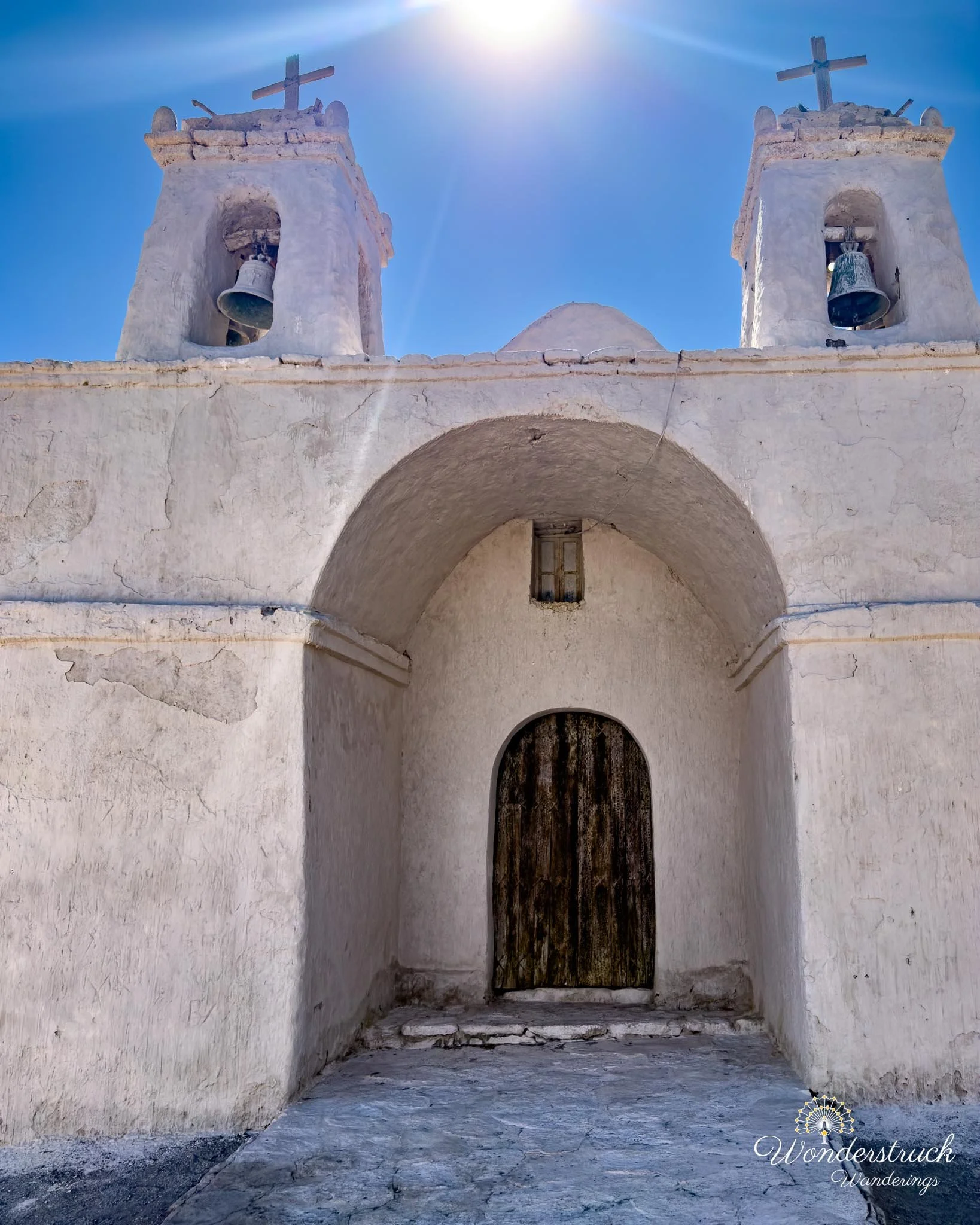
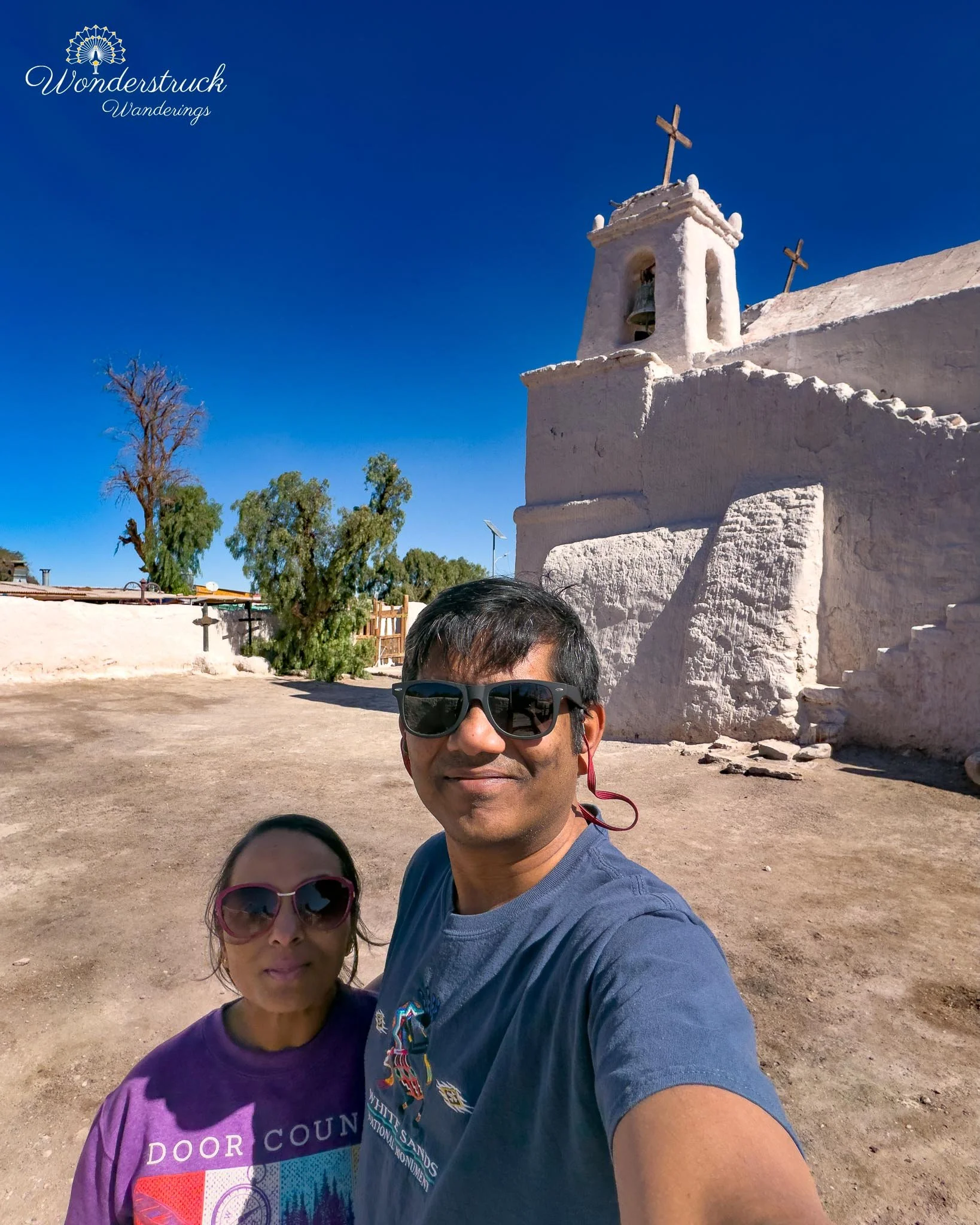
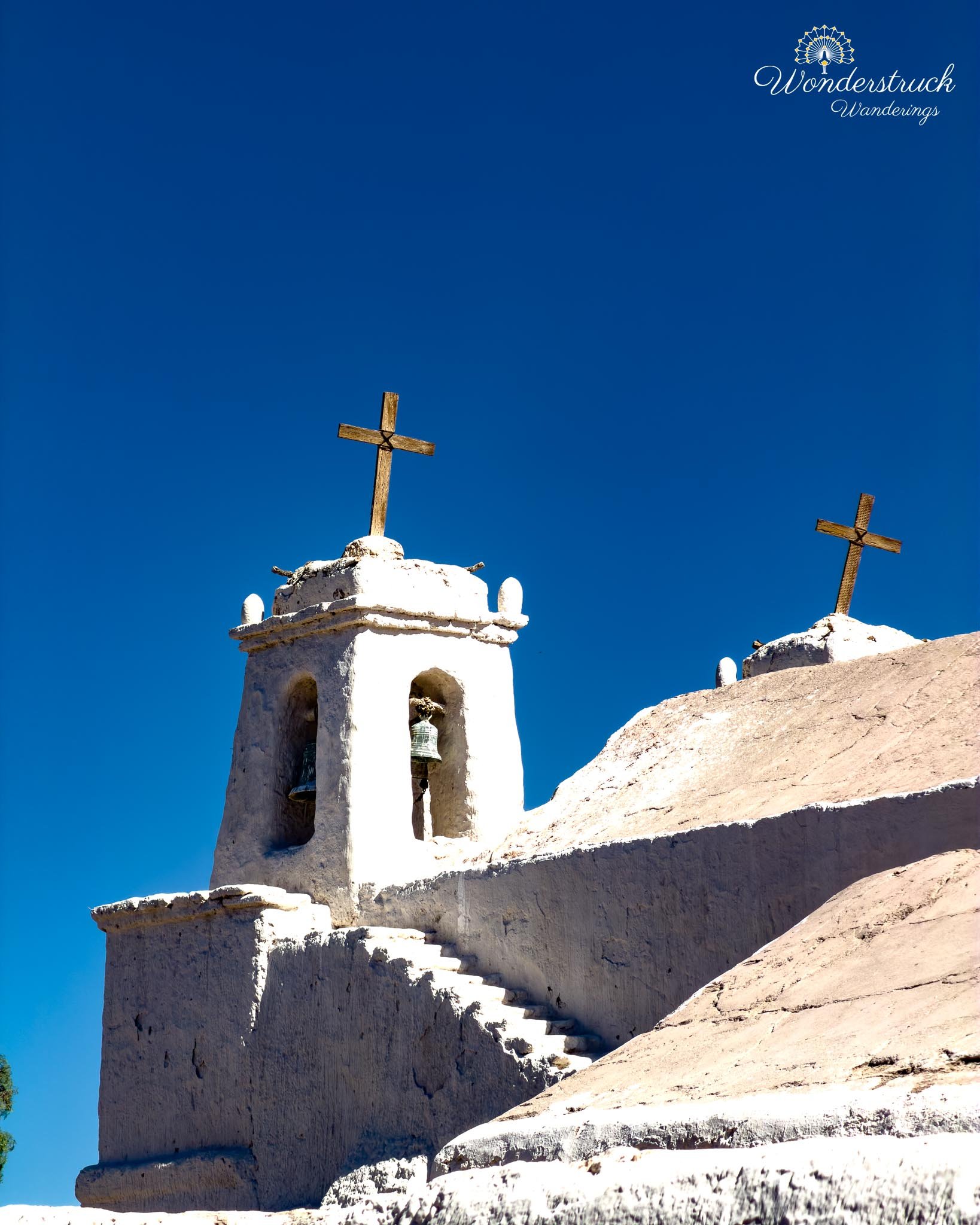
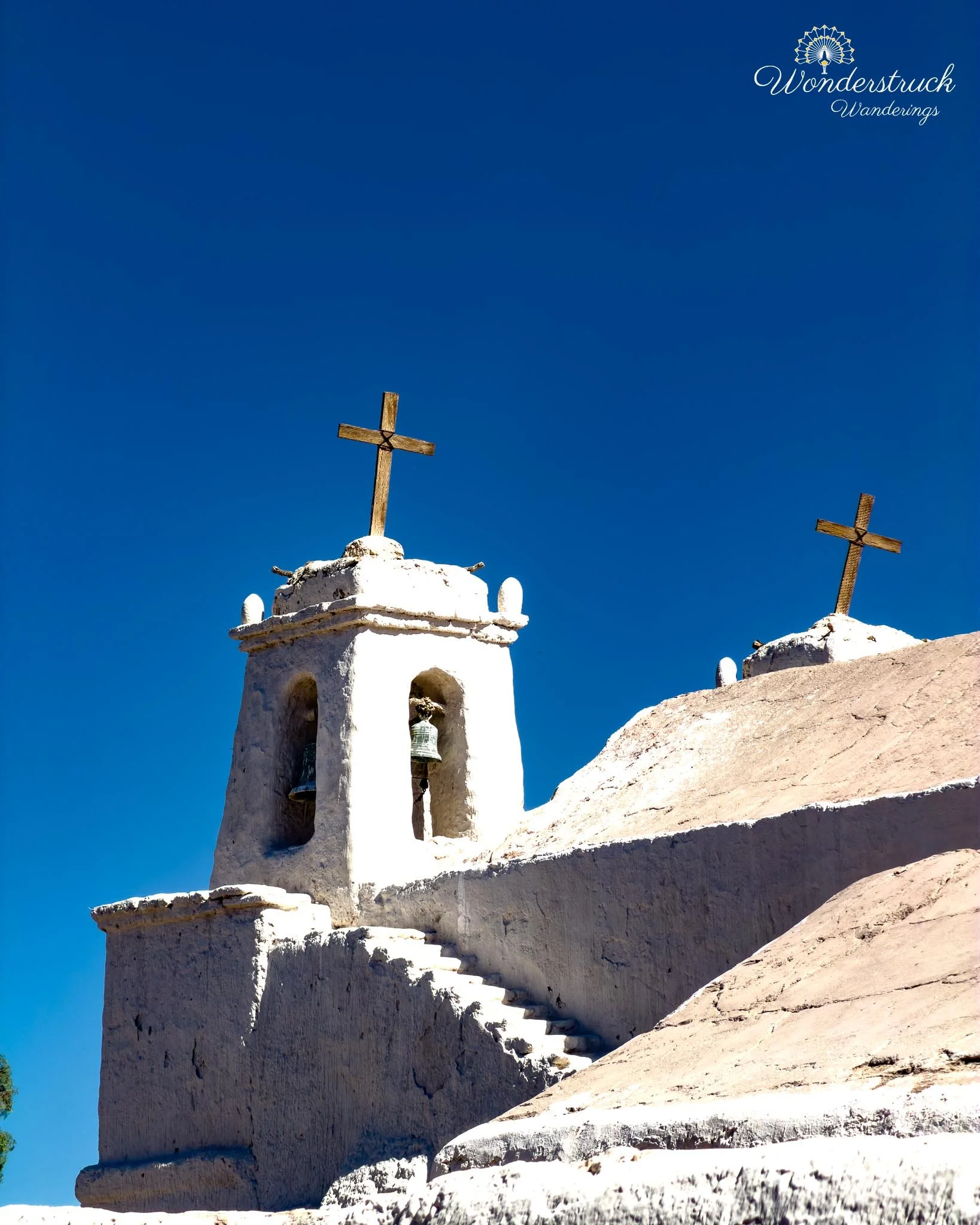
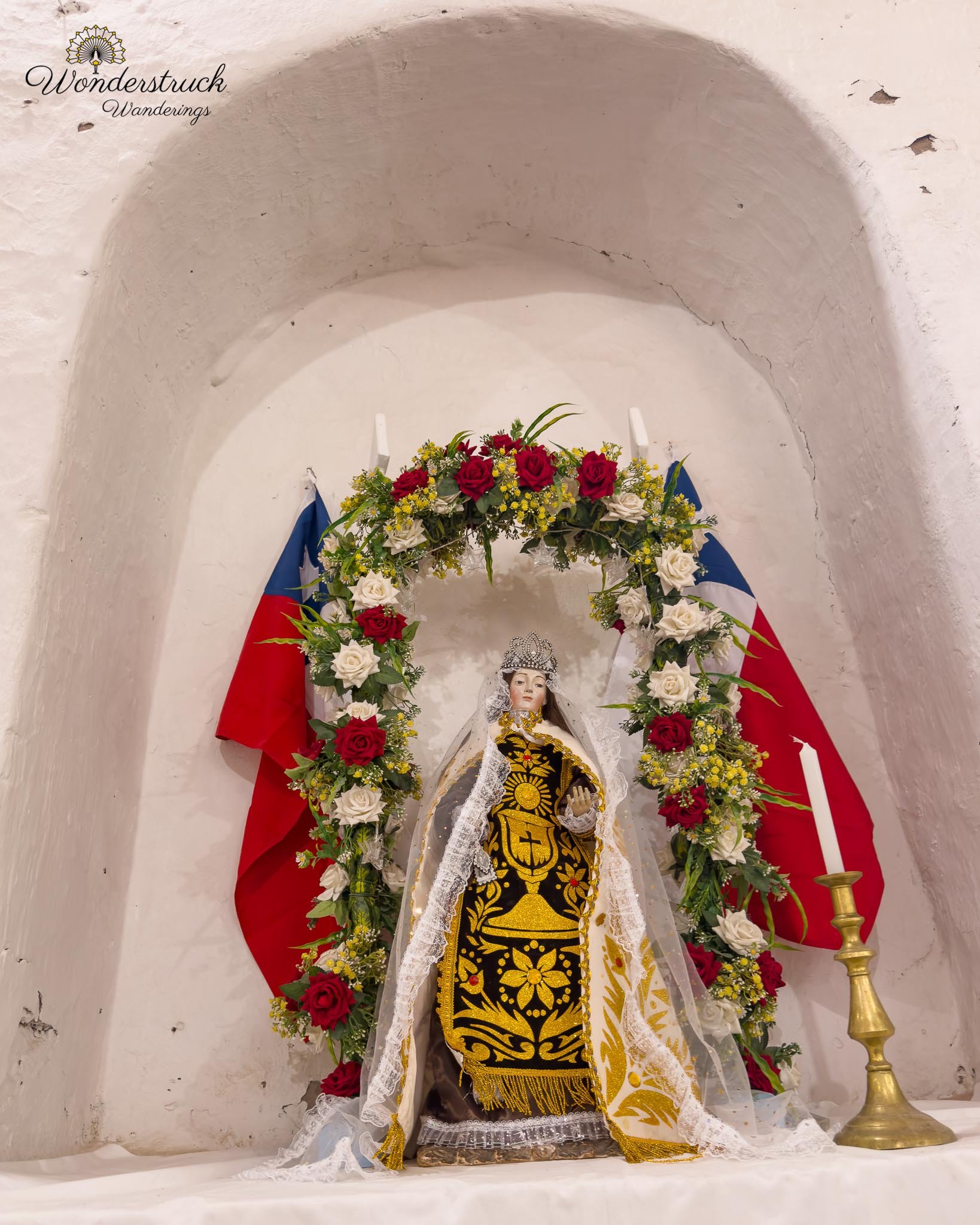
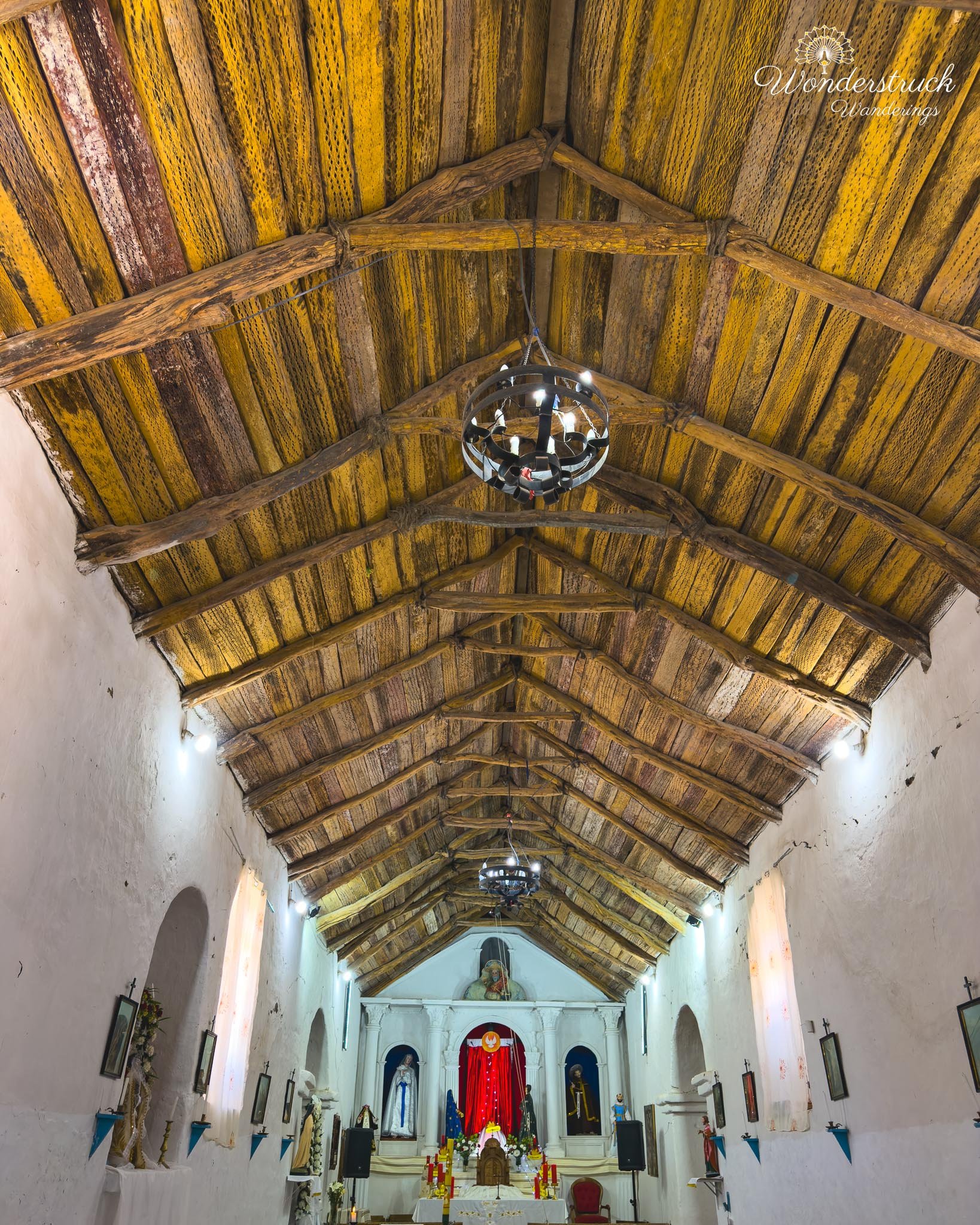
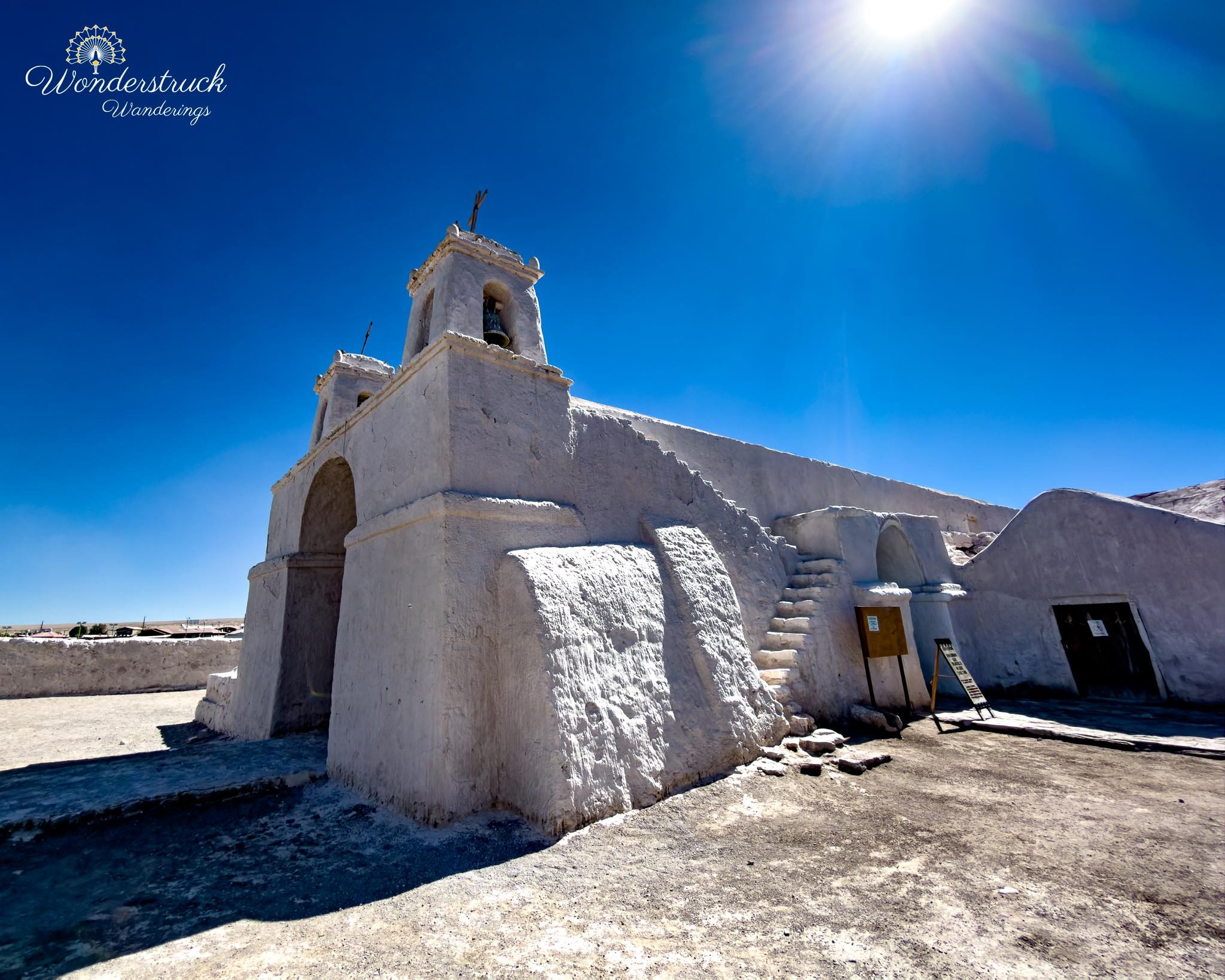
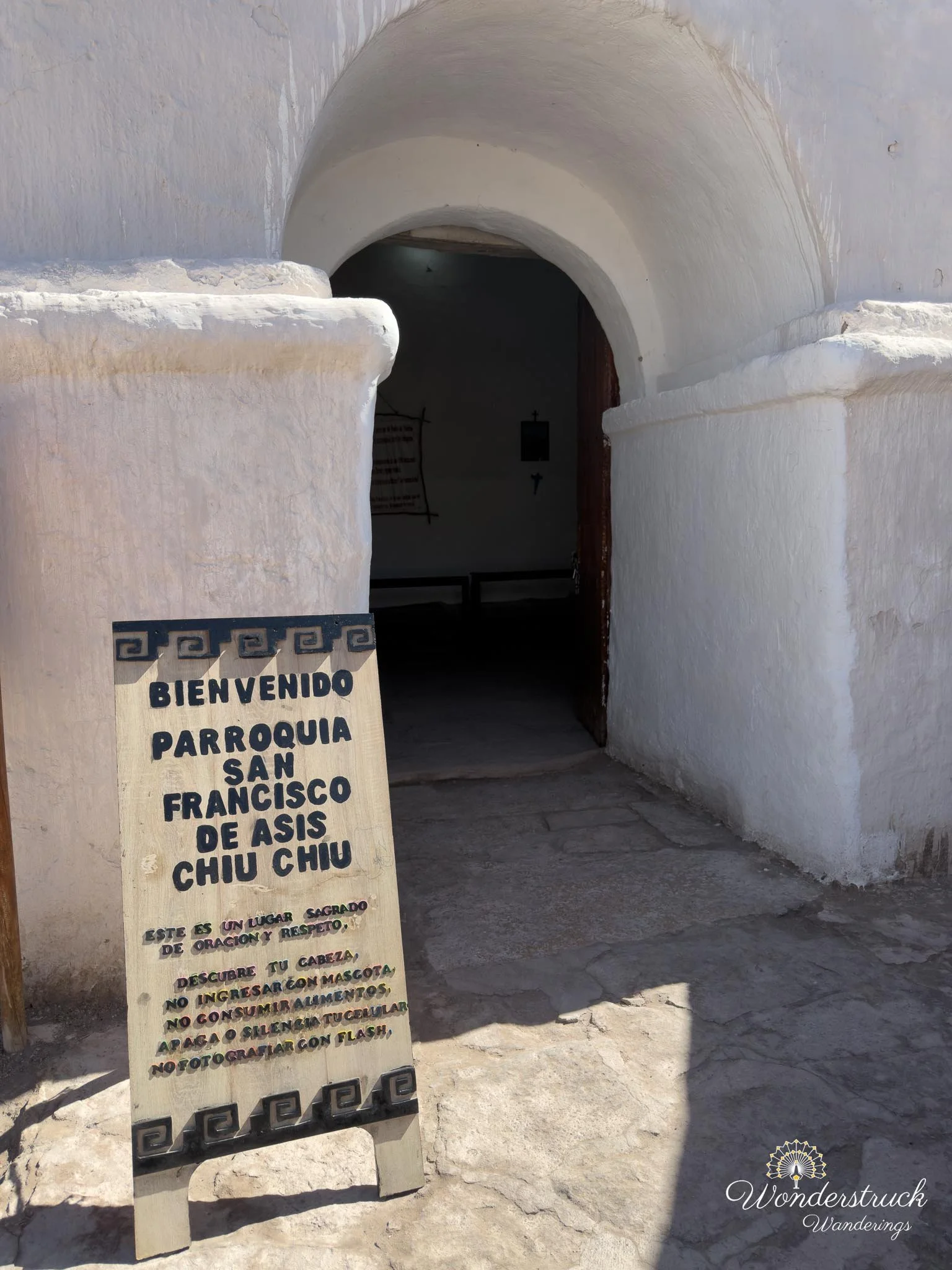
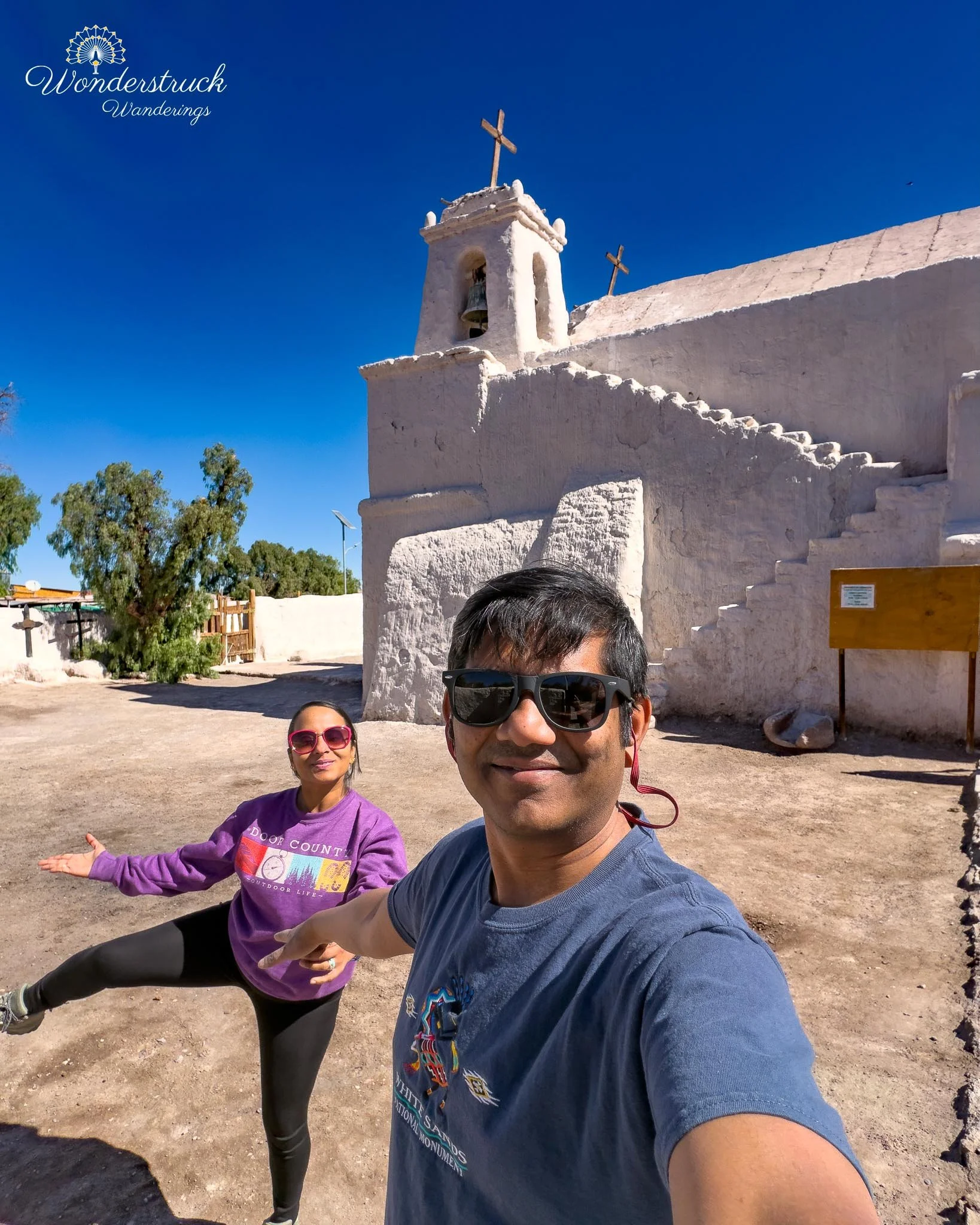
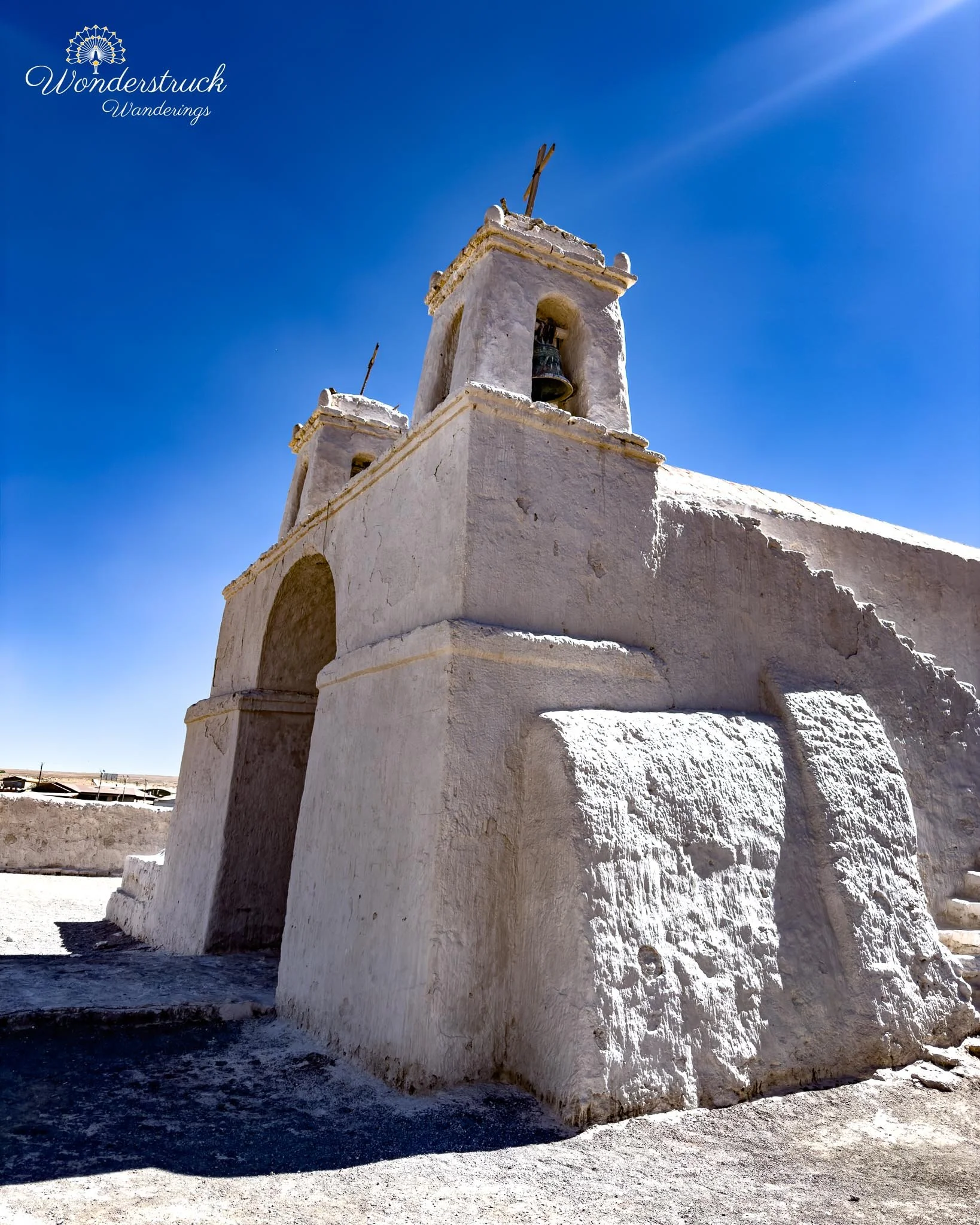
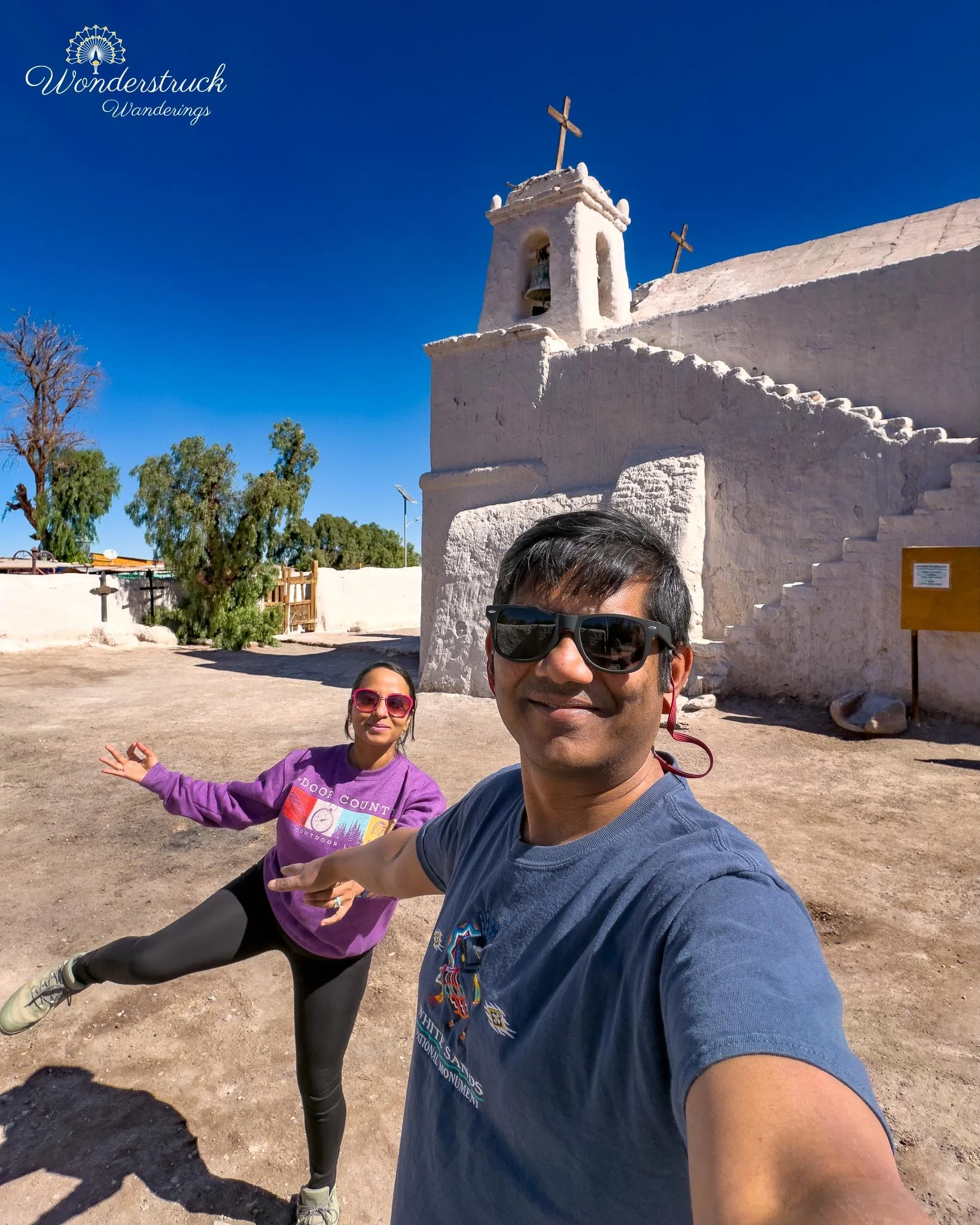
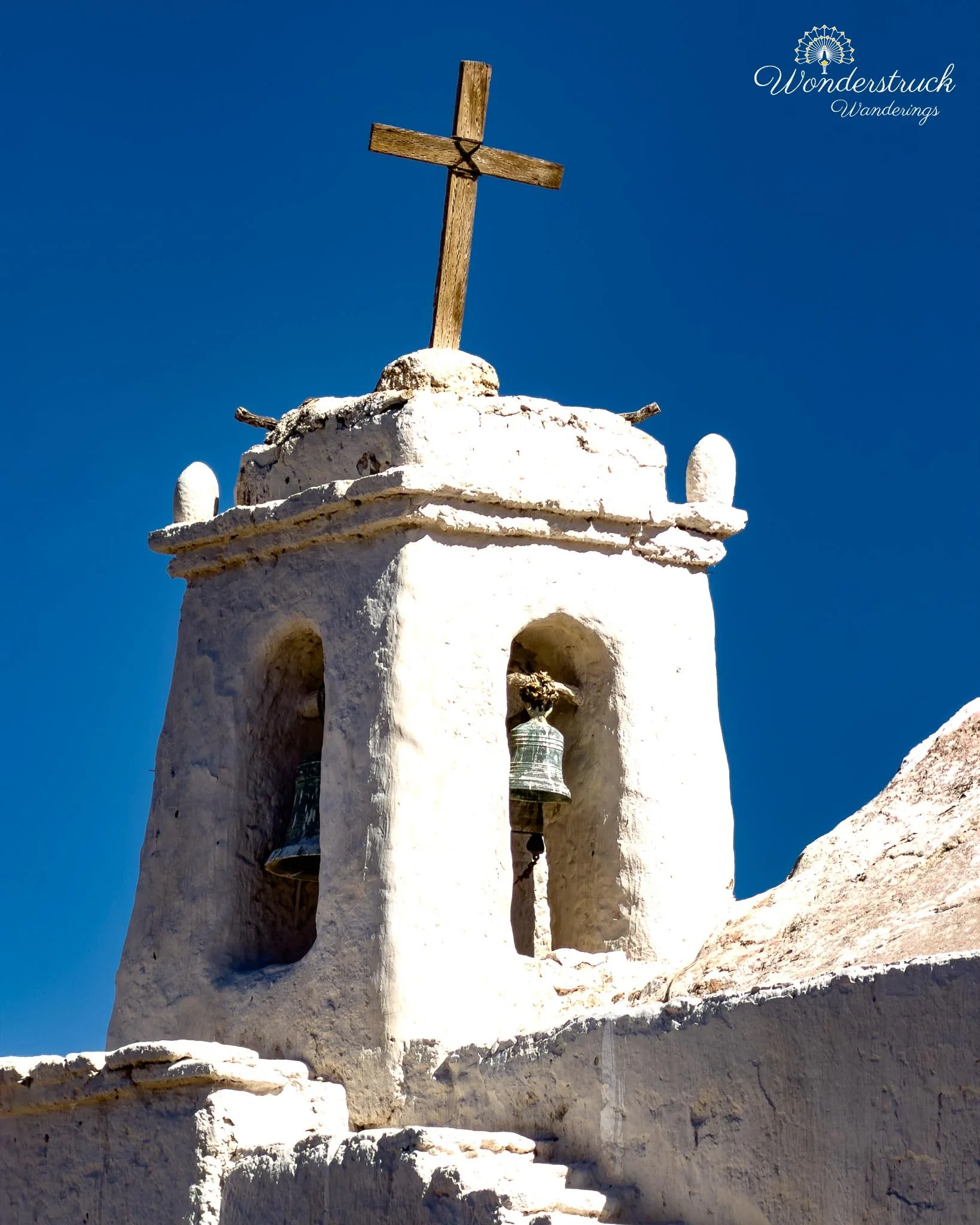
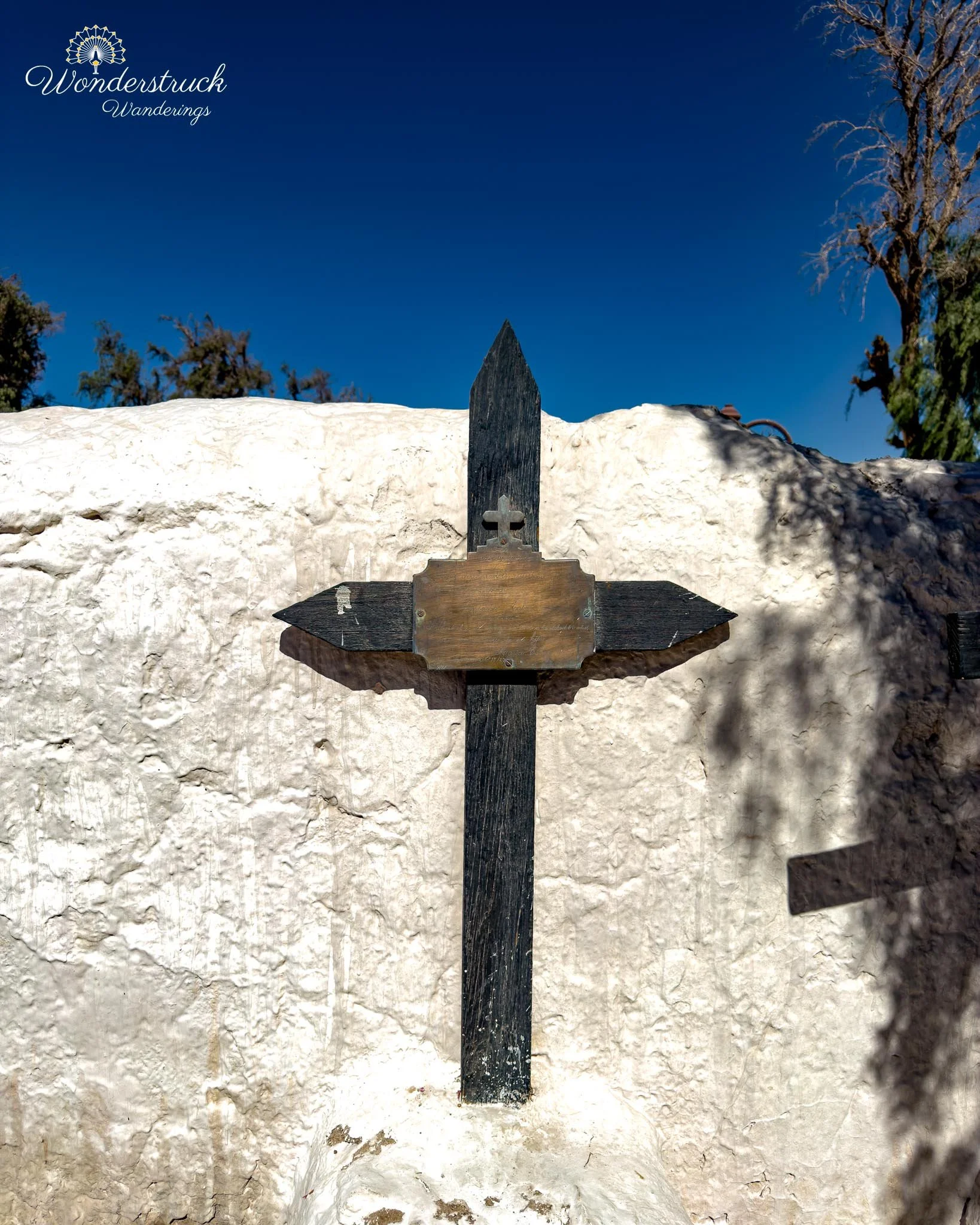
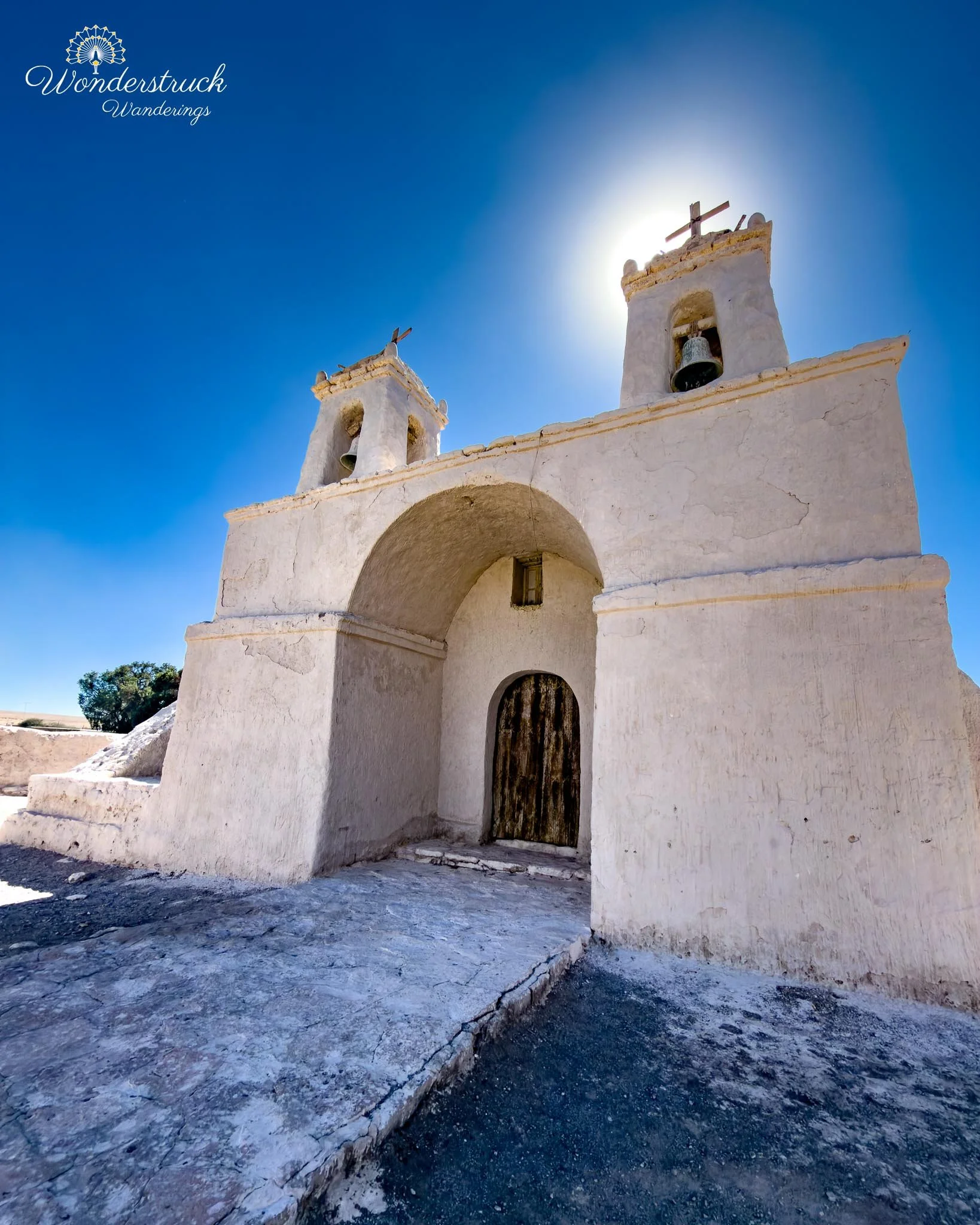
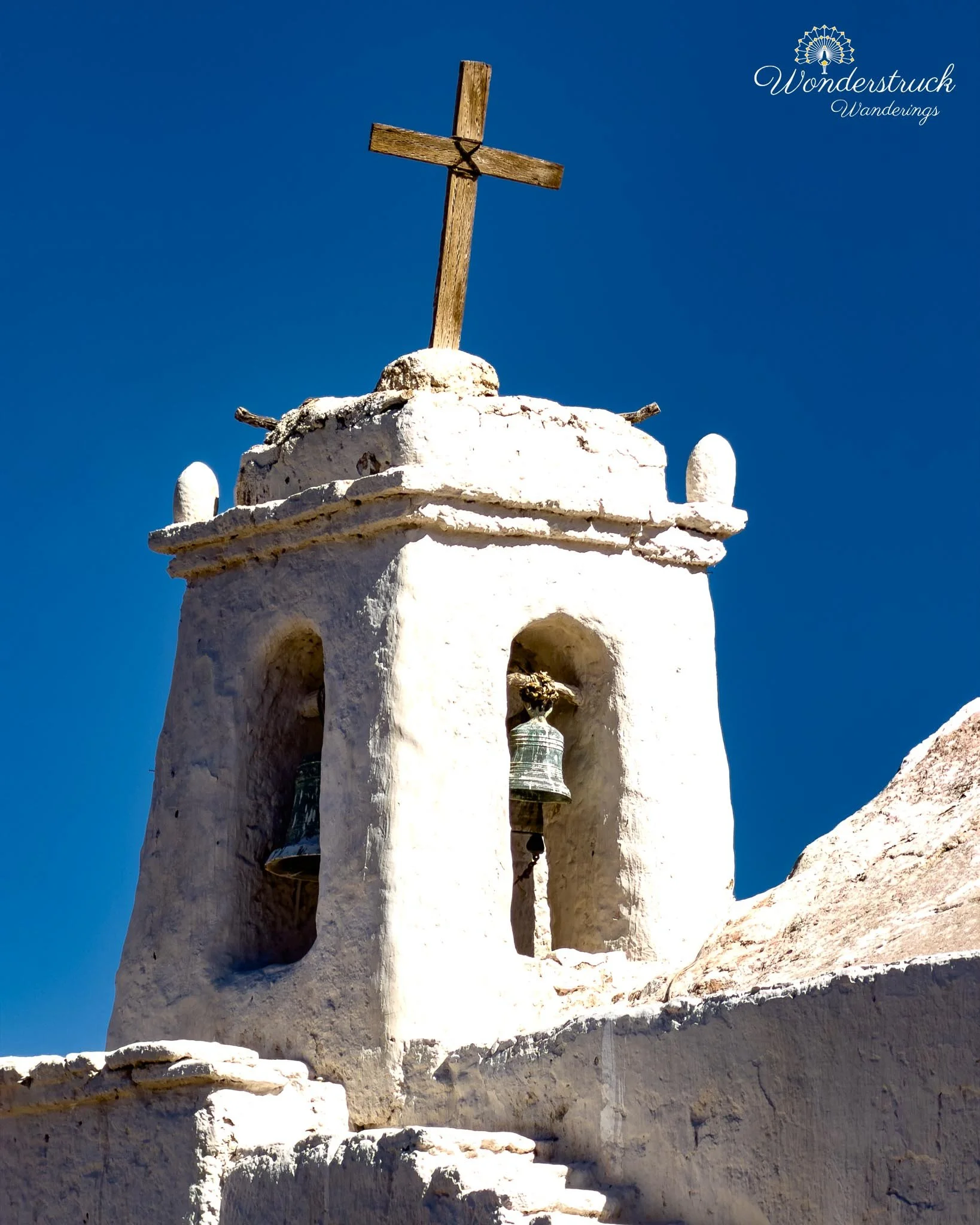
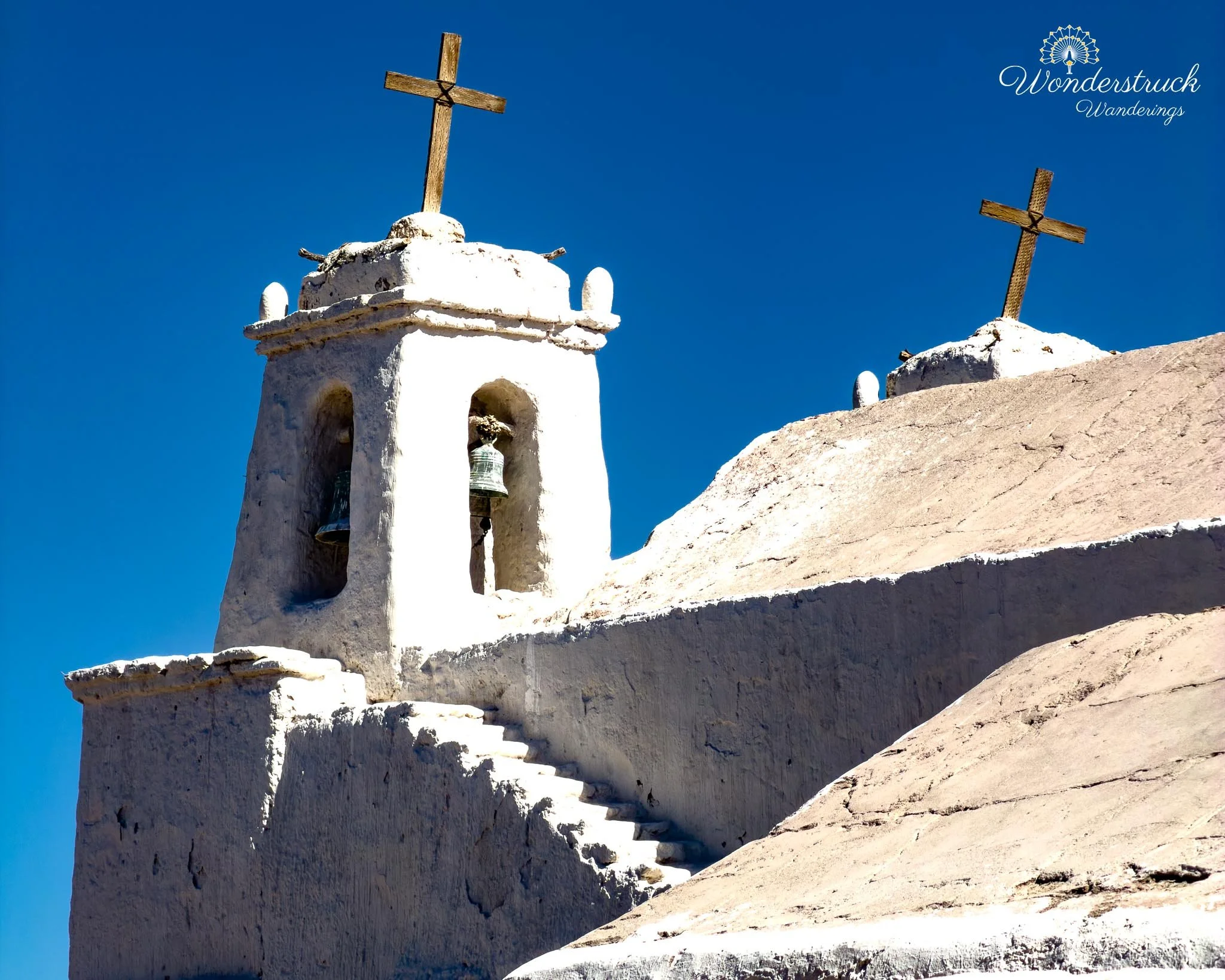
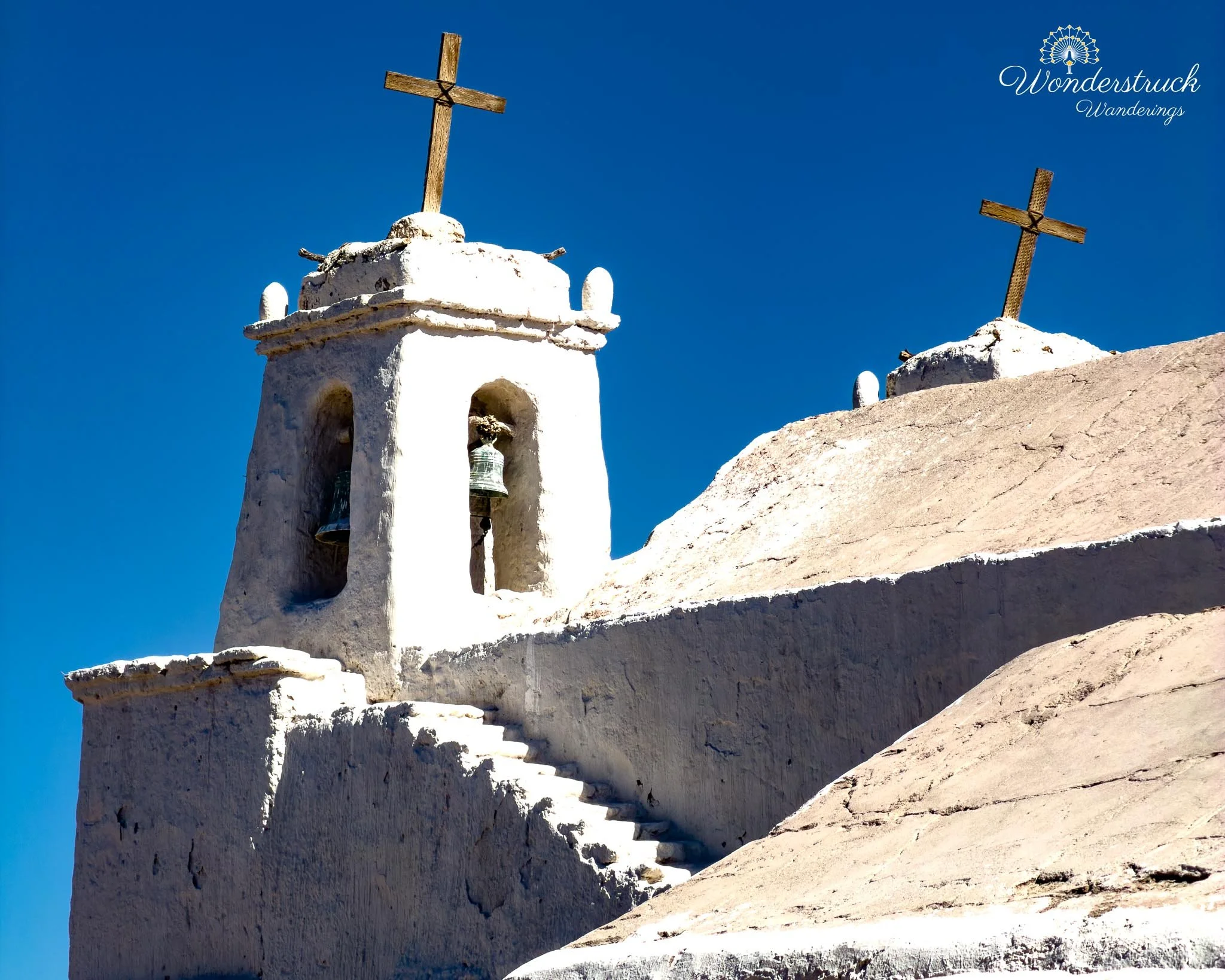
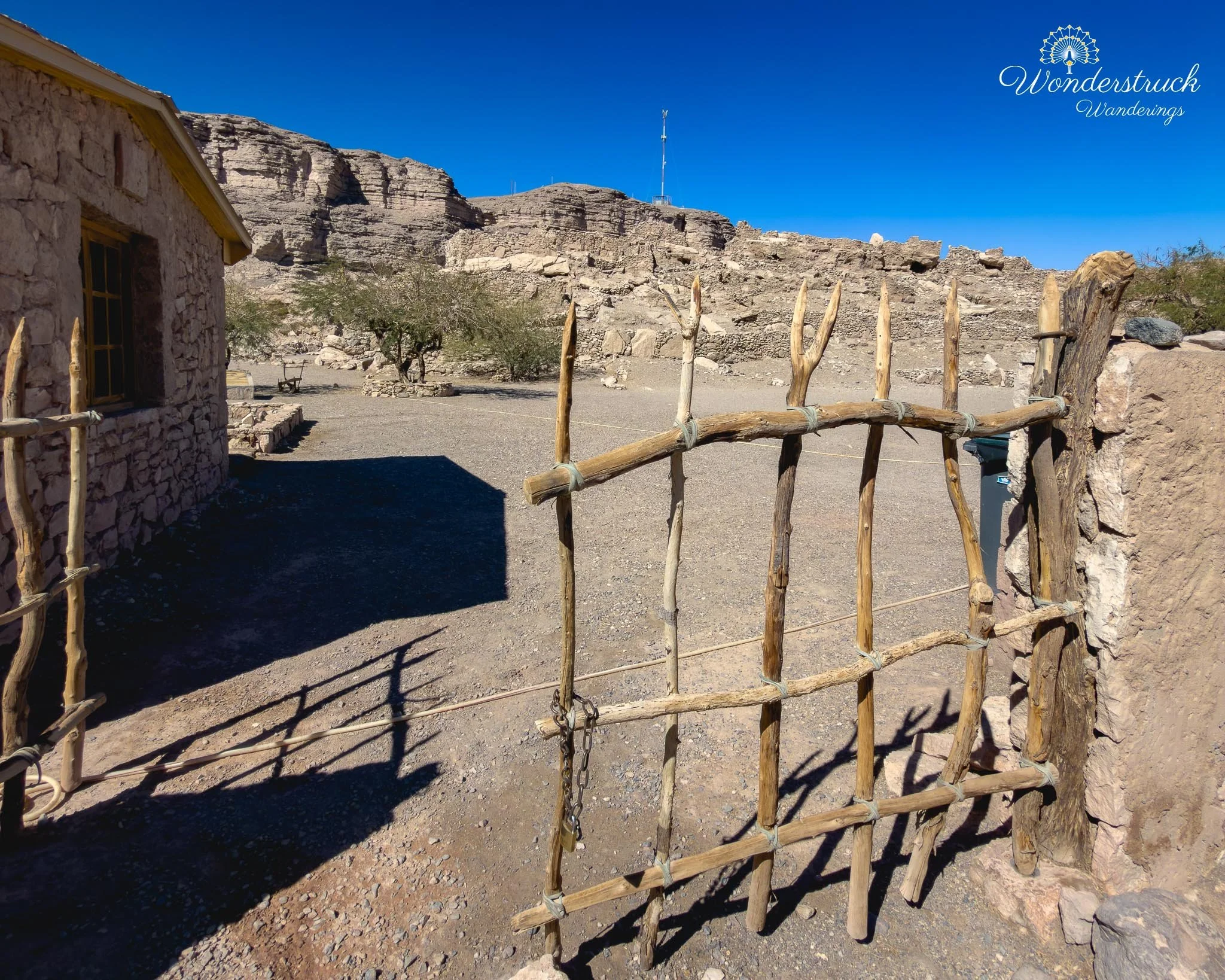
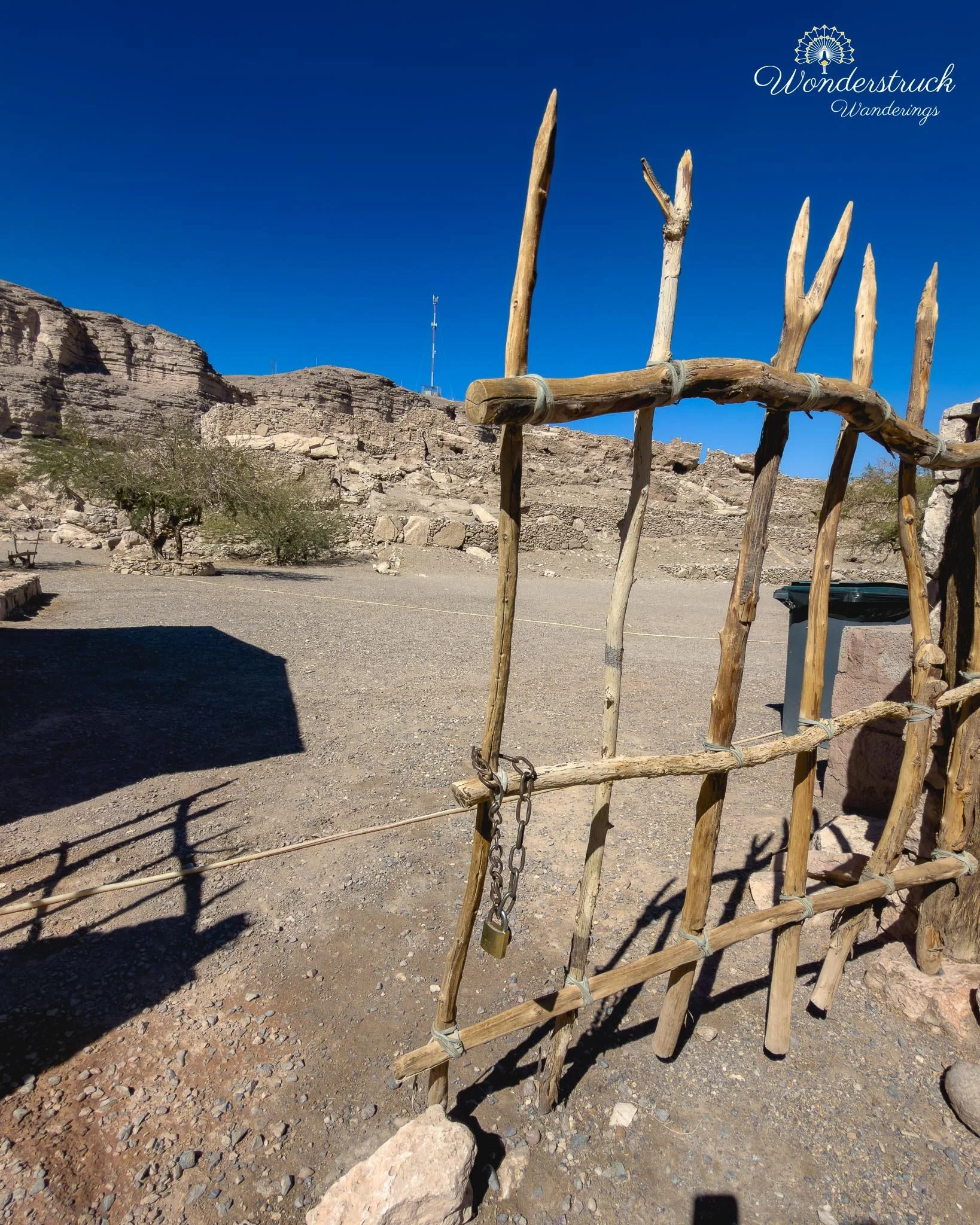
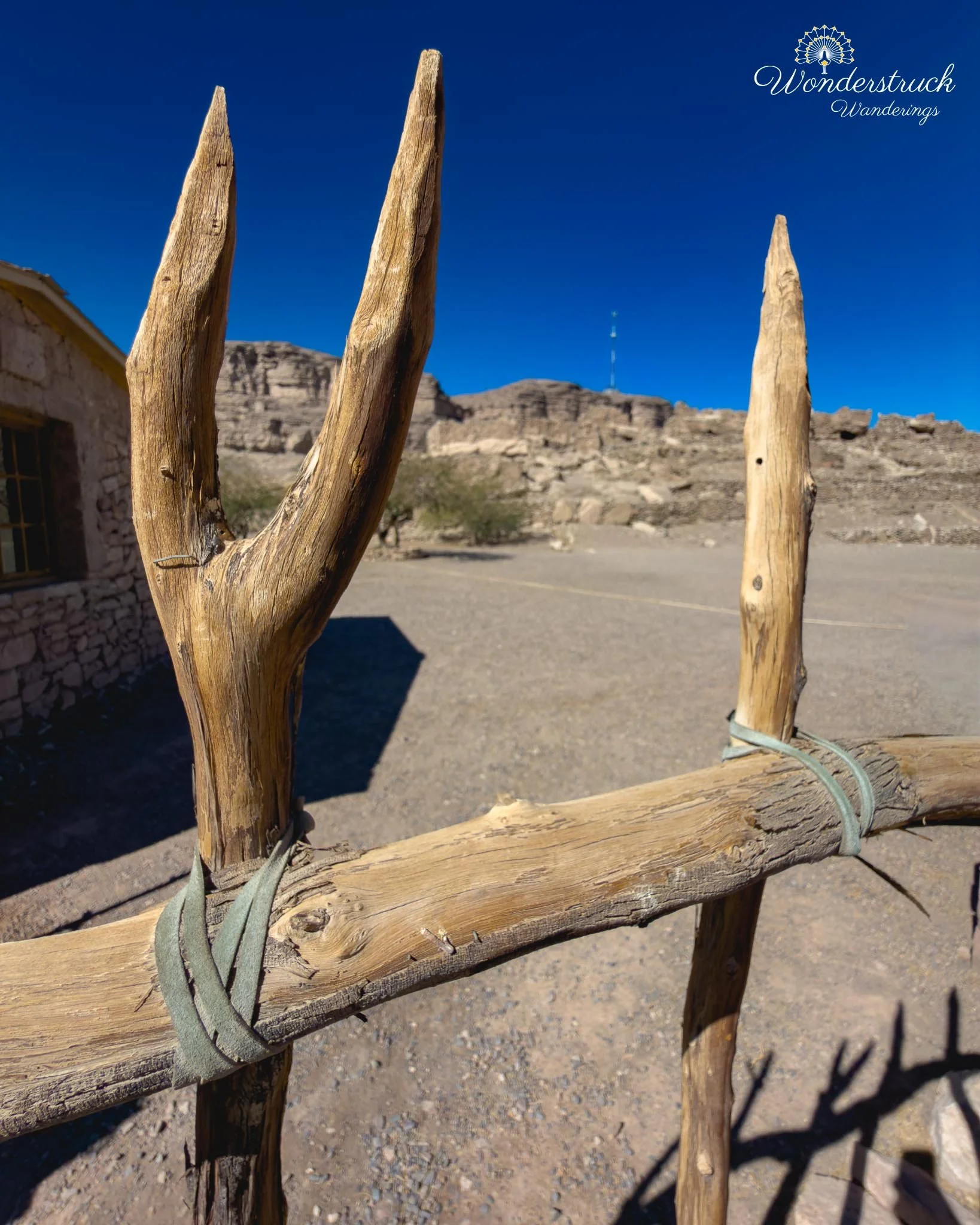
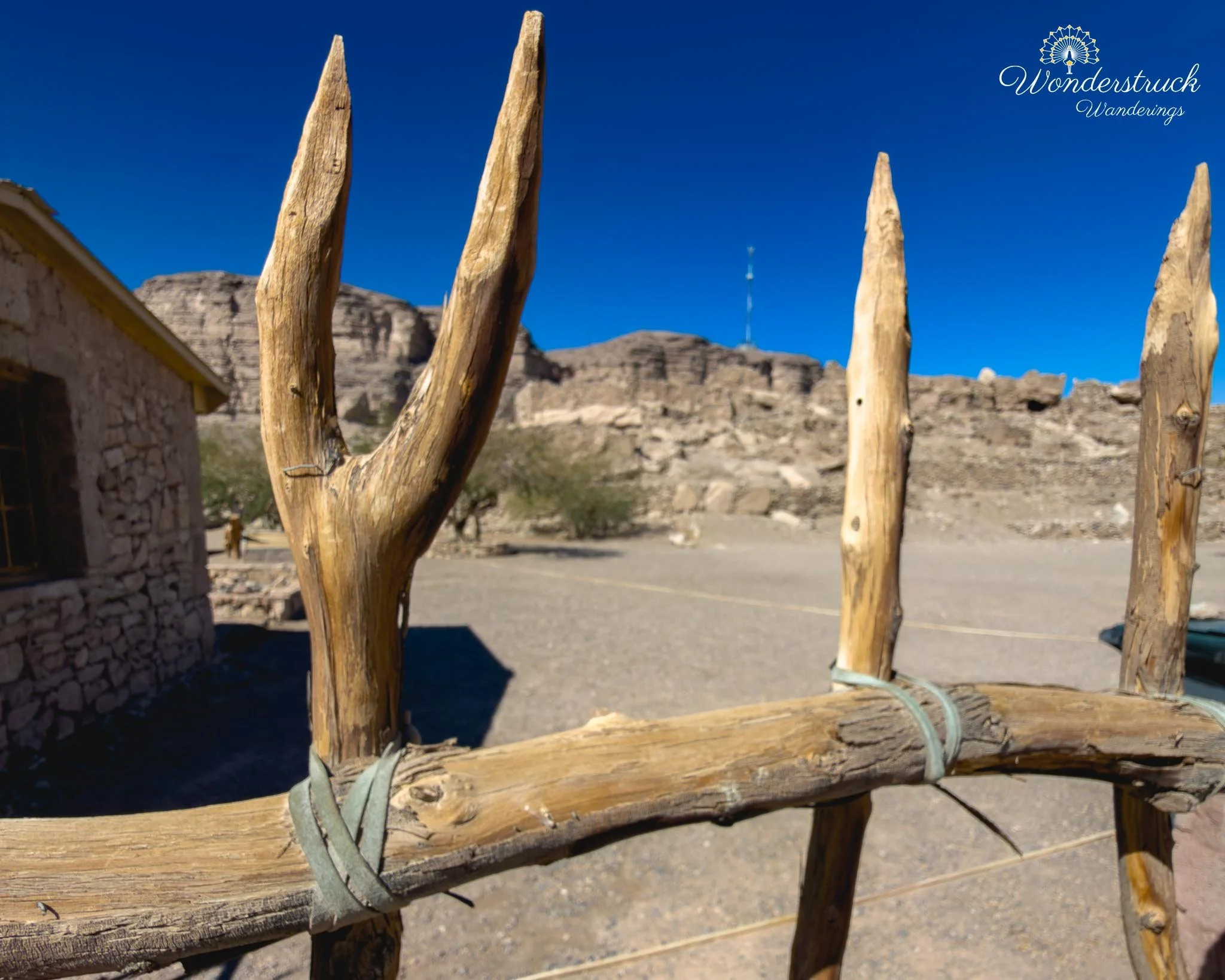
Chiu Chiu itself was small, quiet, and almost startlingly tranquil after the airport and supermarket logistics. Sitting roughly 30 km northeast of Calama, near where the Loa and Salado rivers meet, it's one of the oldest continuously inhabited settlements in the Atacama — a waypoint on the old Inca road network long before it became a parish in 1611 under Spanish rule. The main reason to stop is the Church of San Francisco de Chiu Chiu, built around 1600 and recognized as the oldest preserved church in Chile, raised by the Atacameño people using construction techniques passed down for generations rather than imported colonial materials. The building felt deeply rooted in the desert landscape: adobe walls, rustic proportions, and a stillness that made us slow down immediately. It did not have the grandeur of the Metropolitan Cathedral we had seen from outside the day before in Santiago. This was something different — smaller, humbler, and more connected to a local community and a harsher environment. The church still stands on a roof and door built from cardón cactus wood and chañar and algarrobo timber, the beams lashed together with llama-leather strips instead of nails — a technique that finished with a thick layer of mud and straw packed over the wooden frame for insulation against the desert extremes. The stone bell towers came later, added in 1965 during a restoration, but the rest has simply kept going for more than four hundred years — not a relic behind glass, but part of a village that built around it and never stopped.
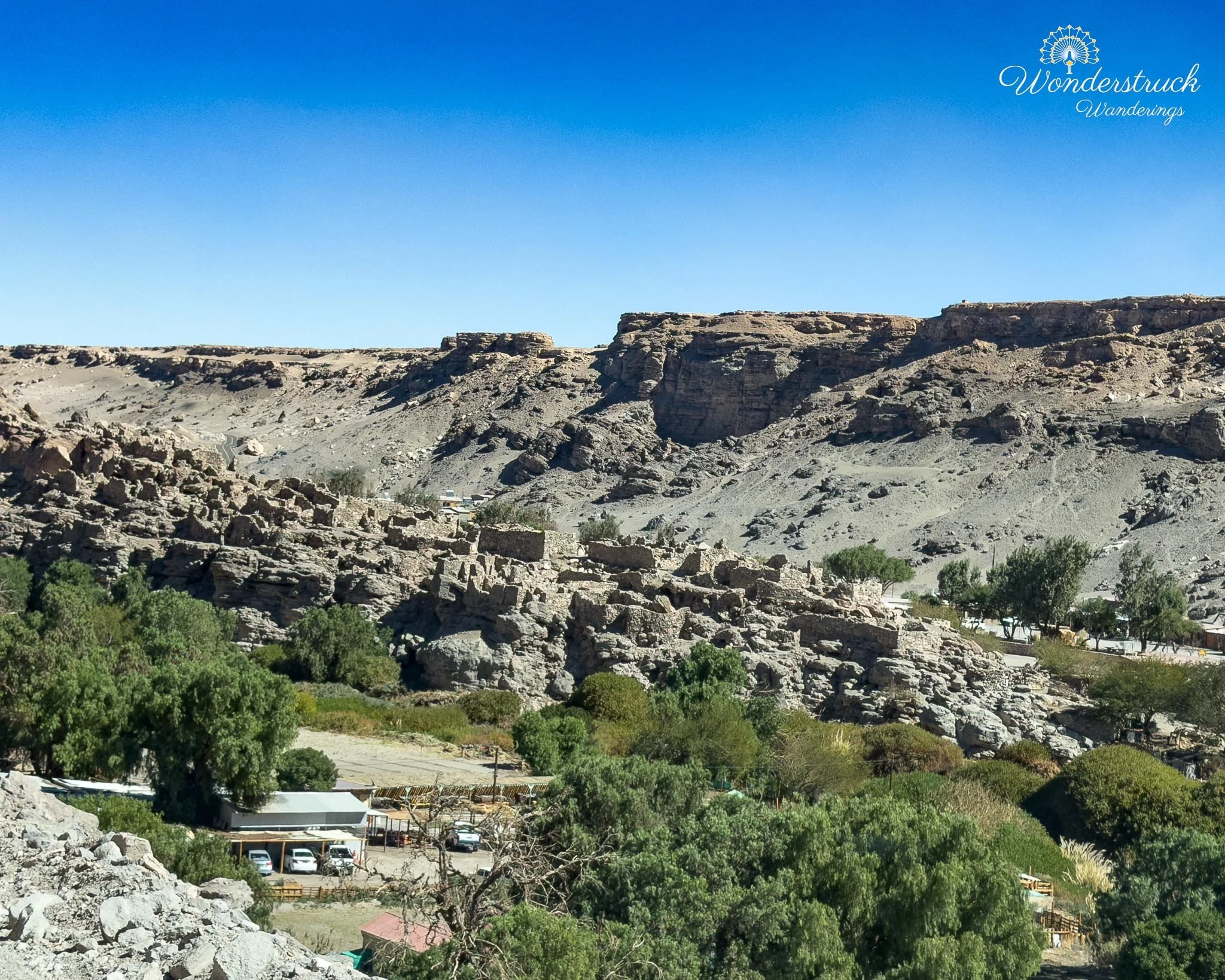
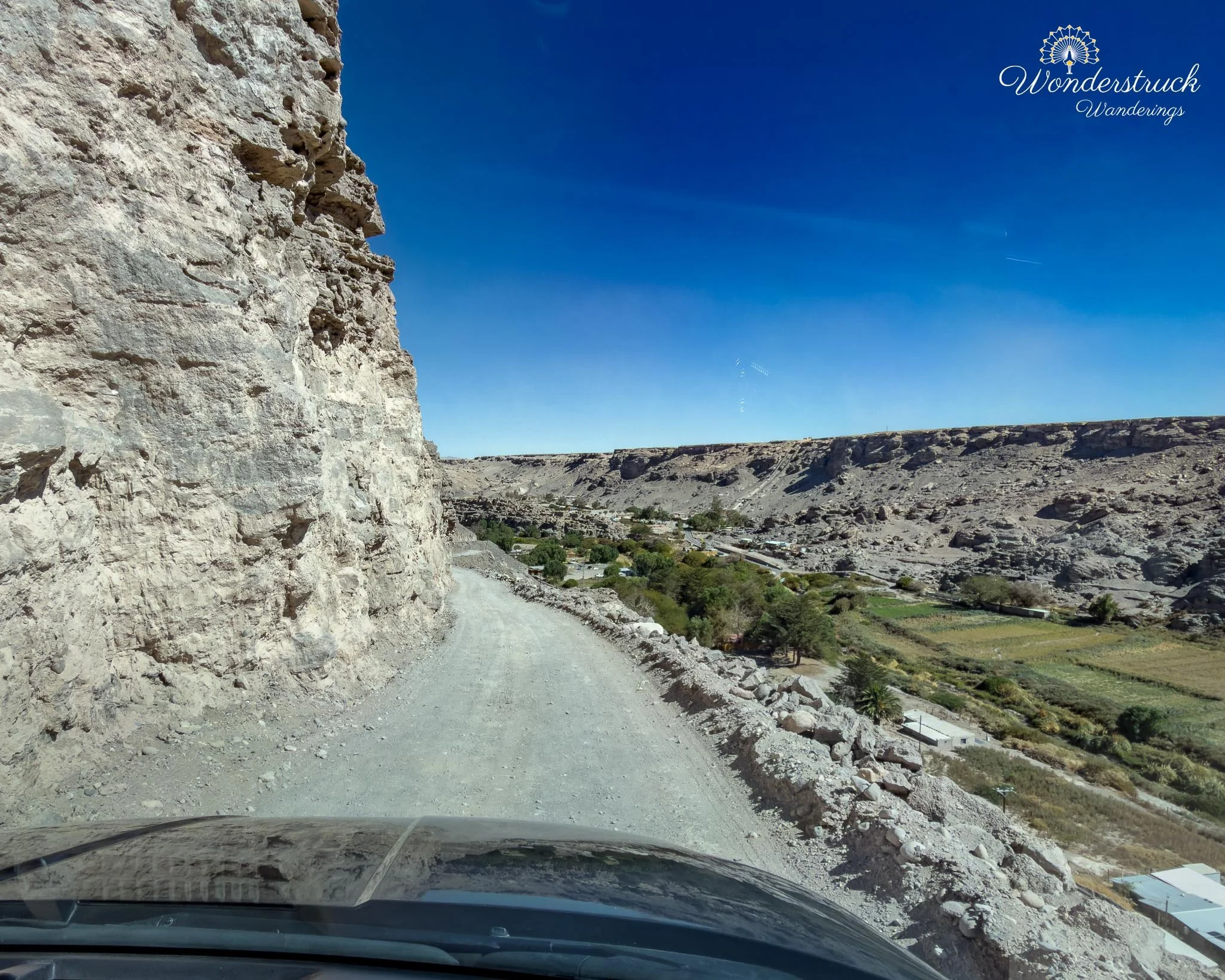
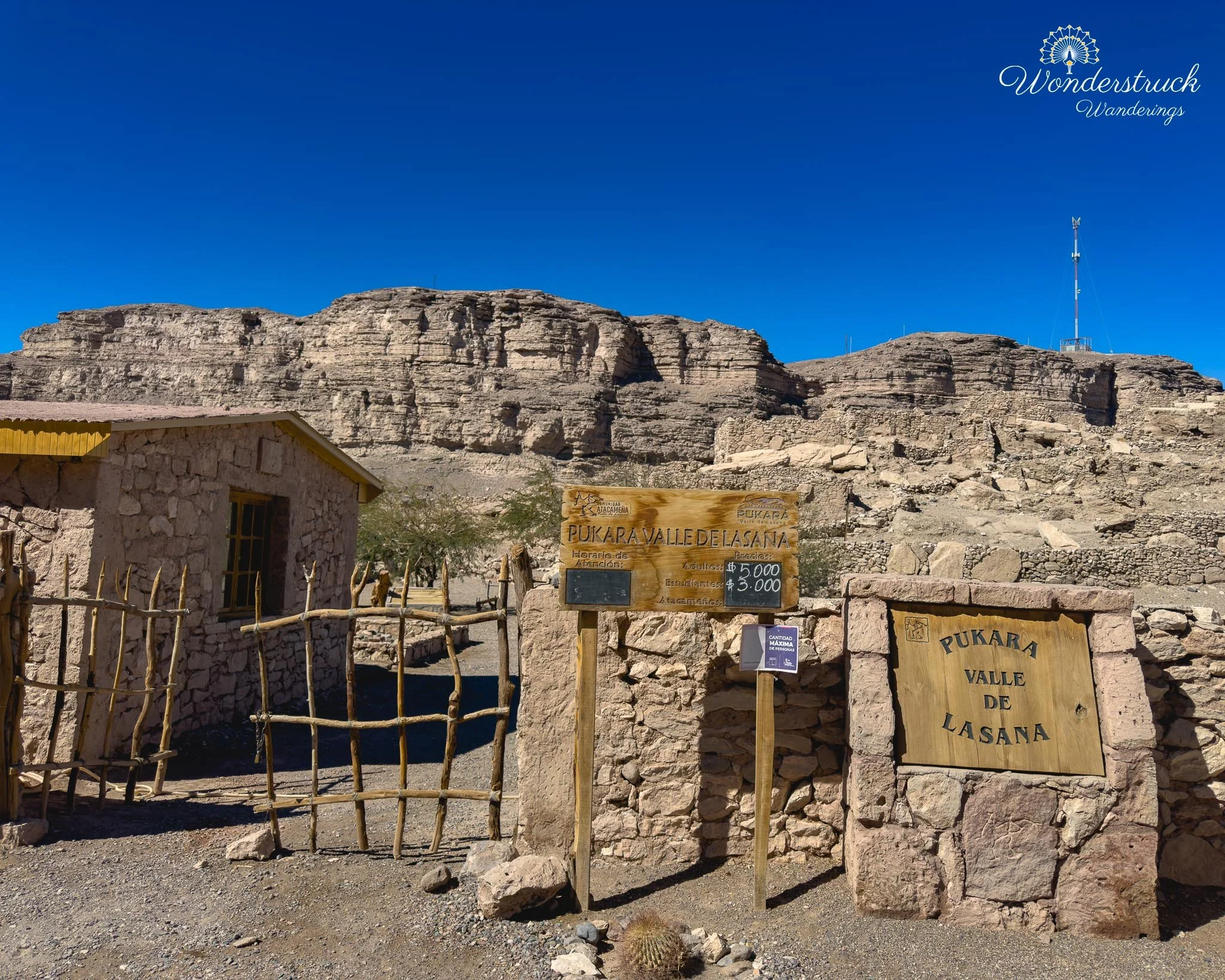
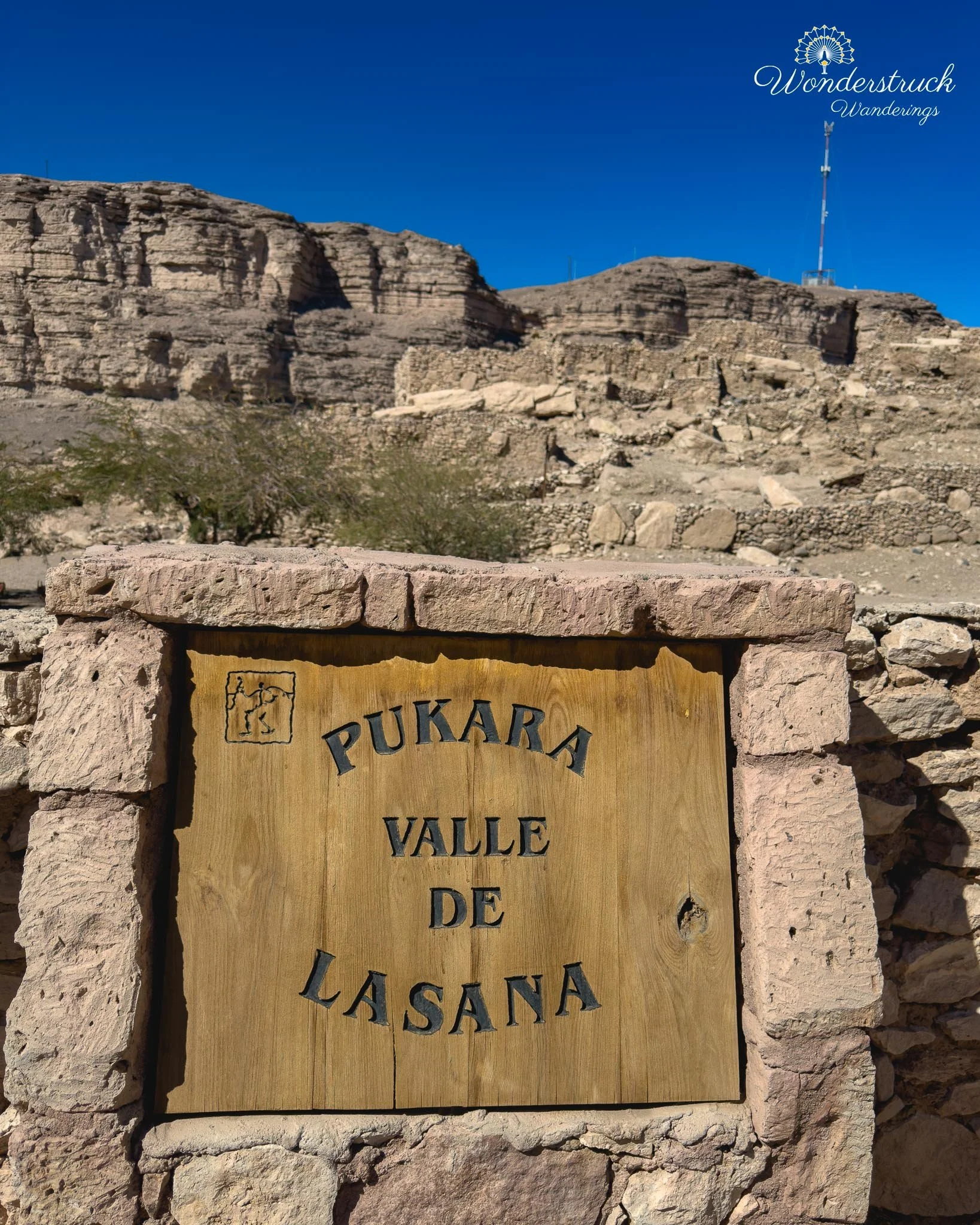
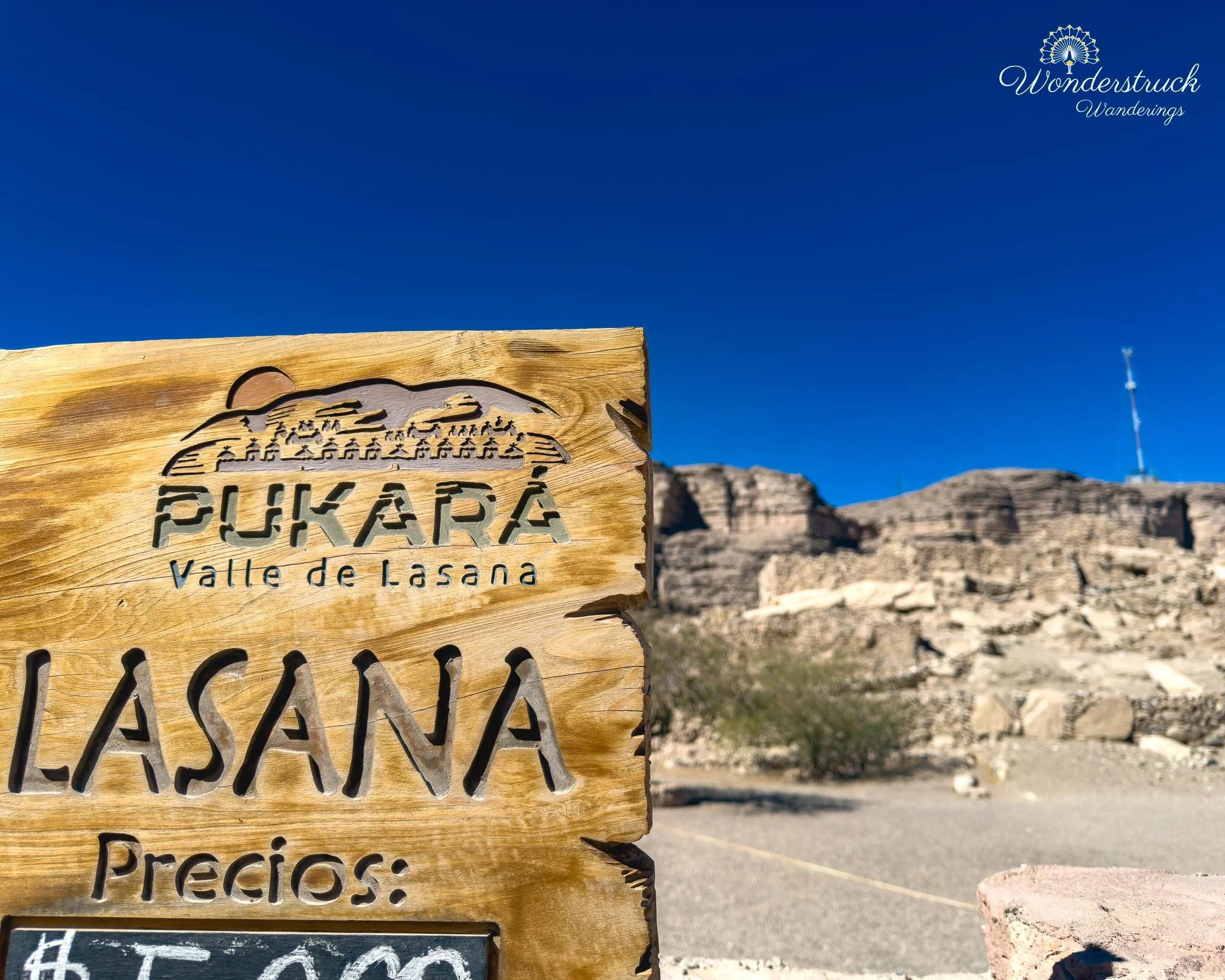
From Chiu Chiu, we continued to Pukará de Lasana. I had loosely thought of it as an old Inca settlement before the trip, but it is more accurate to understand it as a pre-Columbian Atacameño fortified settlement, built around the 12th century as a fortress village, that later became connected to the wider Inca period when the Inca empire absorbed the region in the 15th century. The Atacameño presence in this part of the desert goes back much further still — communities had settled the precordillera zone around San Pedro de Atacama as early as the 6th century AD, building an agricultural and pottery-making culture around maize, potato, and quinoa long before the pukará itself rose on the hillside. The ruins sit in a landscape that immediately makes defensive logic understandable. From the elevated position, you can see how the settlement watched the surrounding area. The old structures are not polished into something too neat; they still feel rough, weathered, and tied to the terrain — defensive dwellings built against each other, their layout following the contours of the mountain rather than any imposed grid. What I liked most about Lasana was that it made the Atacama feel inhabited across deep time. The desert can look empty when you are driving through it, especially if your eyes are trained on the horizon and the road. But places like Lasana correct that impression. People adapted here, built here, defended here, stored food here, and created community in a landscape that looks, at first glance, almost impossible. That continuity didn't last unbroken, though — Spanish conquest in the mid-1500s under Pedro de Valdivia led to the dismantling of the Atacameño pukarás and the imposition of a colonial system run out of towns like San Pedro. What remains at Lasana today is a fortress that outlived the civilization that built it by going quiet rather than disappearing.
The Drive into San Pedro and Our Habitas Atacama
After Lasana, we turned back toward the main route. Both Chiu Chiu and Lasana had been detours, but worthwhile ones. Now the drive toward San Pedro de Atacama began properly. The road from Calama to San Pedro is not just a transfer. It is an introduction. You leave the more industrial feel of Calama and gradually move into a wider, more cinematic desert world. The land opens in long, dry planes. The mountains start to organize the horizon. The colors are subtle at first - sand, salt, gravel, ochre, dull red, gray - but the longer you look, the more variation appears. Nothing is lush, but nothing is empty either. The light, though, is harsh. At midday, the Atacama does not flatter photographers. It strips everything down and flattens the drama. Shadows disappear. Rock faces lose their depth. The desert becomes so bright that you almost have to photograph it mentally instead of through the camera. We would learn this again and again over the next few days: in the Atacama, timing matters. Morning and evening are everything. Midday is for driving, scouting, resting, or walking inside formations where the shade can do some of the work.
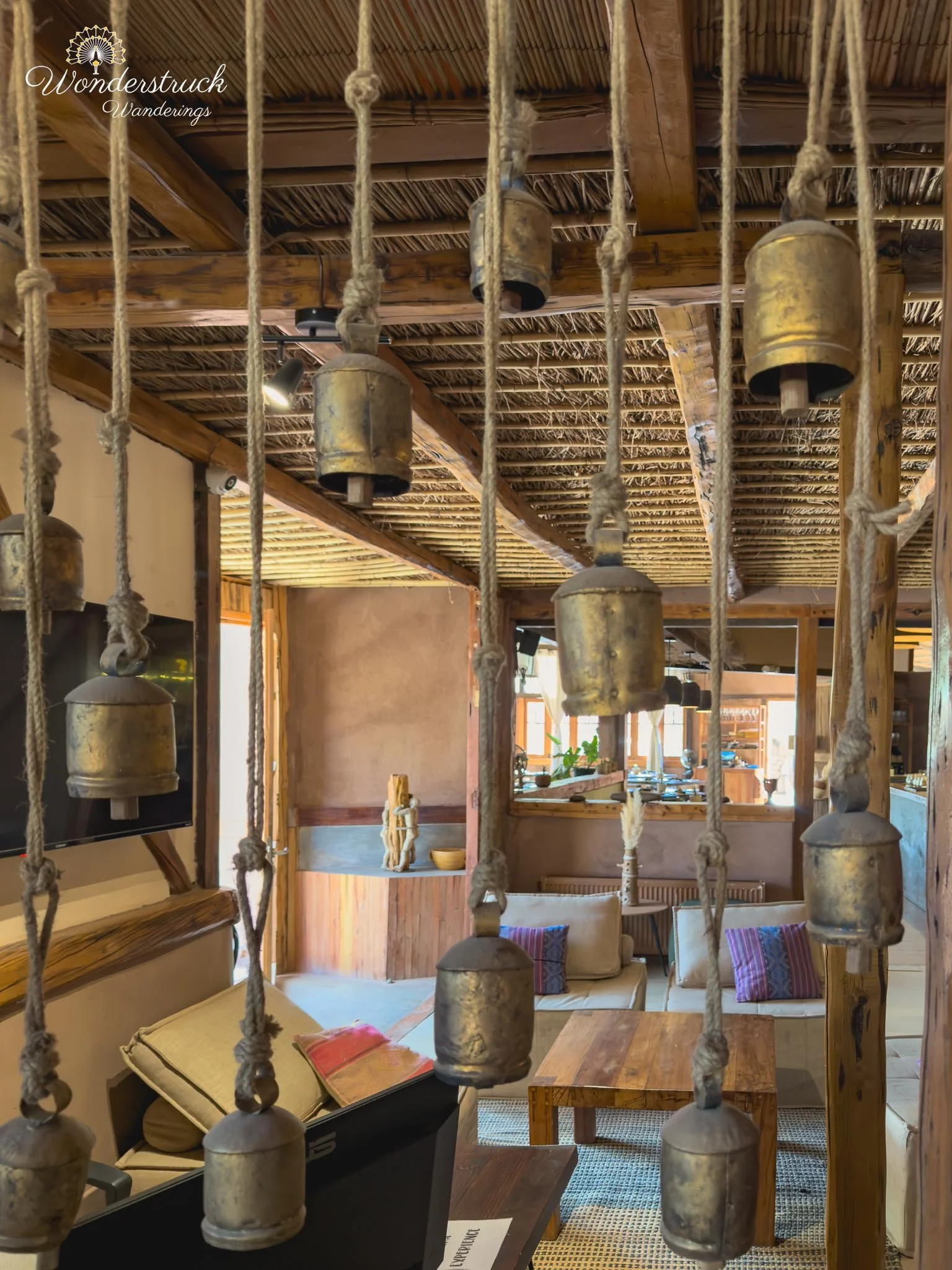
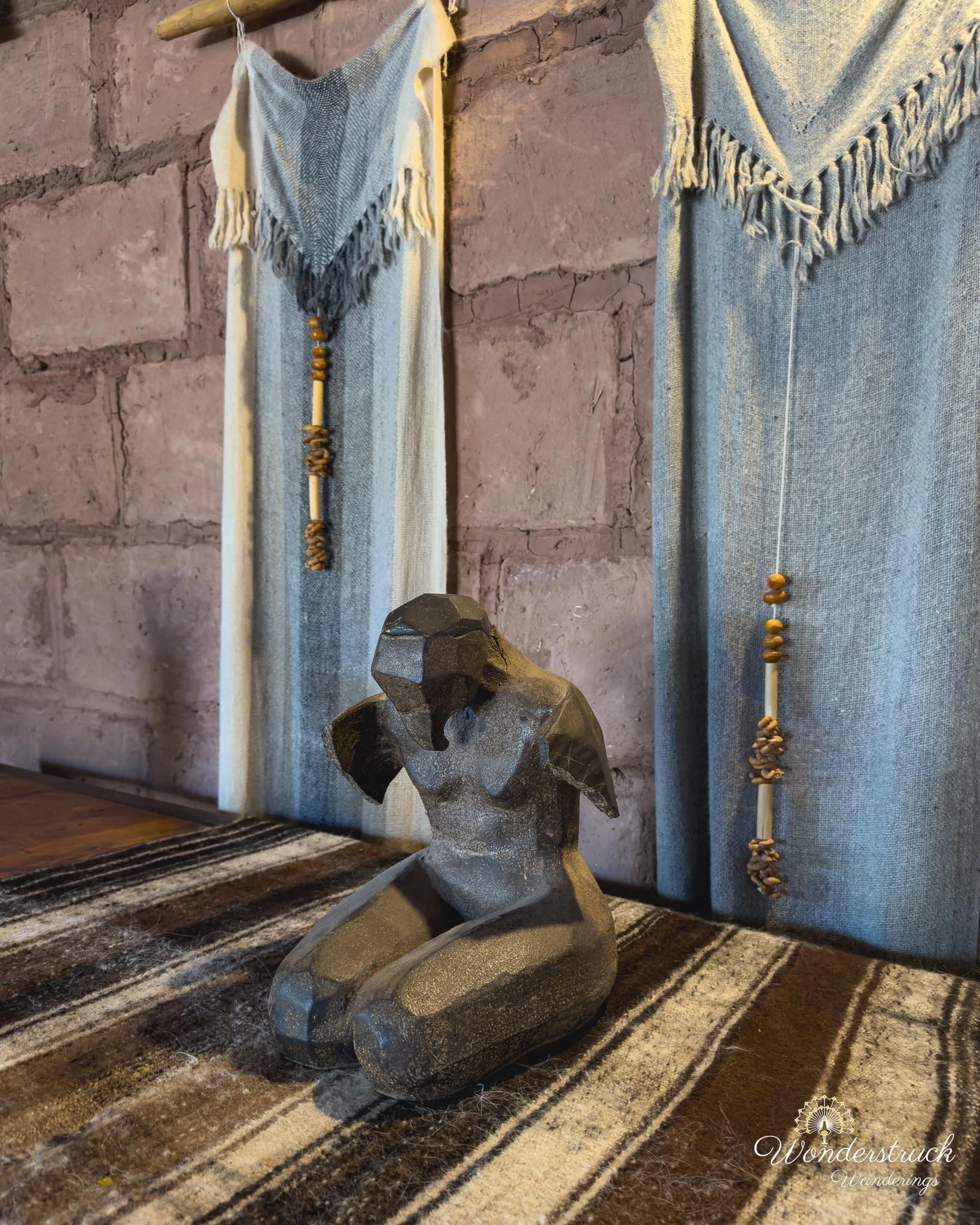
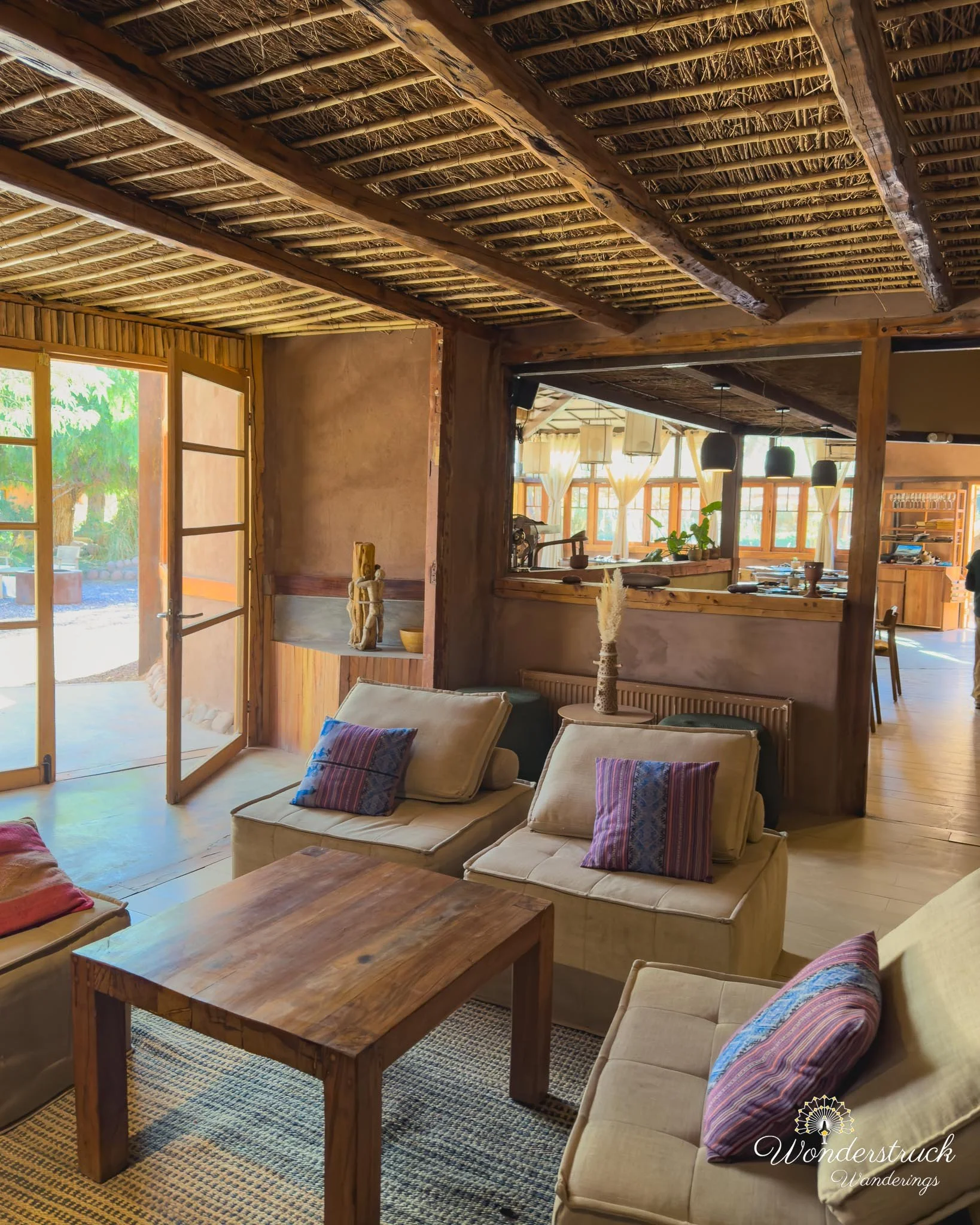
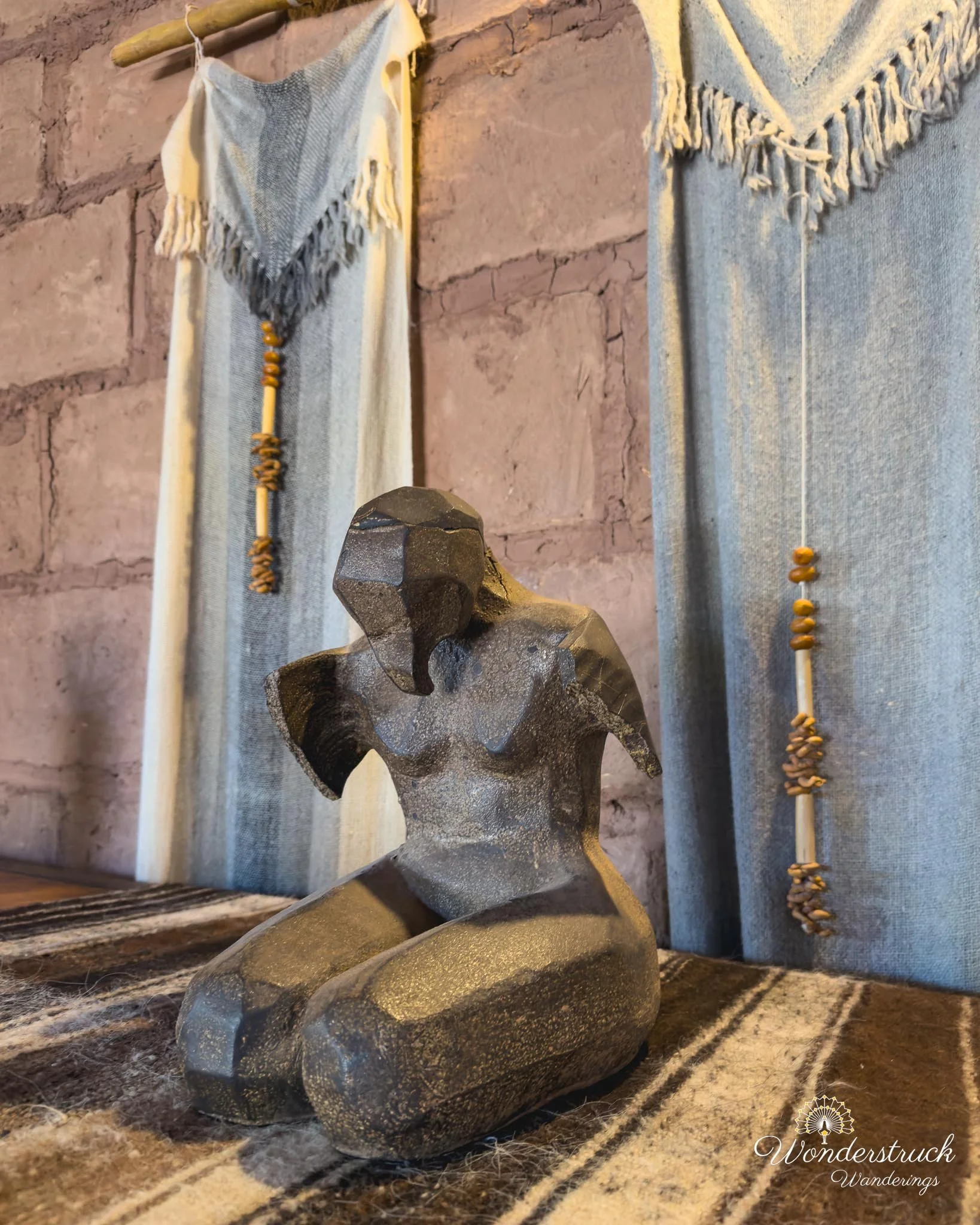
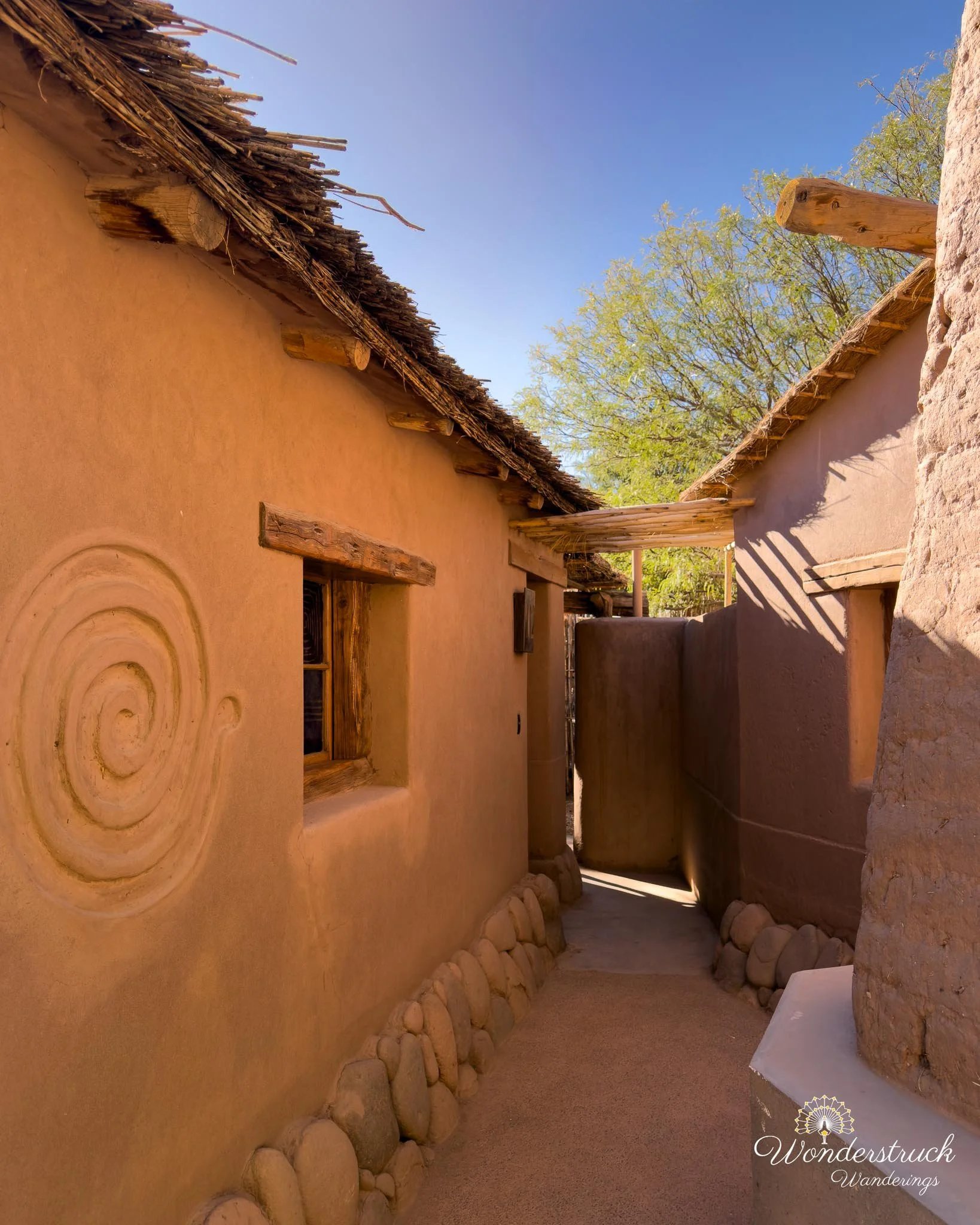
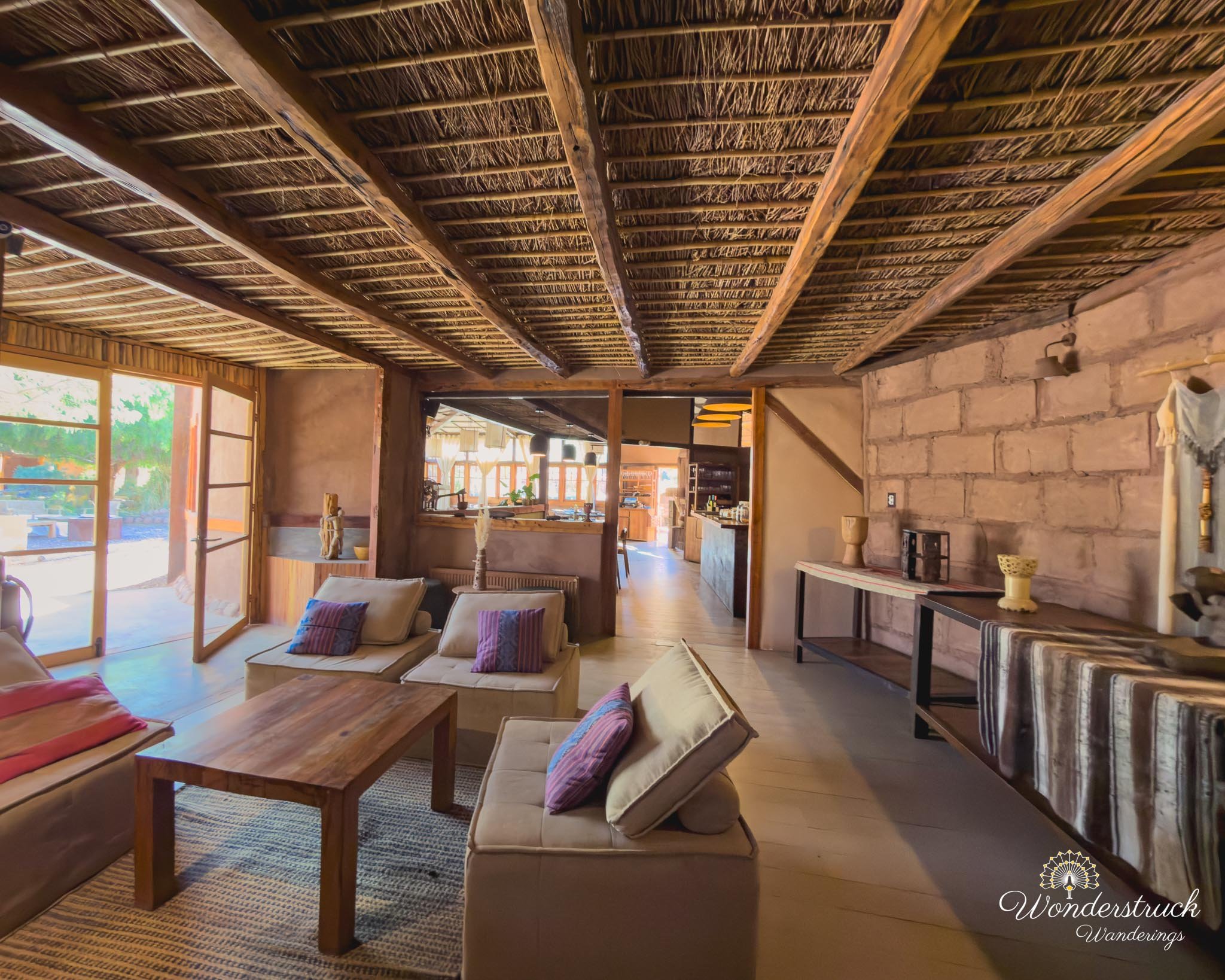
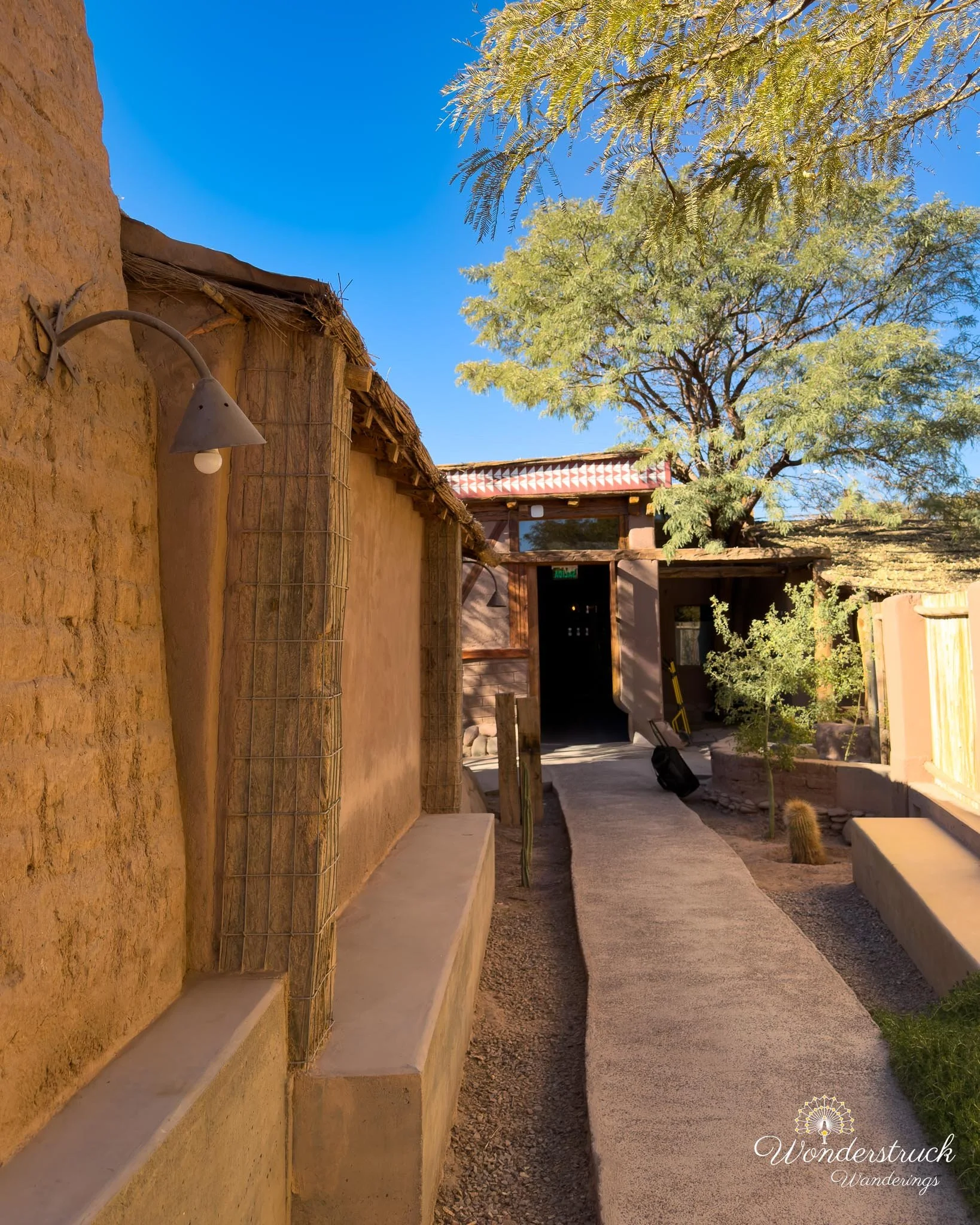
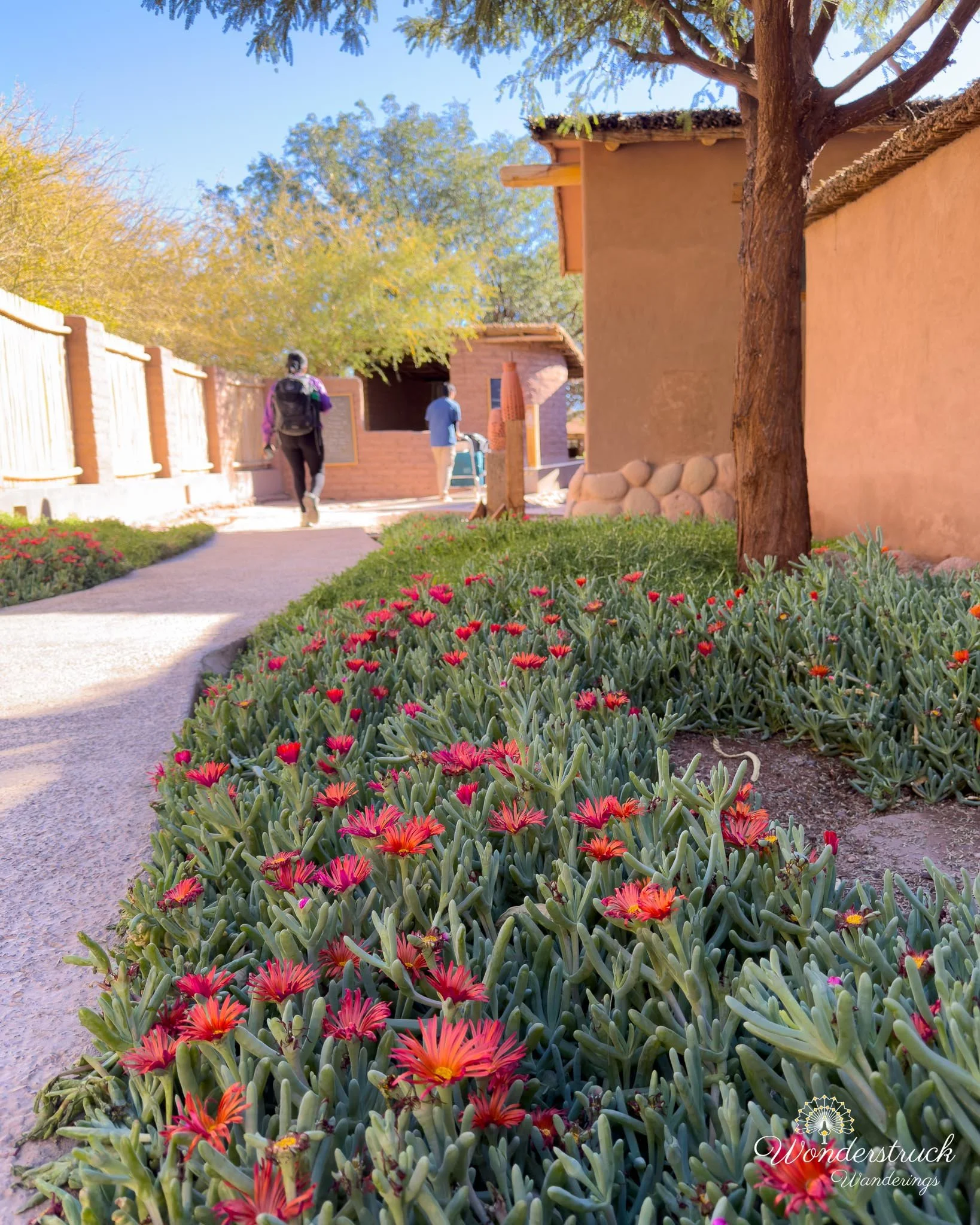
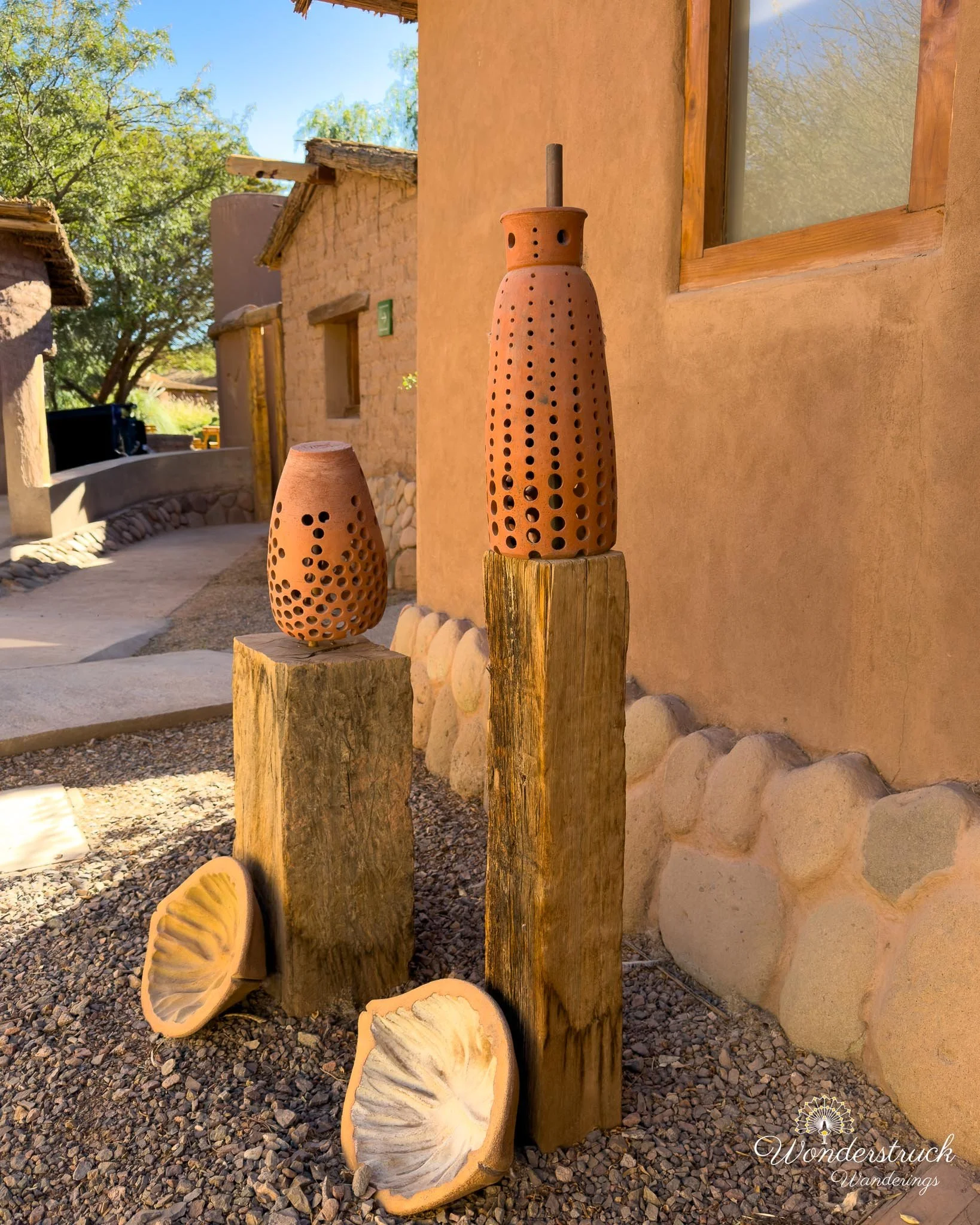
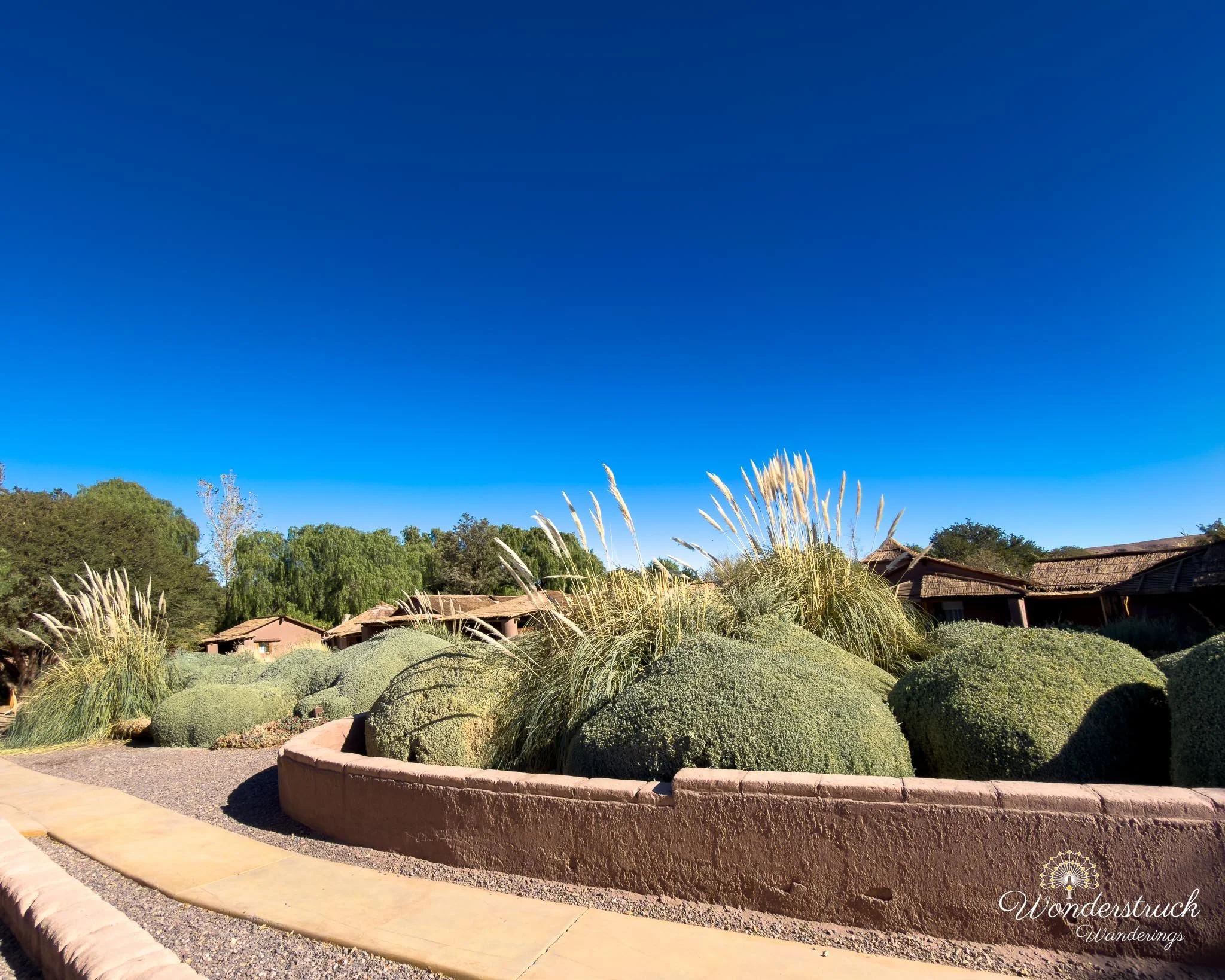
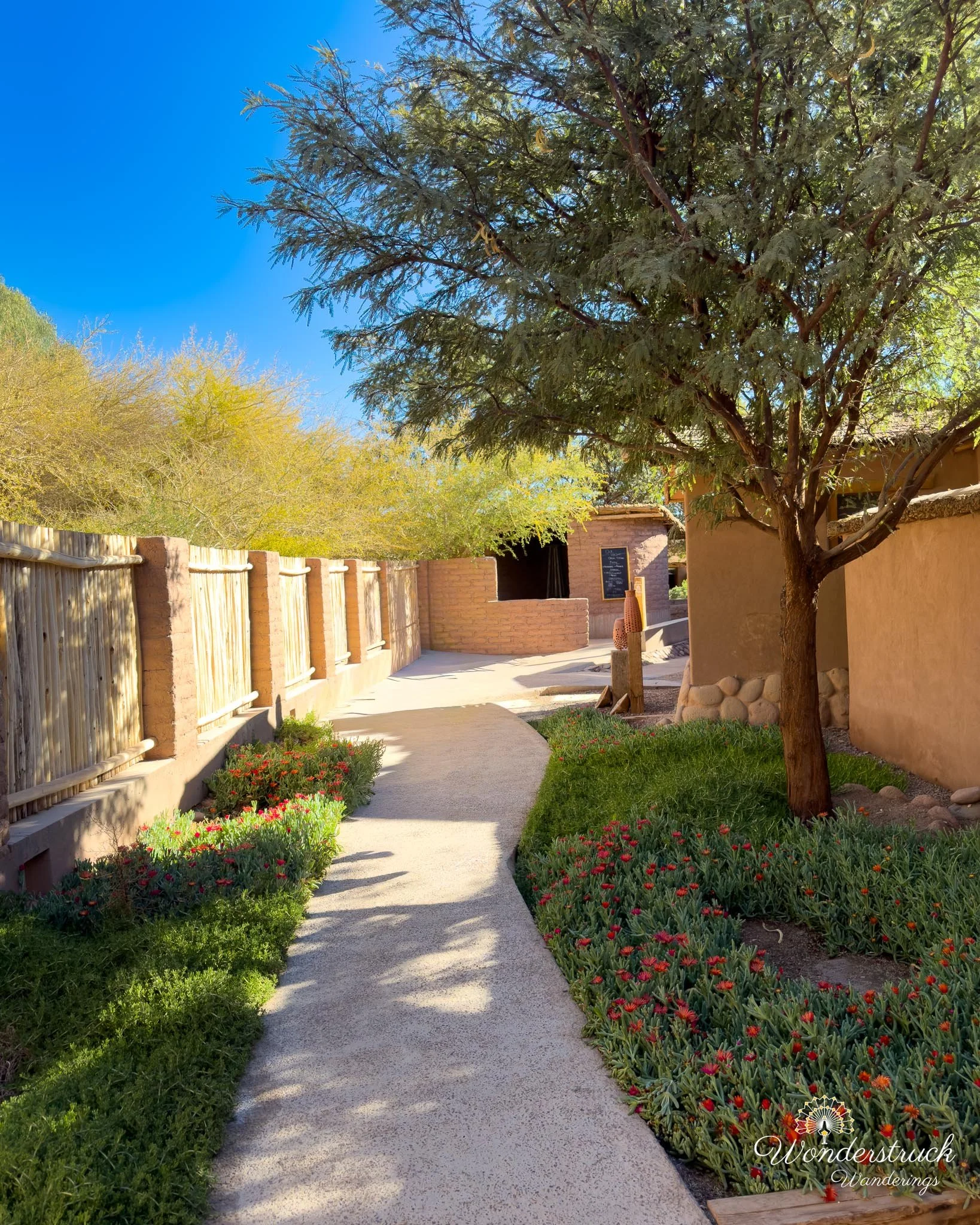
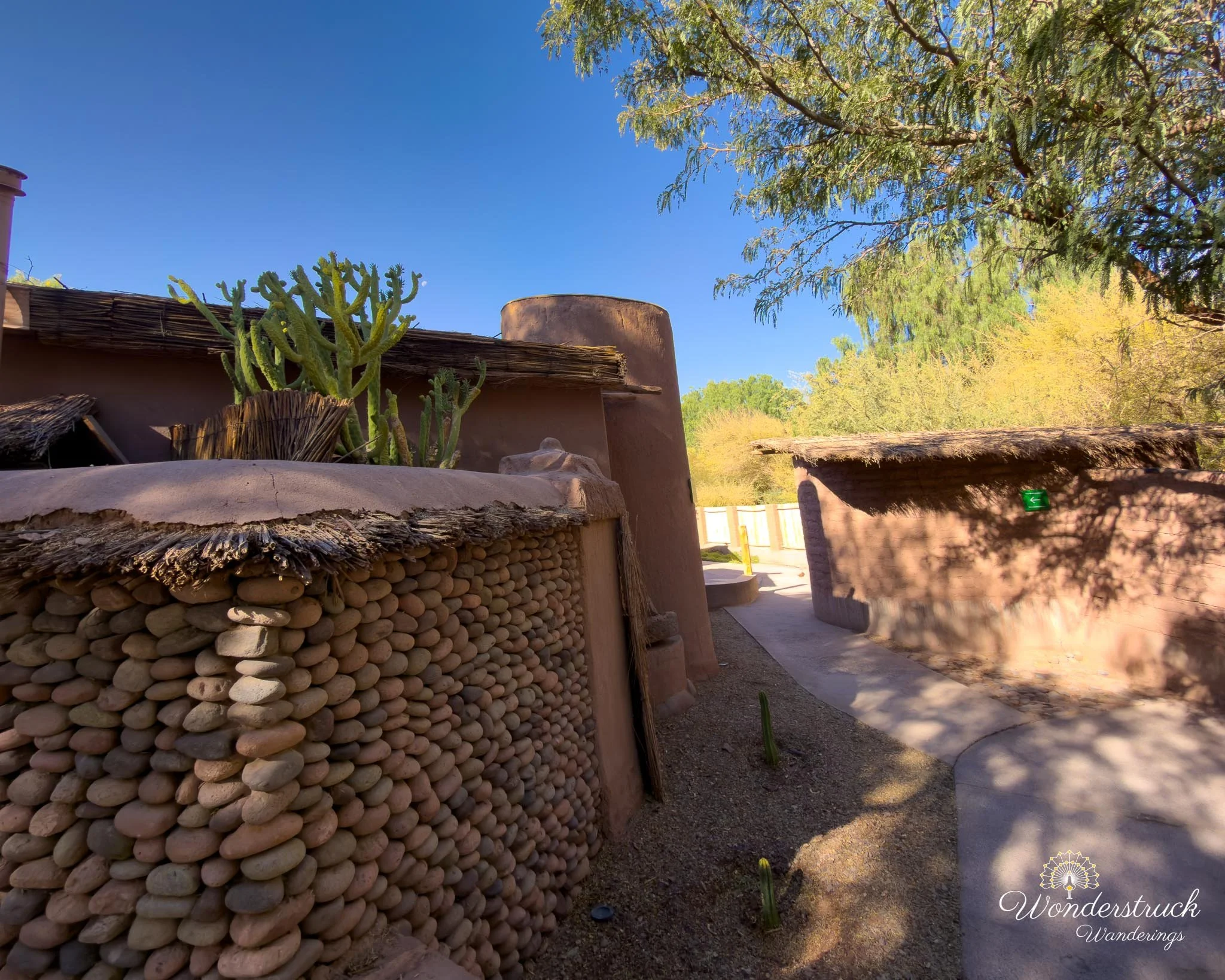
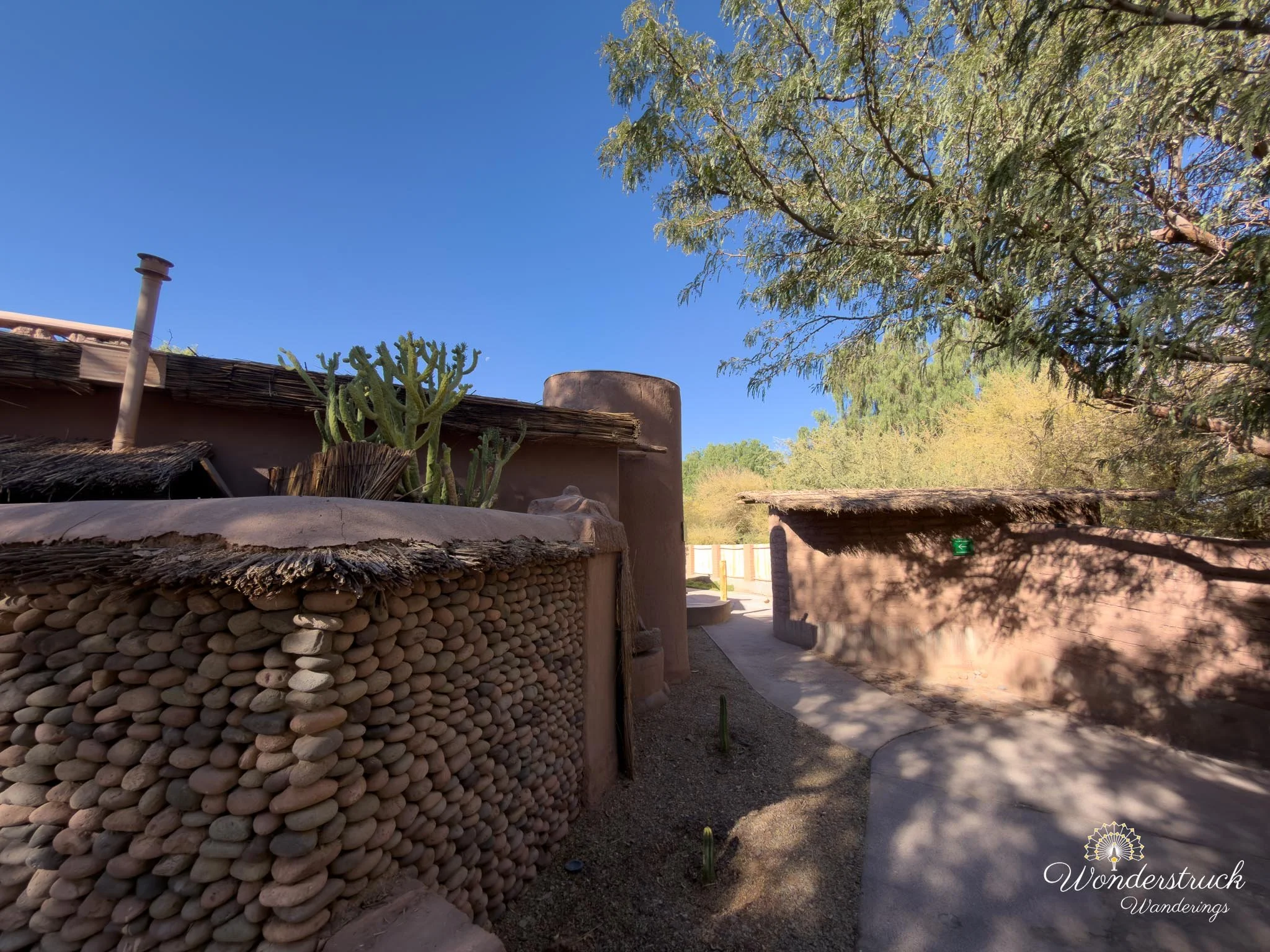
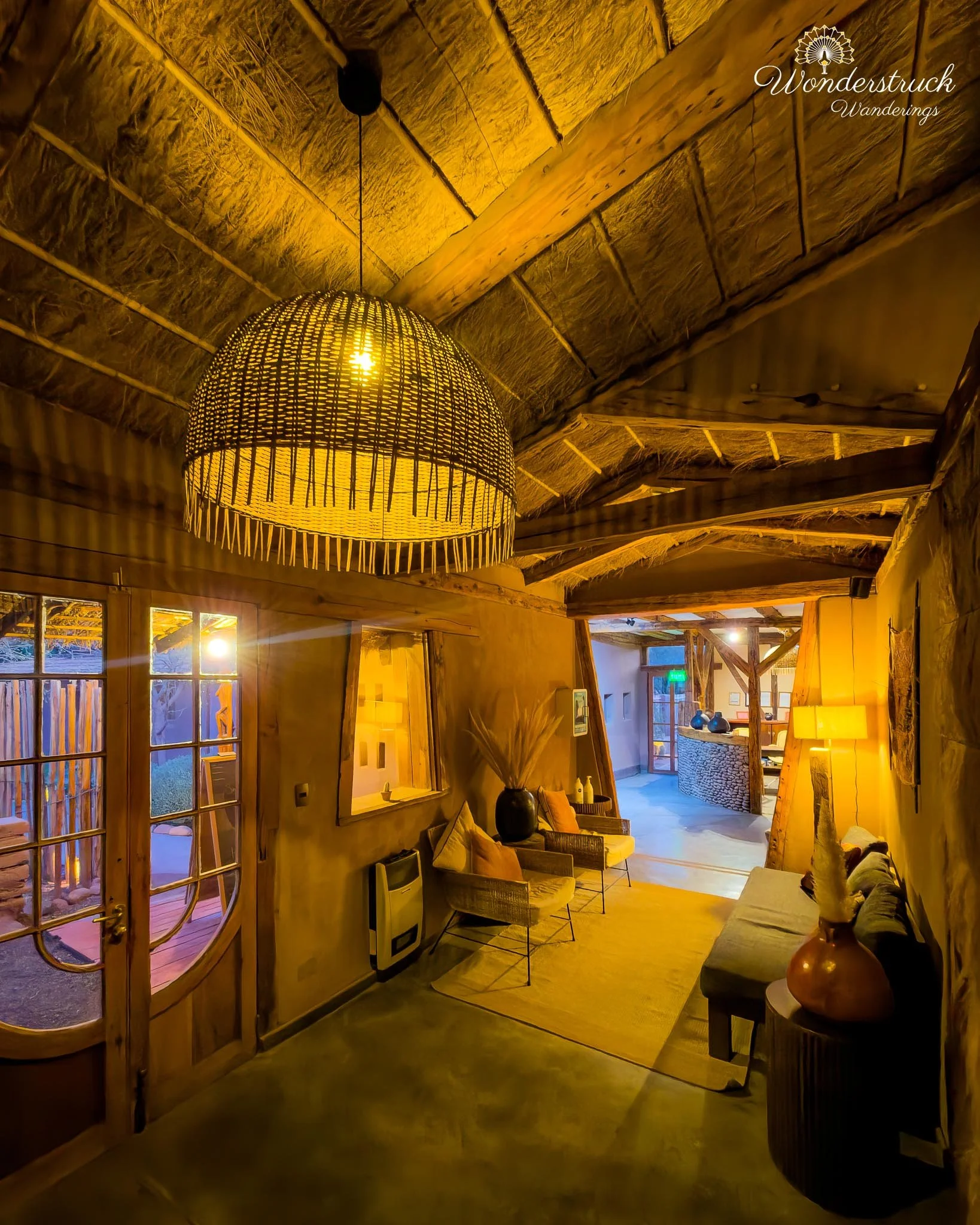
Eventually, San Pedro de Atacama came into view. After the wide emptiness of the road, the town felt almost sudden: low adobe-style buildings, dusty streets, tour agencies, restaurants, small shops, backpackers, rental cars, dogs, cyclists, and that unmistakable energy of a desert base town where everyone is either coming from an excursion or getting ready for the next one. We checked into Our Habitas Atacama, our home for the next five nights. The hotel sat within easy walking distance of town but felt just removed enough from the busiest streets, which ended up being the right balance for us. We could walk to dinner, shops, and the town center when we wanted, but still return to a quieter retreat at night.Our Habitas Atacama is a relatively new addition to San Pedro’s hotel scene, opened in 2023 as part of the global Our Habitas collection. It was designed as a desert retreat rather than a conventional resort, with 51 rooms, local textiles and furnishings, a pool, wellness spaces, and communal areas meant to connect guests with the landscape and local culture. What we liked most was that the property did not try to overpower the Atacama. Its earthy tones, low-profile architecture, outdoor gathering areas, and regional design details blended into a landscape shaped by Andean culture, salt flats, volcanoes, geysers, hot springs, and some of the clearest skies in the world. After long days of driving, hiking, birding, and chasing desert light, it felt like a comfortable pause rather than a place competing with the desert itself.
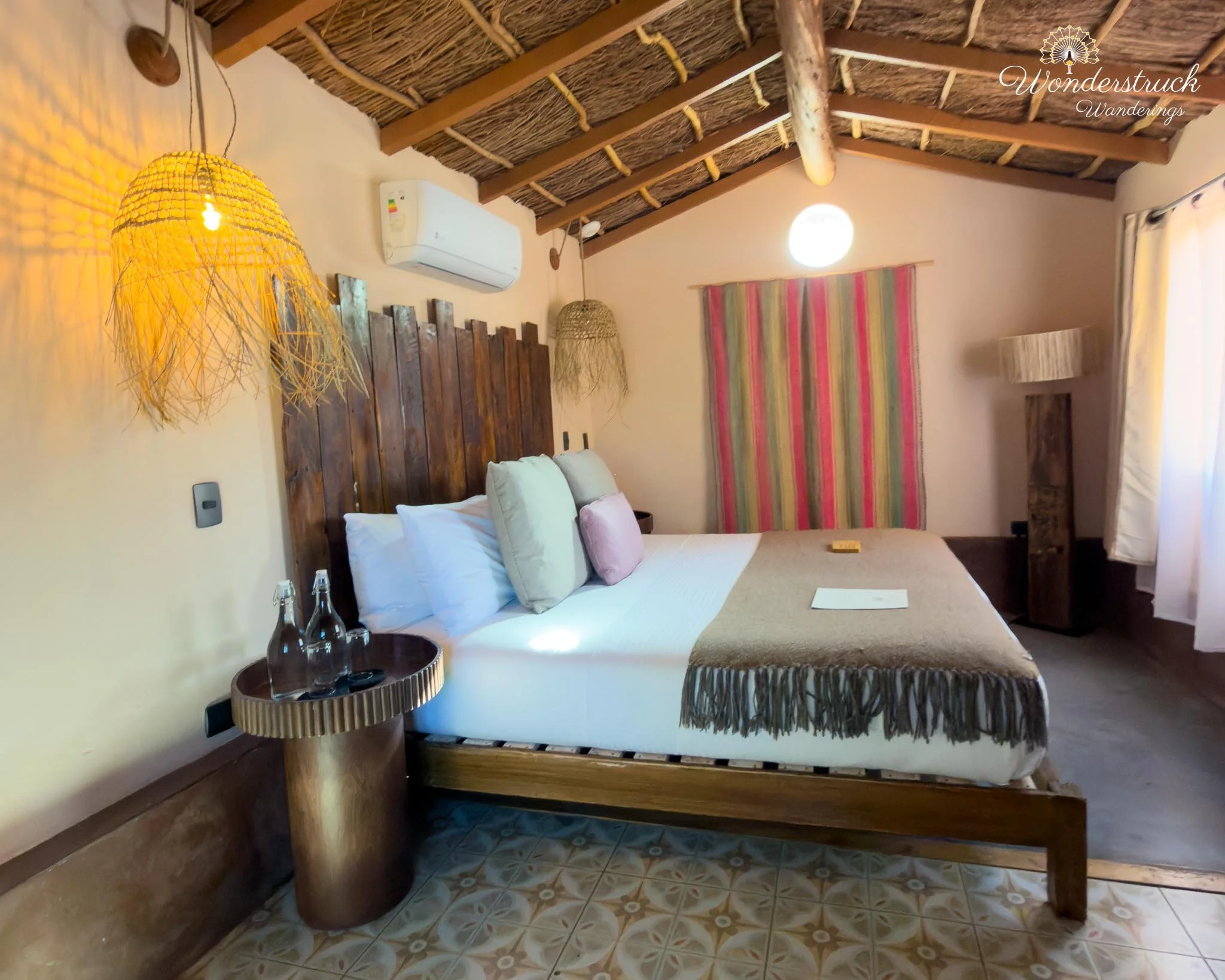
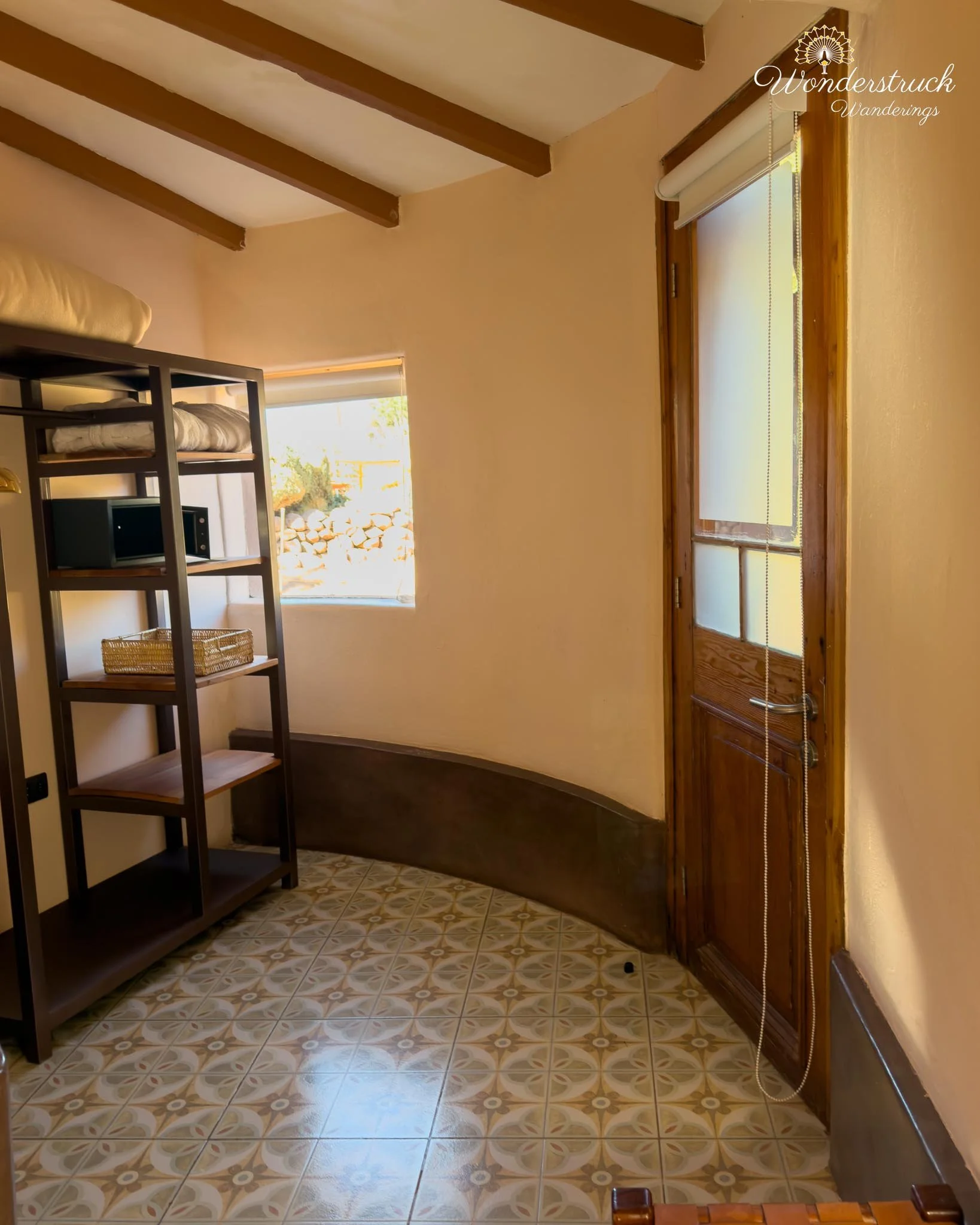
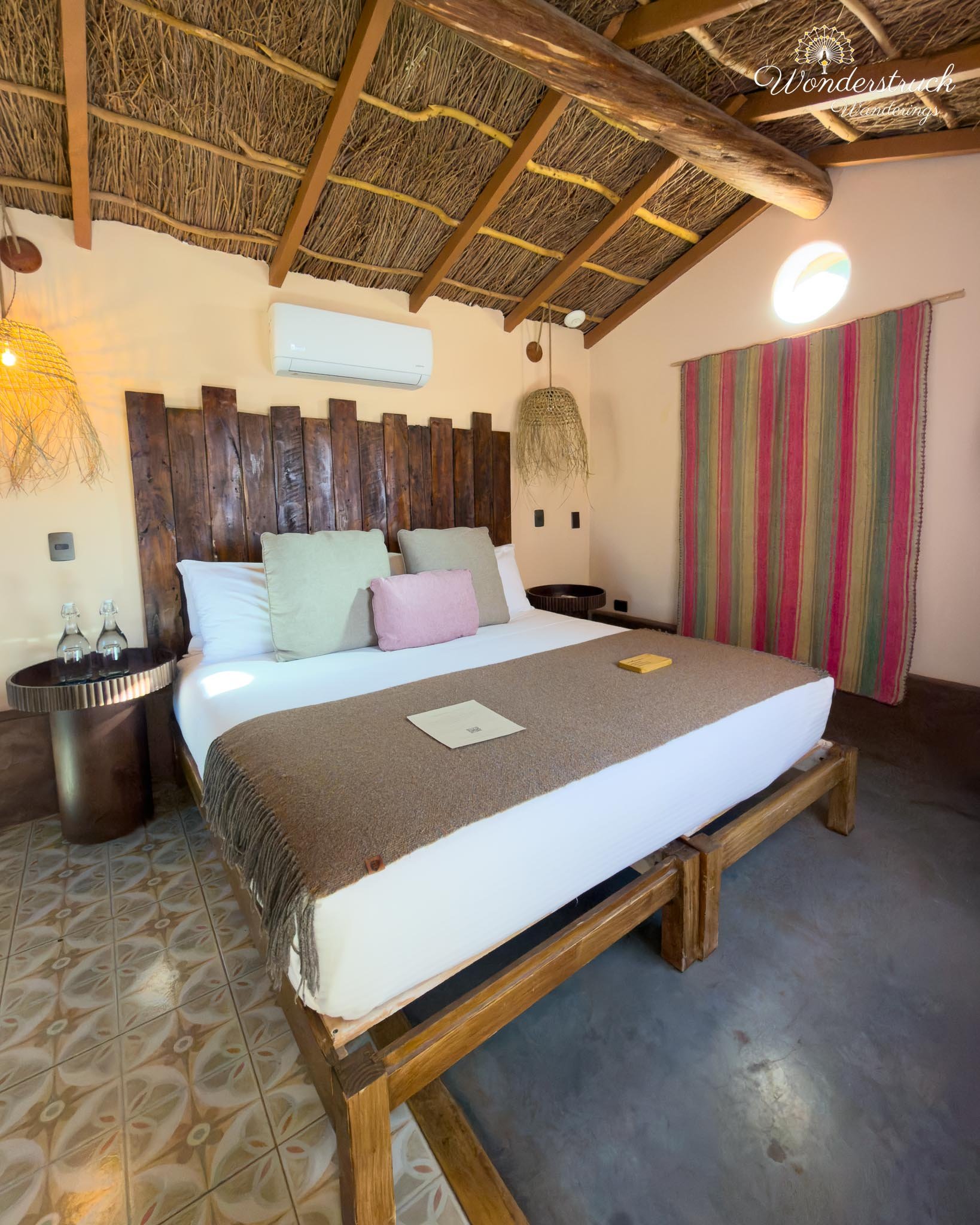
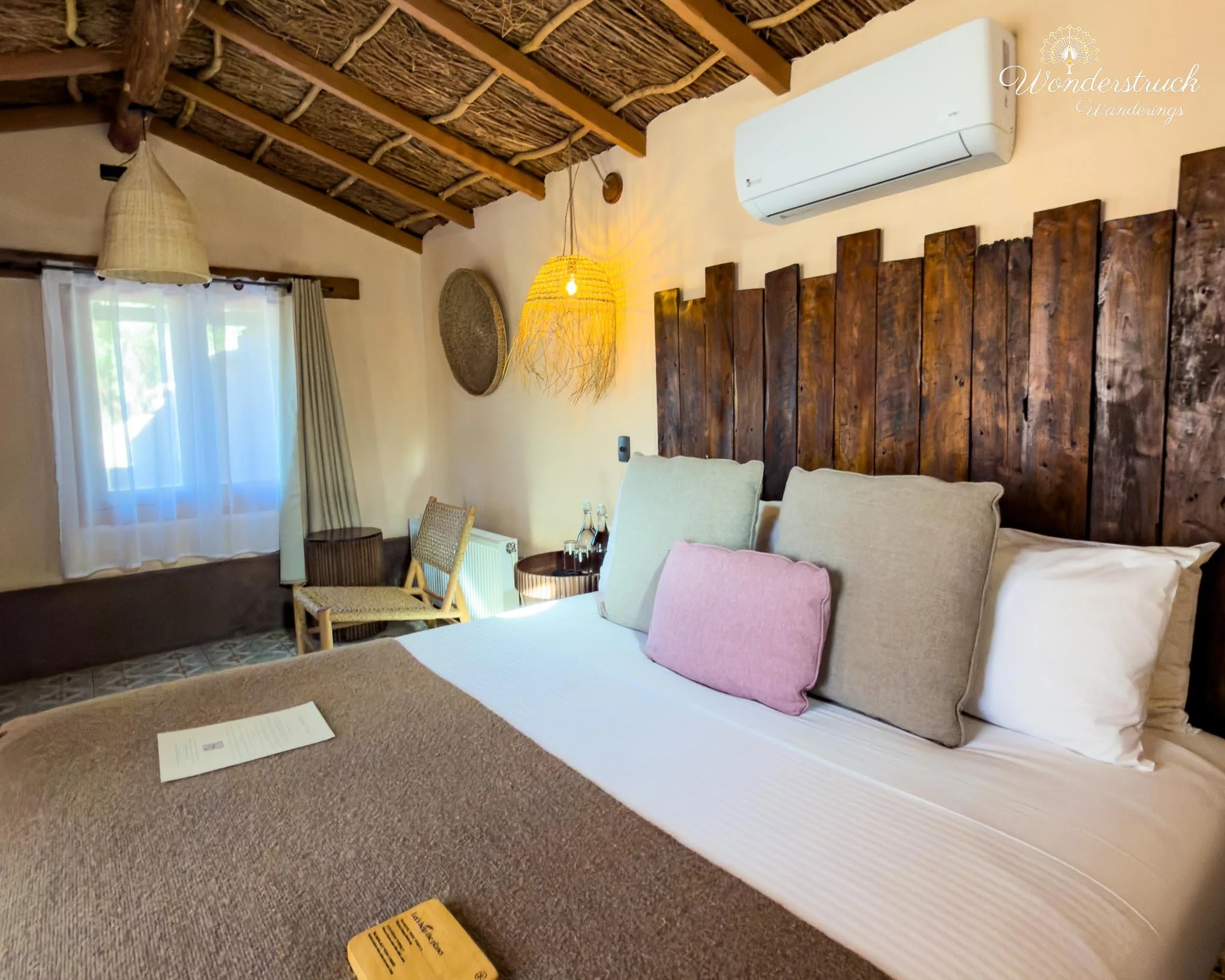
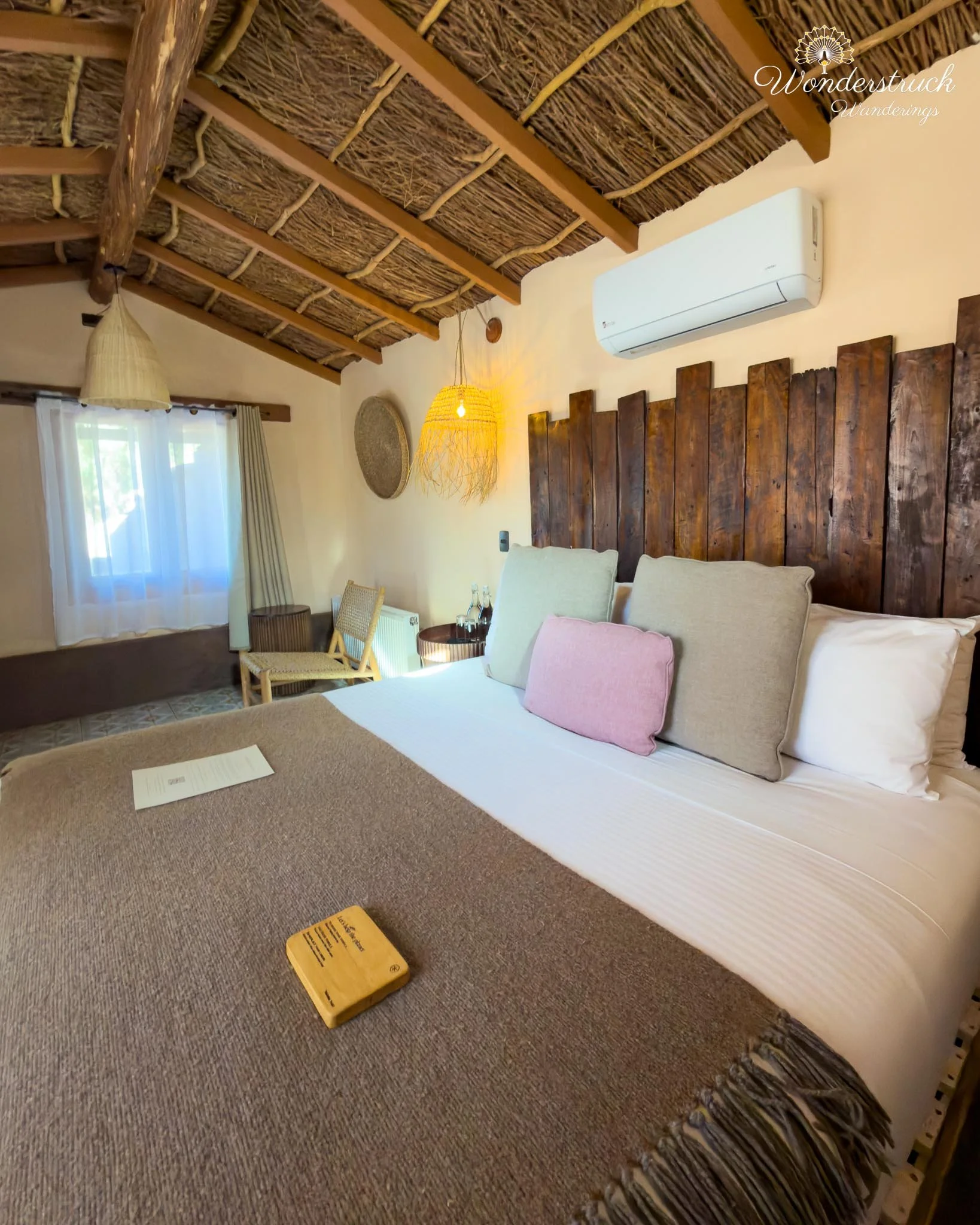
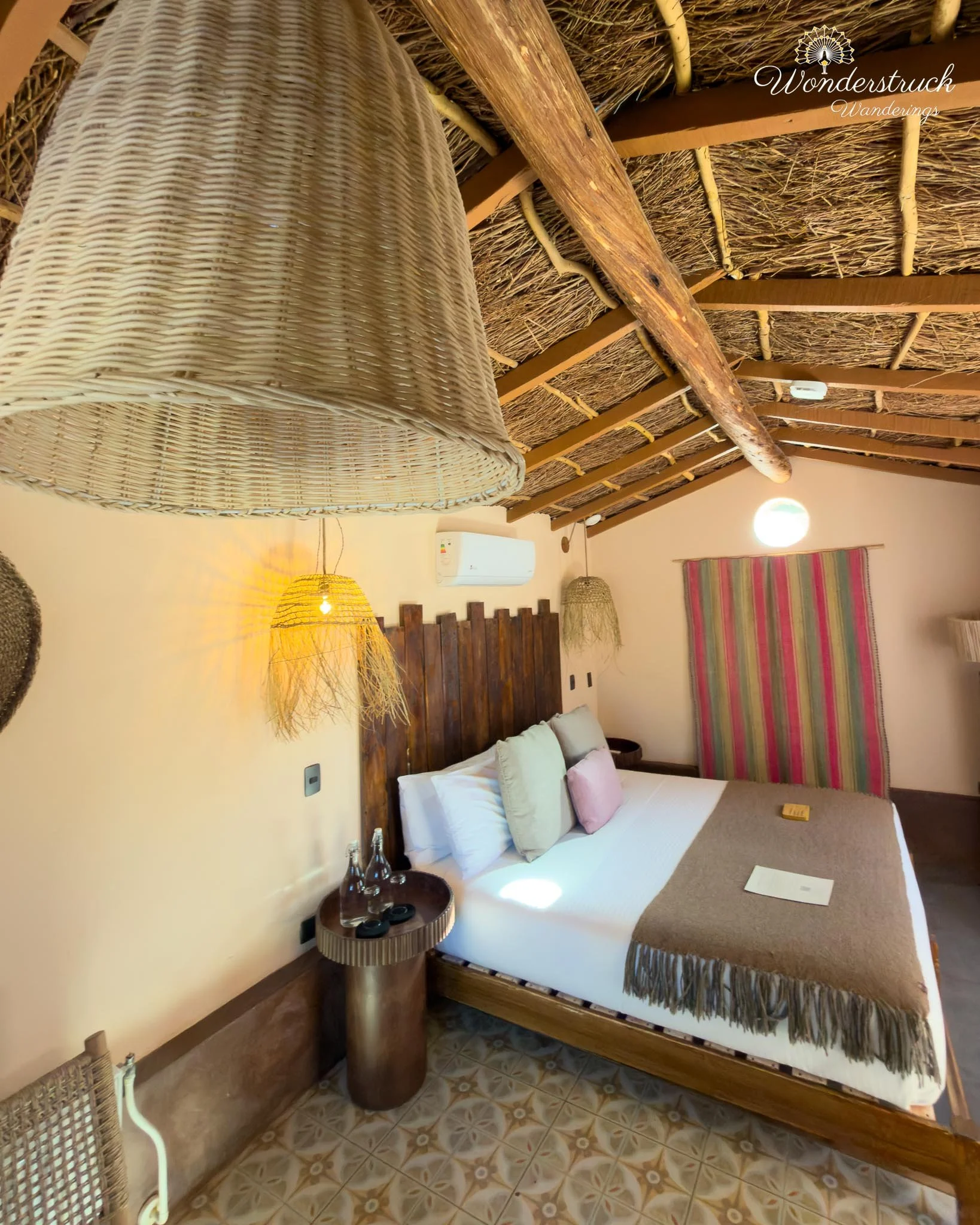
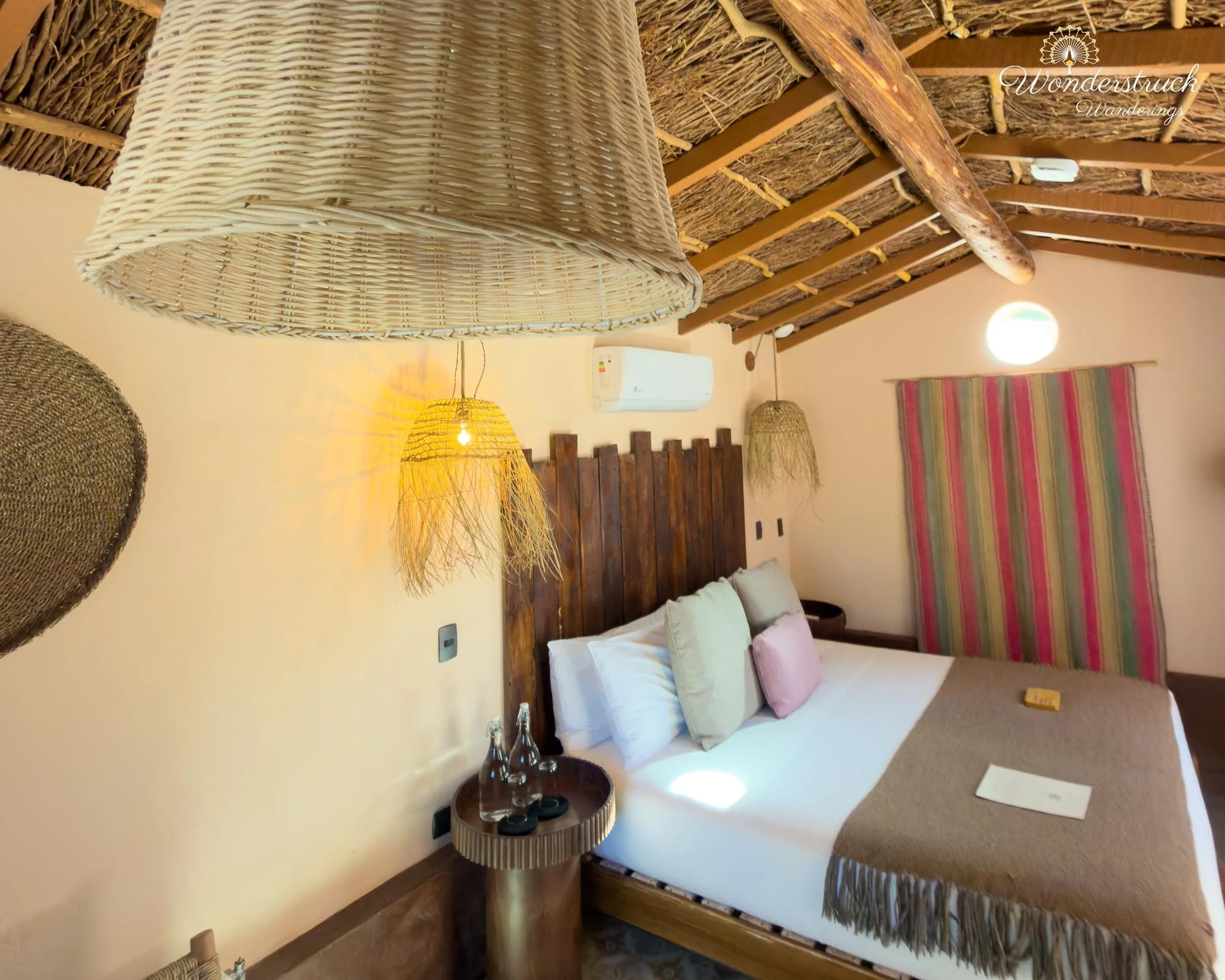
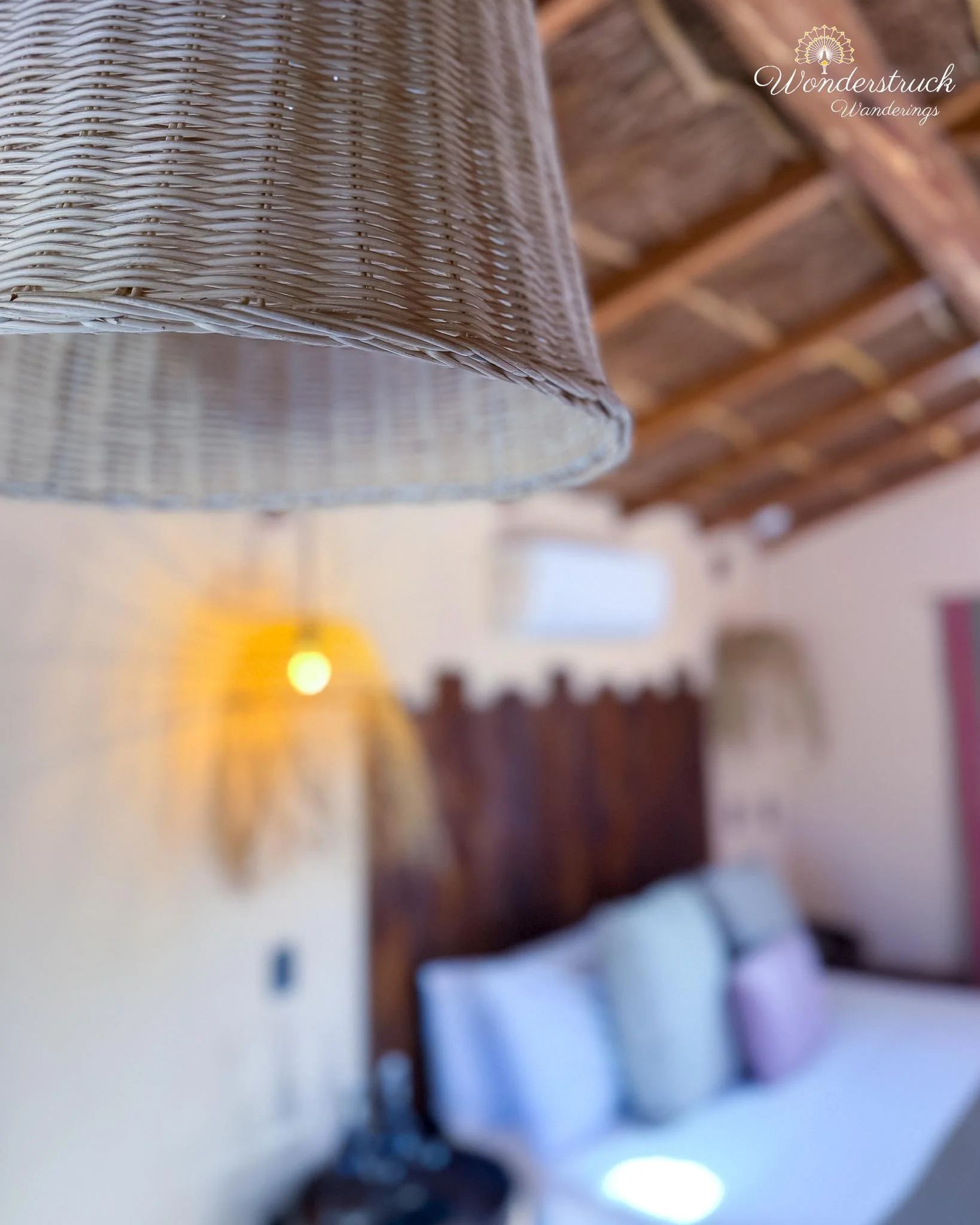
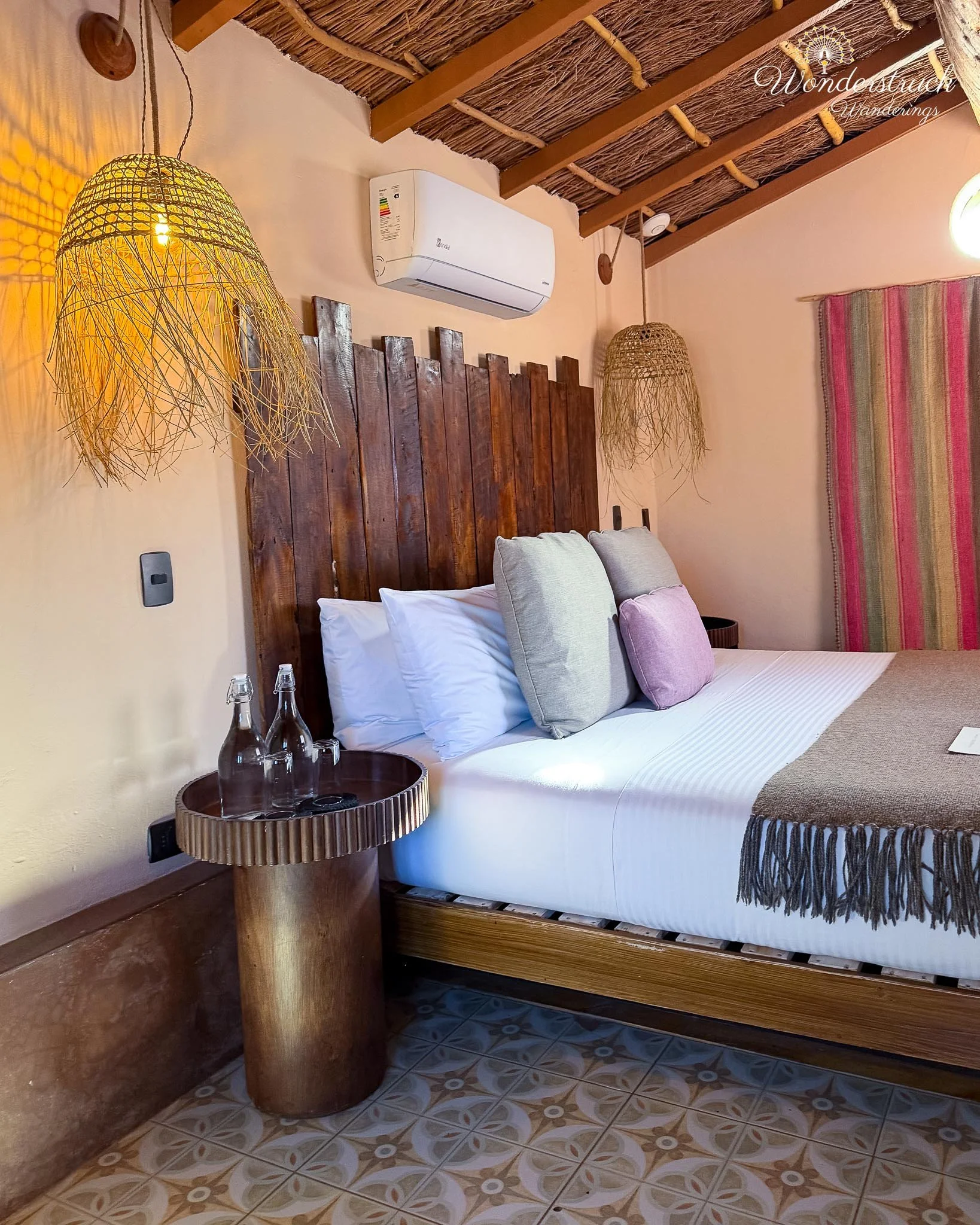
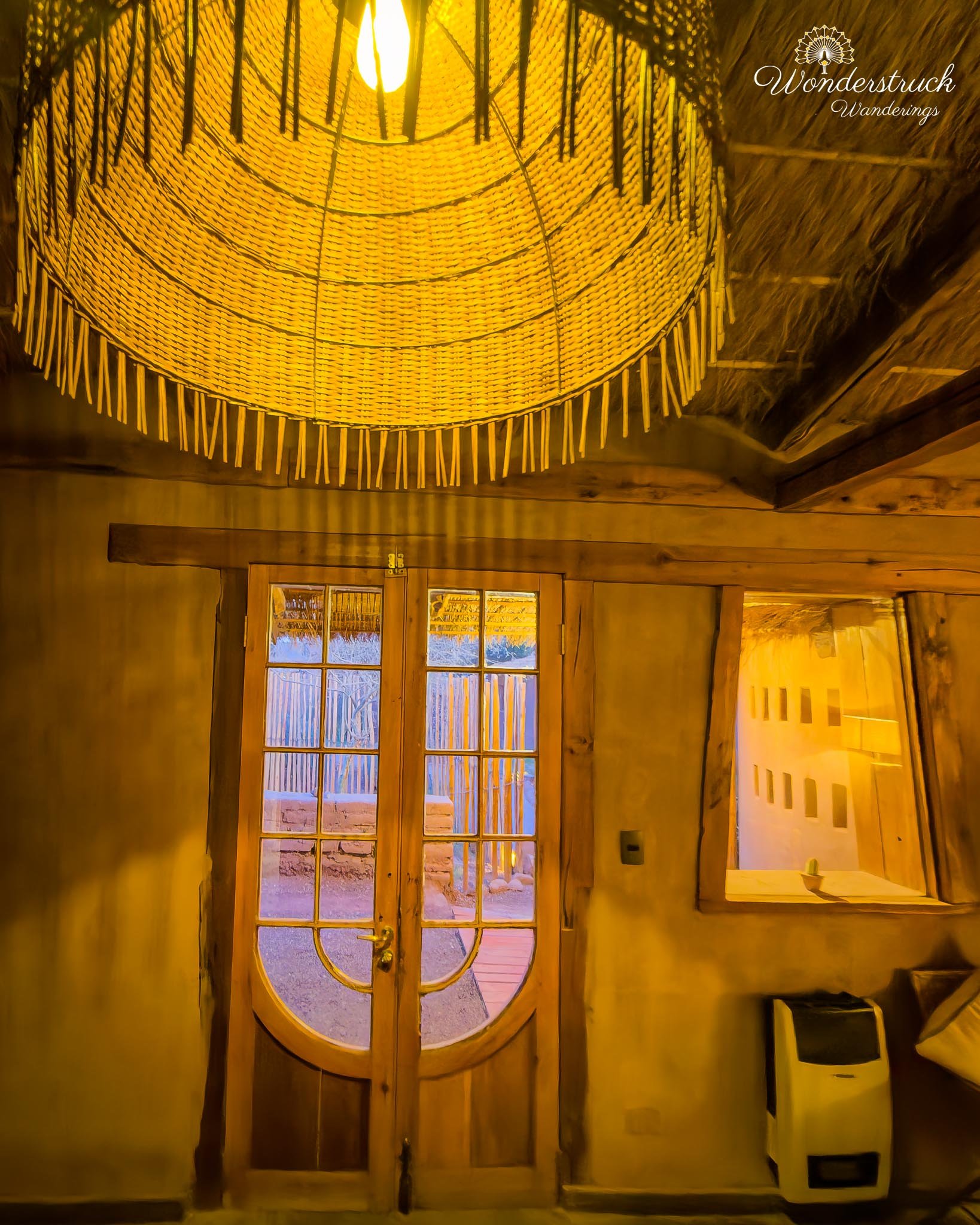
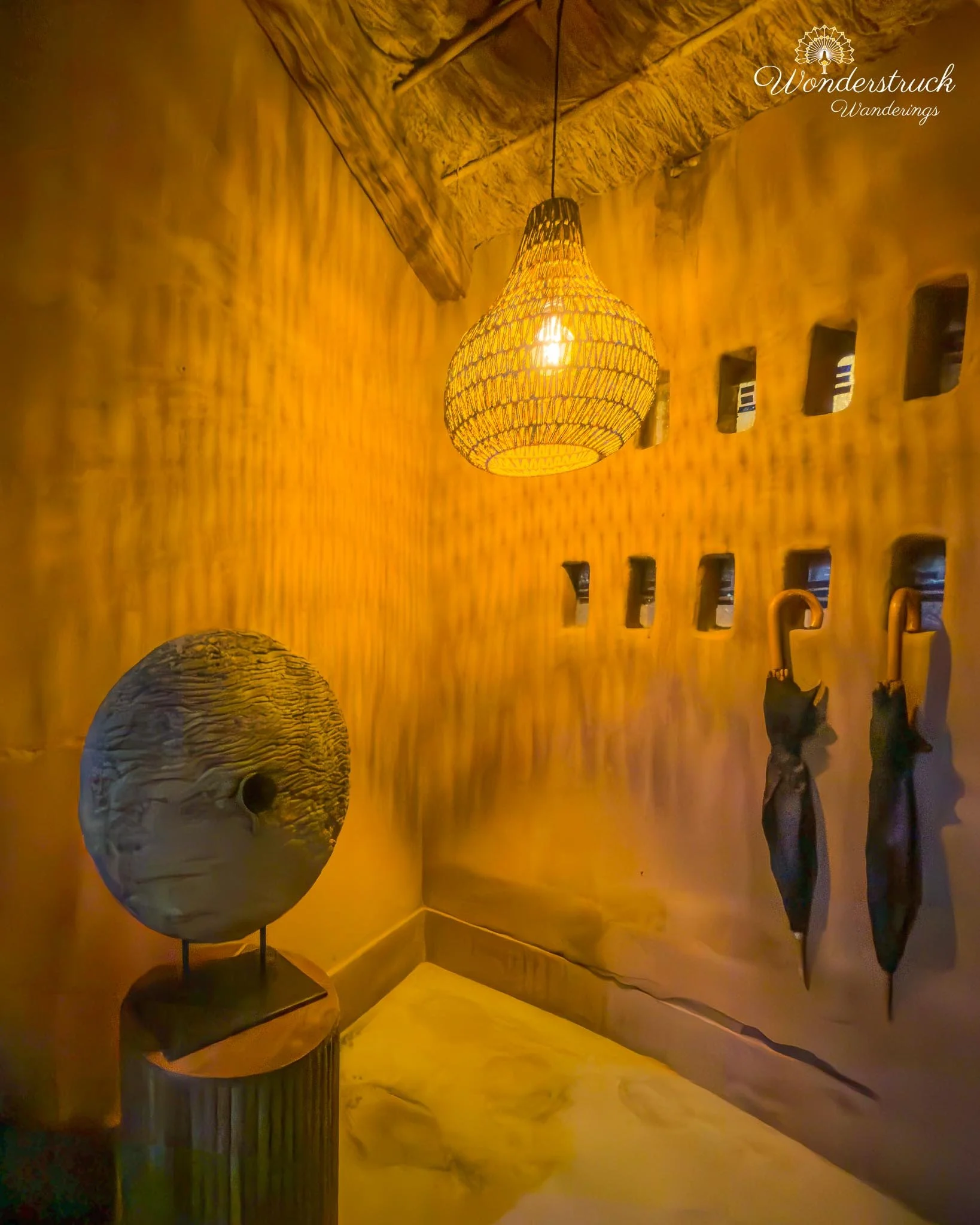
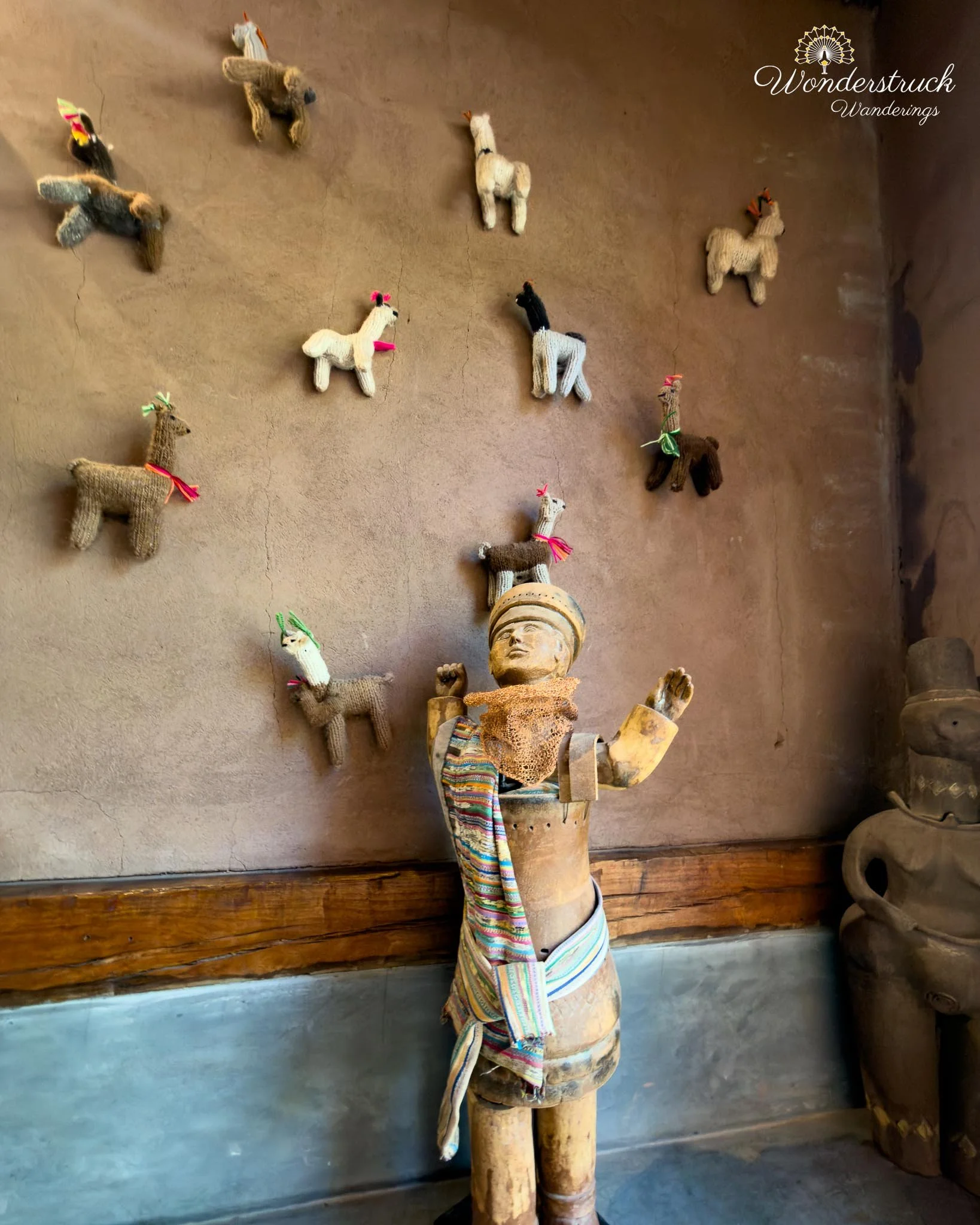
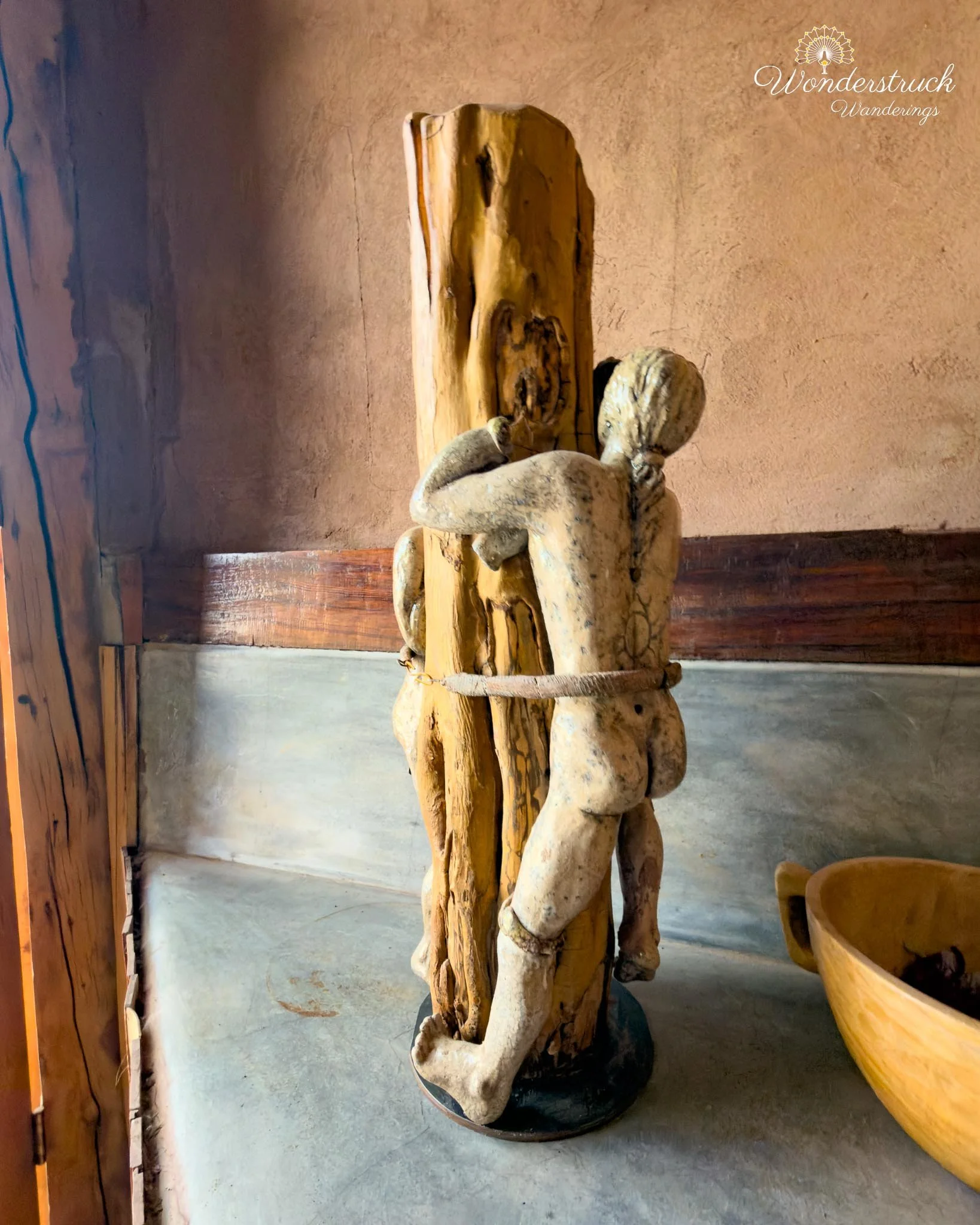
Our room felt very much in tune with the Atacama setting , like many places in the desert, it used an adobe-style construction and natural materials that helped it blend into the landscape rather than stand apart from it. Inside, the palette leaned neutral, so the texture did most of the work—woven elements, handmade details, and a few colorful pieces gave it character without making it feel overly decorated. Our Adventurer room was not one of those oversized rooms you book for the room itself, but it was thoughtfully laid out. The main door opened into a short hallway, with the bathroom and shower on the left and the sleeping area on the right, which made it feel more organized than a room that opens straight into the bed. That hallway also gave us a practical place to keep our luggage and camera gear out of the way, and at the far end there was a door to a small balcony, though we hardly used it. One thing we noticed is that the rooms do not feel overly standardized, and that slightly individual layout made the stay feel less generic. For us, the room worked because it felt grounded in local materials and desert style, while still being simple and functional enough for a trip where we were out from sunrise to sunset most days.
Valle de la Luna: Reverse Route, Tres Marias, Piedra del Coyote, and Victoria Mine
After freshening up, we prepared for our first actual excursion: Valle de la Luna. We deliberately chose it for the first afternoon because it is near San Pedro and sits around the same altitude as town. After coming from Santiago and then Calama, we did not want to begin with one of the very high-altitude excursions. Acclimatization is not something to treat casually in this region as altitude sickness takes days to recover and will spoil everything if you are travelling for a short time. Valle de la Luna gave us a way to start seeing the desert while keeping the day manageable. We had purchased tickets online about a month in advance, though this is one of the places where tickets can often be bought on site depending on availability. When you check in, you go through an orientation where the staff explains the route, timing, and how they want visitors to move through the park. We understand why they do this. Valle de la Luna receives many visitors, the environment is fragile, and crowd flow matters. Still, our travel style is not very compatible with being told exactly where to go, how long to stay, and in what order to experience a landscape. We prefer to move with the light, against the crowds, and at our own pace. And in Valle de la Luna, light is the main culprit. There is so much of it that, for most of the day, it makes everything look flat. The formations are extraordinary, but under harsh afternoon sun, the desert can lose the depth and drama that make it so photogenic. Unless you are walking inside canyons or along shaded formations, the best photography window is really early morning or late afternoon. The challenge is that the main park hours do not perfectly align with the best late light, especially in the season we visited. The suggested route was to stop first at Duna Mayor, spend around thirty minutes at the first viewpoint, then move to the Victoria Mine viewpoint, continue to Tres Marias or Piedra del Coyote, and then exit toward the Ckari sector if staying for sunset. Instead, we decided to reverse the logic. Rather than stopping at the first point with everyone else, we drove to the far end first and planned to work backward. This gave us fewer crowds and, at least in theory, better sun positioning.
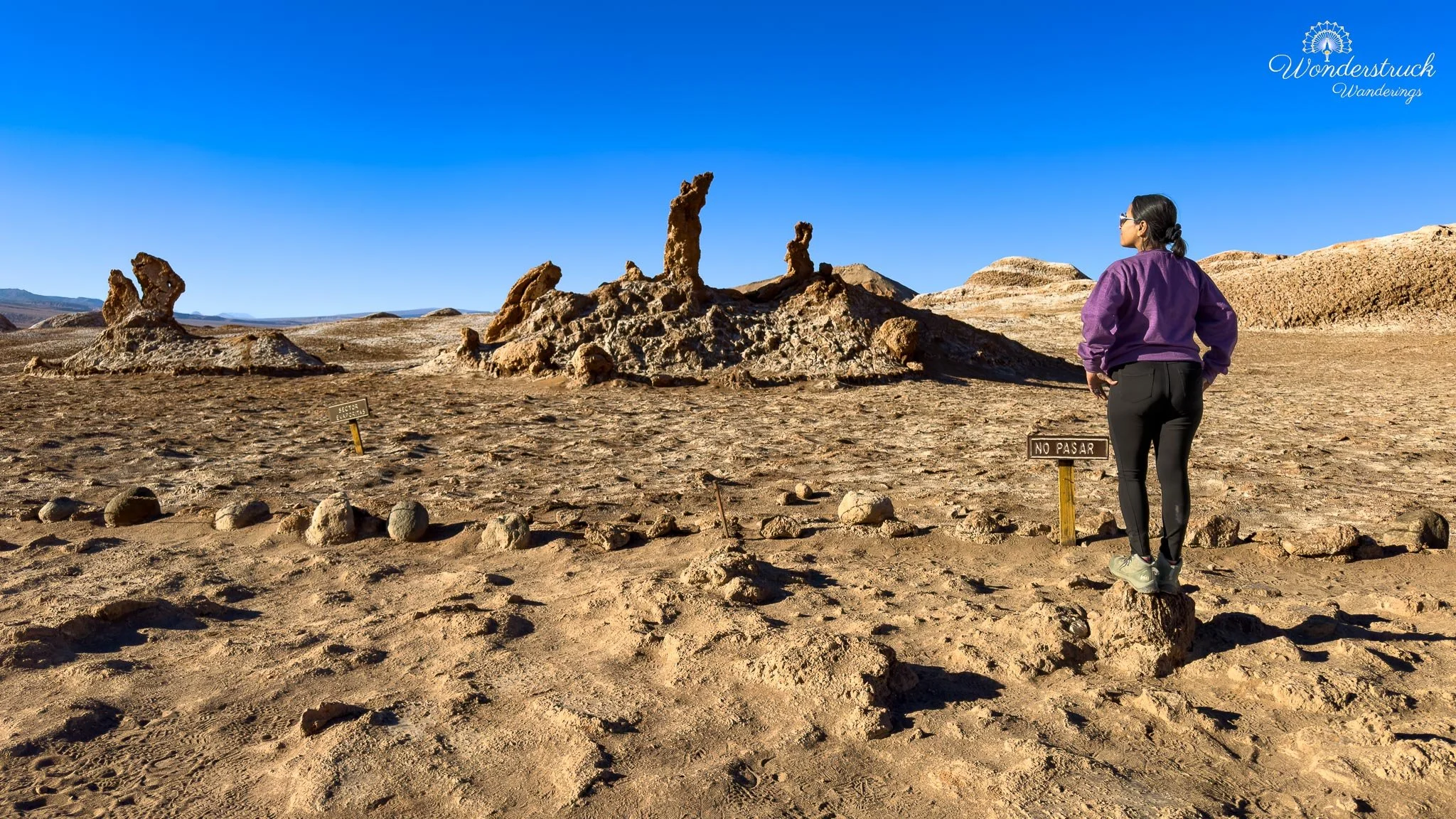
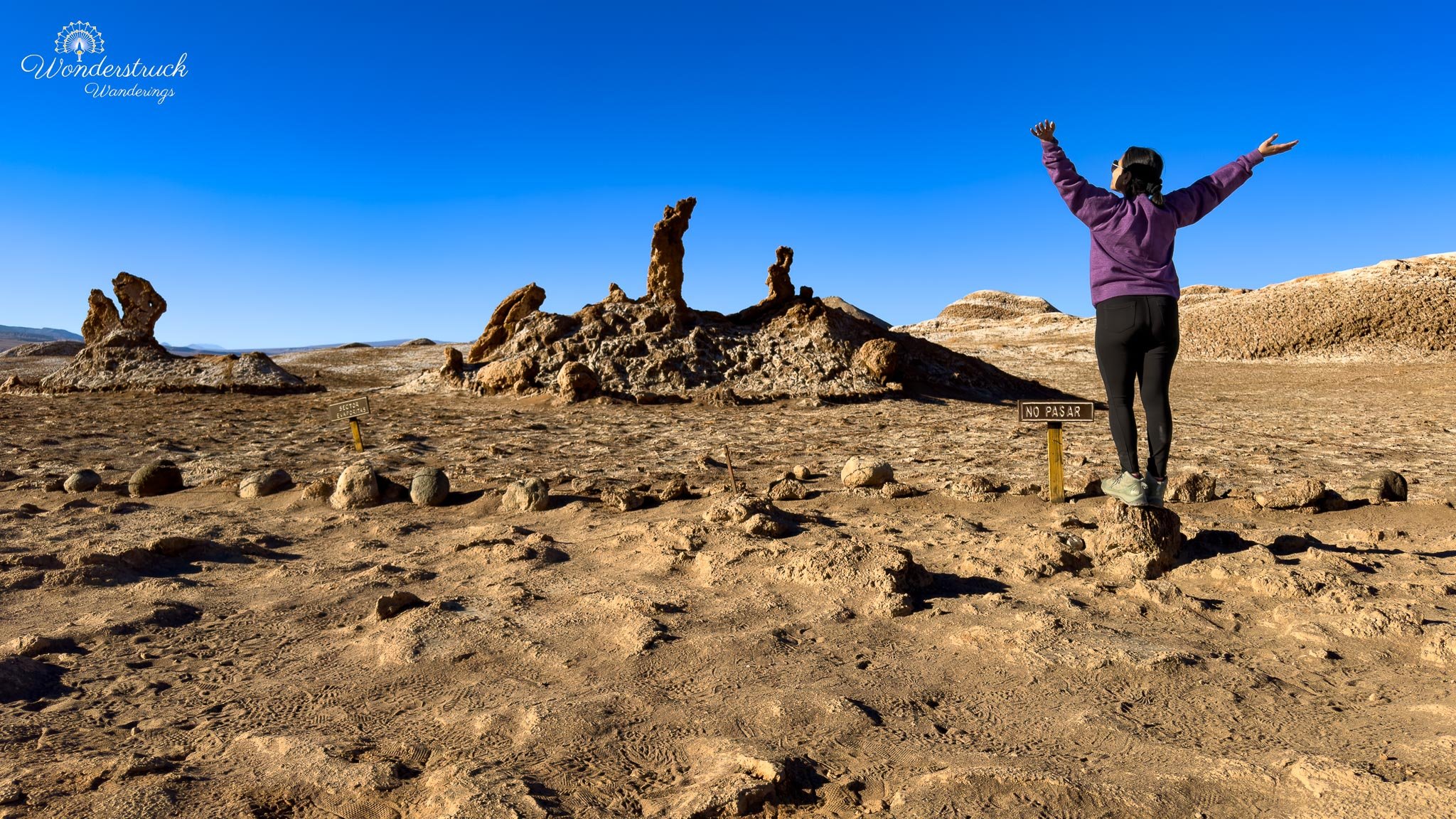
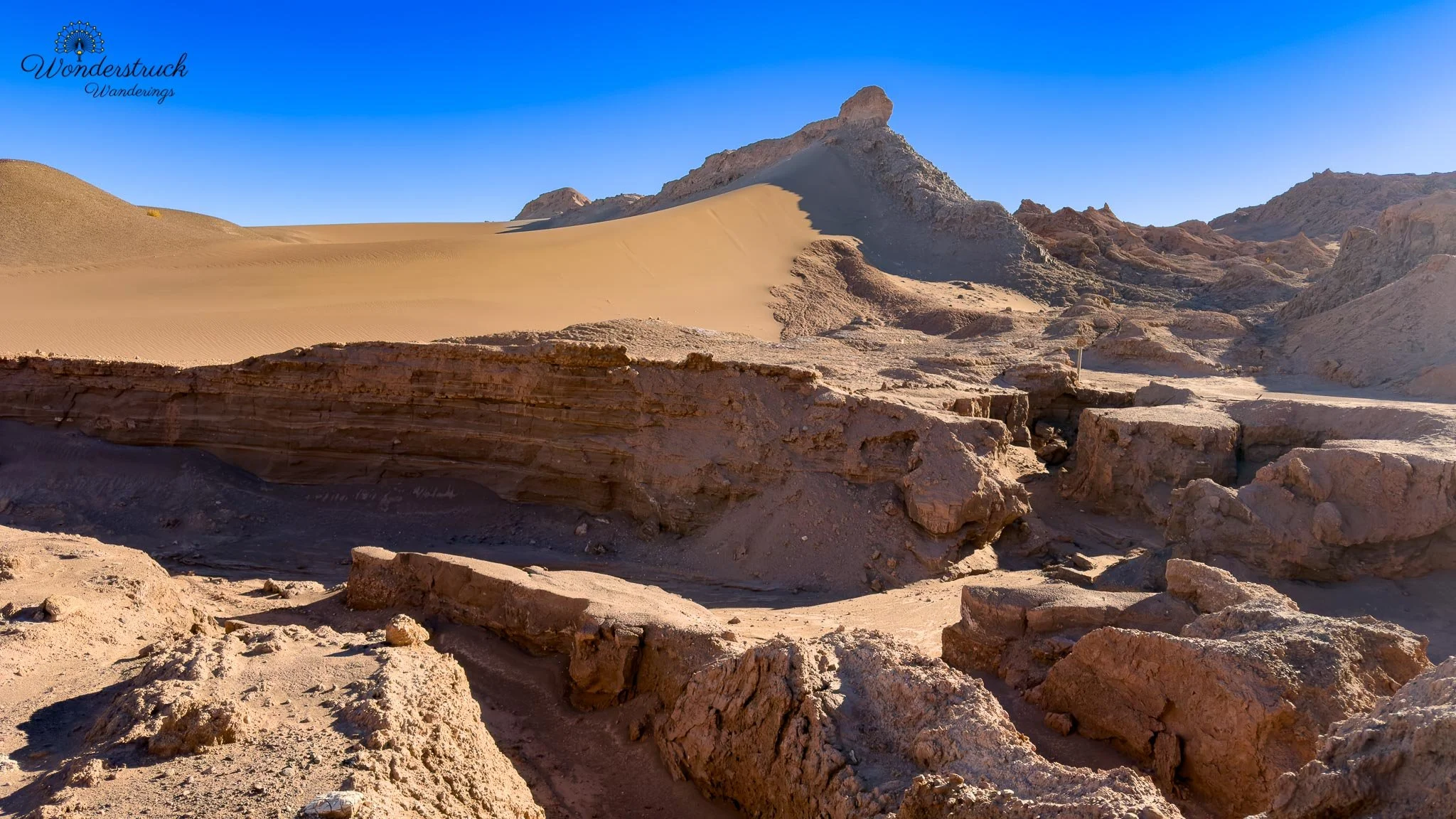
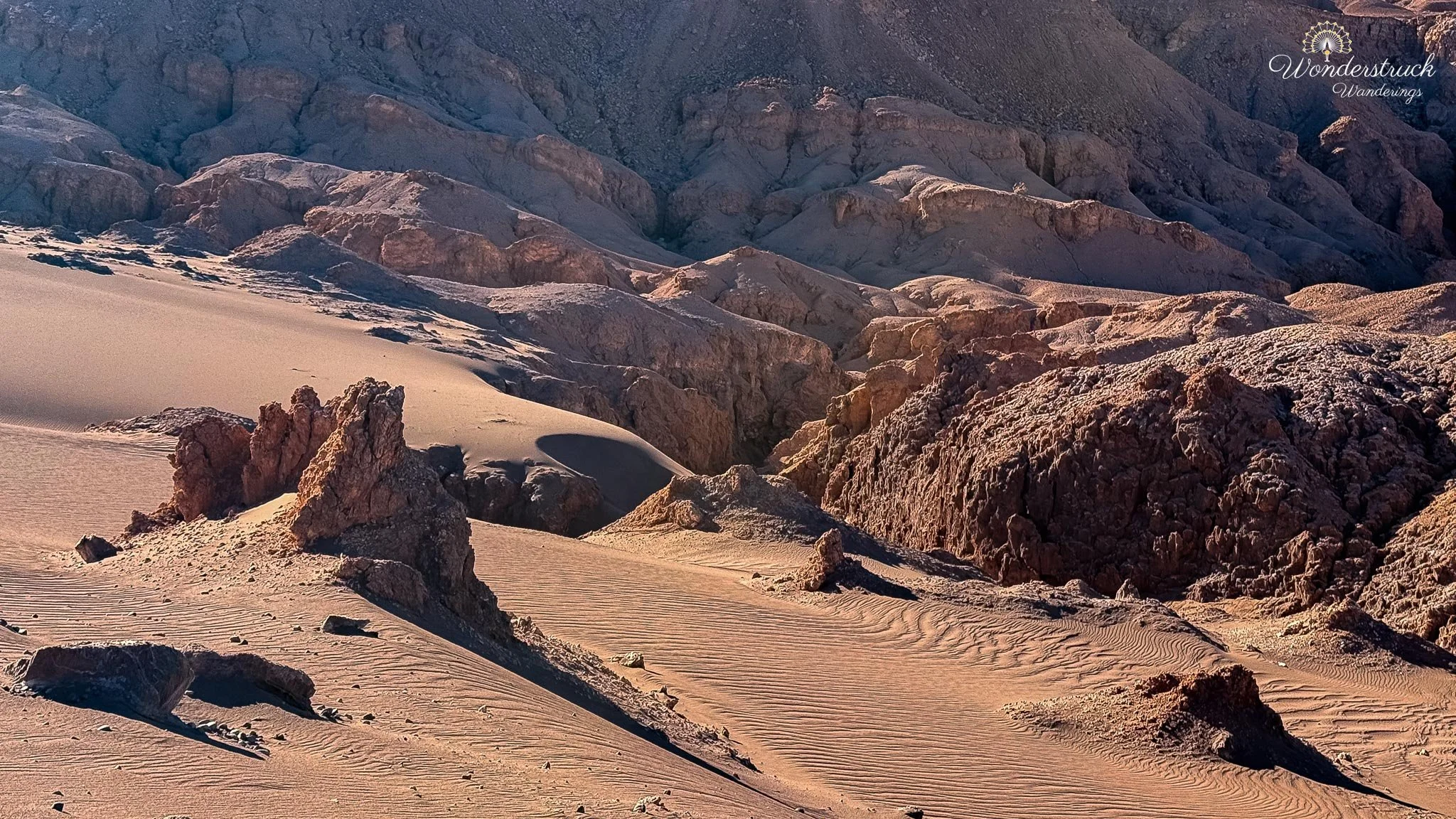
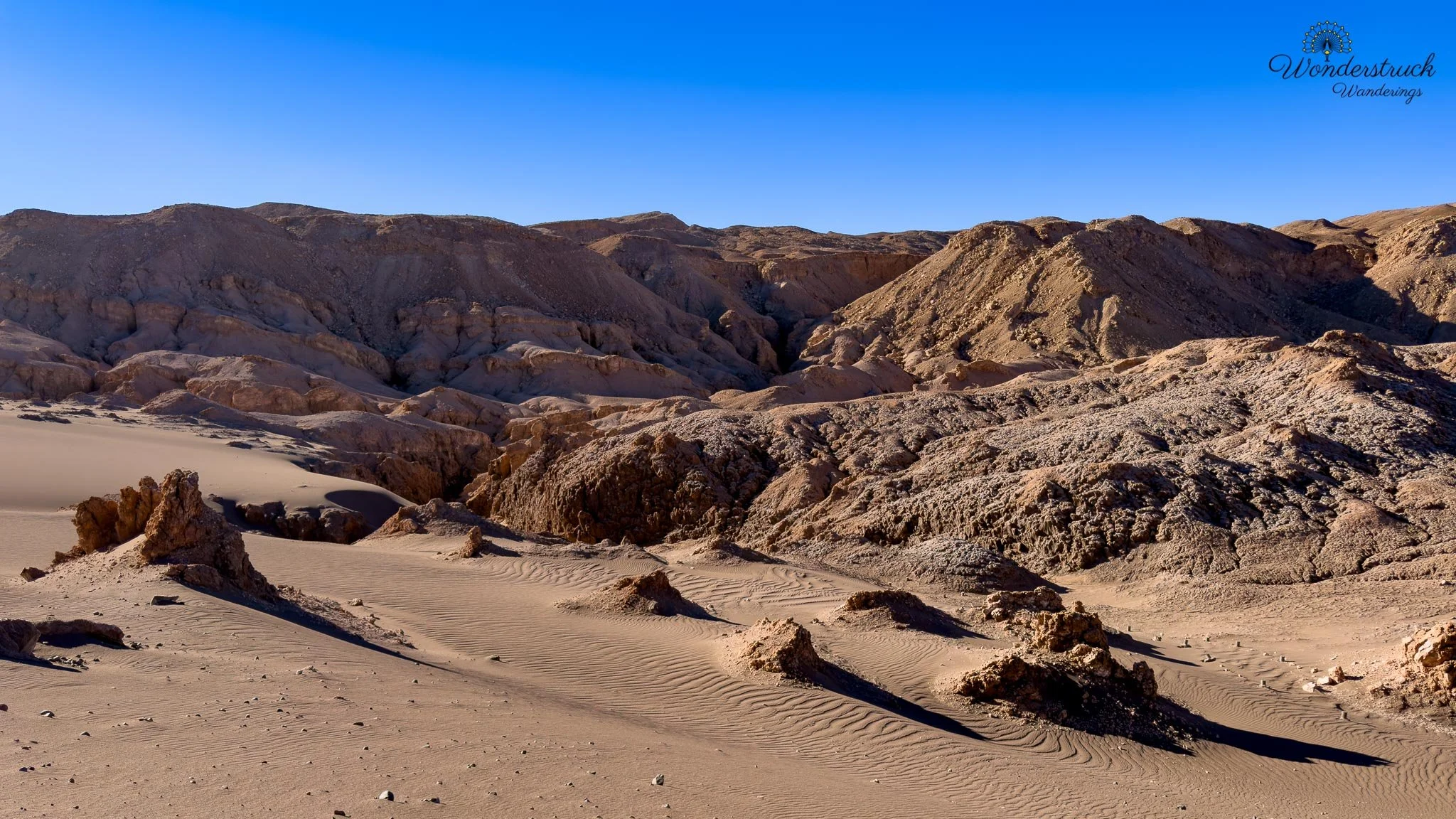
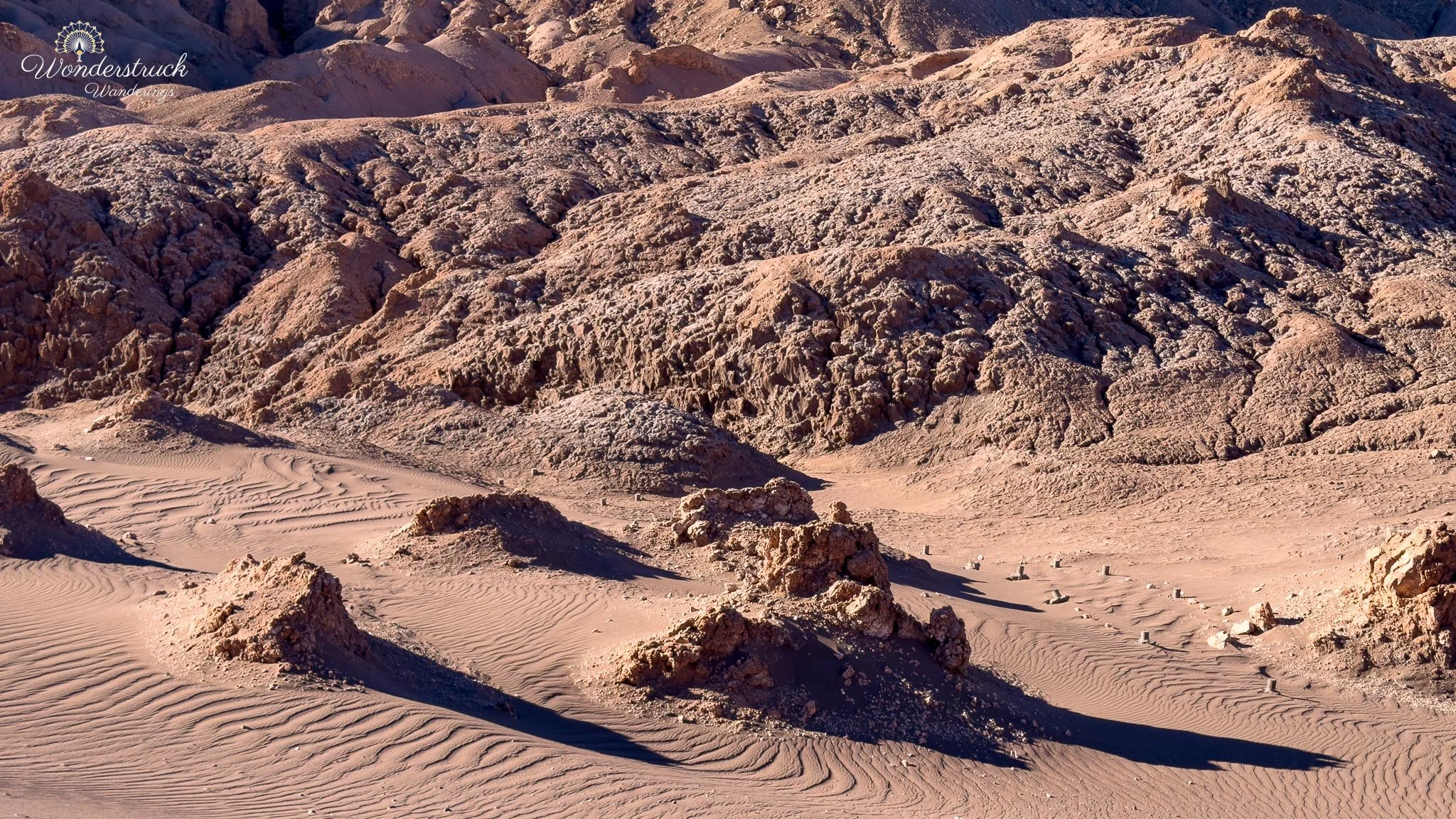
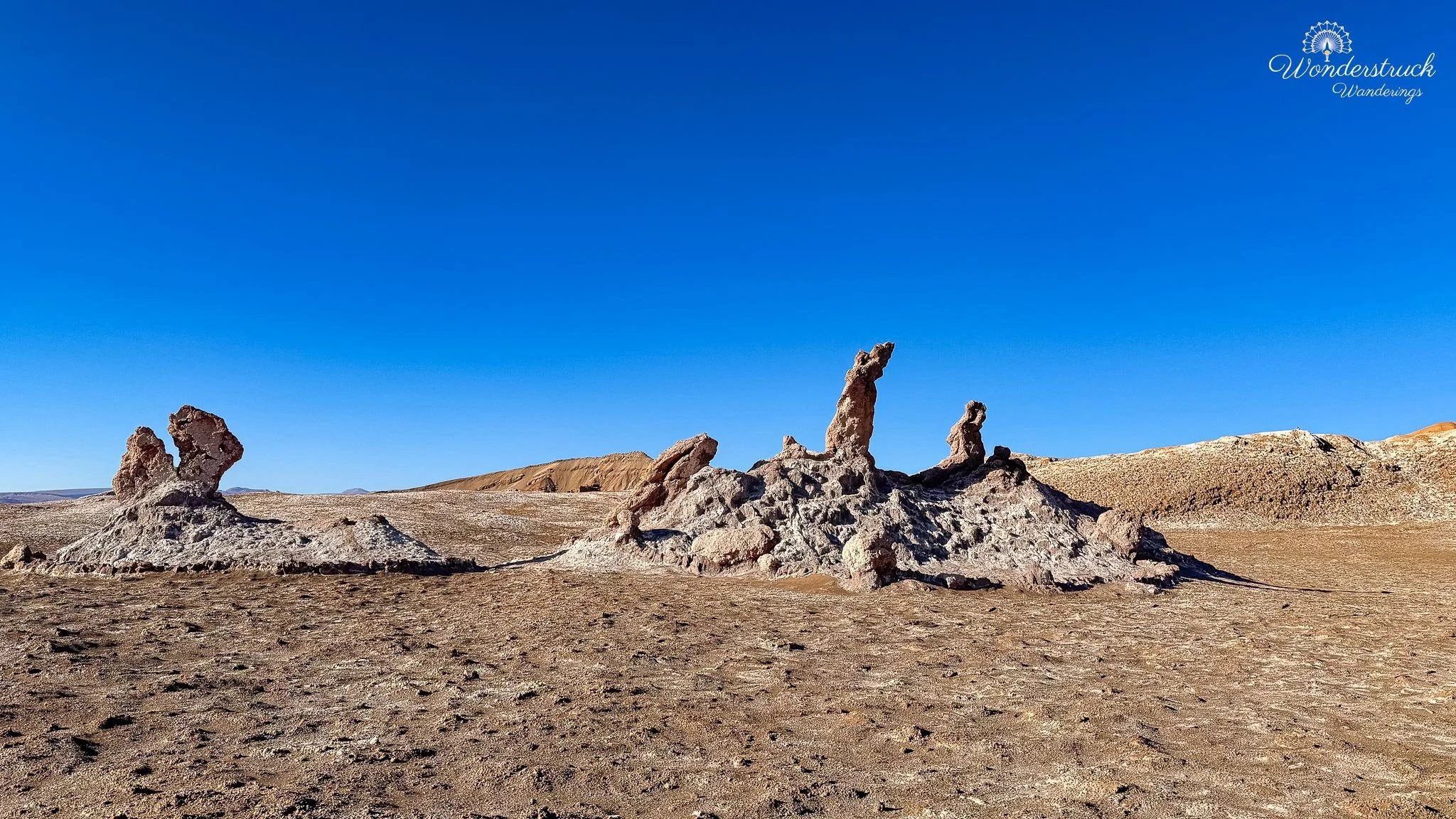
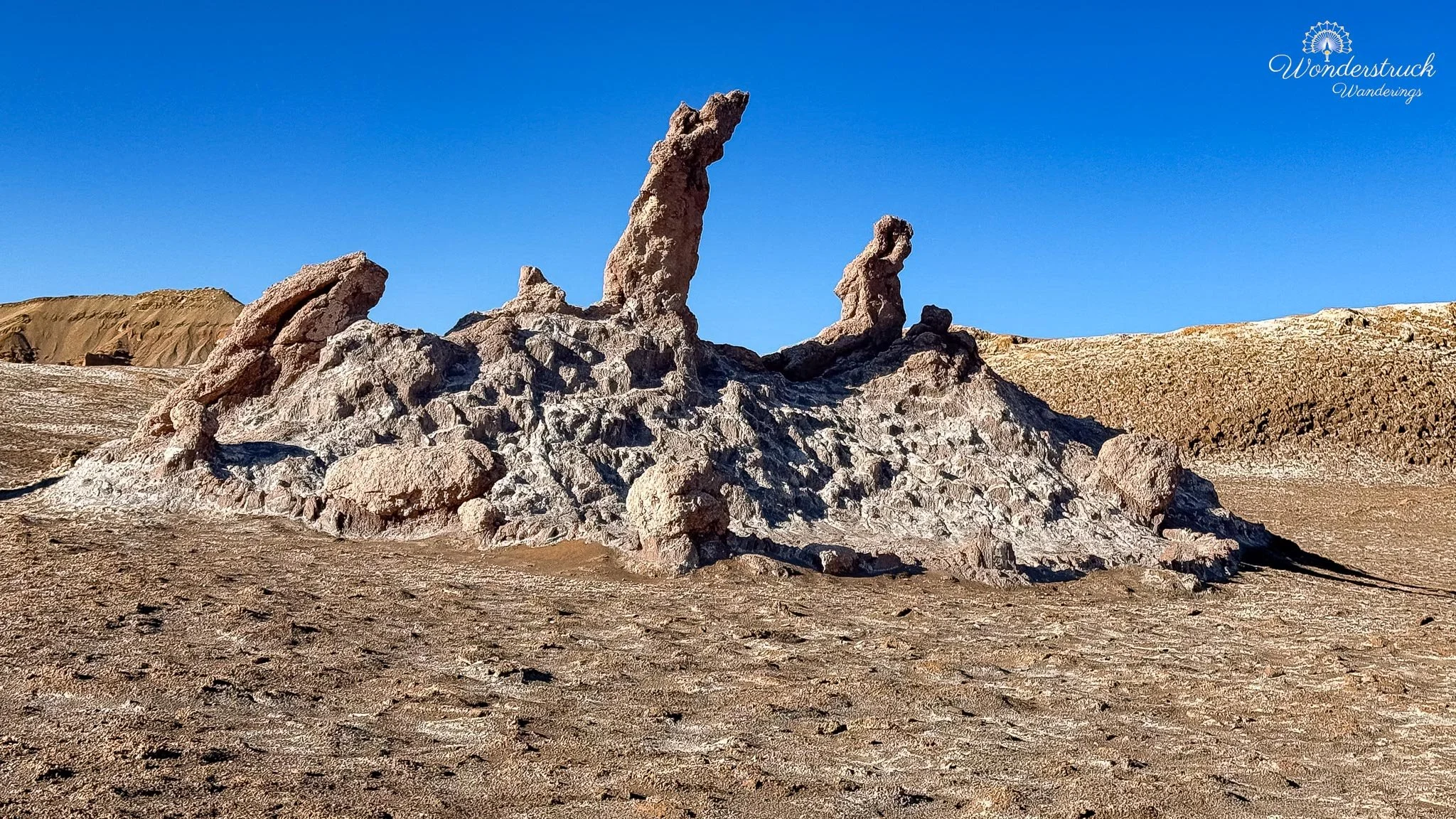
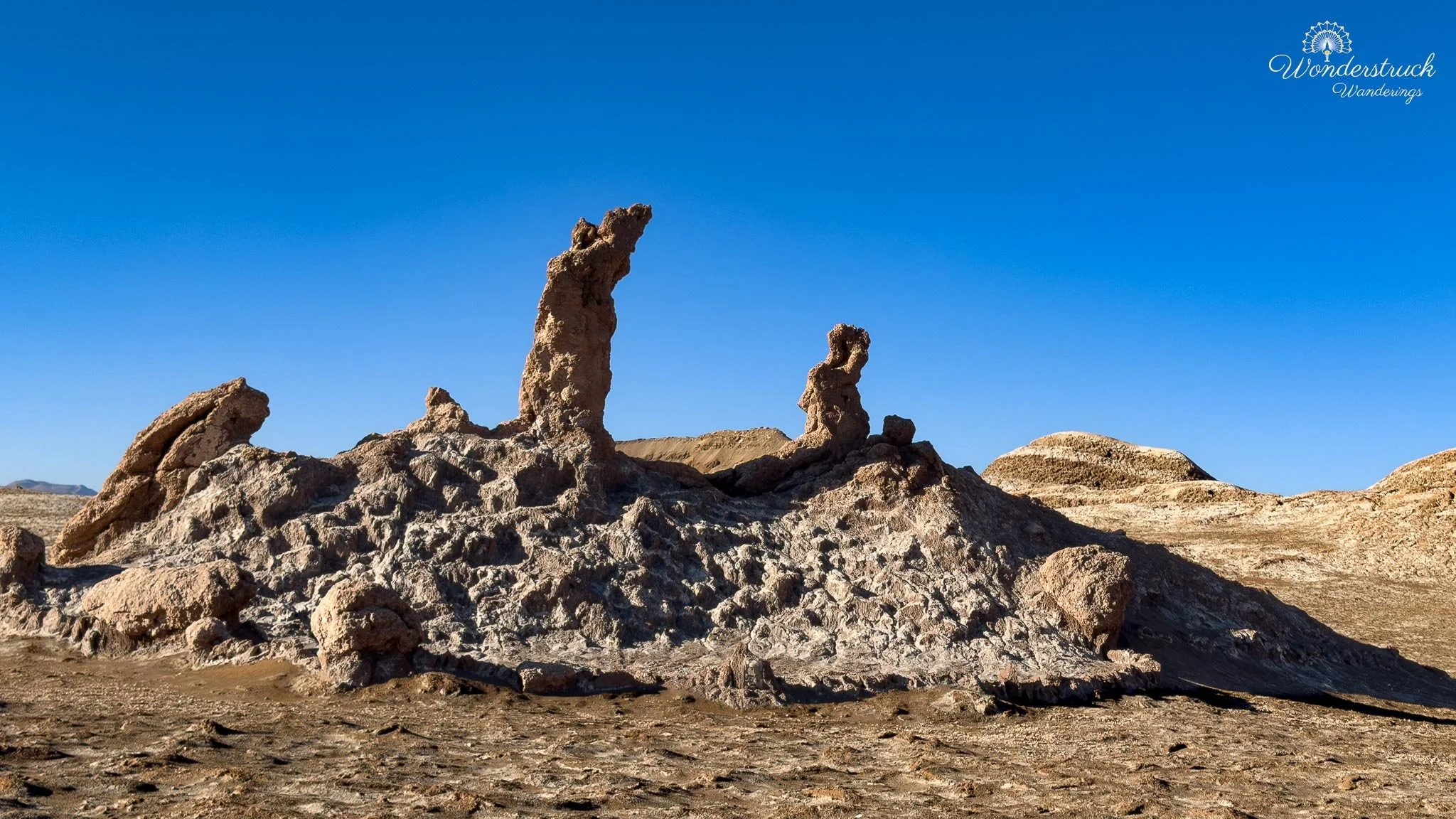
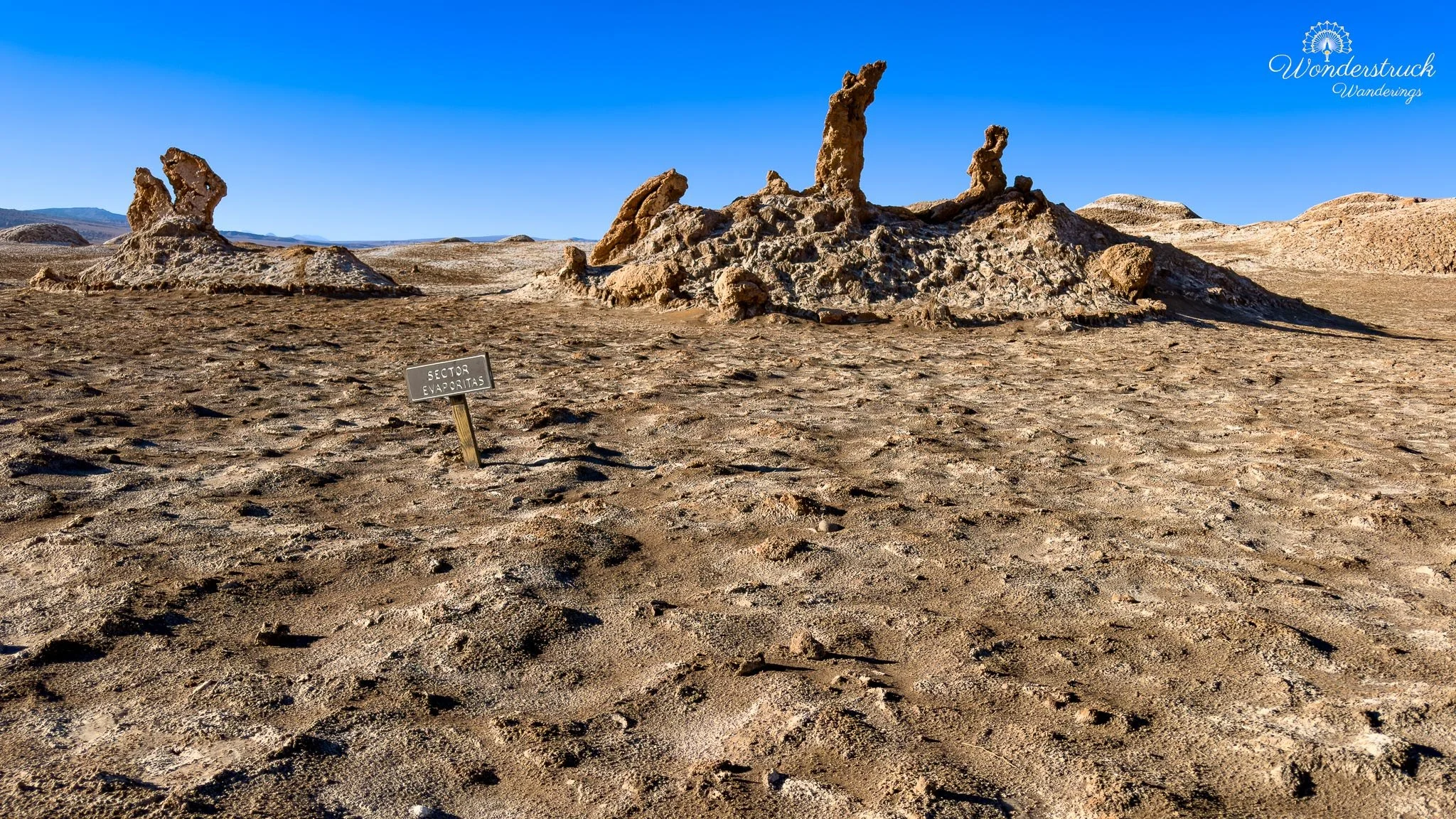
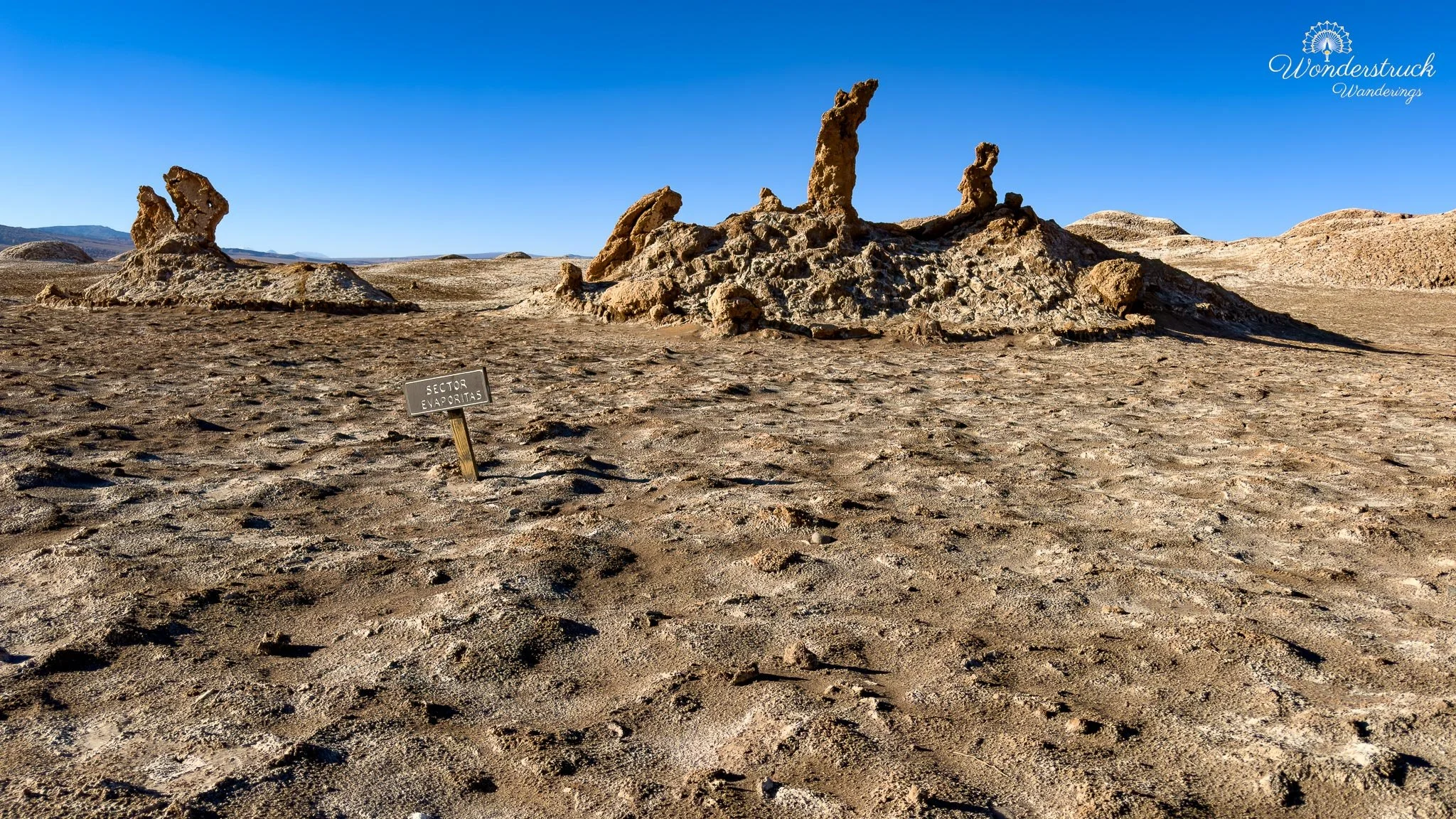
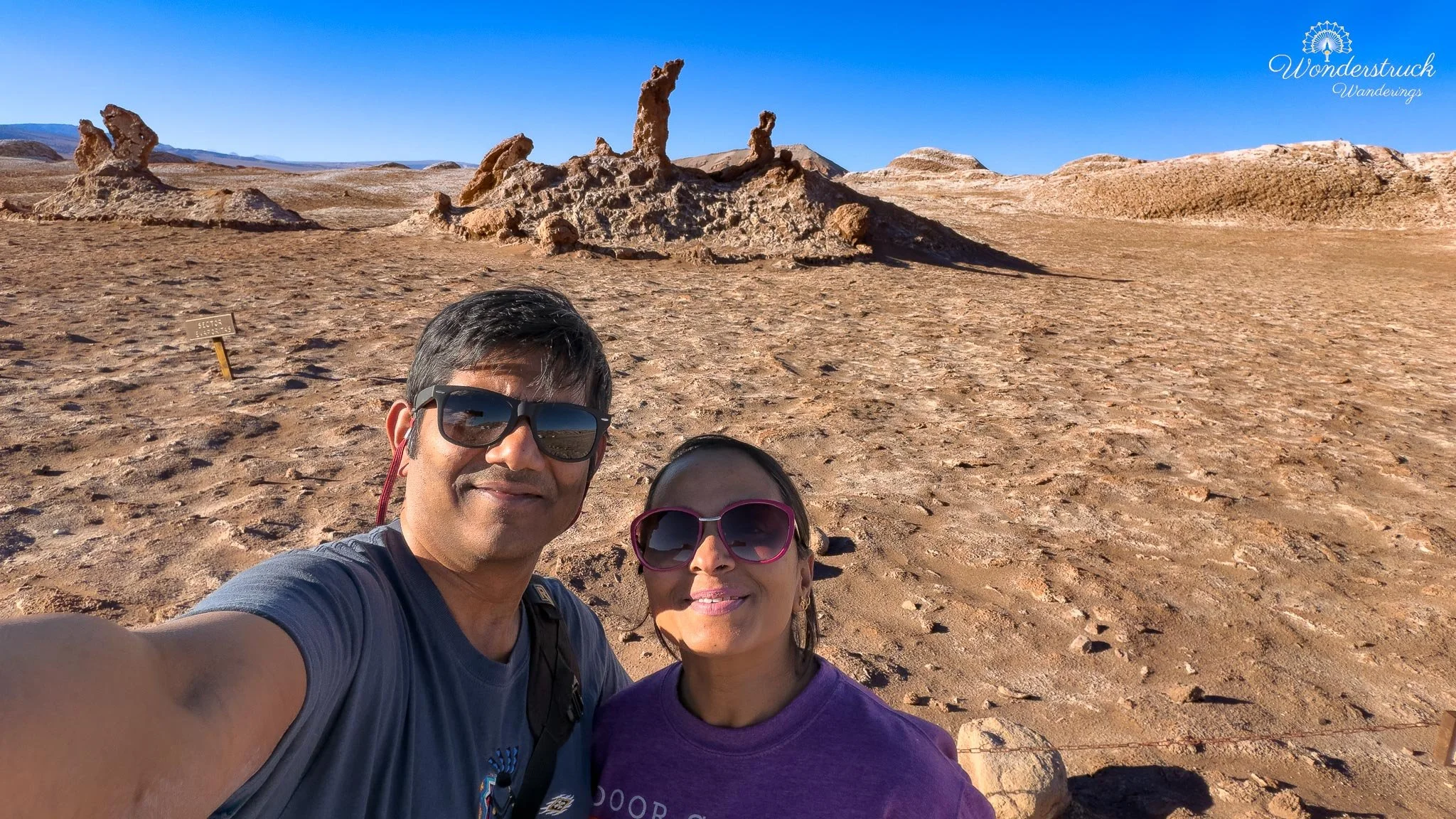
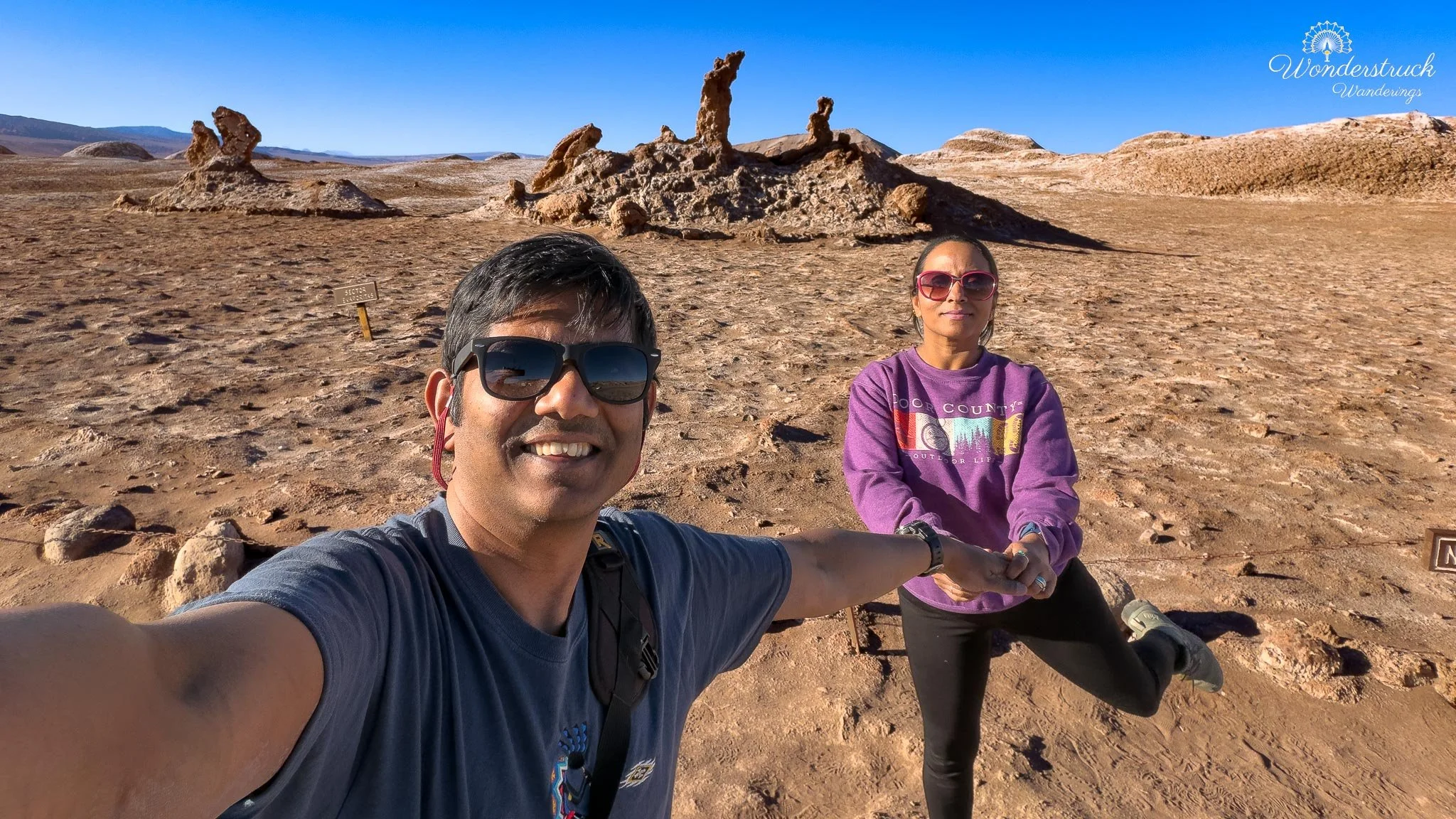
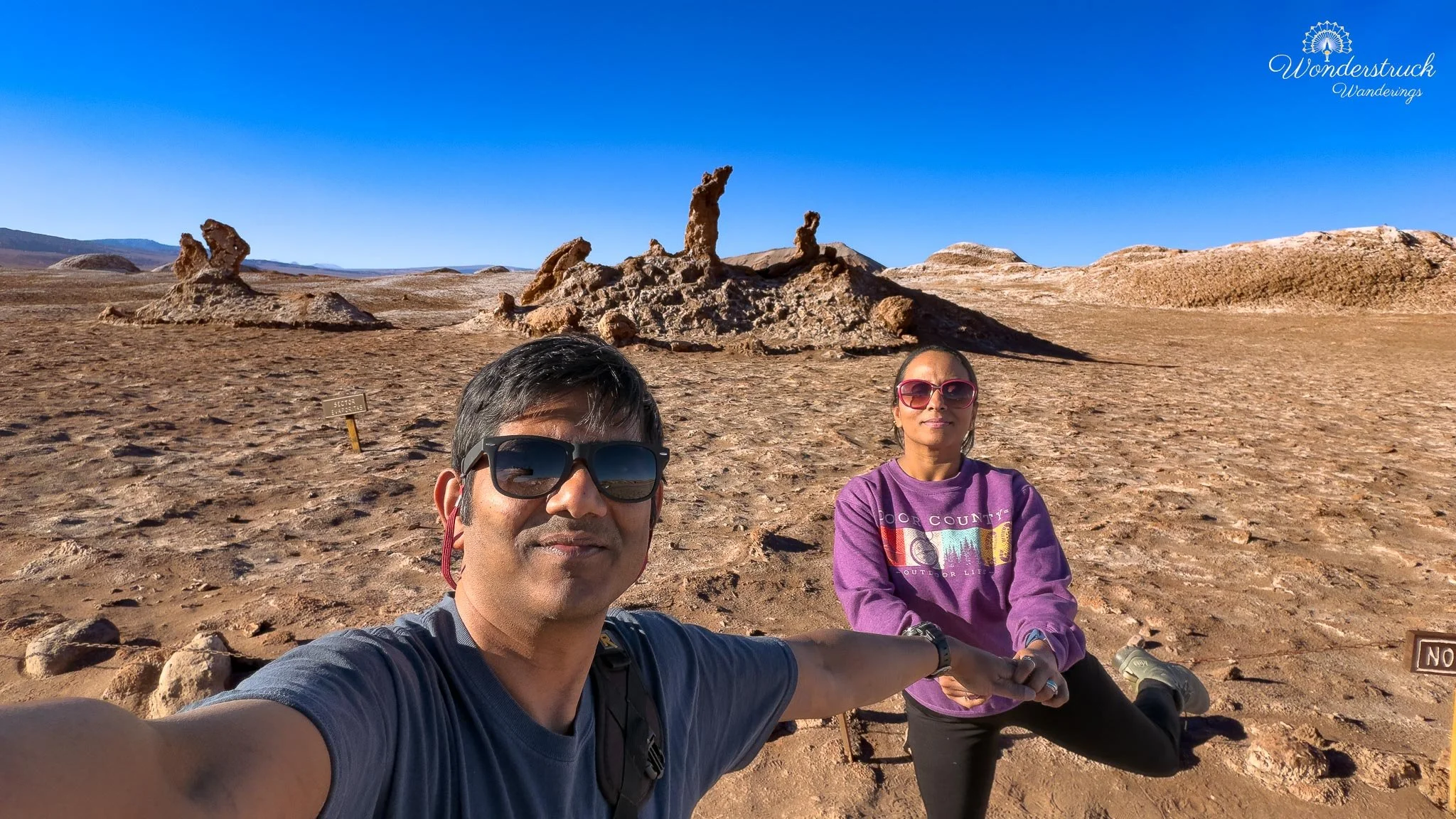
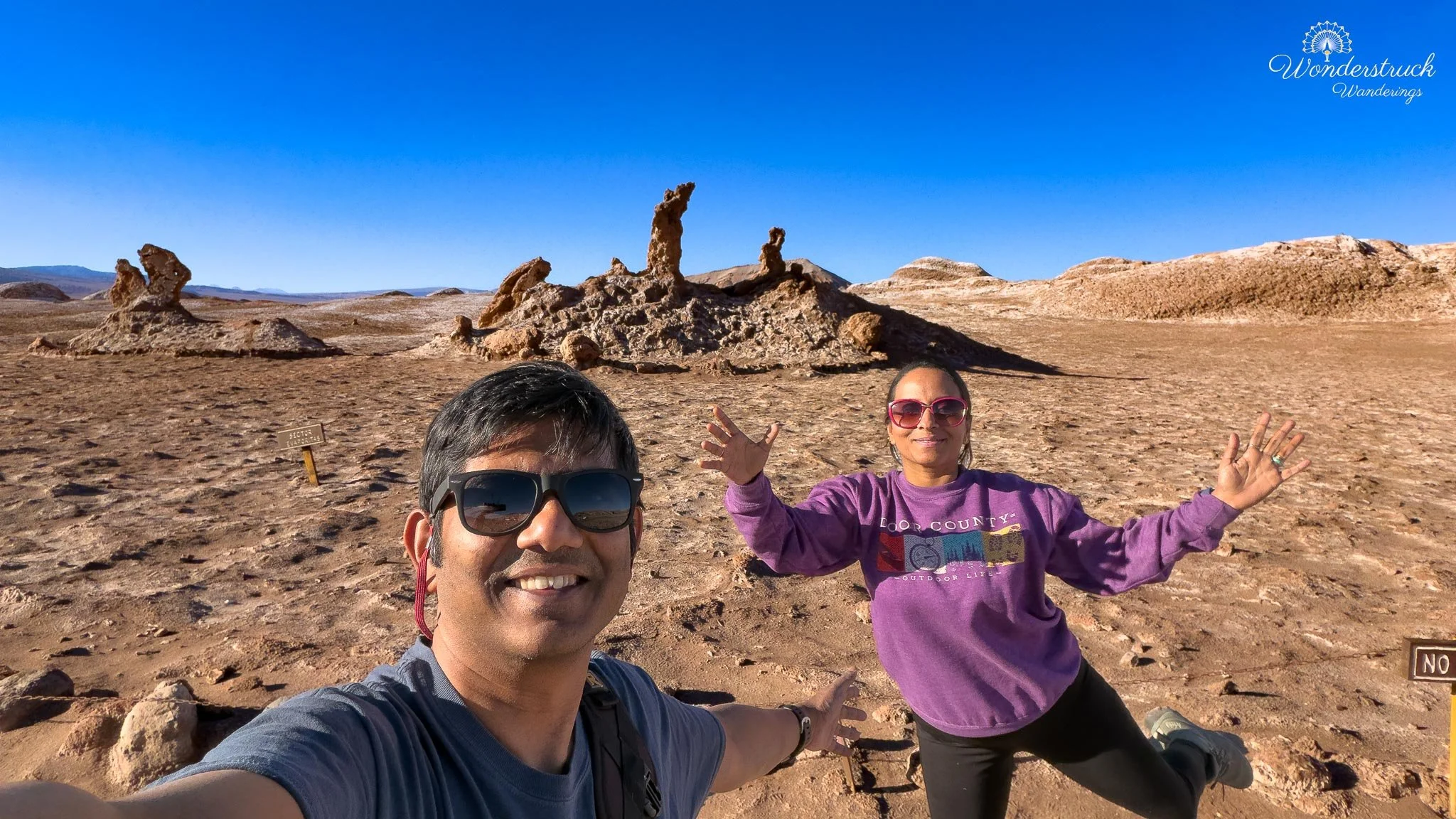
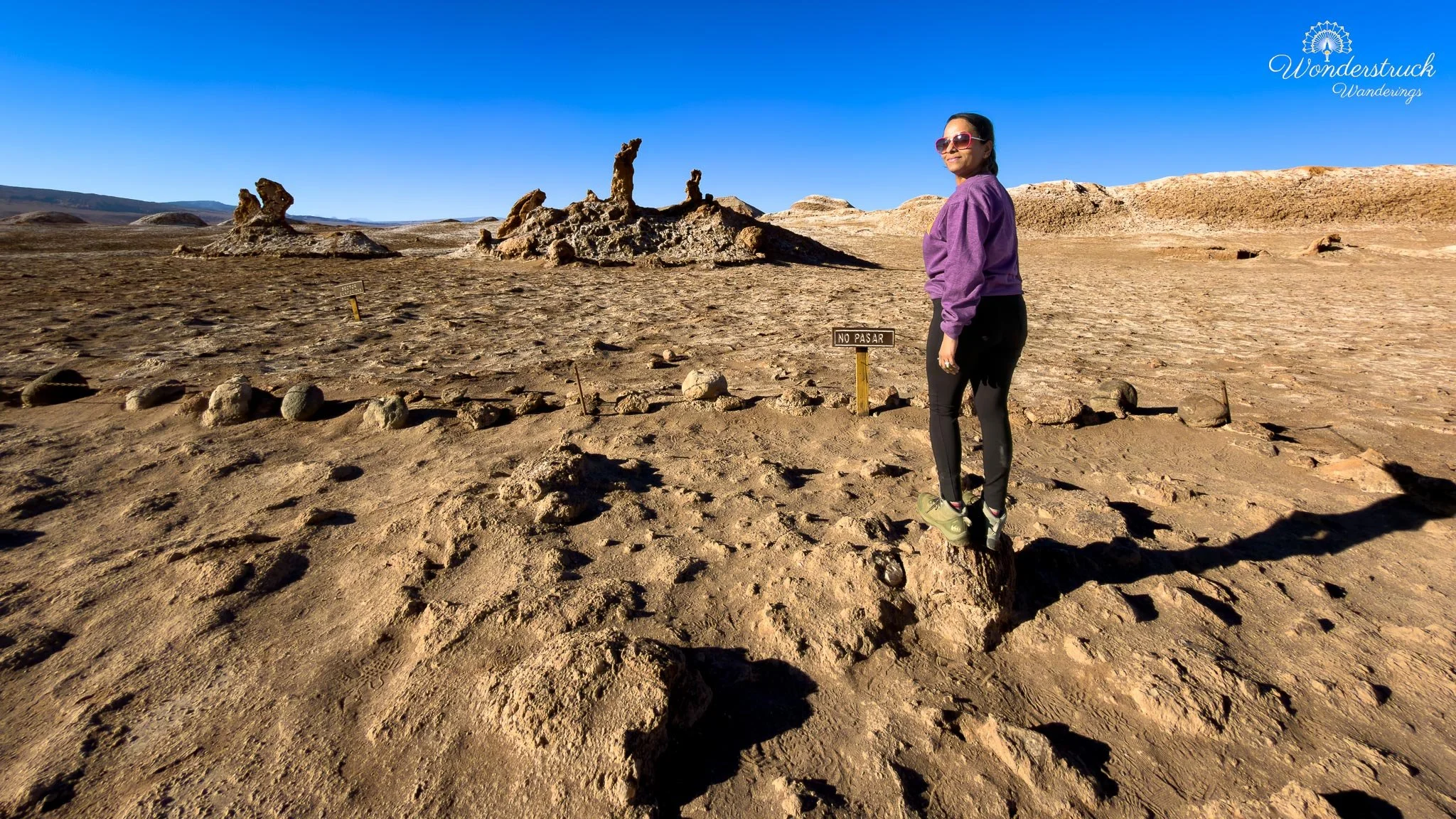
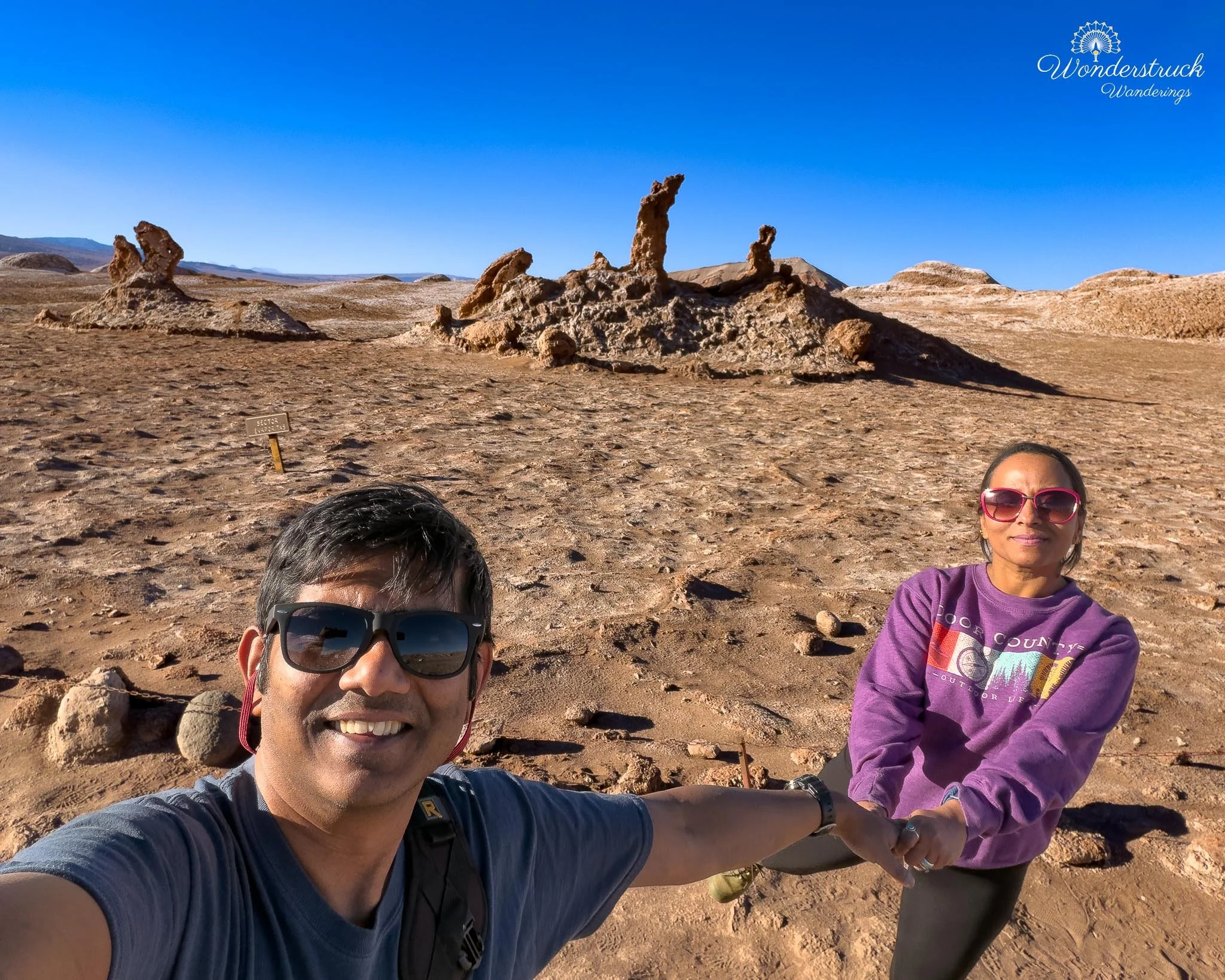
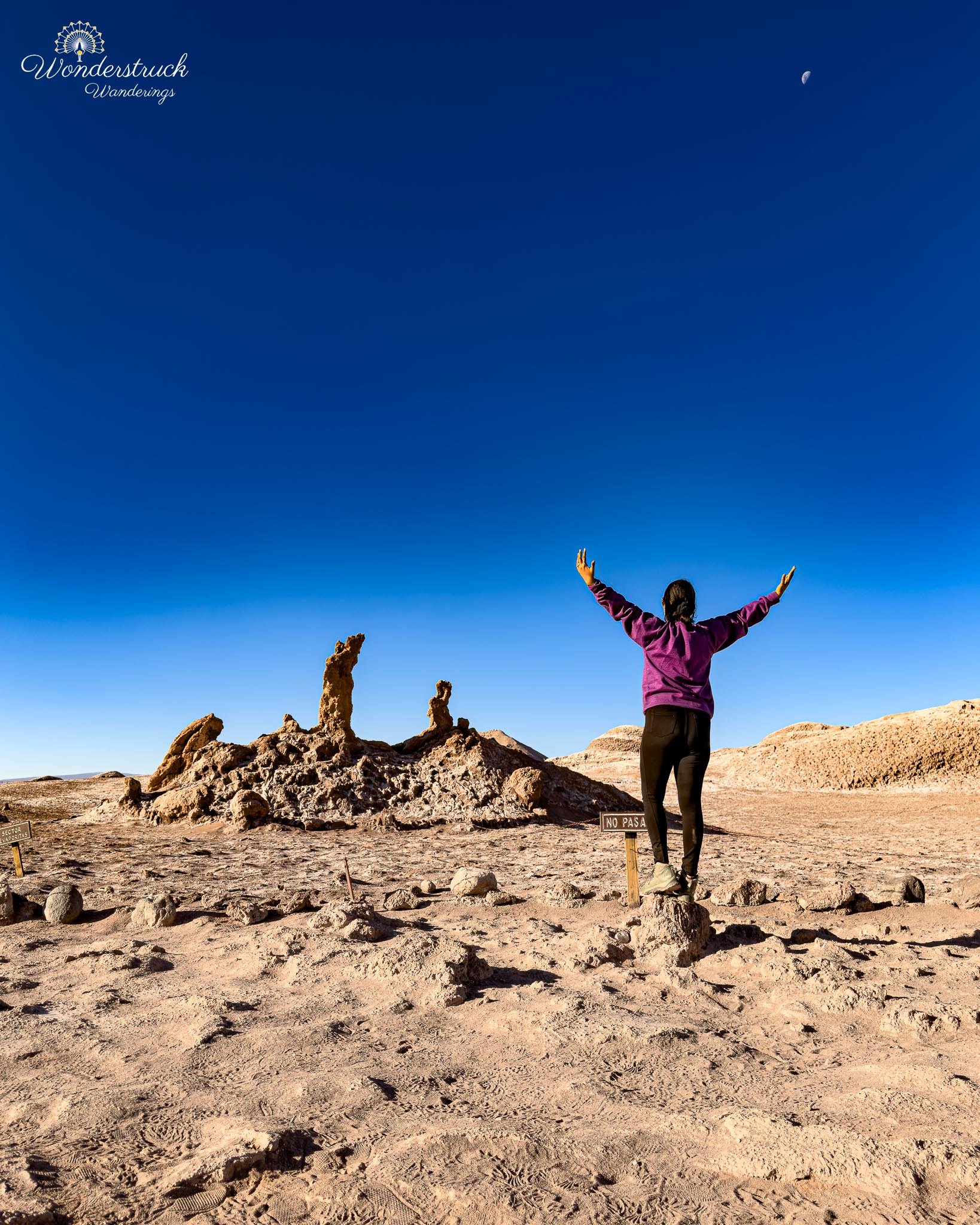
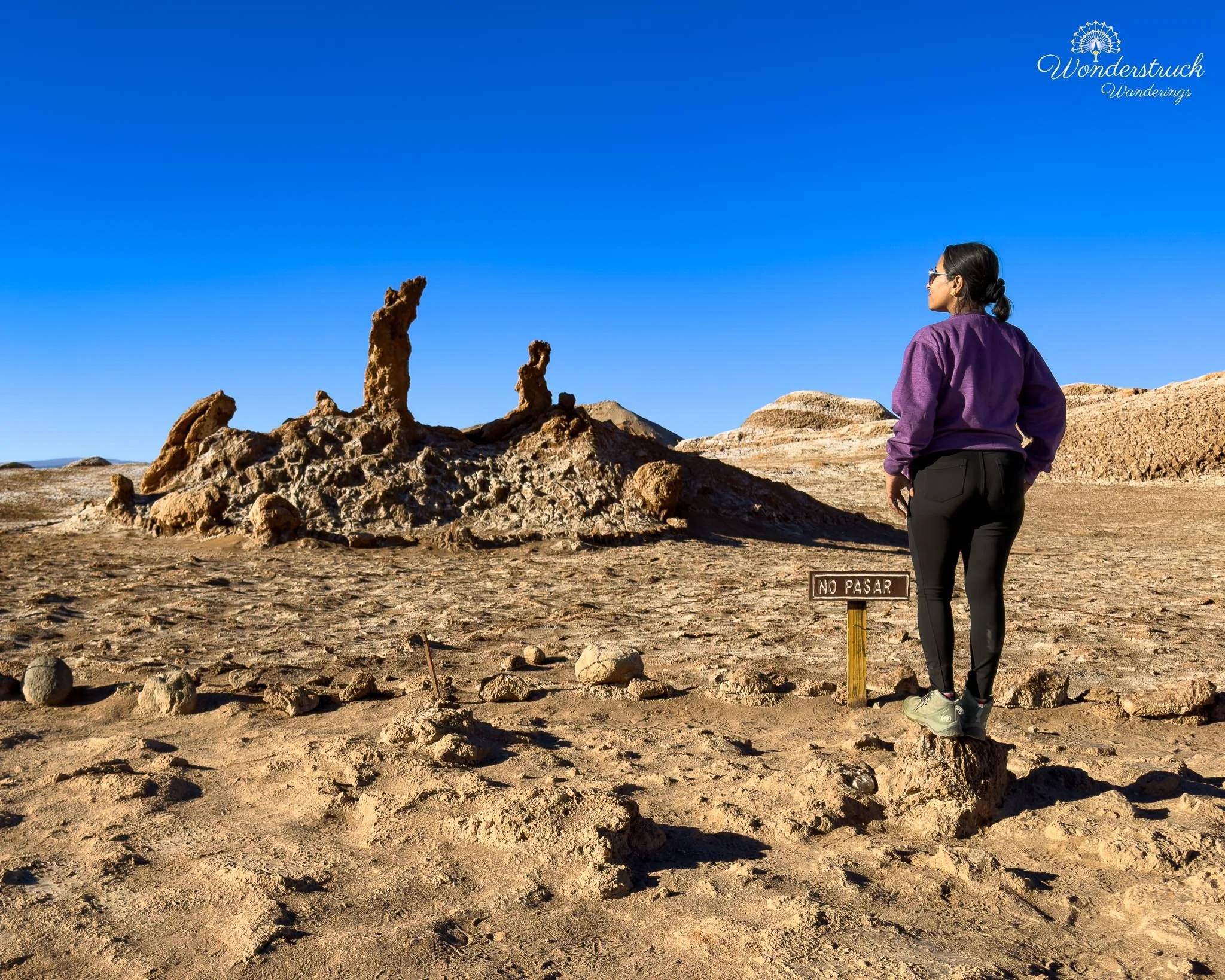
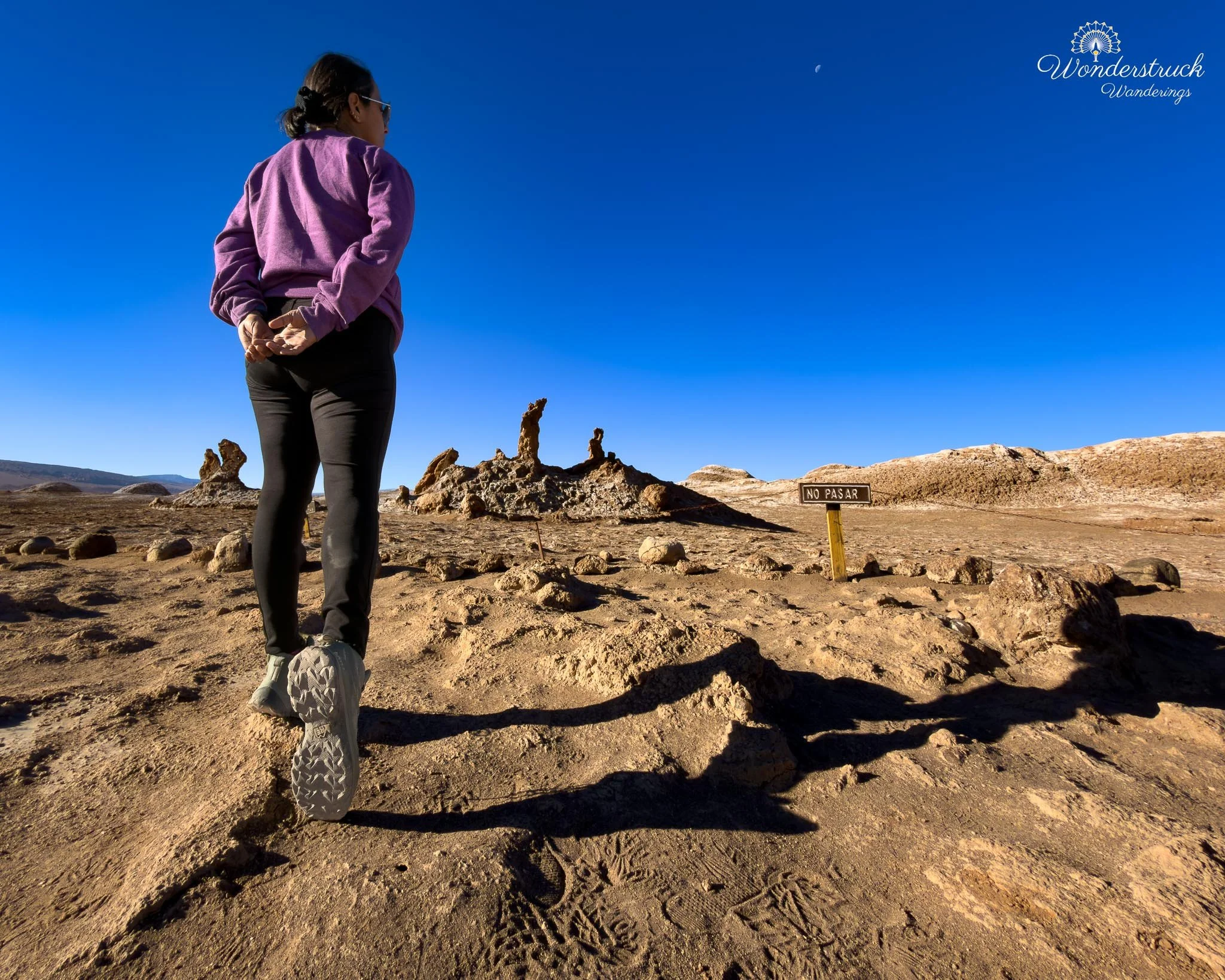
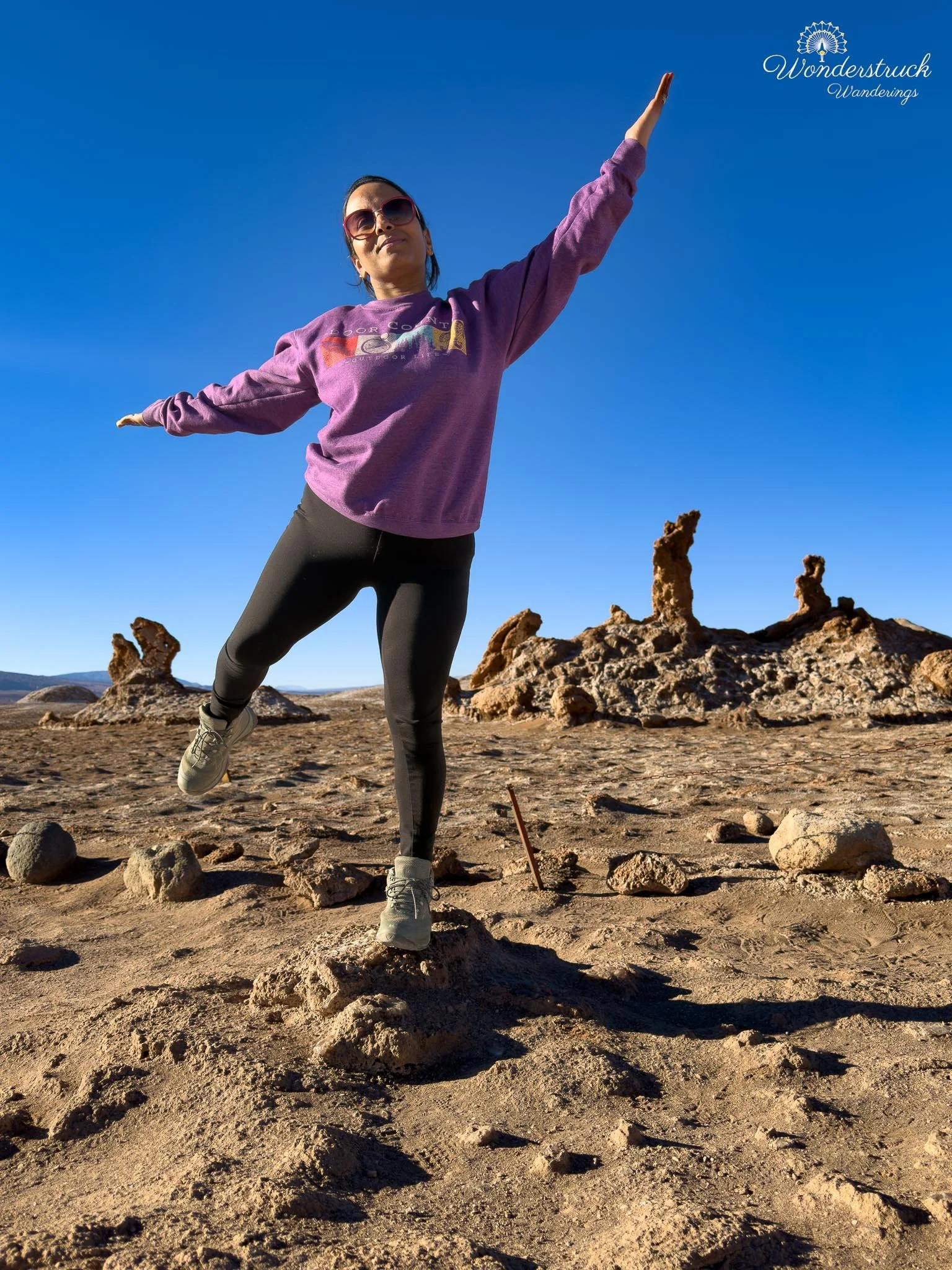
Our first major stop was Tres Marias, one of Valle de la Luna's recognizable rock formations. It is not a place where you need a huge amount of time, but it is worth seeing because it shows the valley's sculptural quality well. Wind, salt, and erosion have shaped the stone into strange, almost symbolic forms. The name makes you look for figures, but the real appeal is the surrounding texture: salt-crusted ground, jagged ridges, pale rock, and the sense that the entire landscape has been carved by forces that do not care about human time. Just beside Tres Marias, the surrounding rock formation of Piedra del Coyote looks like a coyote is coming out of the salt flat to eat gulp down the moon. Maybe it aligns may it doesn’t but you can let your imagination run wild here. The whole area looked like the desert had been squeezed, cracked, salted, and folded over time, leaving behind ridges and pale mineral crusts that caught the light differently from every angle. Some formations had sharp, broken edges, while others looked smoother and almost melted, like hardened waves of mud and salt. For photography, this was where small details mattered as much as the wide view: cracked ground underfoot, white salt lines across brown rock, and jagged walls rising behind the Three Marias like a natural desert amphitheater.
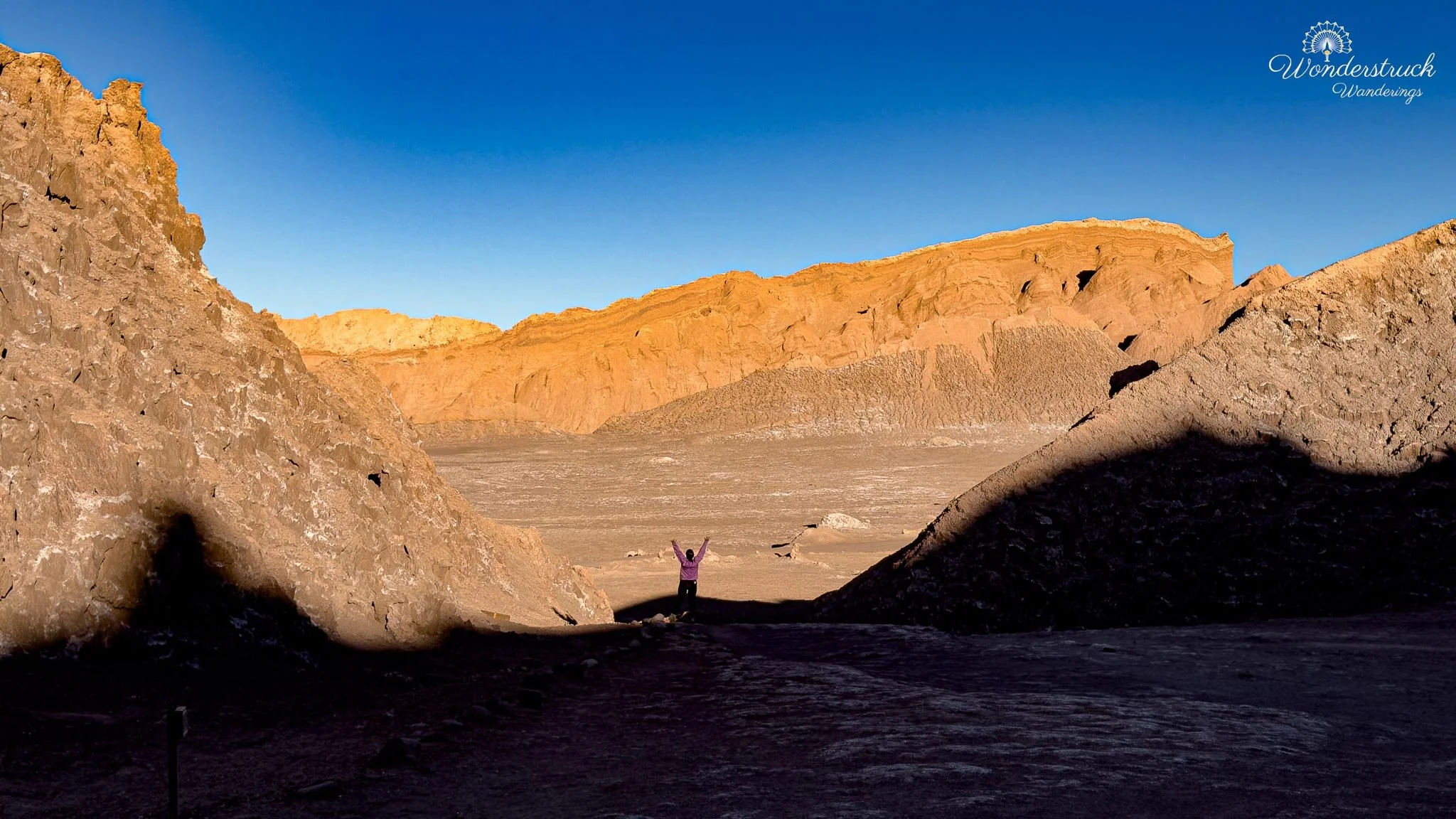
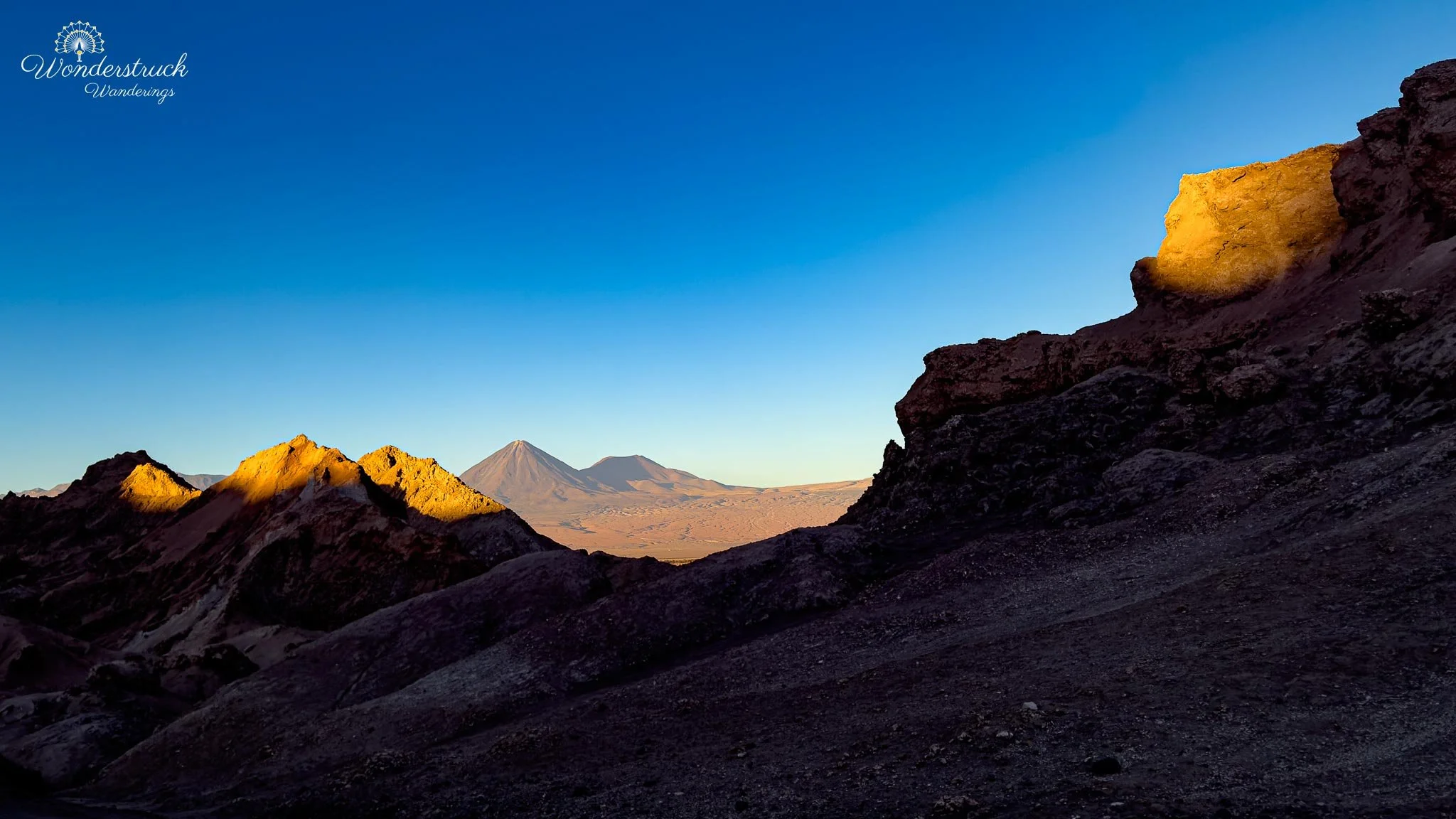
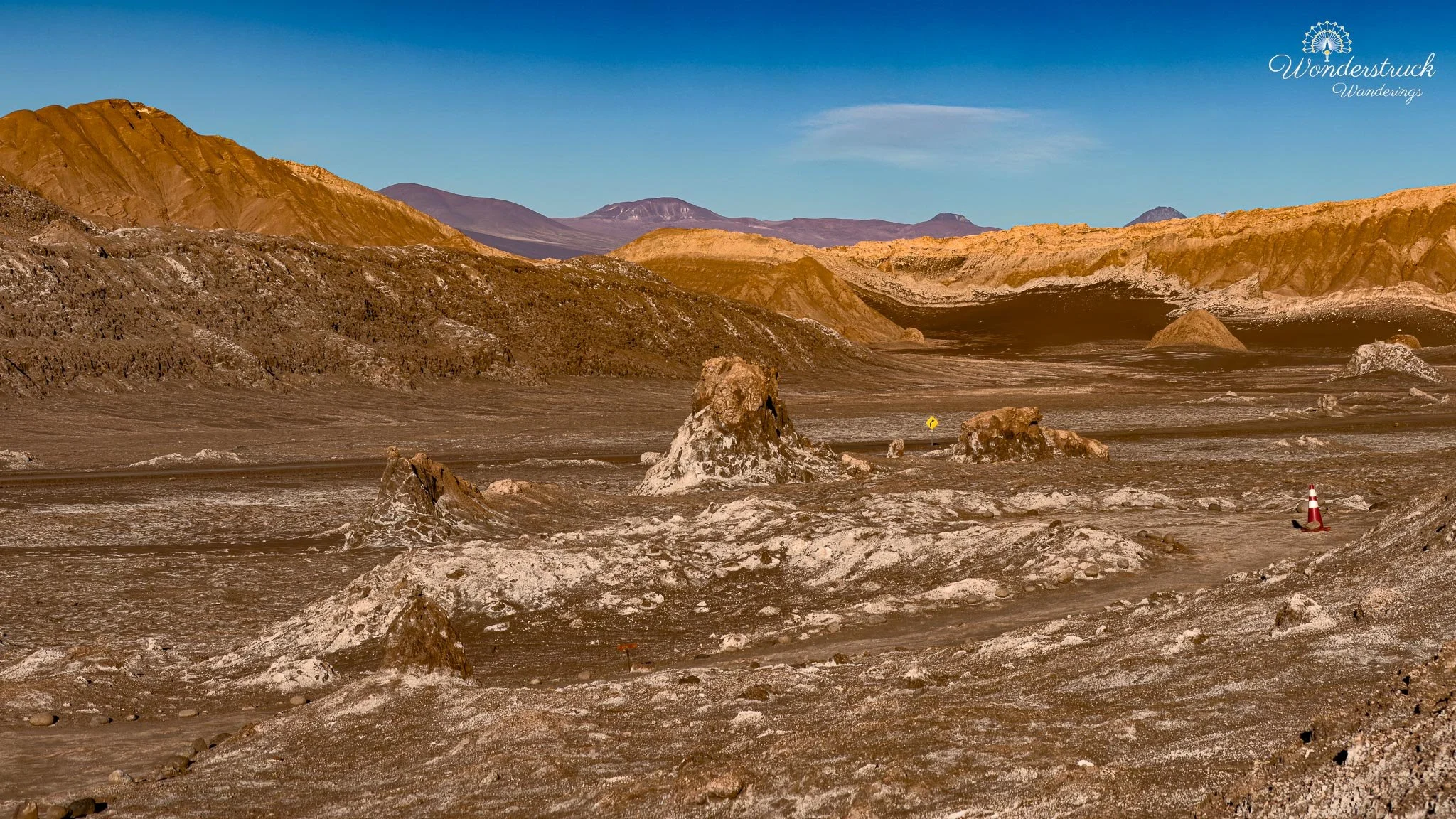
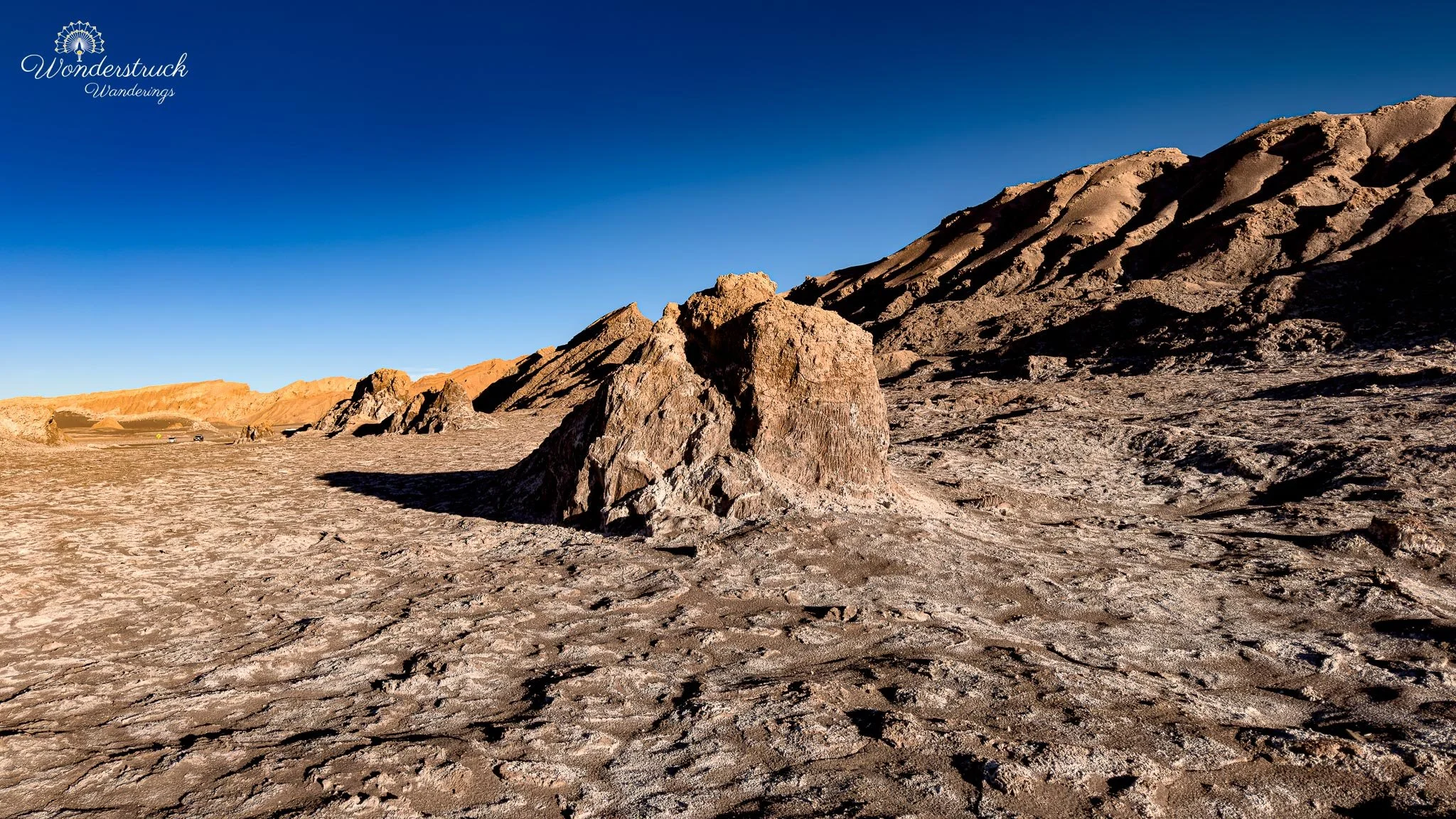
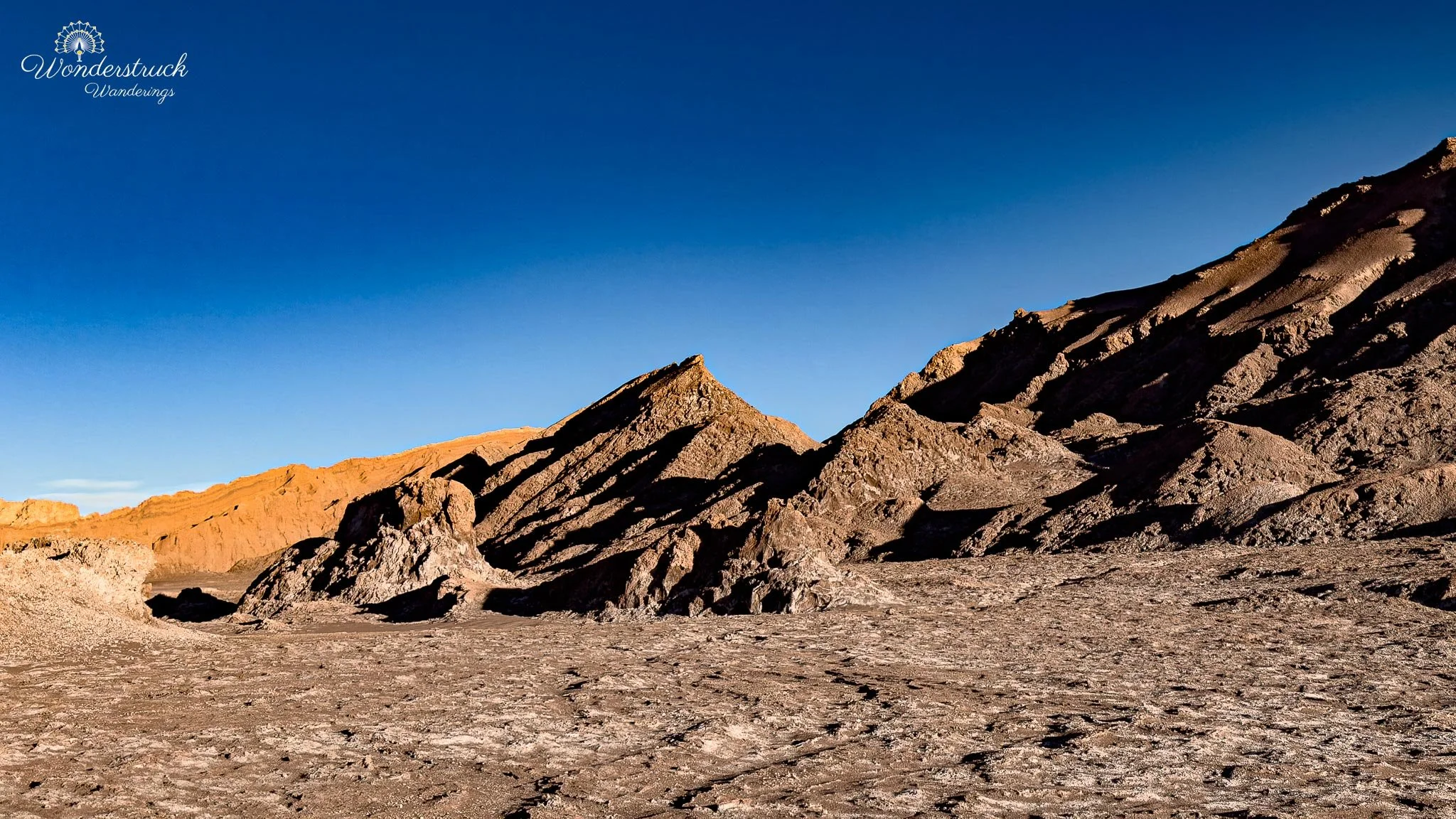
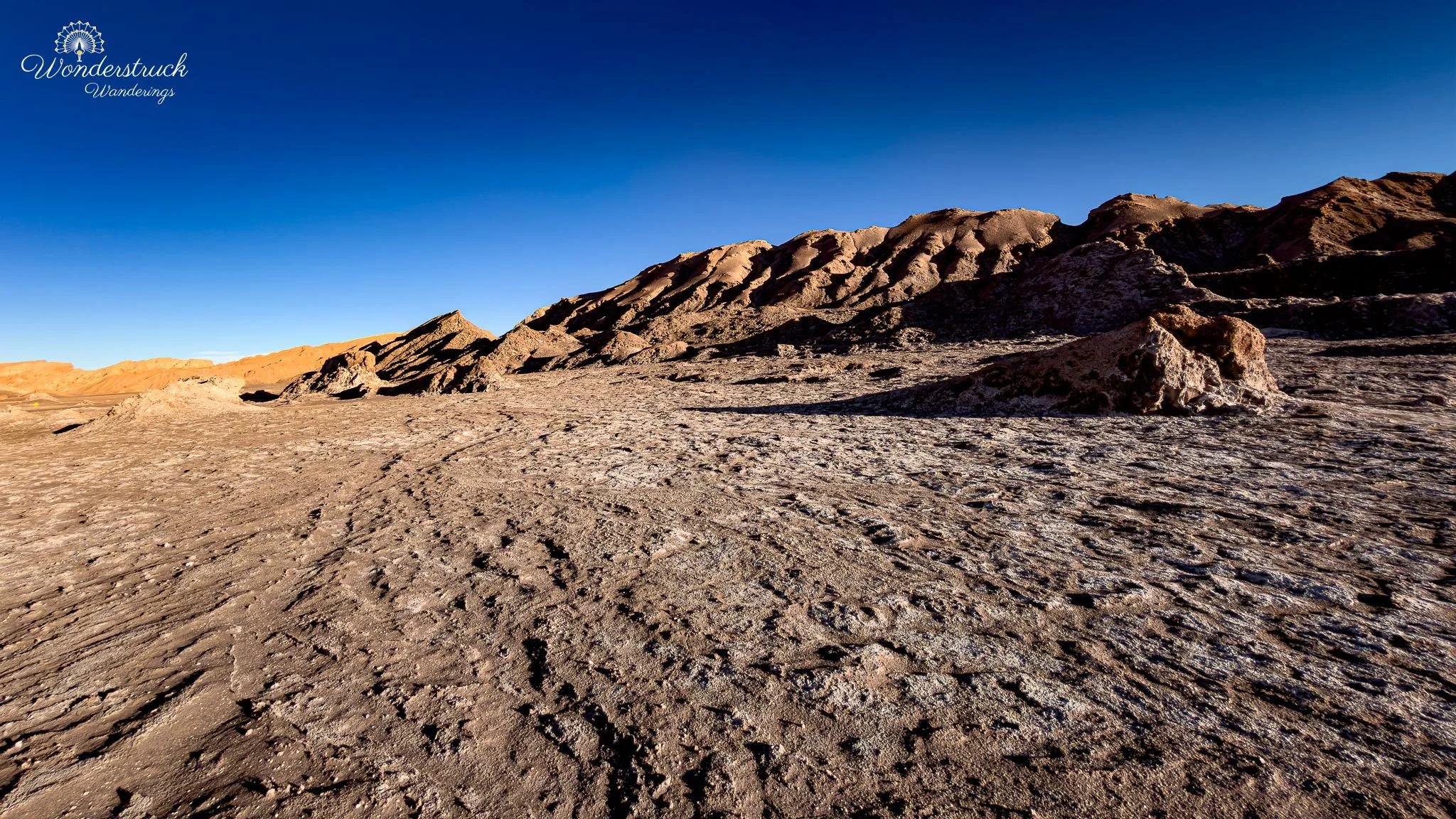
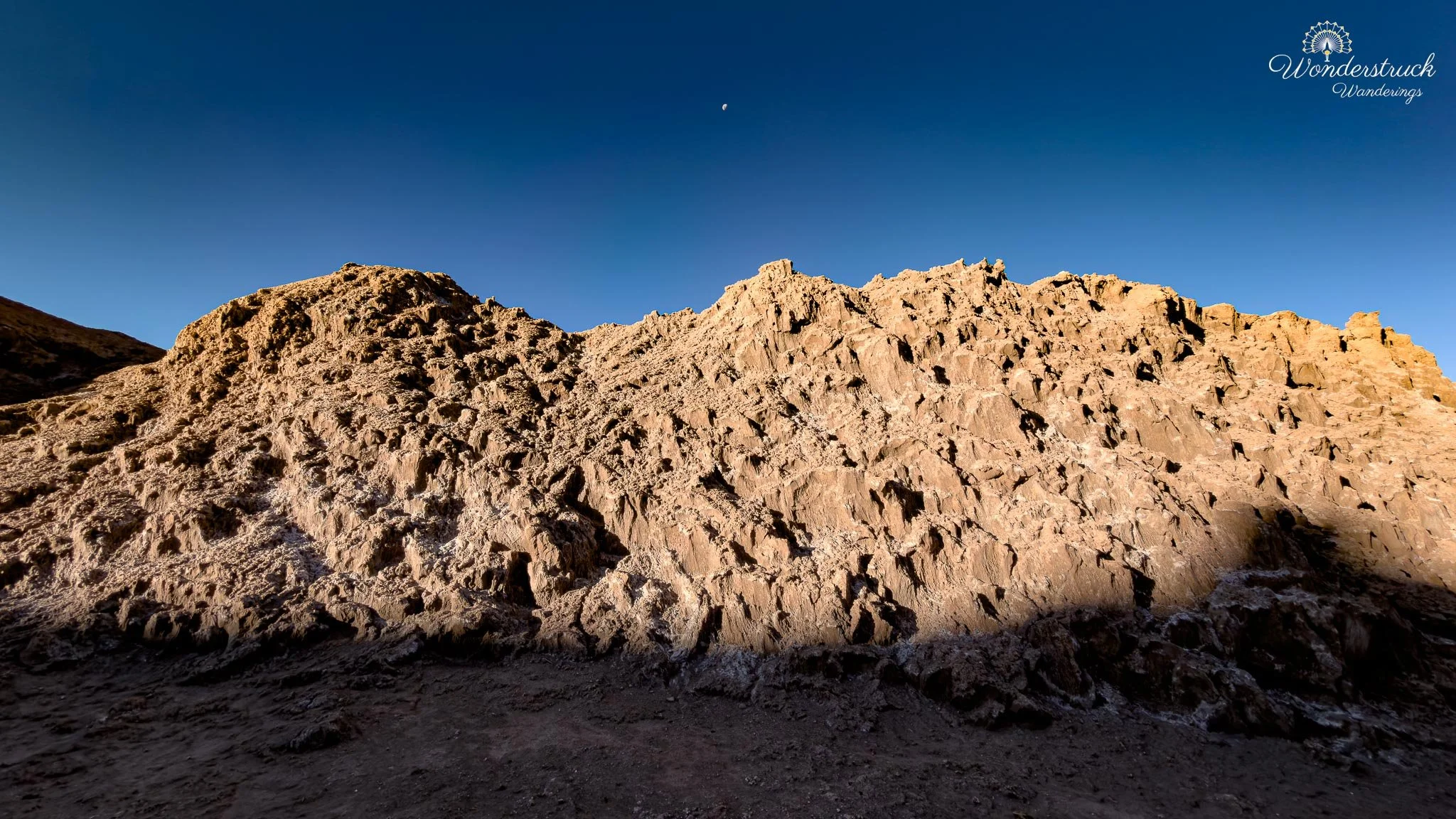
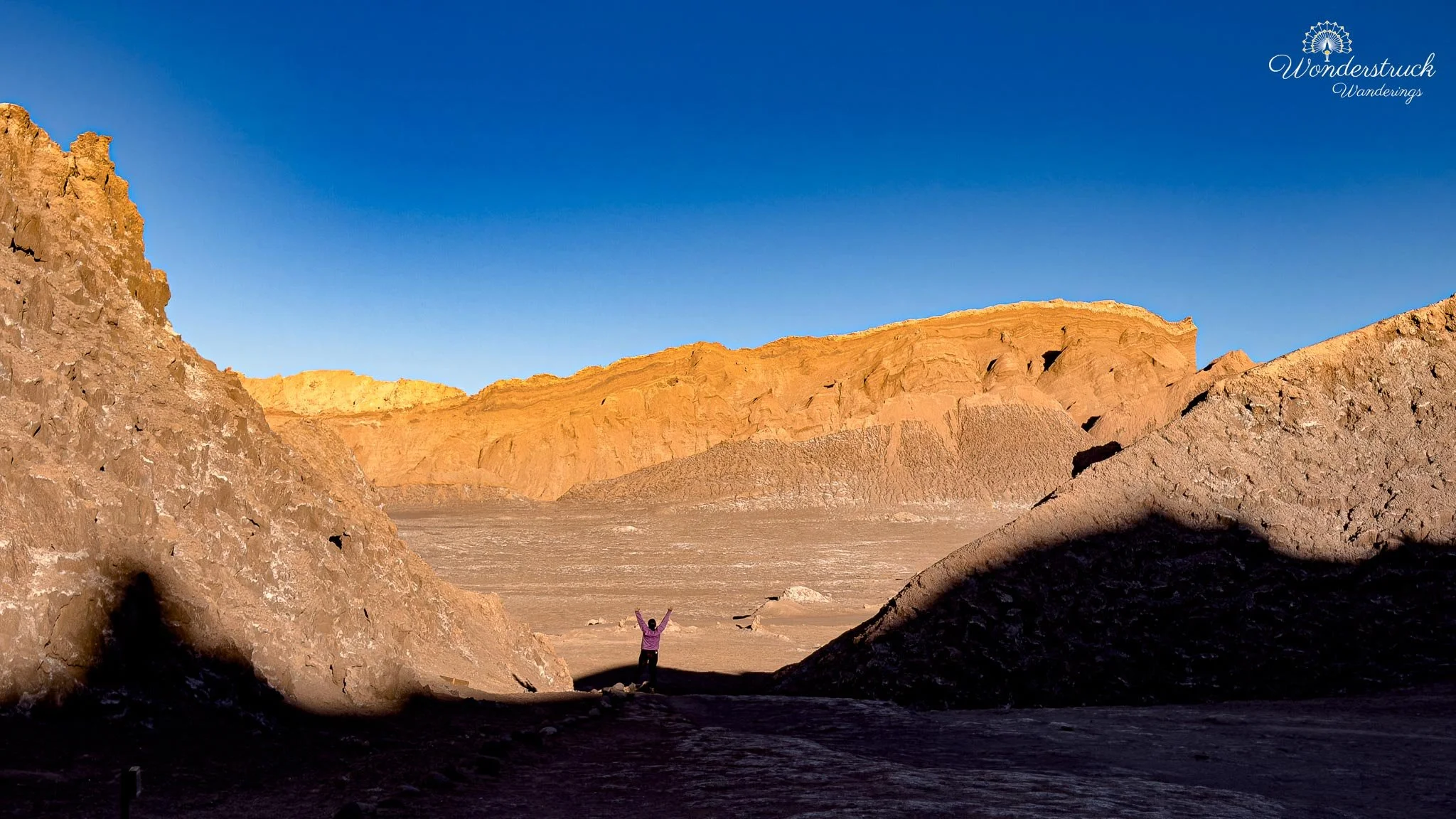
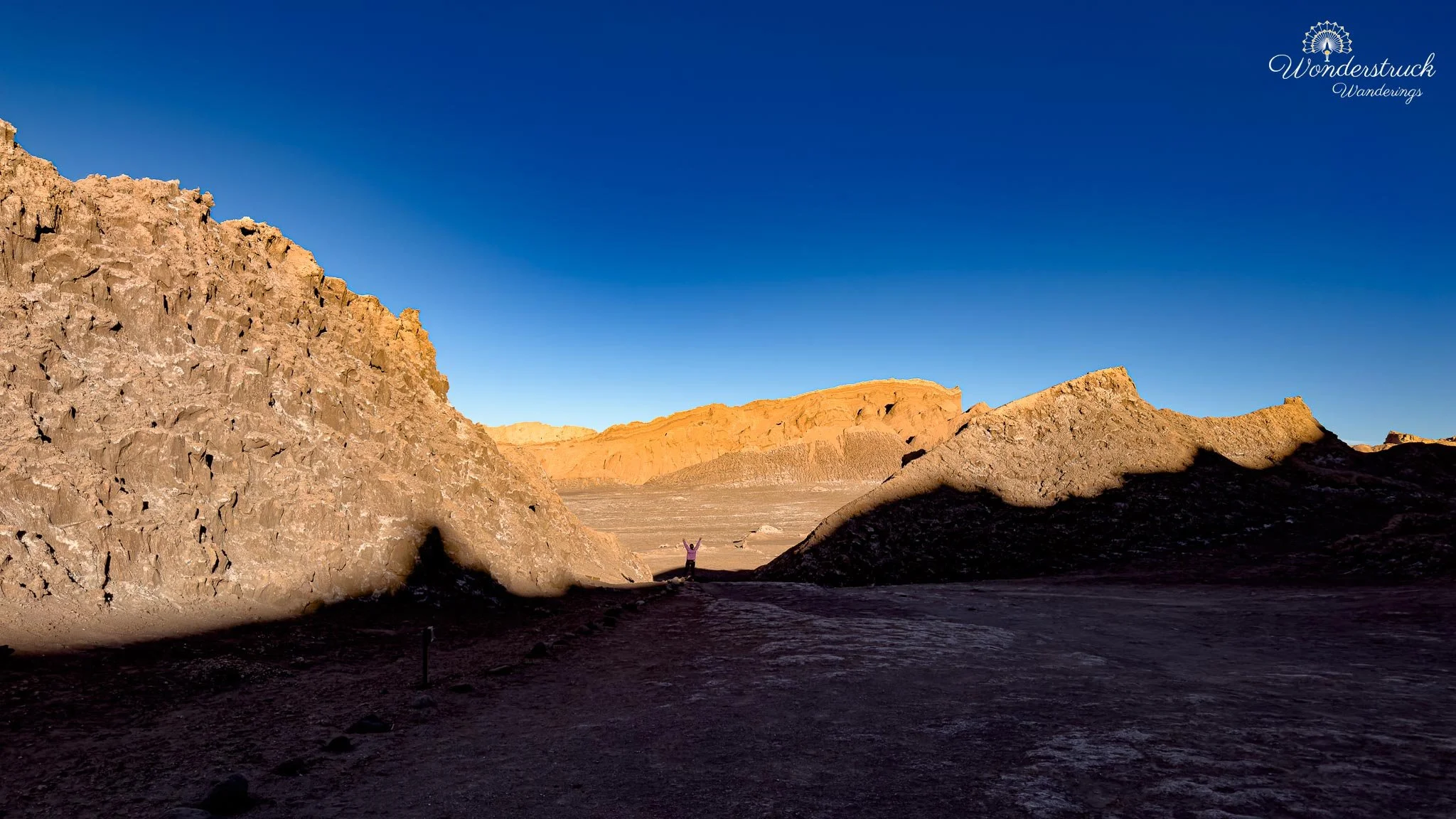
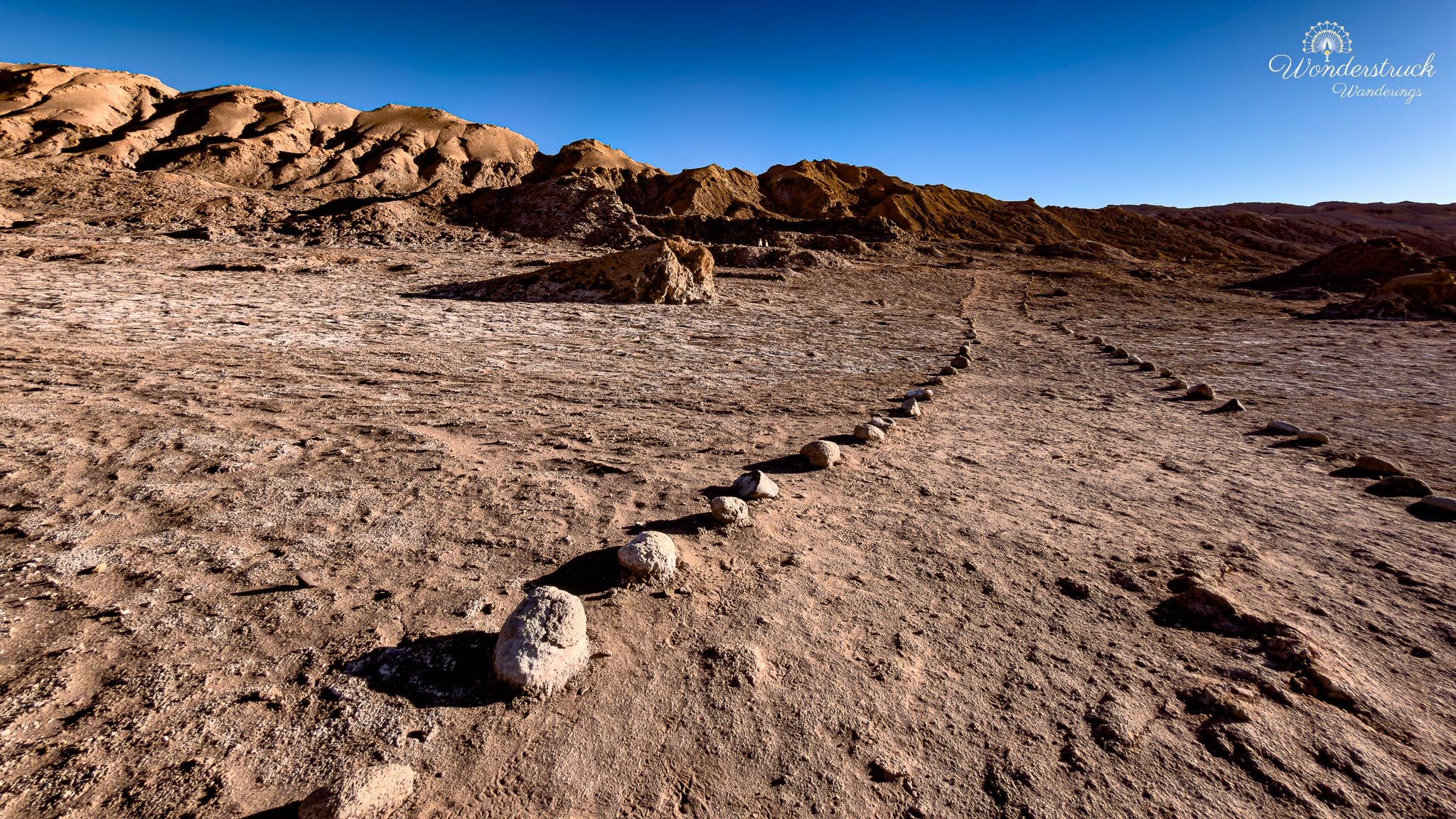
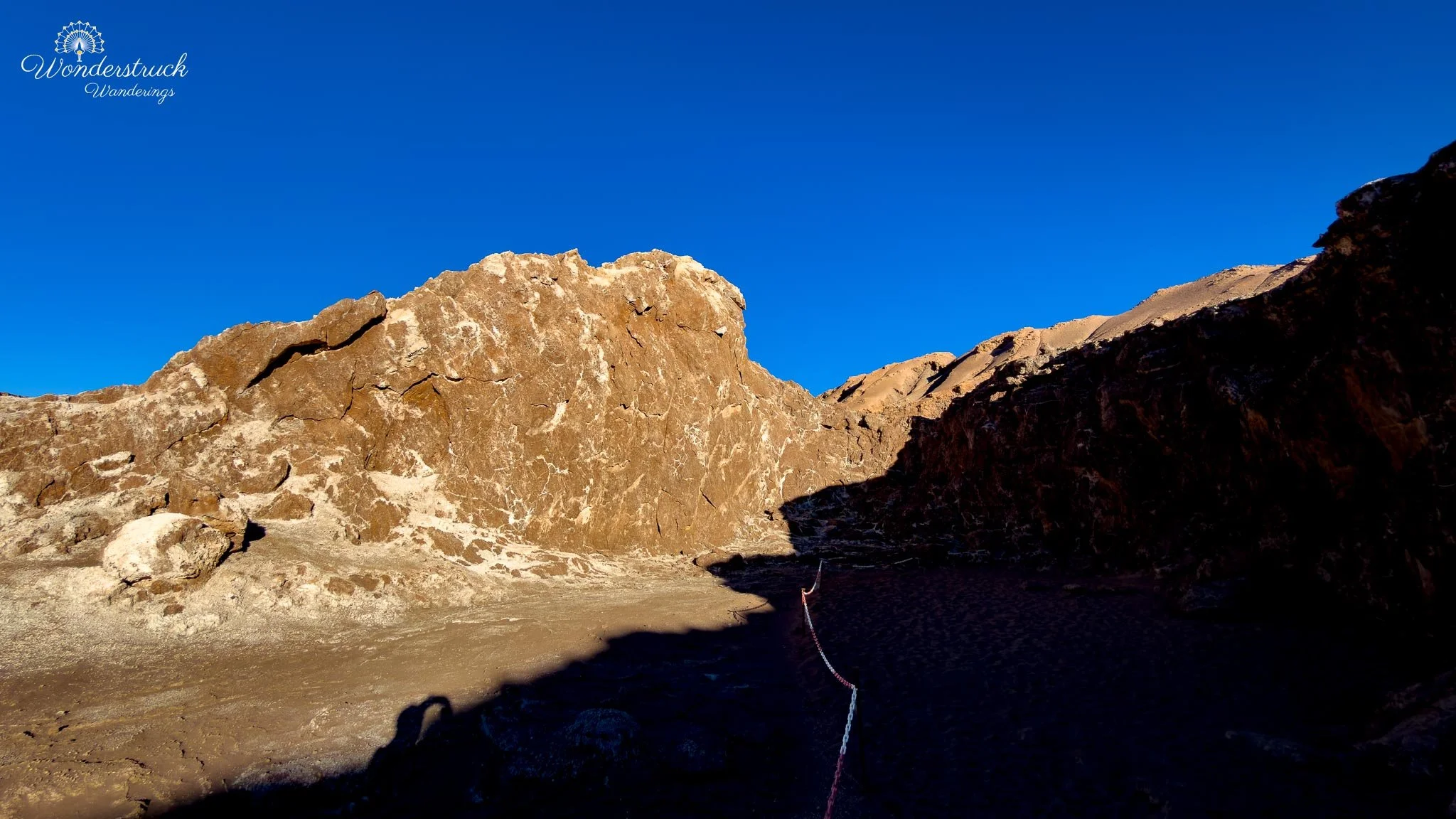
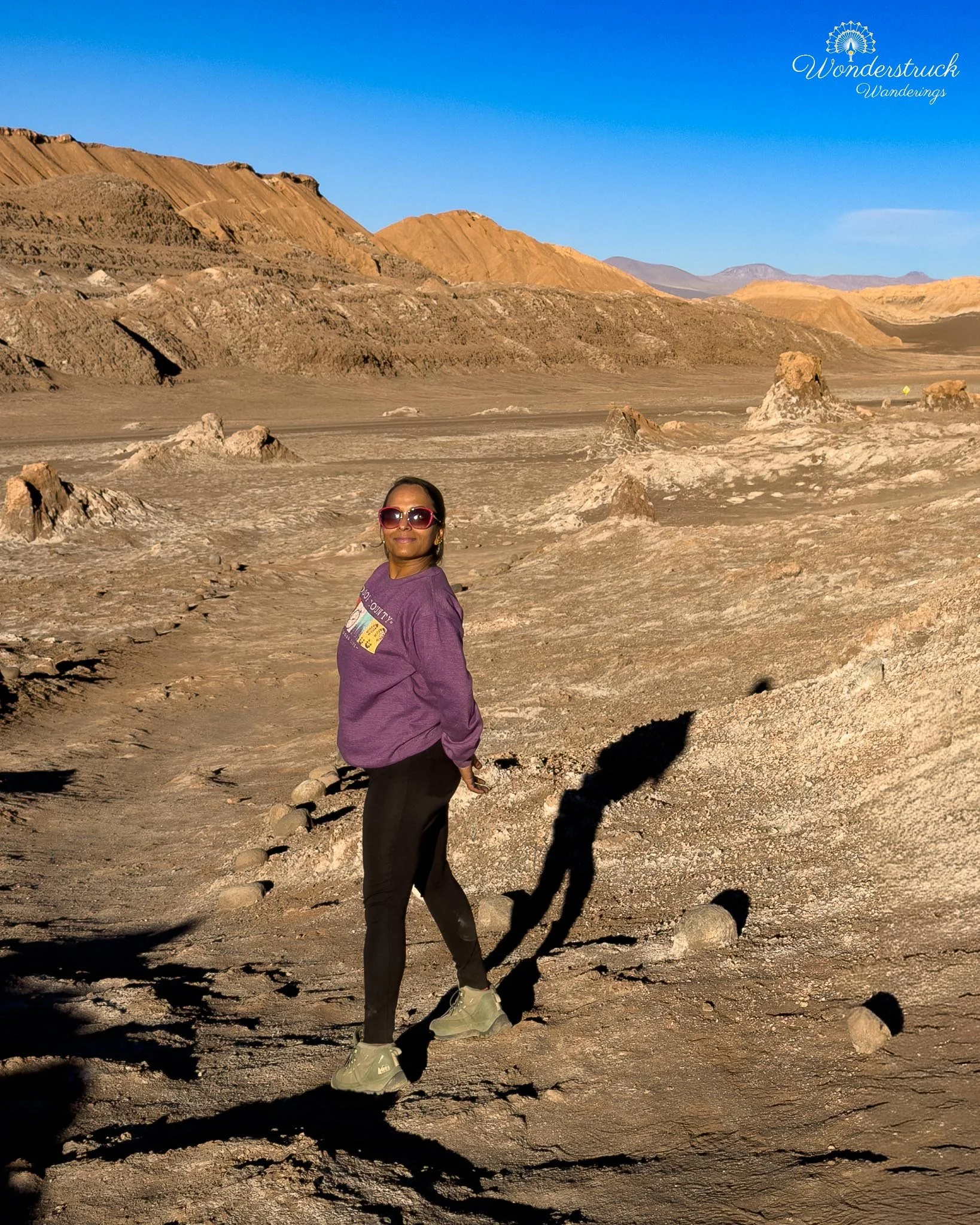
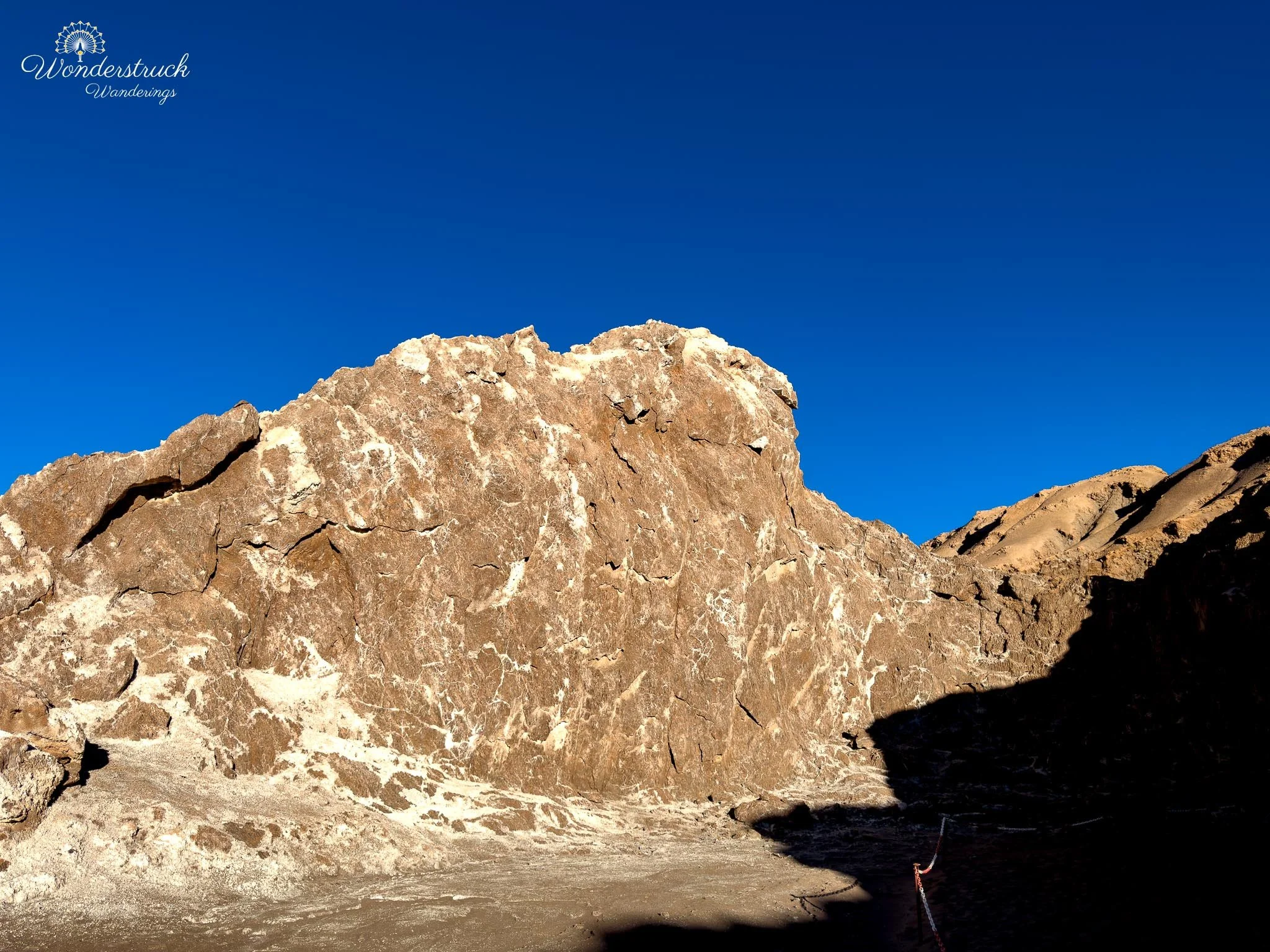
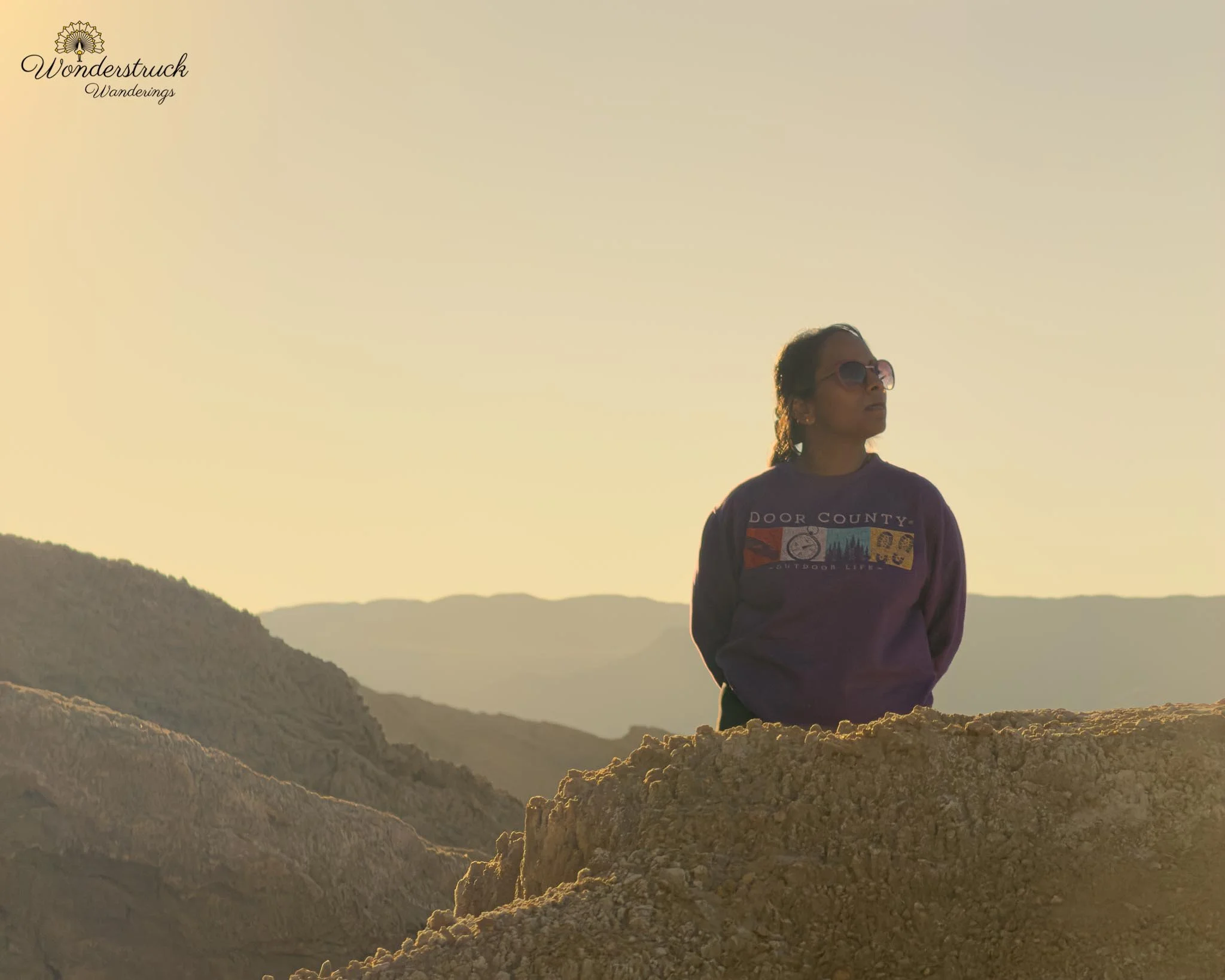
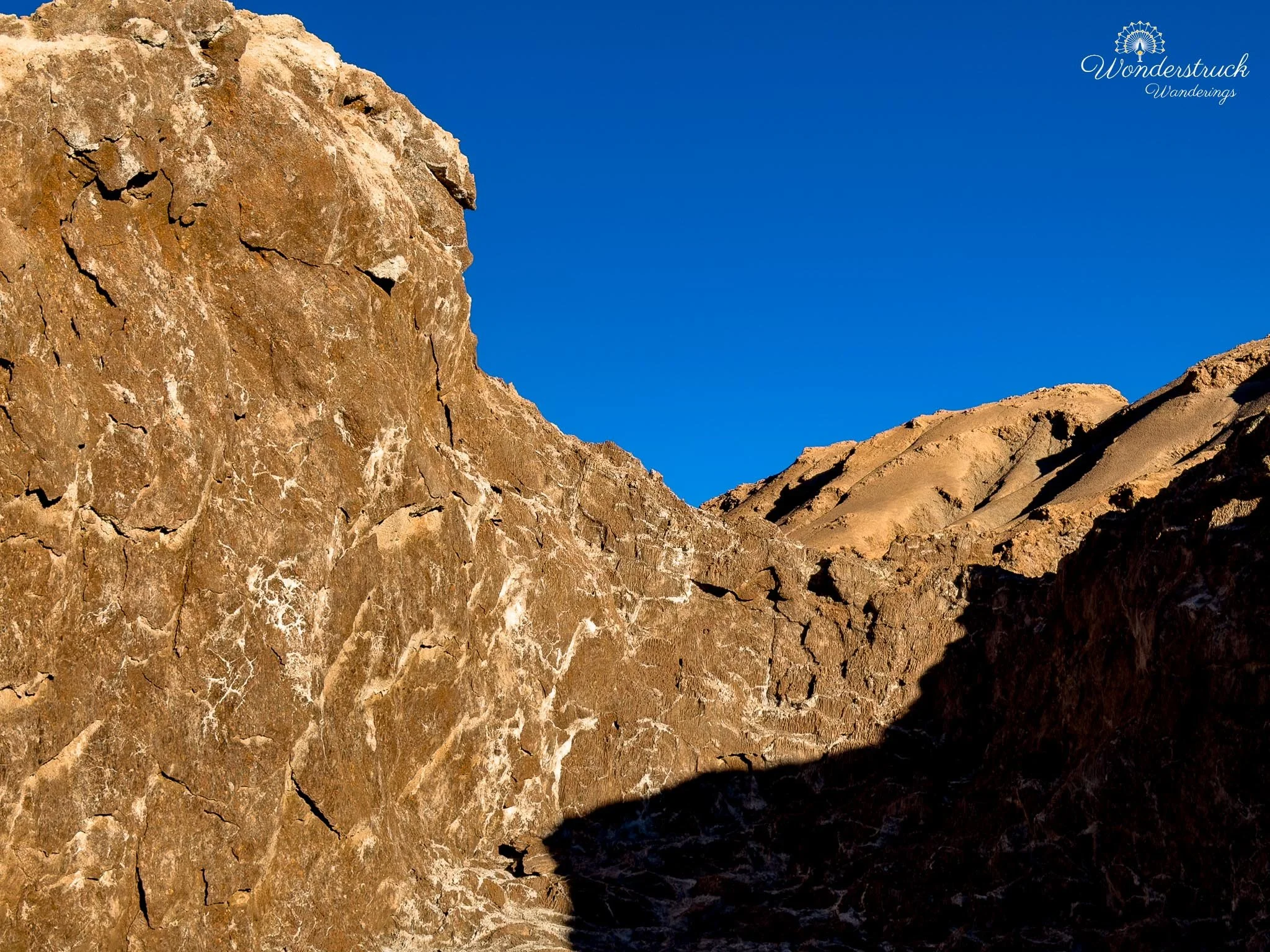
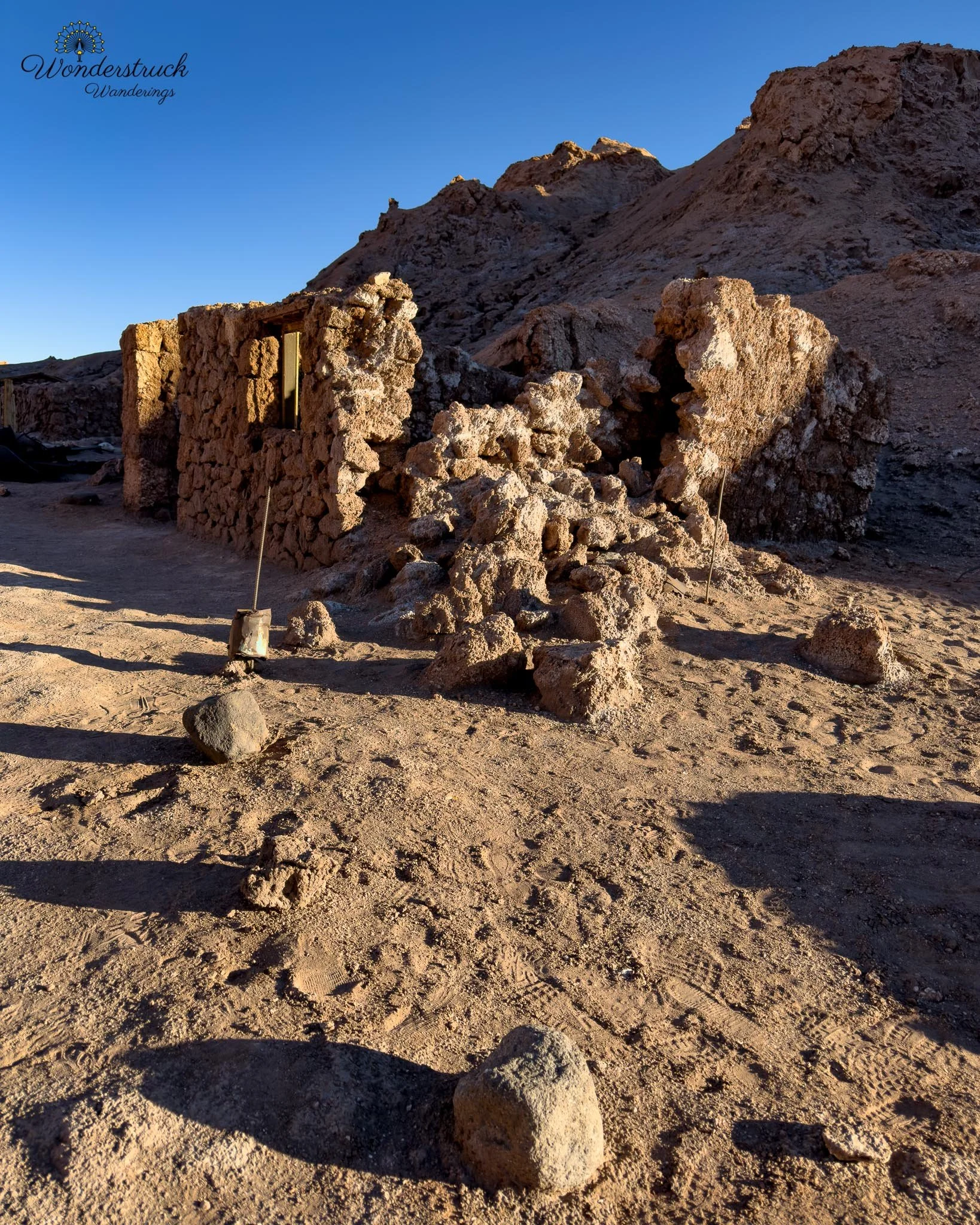
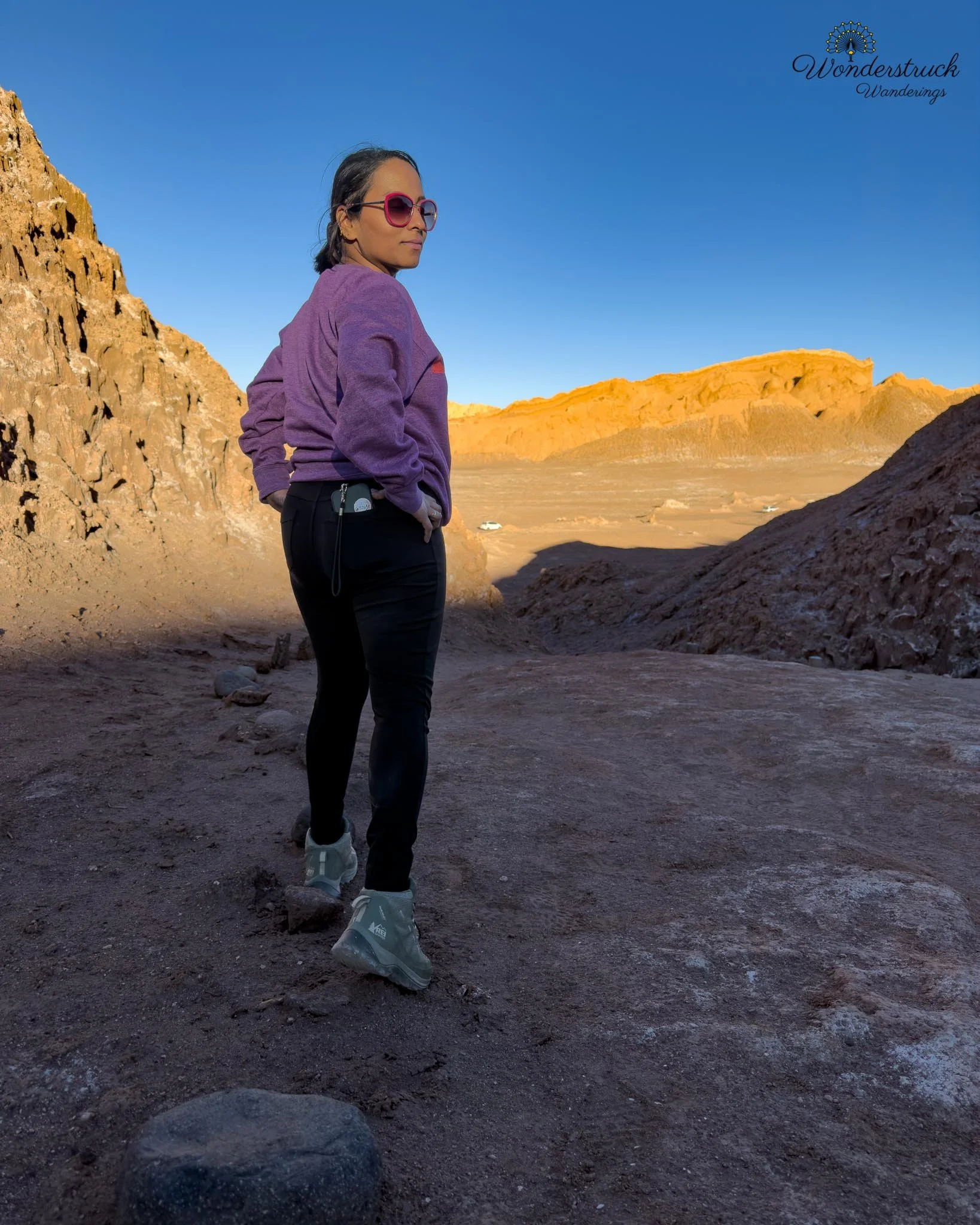
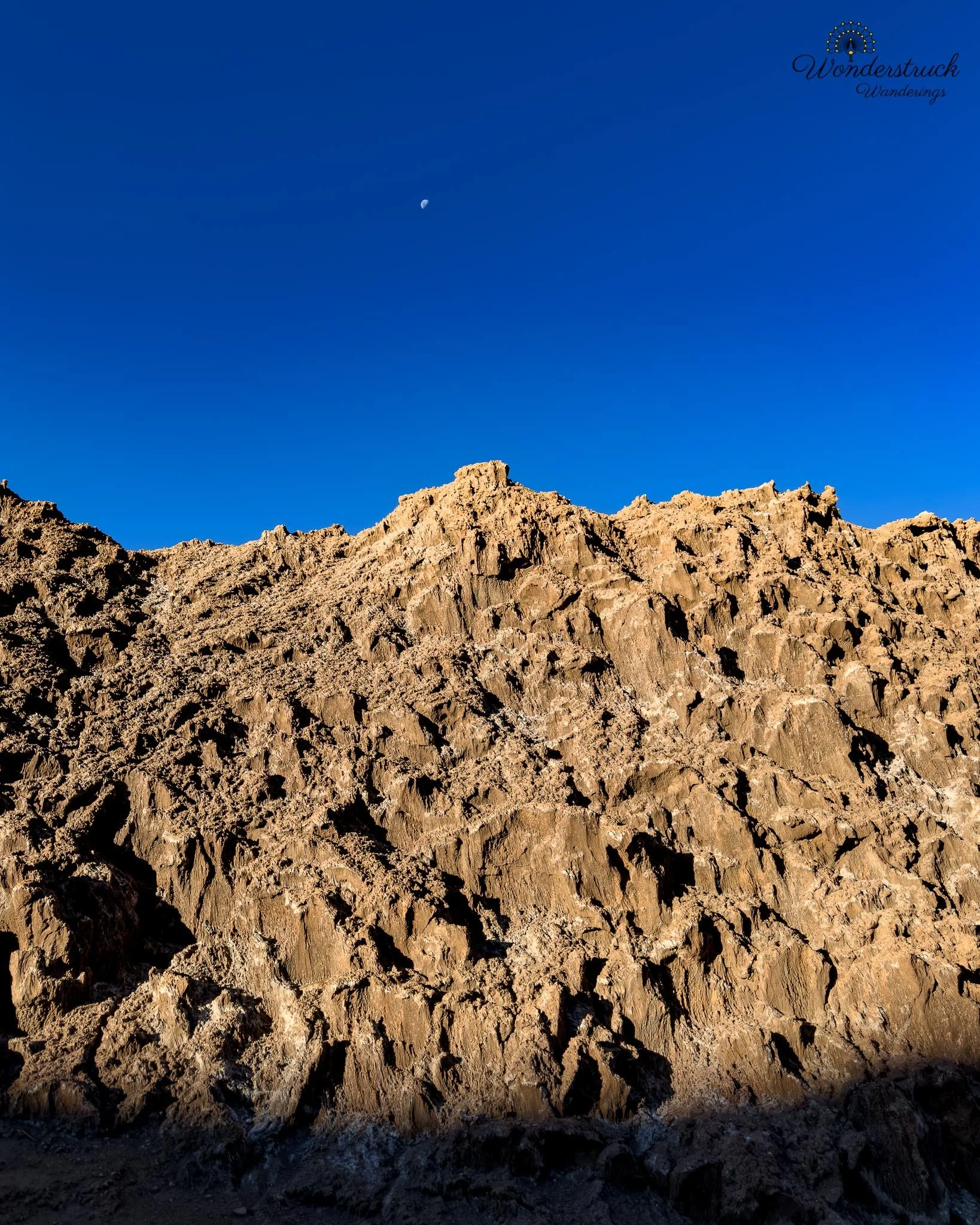
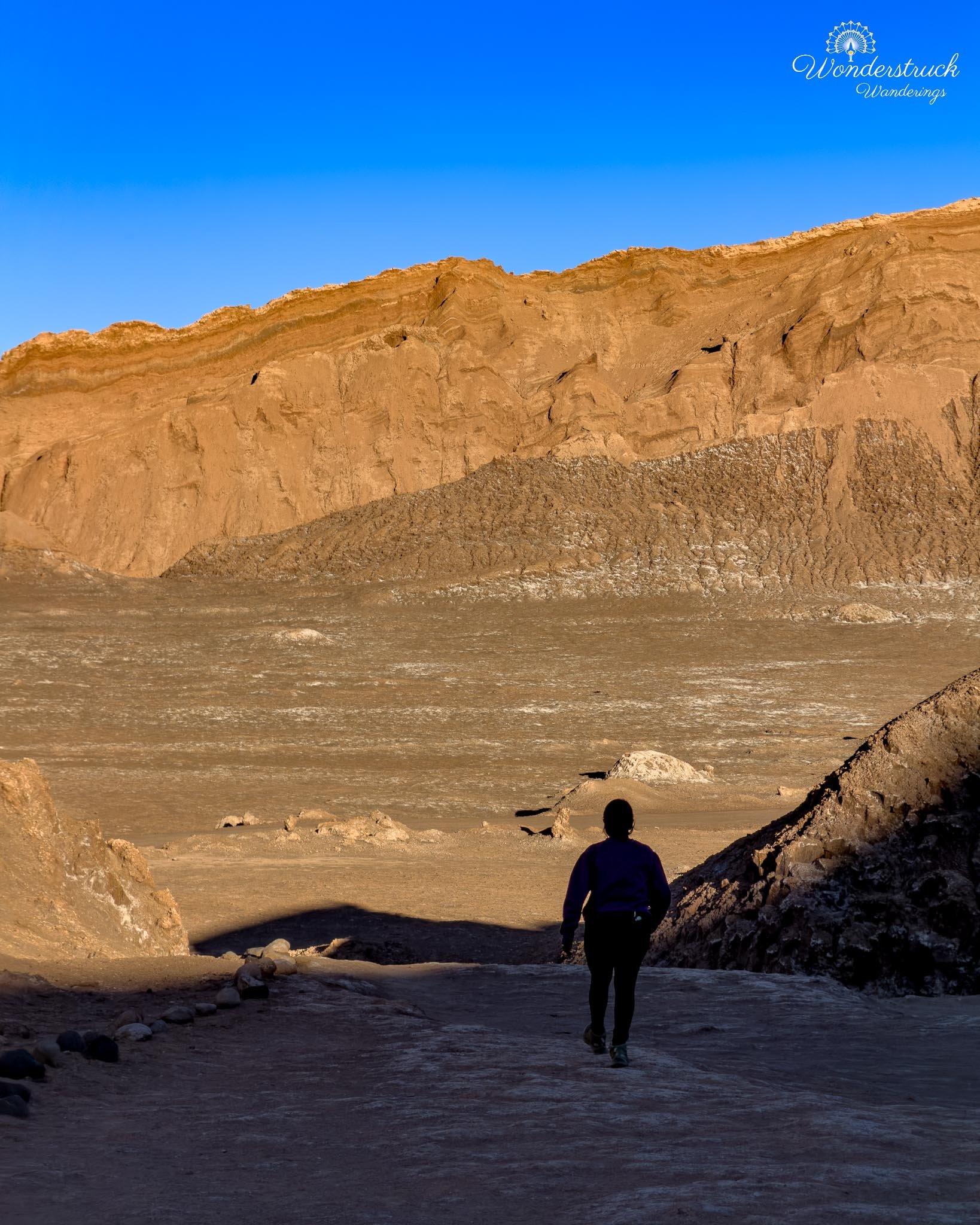
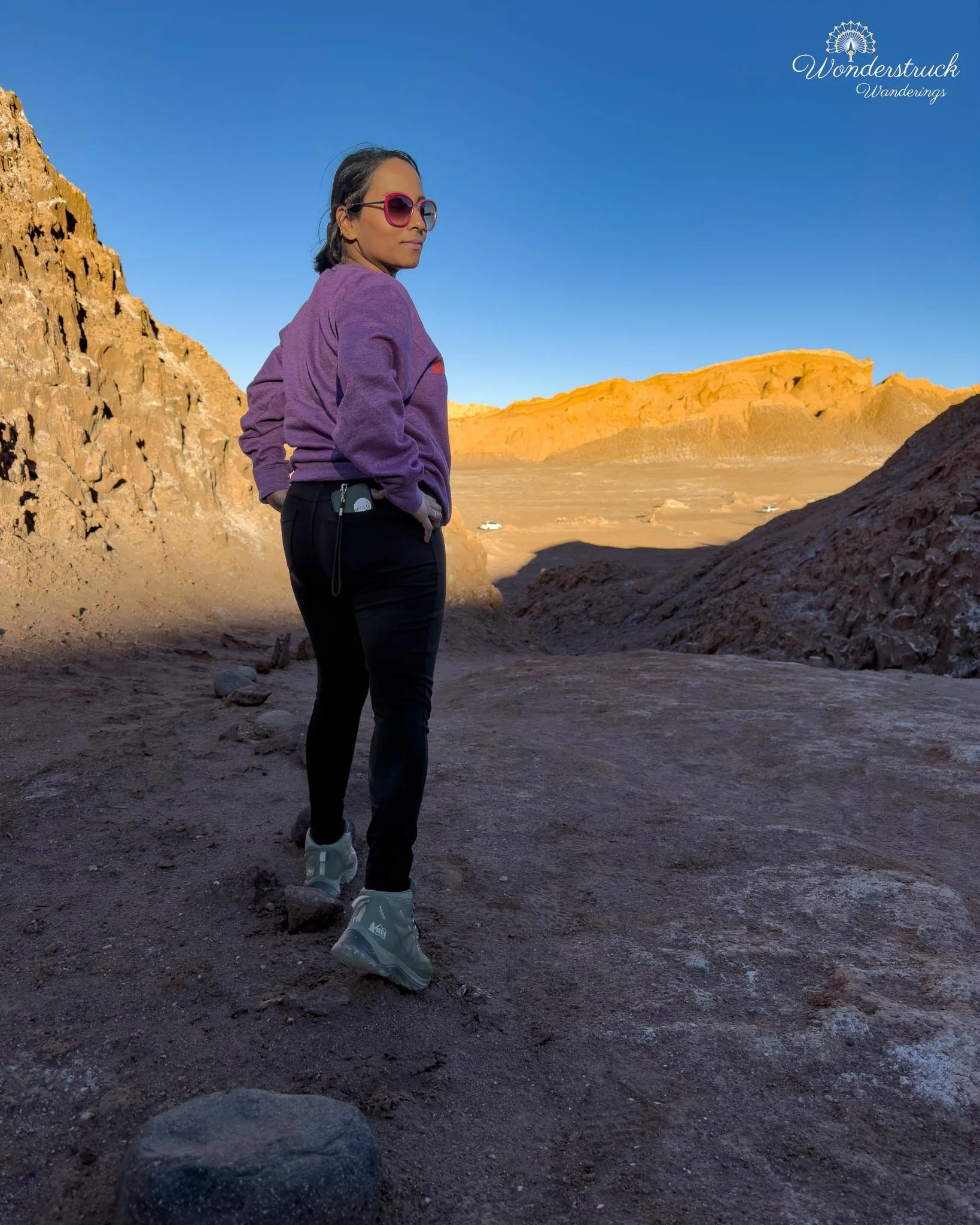
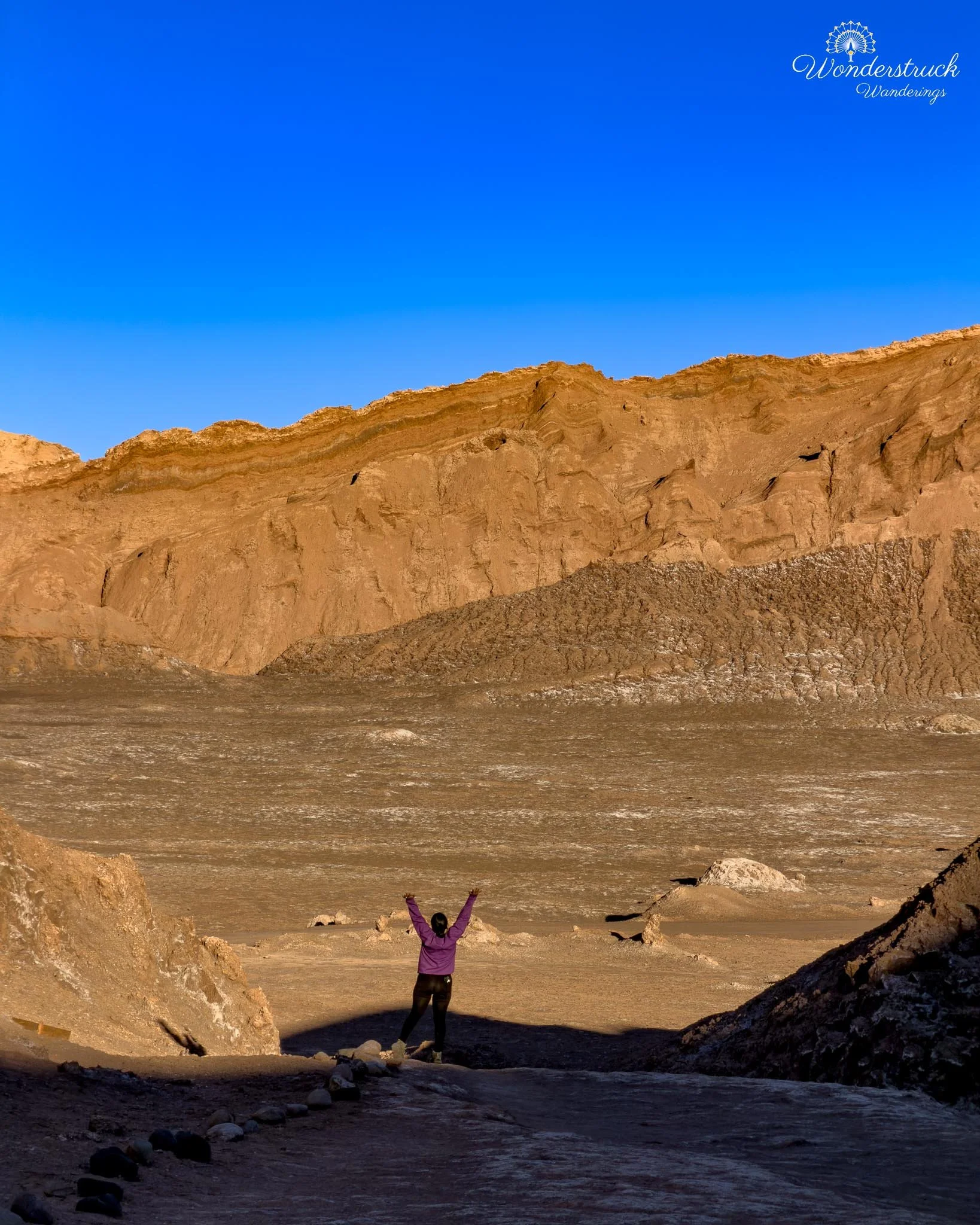
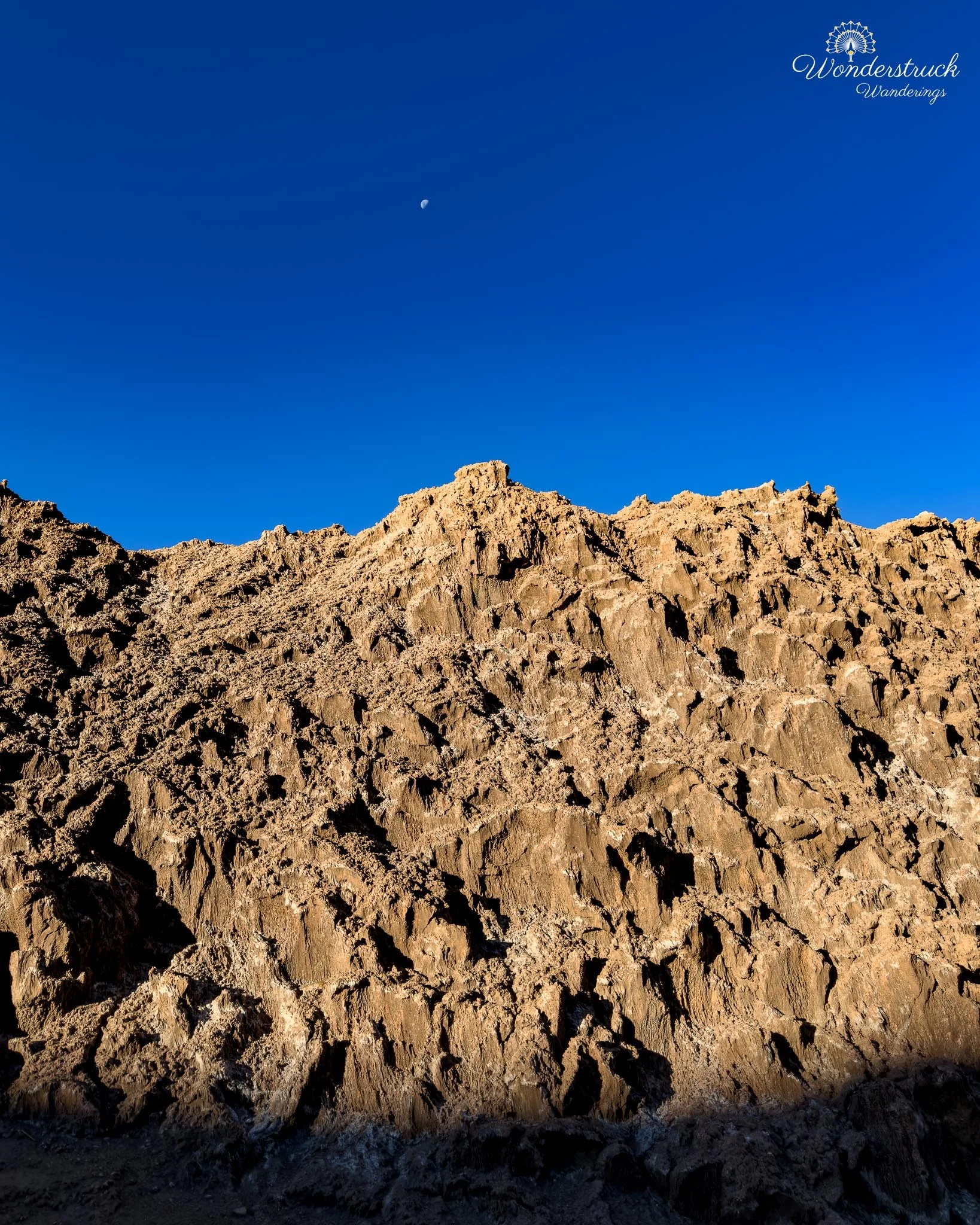
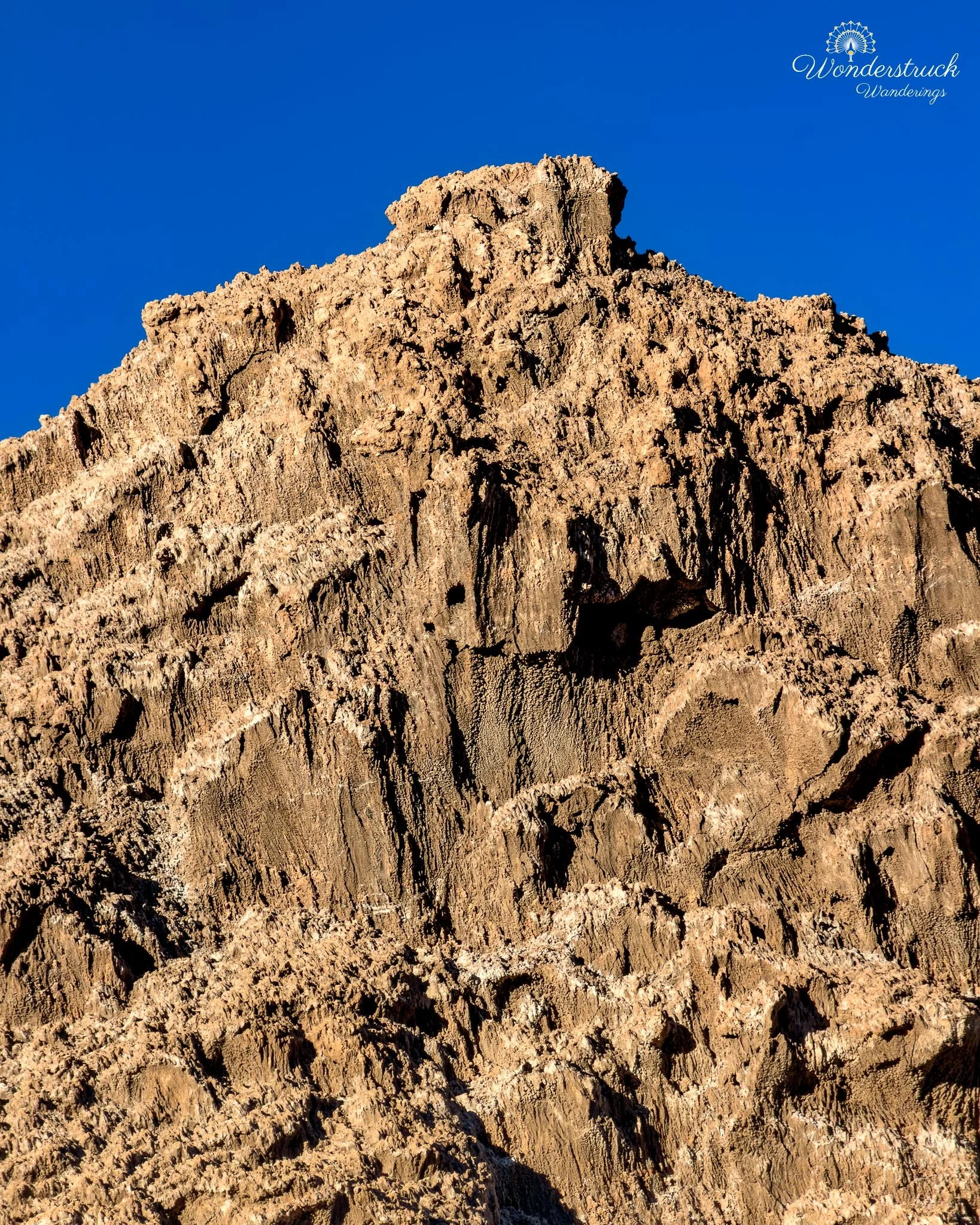
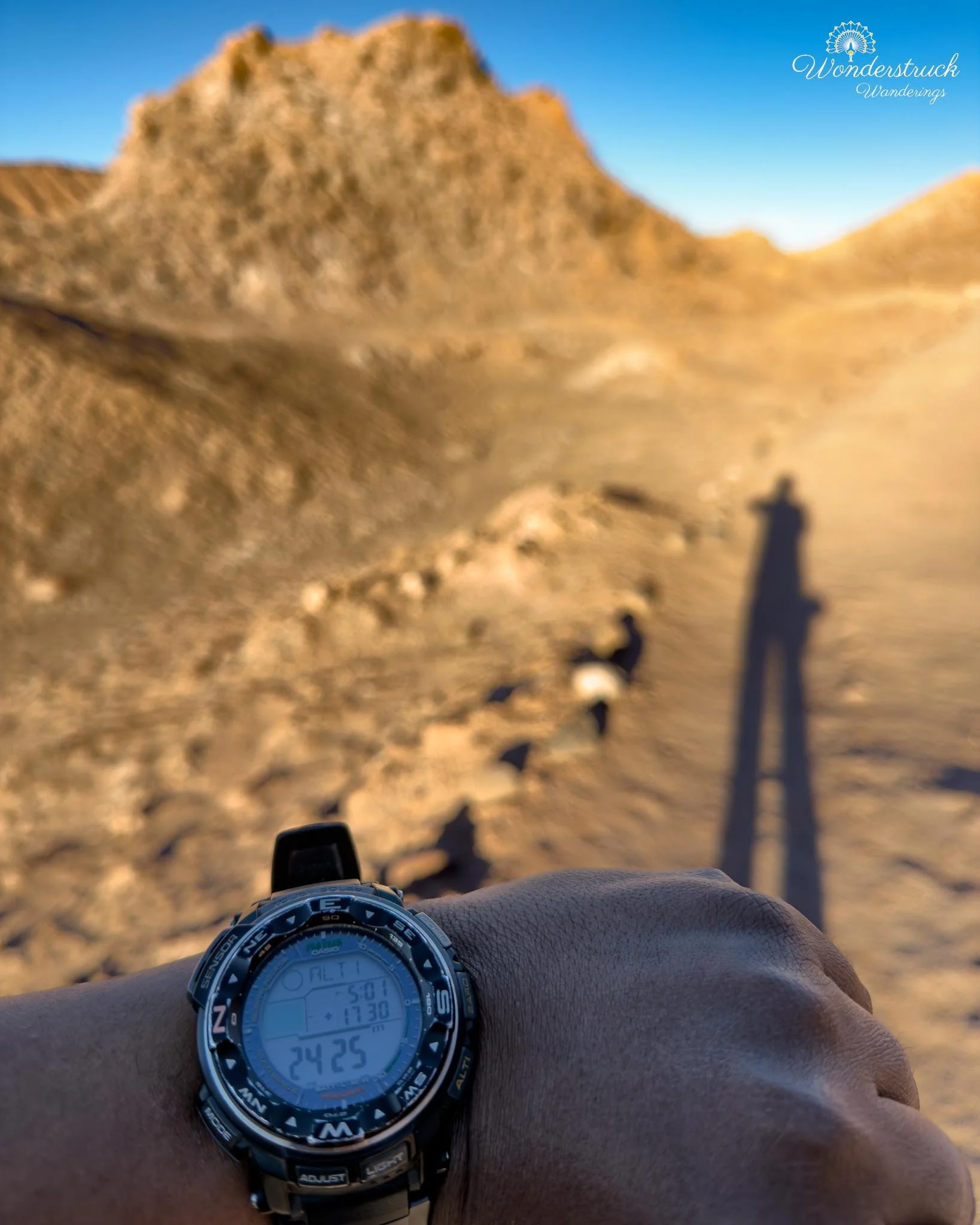
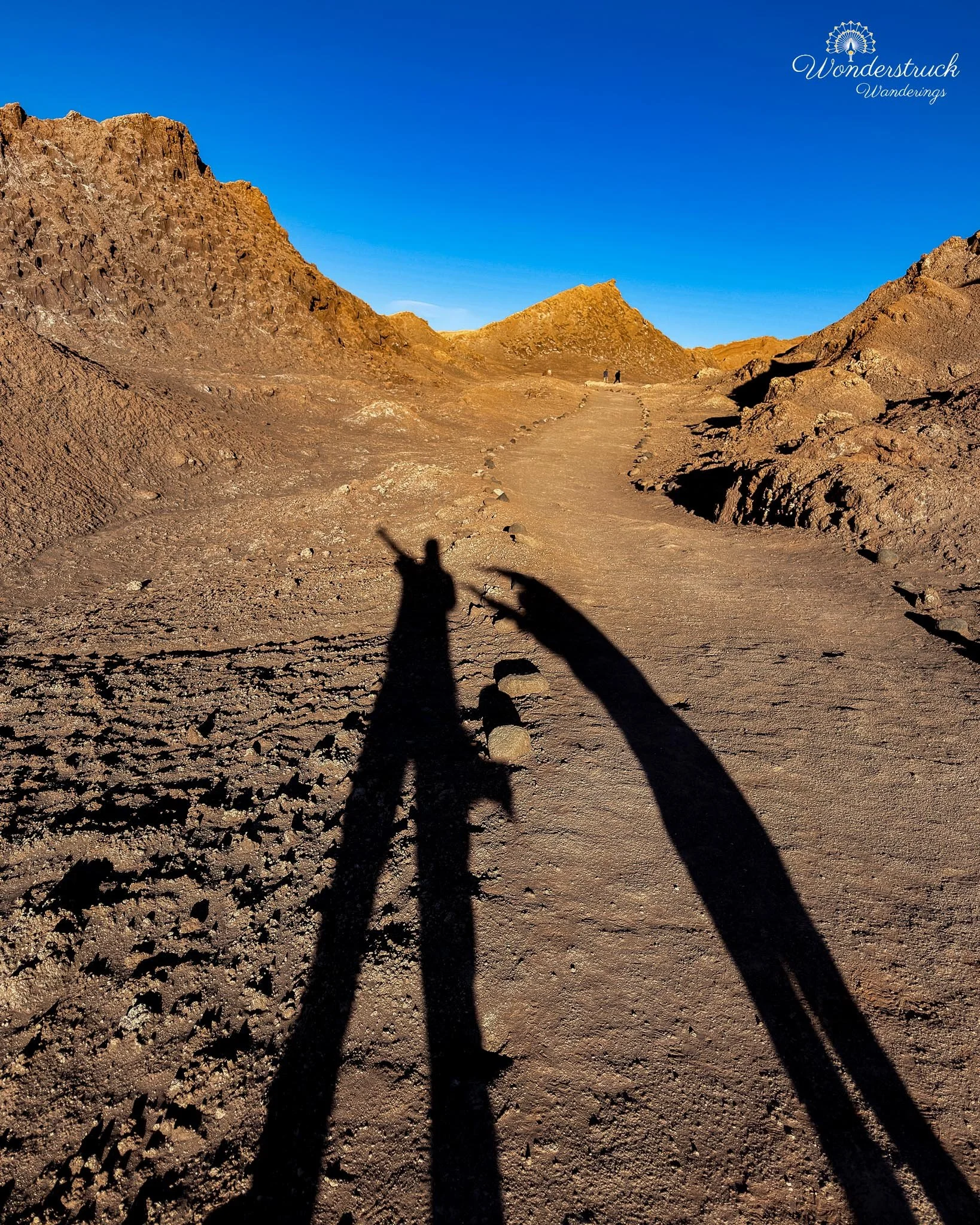
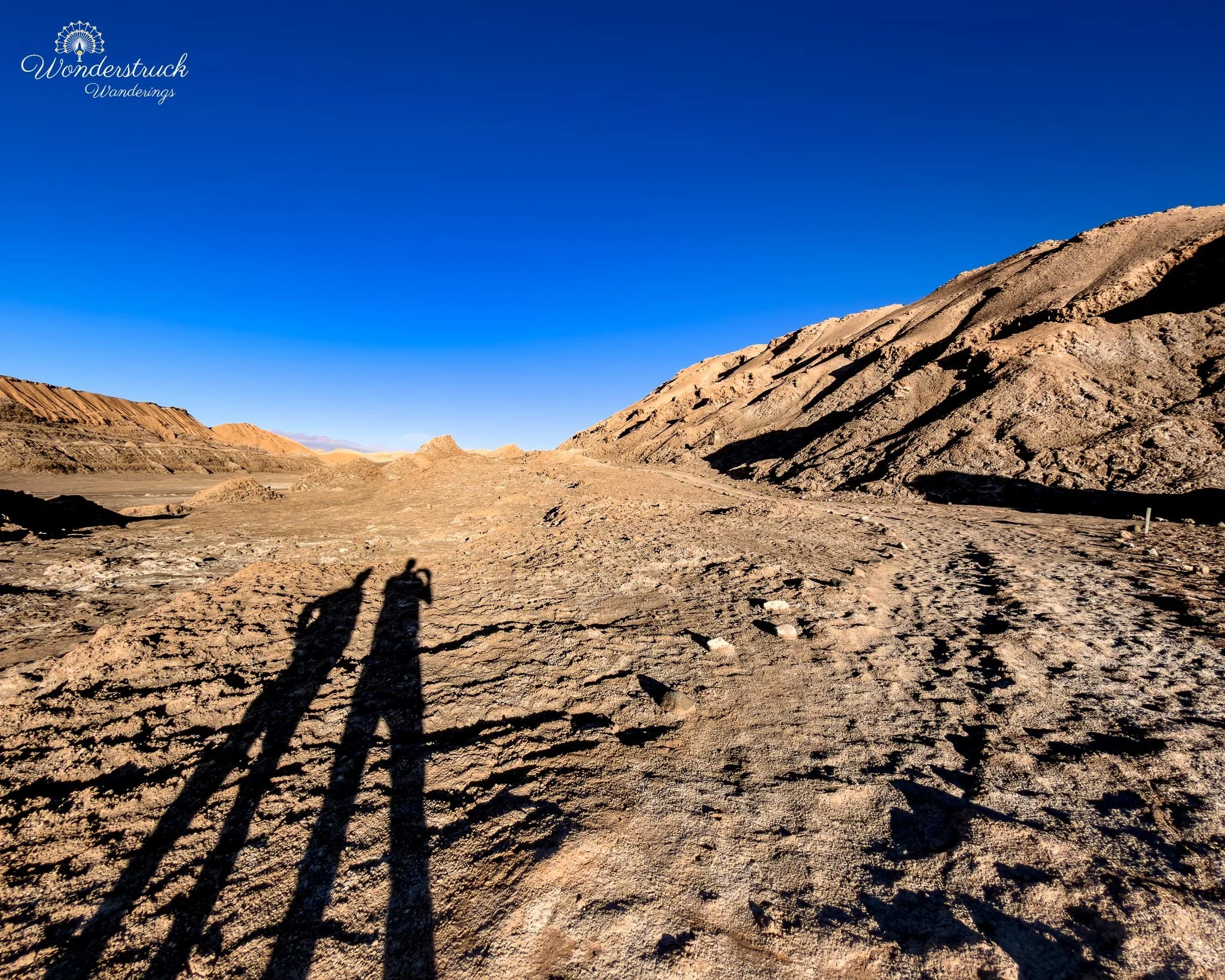
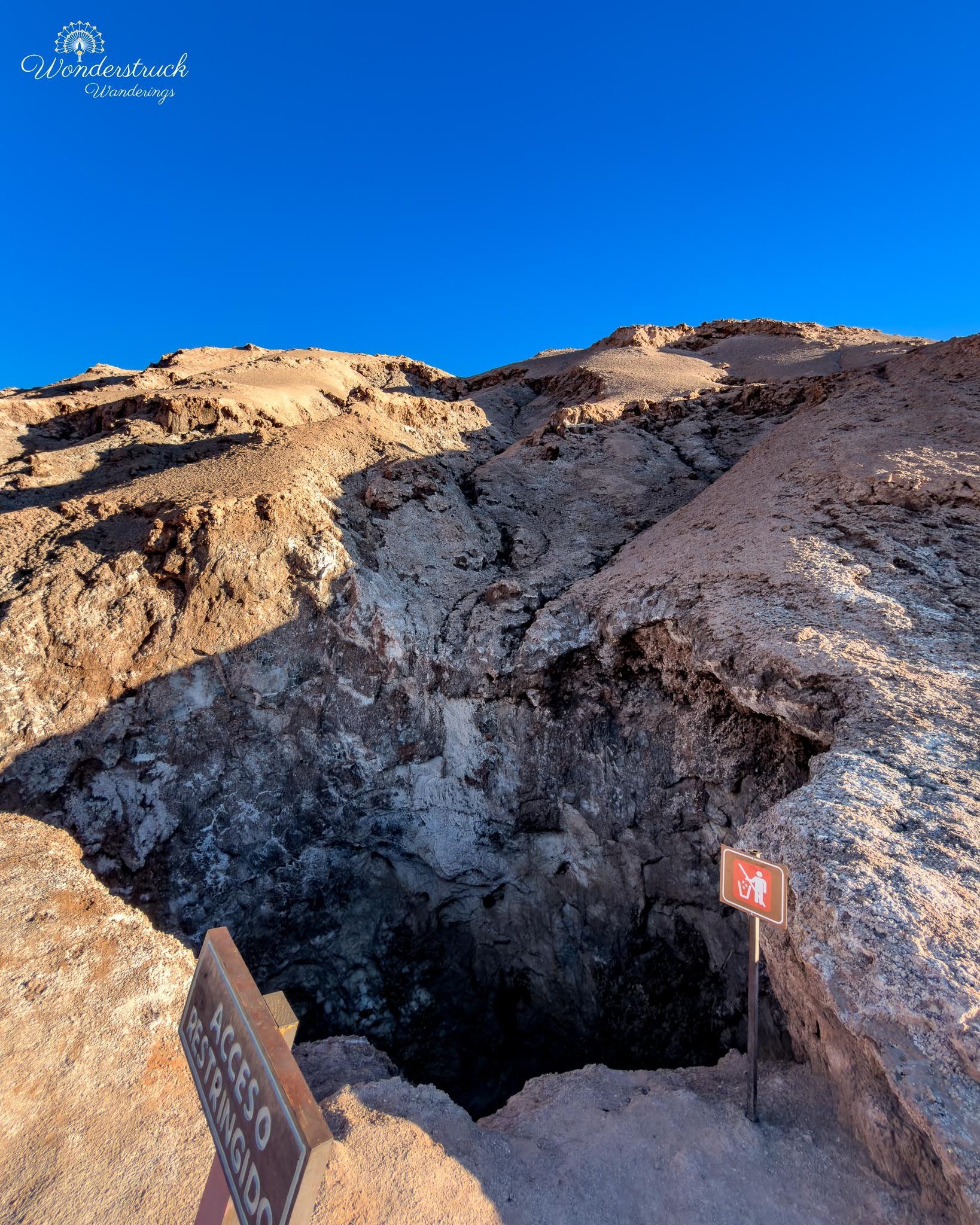
From Tres Marías, we stopped at the Mina Victoria / Victoria Mine sector and decided to do the full marked walk instead of treating it as a quick viewpoint. The route starts from the designated Mina Victoria parking area and leads into one of the more enclosed parts of Valle de la Luna, where the landscape is less about sweeping panoramas and more about salt crusts, exposed mineral bands, eroded clay walls, and the old mining traces that give the sector its name. The marked path first takes you away from the road and into the old mine area, passing pale salt deposits, cracked clay, gypsum-like textures, and low ridges carved by wind and time. This was the section where Valle de la Luna felt most interesting at ground level. Duna Mayor gives you the big view, and Tres Marías gives you the named formation, but Mina Victoria lets you see the valley’s geology up close: white mineral veins across brown earth, crunchy salt underfoot, and eroded walls that look completely different depending on the sun angle. The official route eventually leads toward the circuit road, so many people continue out that way and walk back along the road. We chose not to do that. It was hot, exposed, and walking the main road in full sun did not sound appealing, so we retraced our path through the mine section instead. That ended up being the better choice for us. Walking back the same way did not feel repetitive because the views changed completely in reverse. Formations that had been in shadow on the way in caught more light on the way back, and the same salt ridges, clay walls, and mineral bands looked different from the opposite direction. Retracing the trail also let us slow down and notice details we had missed the first time: the way the white salt crust broke through the darker soil, the small undercut shapes along the walls, and the old mining context that made this part of the valley feel more layered than a simple scenic stop. By the time we returned to the car, Mina Victoria had become one of the most worthwhile short walks in Valle de la Luna for us—not because it had the biggest view, but because it gave us the closest look at the valley’s texture, geology, and history..
Licancabur Glow and Dinner in San Pedro
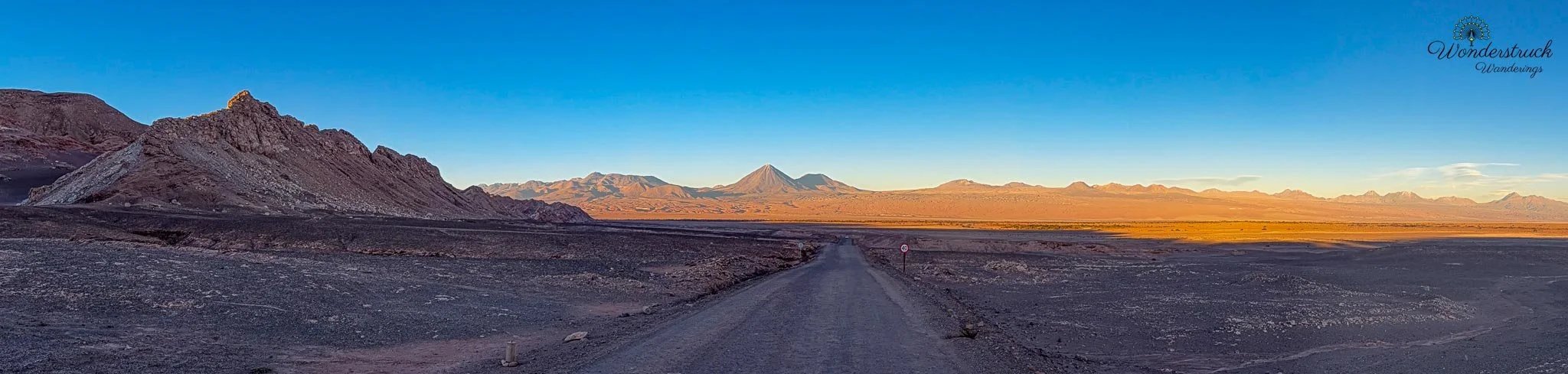
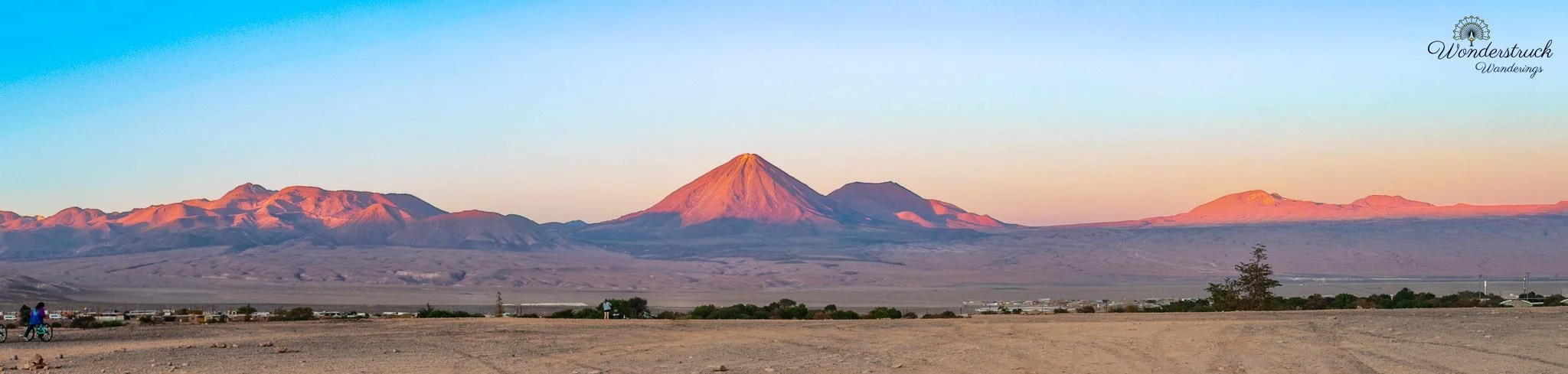
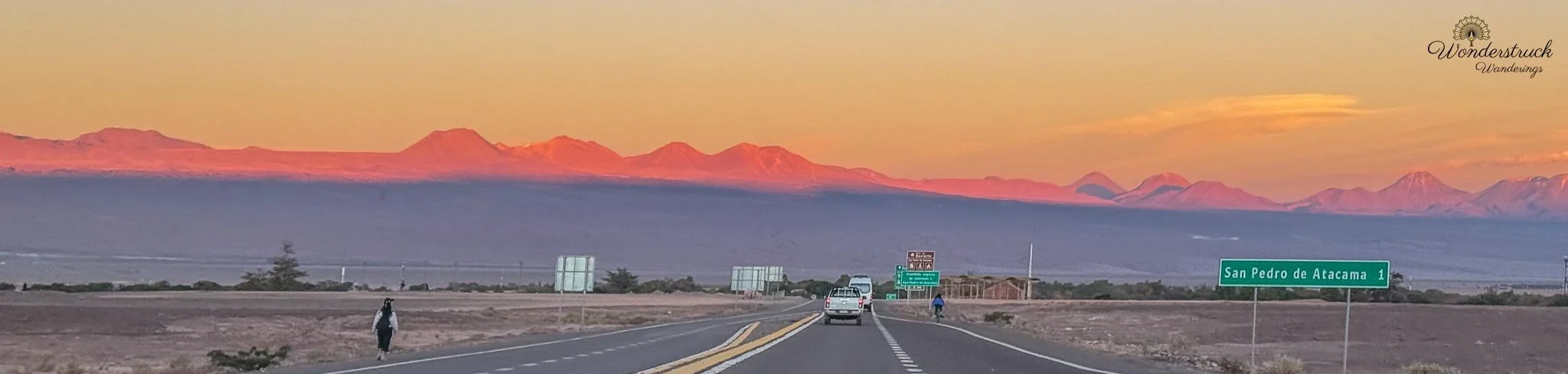
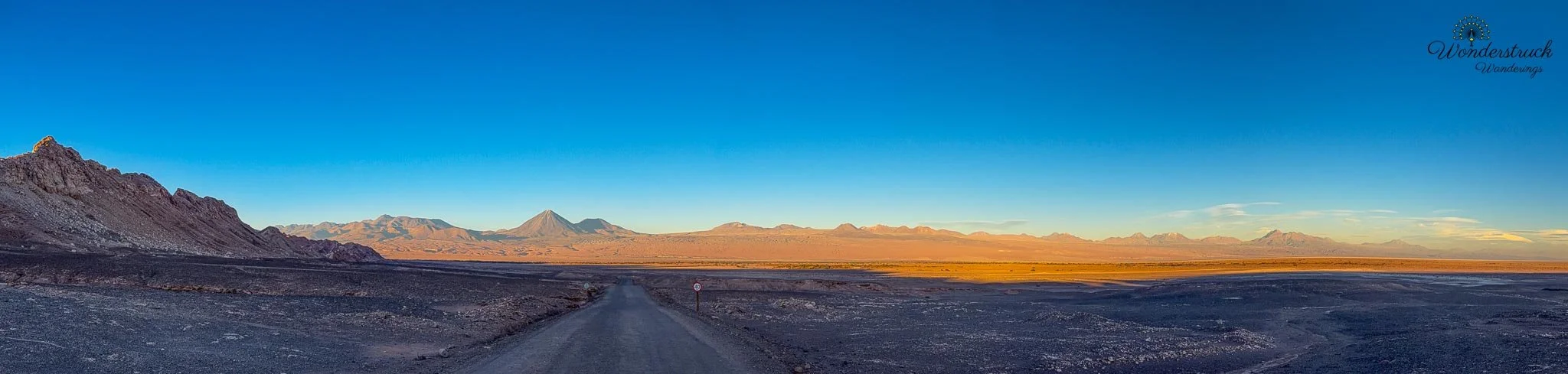
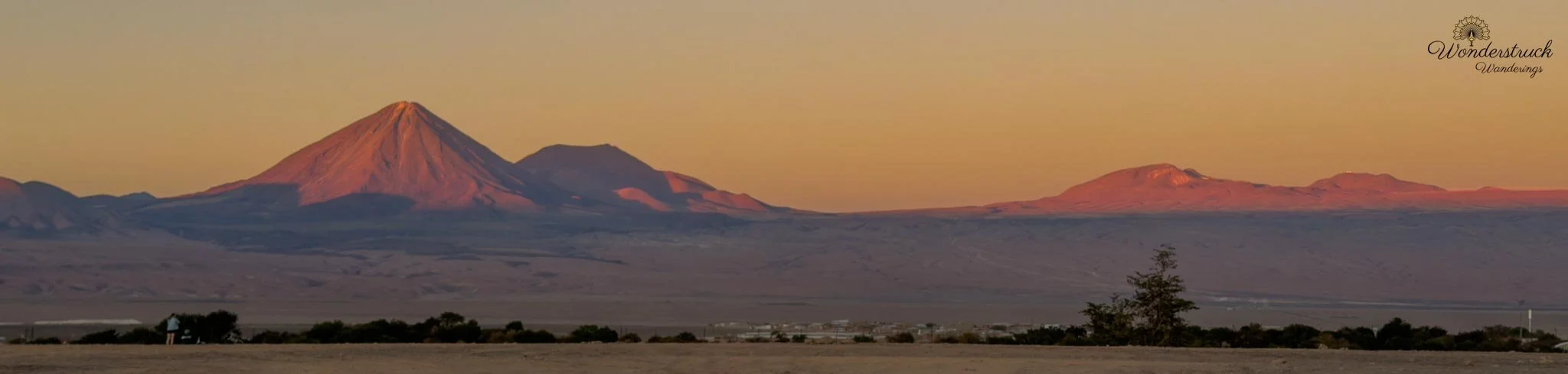
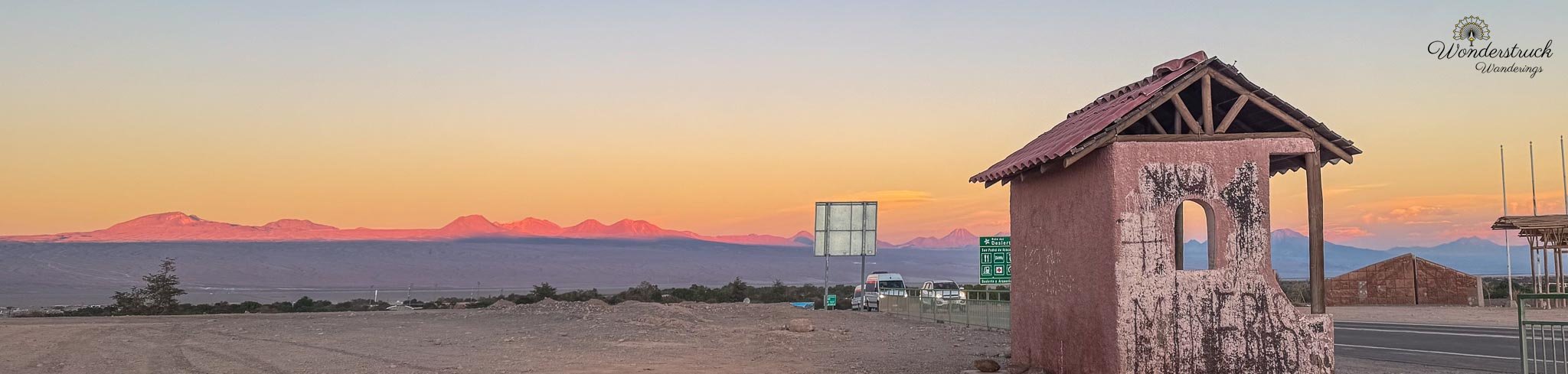
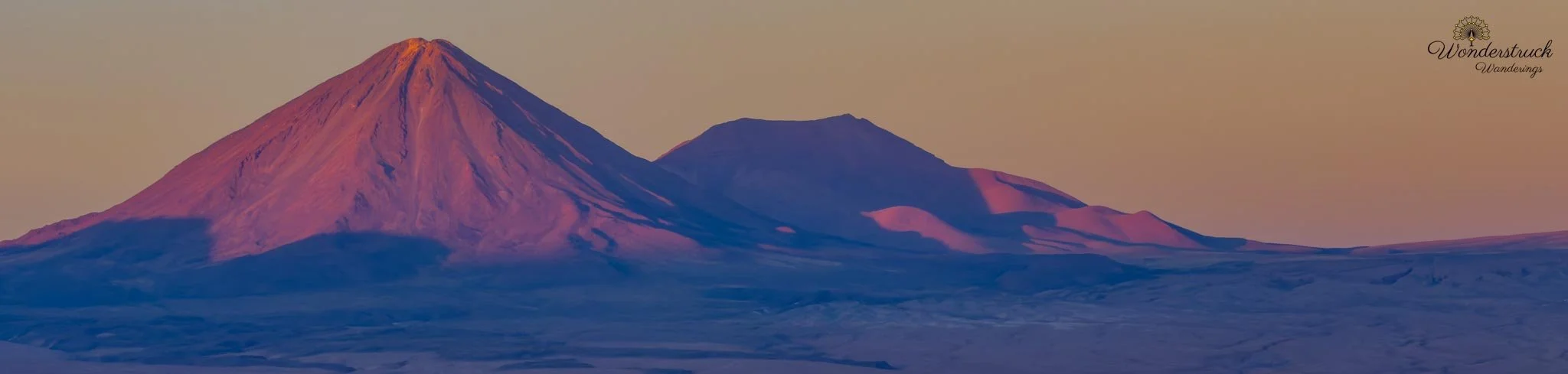
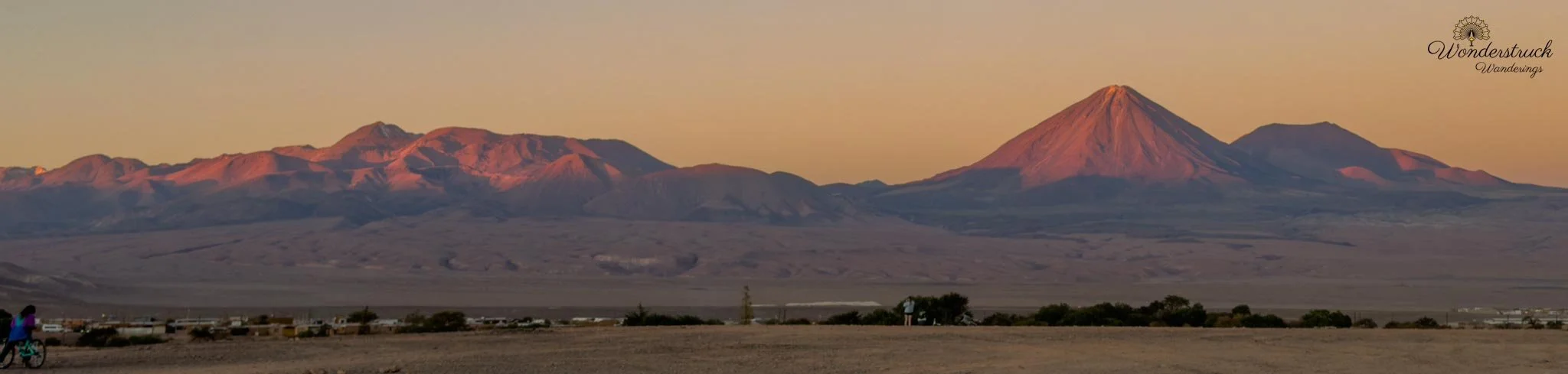
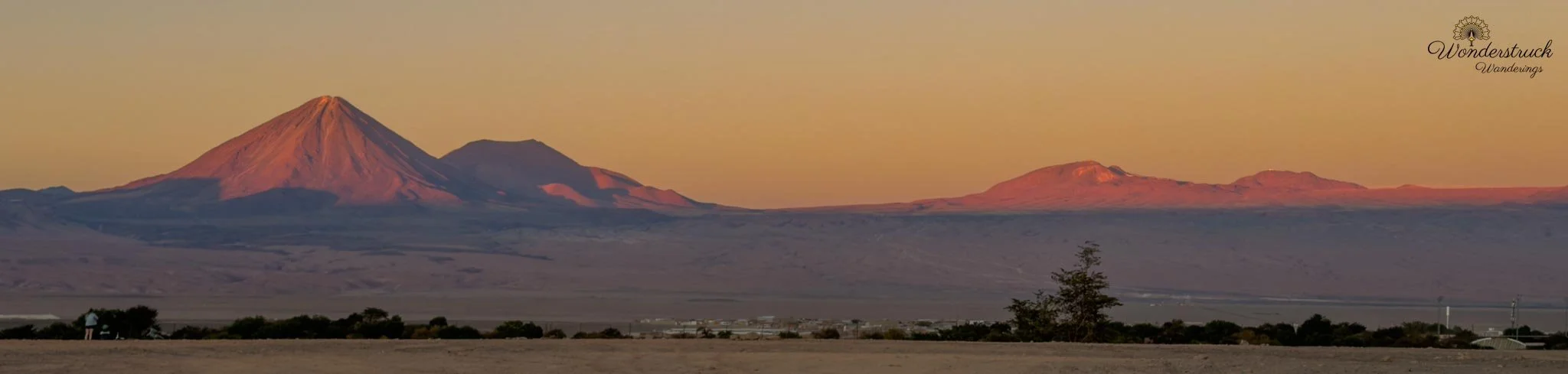
By the time we finished, the light was finally getting good. This was exactly when we wanted to go to Duna Mayor. Unfortunately, the timing rules worked against us. Even though the sun angle was improving and the desert was beginning to gain depth, we were not allowed to stop there and were told to continue toward the Ckari sector for sunset. Technically, we could have made it to Ckari, but the whole situation had started to feel more like managing a schedule than enjoying the landscape. So we made a different choice. Instead of rushing to Ckari, we tried watching sunset from the Linkanatay viewpoint along Ruta 23 toward Calama, just outside town. It seemed like a good backup plan, and sometimes those unplanned viewpoints work out beautifully. But when we arrived, the parking was already full. Trying to find a spot was taking long enough that we could feel the light slipping away. At that point, we turned back toward town and aimed for a Licancabur viewpoint near the junction off Ruta 23. In all the running around, we missed the best light, which was frustrating. But the desert still gave us something: Licancabur Volcano caught a majestic pink and purple glow, soft and quiet rather than fiery.
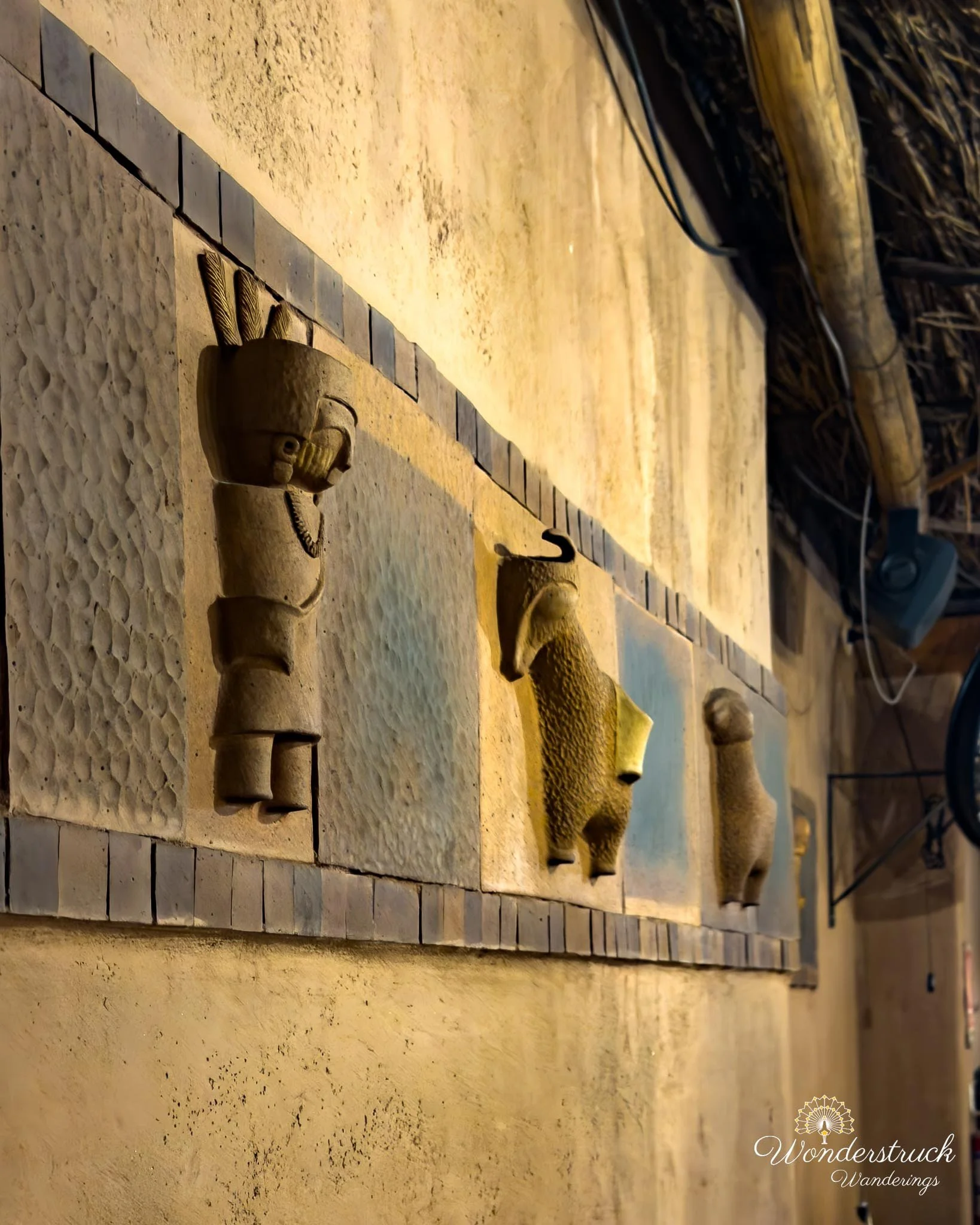
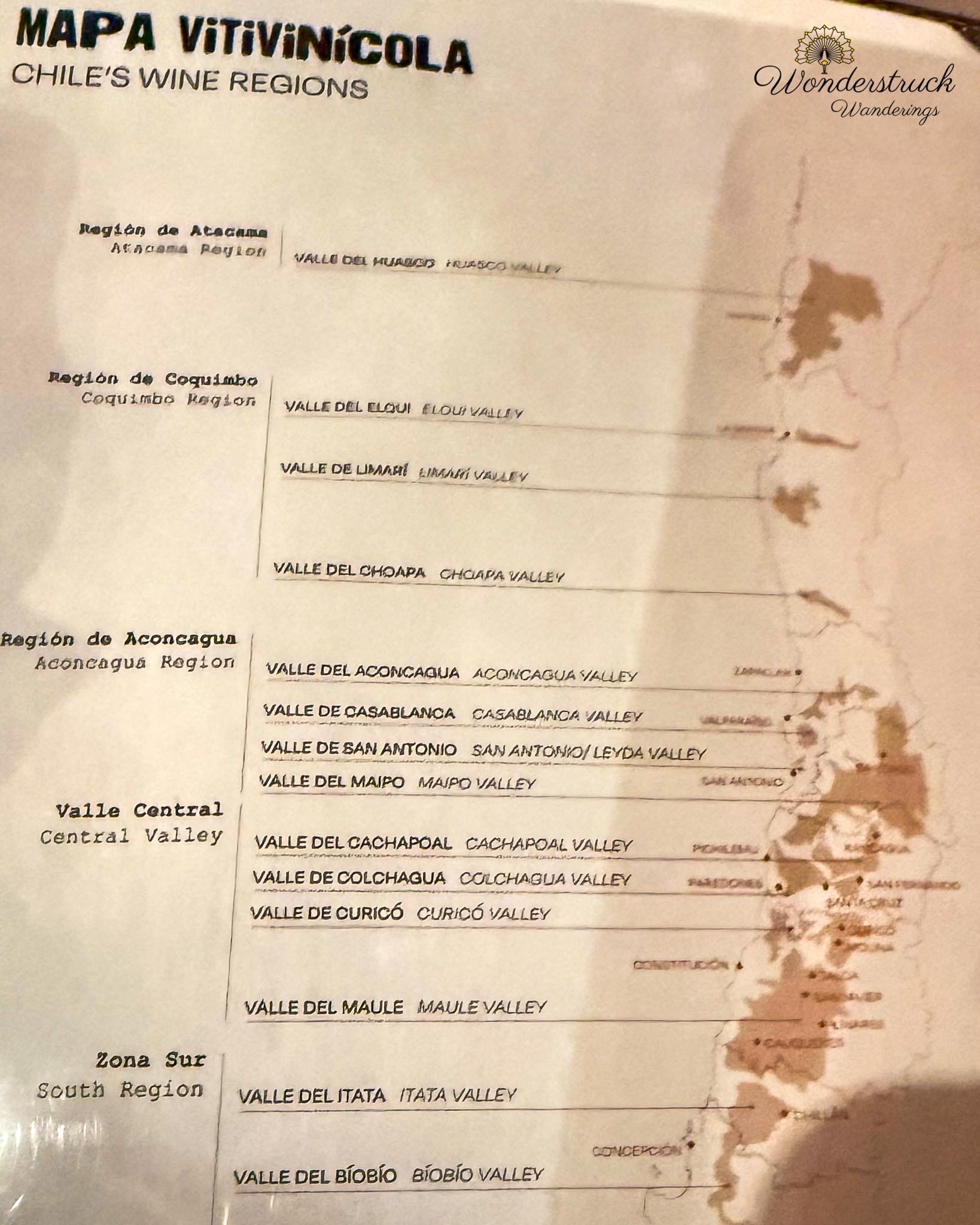
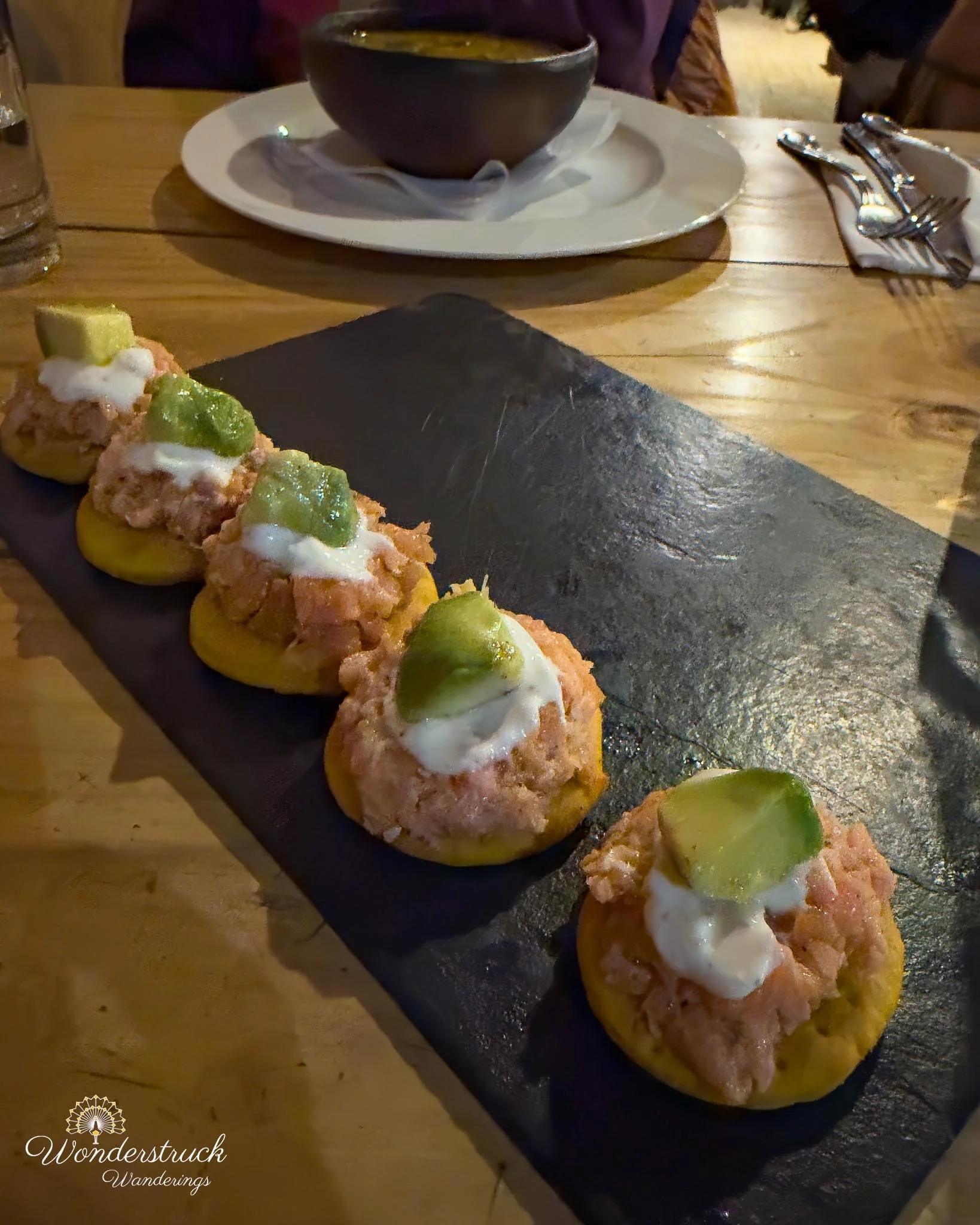
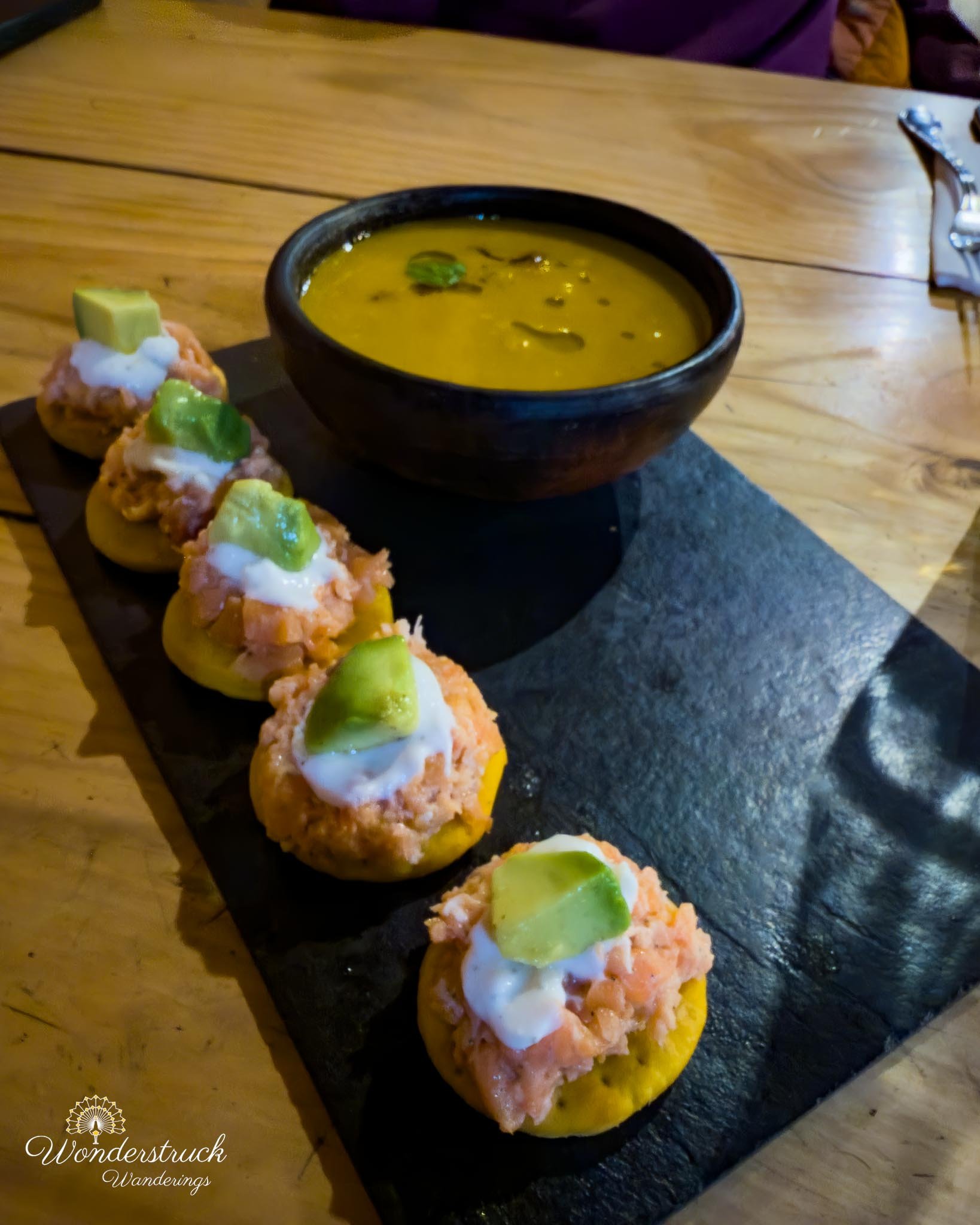
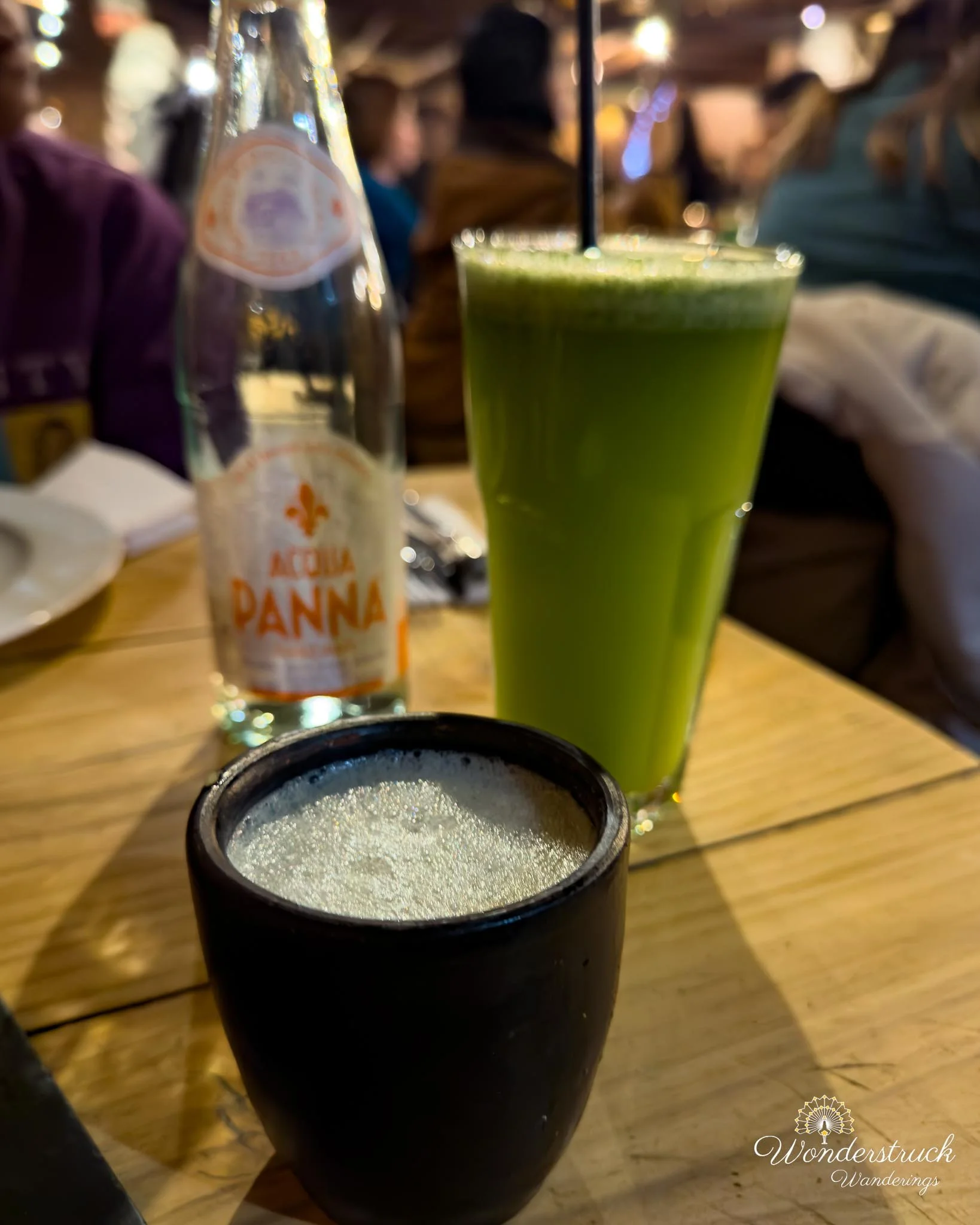
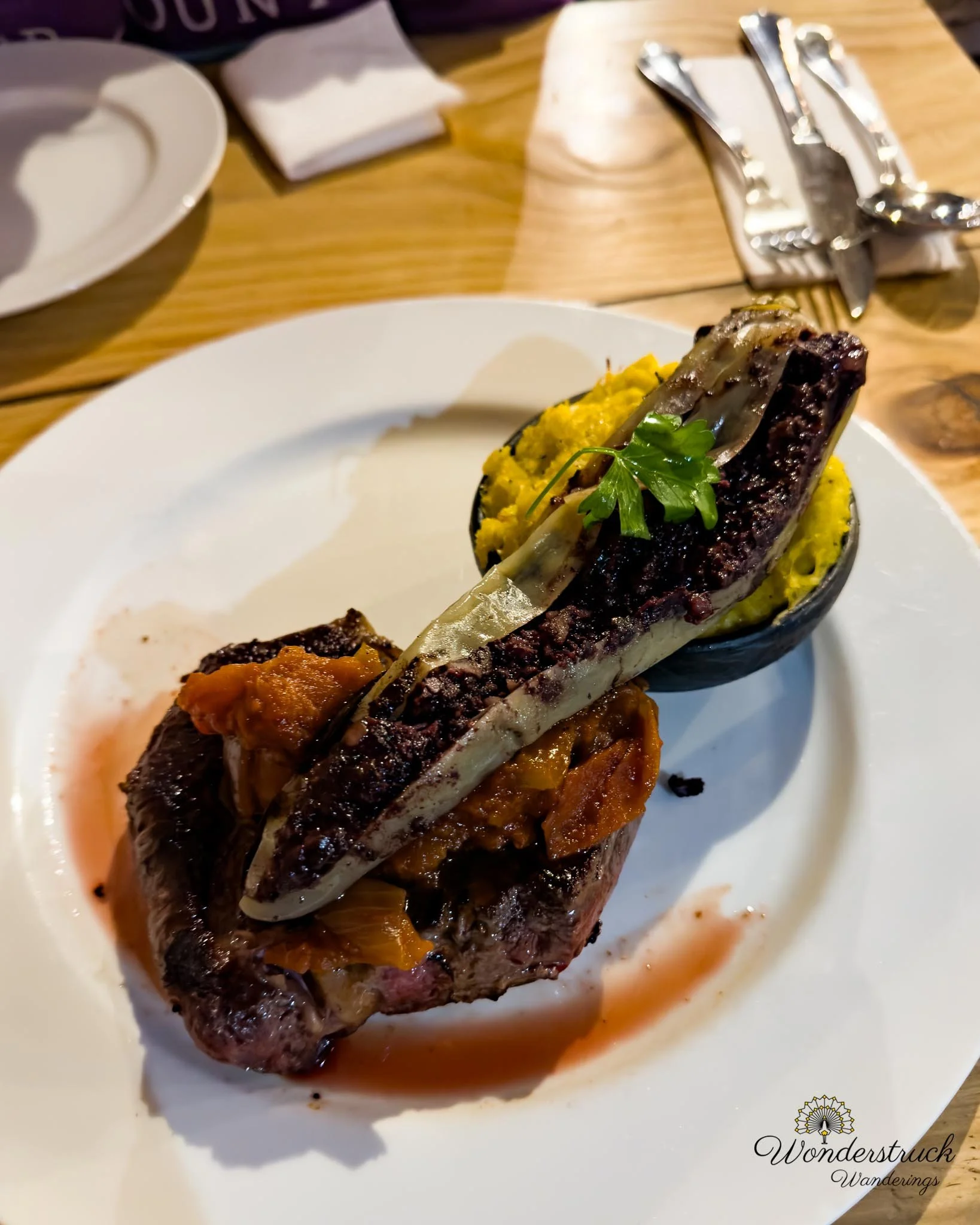
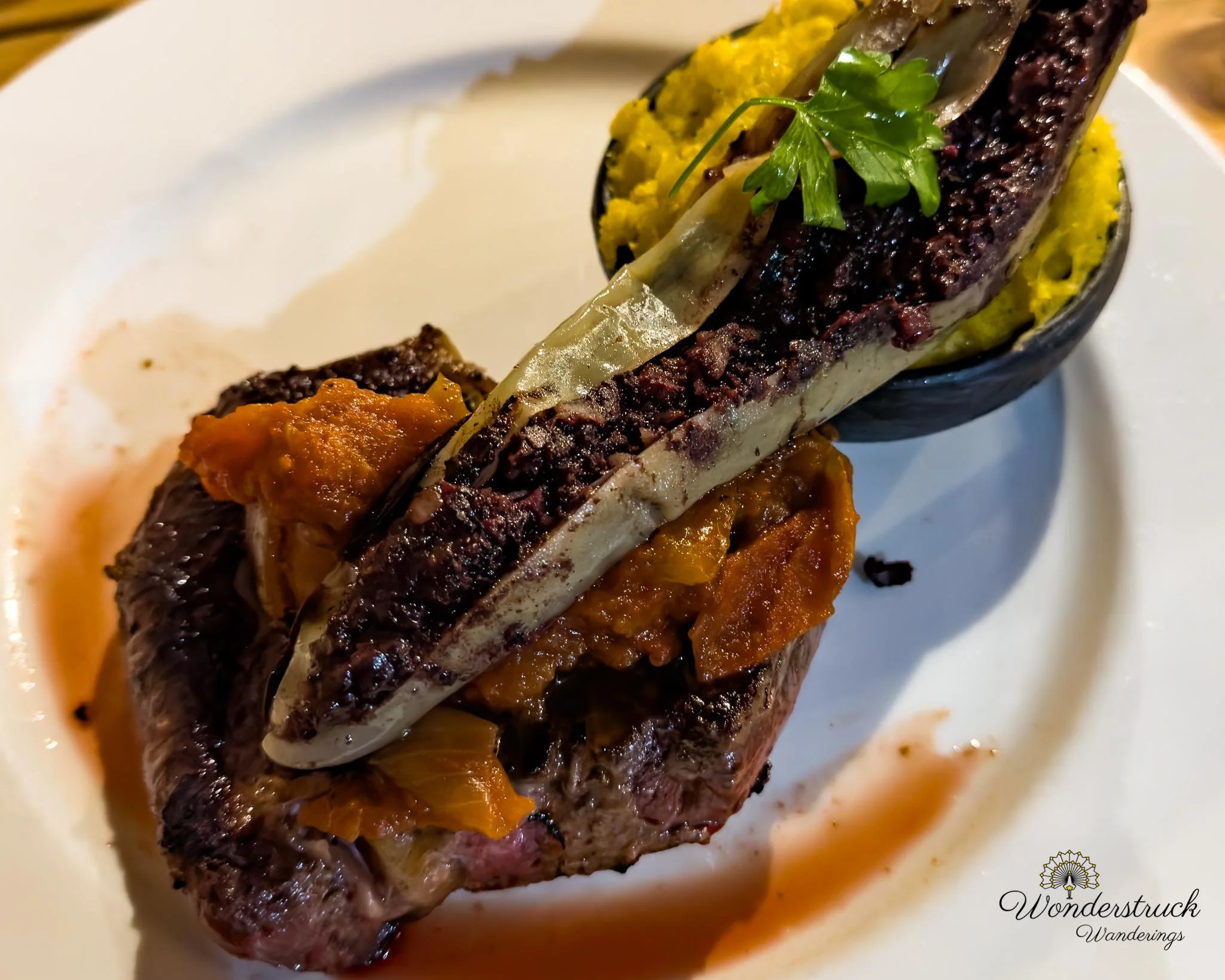
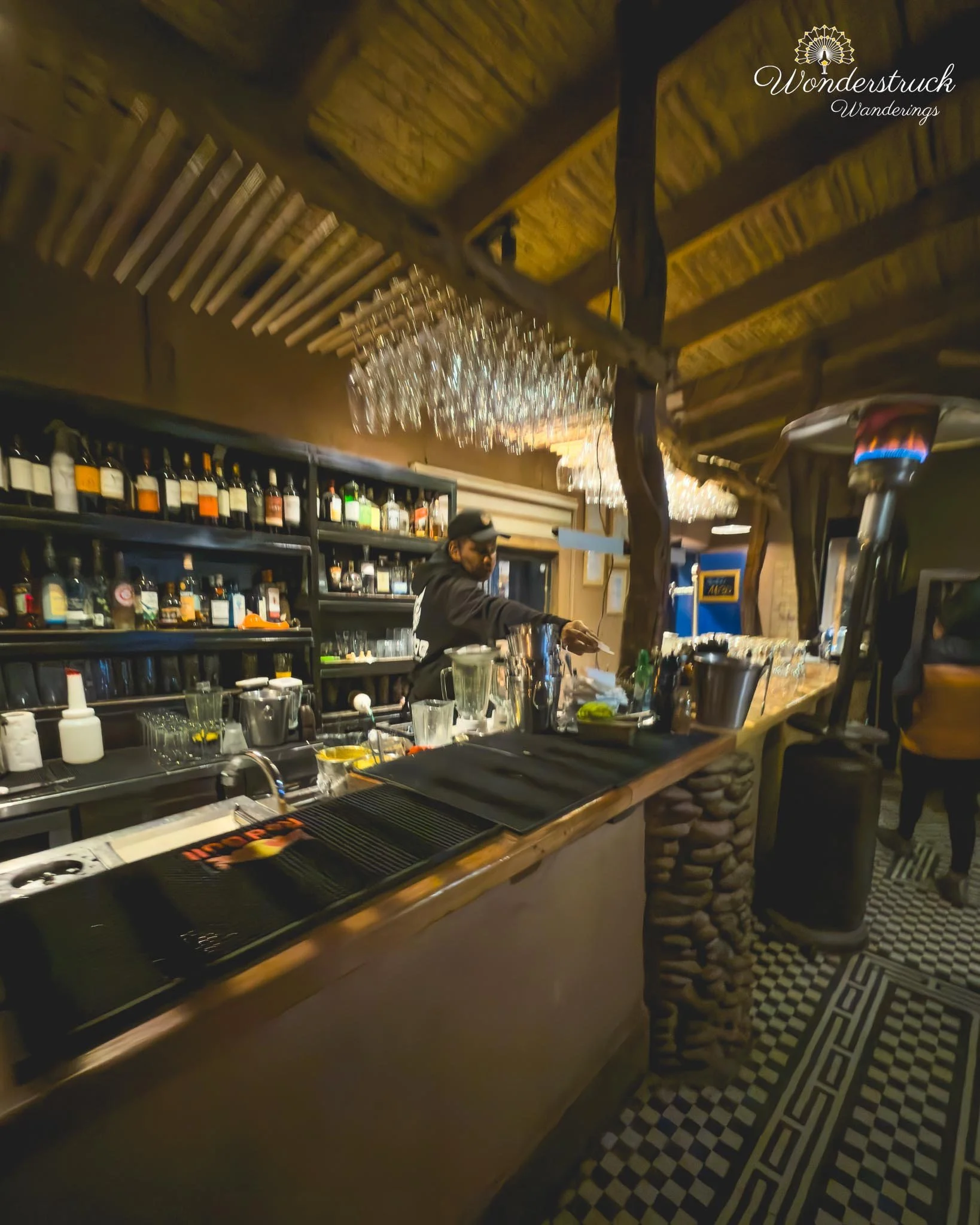
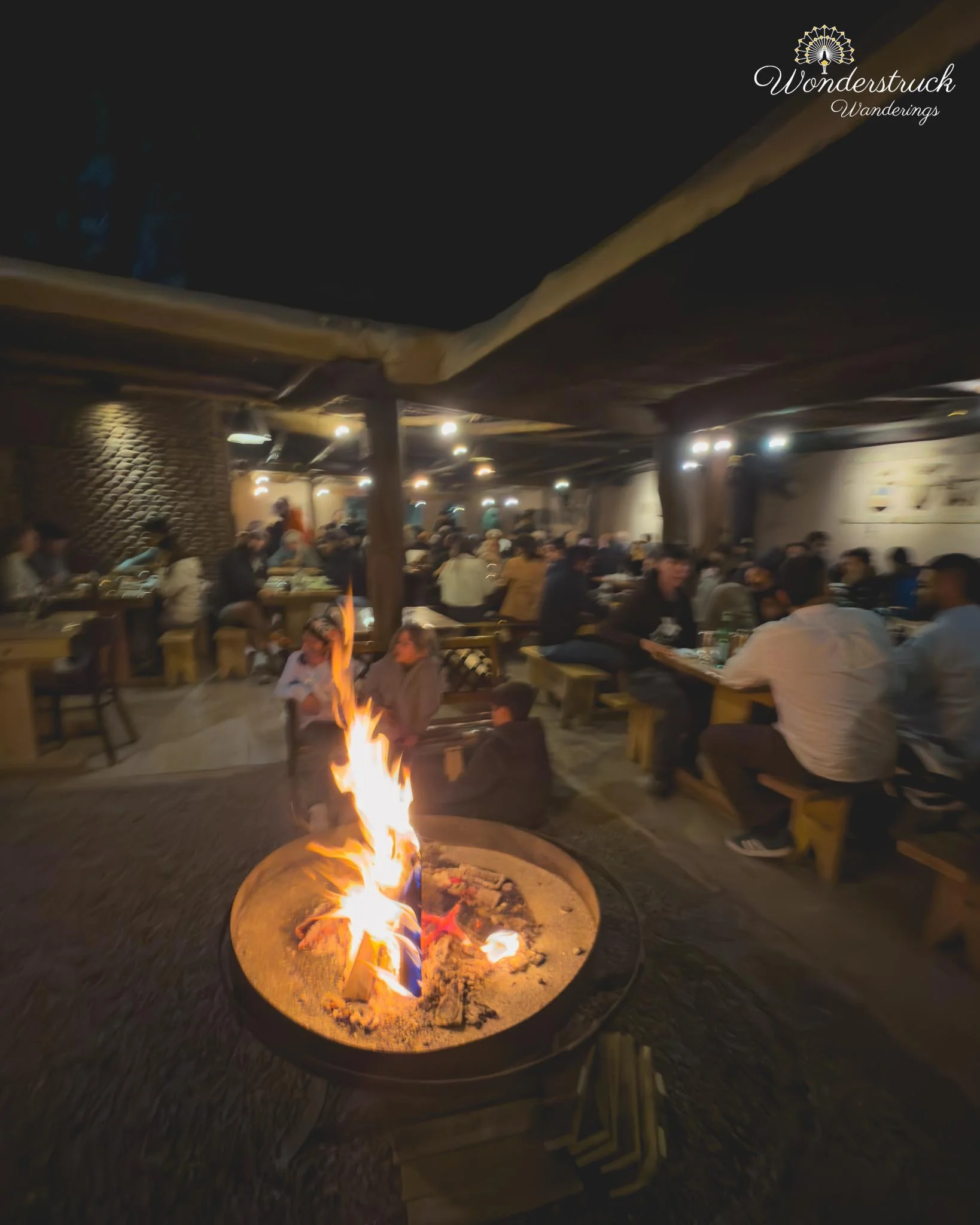
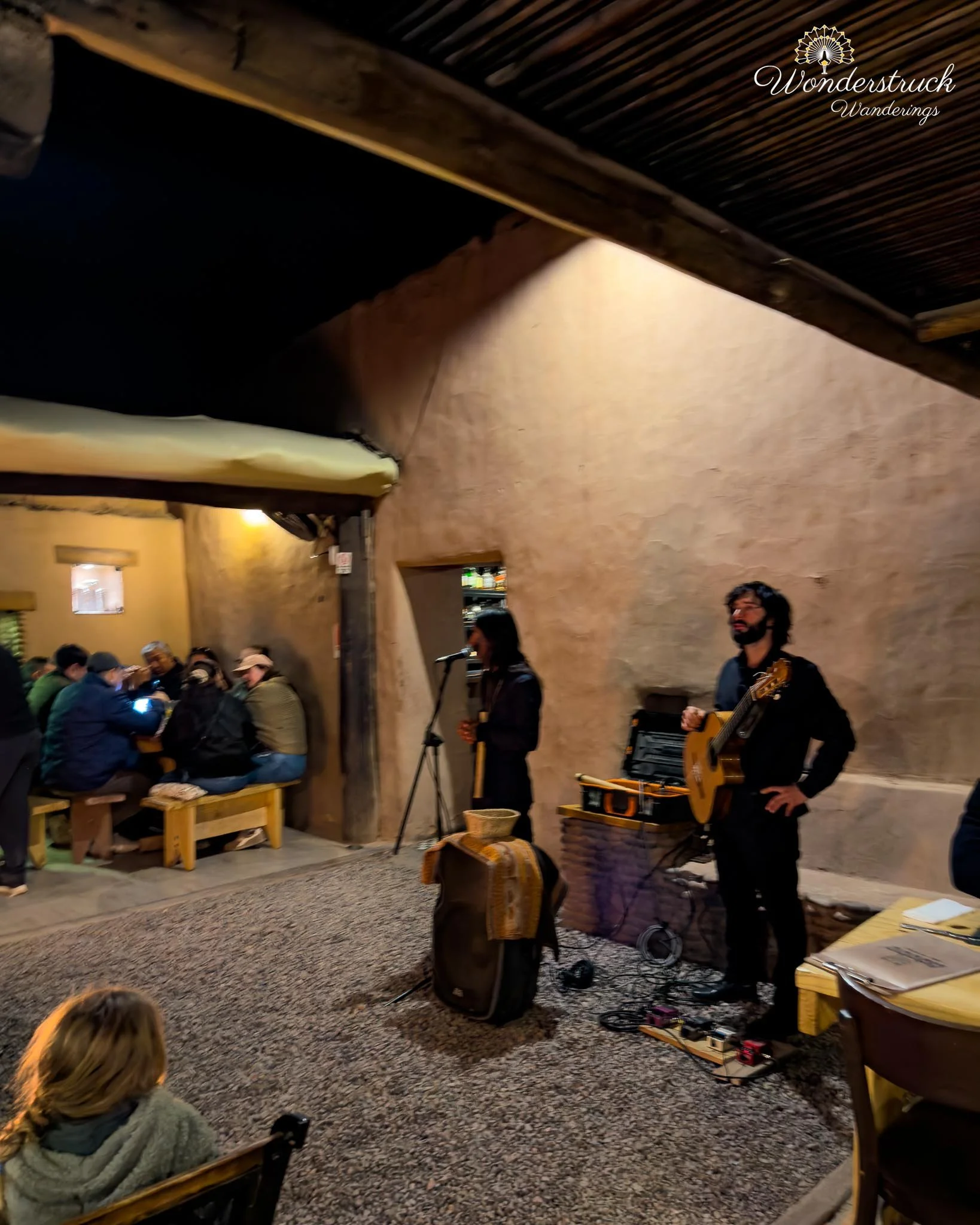
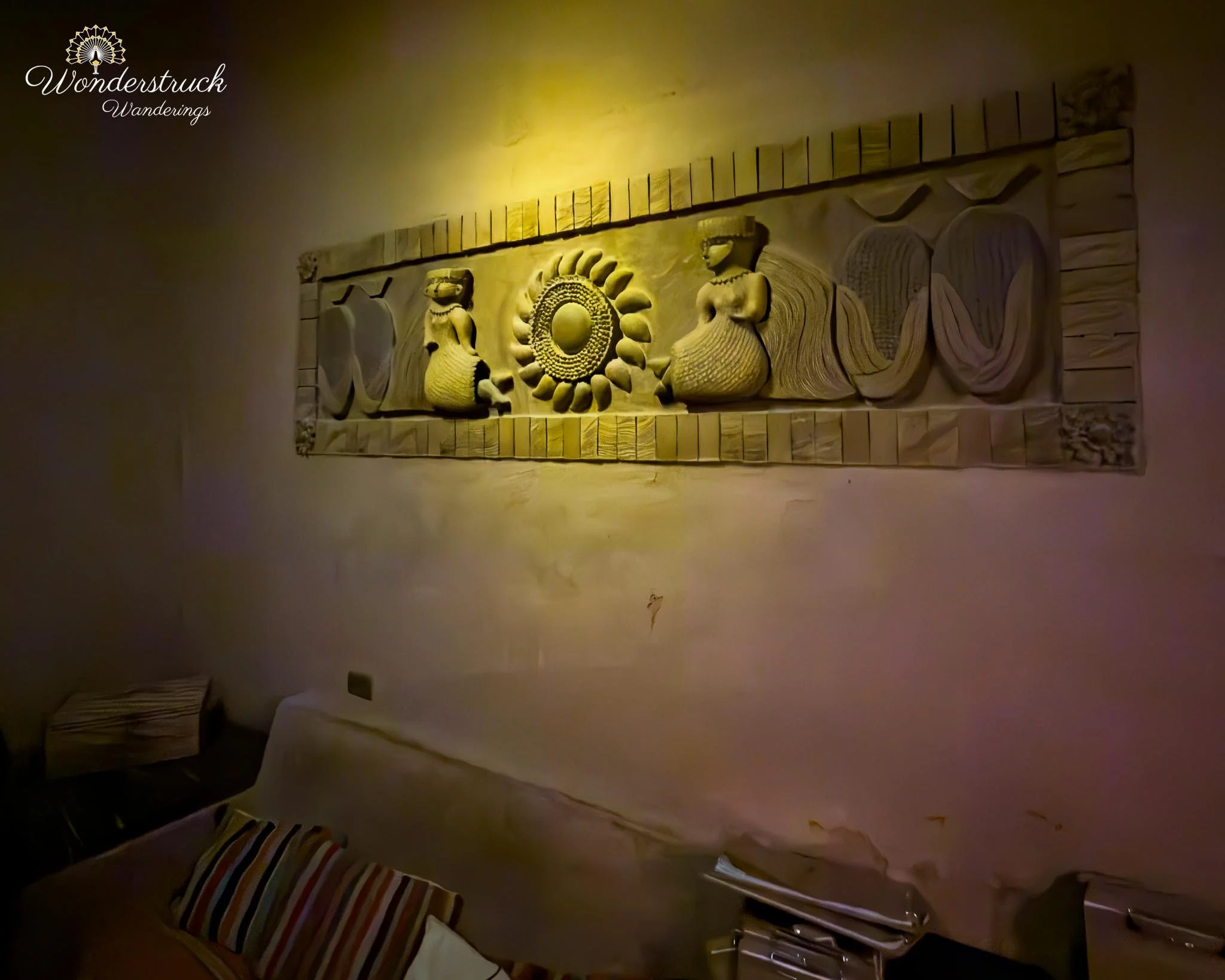
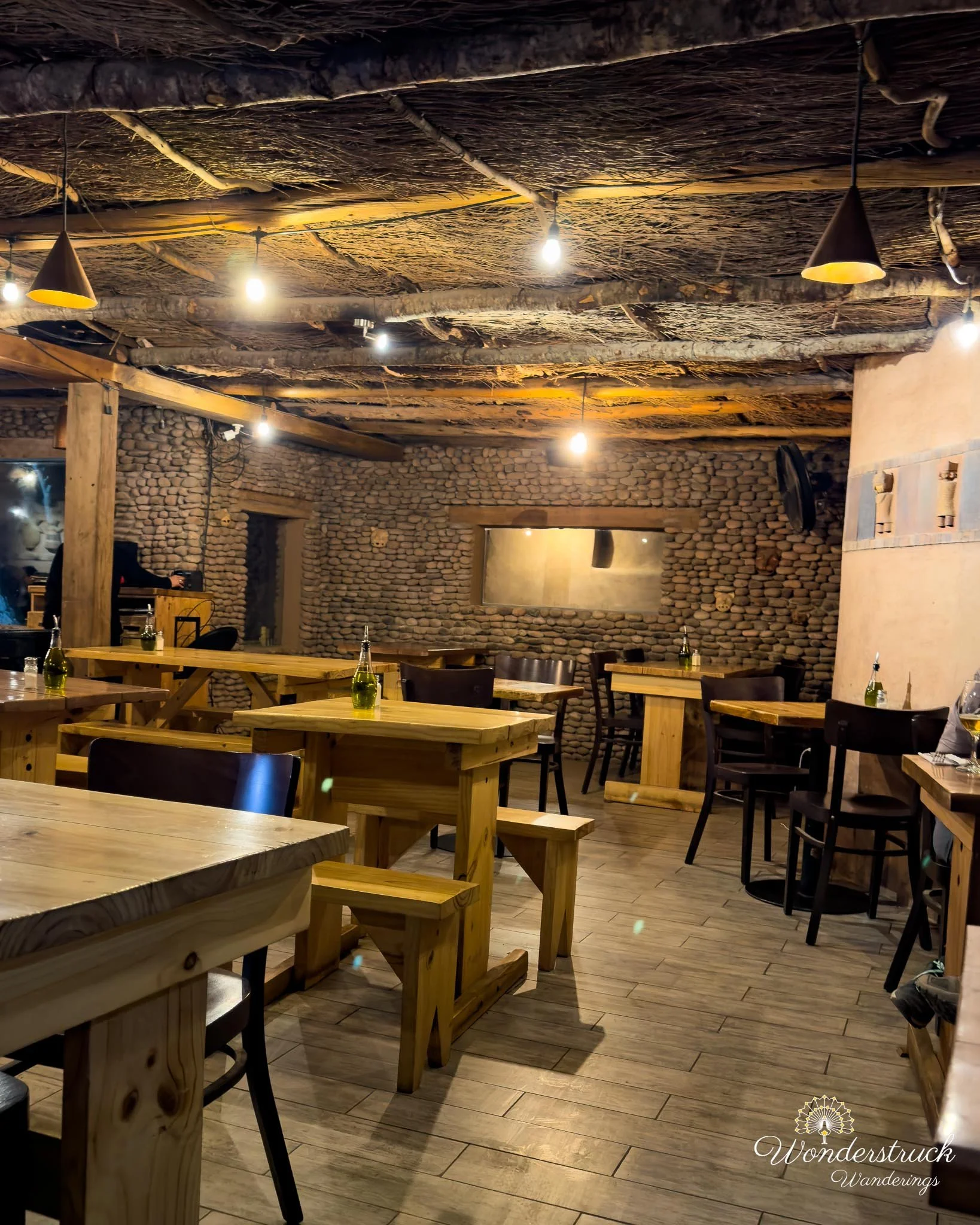
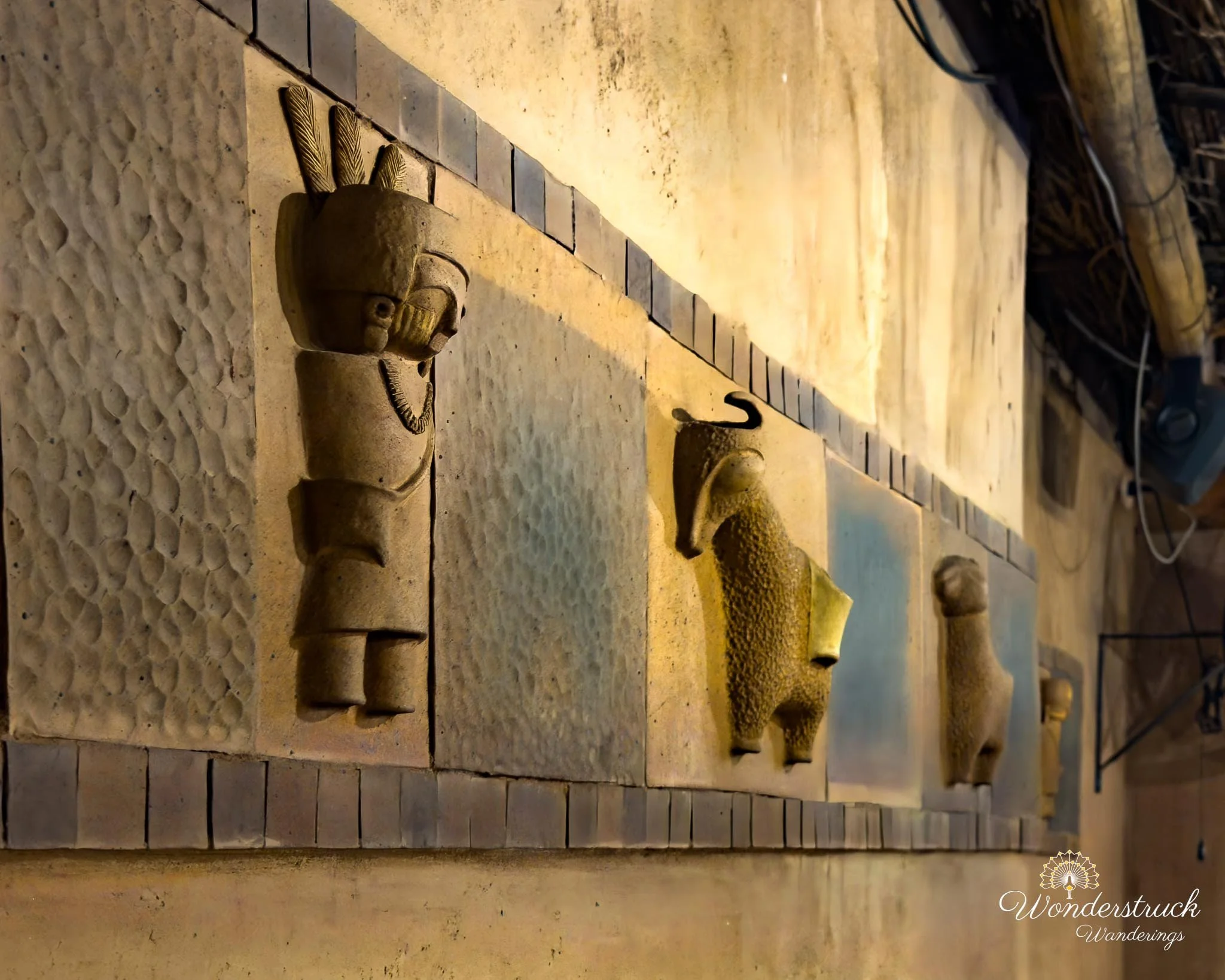
Back at the hotel, we freshened up and then walked into San Pedro town. Someone had mentioned there was an artisan market near the town center until about 8 p.m., and since we were only about a ten-minute walk away, it made sense to go. The town was lively in the evening. Shops were open, tour agencies were still active, restaurants were filling up, and travelers moved through the dusty streets in that post-excursion state - tired, sun-dried, and hungry. One of the shopkeepers recommended Adobe for dinner, and since we had already seen and read good things about it, that settled the decision. Because it was still early, we got a seat easily. By the time we were leaving, the place was packed and there was already a wait of around thirty minutes. Shay ordered a Chilean pisco sour, and I went with a lemon-mint-ginger lemonade. For food, we ordered salmon tartare served on sopaipilla and a tomatillo-style soup that was very sour but delicious. Shay especially liked the soup. For the main course, we ordered picana with blood sausage packed into a grilled poblano pepper. It was hearty, smoky, and satisfying after a day that had started before sunrise in Santiago and ended under the desert sky in San Pedro.