
Chicago to Santiago: The Farthest South We Had Traveled
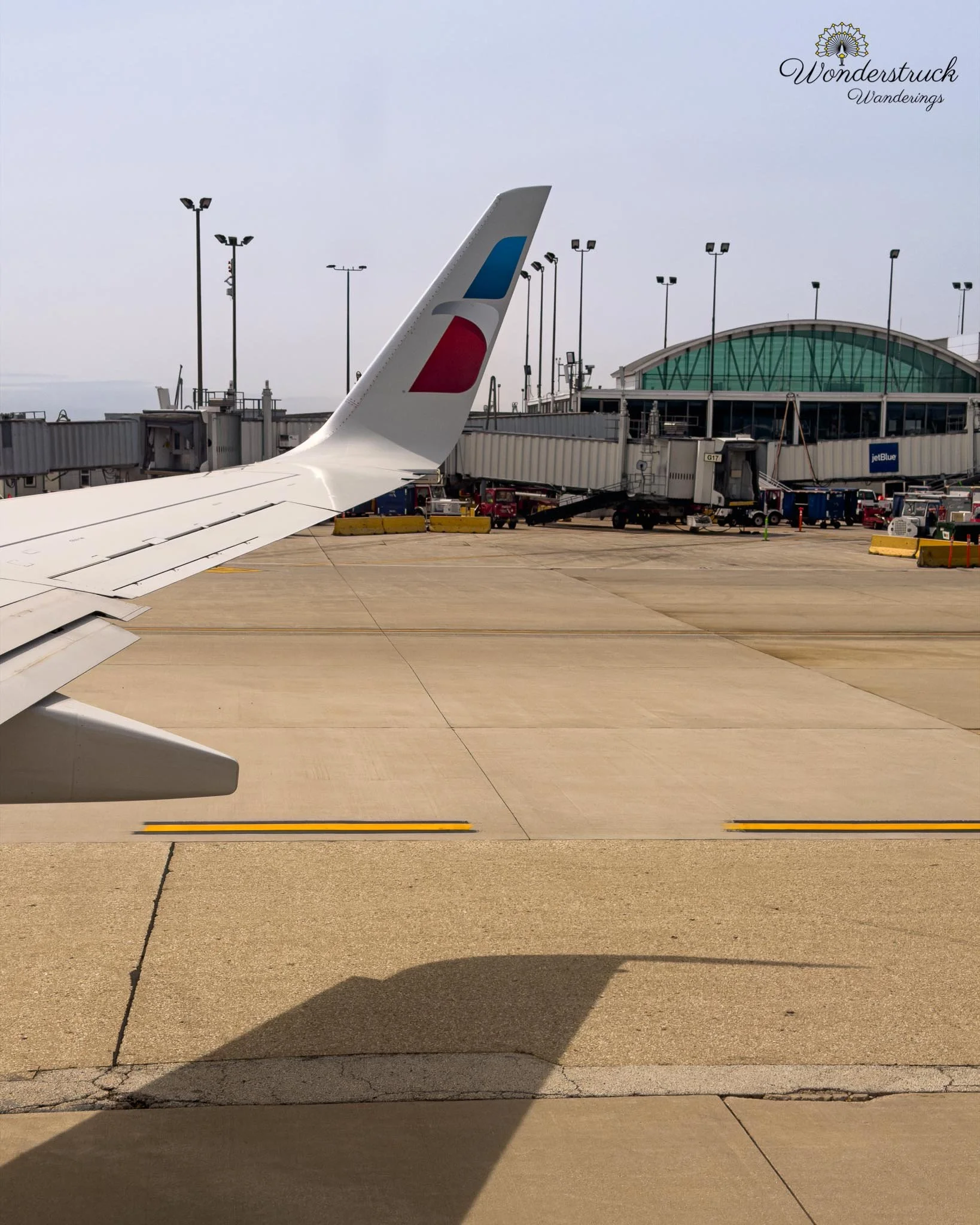
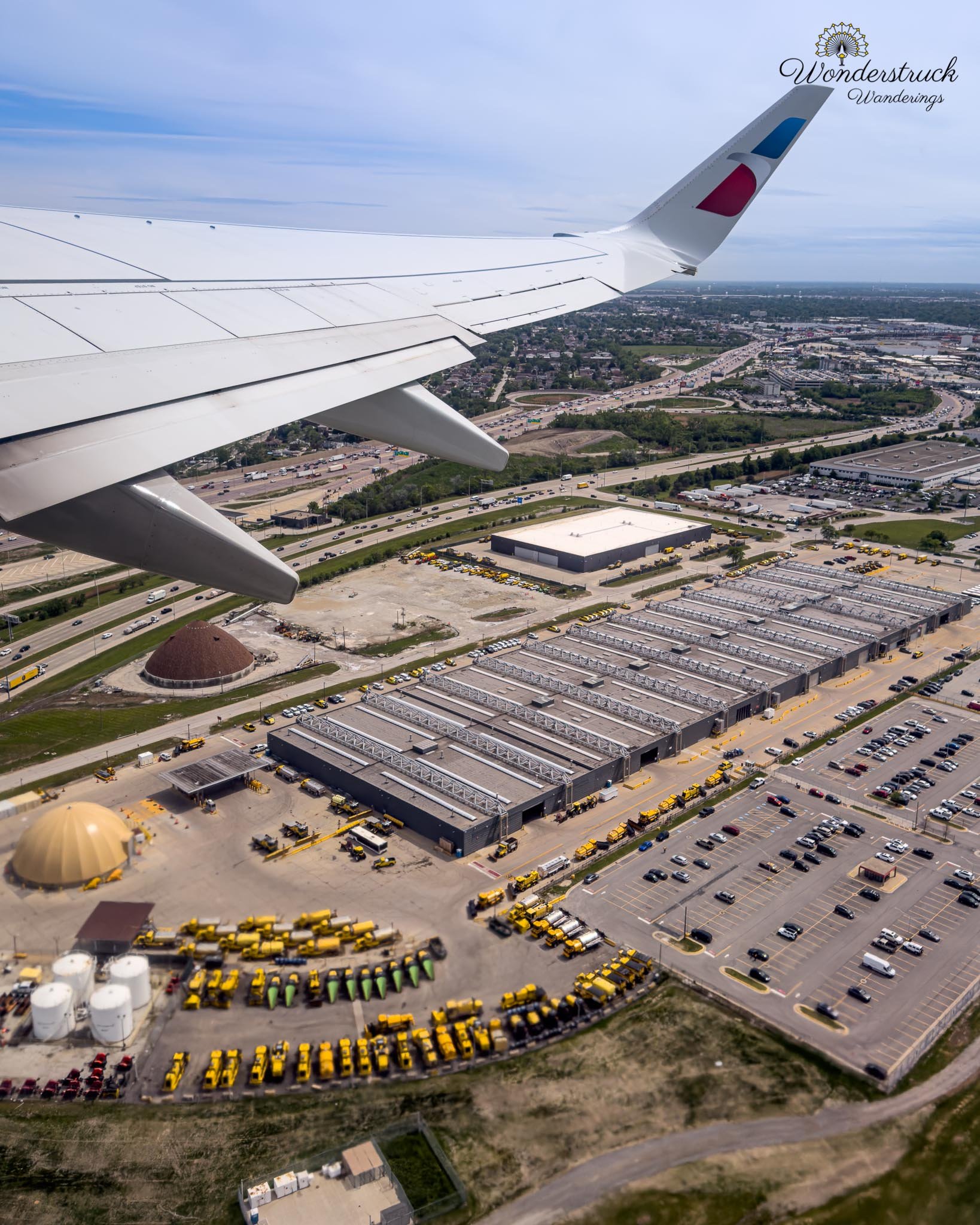
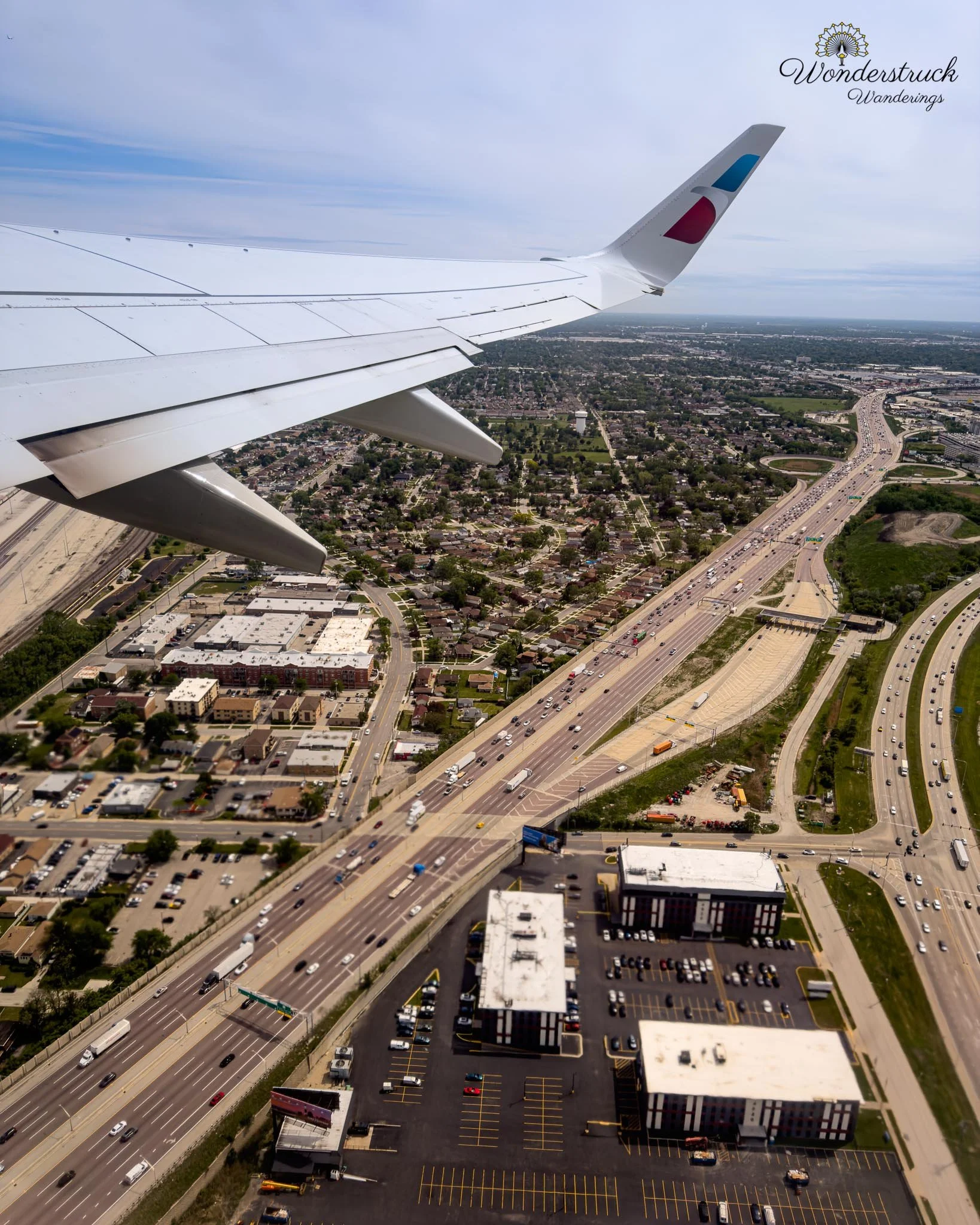
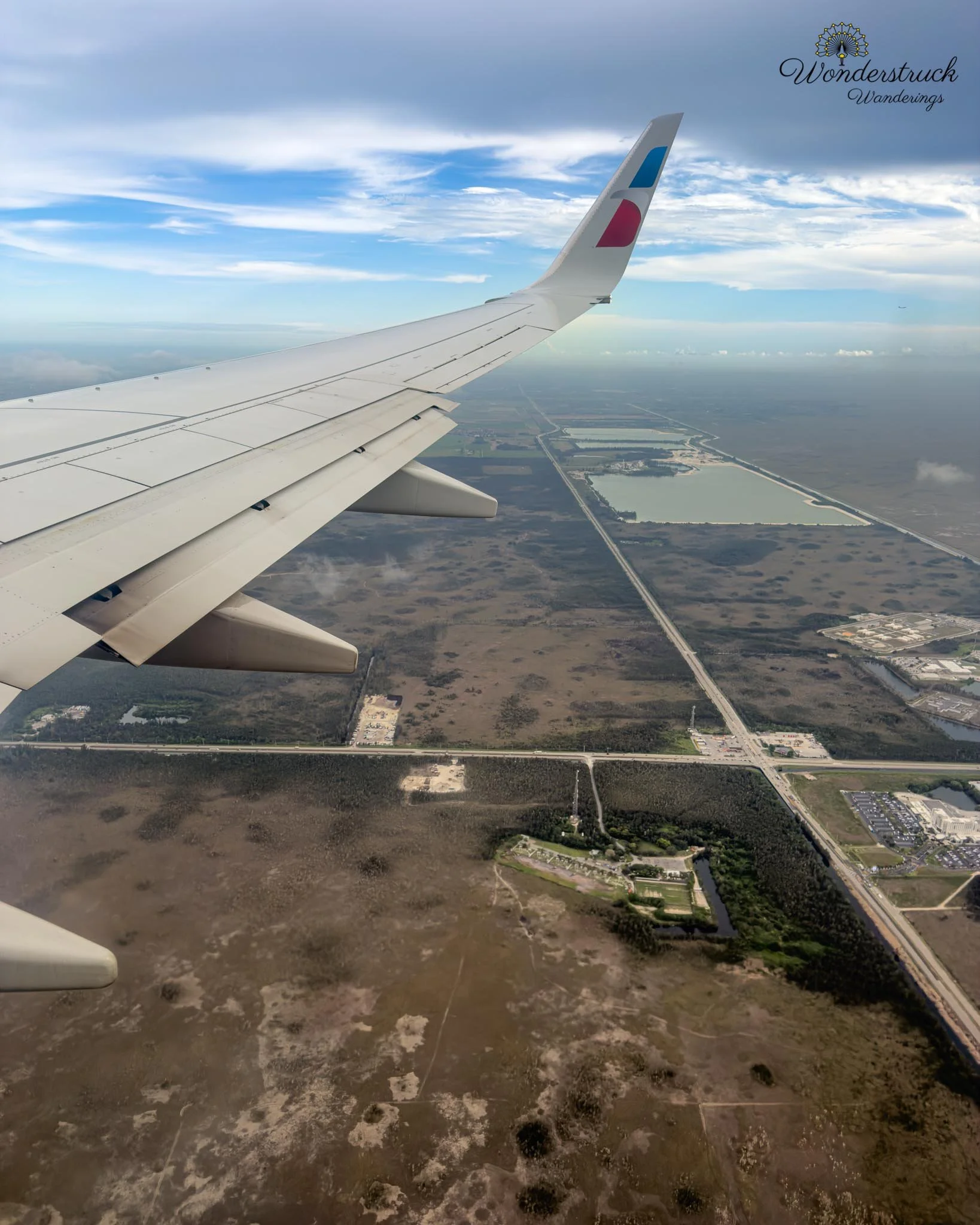
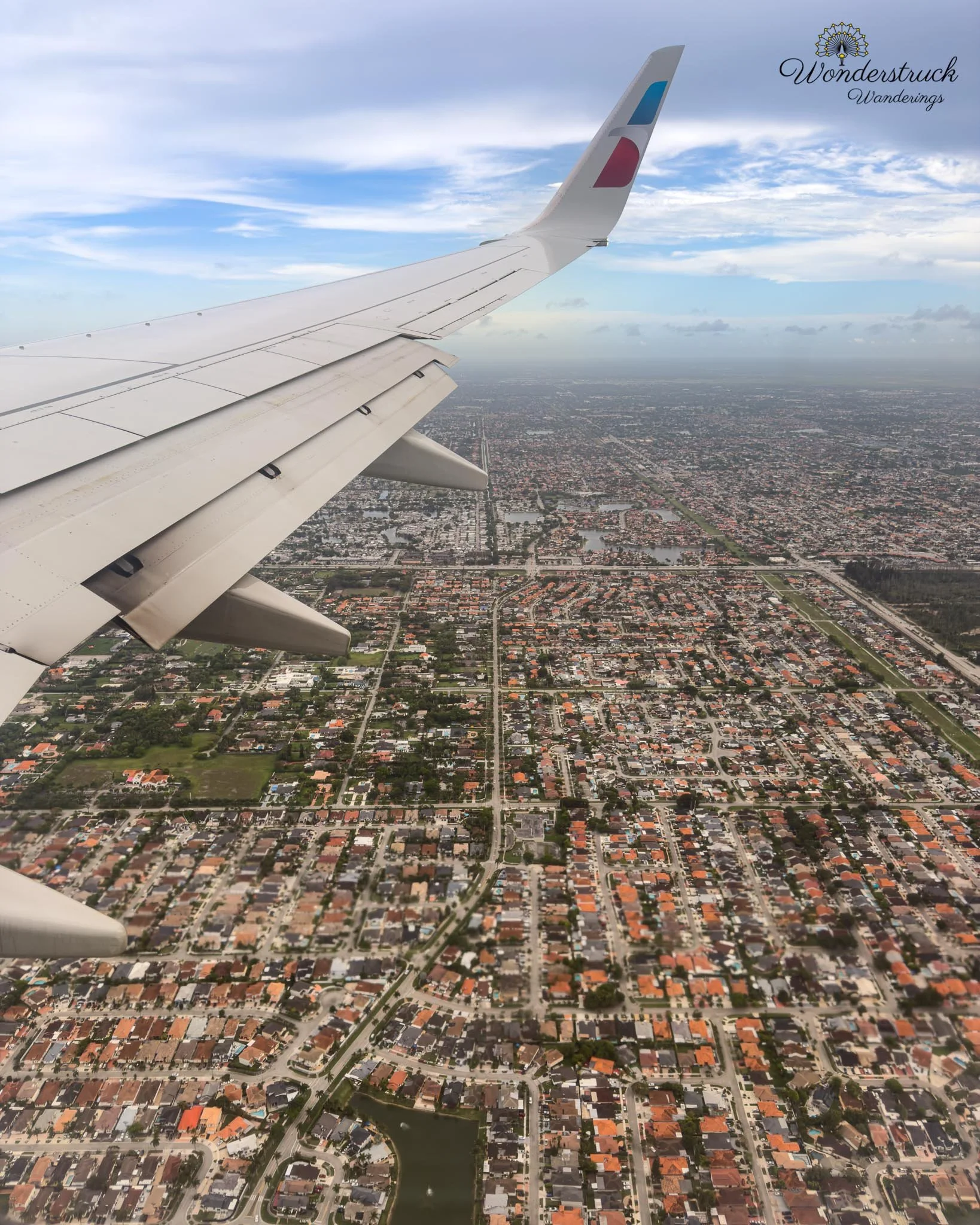
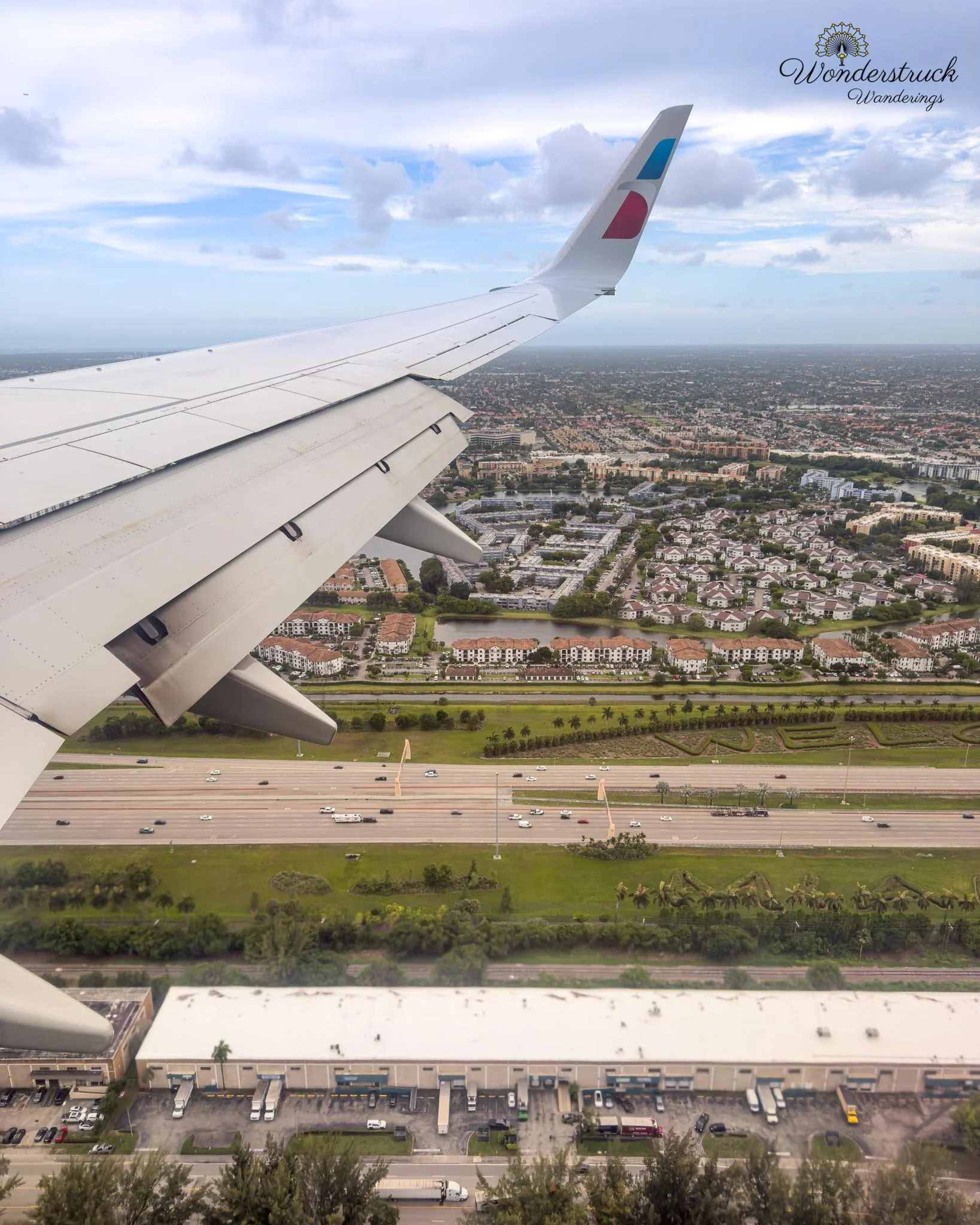
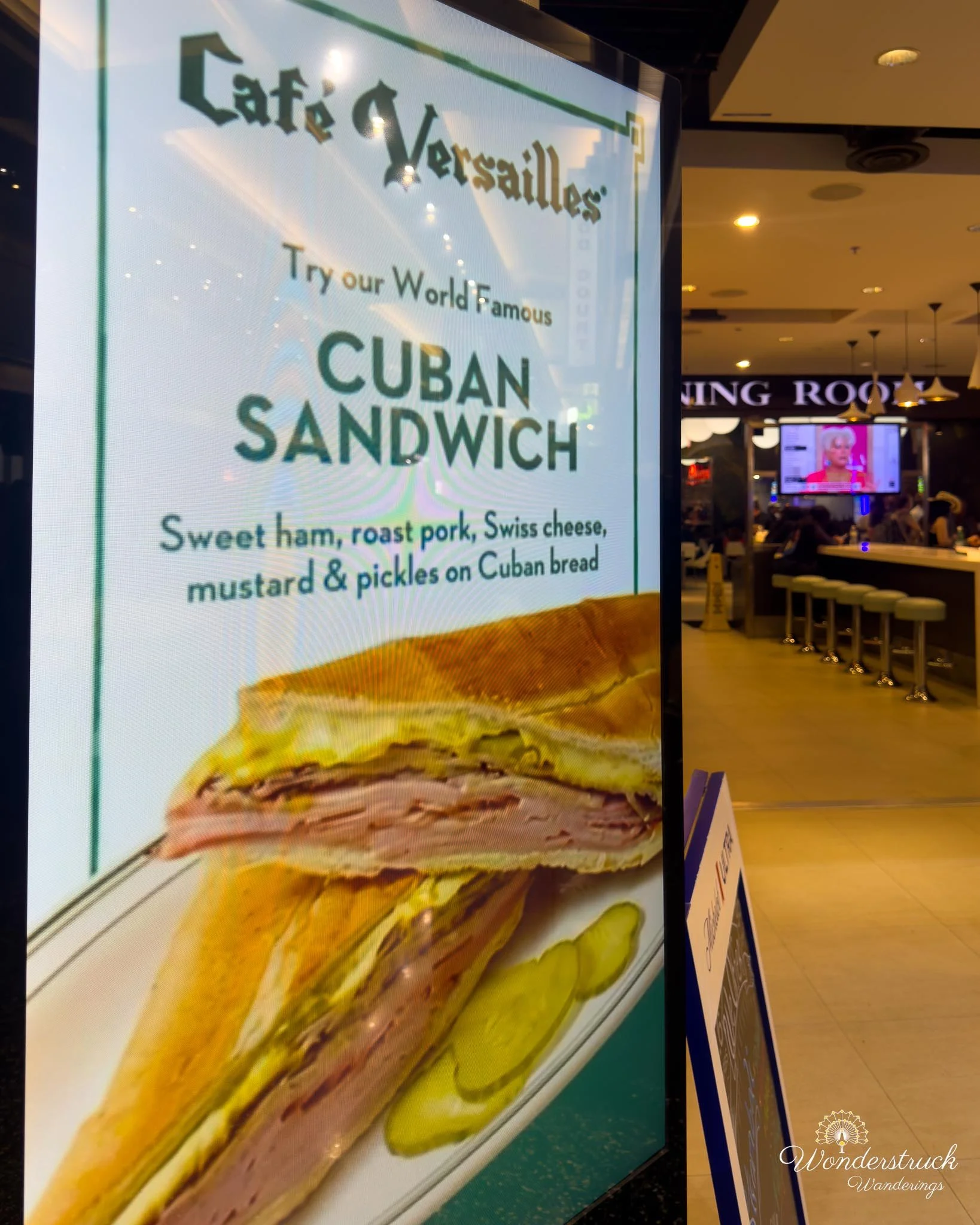
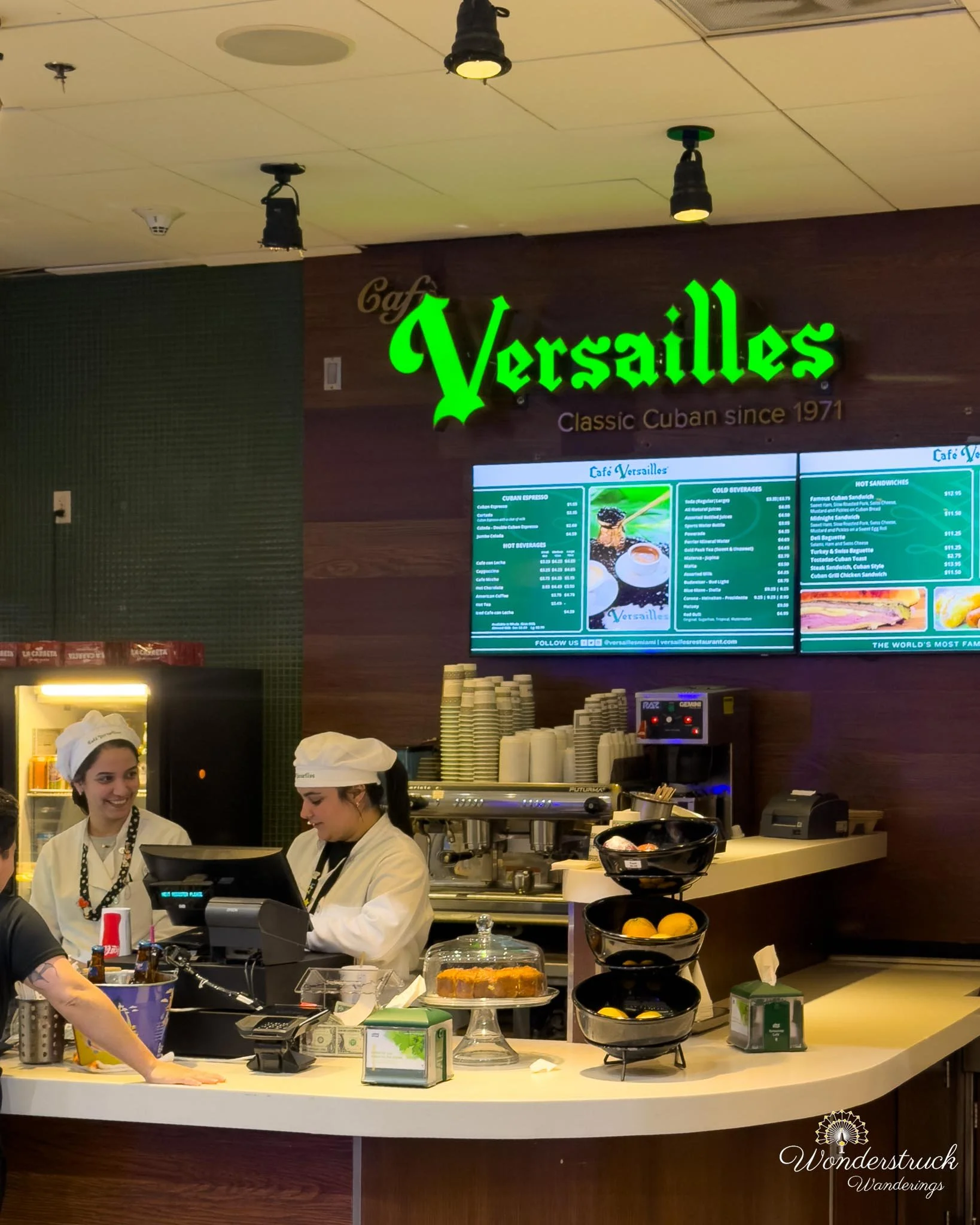
We left Chicago on a Friday afternoon with the usual mixture of excitement, unfinished packing thoughts, and the slightly strange feeling that comes with beginning a big trip after a regular workweek. Chile had been on our minds for a while, but until we were actually sitting on that first flight, it still felt like an idea rather than a place we were about to touch. This was going to be our farthest southern travel so far, and there was something quietly thrilling about that. South America was not new to us anymore, but Chile felt different on the map - long, narrow, dramatic, with desert in the north, glaciers in the south, wine valleys in between, and the Andes almost always somewhere in the background. Our route took us through Miami, where we had a four-hour layover that was just long enough to make the travel day feel stretched out, but not quite long enough to relax into it. We grabbed a quick bite at Cafe Versailles in the airport, which immediately pulled us back to memories of our Miami and Key West trip from around twelve years ago. There is something funny about airport meals like that. Most of the time they are just practical, but every now and then one of them connects to an older trip, an earlier version of yourself, and suddenly a layover becomes part of the story instead of just dead time. By the time we finally landed in Santiago, it was 7 a.m. and the city was wrapped in fog. Santiago was in a cold spell, and the morning had that muted, gray quality where even a major capital city seems to be speaking softly. We were tired, a little stiff from travel, and not fully oriented yet, but the moment we stepped into the arrival rhythm - luggage, immigration, customs, the usual mental checklist - we knew the trip had properly begun.
Hotel Bidasoa: An Early Check-In That Saved the Morning
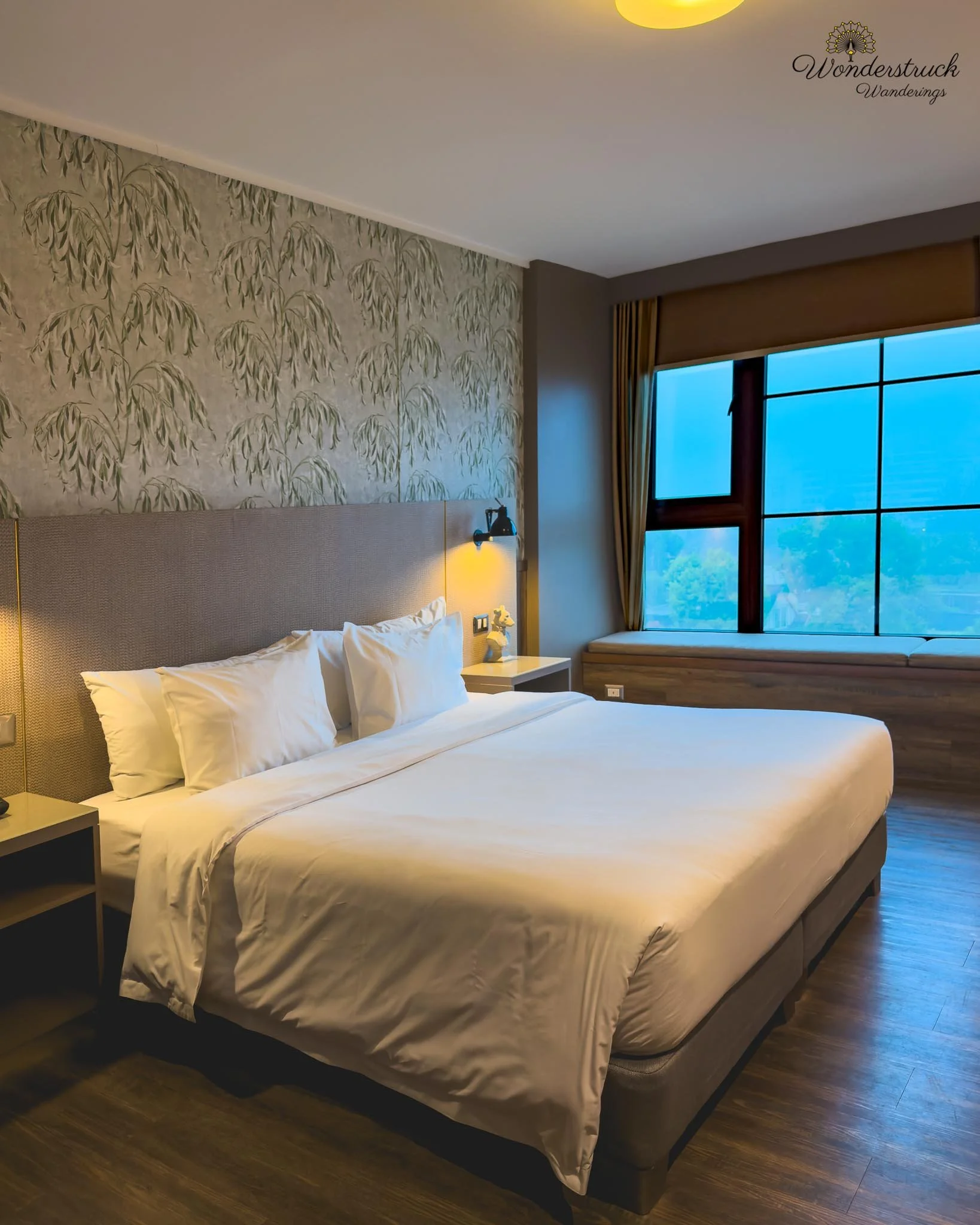
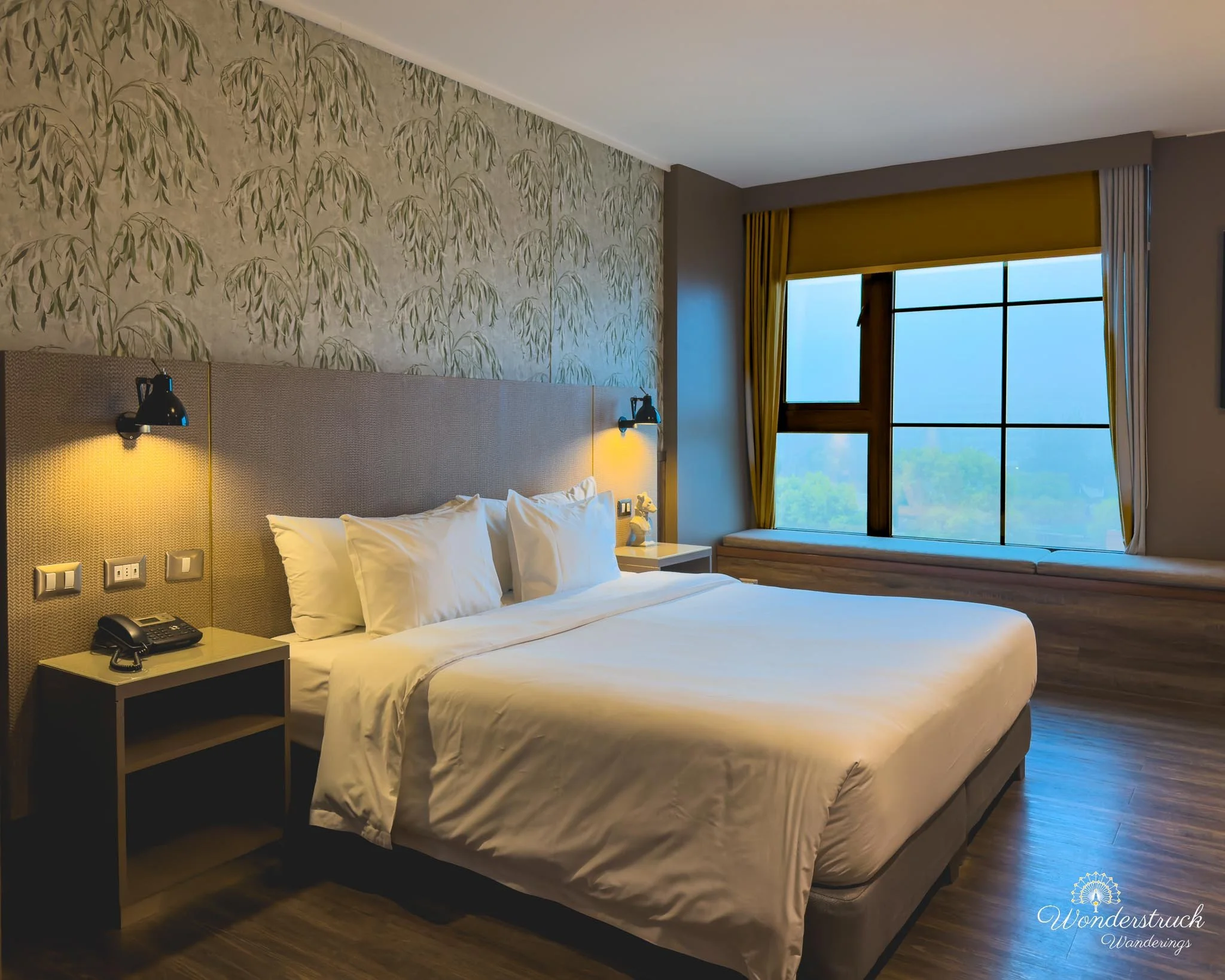
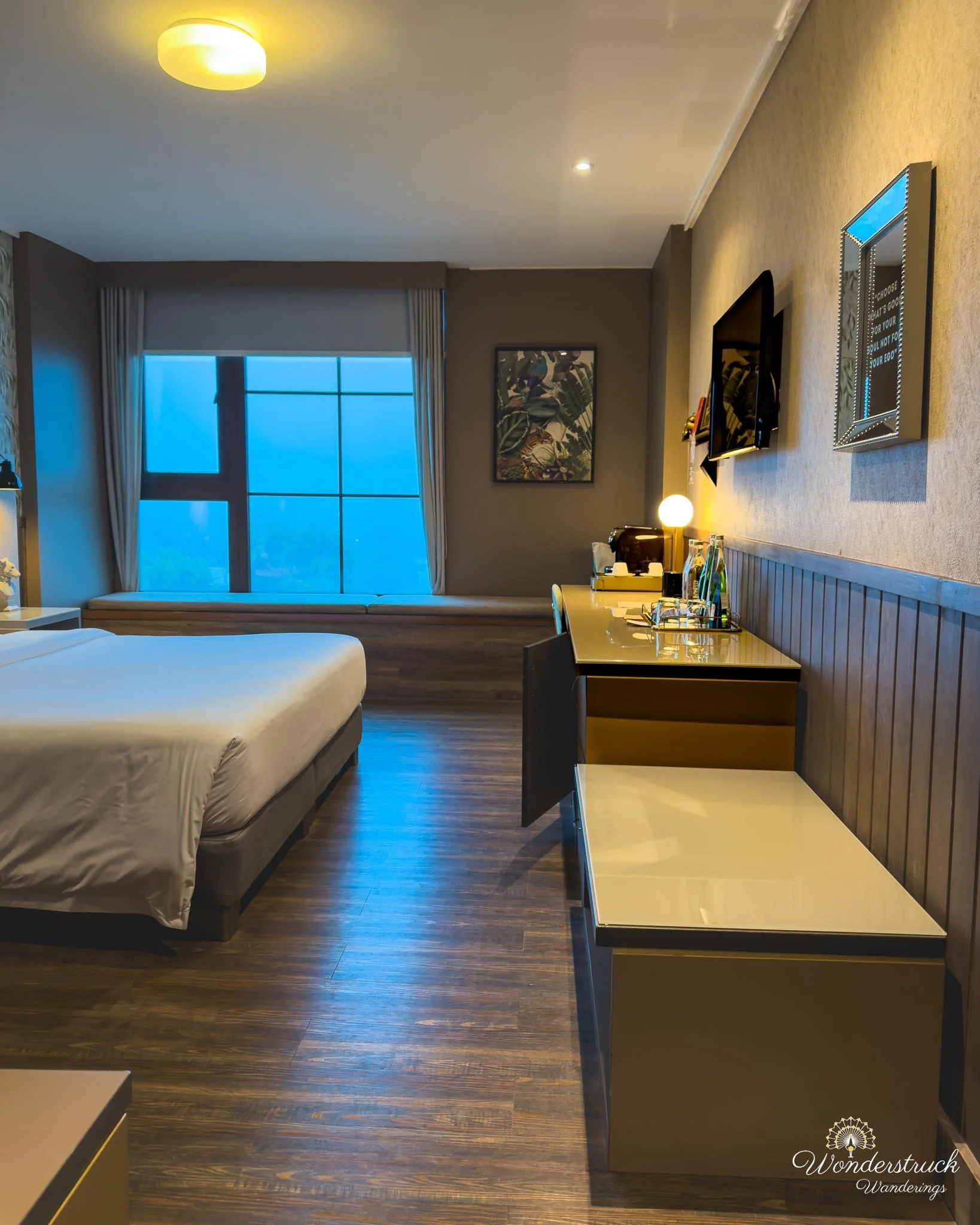
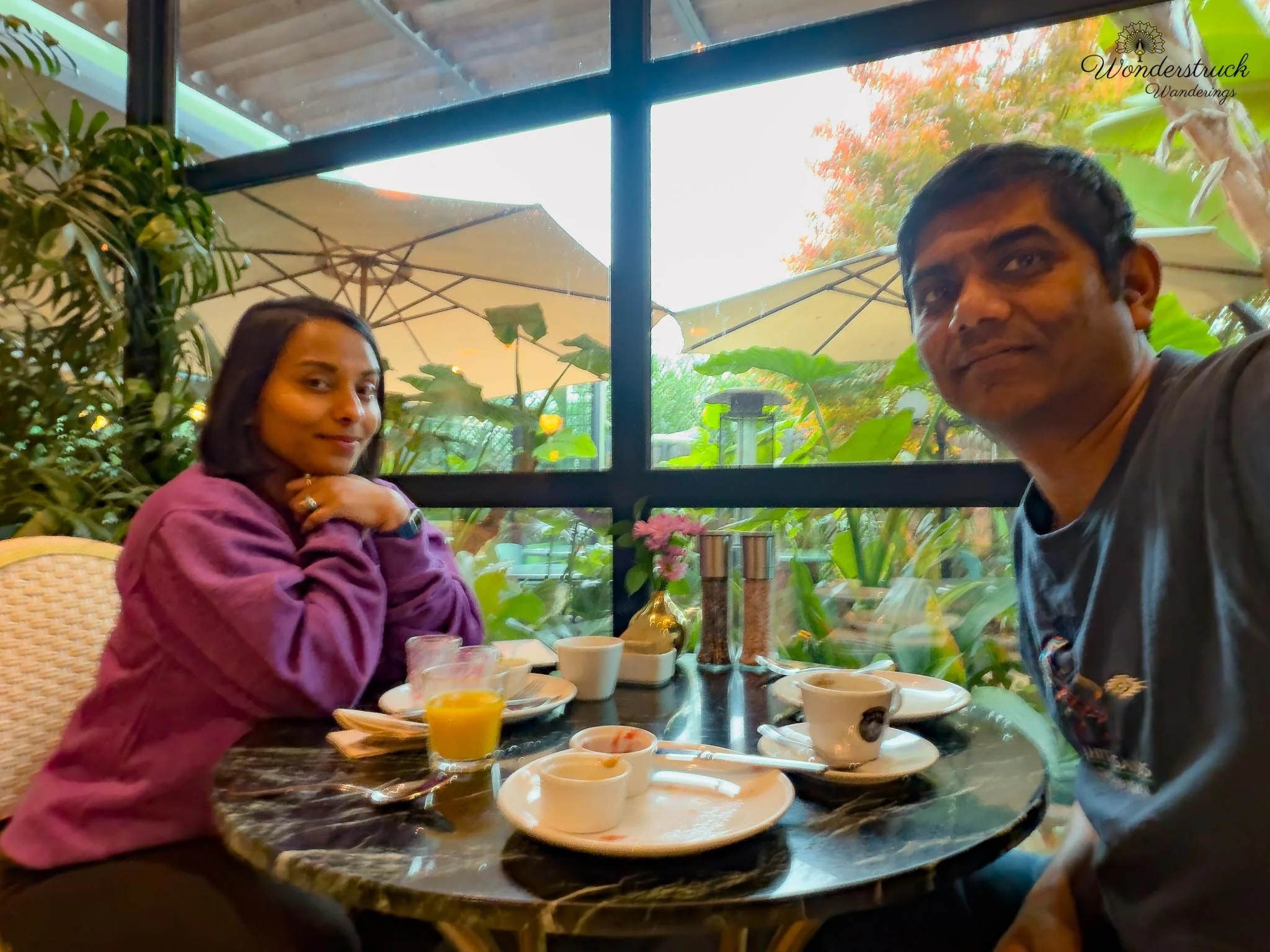
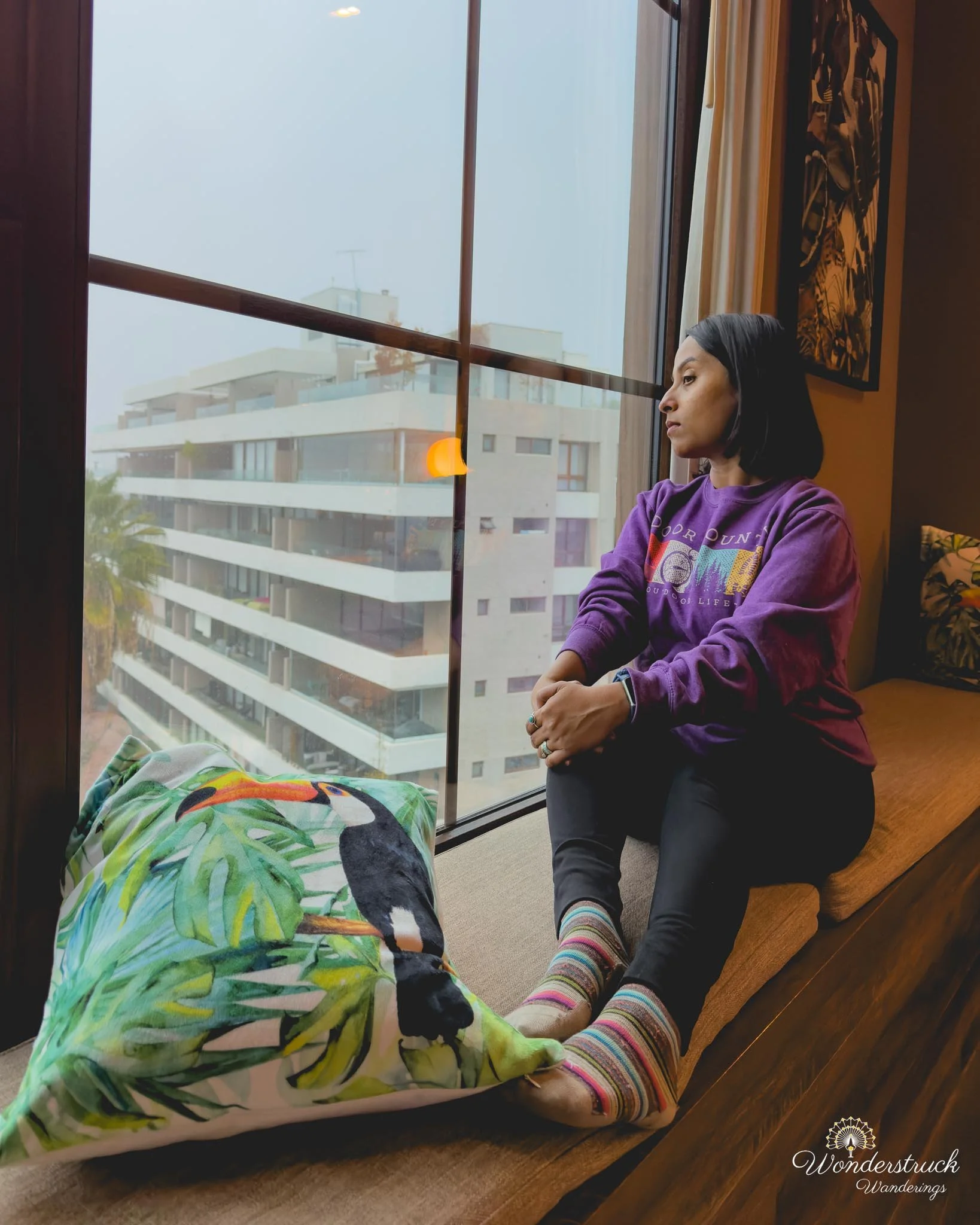
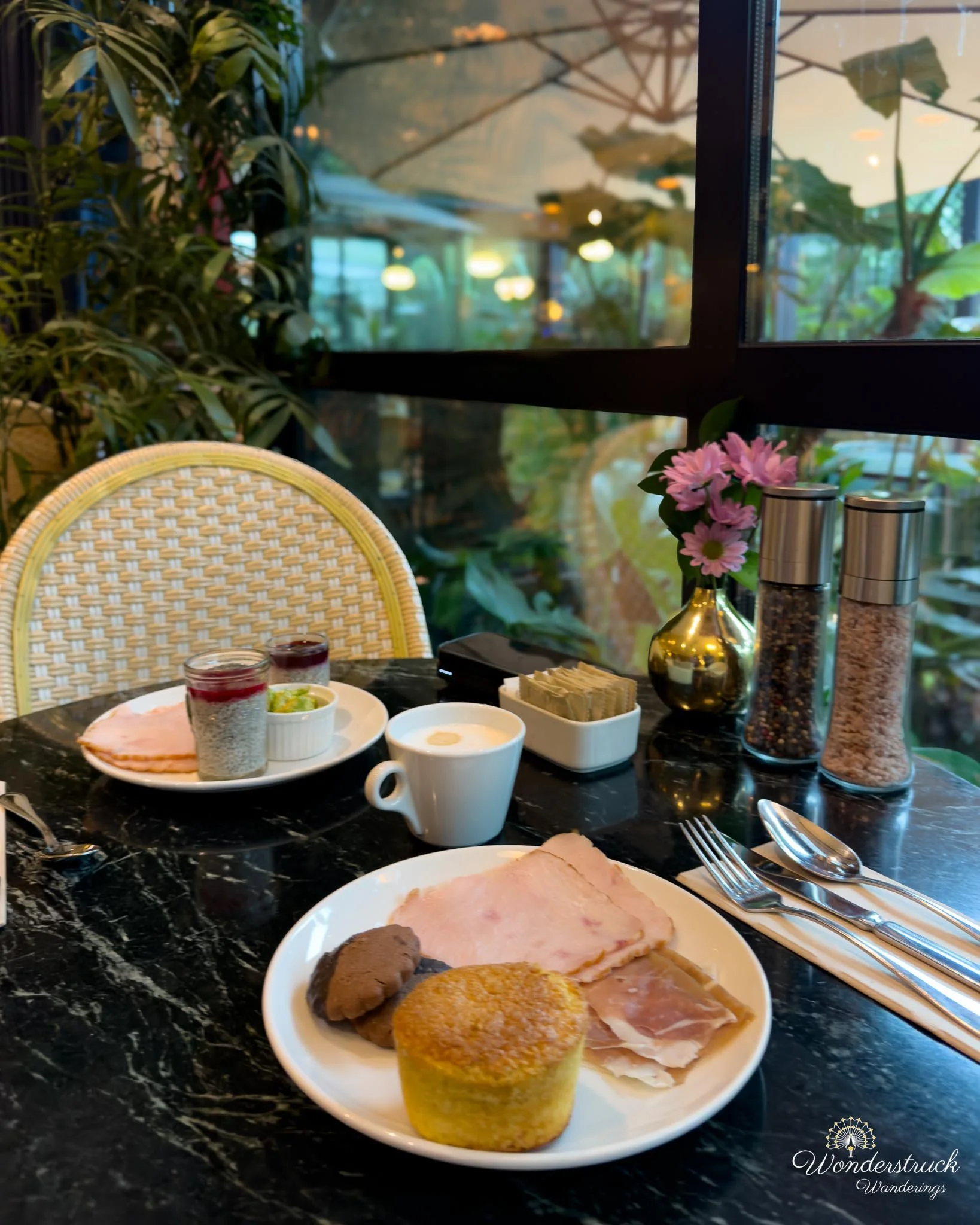
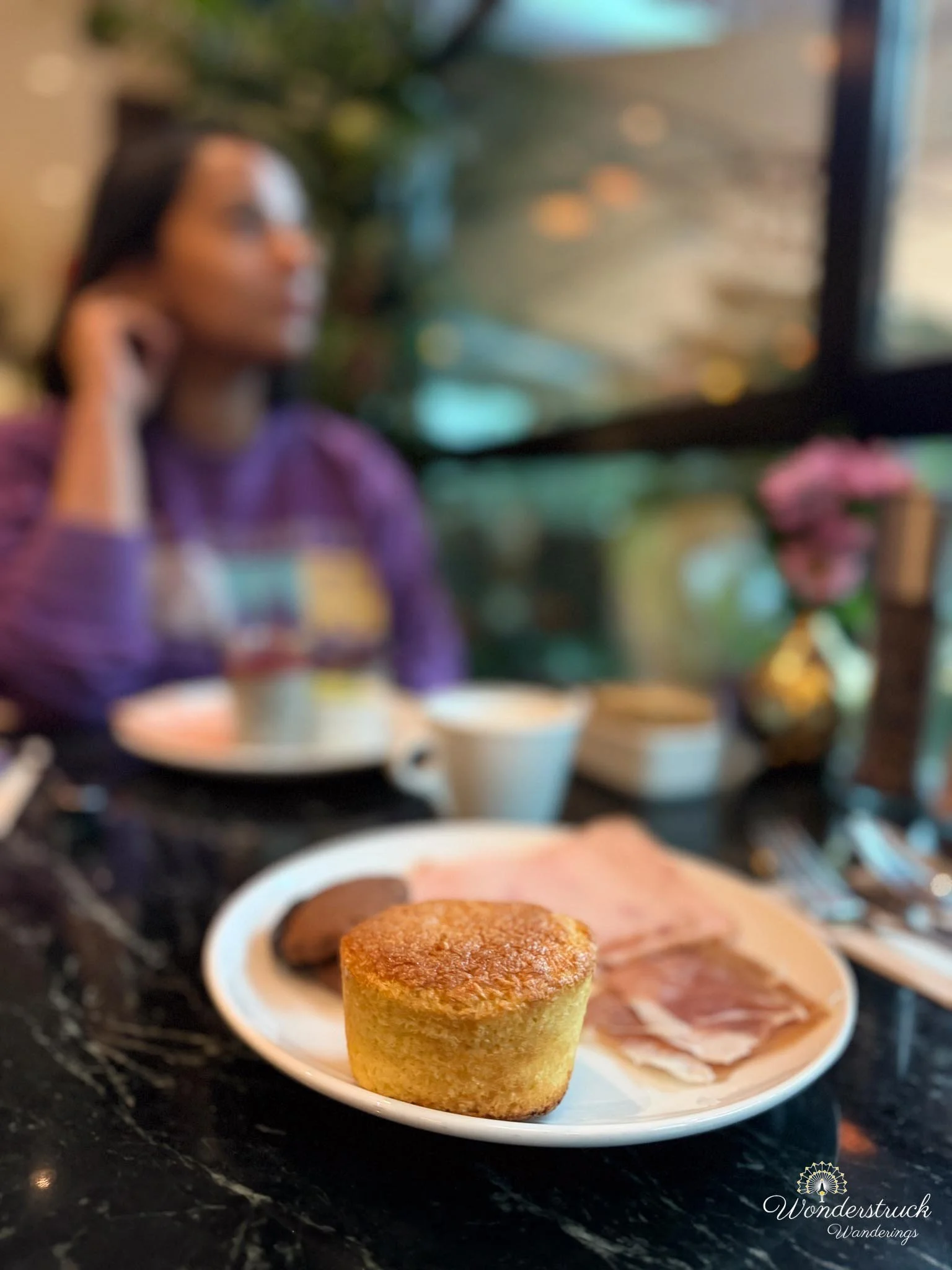
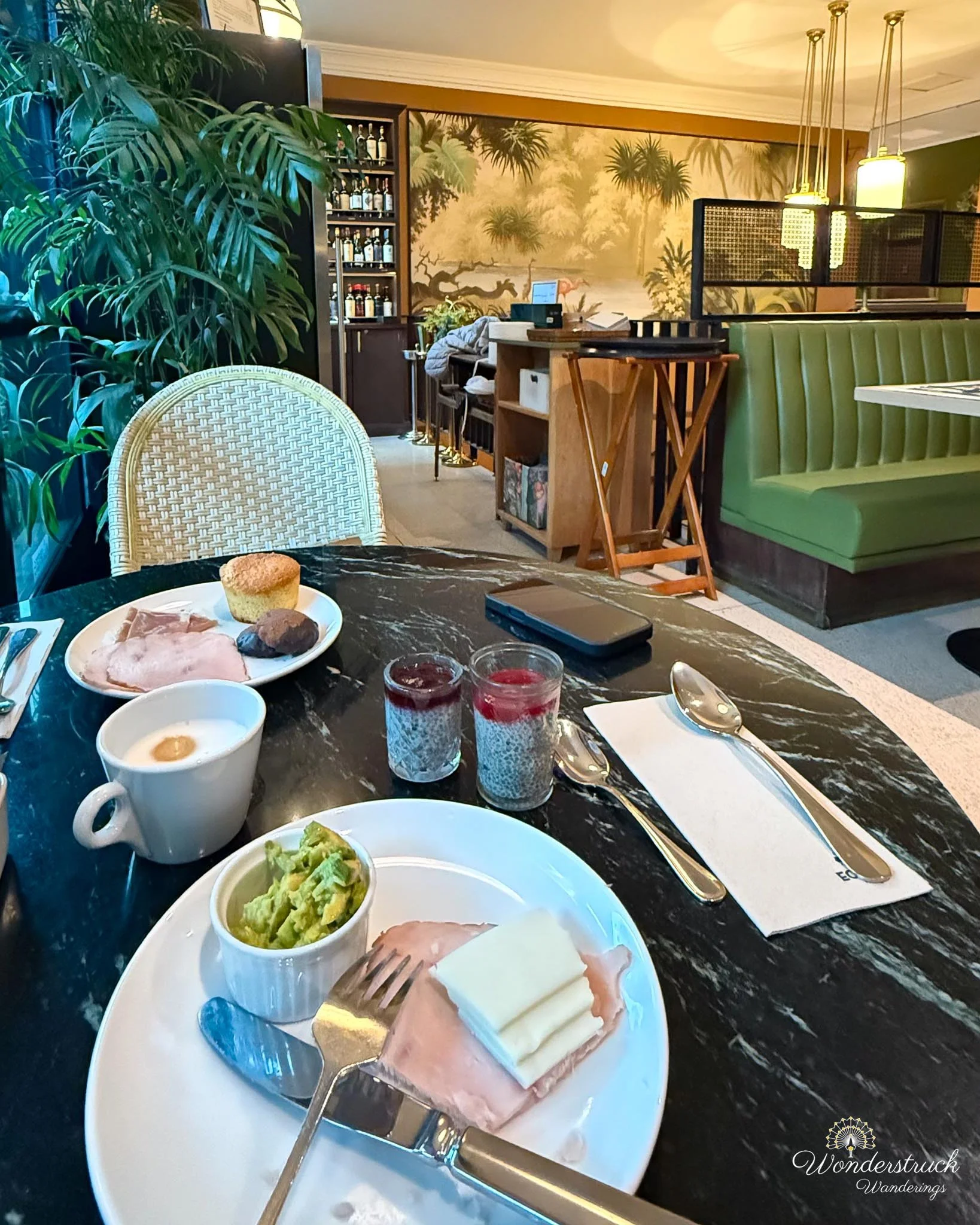
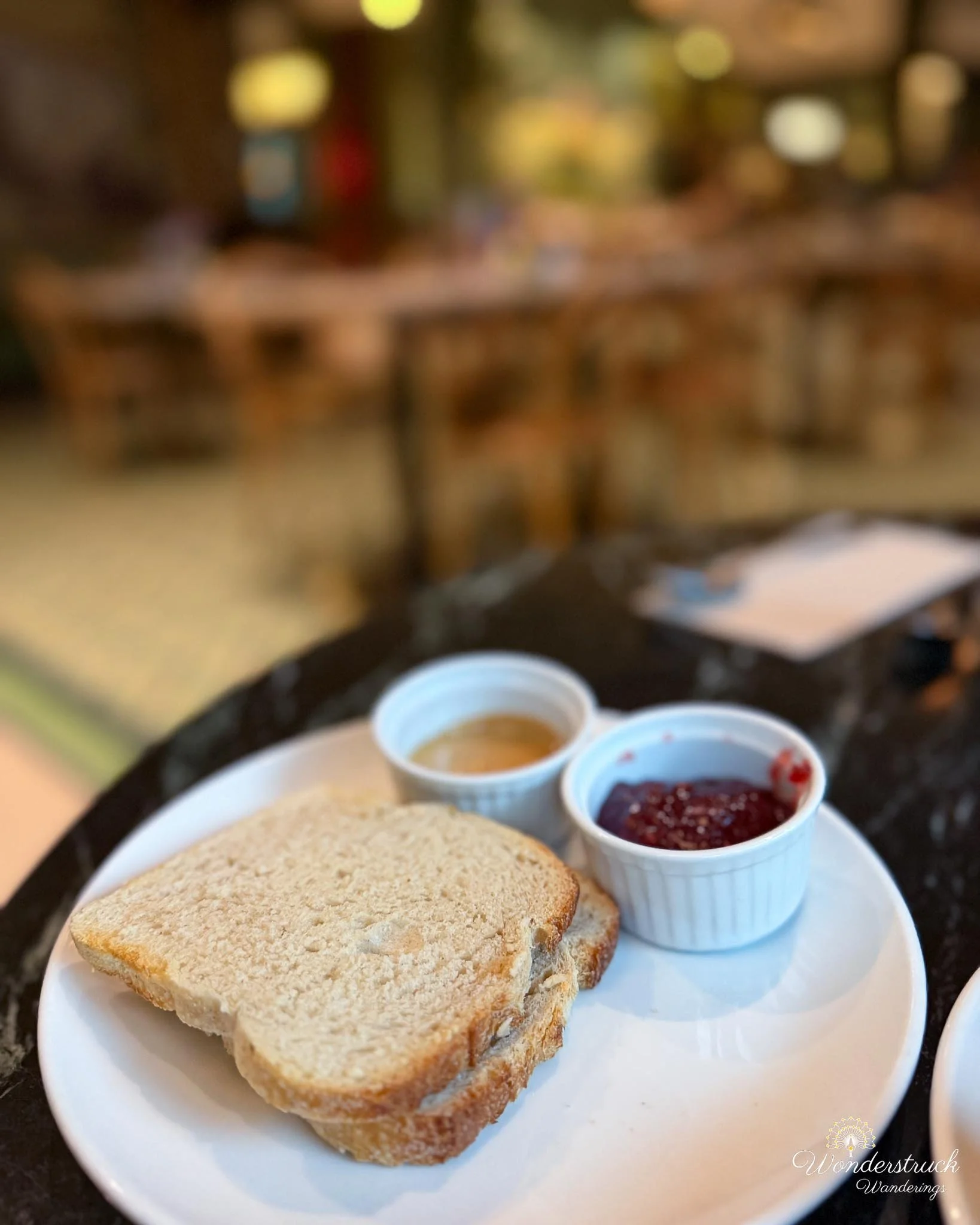
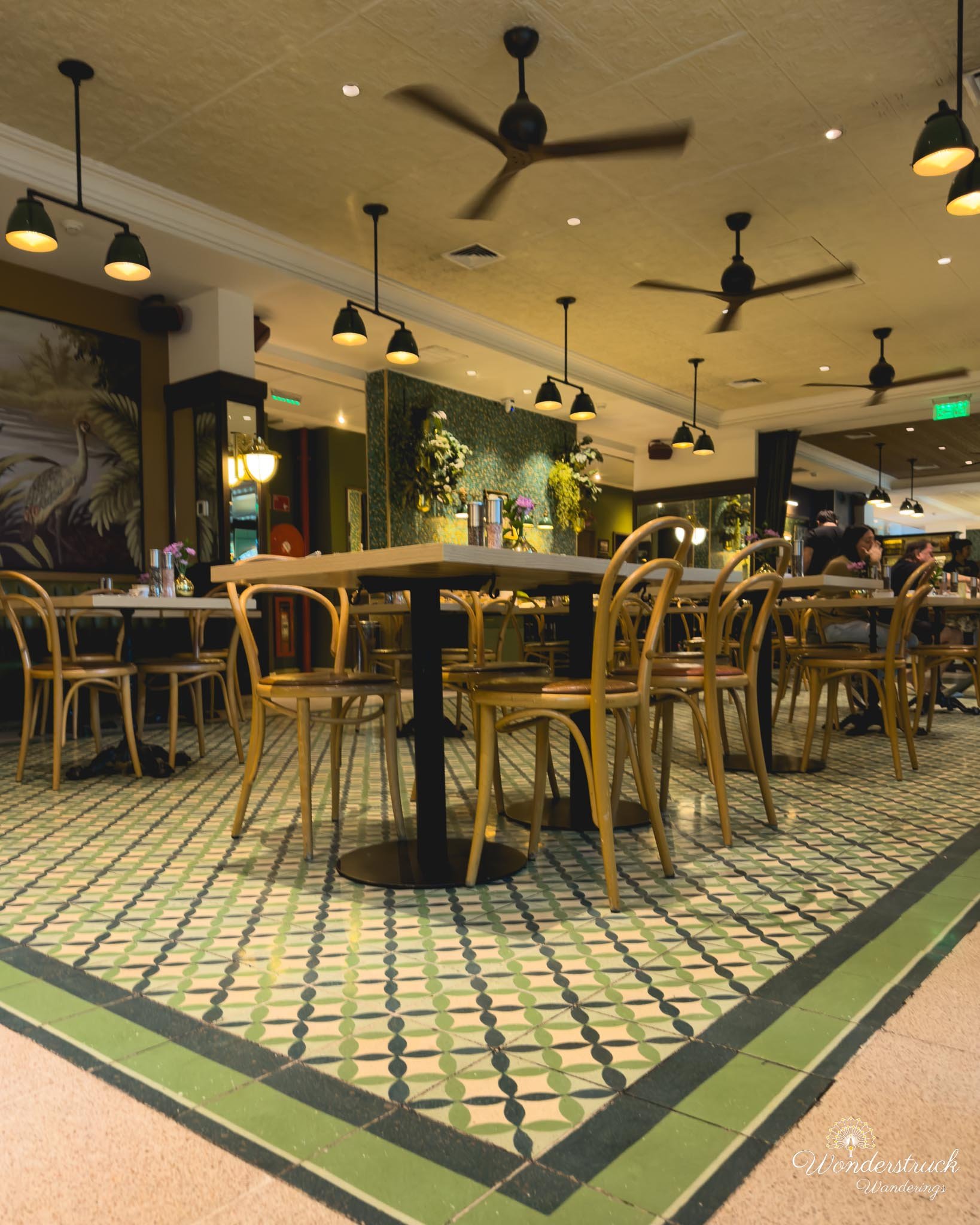
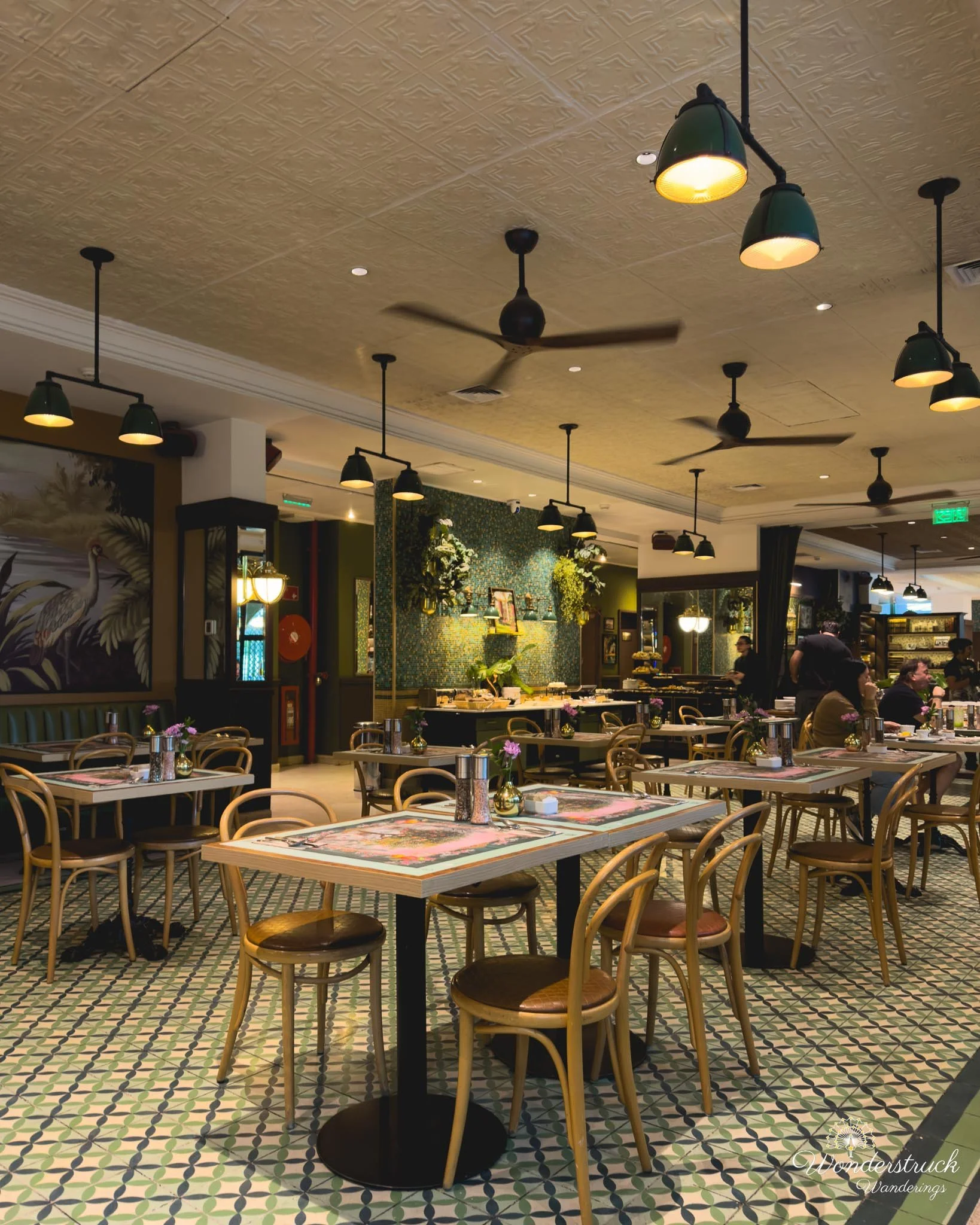
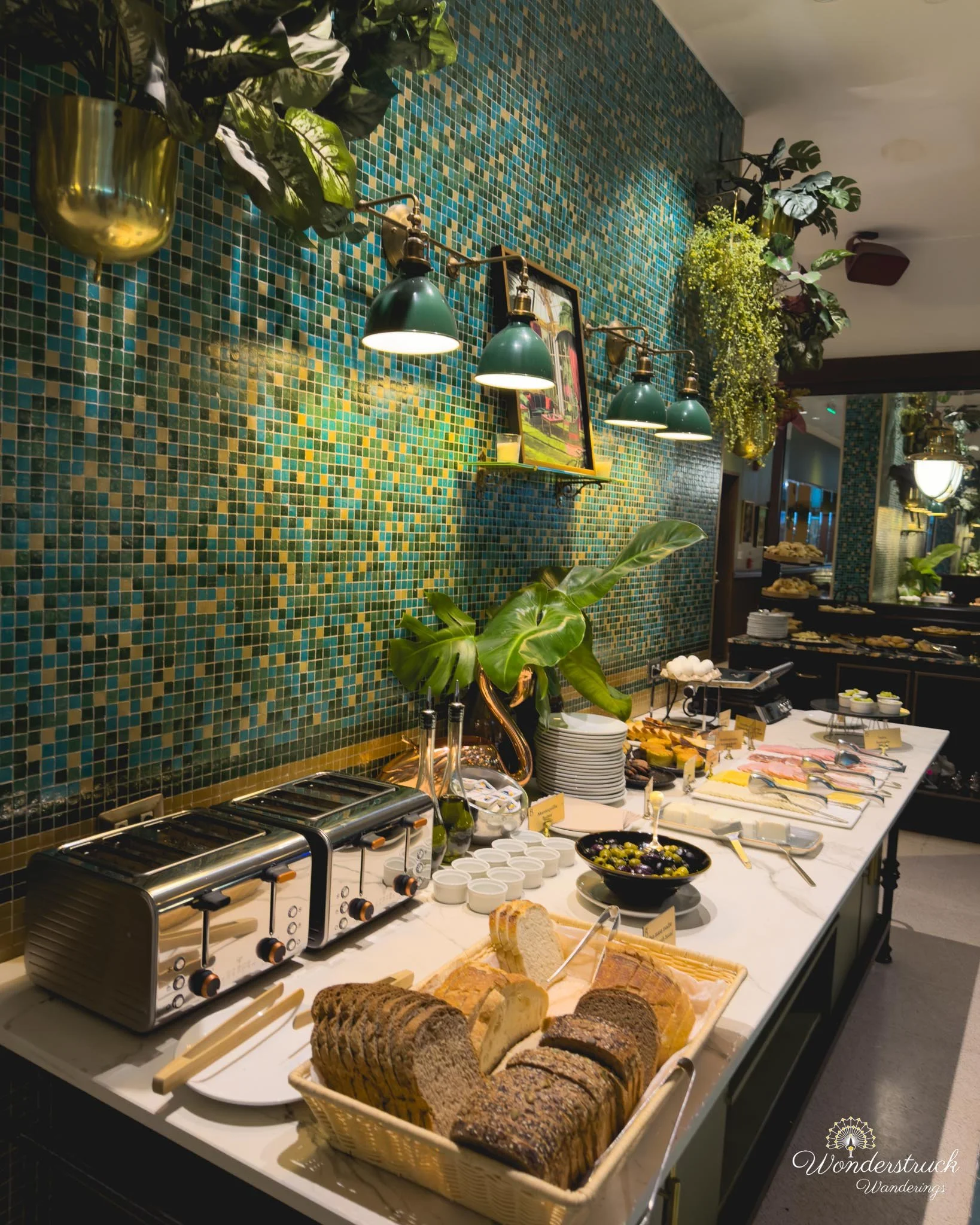
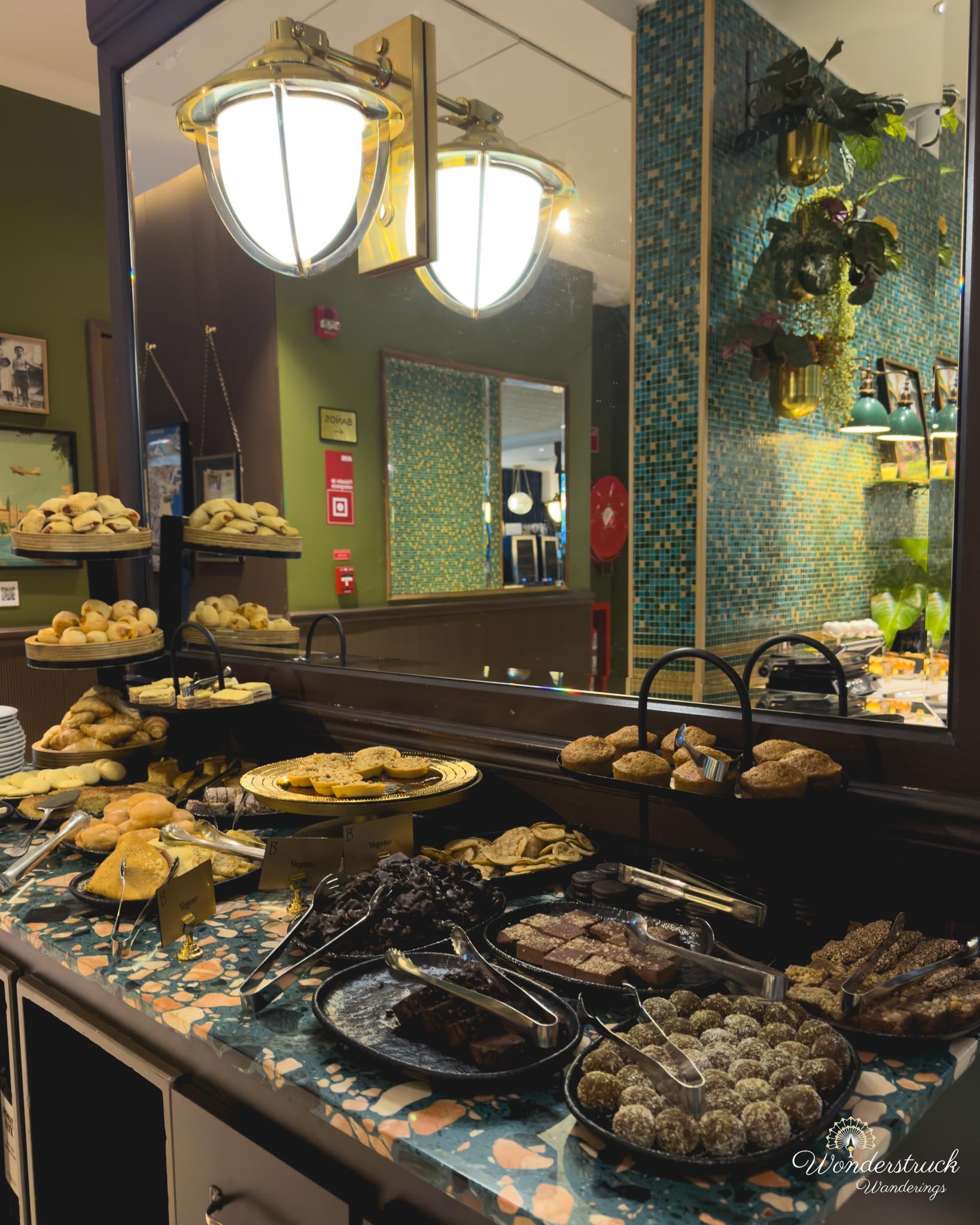
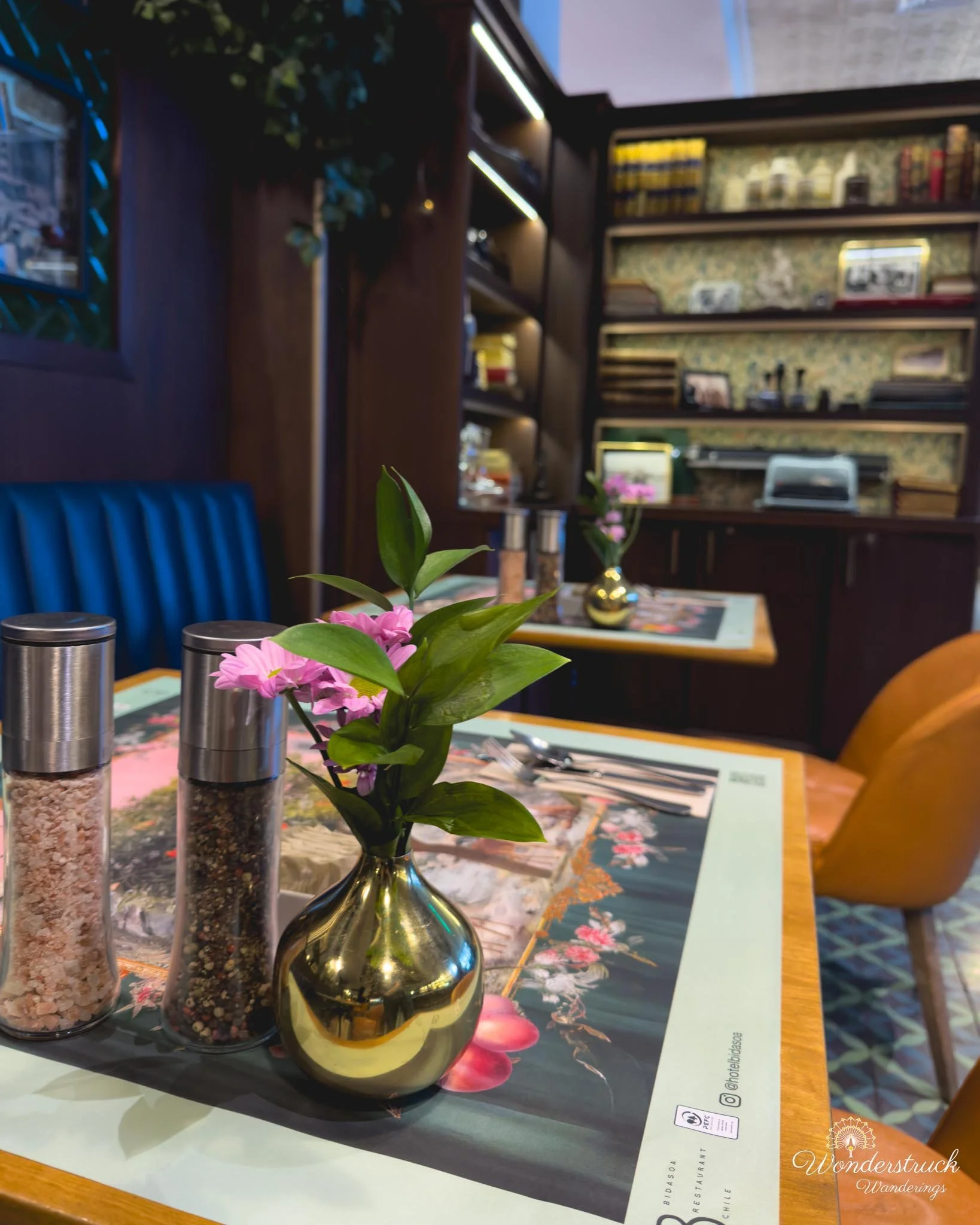
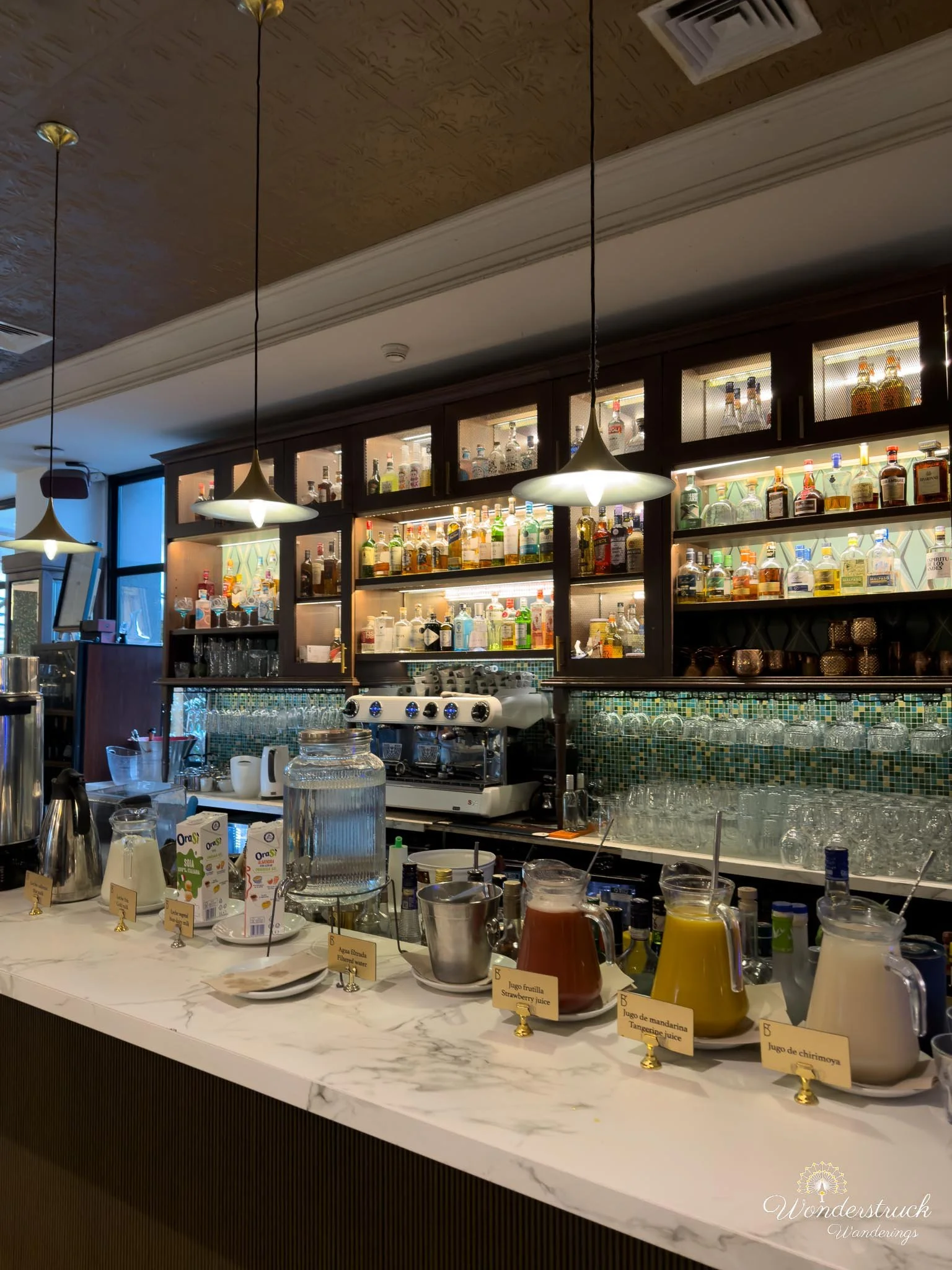
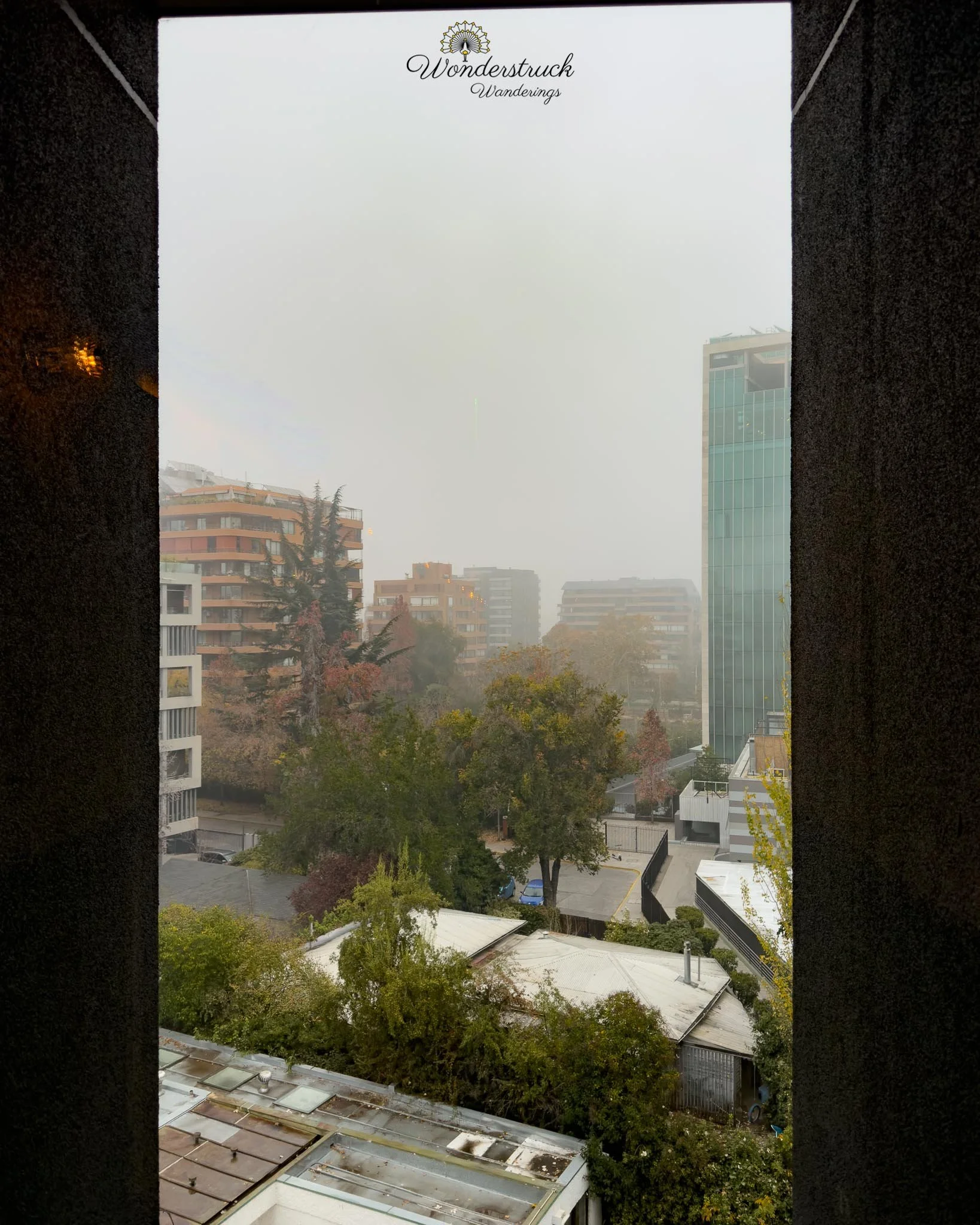
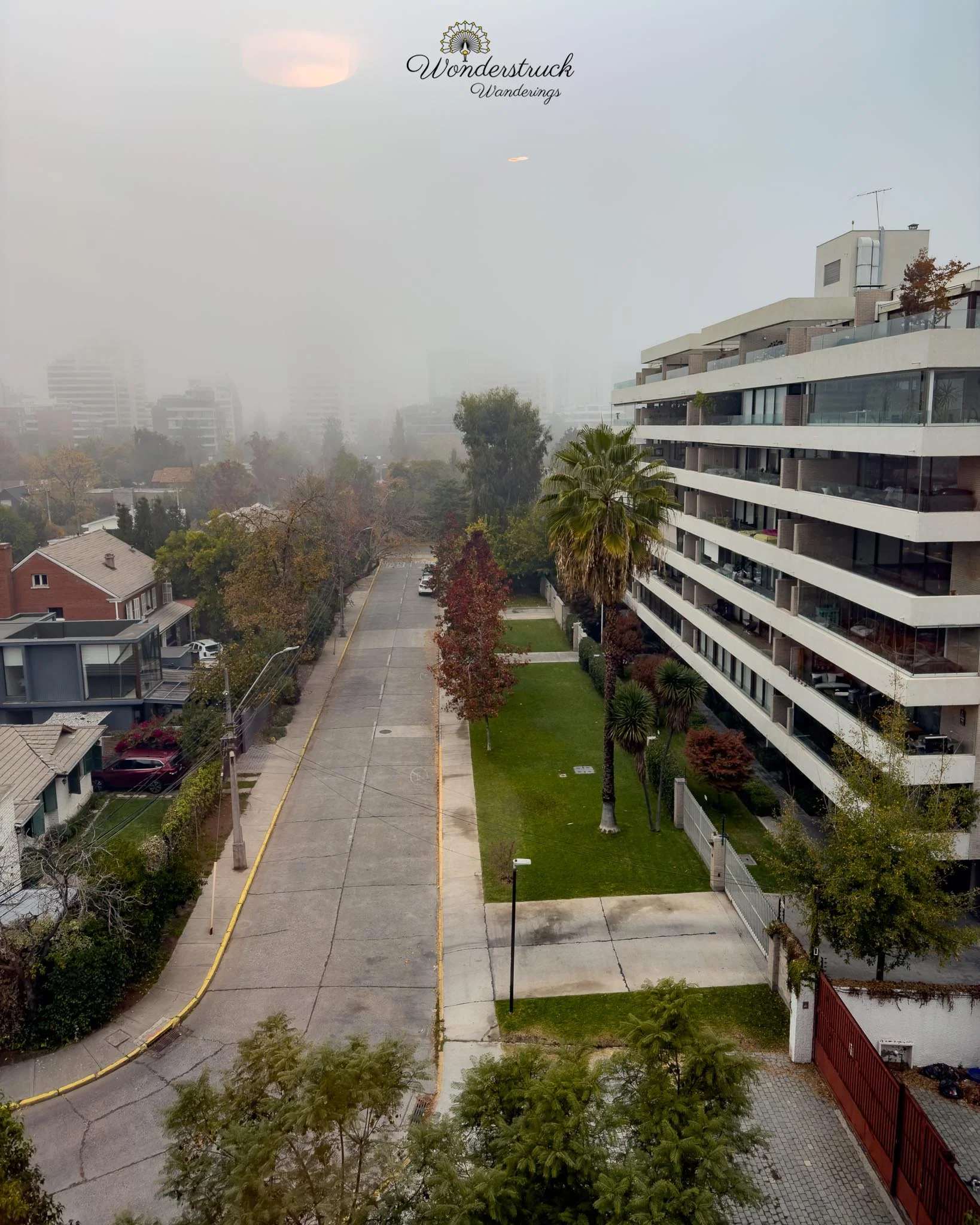
After getting through the airport, we called an Uber and headed toward Vitacura, where we would be staying at Hotel Bidasoa. The hotel had come highly recommended by Shay's local chocolate friend, whom we were planning to meet for dinner that evening. We had booked it partly for comfort, partly for location, and partly because those personal recommendations often turn out better than anything you can find by just comparing hotel listings. We were only expecting to drop our luggage and then head straight back out into the city. Official check-in was at 3 p.m., and arriving before 9 a.m. usually means you are politely told to leave your bags and come back later. Instead, the front desk surprised us completely. They had a room ready and offered it to us right away, around 8:30 in the morning. Even better, they invited us to enjoy the breakfast buffet that same morning. Maybe low season helped, but it still felt unusually generous, especially after an overnight international flight when even the smallest kindness feels magnified. Hotel Bidasoa made a strong first impression. It did not feel like a generic city hotel where you could be anywhere in the world. The design had personality - warm, modern, leafy, and quietly stylish without trying too hard. The public spaces had that indoor-outdoor Santiago feeling, with plants, natural textures, and a calmness that worked especially well after the airport. We went up to our room, dropped the luggage, and took a moment to breathe. Outside the window, the trees around Vitacura already had their share of city bird life, and because this was our first morning in Chile, even common urban birds had our full attention. Within minutes our first proper Chile birds started entering the trip list: Rock Pigeons, a single Picui Ground Dove, and several Austral Thrushes moving through the trees and open spaces. The Rock Pigeon was familiar, of course, but Picui Ground Dove and Austral Thrush were new for us, and that gave the sleepy arrival morning a small but satisfying birding spark. It is always funny how a travel day can shift from airport fatigue to discovery because one unfamiliar dove walks across a plaza or a thrush starts working through the branches like it owns the place. Then we went straight back down for breakfast. The buffet had the kind of spread that makes you slow down even when you are eager to get out: slices of meat, breads, sweet muffins, coffee, fresh juice, and enough small things to build a proper first meal in Chile. Shay especially loved the chia pudding and went back for a repeat. After overnight travel, breakfast is not just breakfast. It is recovery. It is proof that you made it.
Barrio Italia: Chocolate, Wine, Coffee, and Murals
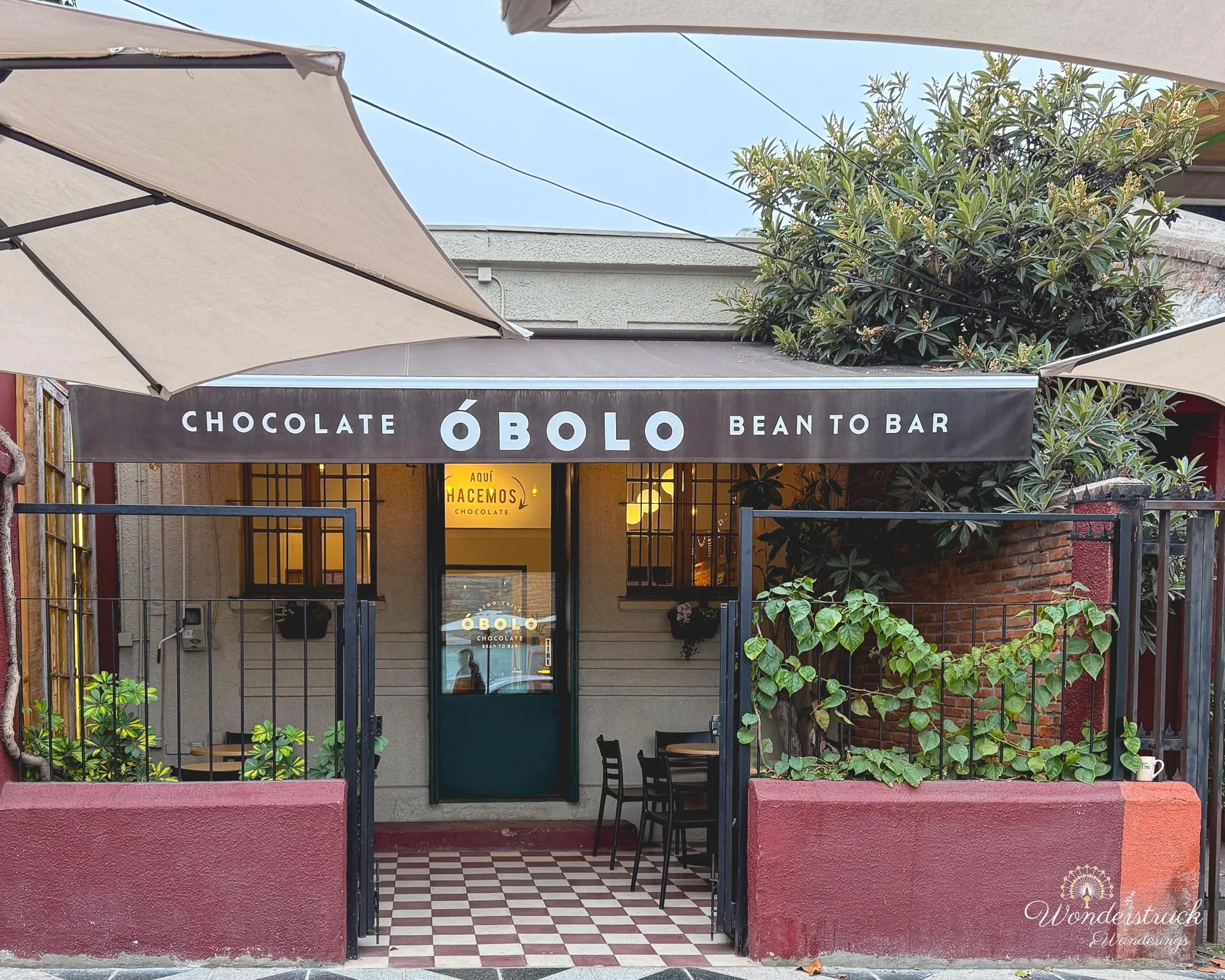
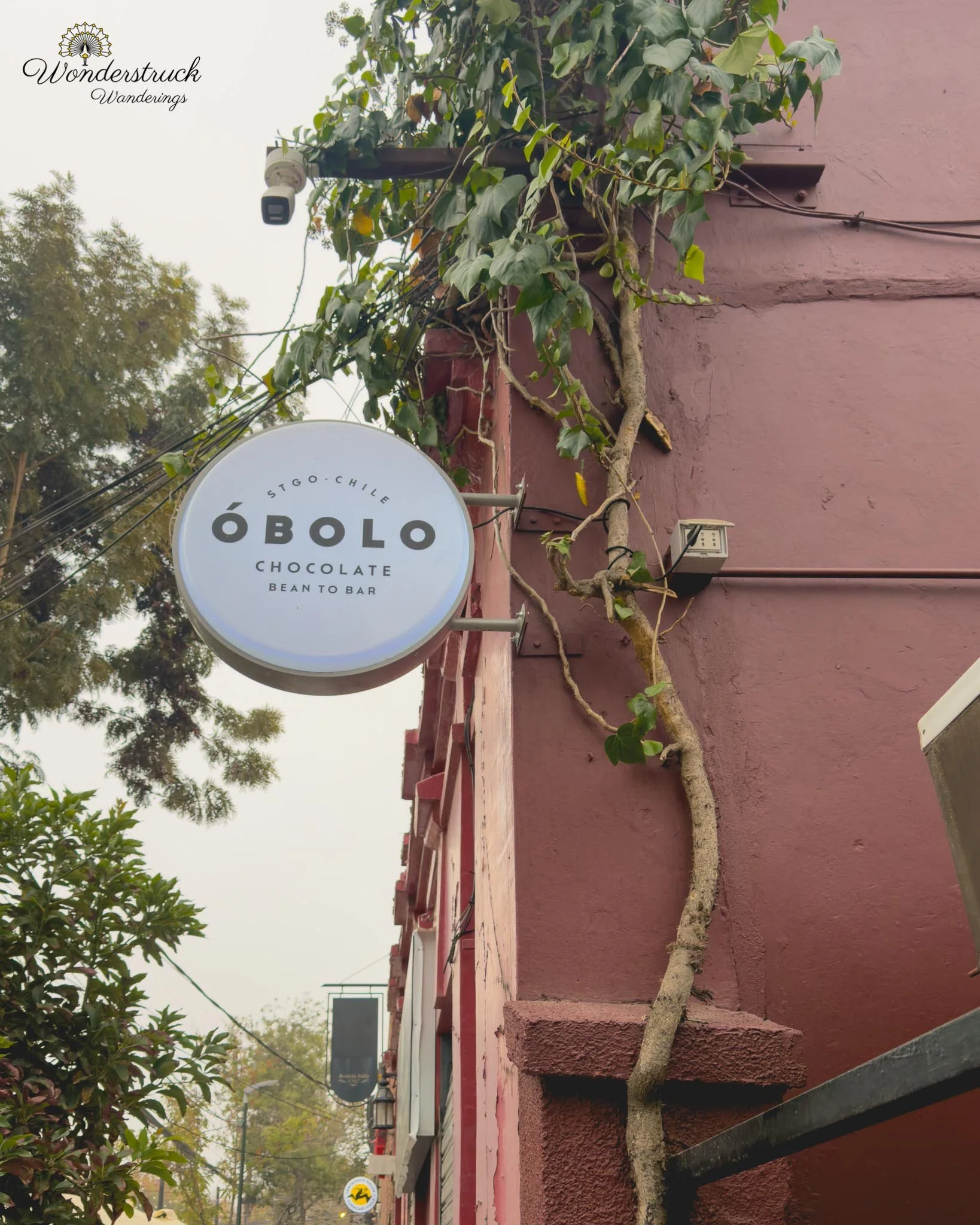
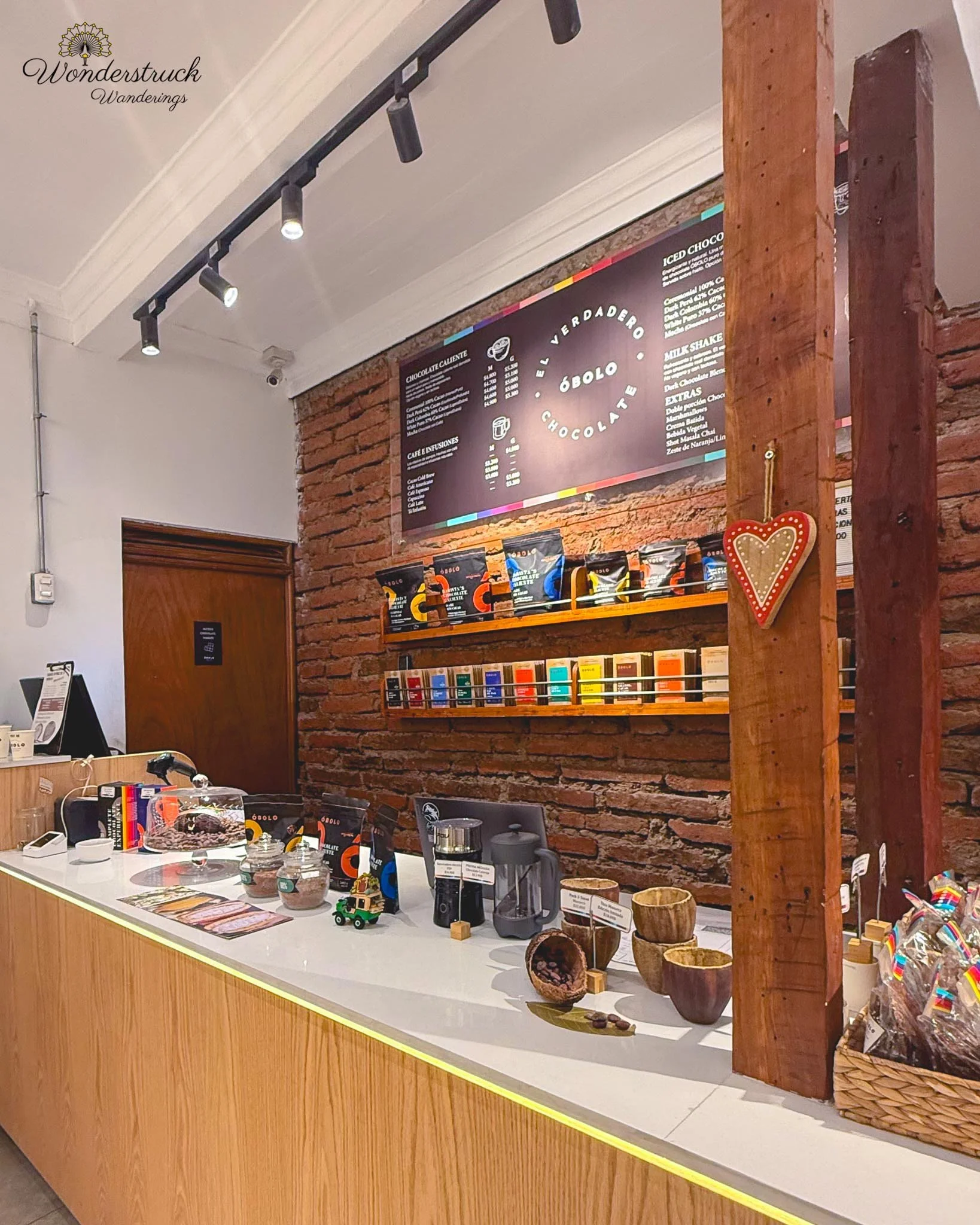
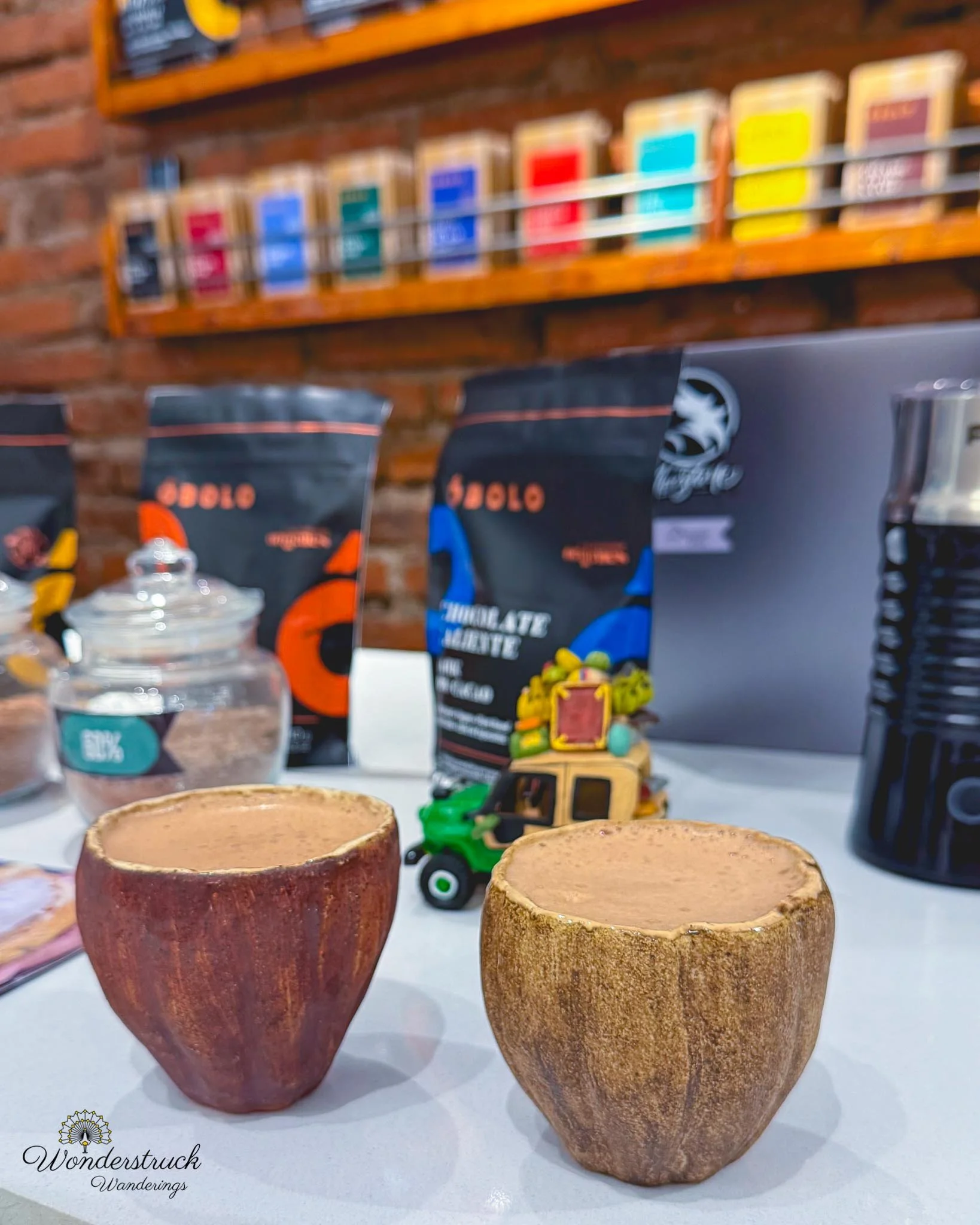
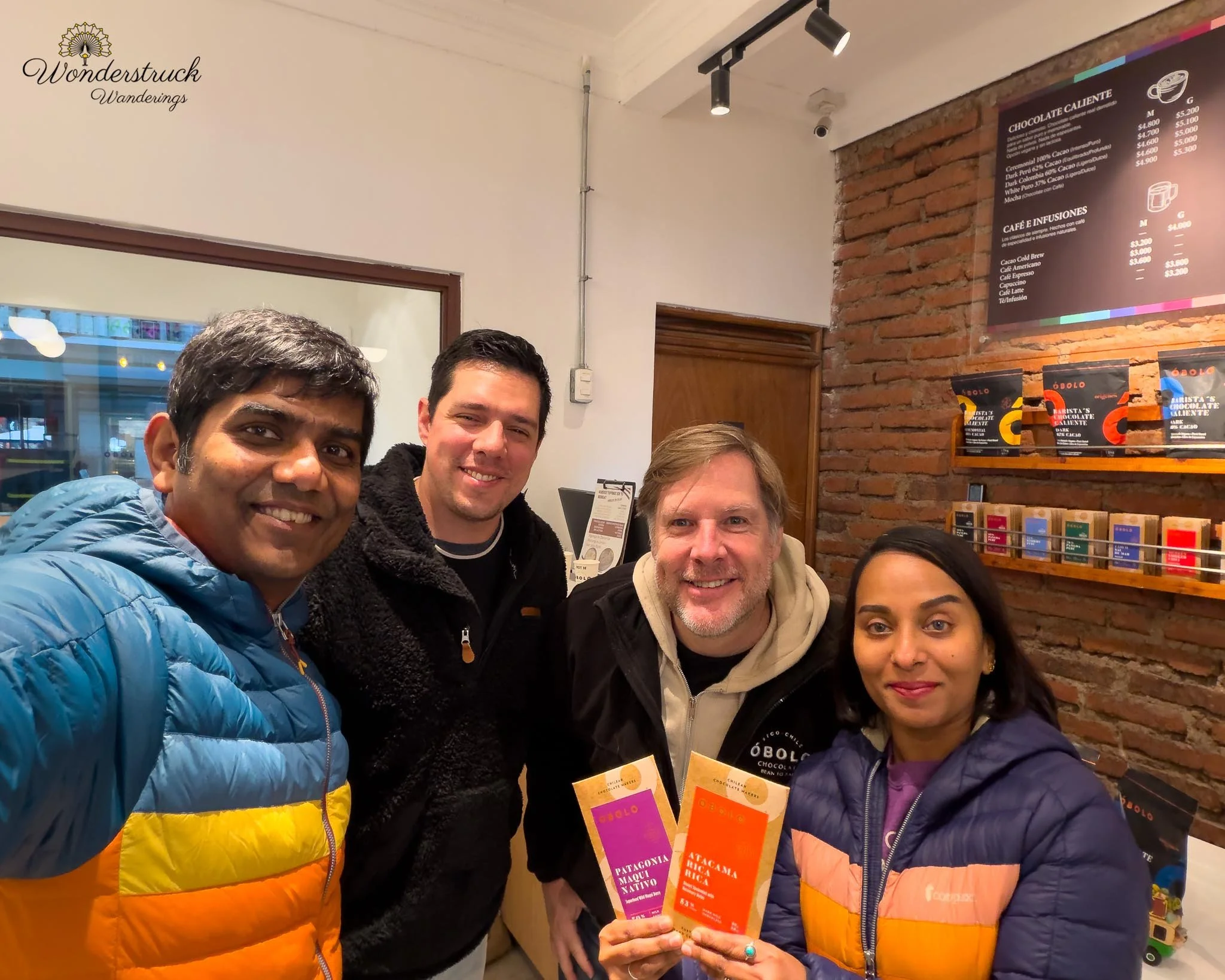
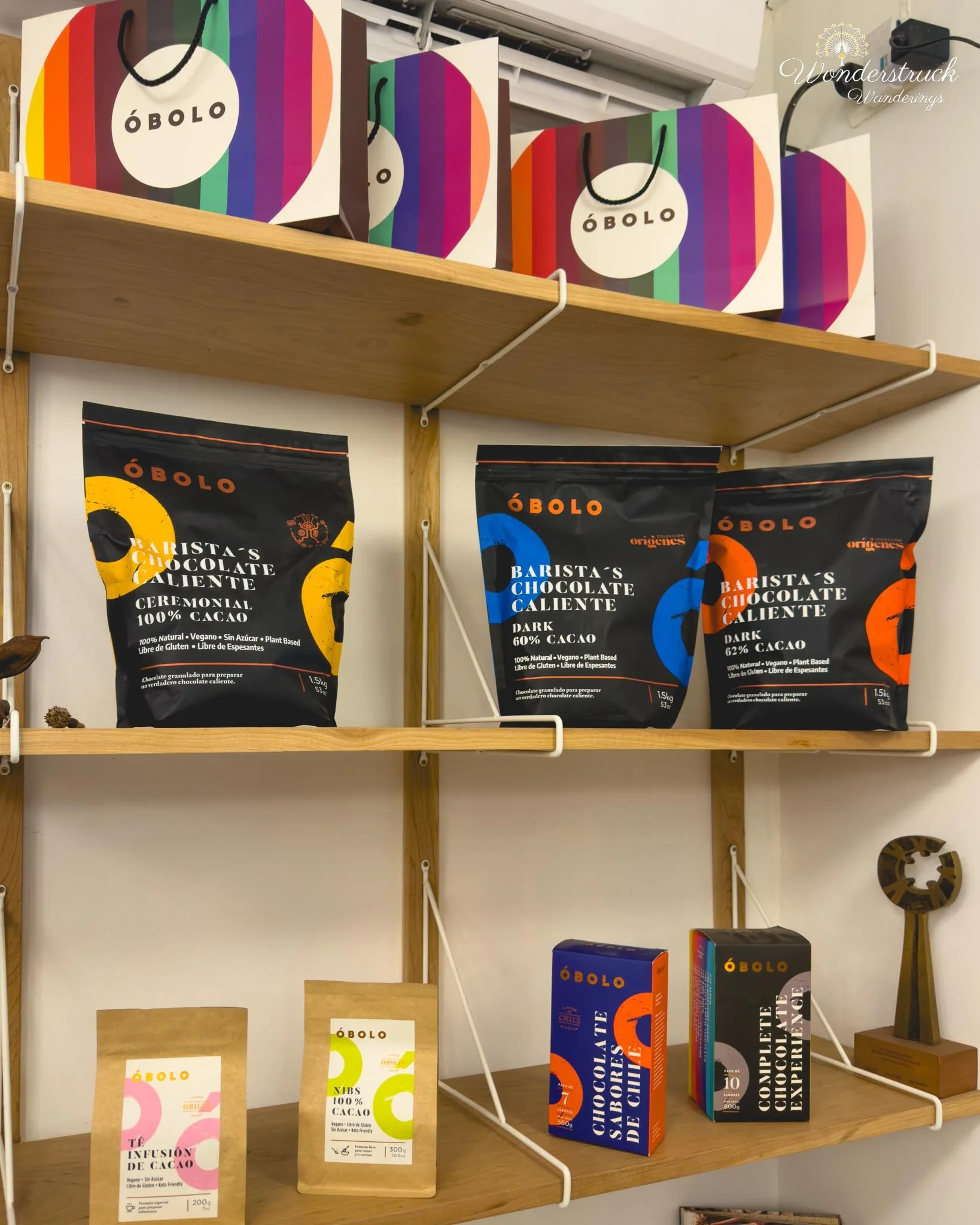
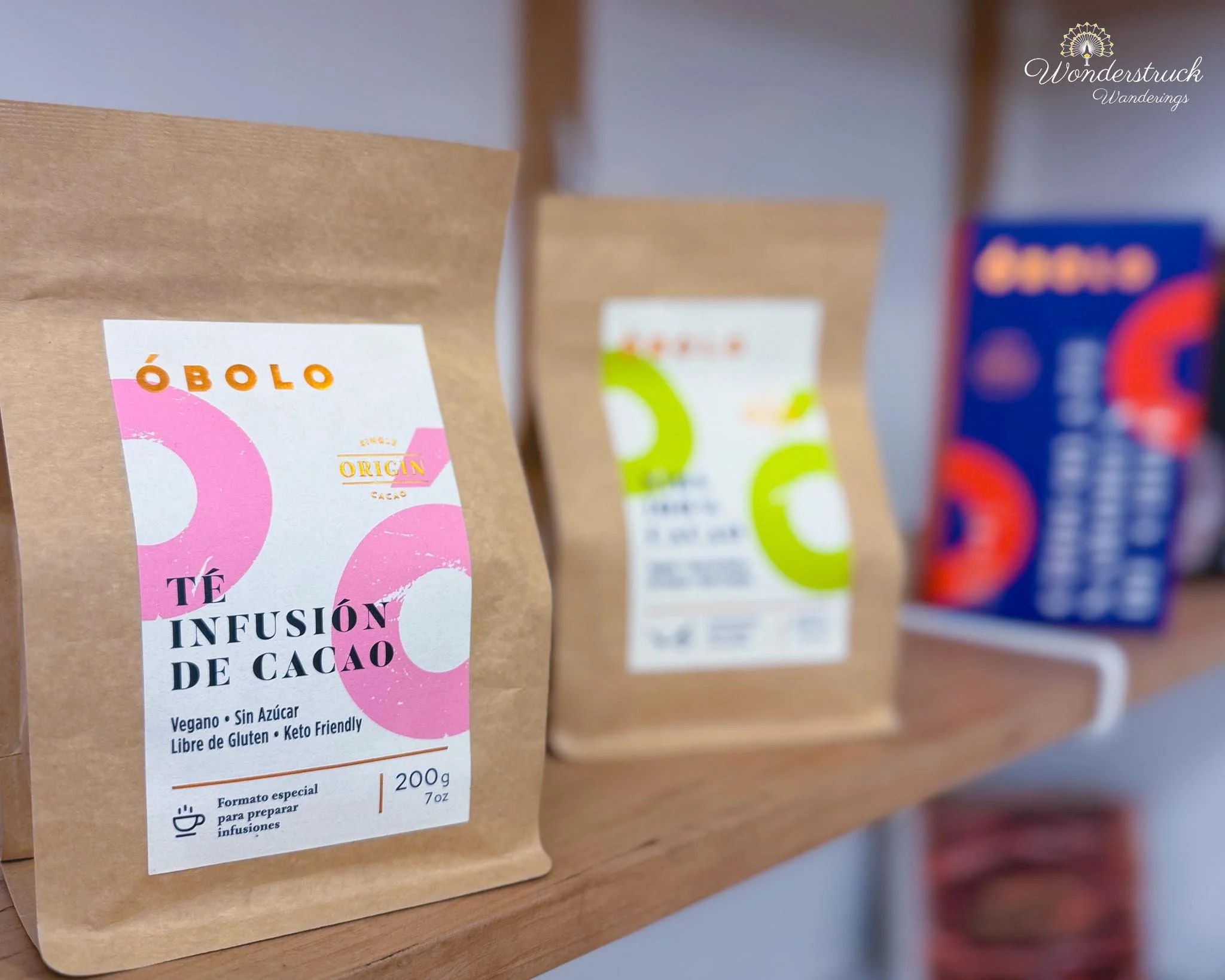
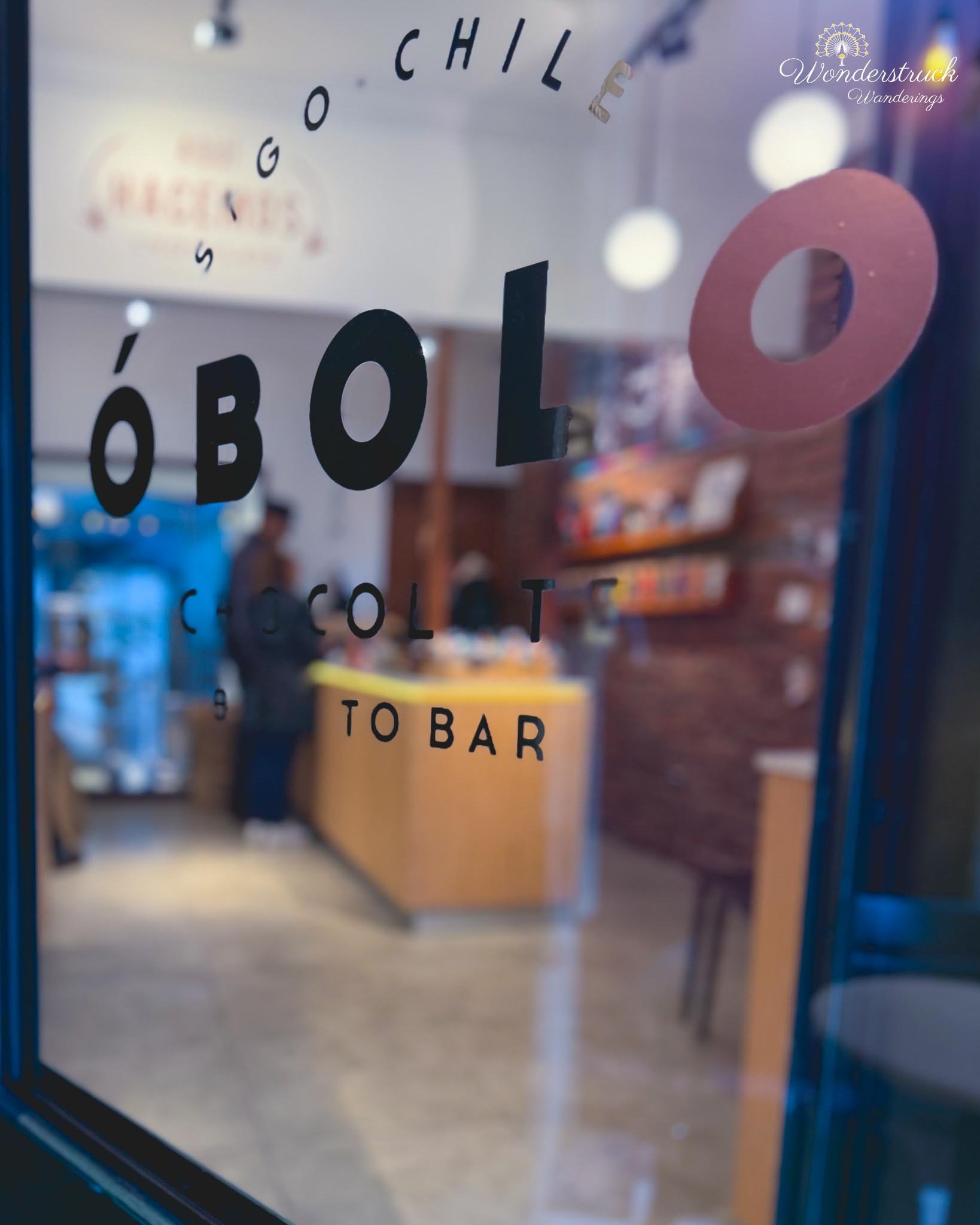
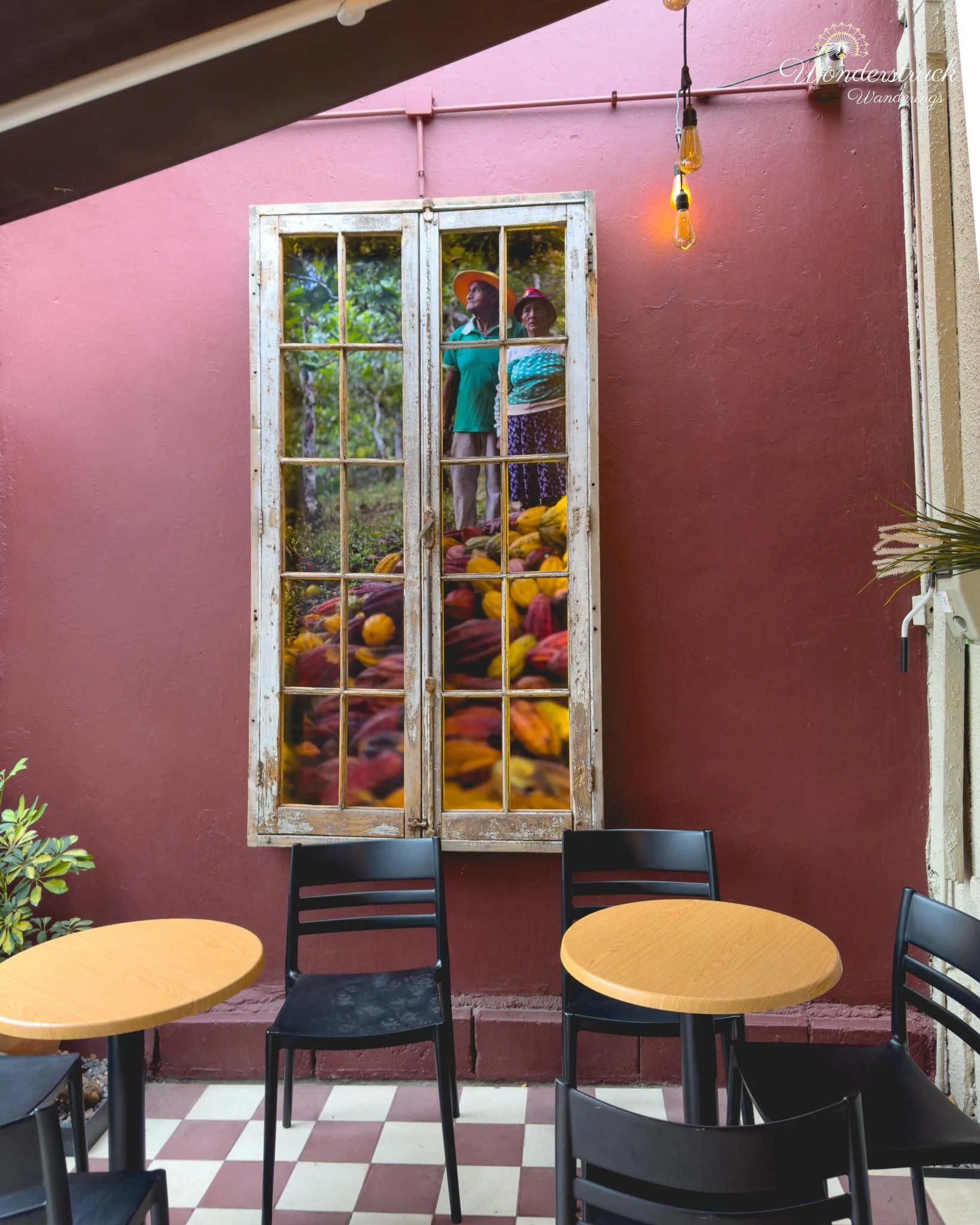
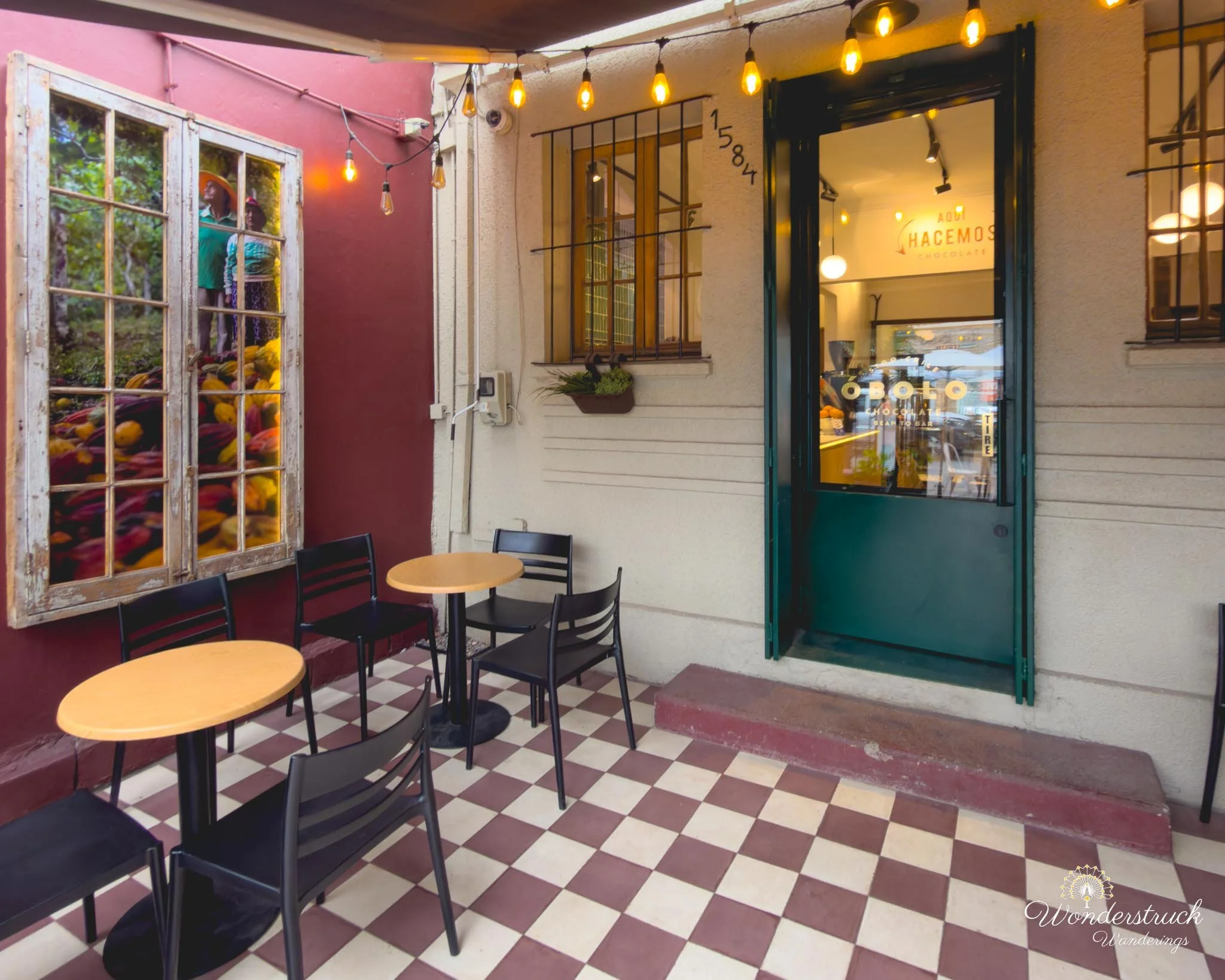
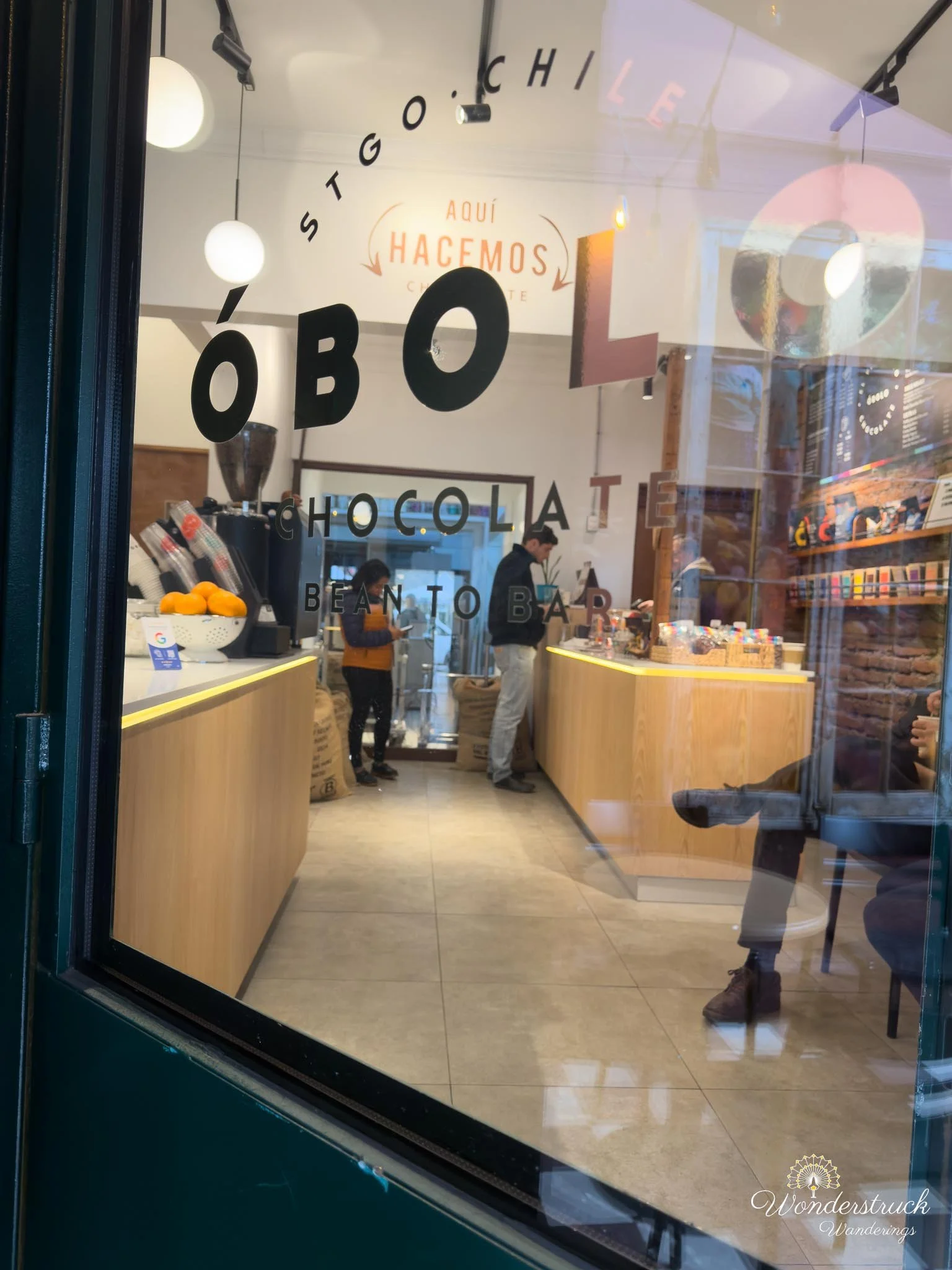
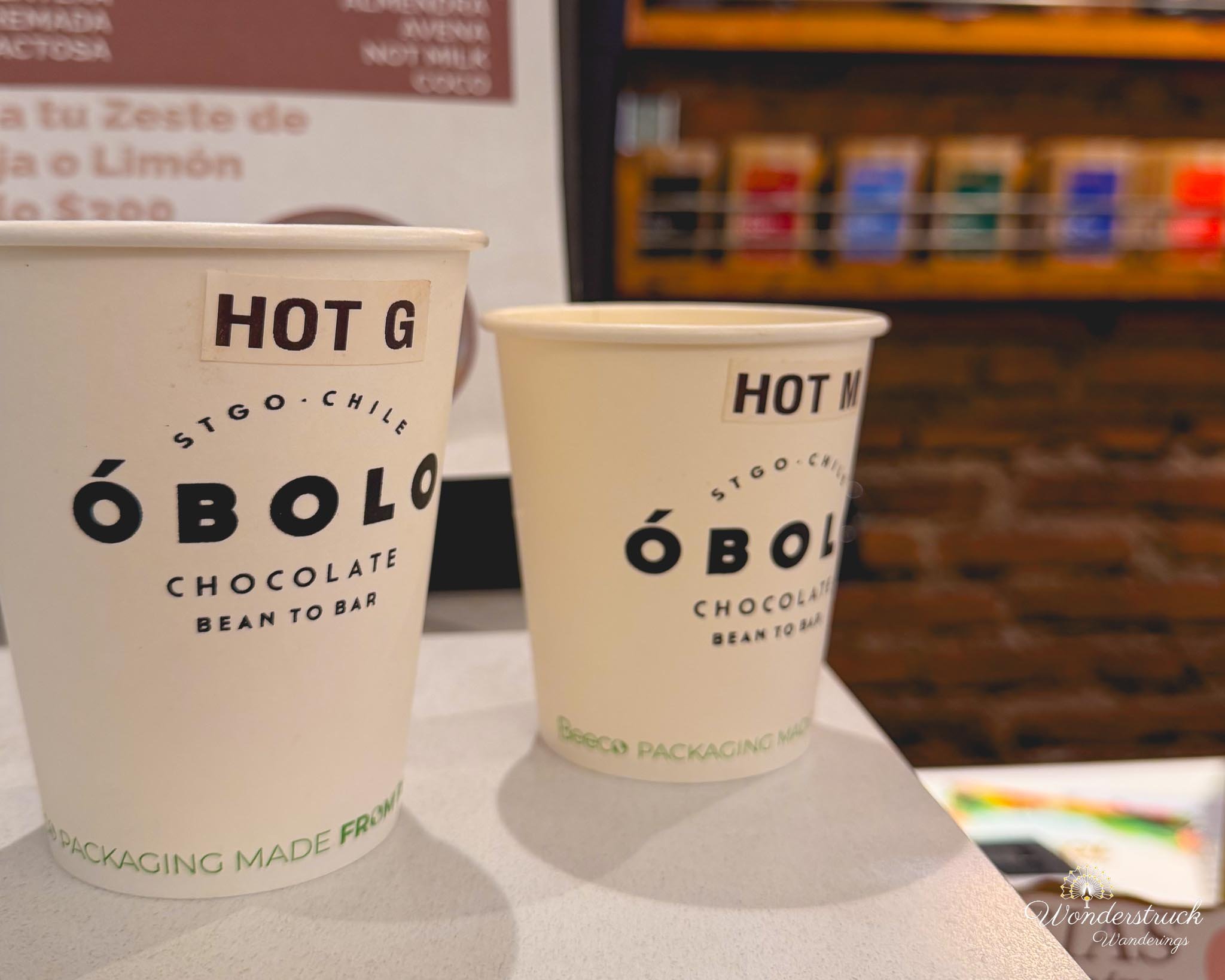
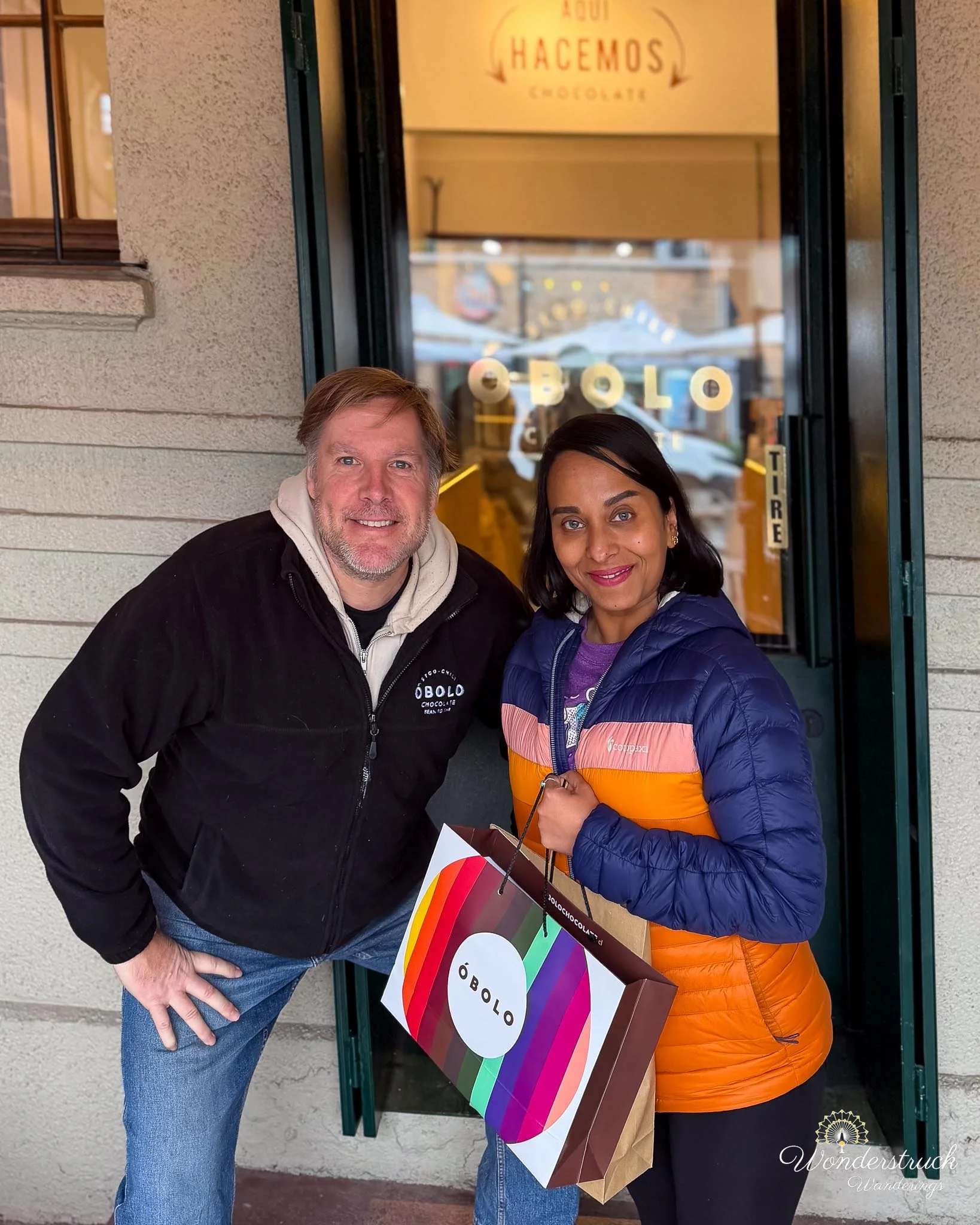
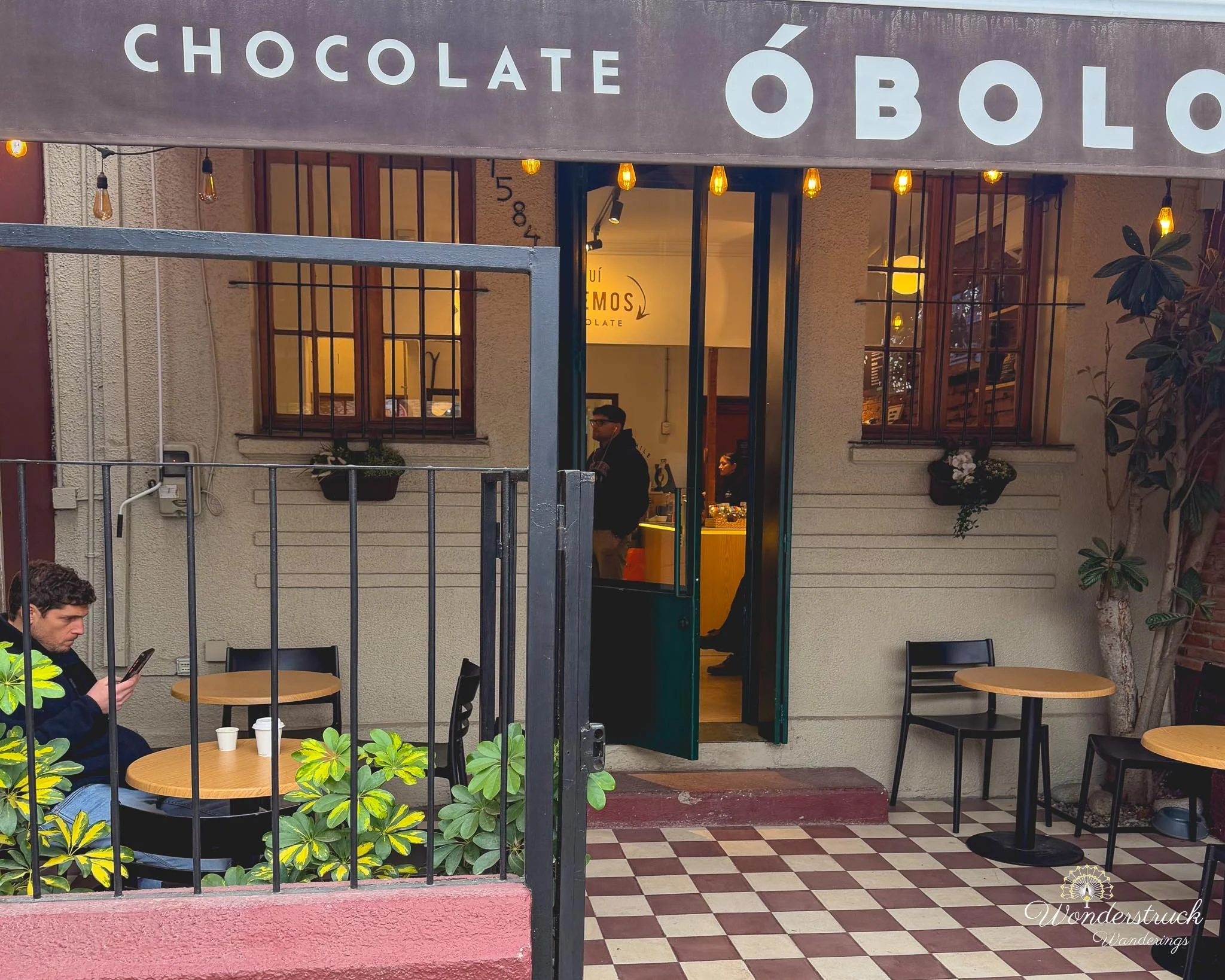
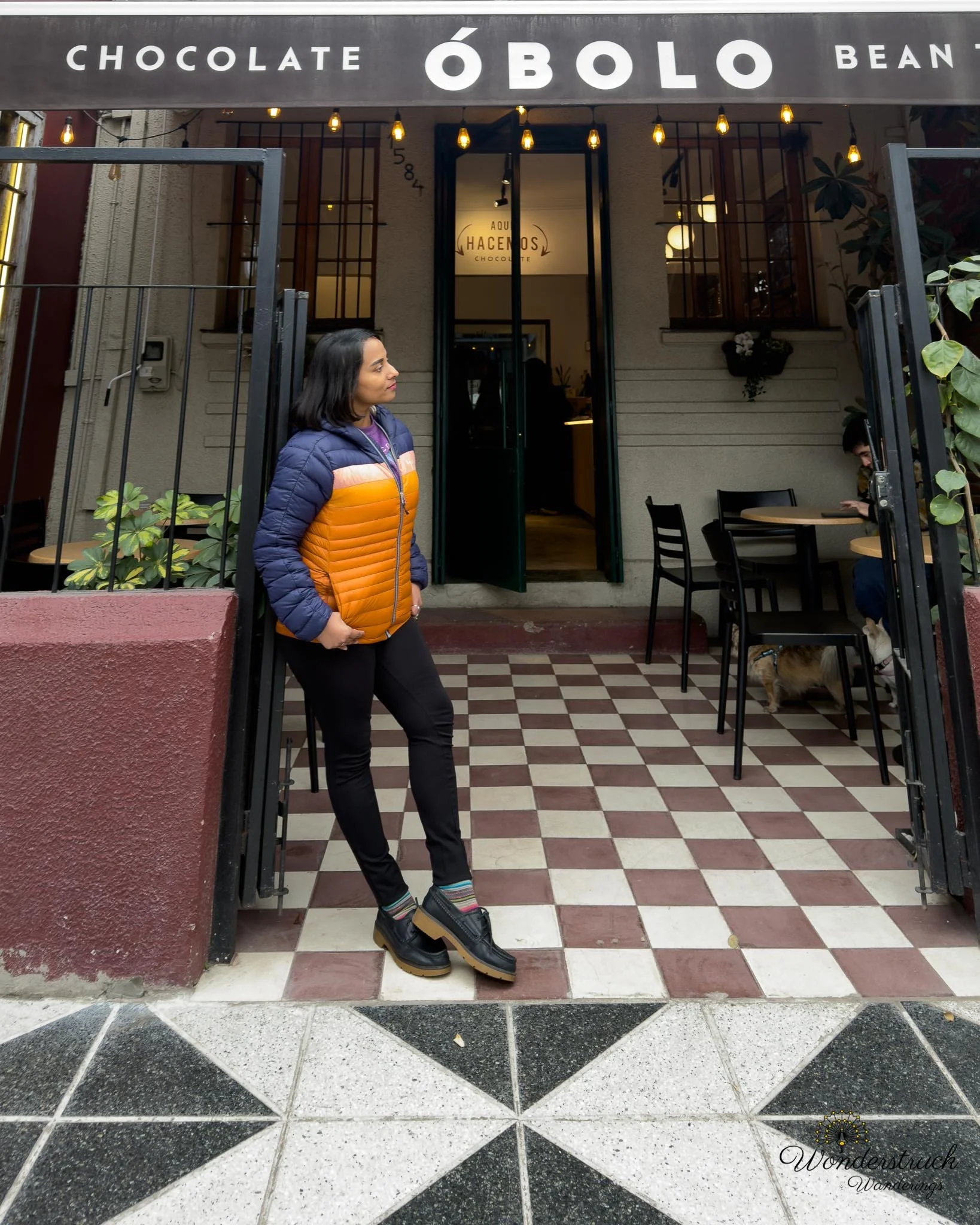
After breakfast, we took quick showers and packed our city camera setup. For Santiago, we wanted to stay light but ready - wide enough for streets and architecture, flexible enough for city details, and not so much gear that the first day became a burden. Then we called an Uber to our first real stop of the day: Obolo Chocolate in Barrio Italia. Obolo was not just another chocolate stop for us. Shay had met Mark years ago, back in 2019 at the Southwest Chocolate Festival, and had kept in touch through her ChocCoffeeWine world. So walking into the shop in Santiago felt less like visiting a business and more like reconnecting with a thread from a previous chapter. We sat with Mark and his business partner Brayan over hot chocolate, talking about the past, present, and future of chocolate - the kind of conversation that moves easily from sourcing and craft to business plans and personal updates. Barrio Italia was also a perfect first neighborhood for us. It had murals everywhere, small storefronts, cafes, design shops, and that slightly creative, lived-in texture that makes a neighborhood feel more interesting than polished. It did not feel like a place built only for visitors. It felt like a neighborhood where people actually work, meet, drink coffee, browse, and linger. Arriving there gave the day a very Shay-and-Rahul kind of rhythm: chocolate first, city later. It was good to see that they were doing well. Mark mentioned plans for another outlet in the city, and there was something encouraging about hearing that from someone whose work we had followed across years and countries. Travel can sometimes make friendships feel scattered all over the map, but then you sit down over hot chocolate in Santiago and realize those scattered threads are exactly what make the world feel connected.
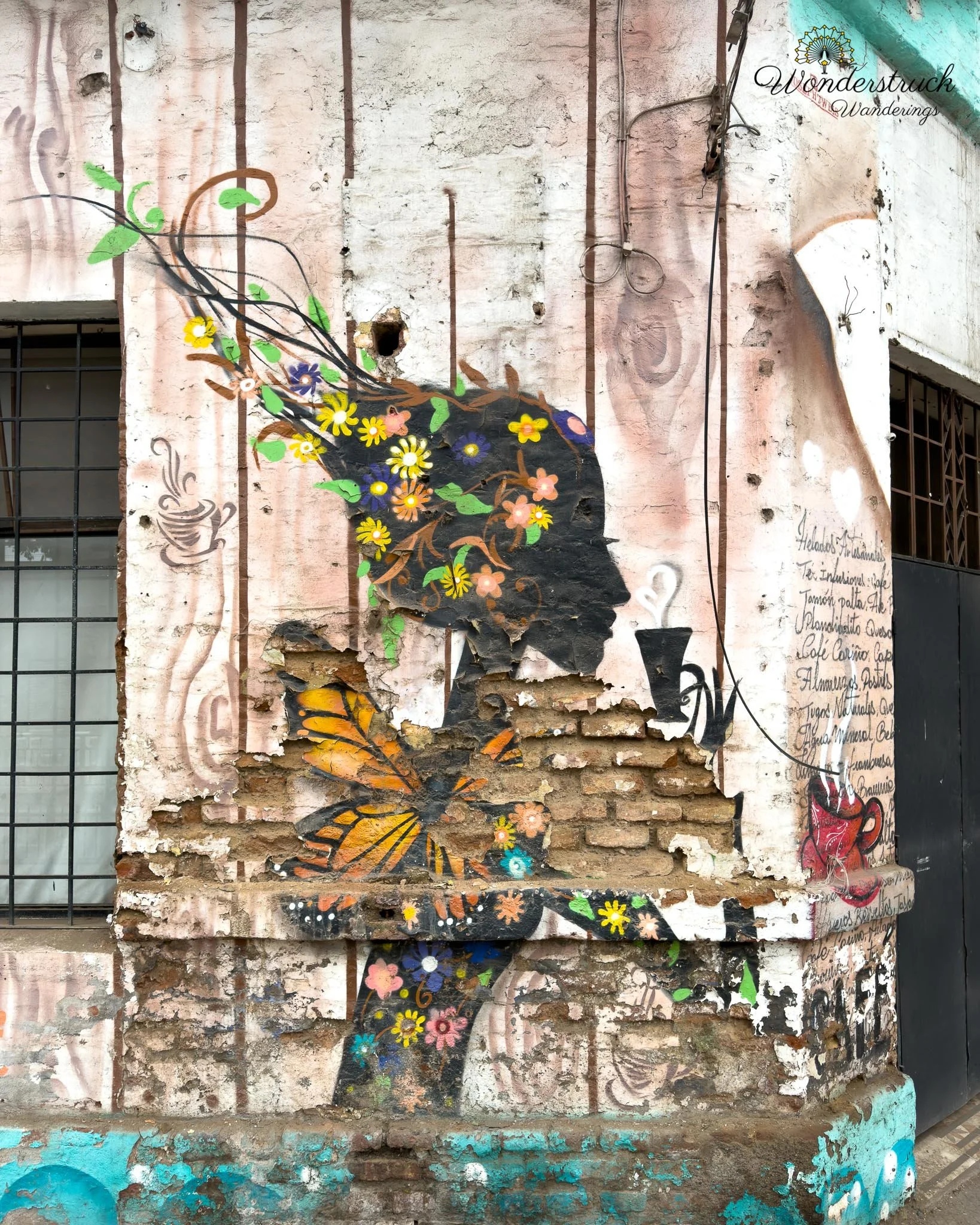
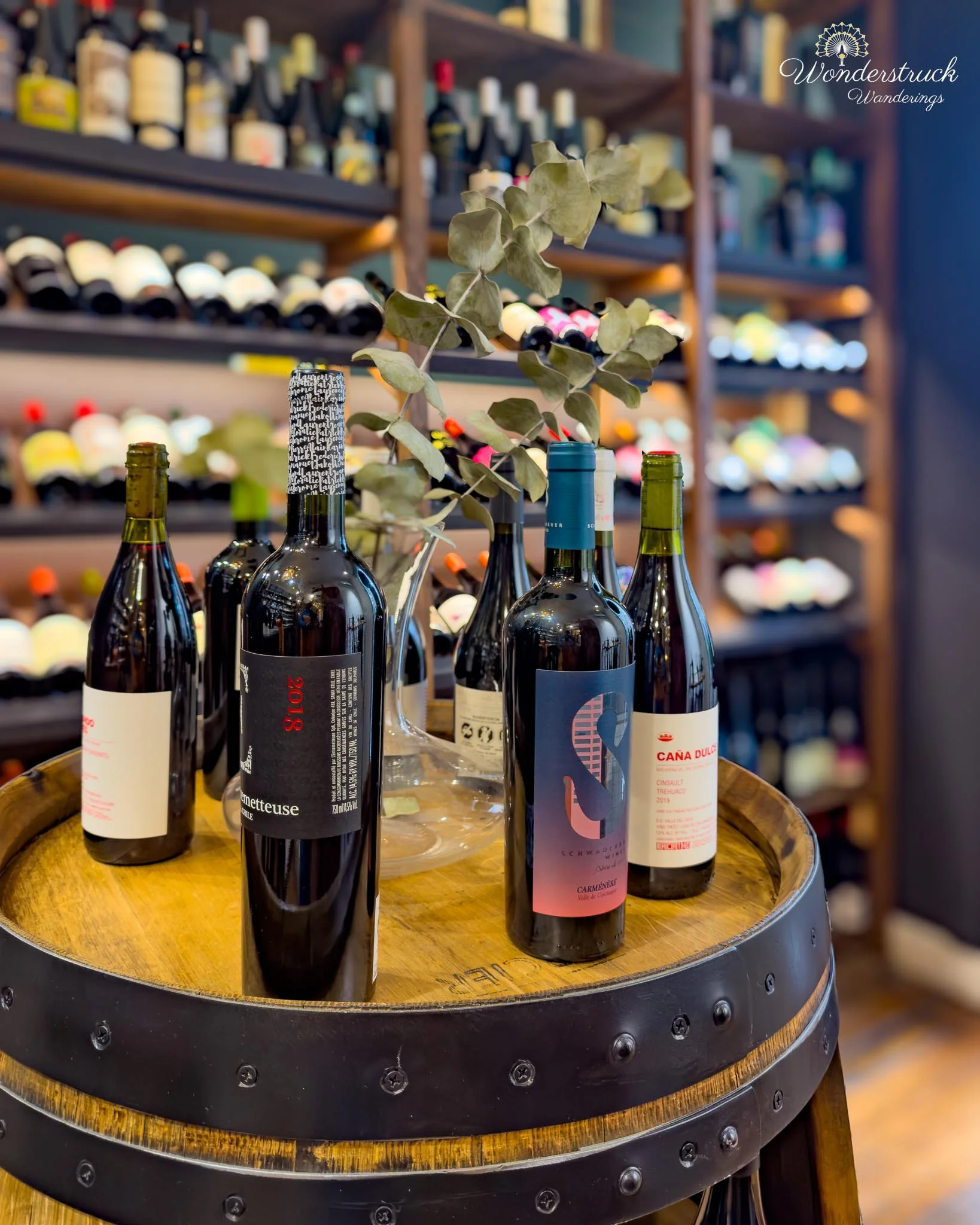
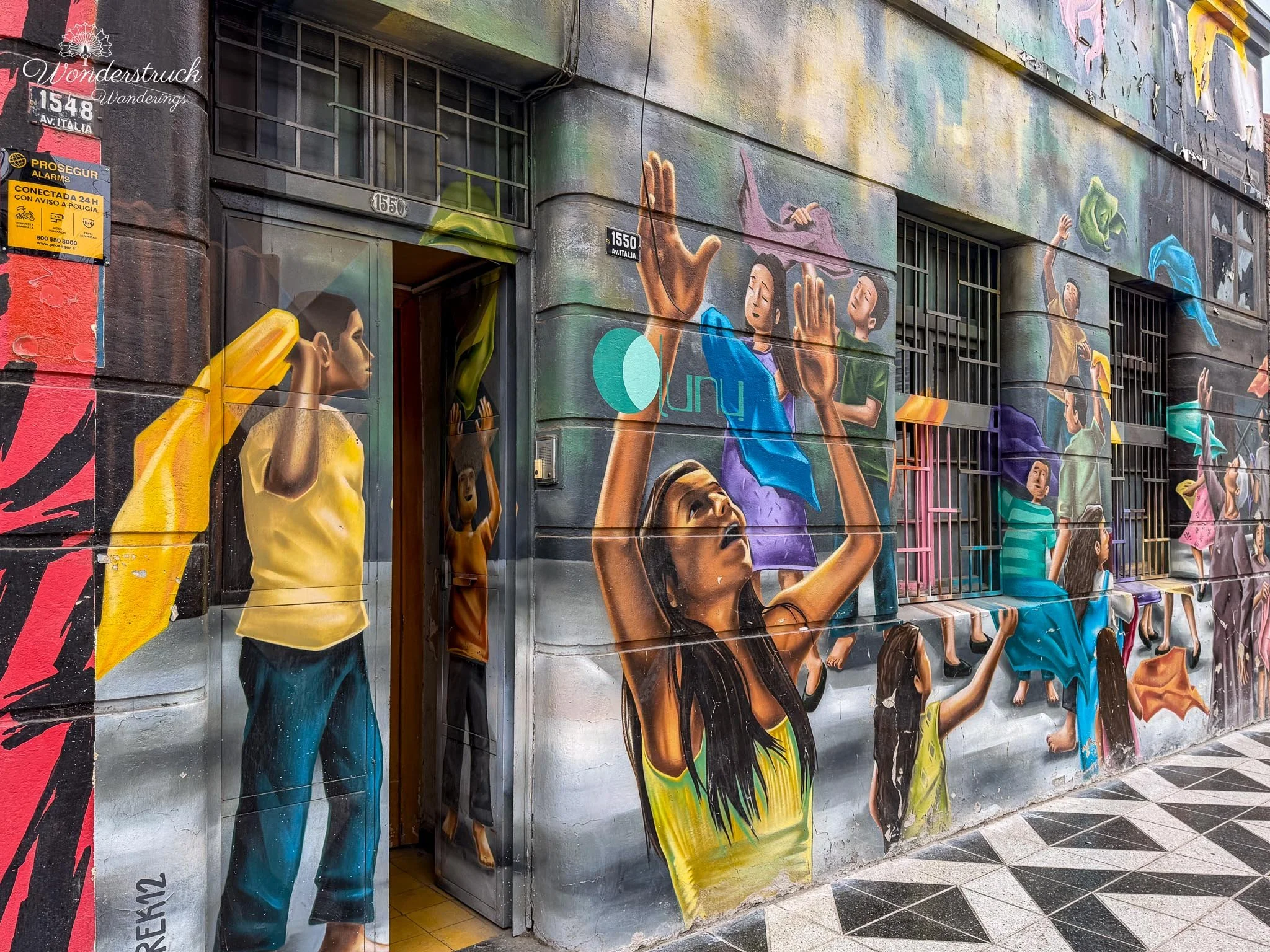
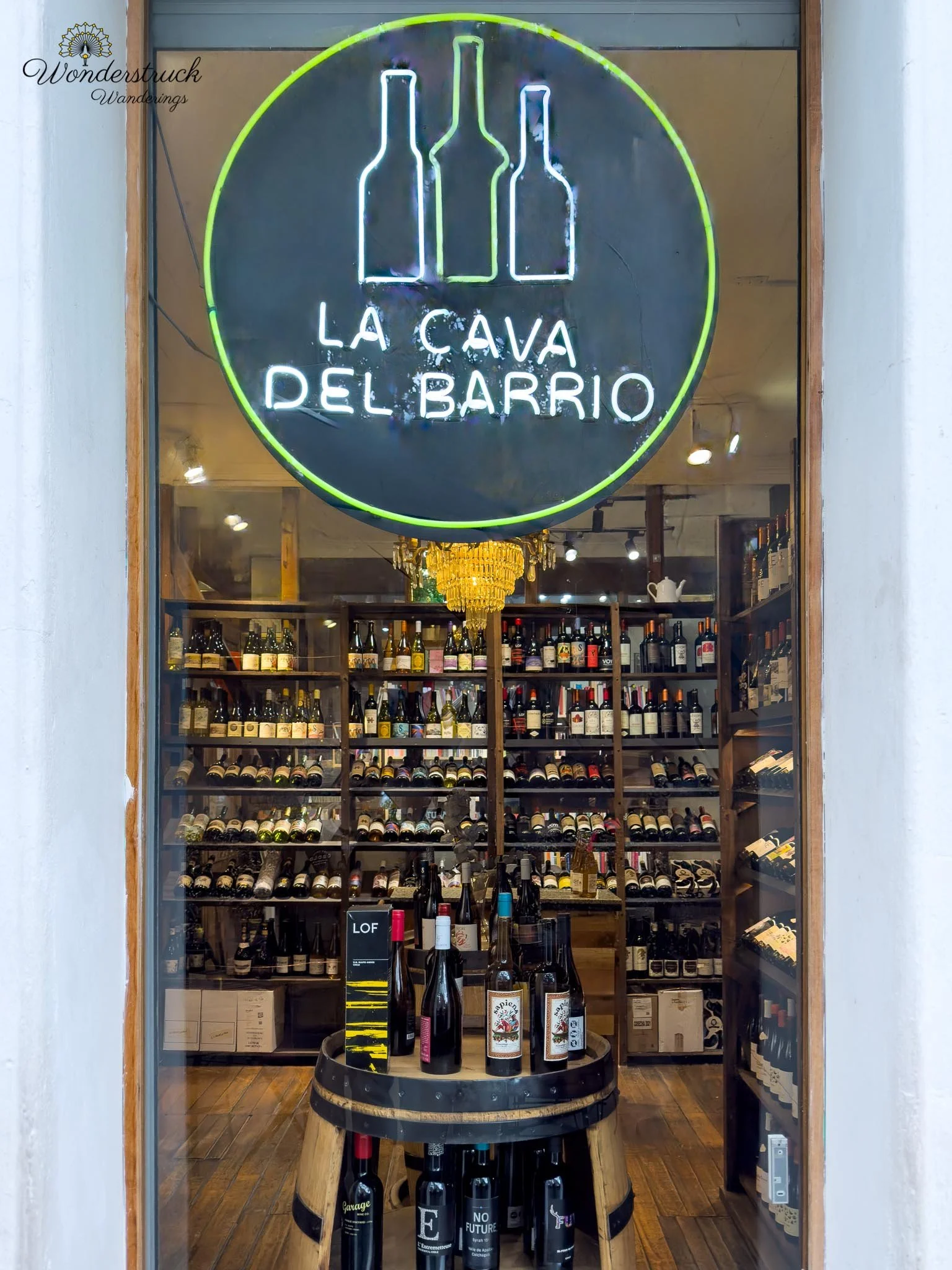
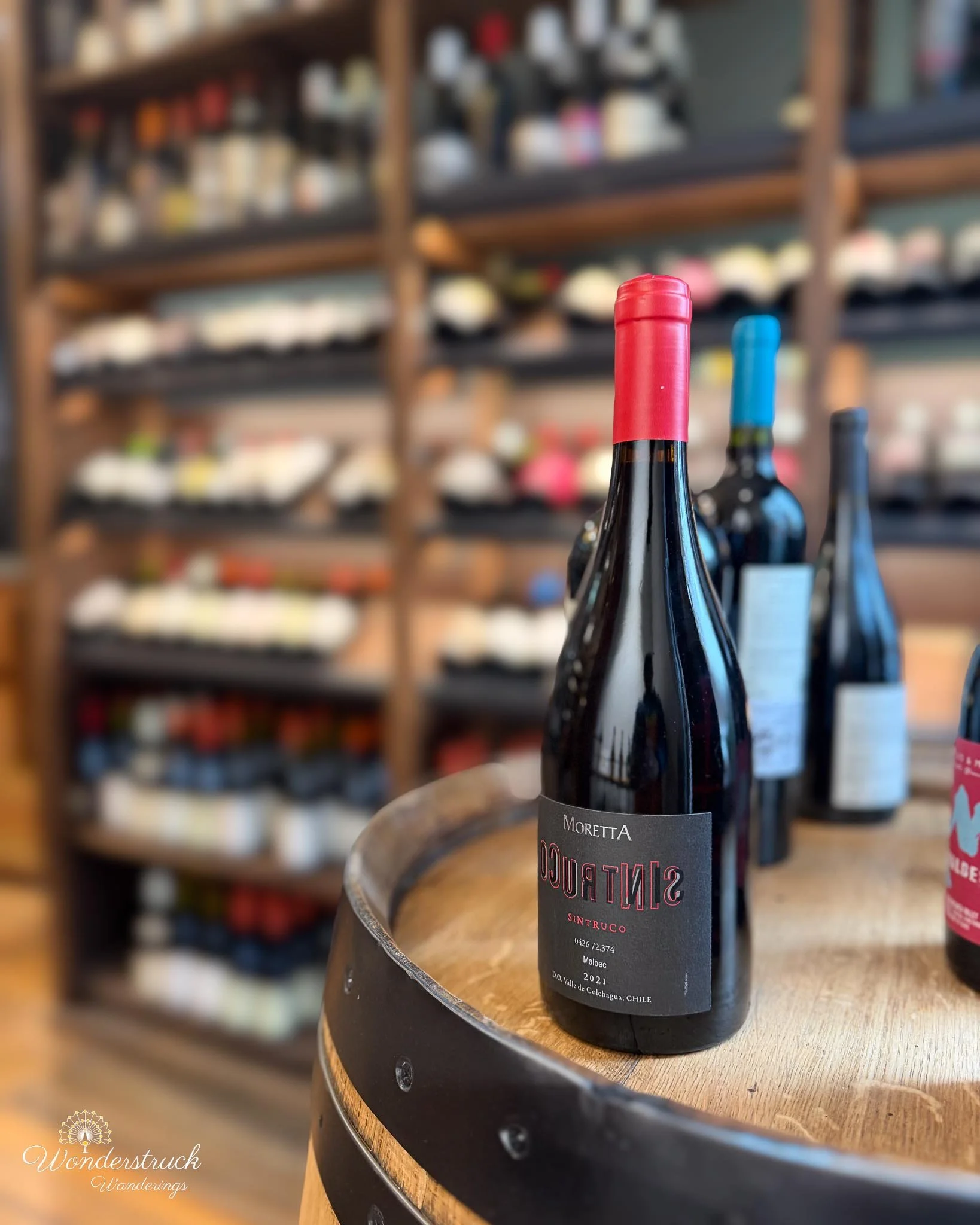
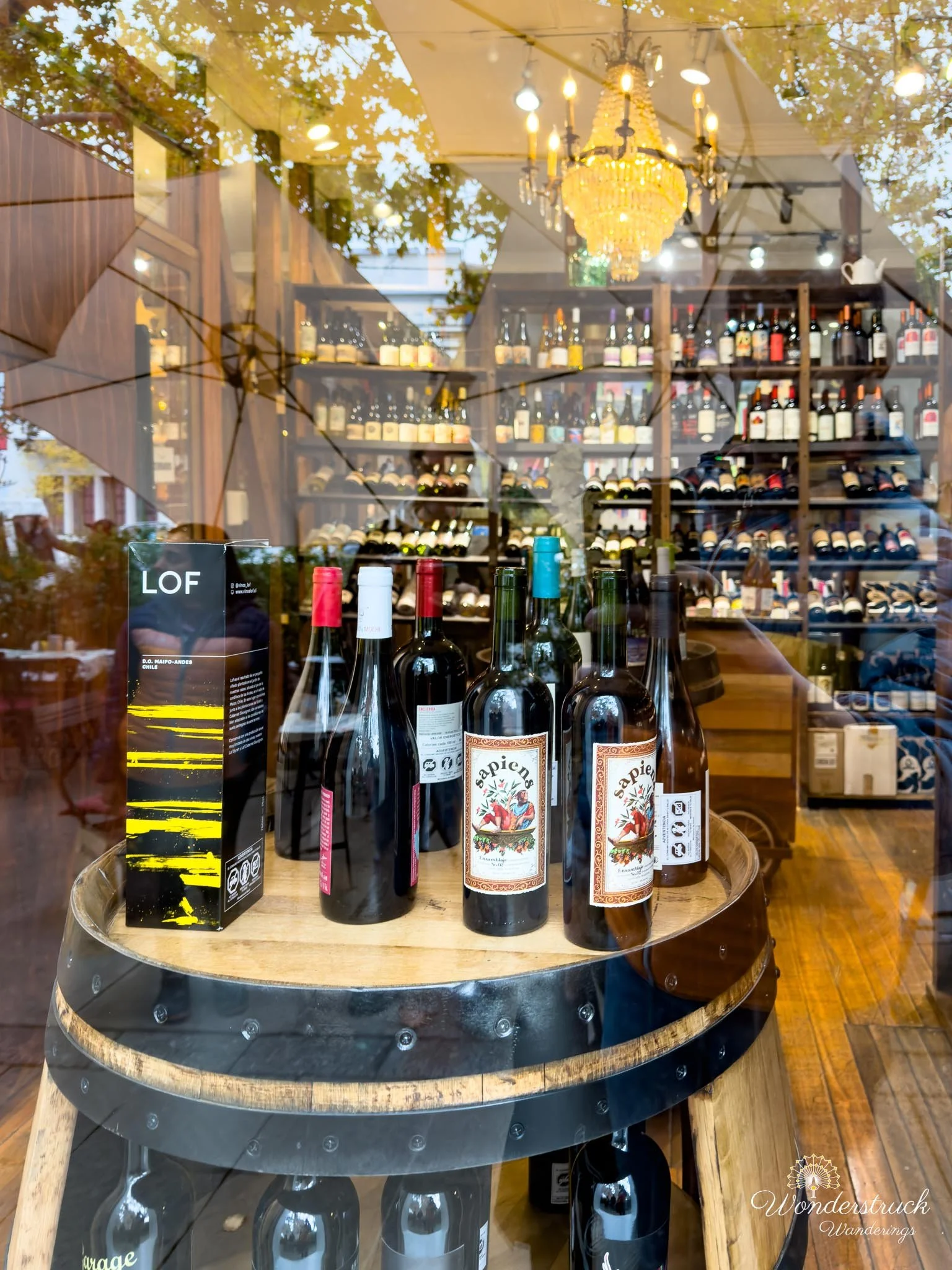
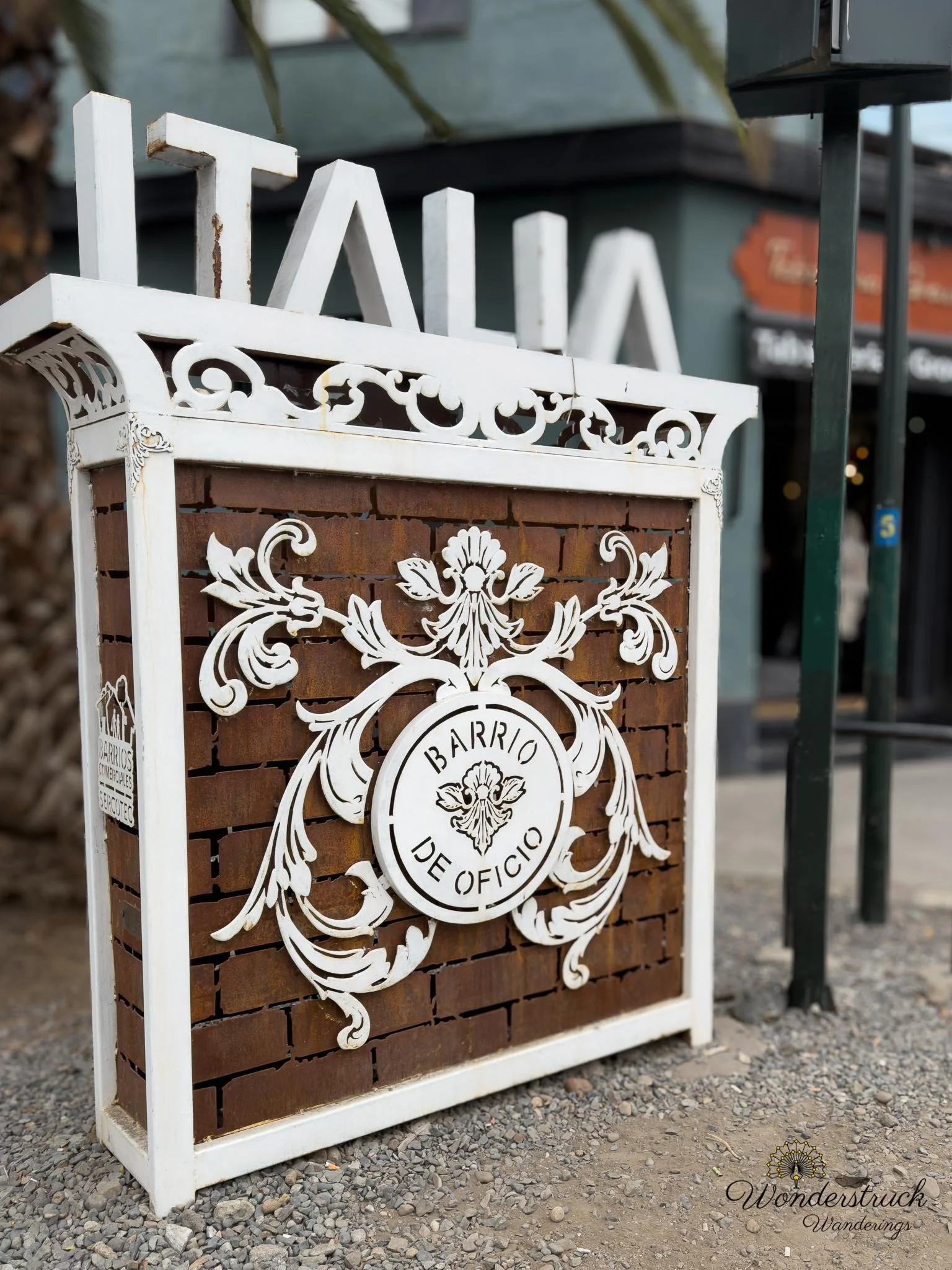
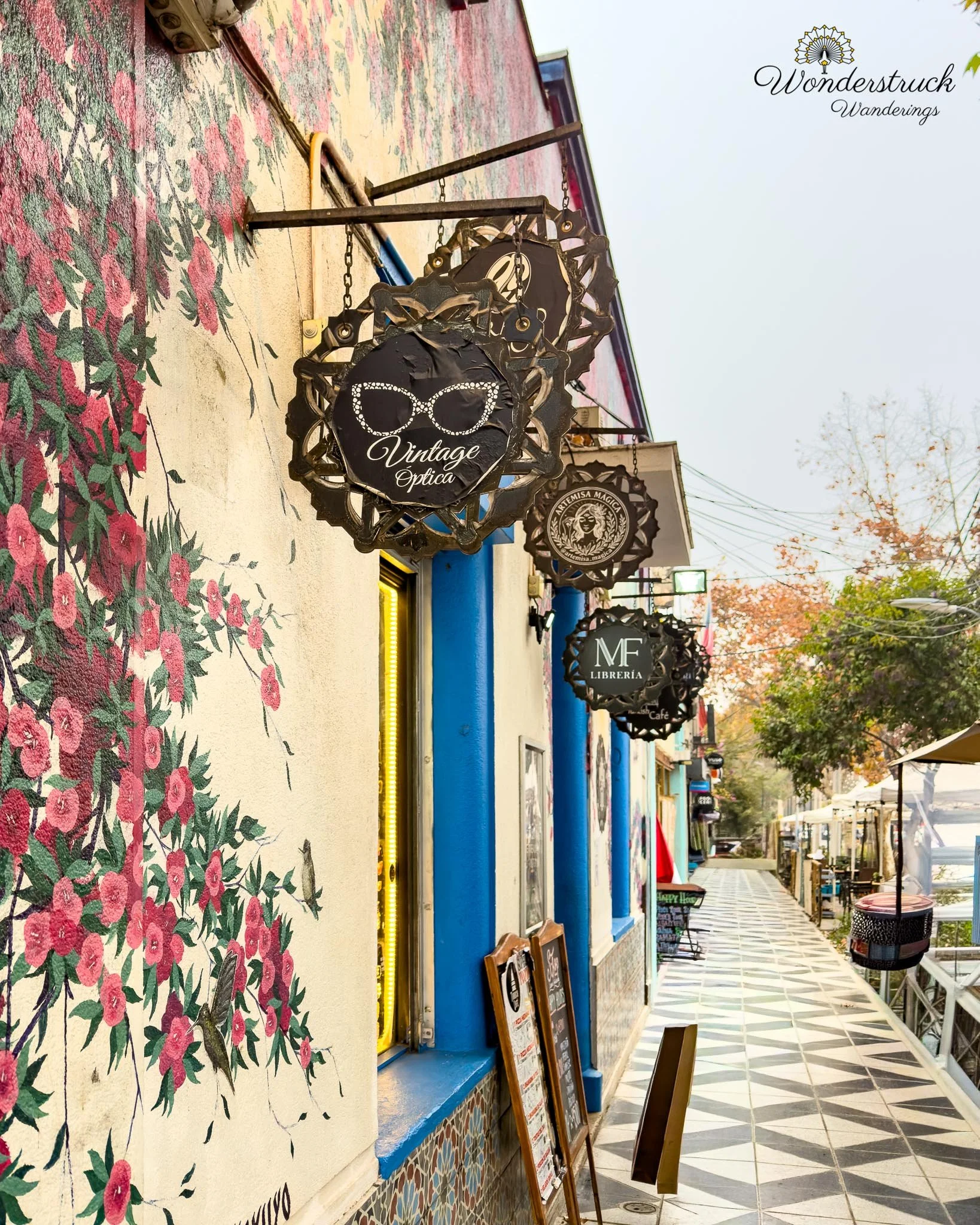
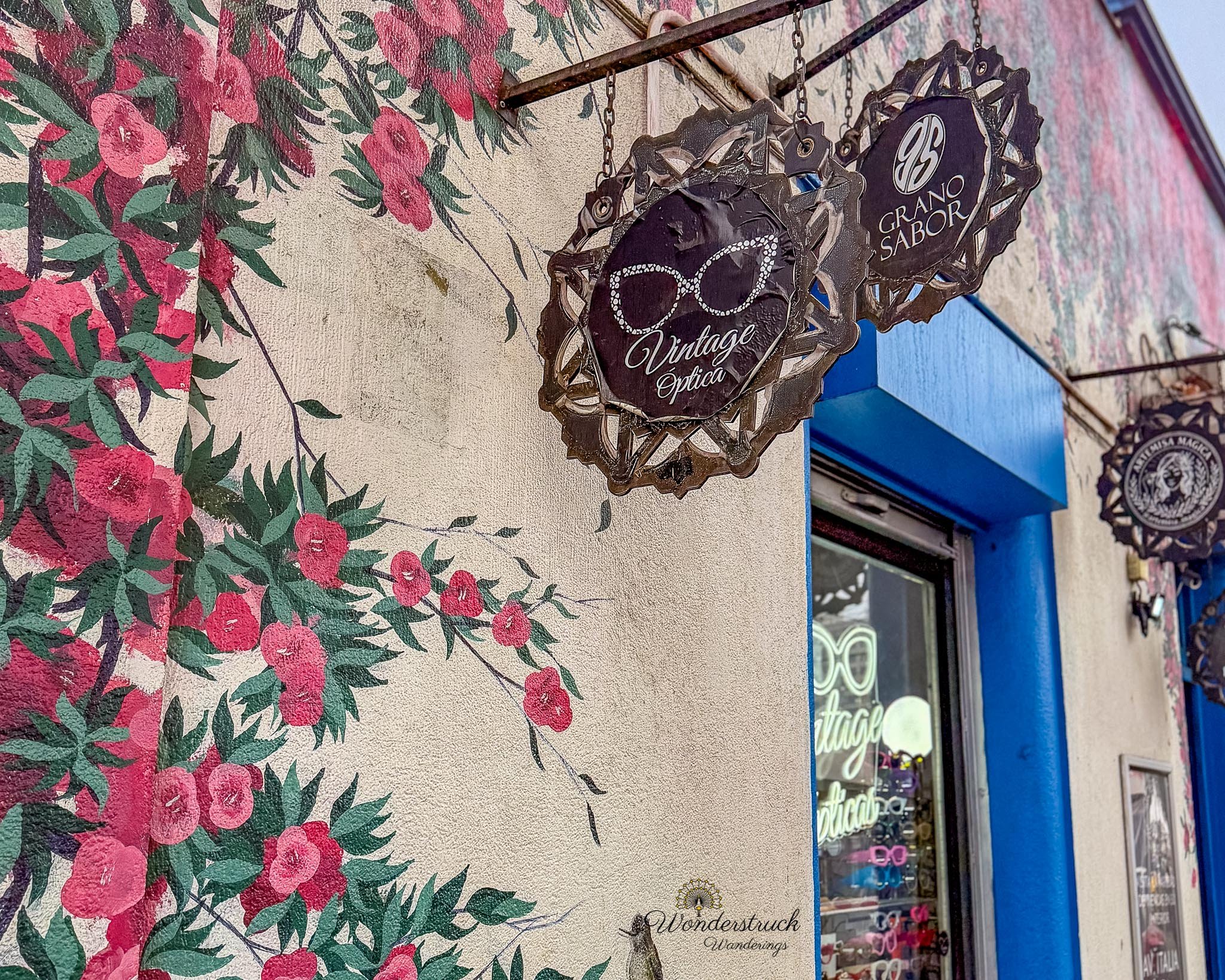
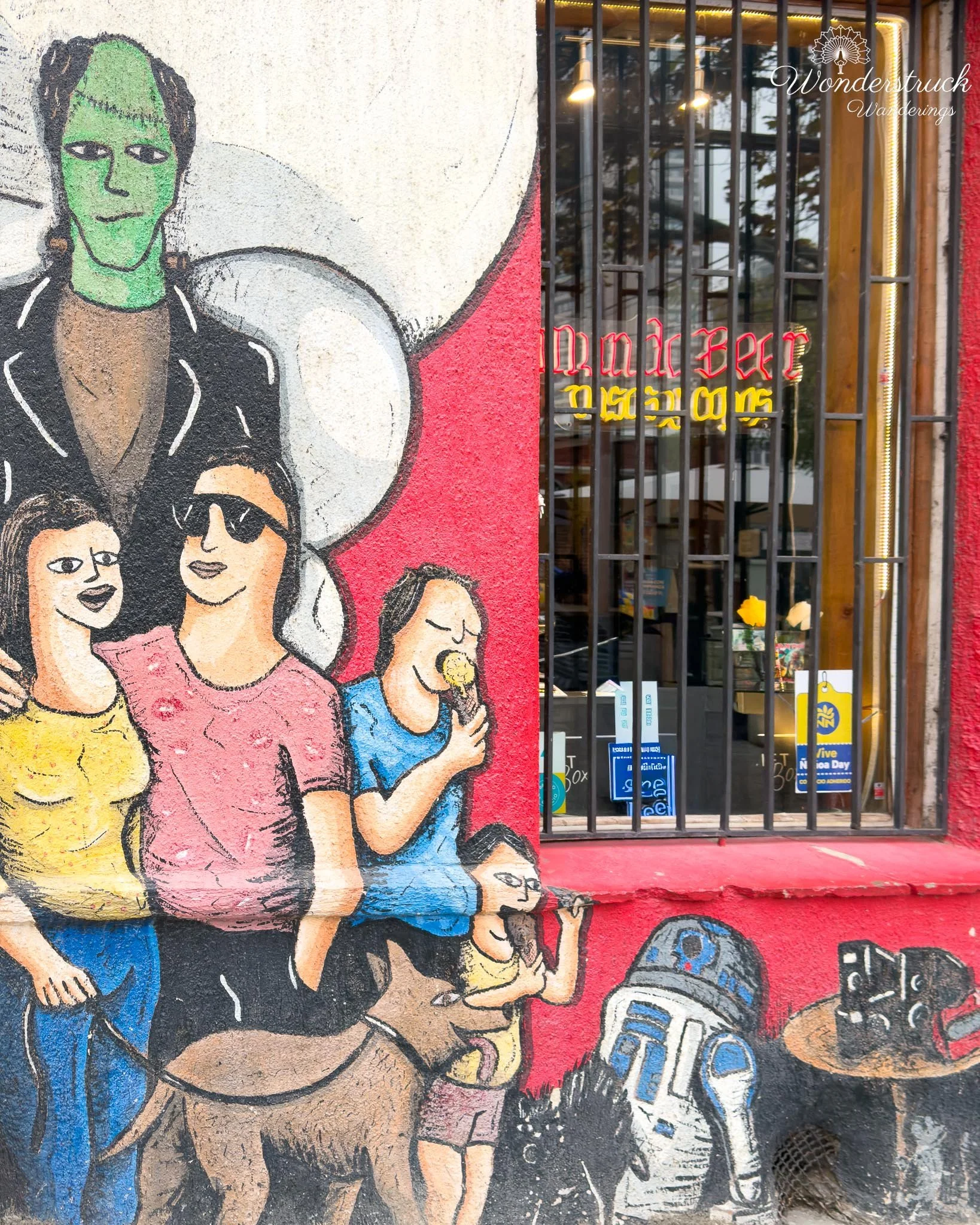
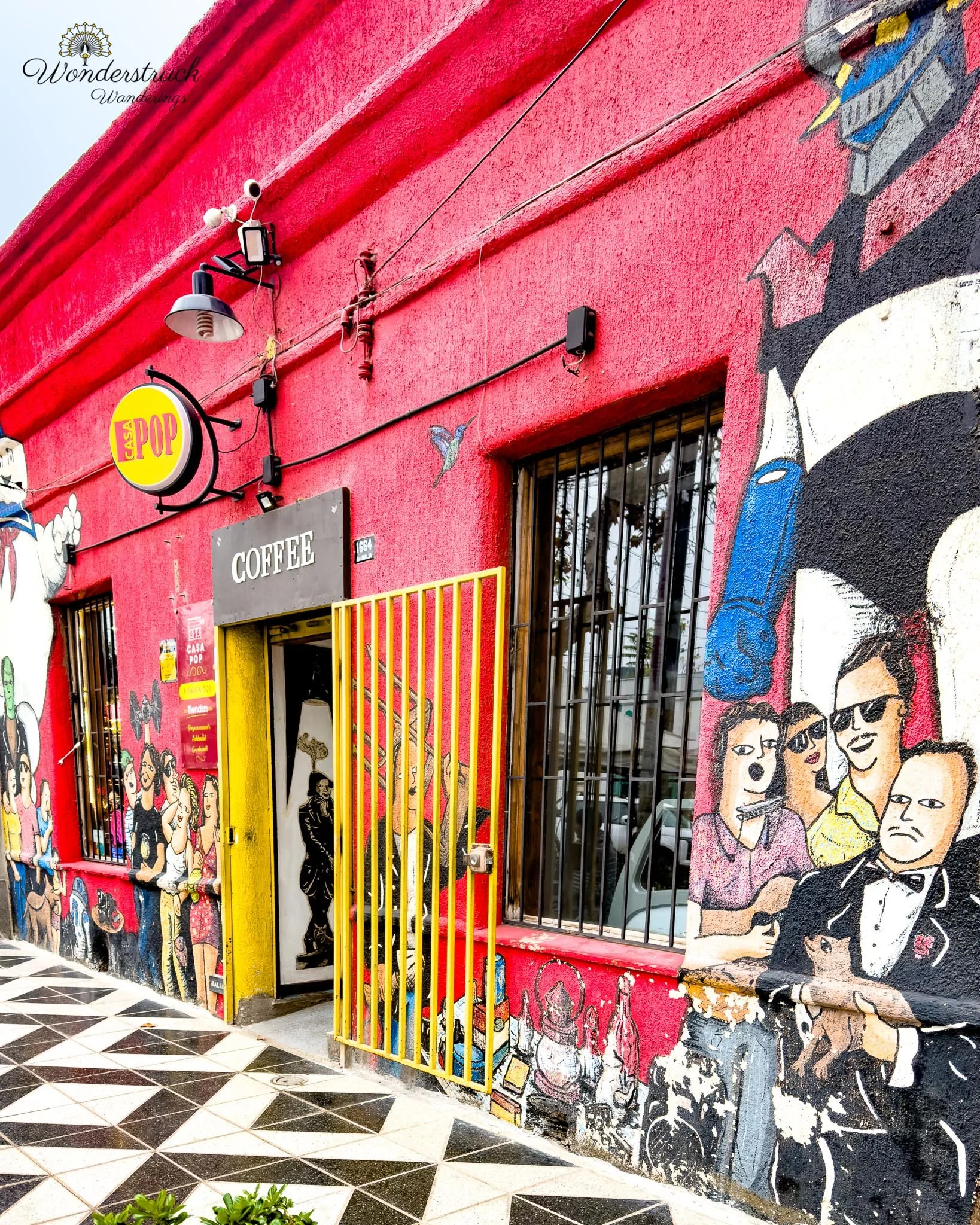
Barrio Italia itself was worth slowing down for. The neighborhood is full of street art, painted shutters, murals, and small graffiti pieces tucked between cafés, workshops, and restored older buildings. Some of the murals cover entire walls, while others appear in doorways, alleys, or across metal shop fronts, giving the streets a constantly changing look as you walk. The shops were just as colorful. We passed independent boutiques, antique stores, furniture workshops, ceramics studios, clothing shops, and small design stores with displays spilling toward the sidewalk. Many occupy older houses and low-rise buildings, so even the storefronts feel different from the polished shopping districts elsewhere in Santiago. One doorway might lead into a courtyard filled with plants and handmade goods, while the next opens into a workshop packed with vintage furniture or local artwork. It made Barrio Italia feel less like a single attraction and more like a neighborhood built for wandering, with something new every few doors . Keeping with the ChocCoffeeWine theme, Mark suggested a small local wine shop called La Cava del Barrio, the kind of place that focuses on smaller-scale Chilean wines rather than only the obvious names. That immediately sounded like our kind of detour. Once we told him which wineries we were planning to visit later in the trip, he suggested a few different bottles that would give us a broader taste of Chile's wine scene. We picked some up, partly for the wine itself and partly because those local recommendations often become the best souvenirs.
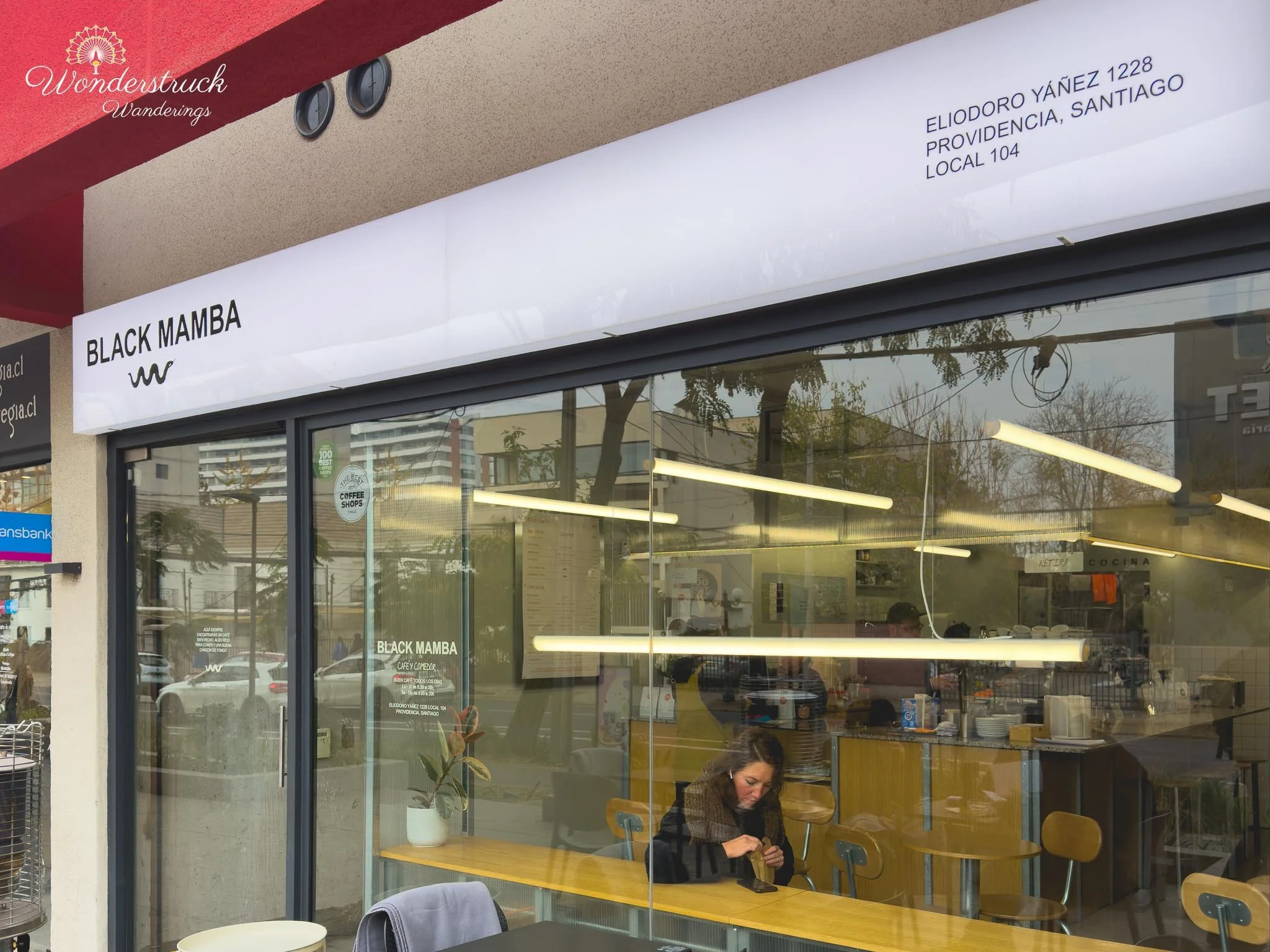
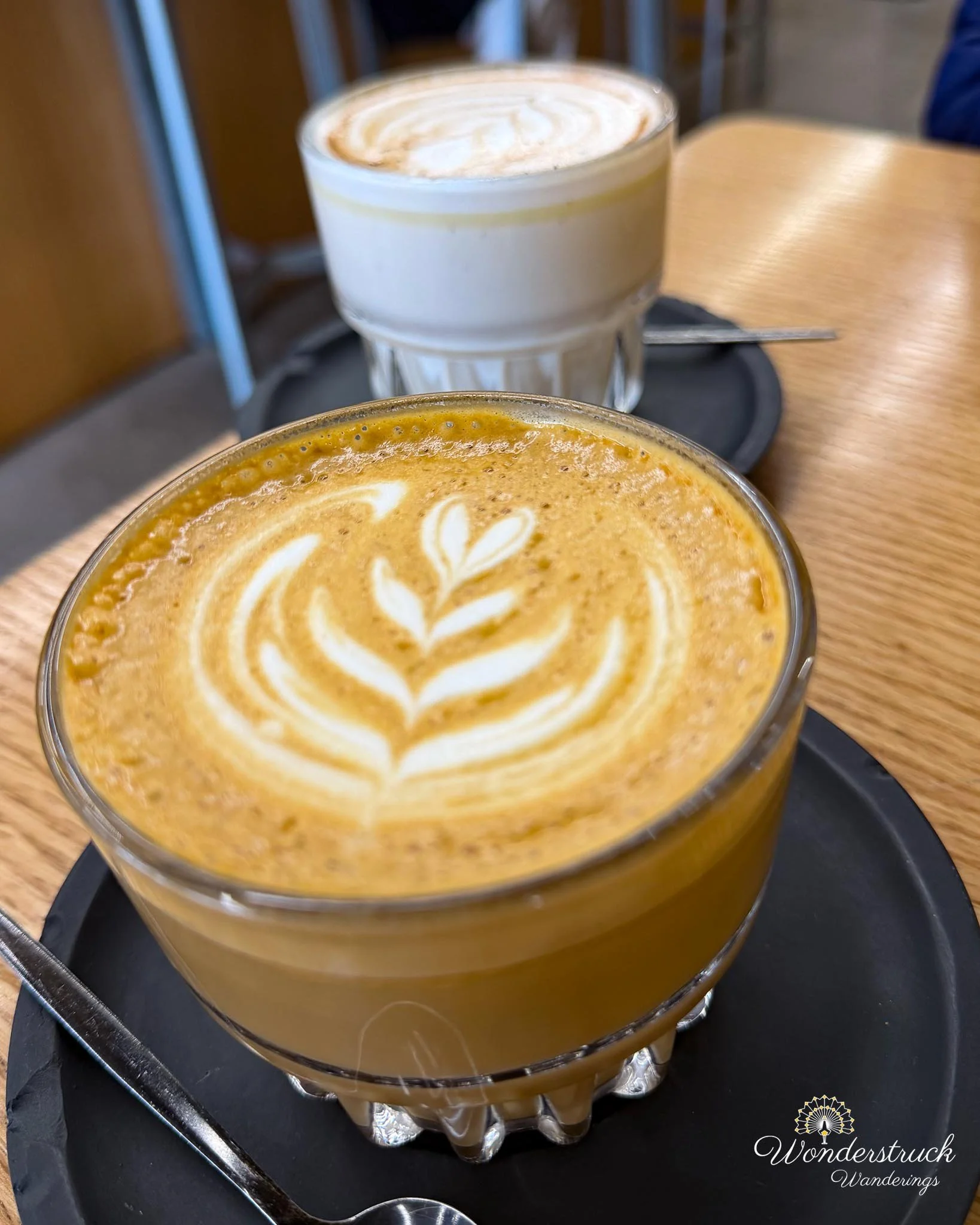
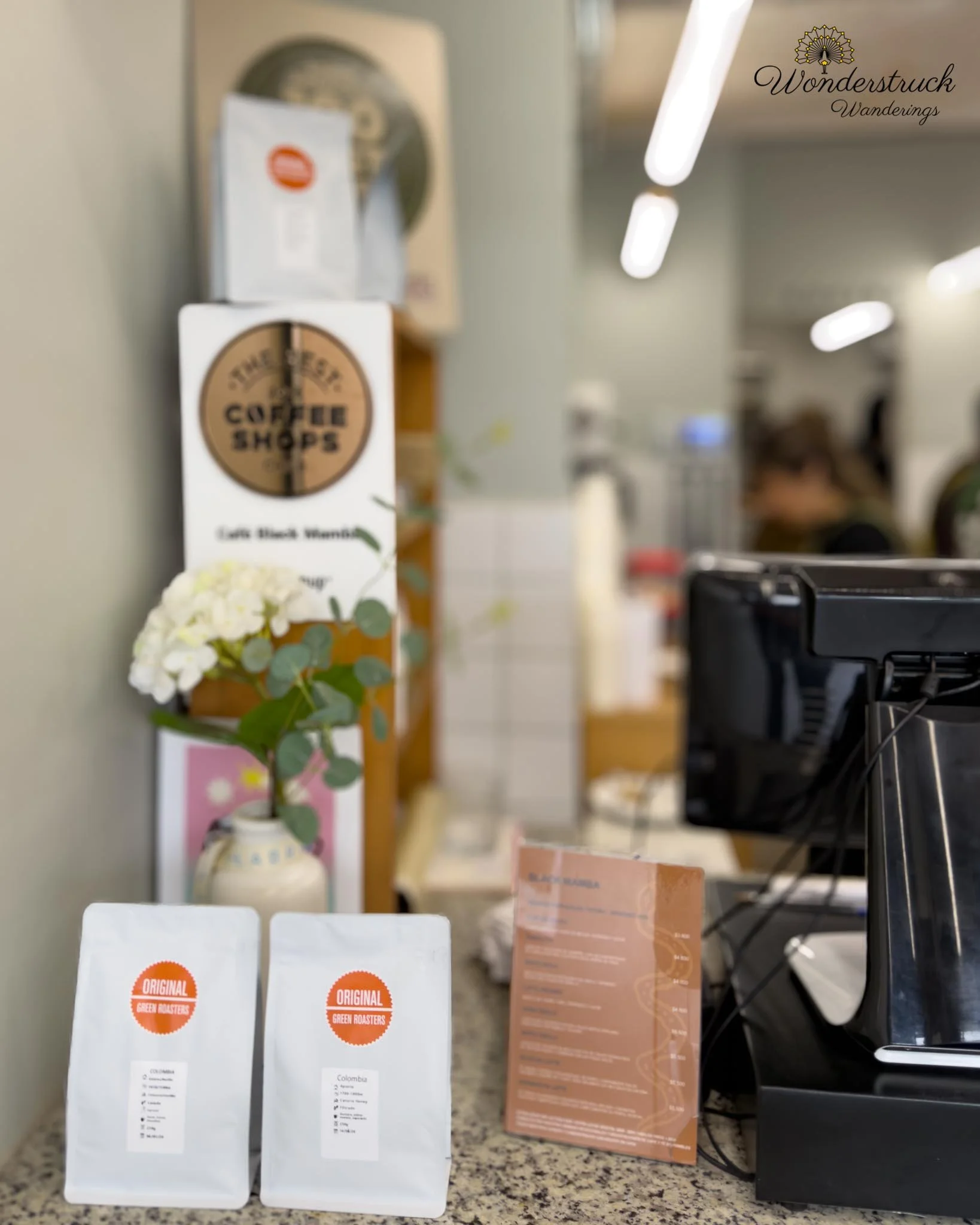
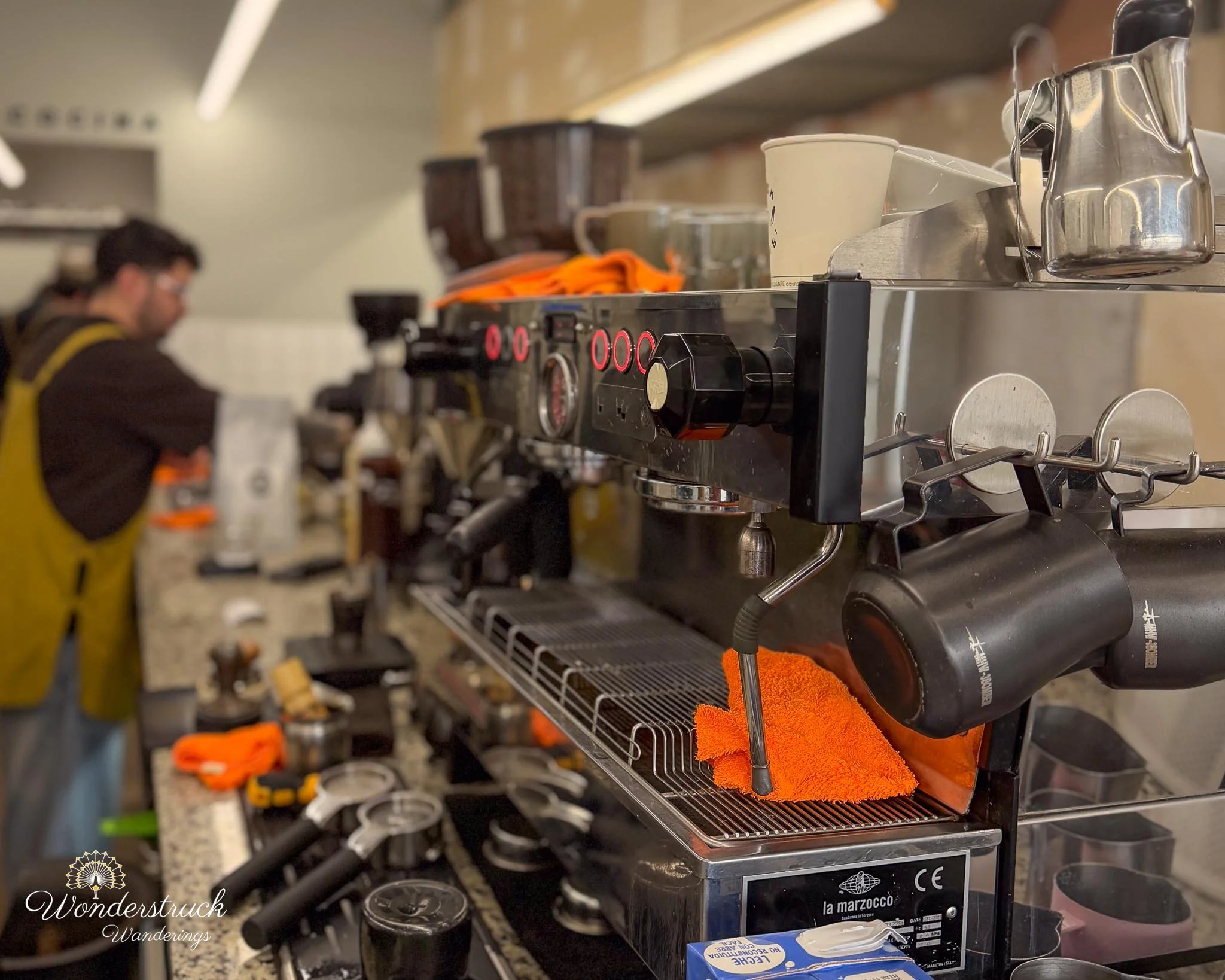
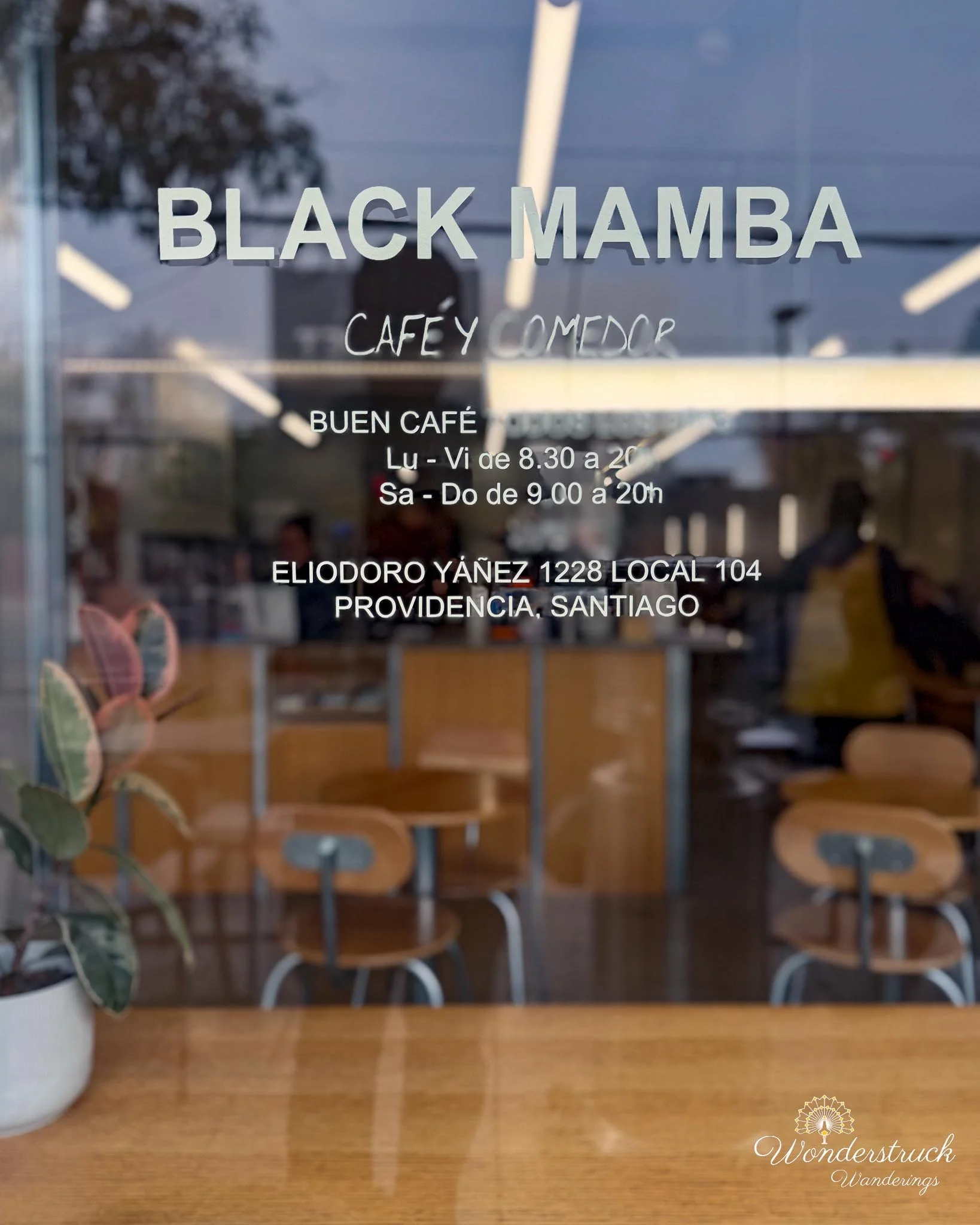
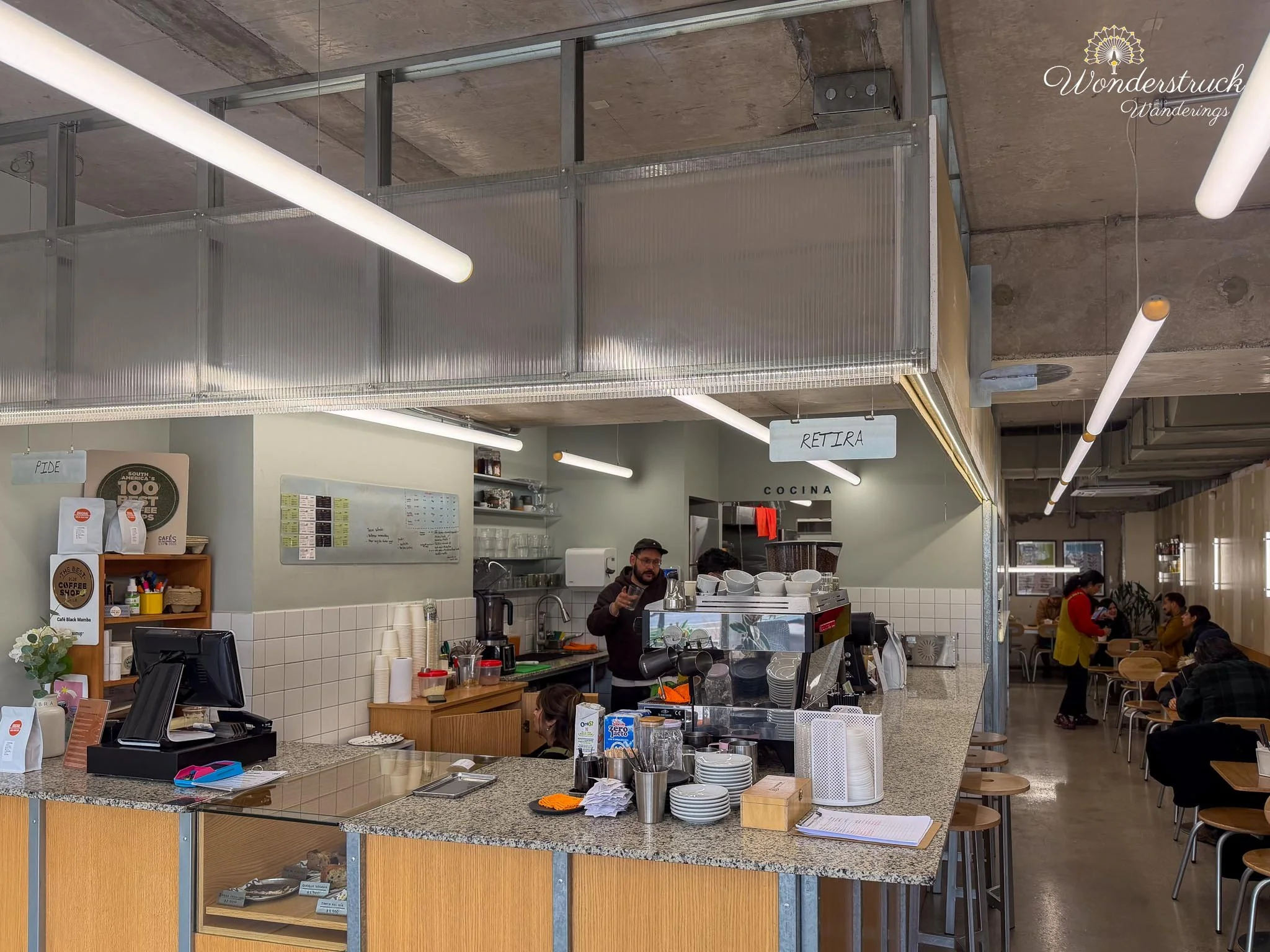
Then Mark offered to drop us at Black Mamba, a nearby specialty coffee shop that also served his hot chocolate. Black Mamba was started by Paloma Valdéz and Nicolás Riquelme after spending several years in Australia, and the café carries a strong influence from Melbourne’s specialty-coffee culture. The focus is on well-made espresso drinks and rotating coffees, but the menu goes beyond the standard latte and cappuccino with more creative drinks and a substantial café food menu. We never say no to good coffee, especially on day one after an overnight flight. I had a salted caramel latte, while Shay went with a white chocolate mocha. Both were decidedly on the indulgent side, but at that point in the afternoon, caffeine and sugar were exactly what we needed. It was also fun stopping somewhere Mark personally recommended—and seeing his hot chocolate on the menu made the connection even more personal. It was exactly the sort of small pause that kept the day from becoming a checklist. We were seeing Santiago through people who knew the city, mixing the major sights with neighborhood wine shops, chocolate, and specialty coffee along the way.
Santa Lucia, Plaza de Armas, and the Historic Center
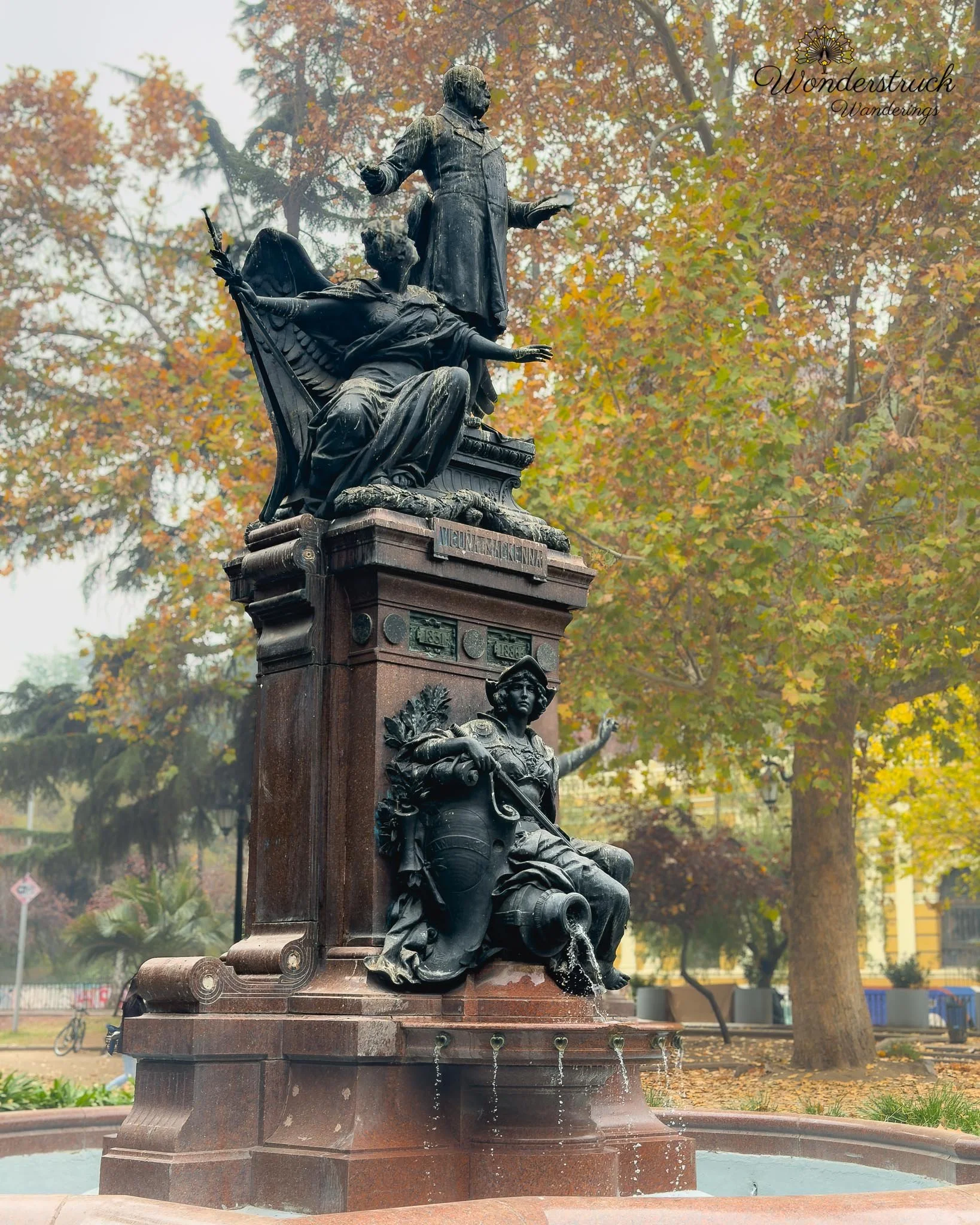
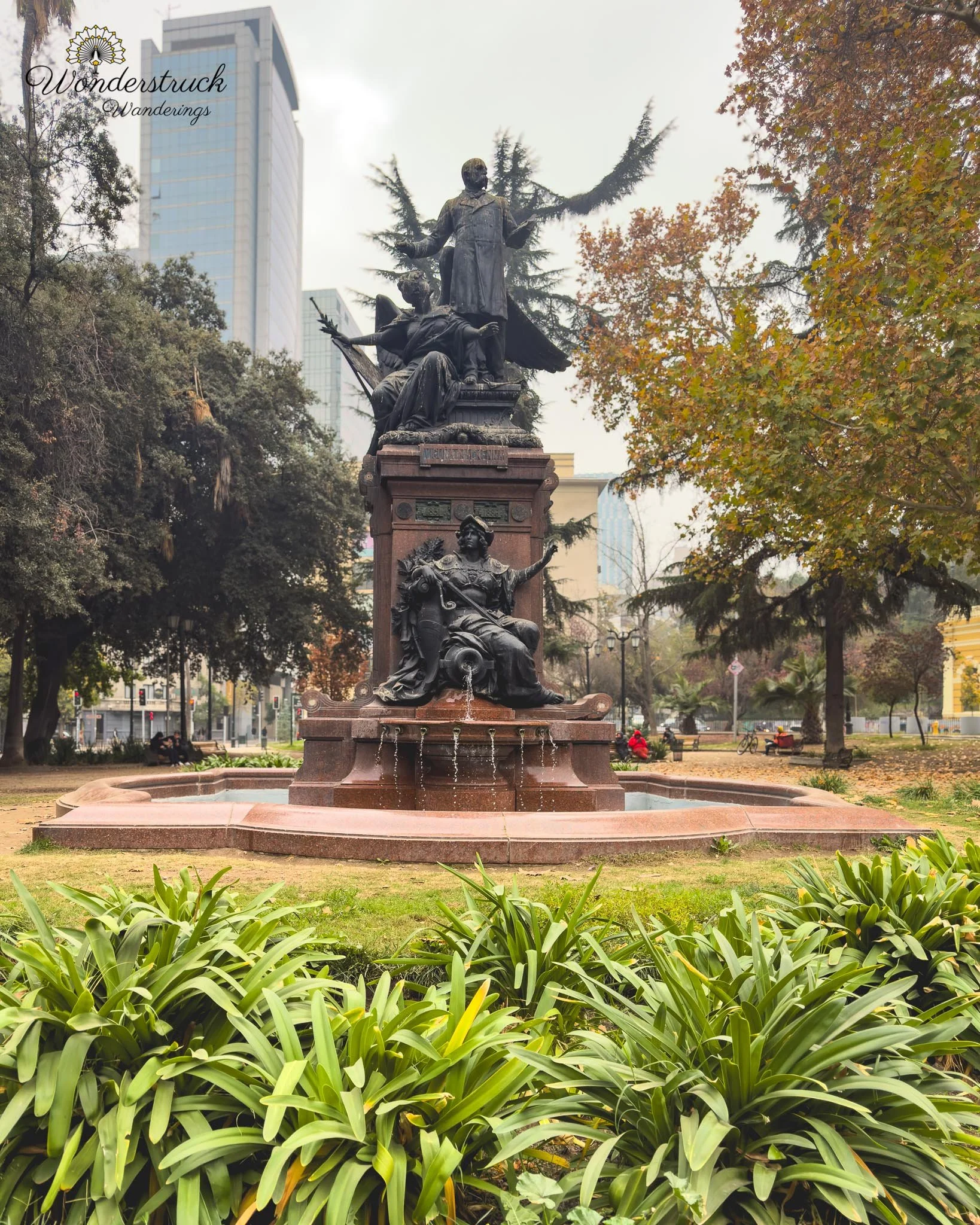
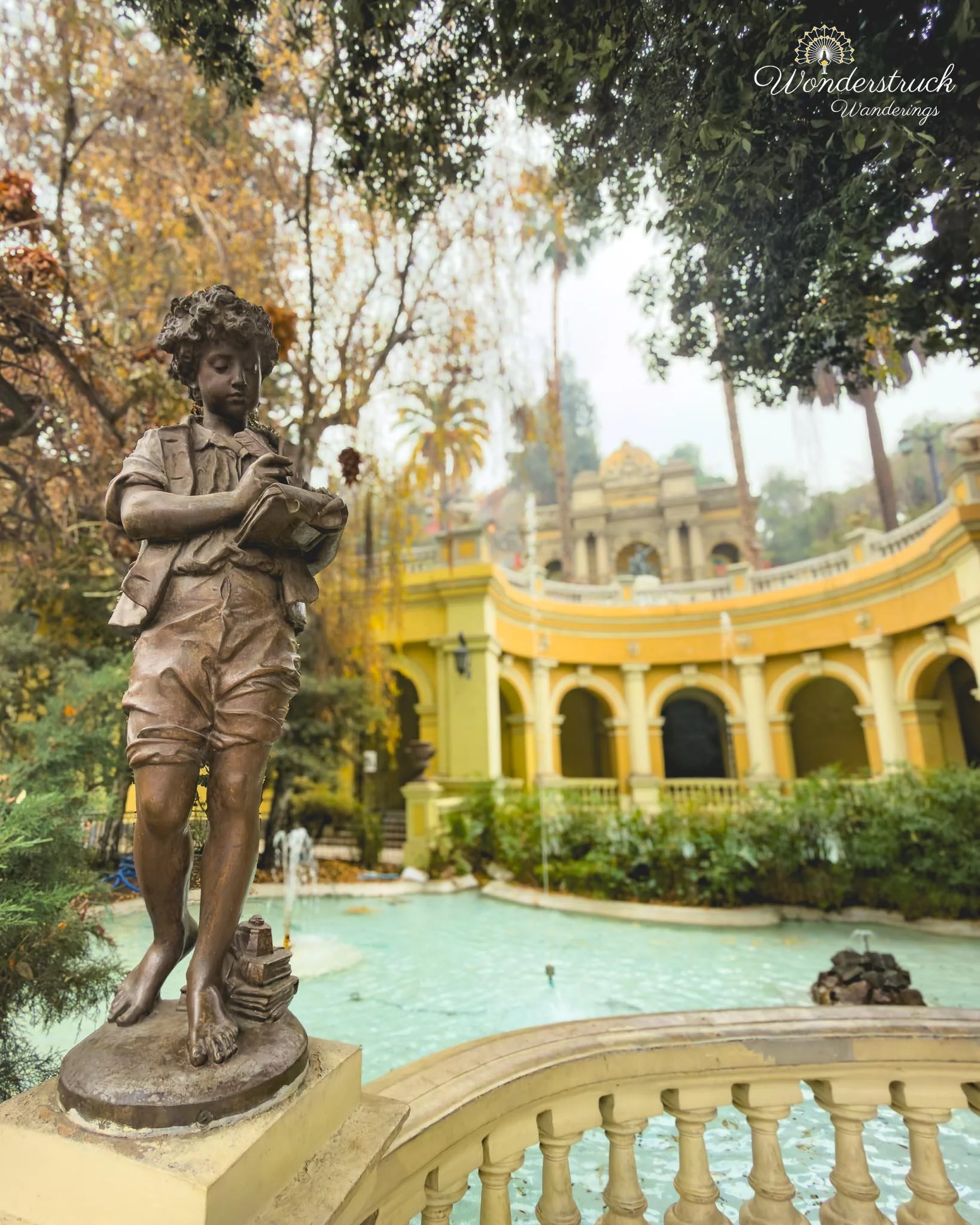
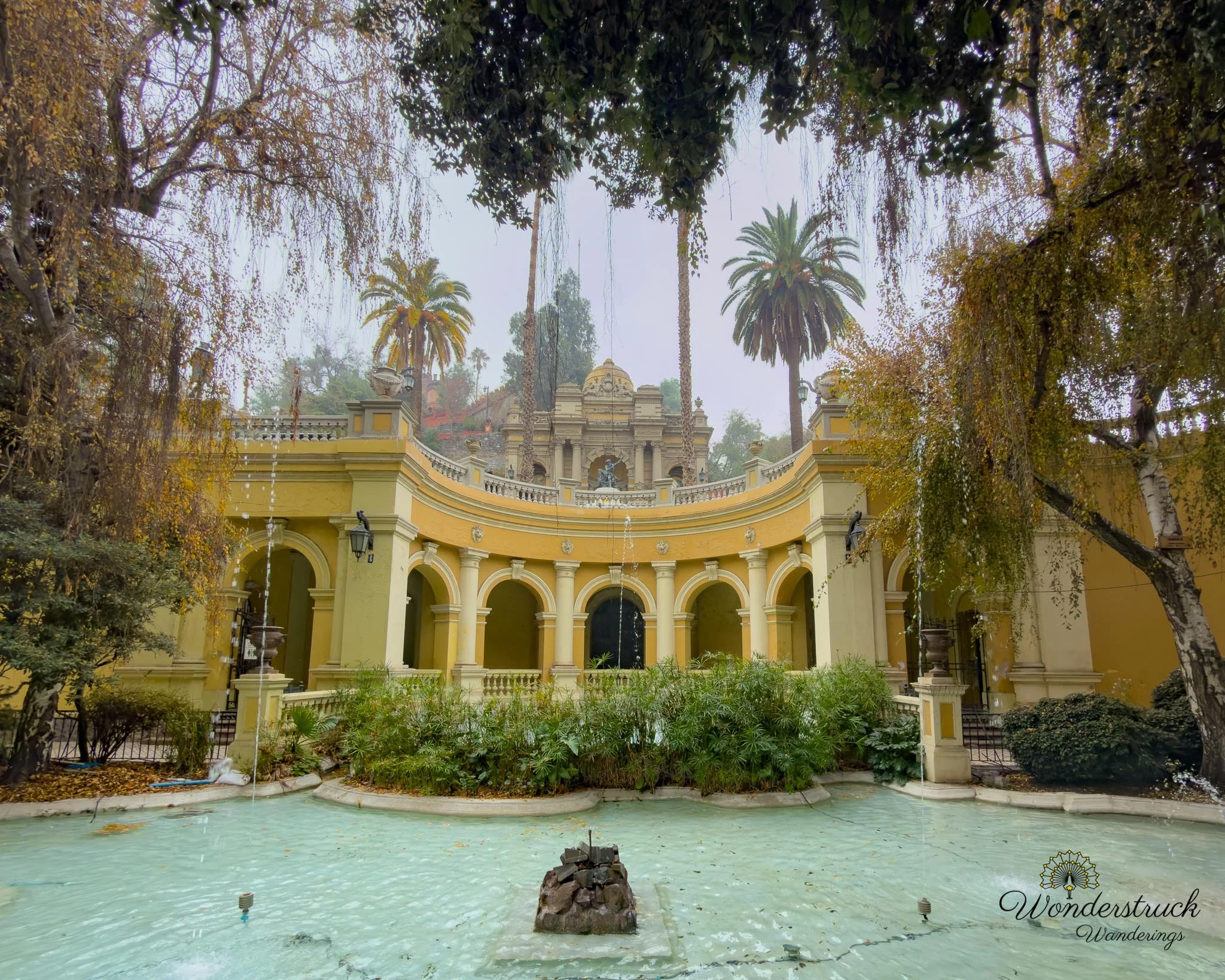
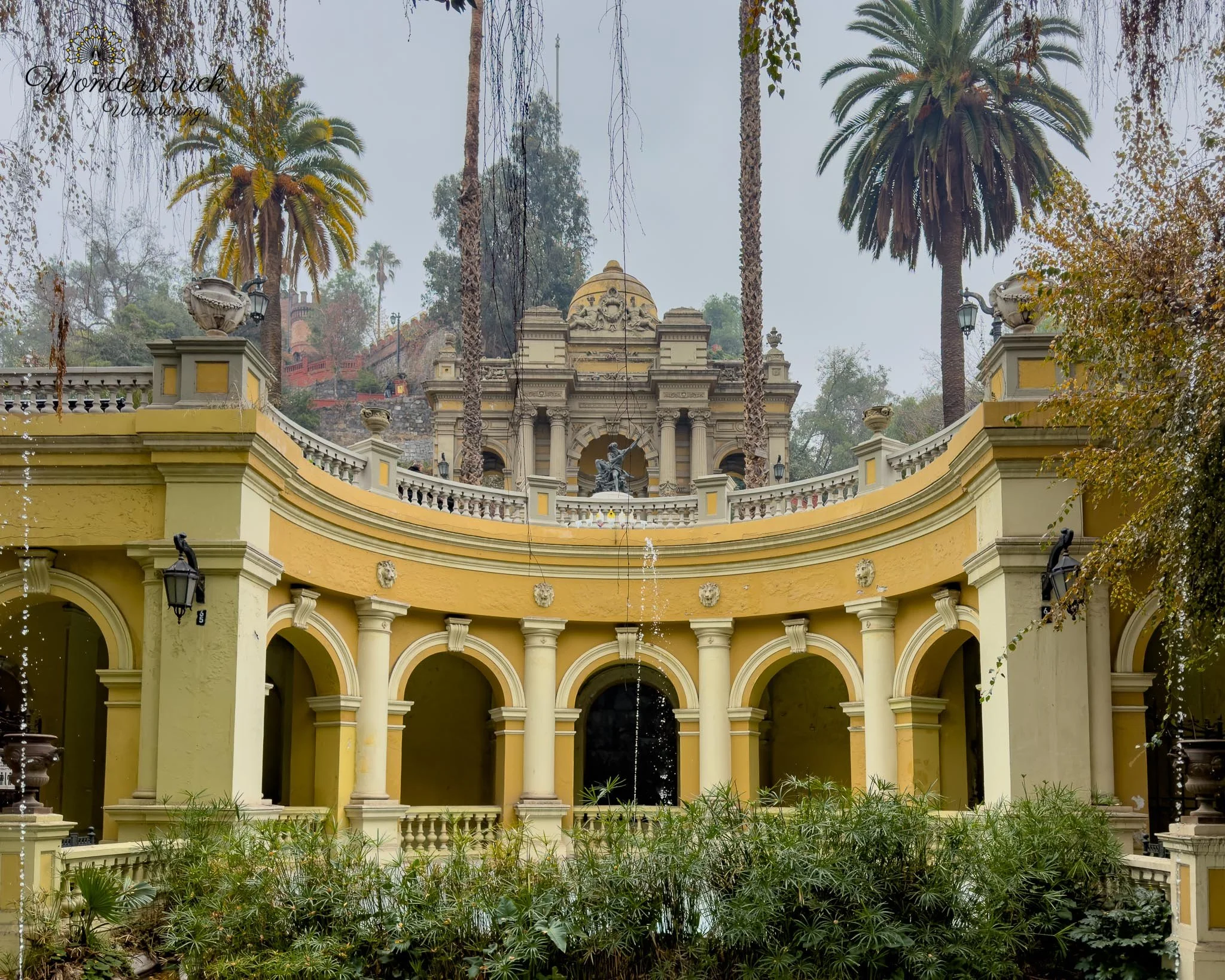
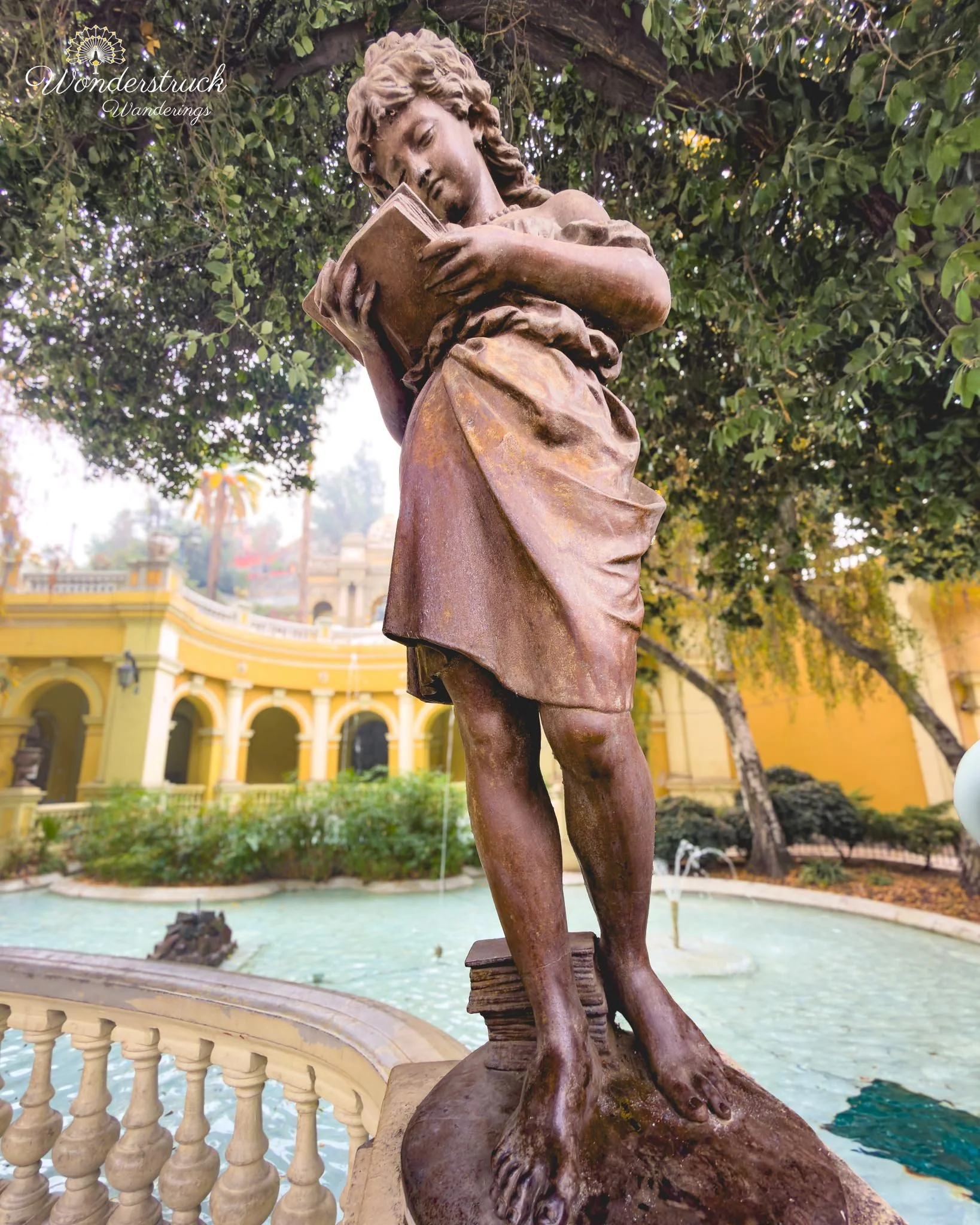
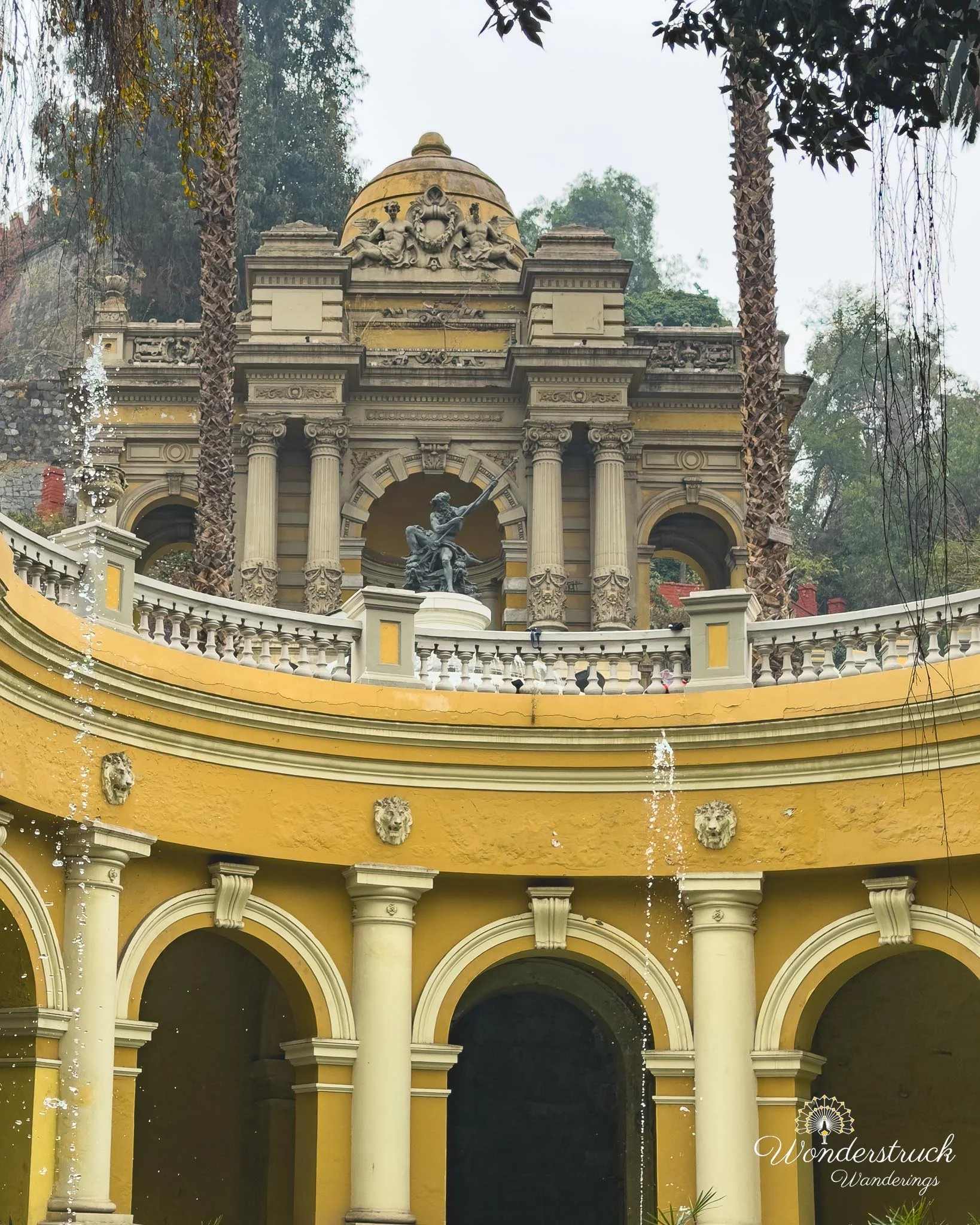
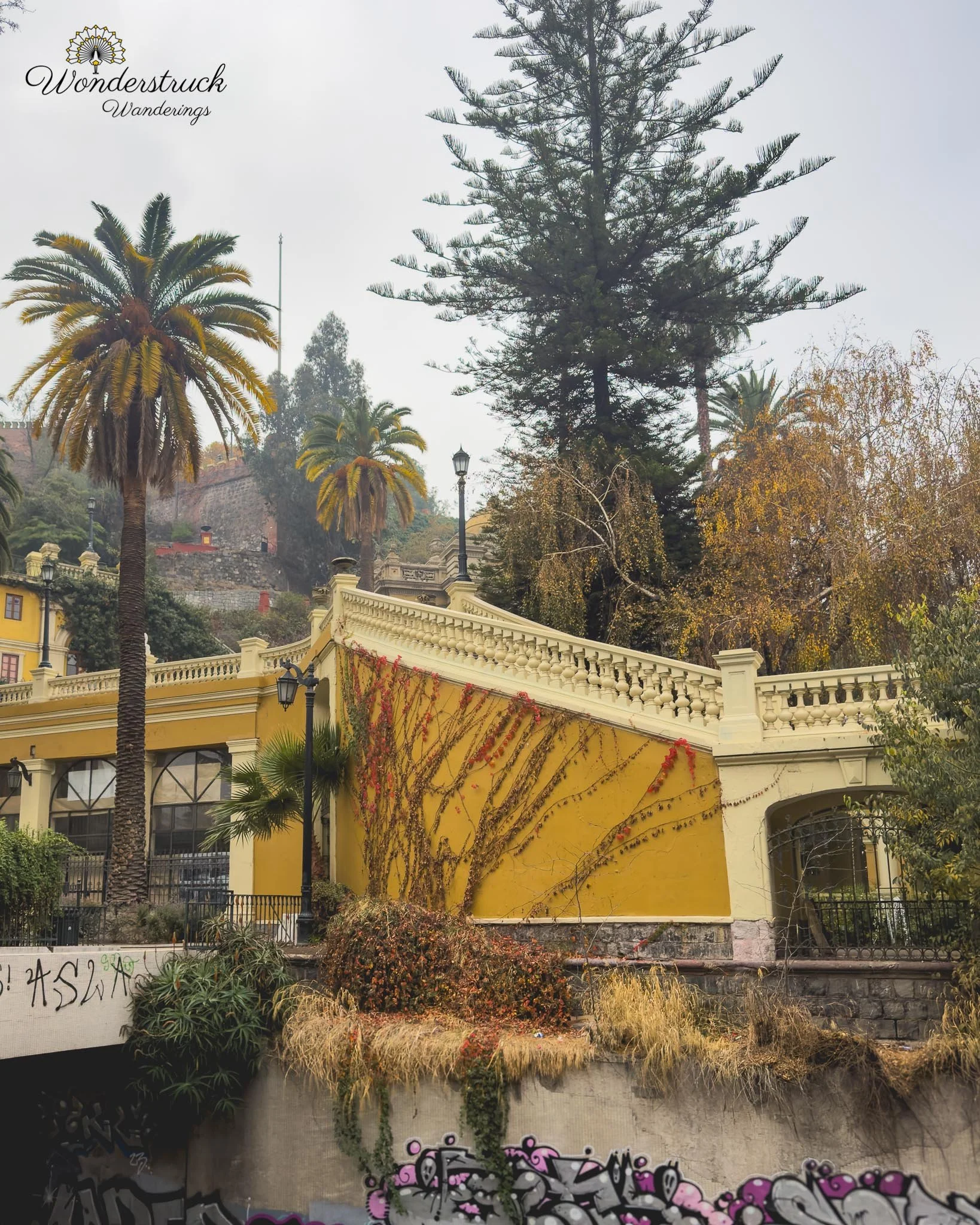
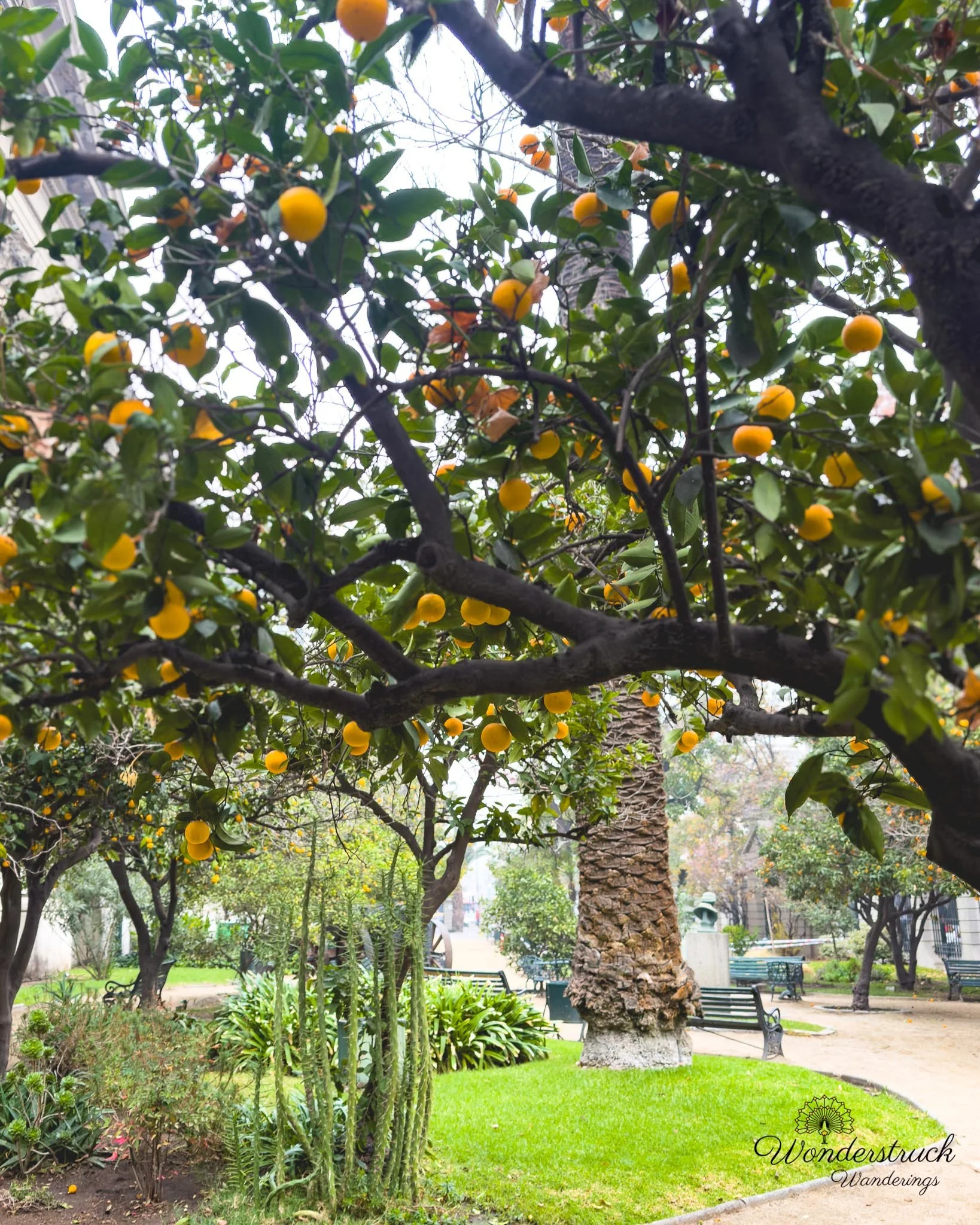
From there, we took an Uber to Cerro Santa Lucia. The hill is one of those places where Santiago's layers become visible quickly. It is not just a pretty hill in the middle of the city, though it is certainly that. The old hill, originally known as Huelen, is closely tied to the early Spanish founding of Santiago by Pedro de Valdivia in 1541. Today, it feels like a combination of urban park, historical lookout, architectural ornament, and quiet escape from the traffic around it. Stone stairways, terraces, fountains, planted paths, and old walls all rise above the surrounding city blocks, giving little framed views of Santiago as you climb. The weather was still gray and moody, so the views were not crisp, but in a way that suited the place. The stone and greenery felt softened by the fog. The city appeared and disappeared behind the haze. We wandered through the lower sections, taking in the architecture, the terraces, and the sense that this hill had watched Santiago change around it for centuries. On one side, there was an artisanal exhibition area with stalls where actual artists and craftspeople could sell their work directly, without a middleman. That always matters to us. We like bringing home things that feel connected to the hands that made them, not just souvenir objects stamped out for tourists. We found a sheep wool table runner from Mapuche makers and browsed pieces from Aymara and Easter Island artisans. It was not a huge shopping stop, but it gave the morning a nice cultural texture - Chile not as one single thing, but as many regions, identities, materials, and traditions showing up in one small city market.
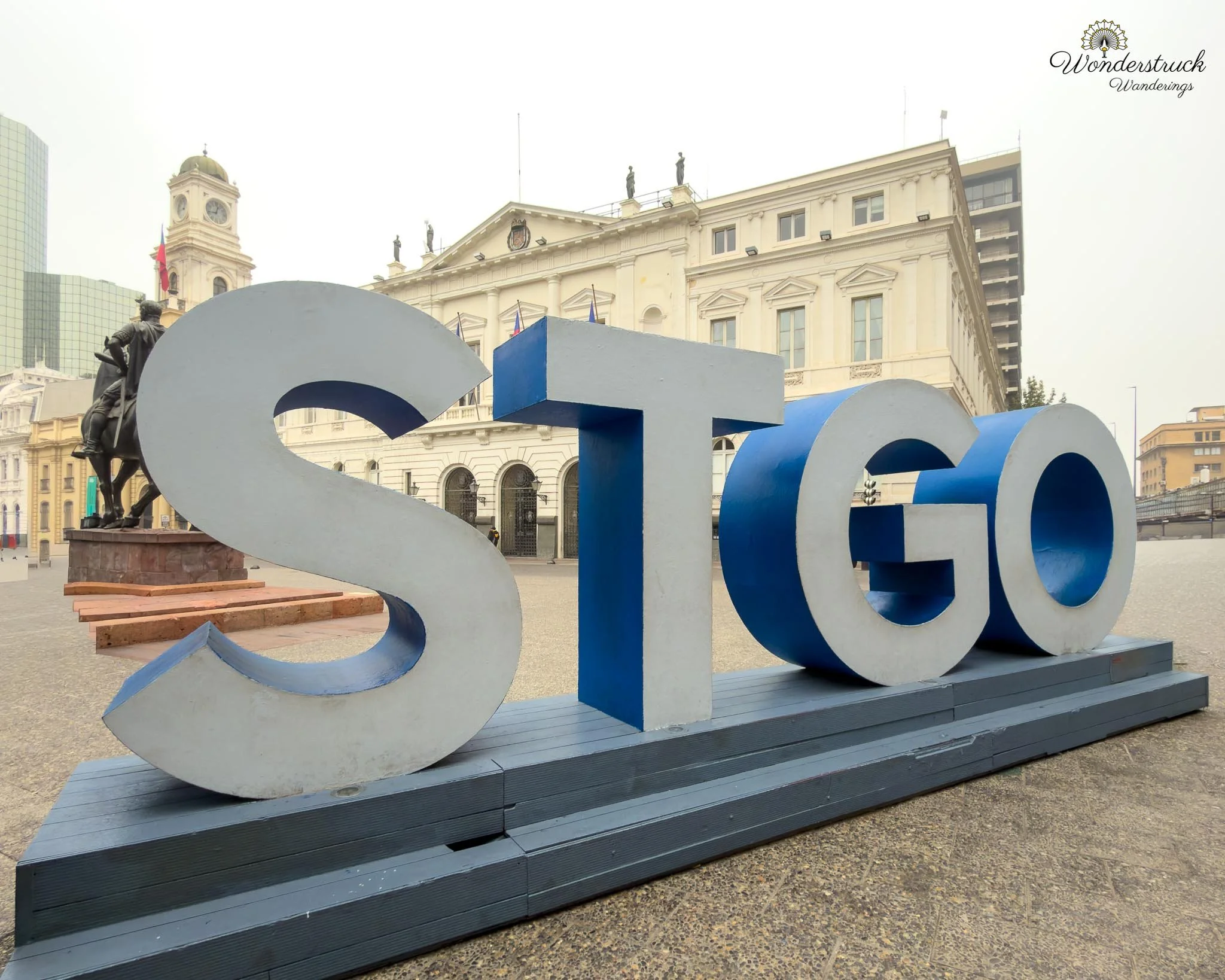
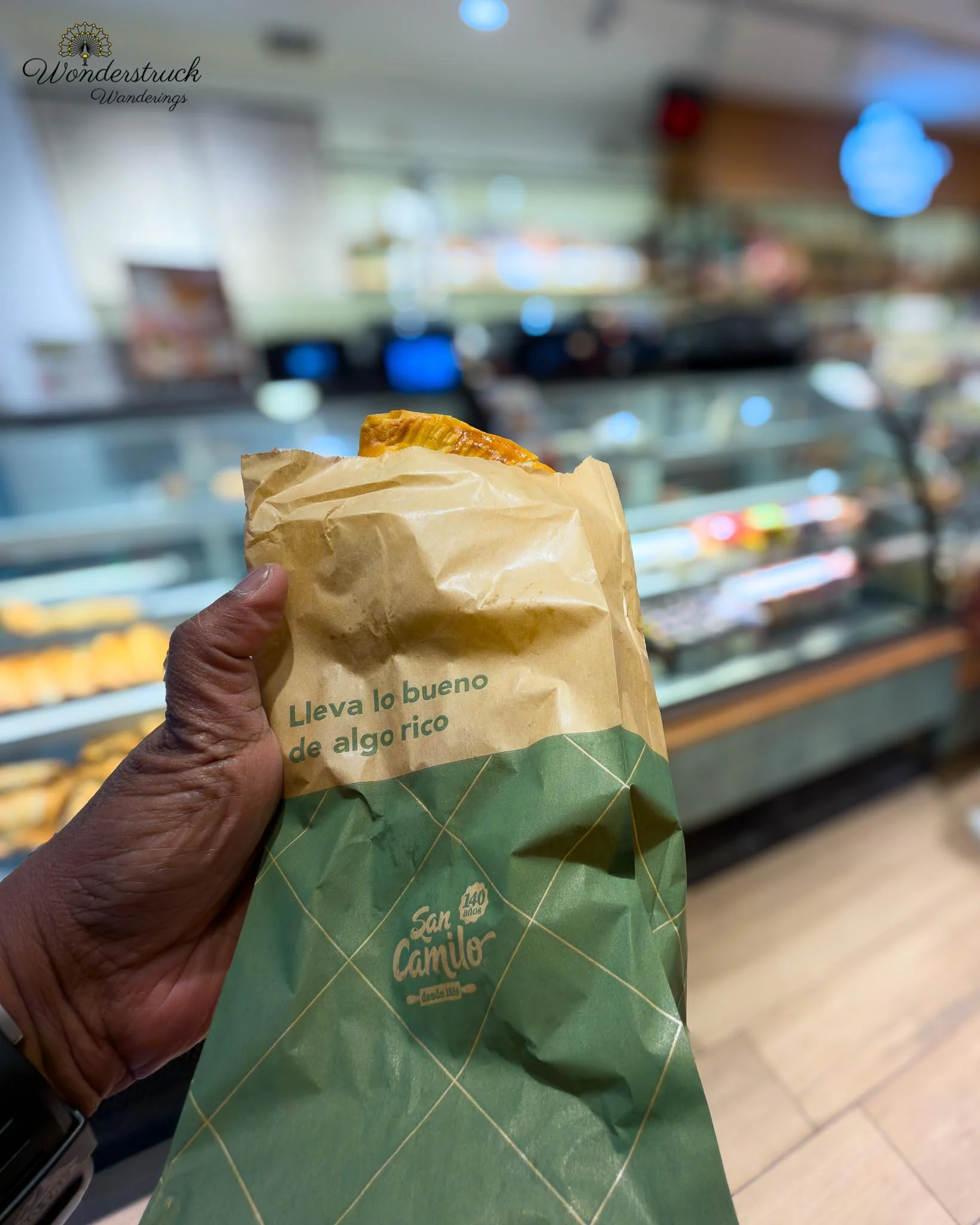
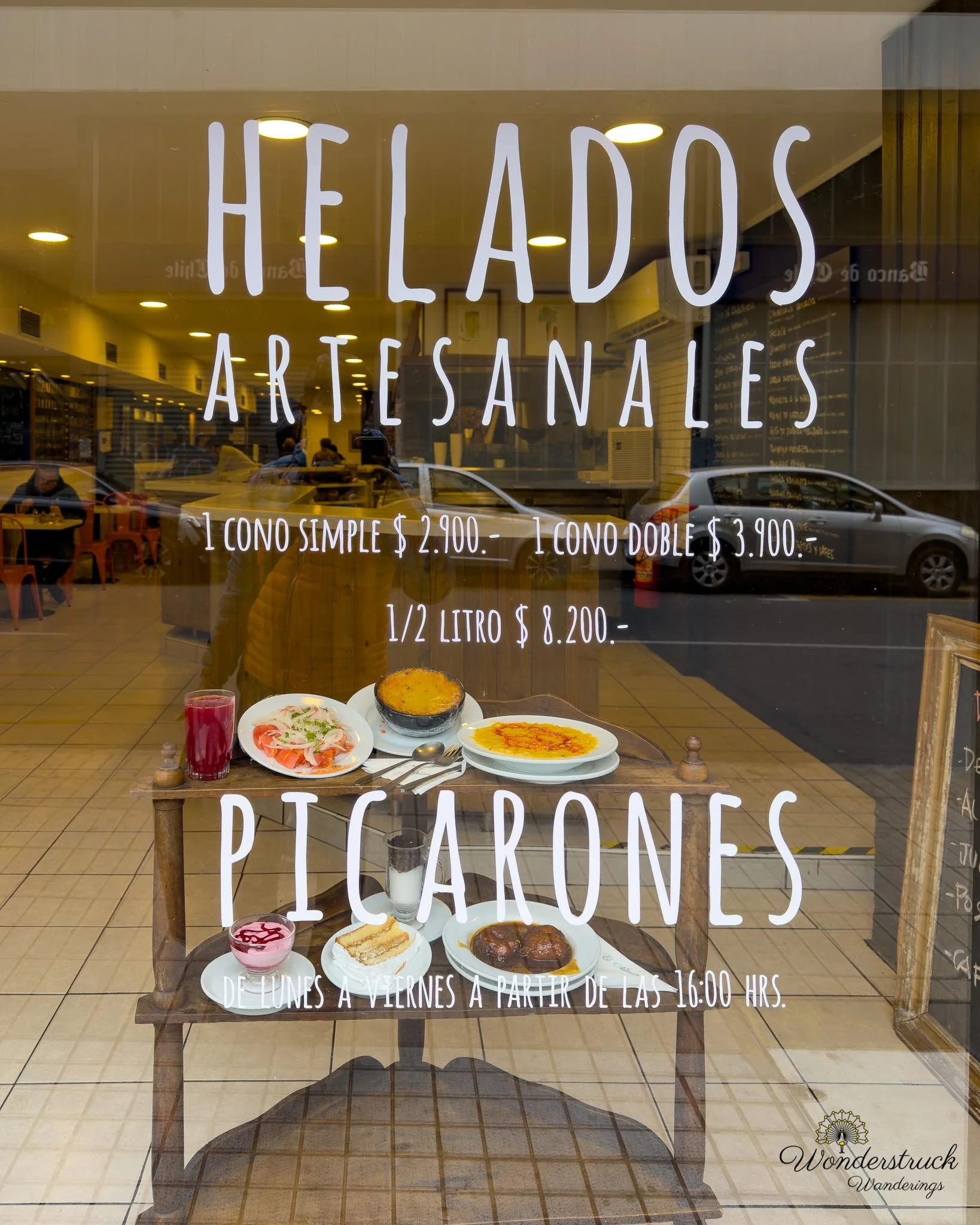
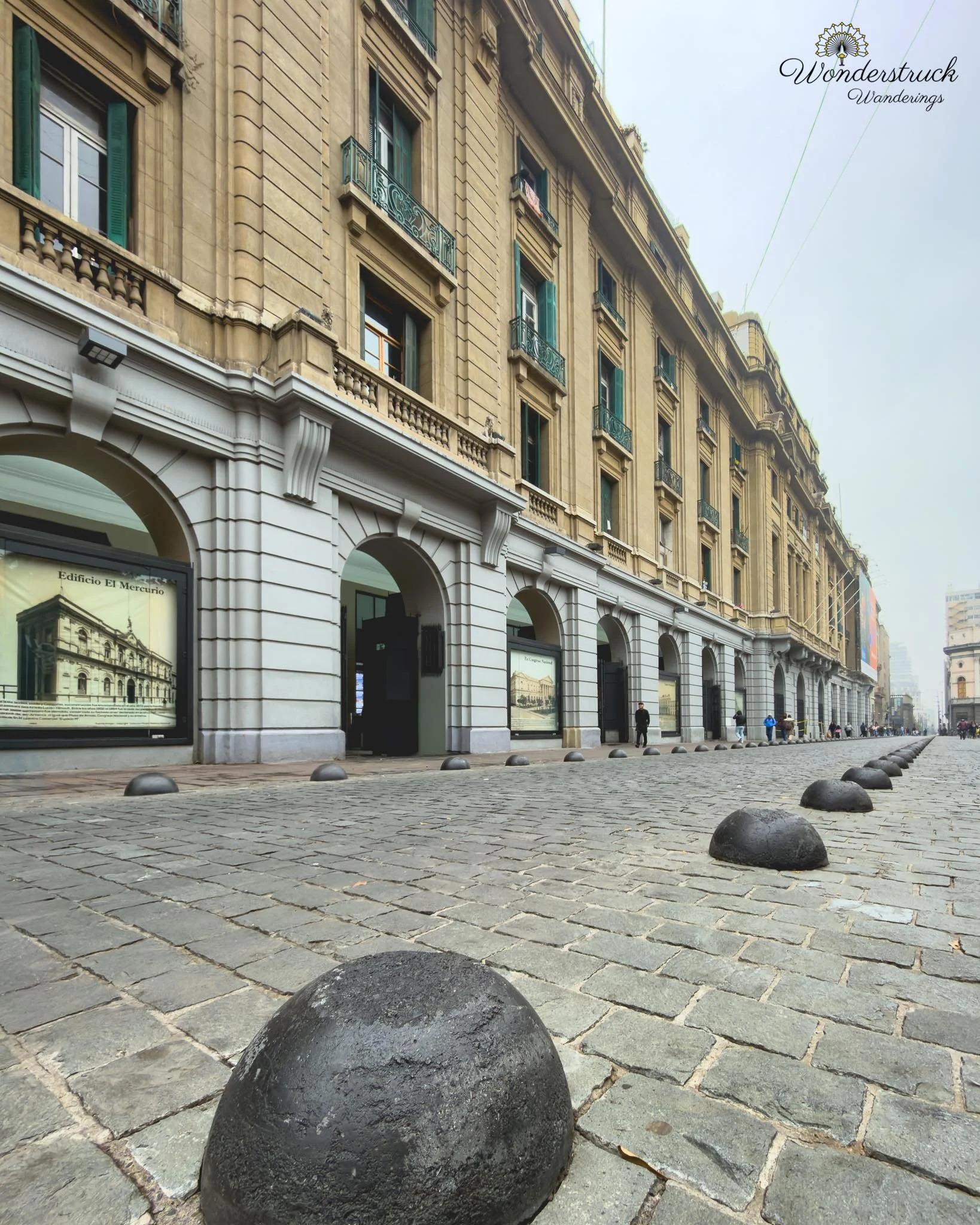
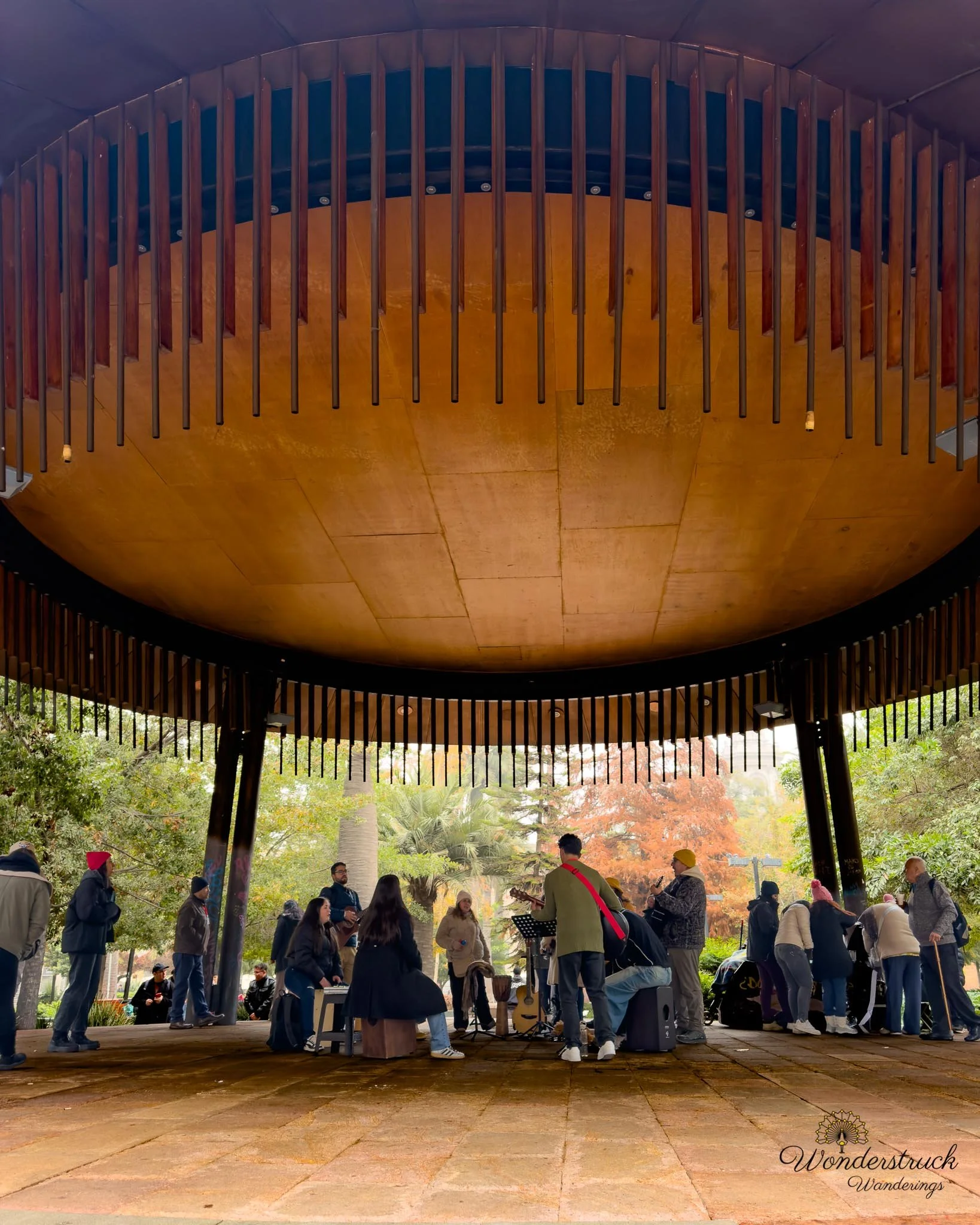
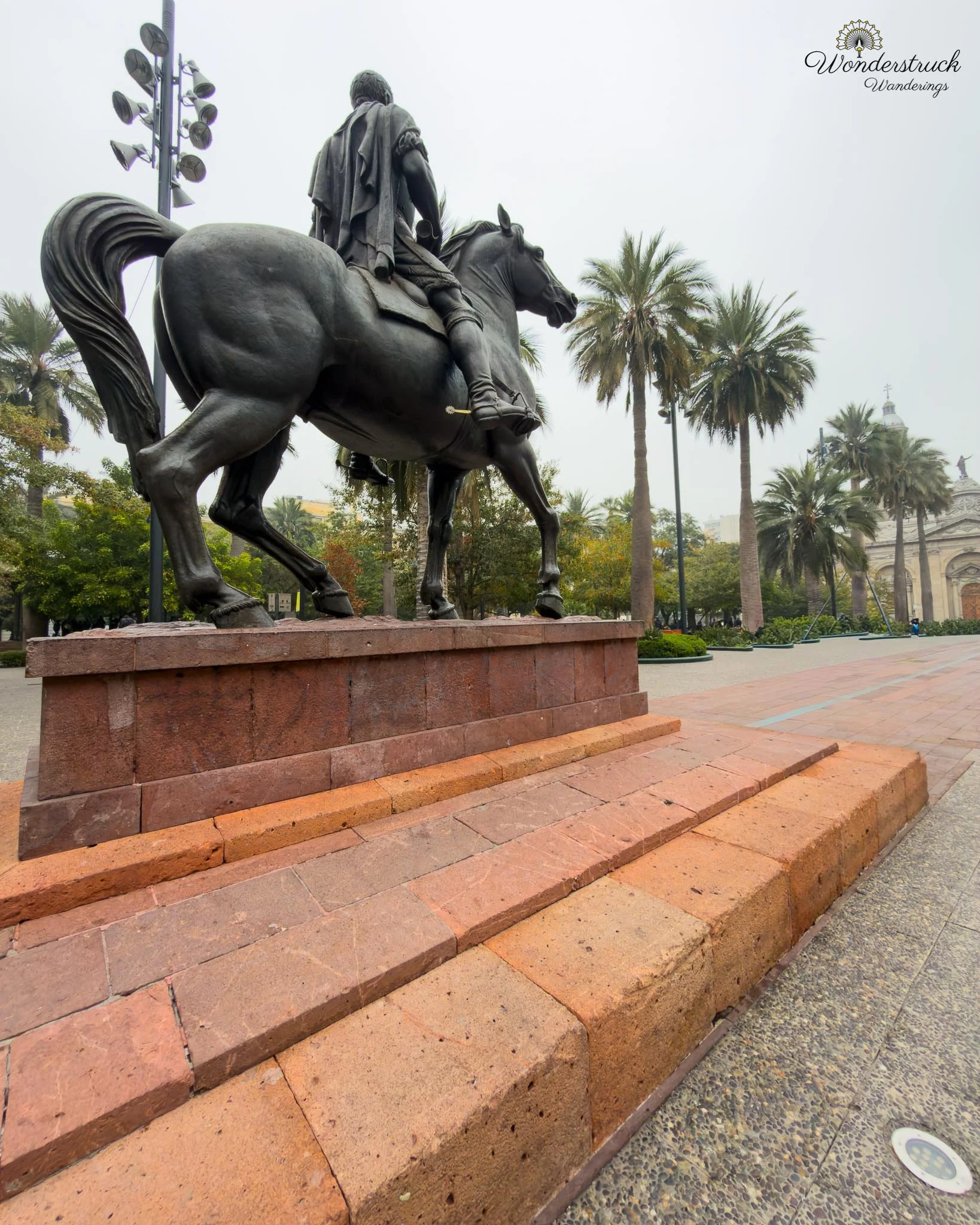
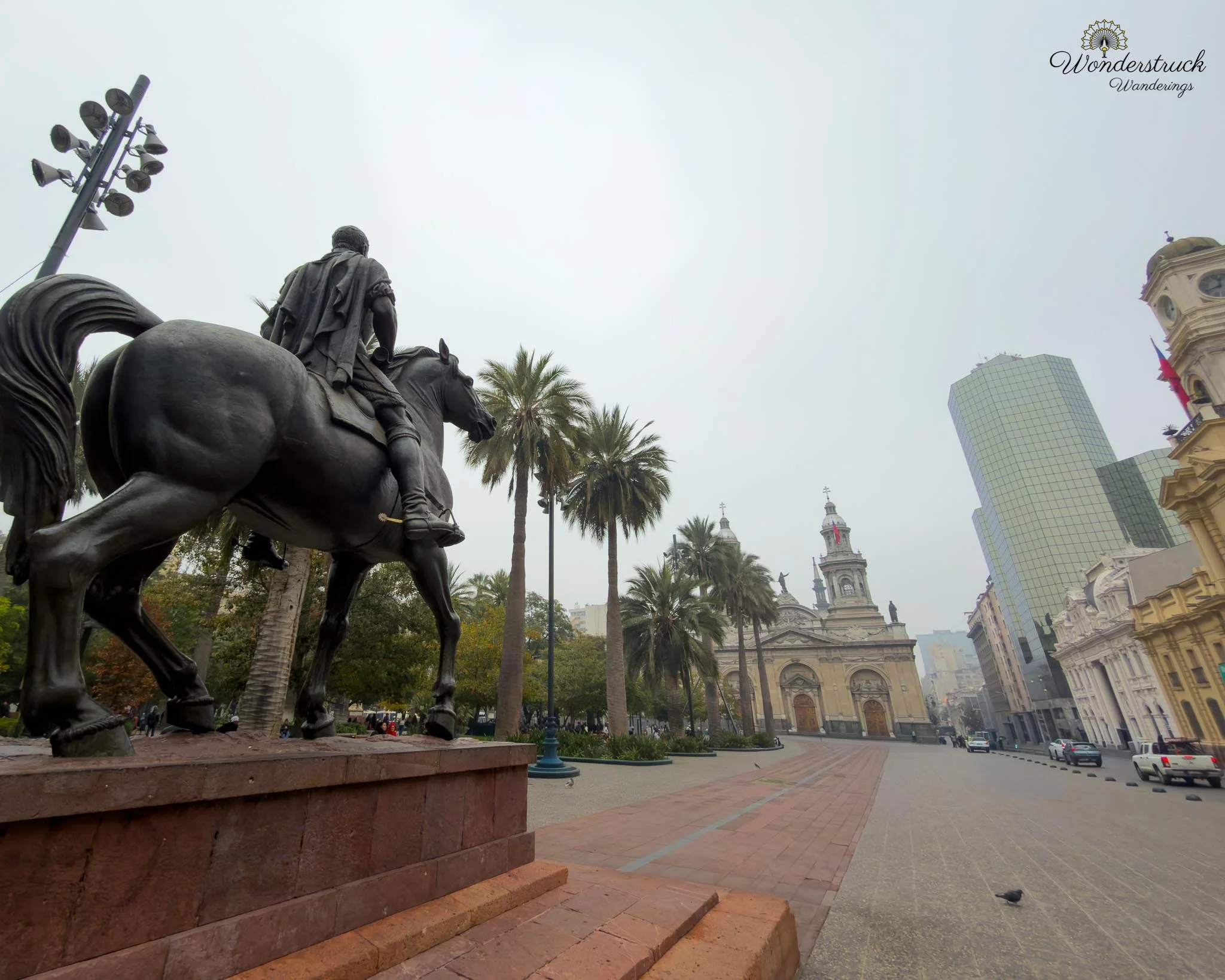
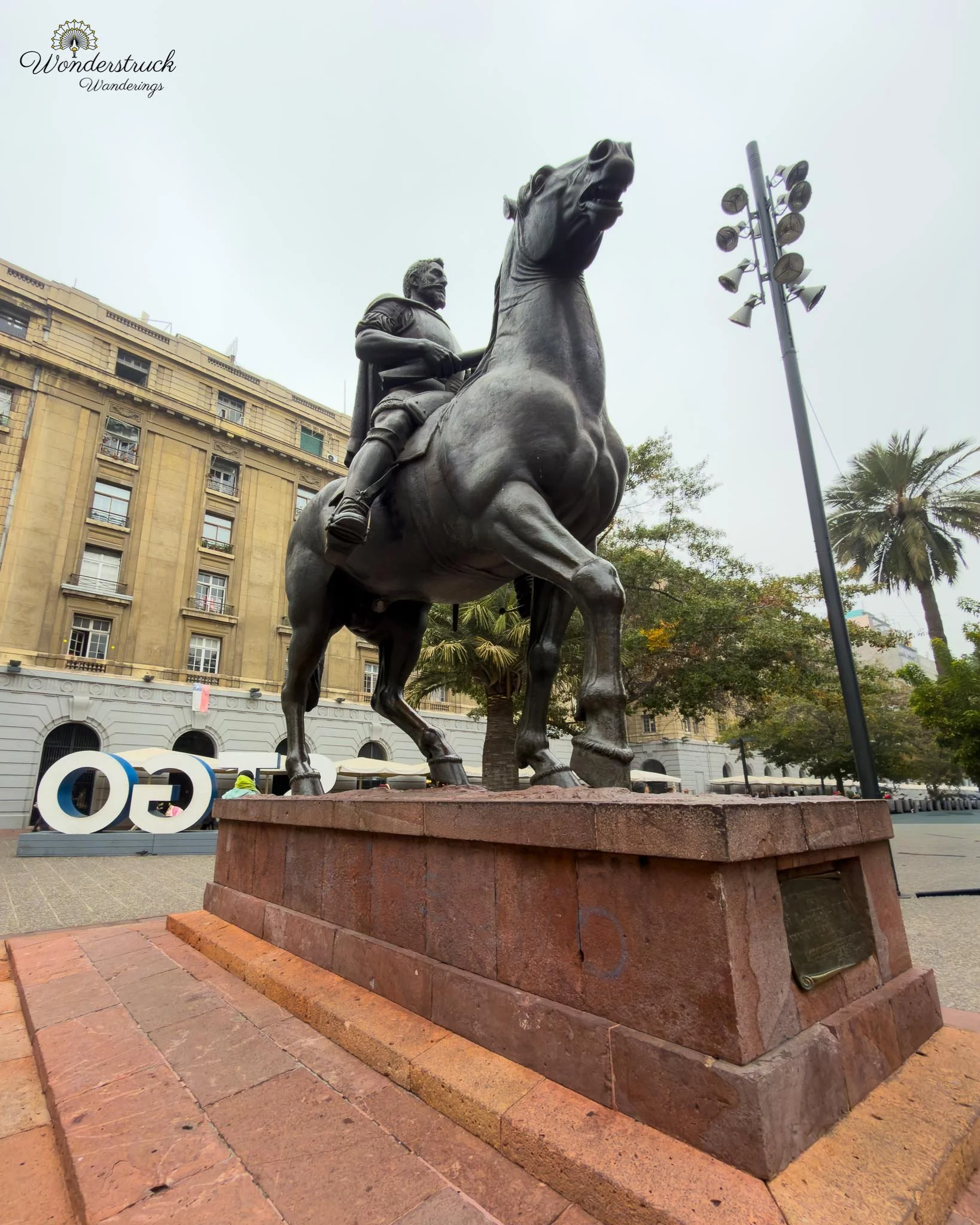
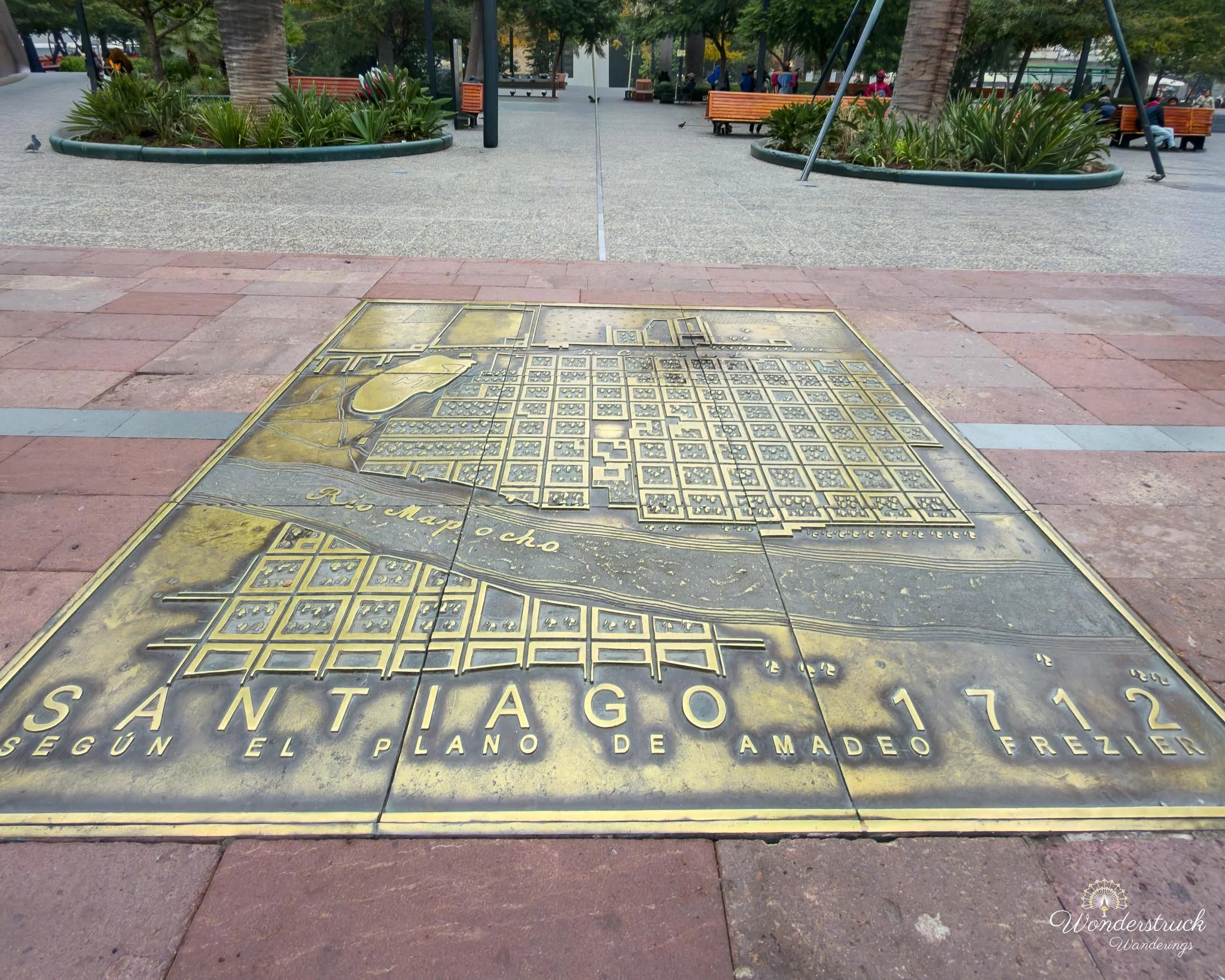
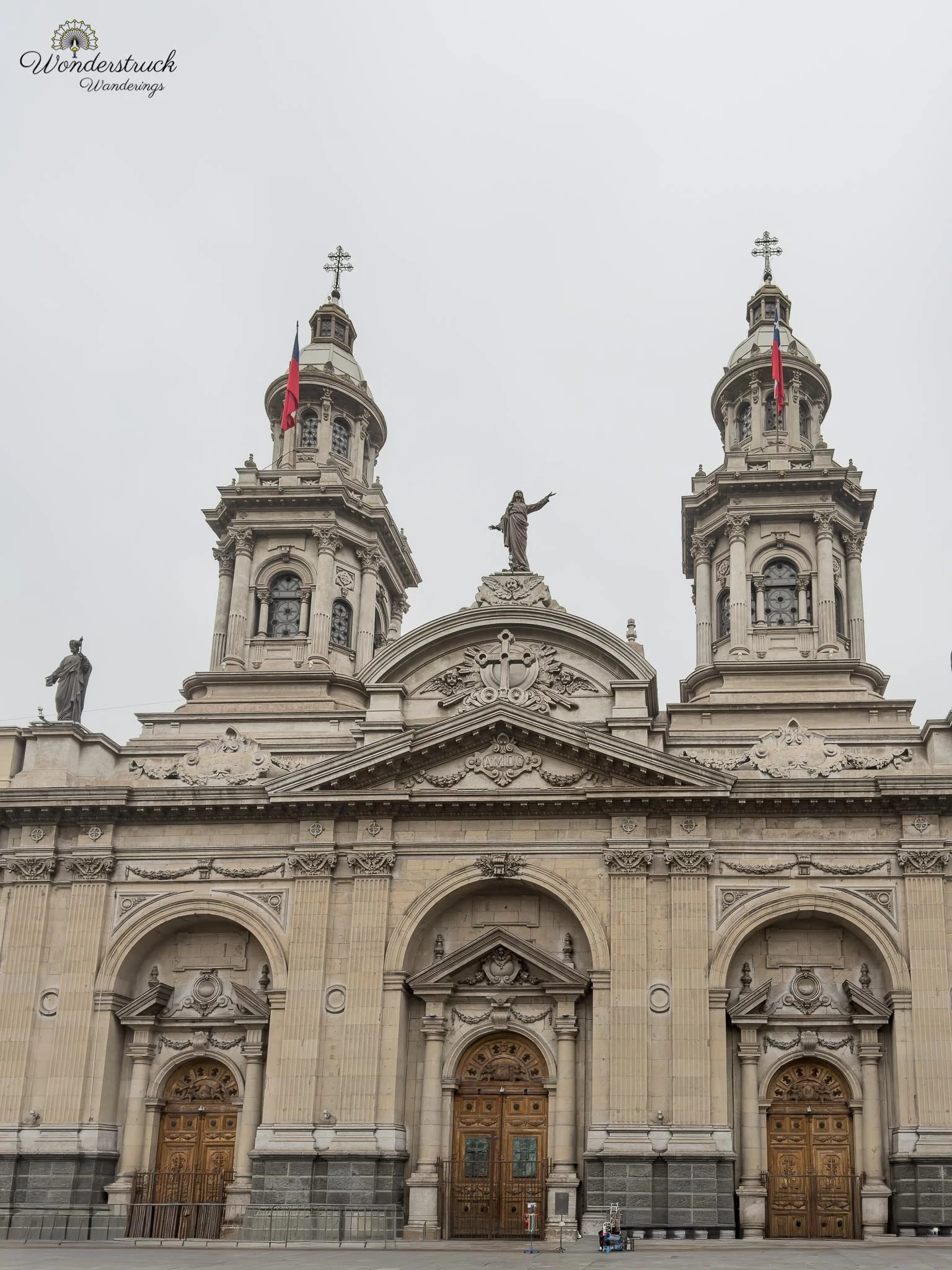
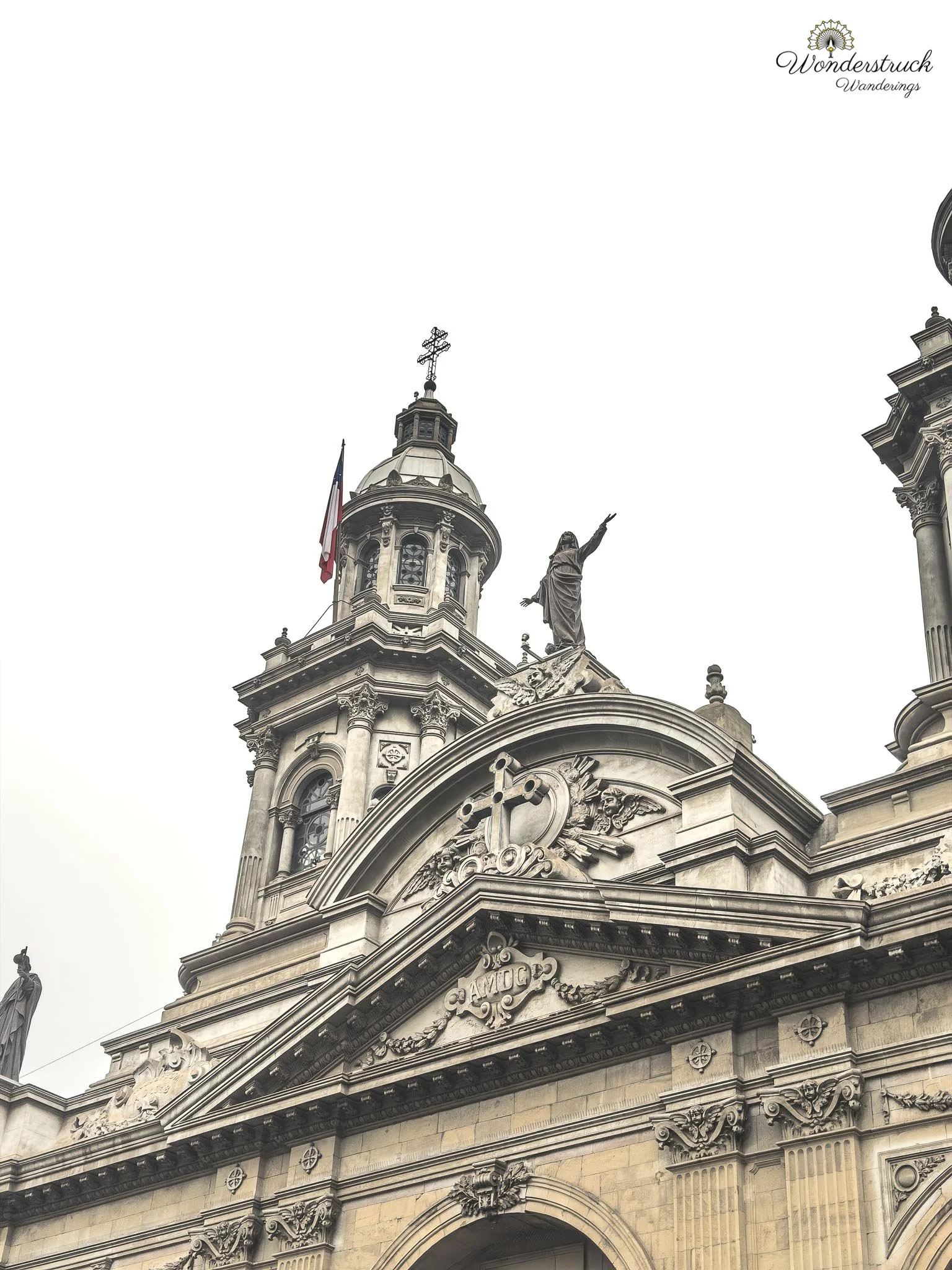
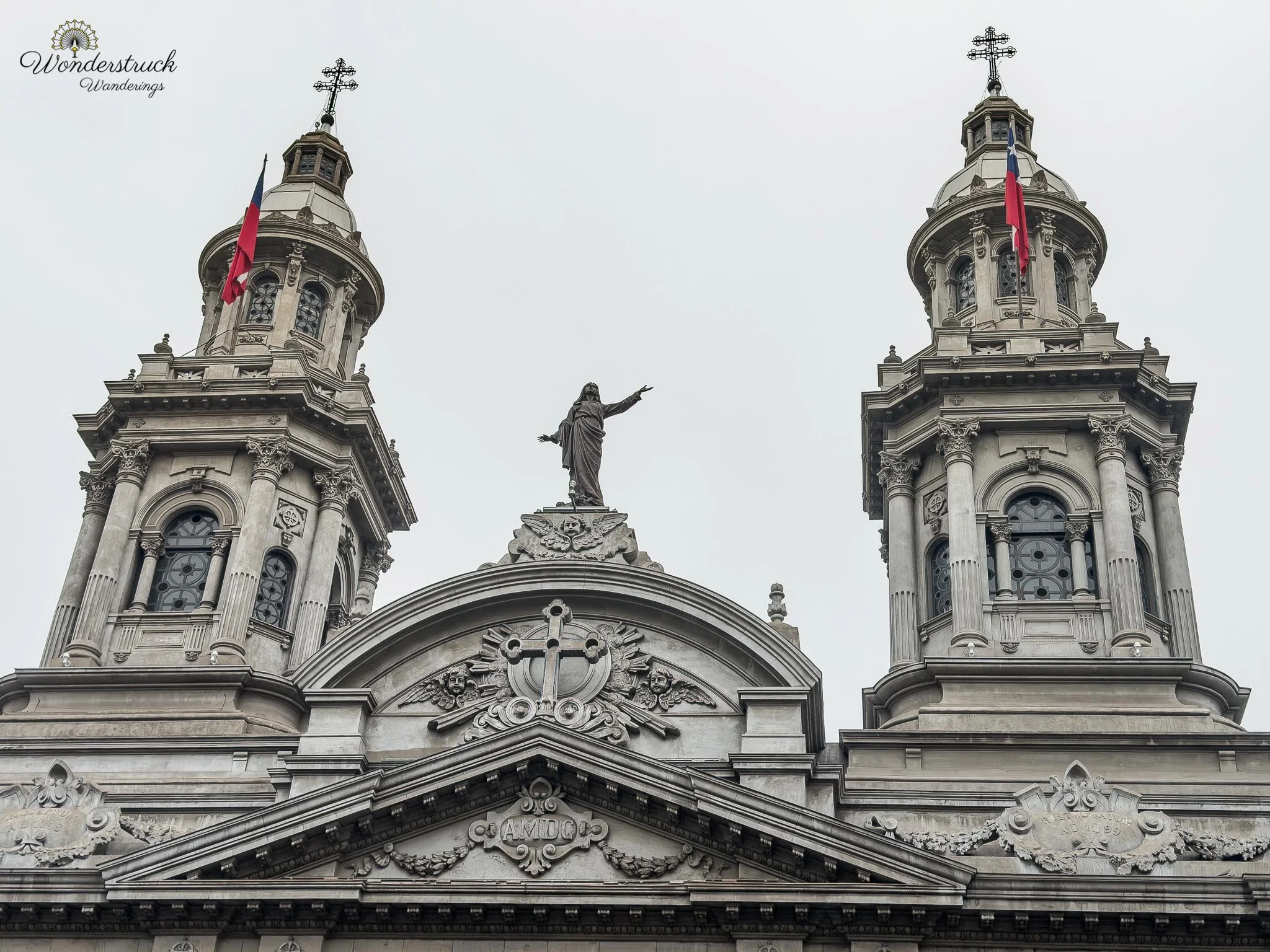
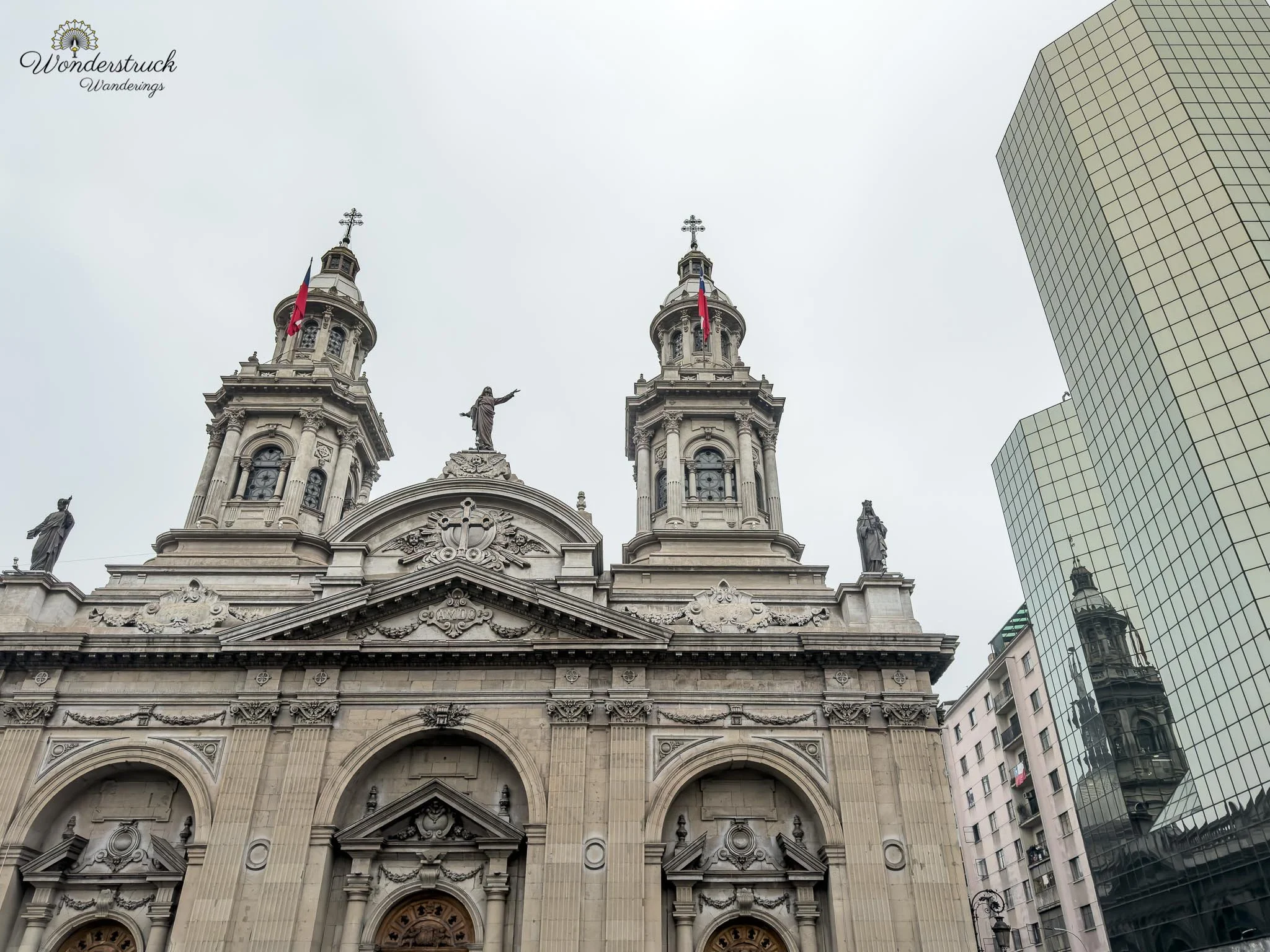
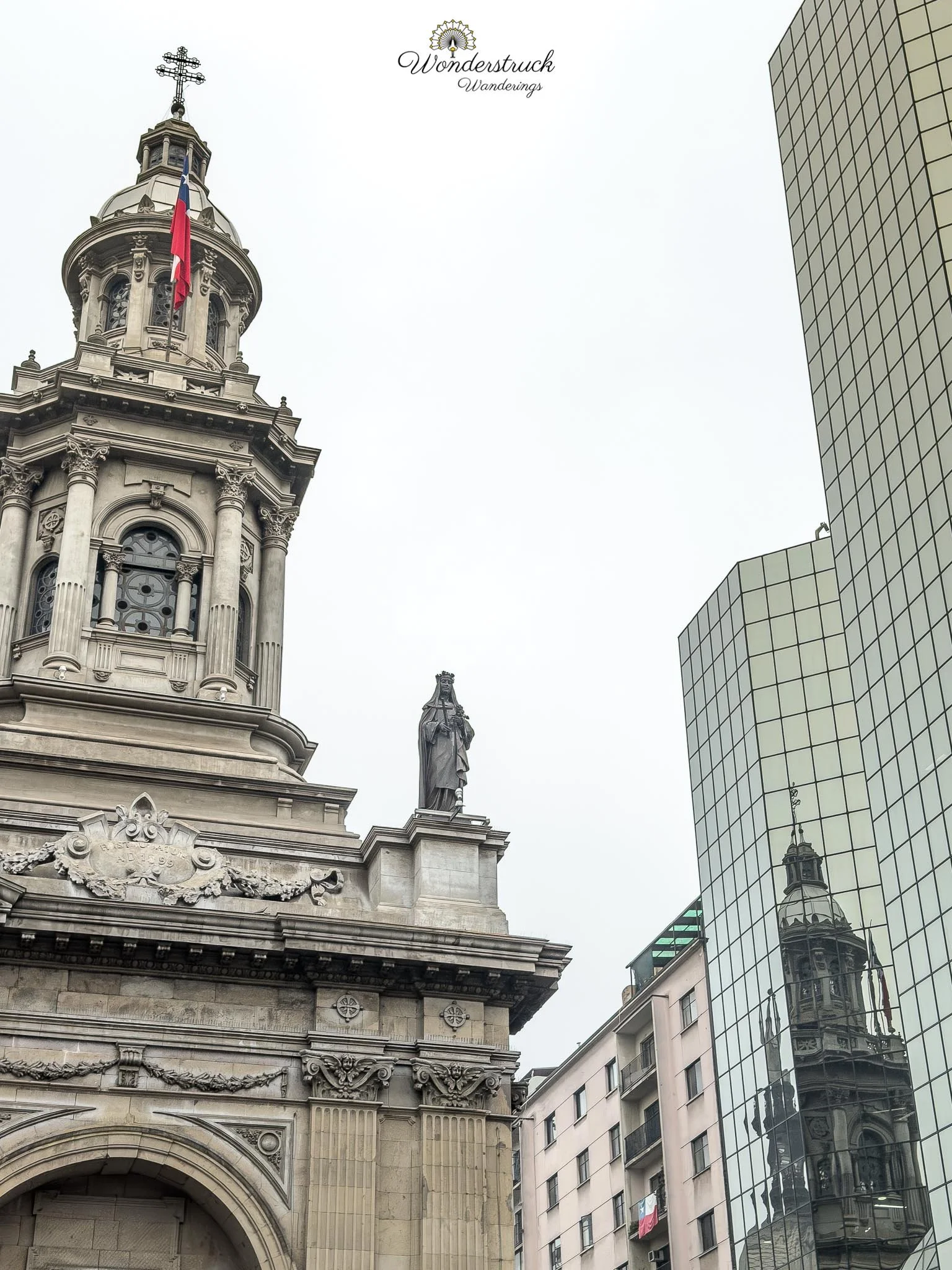
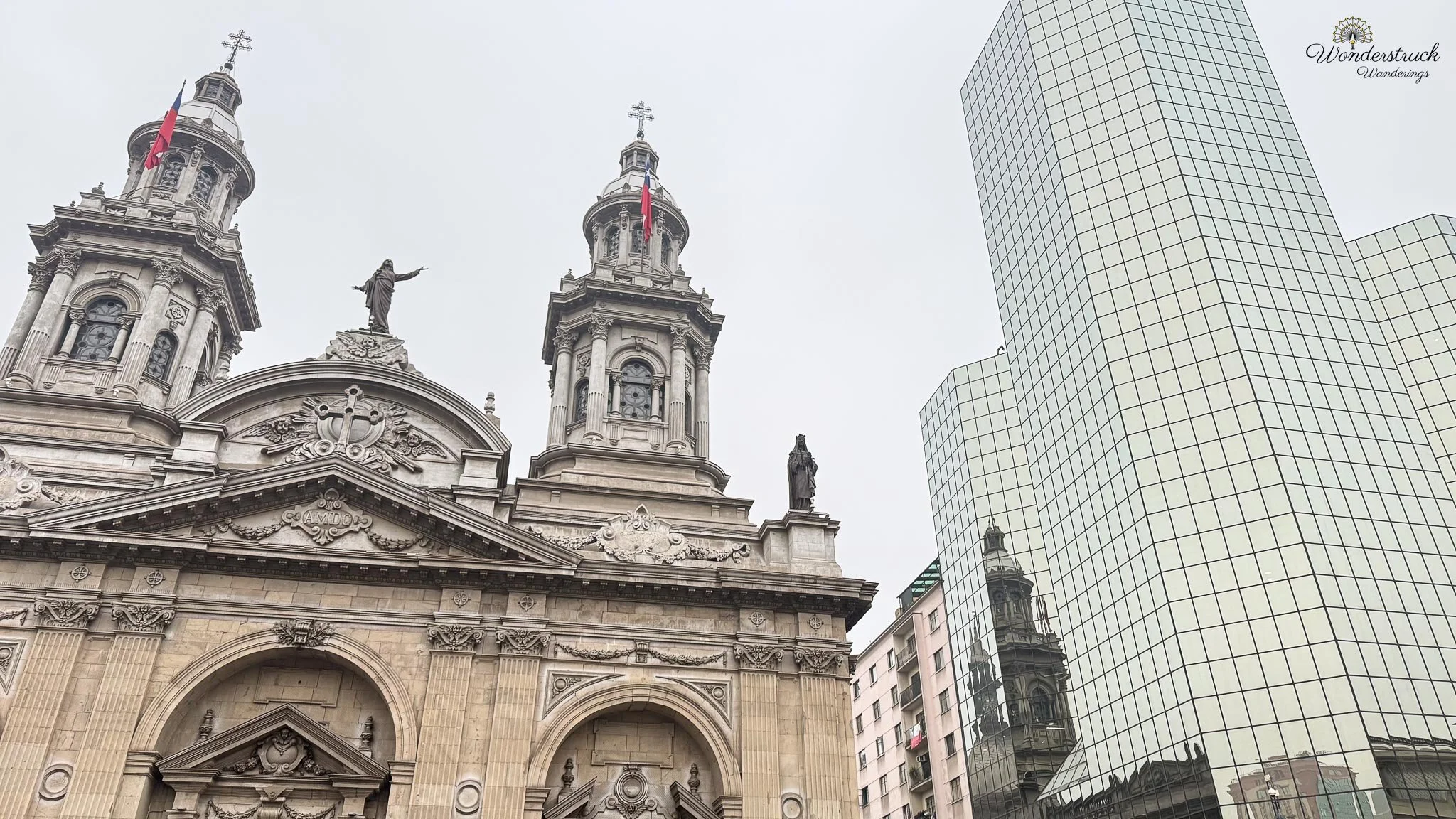
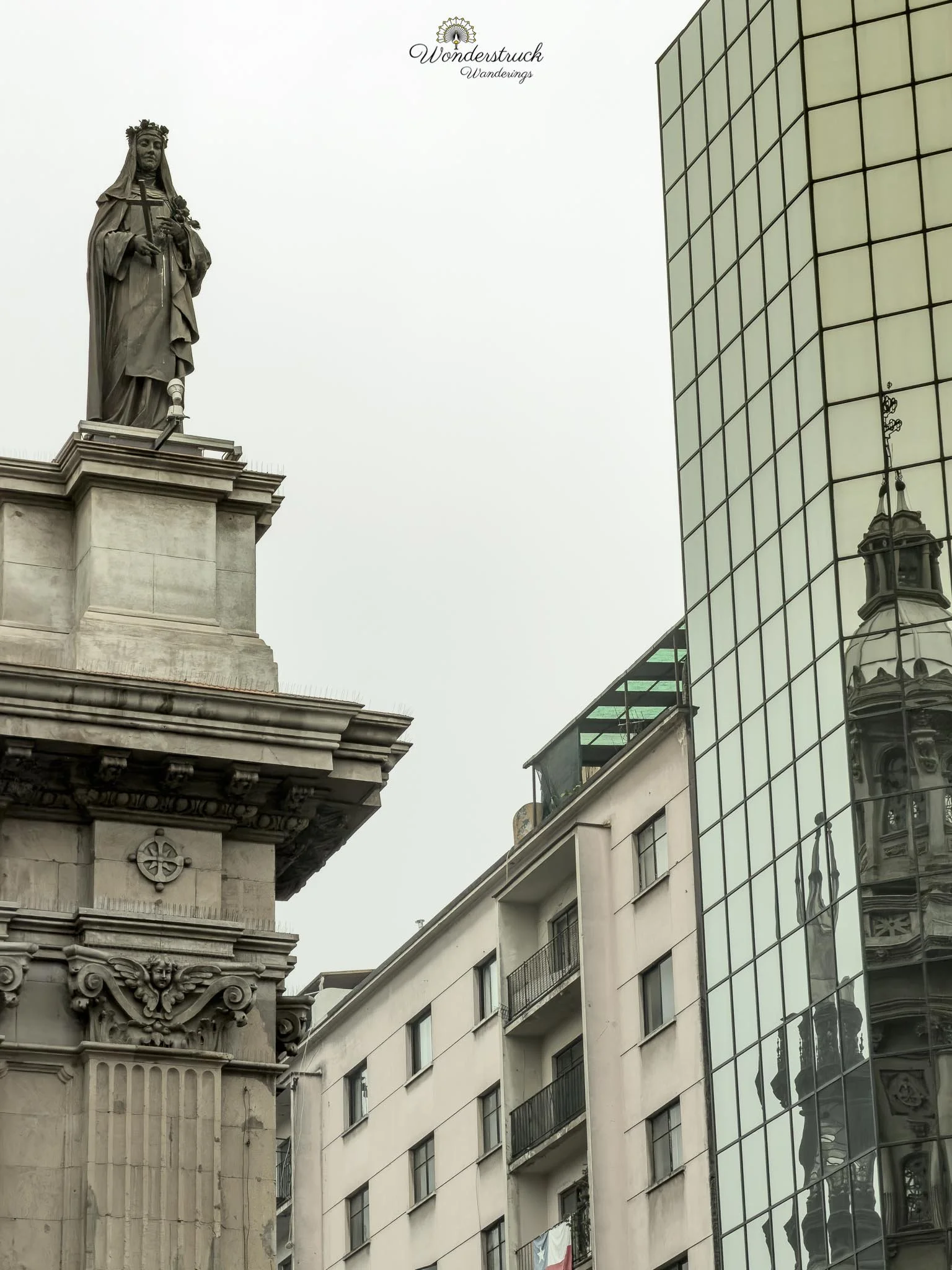
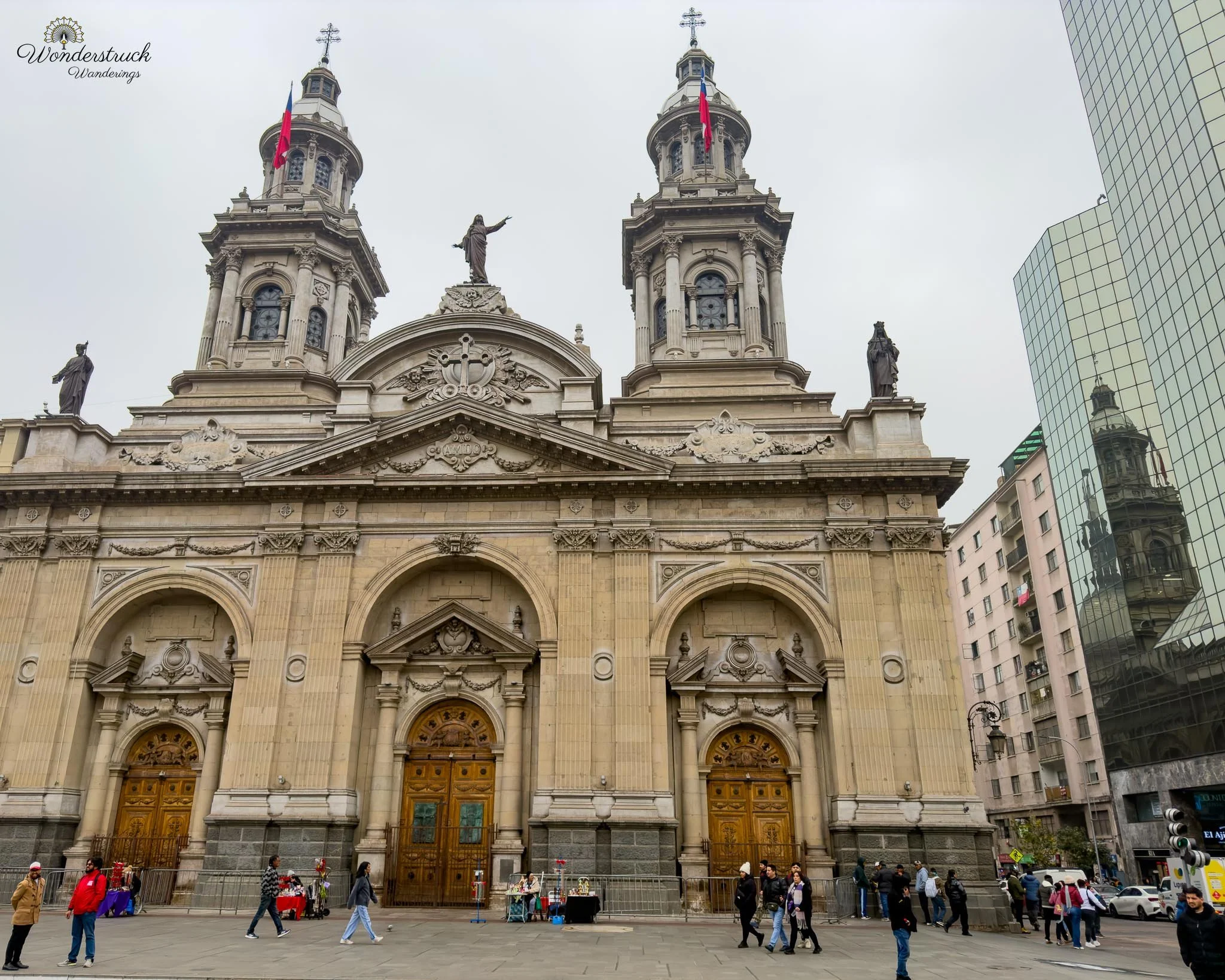
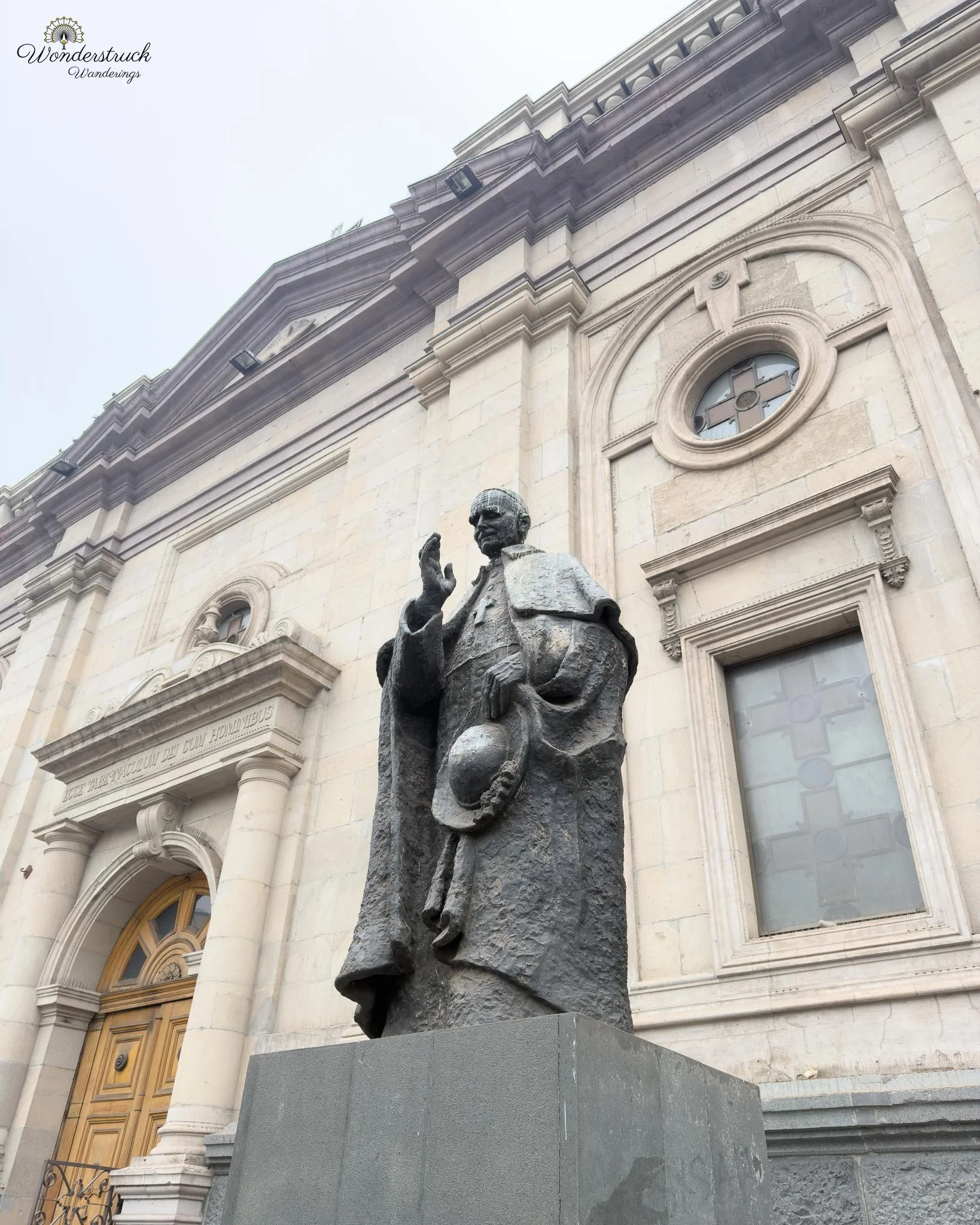
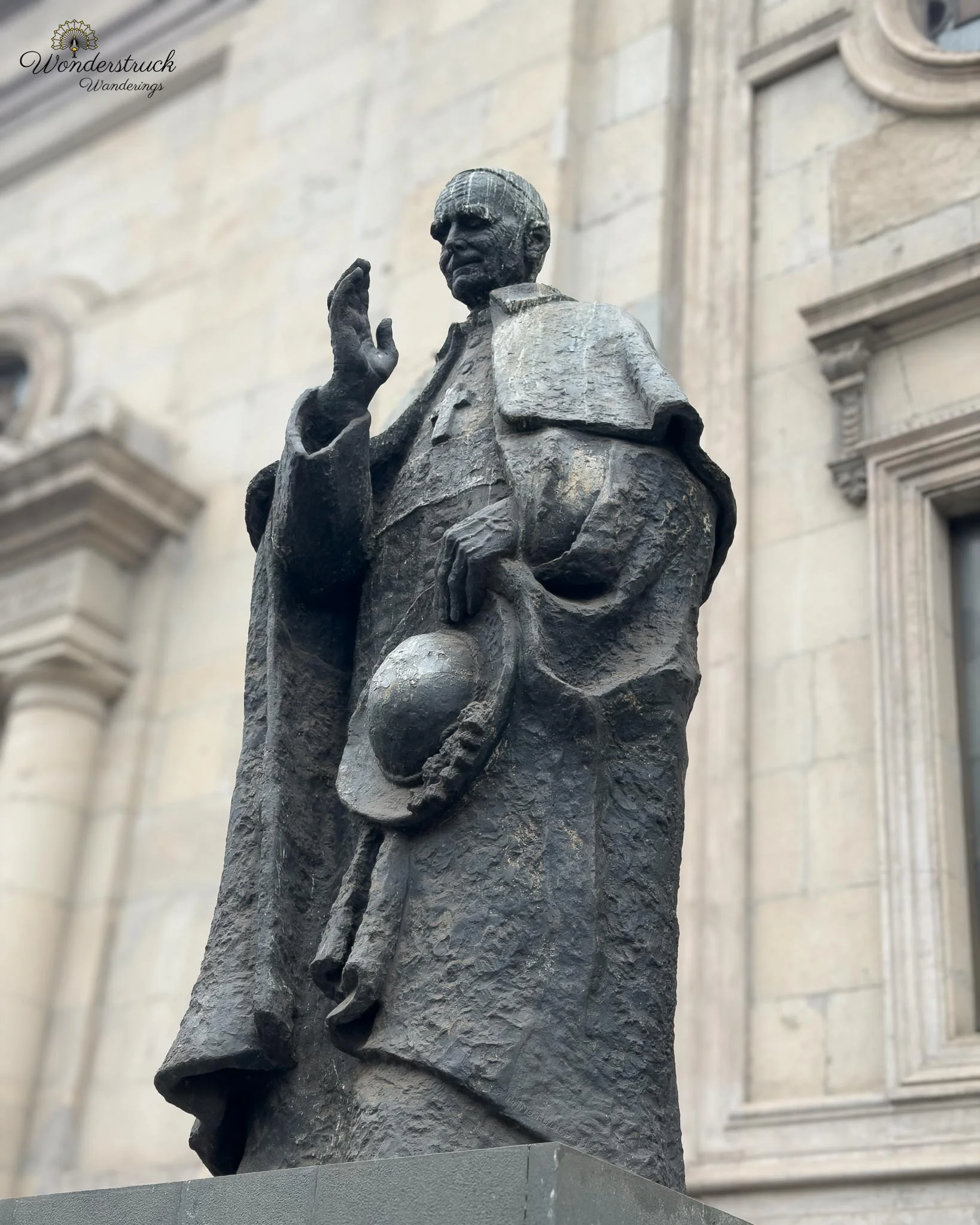
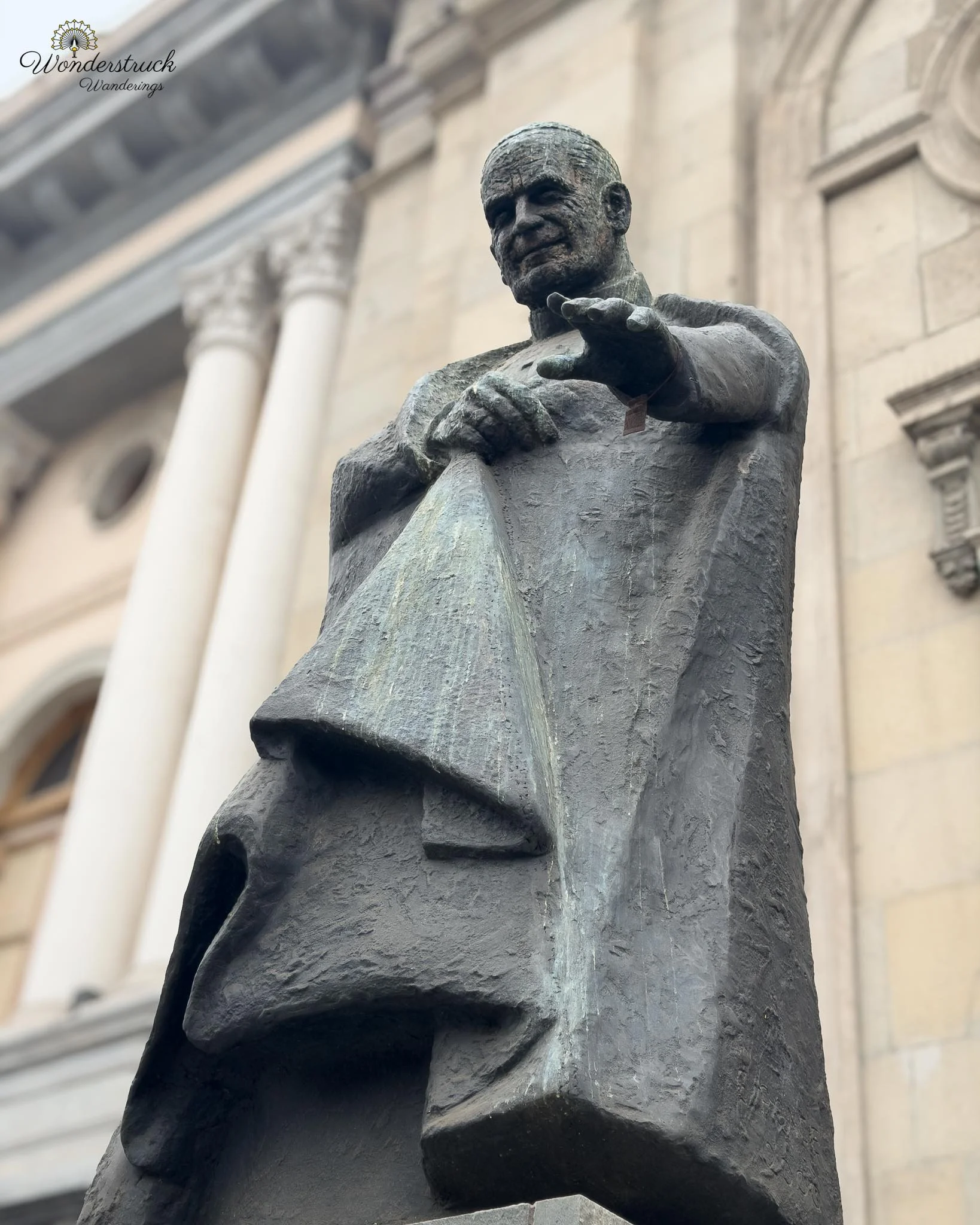
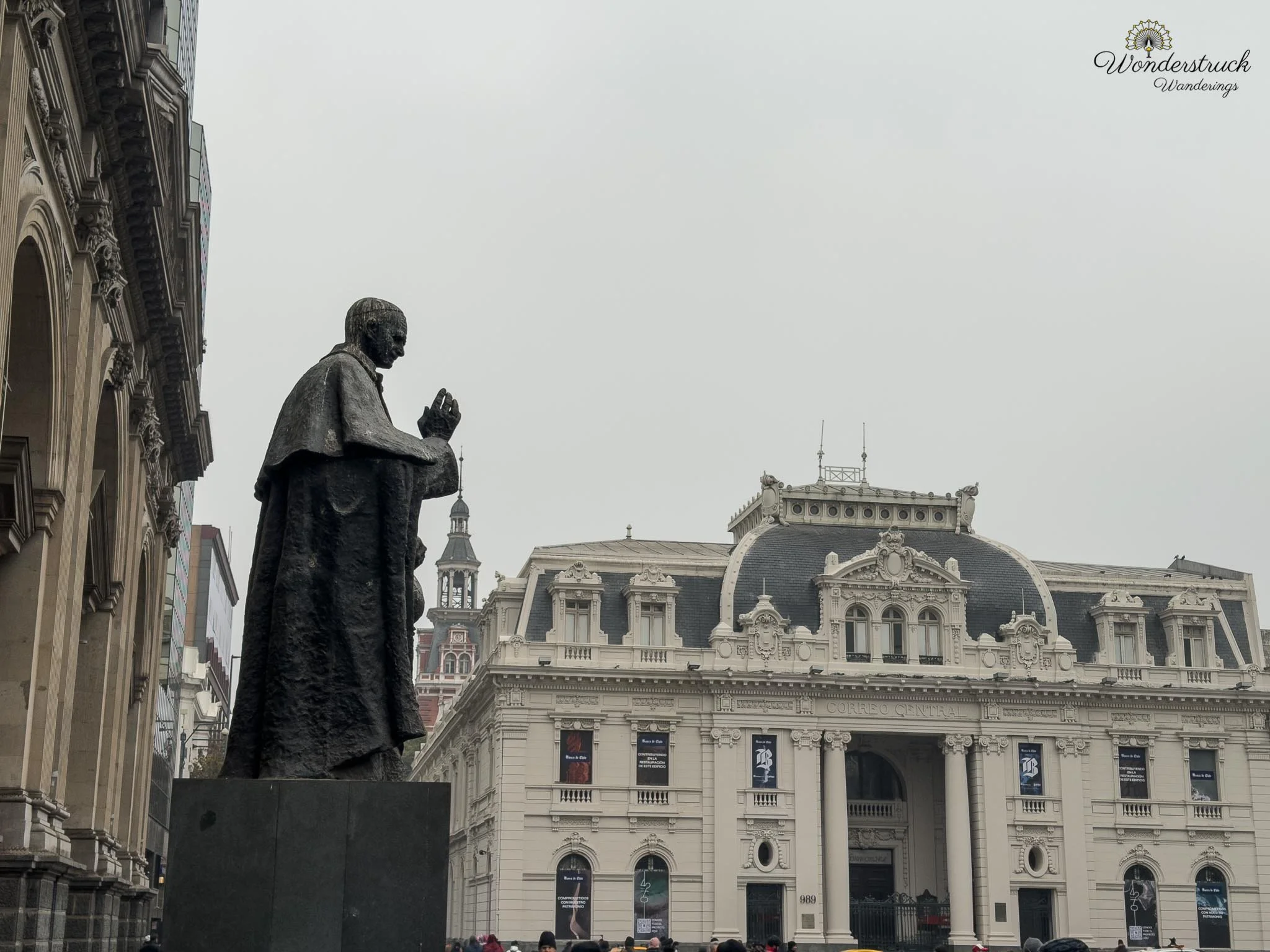
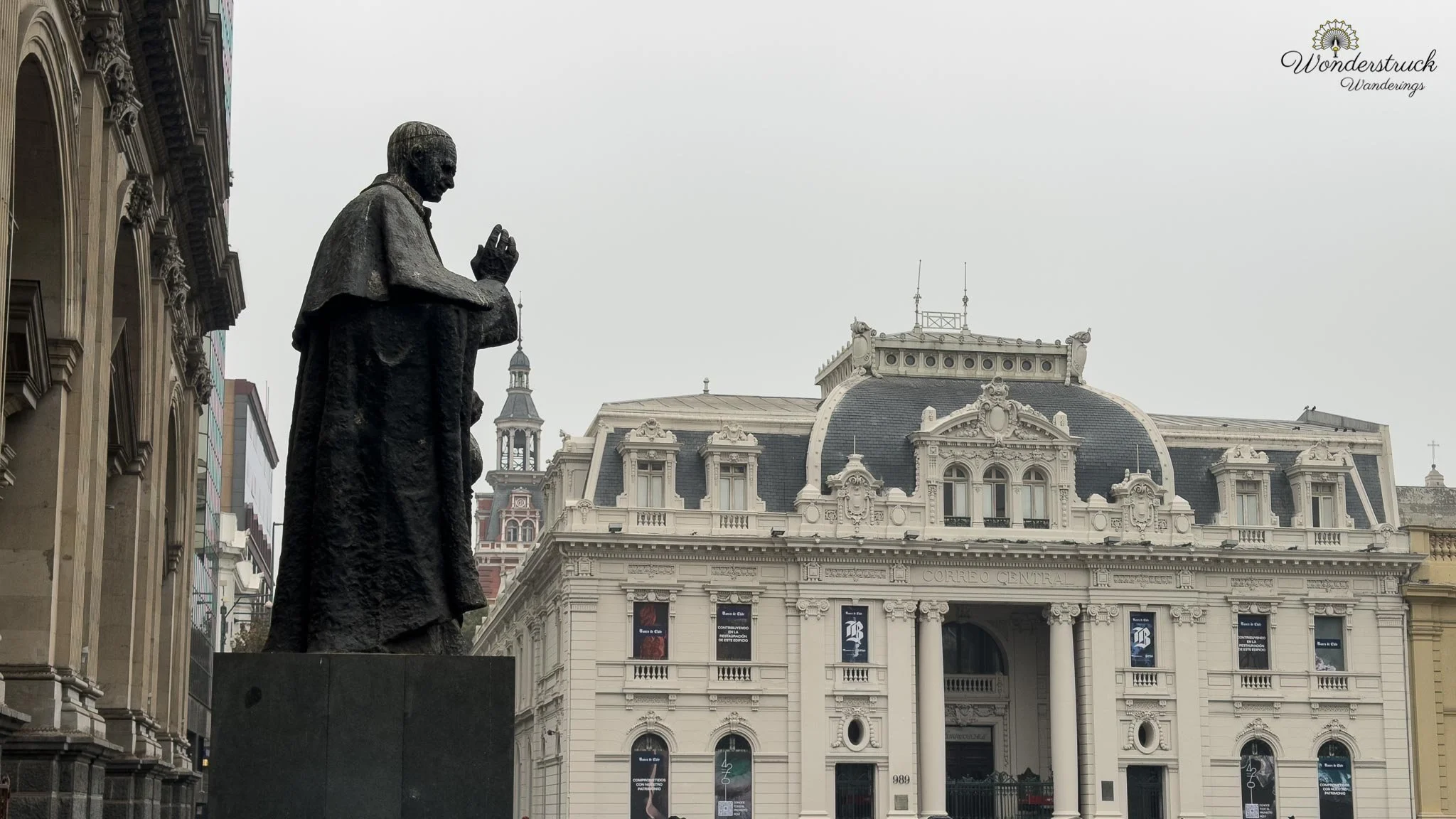
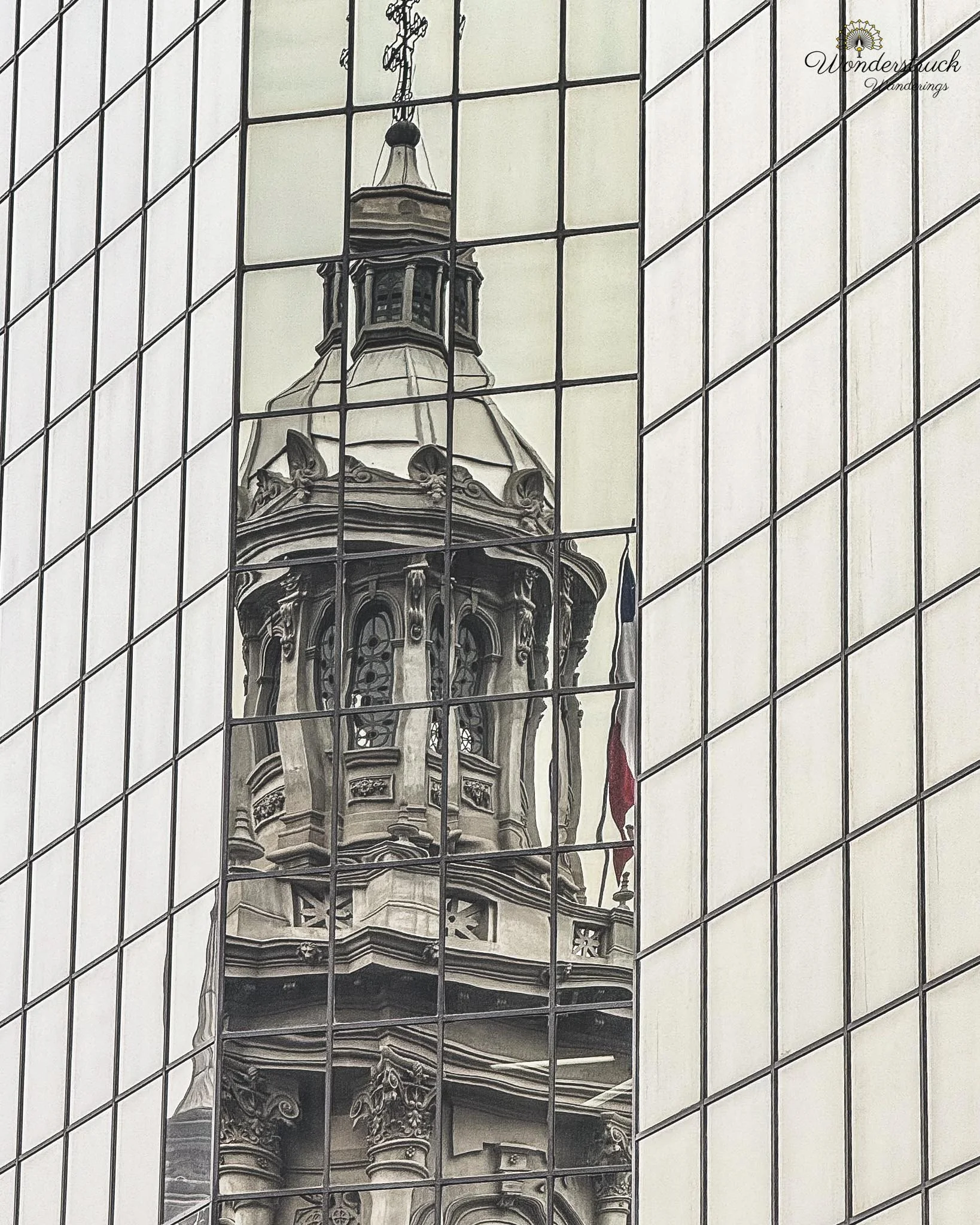
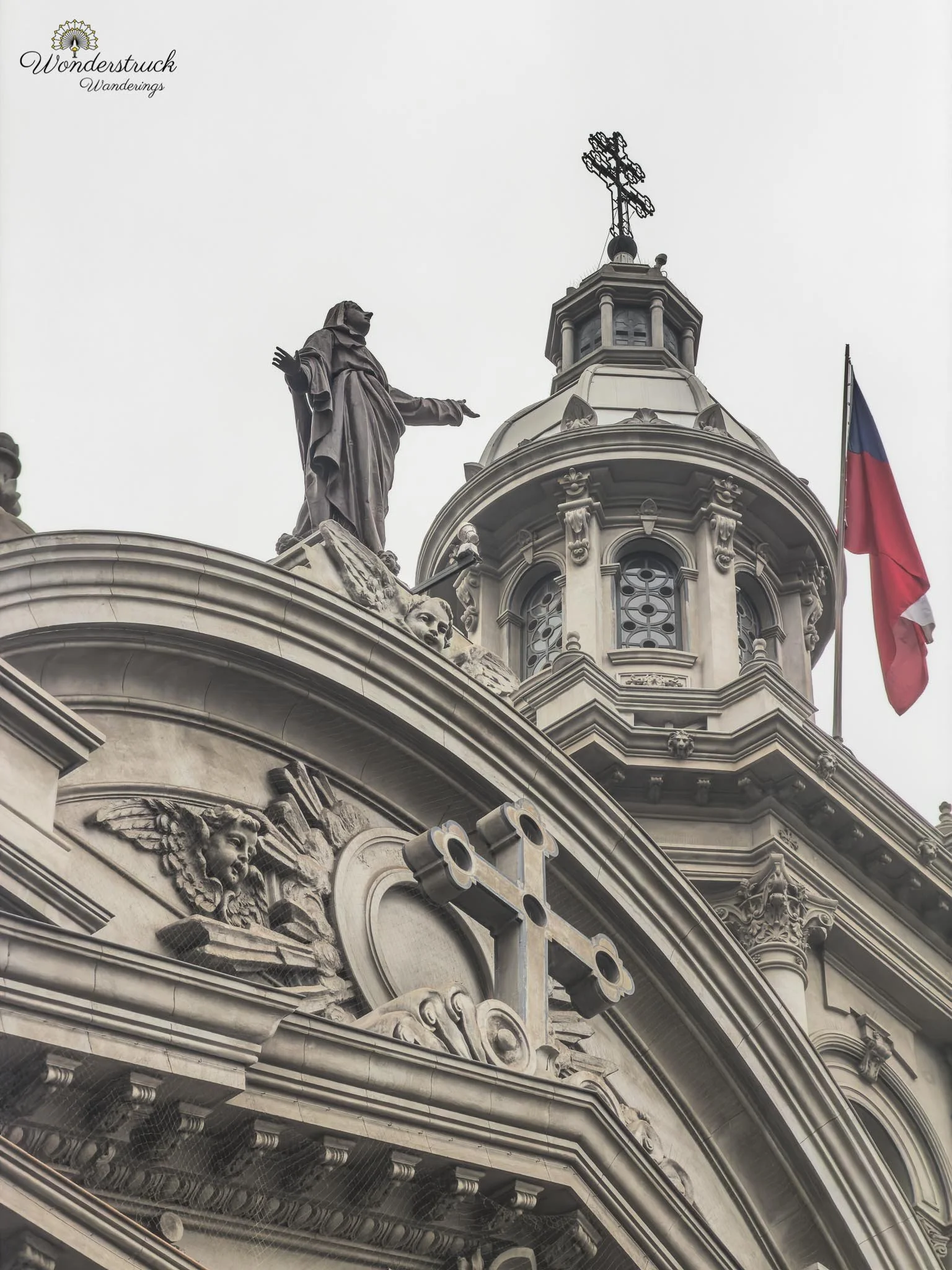
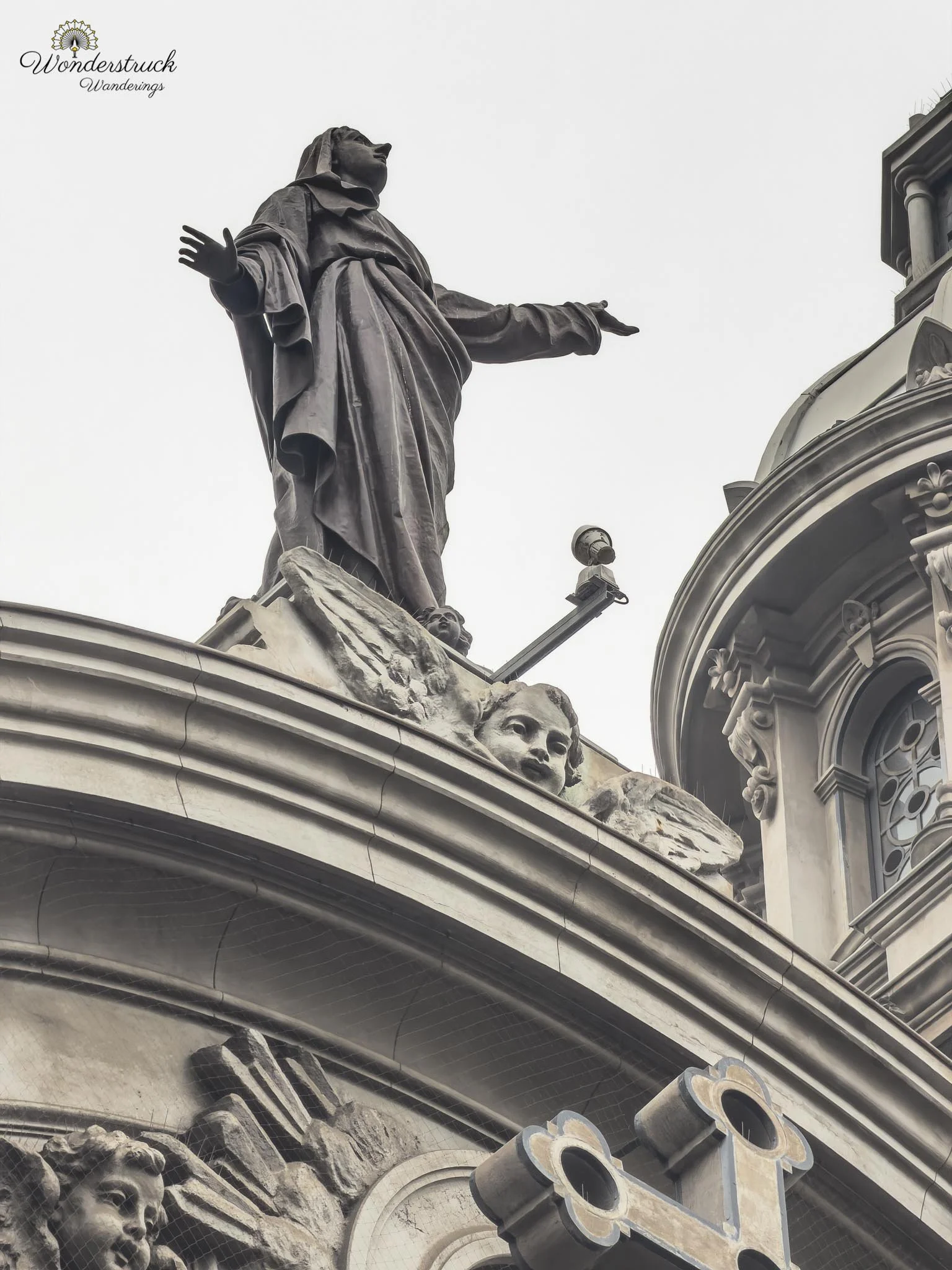
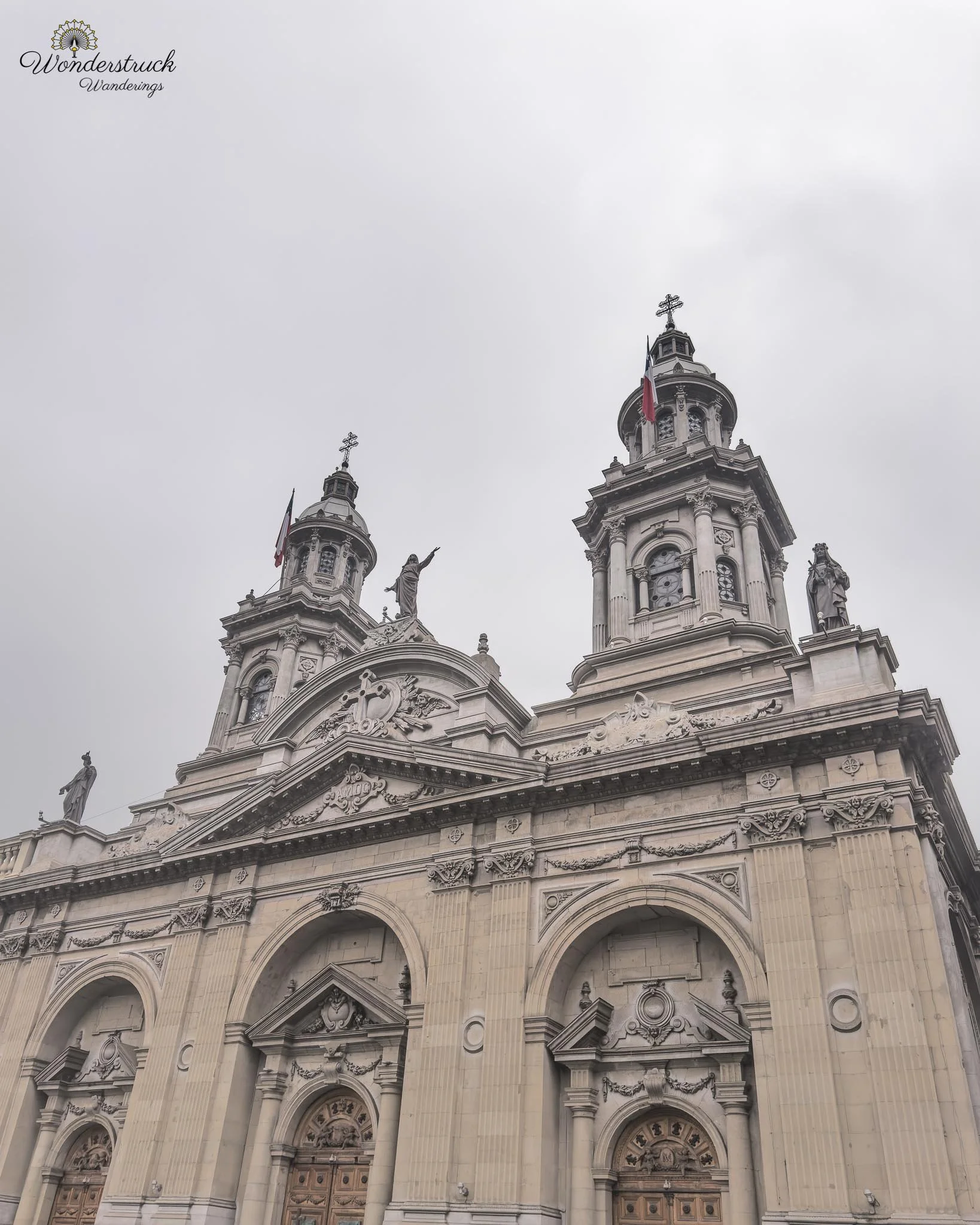
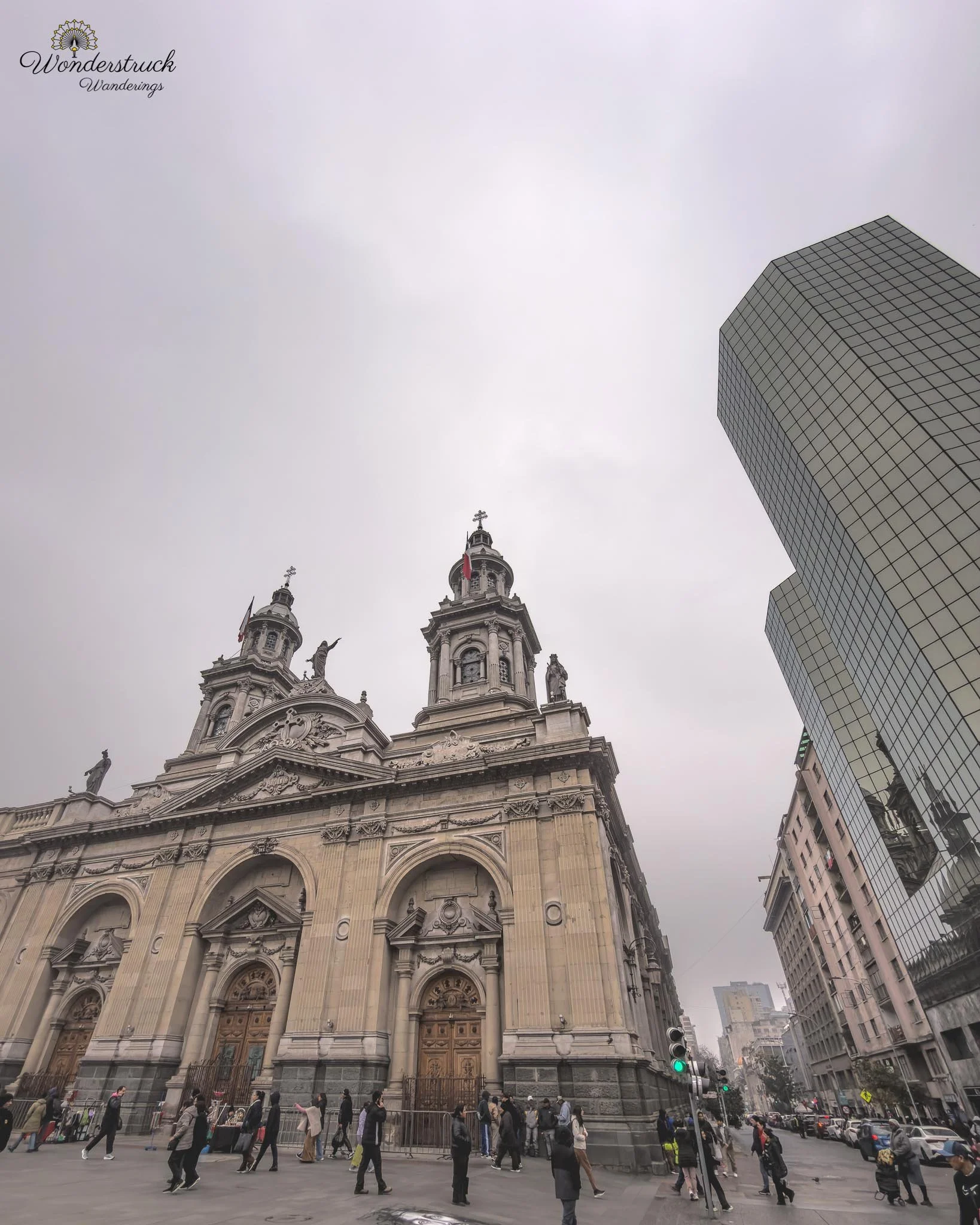
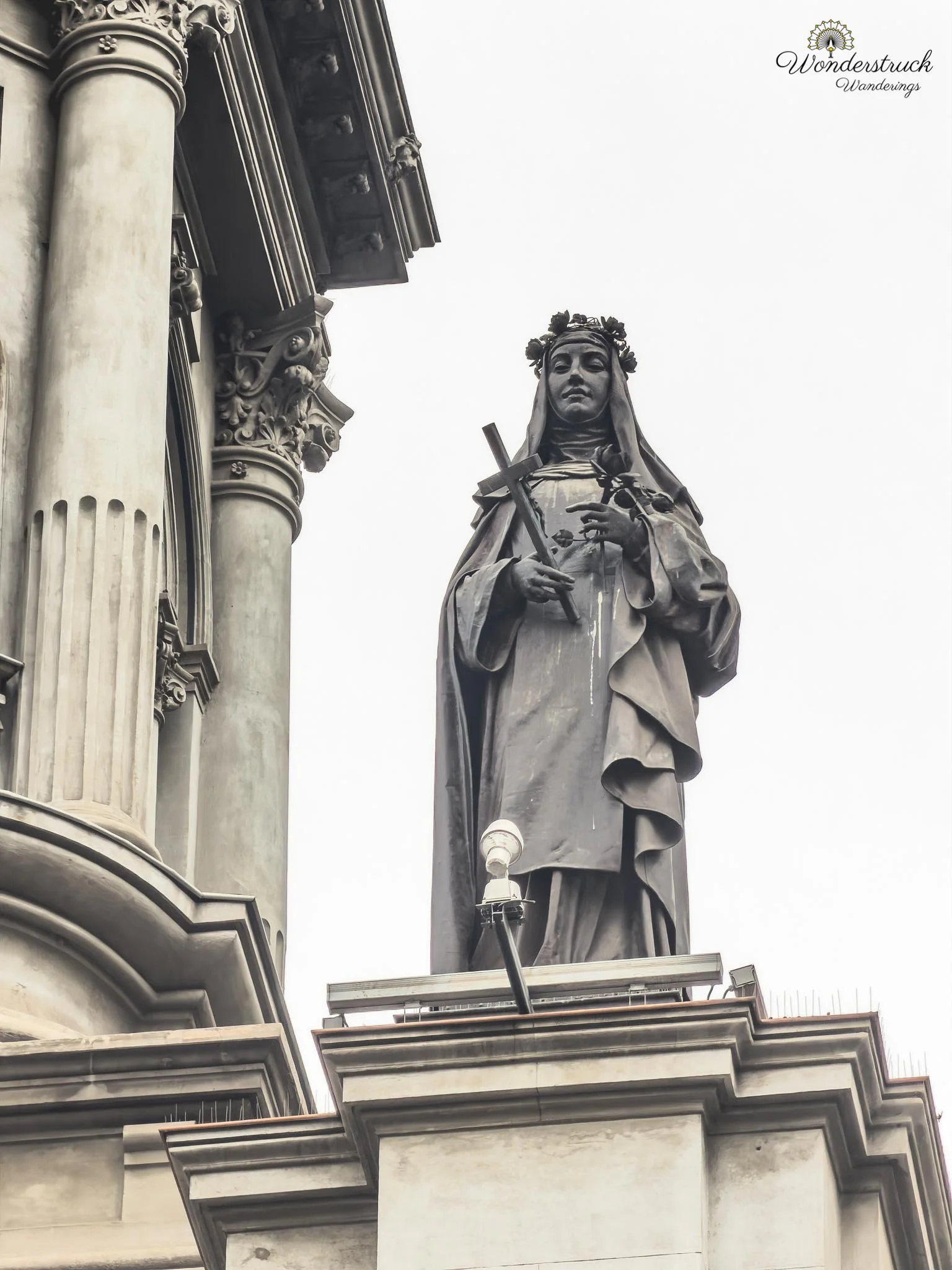
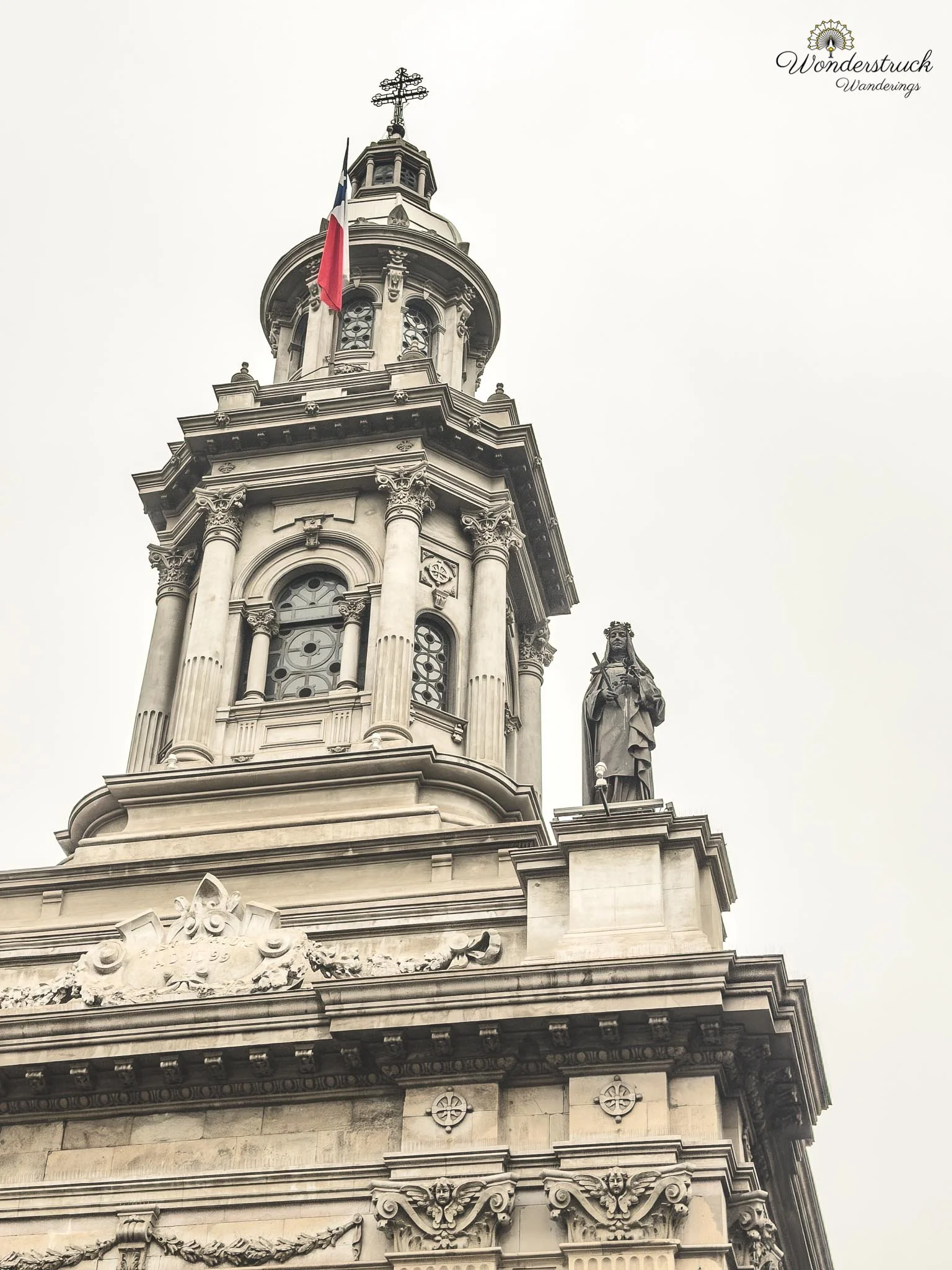
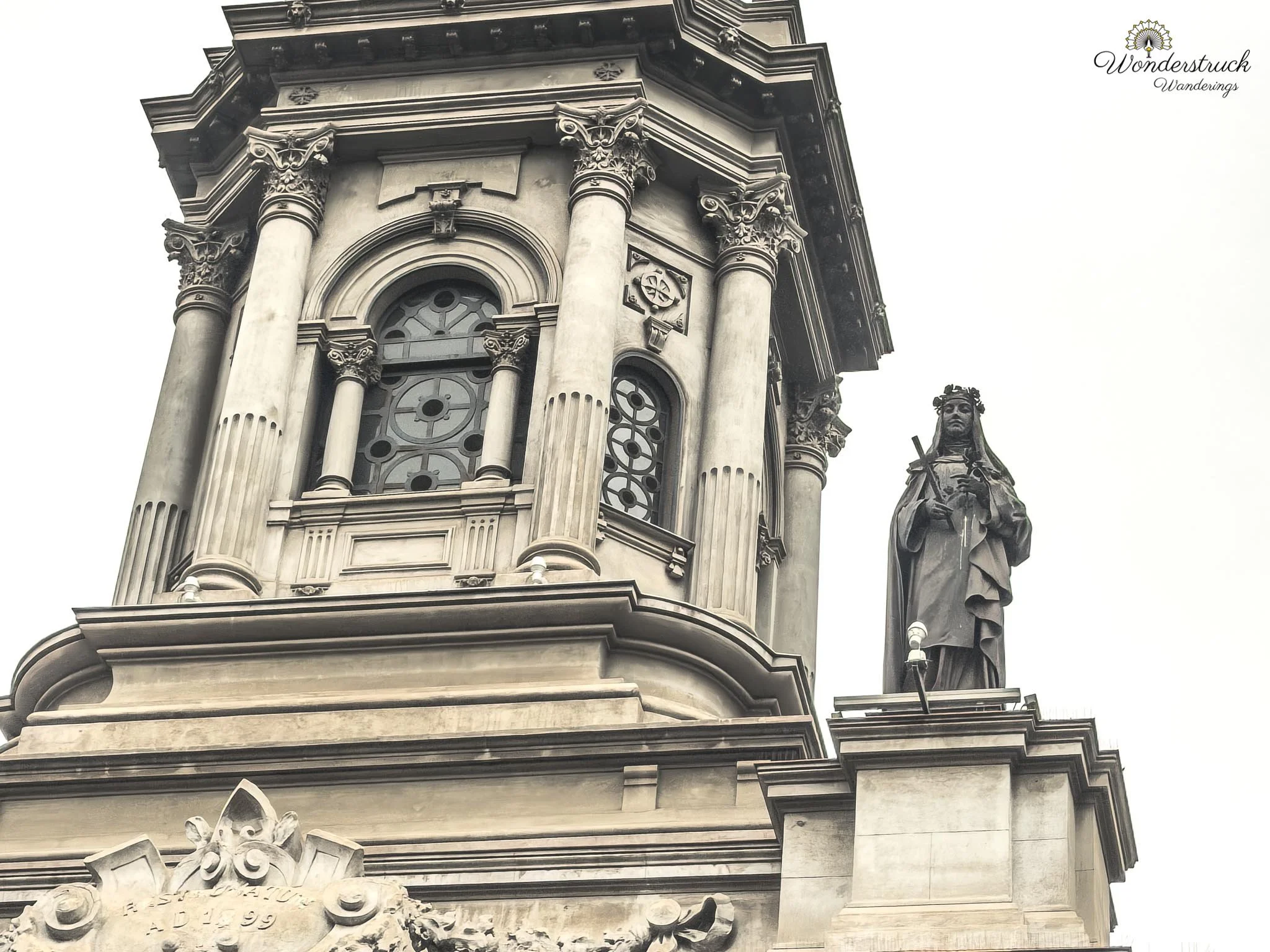
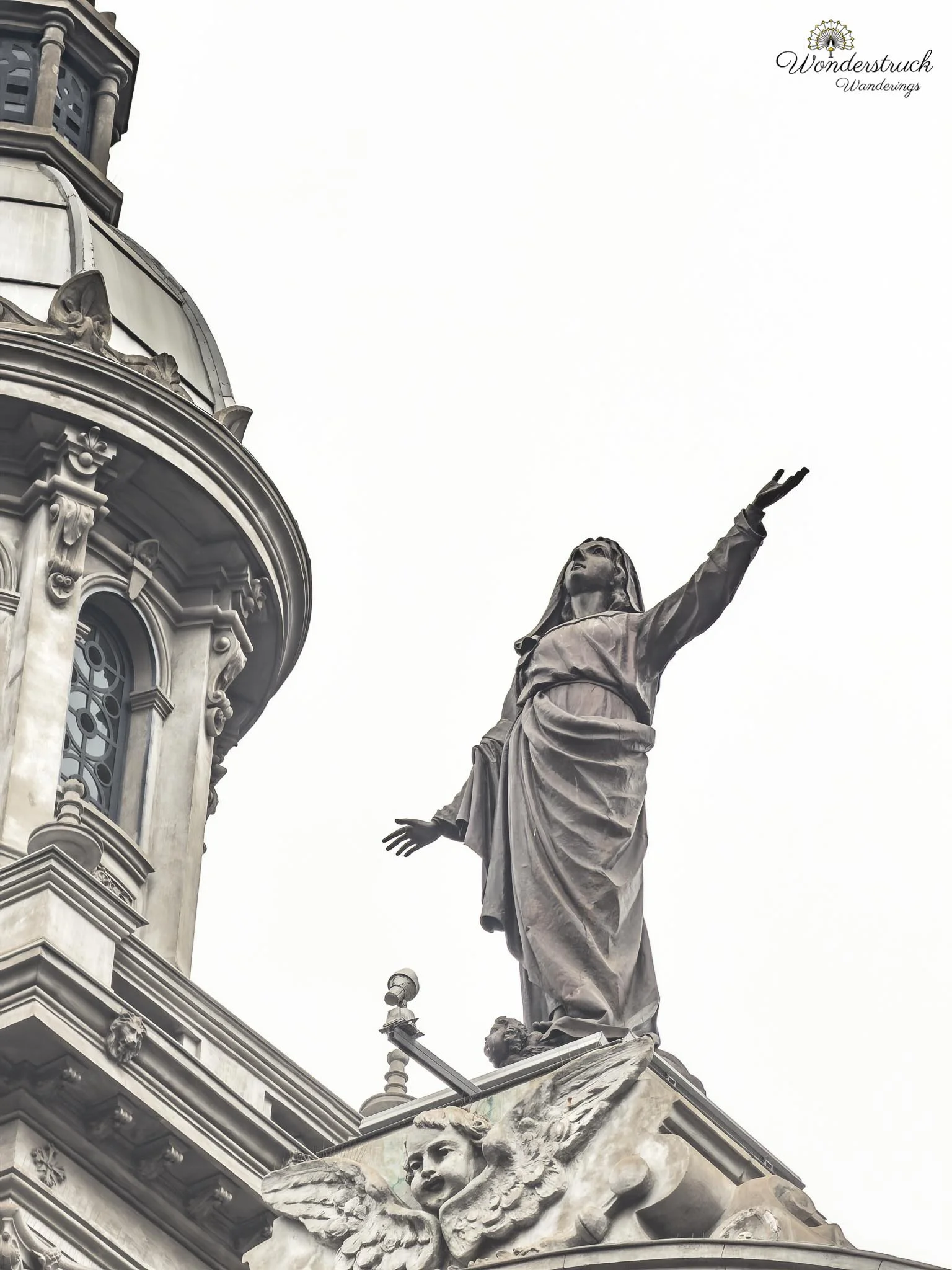
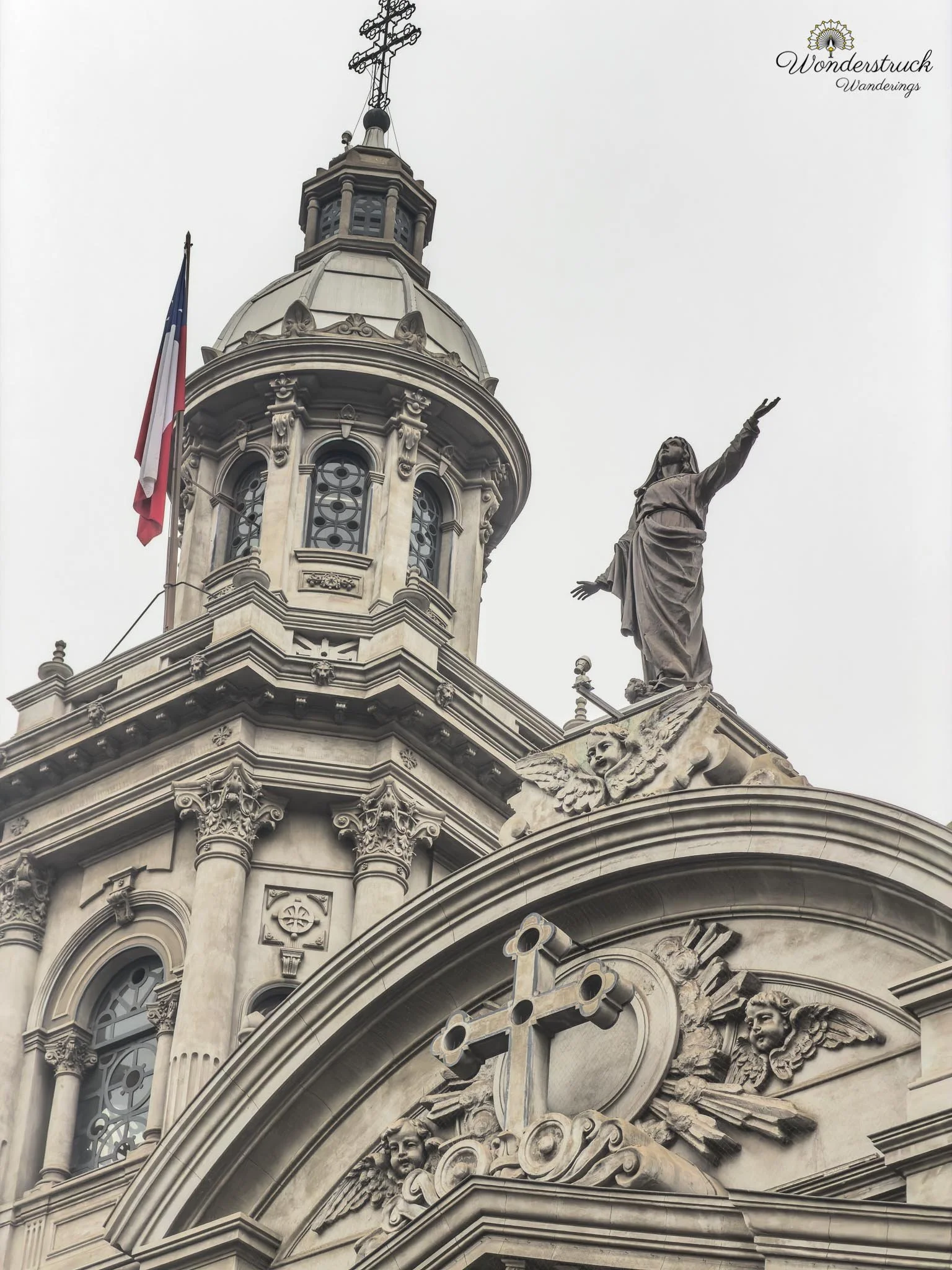
From Santa Lucia, we decided to walk toward Plaza de Armas. The route took us through busy commercial streets where shops were opening and the city was shifting into its weekend rhythm. Rolling doors rattled upward. Vendors adjusted displays. Locals moved with purpose while we moved with that slightly slower traveler's pace, looking at signs, windows, faces, street corners, and the little details that never make it into guidebooks but always shape how a city feels. Eventually, we reached Plaza de Armas. It was crowded when we arrived - families, tourists, street performers, people resting on benches, people crossing through, people simply existing in the center of the capital. After the more relaxed feel of Barrio Italia and Santa Lucia, Plaza de Armas felt louder, denser, more civic. At the center, the equestrian statue of Pedro de Valdivia gave the square one of its recognizable anchors, but what caught our attention even more were the brass ground tiles and engraved maps set into the pavement. They are easy to miss if you are only looking up at the buildings, but once you notice them, they pull your eyes down into the city's old geography. The Metropolitan Cathedral stood along the edge of the plaza, large and formal, with its twin towers and pale facade facing the square. Unfortunately, we arrived too late to go inside. We had not realized that it would close early that weekend afternoon, so we had to settle for seeing it from the outside. That was a little disappointing, but also very typical of first travel days. You make the best plan you can, then the city reminds you that it has its own schedule.
Puelo Coffee Roasters Cerro San Cristobal & Cable Car Descent
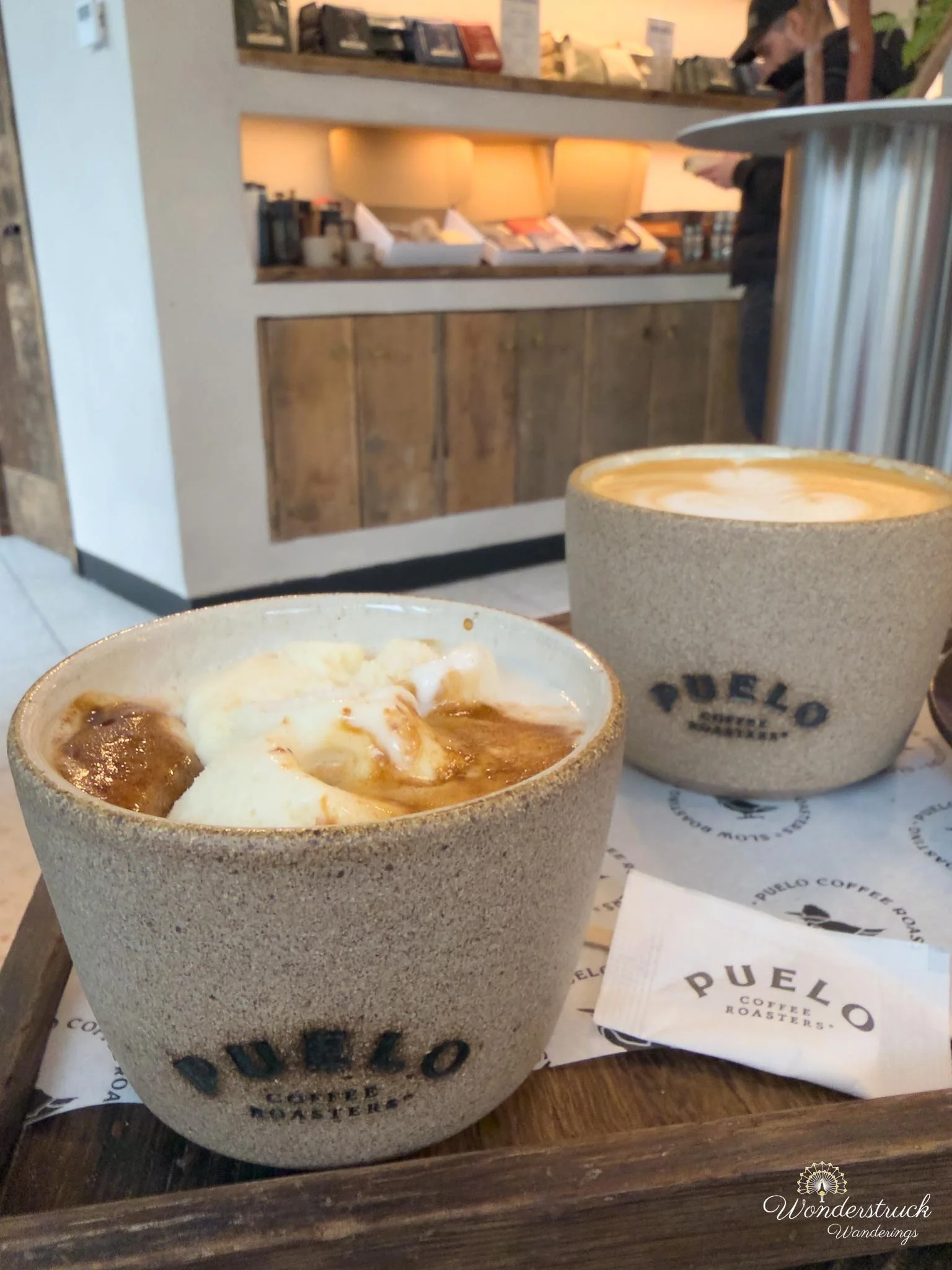
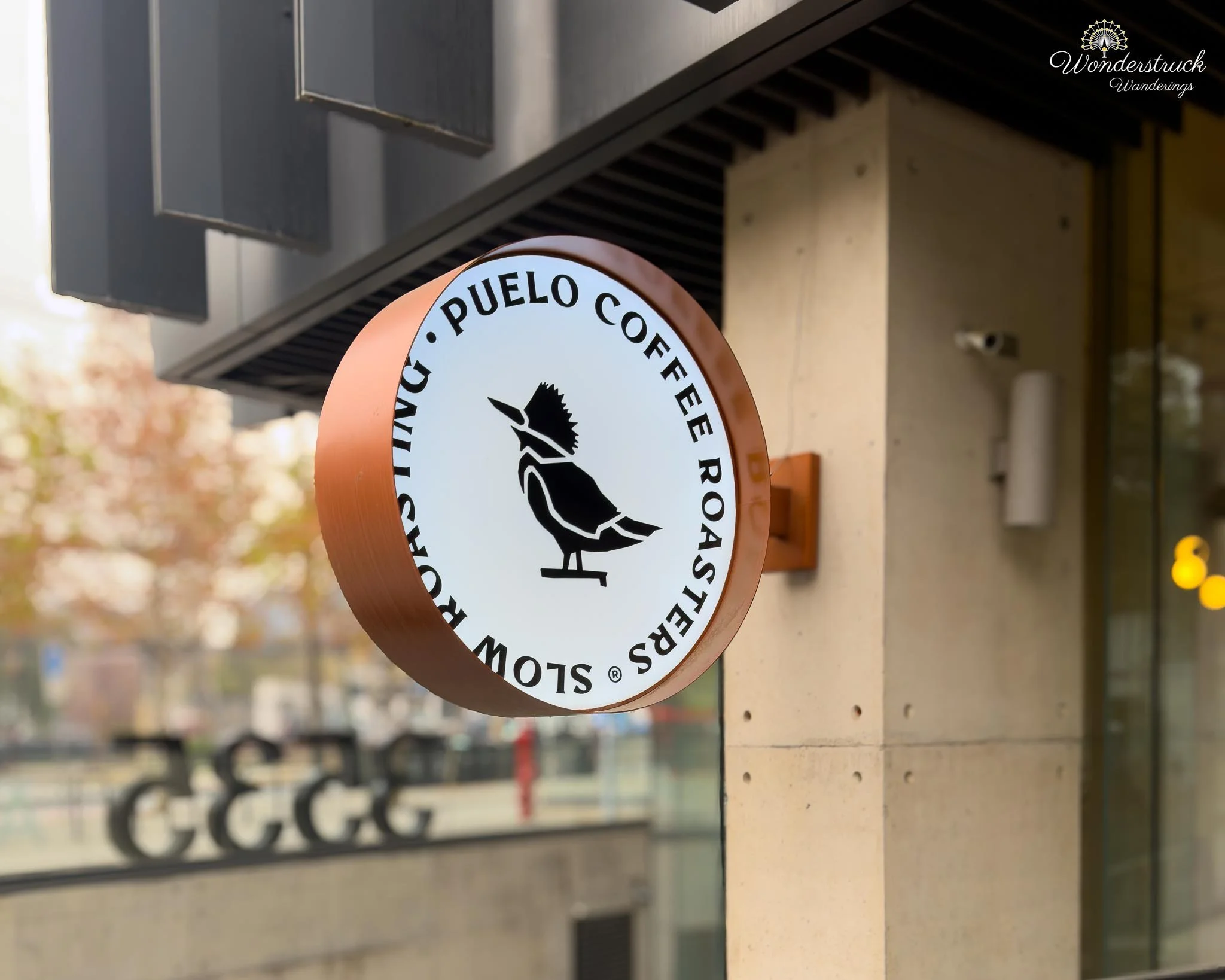
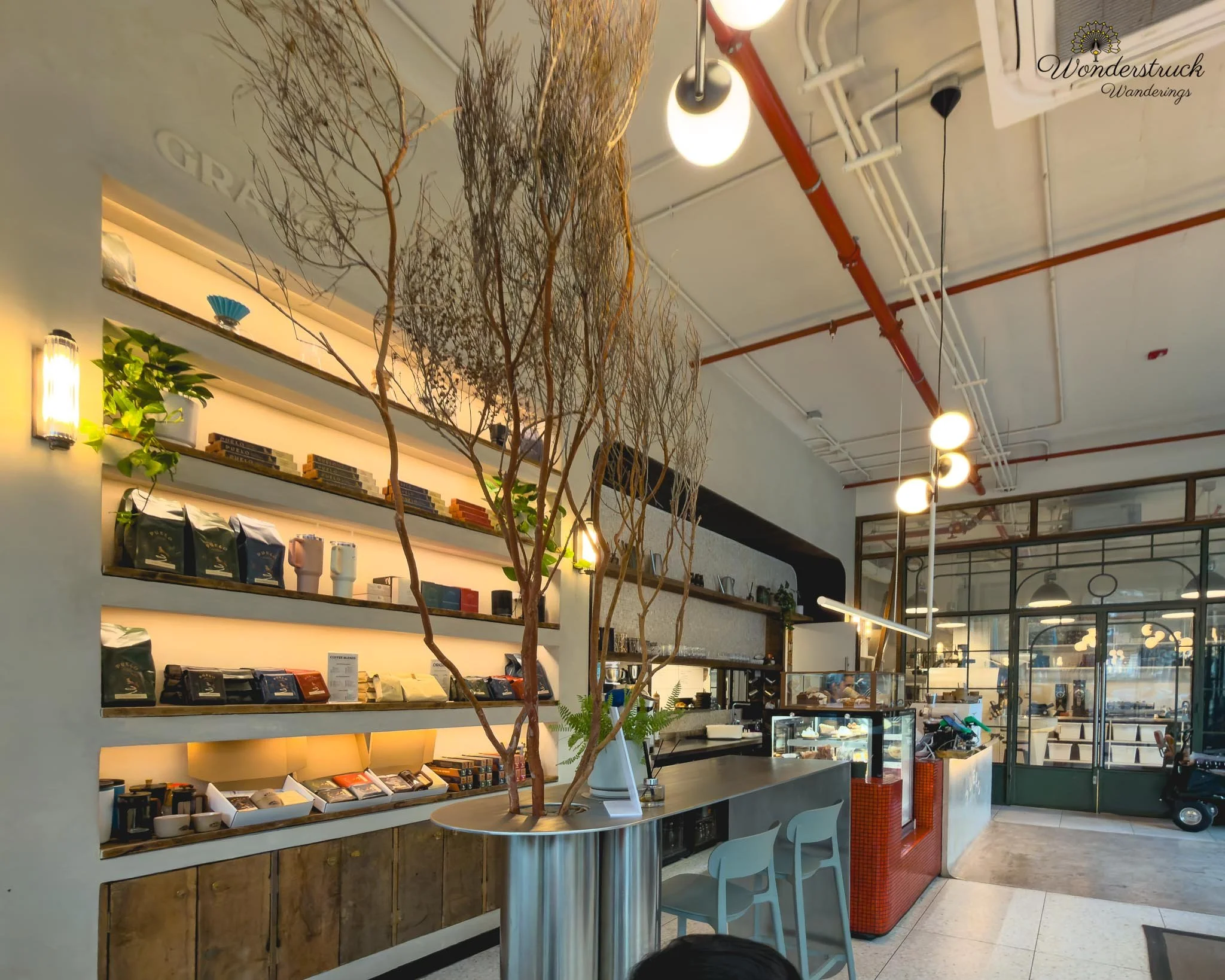
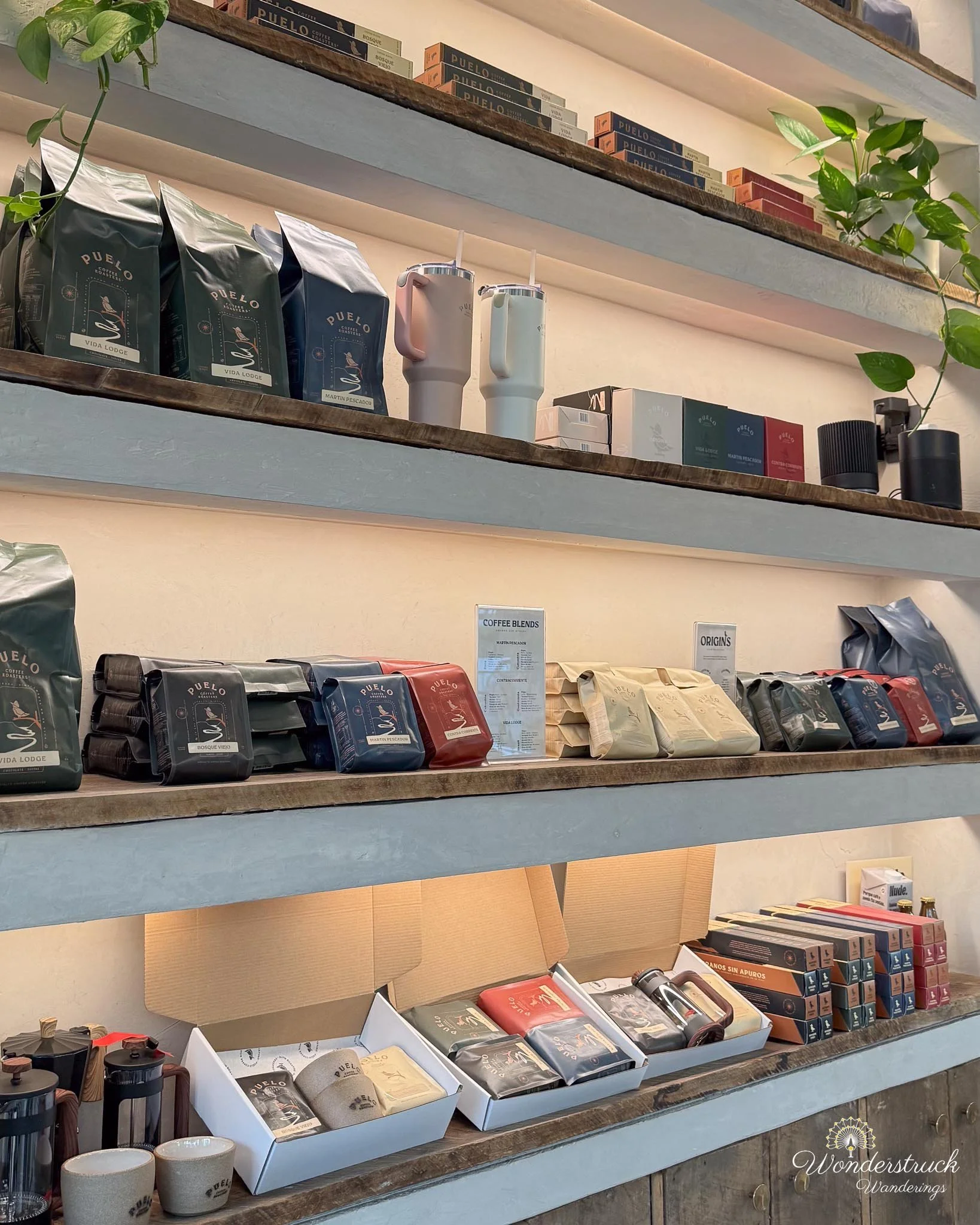
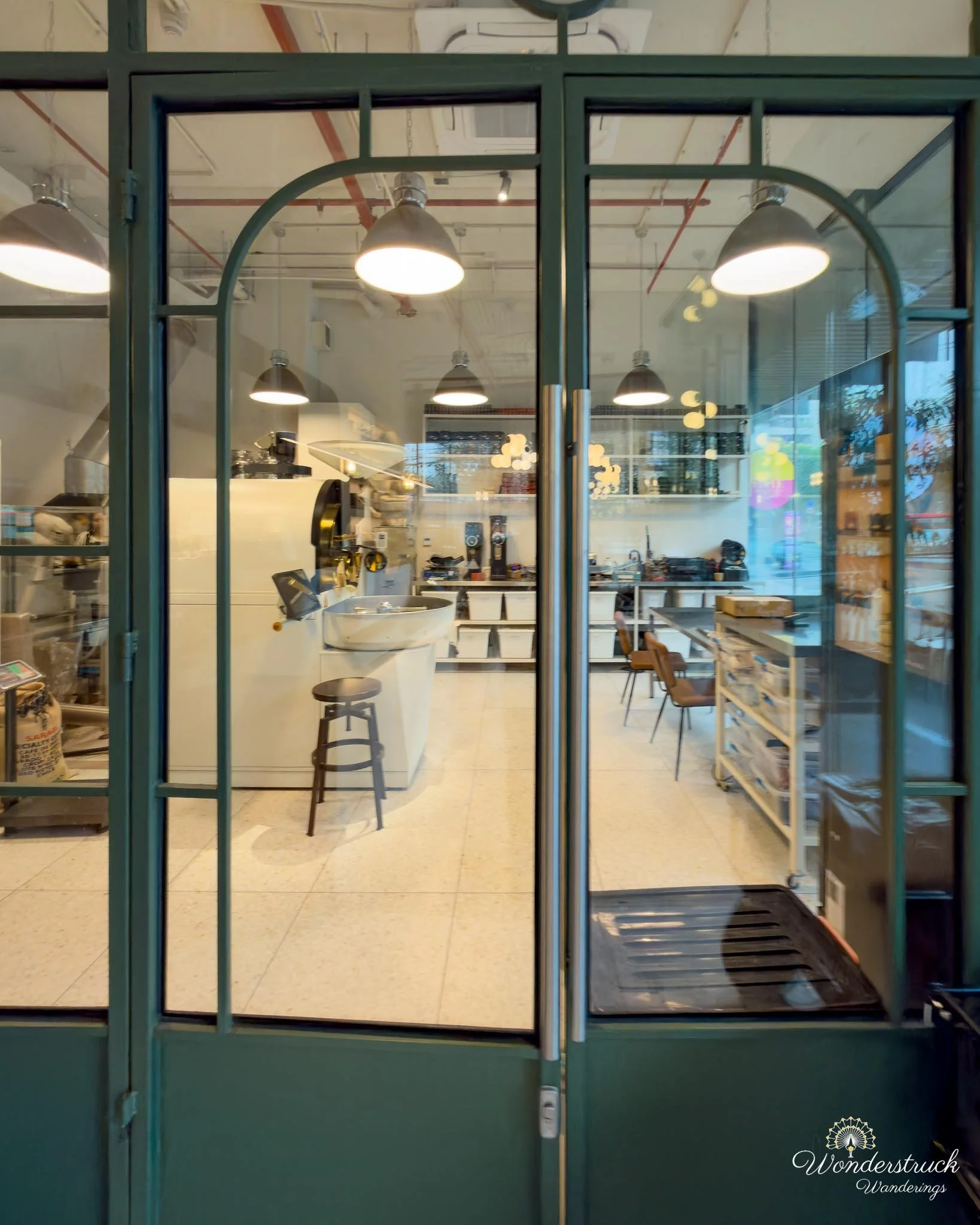
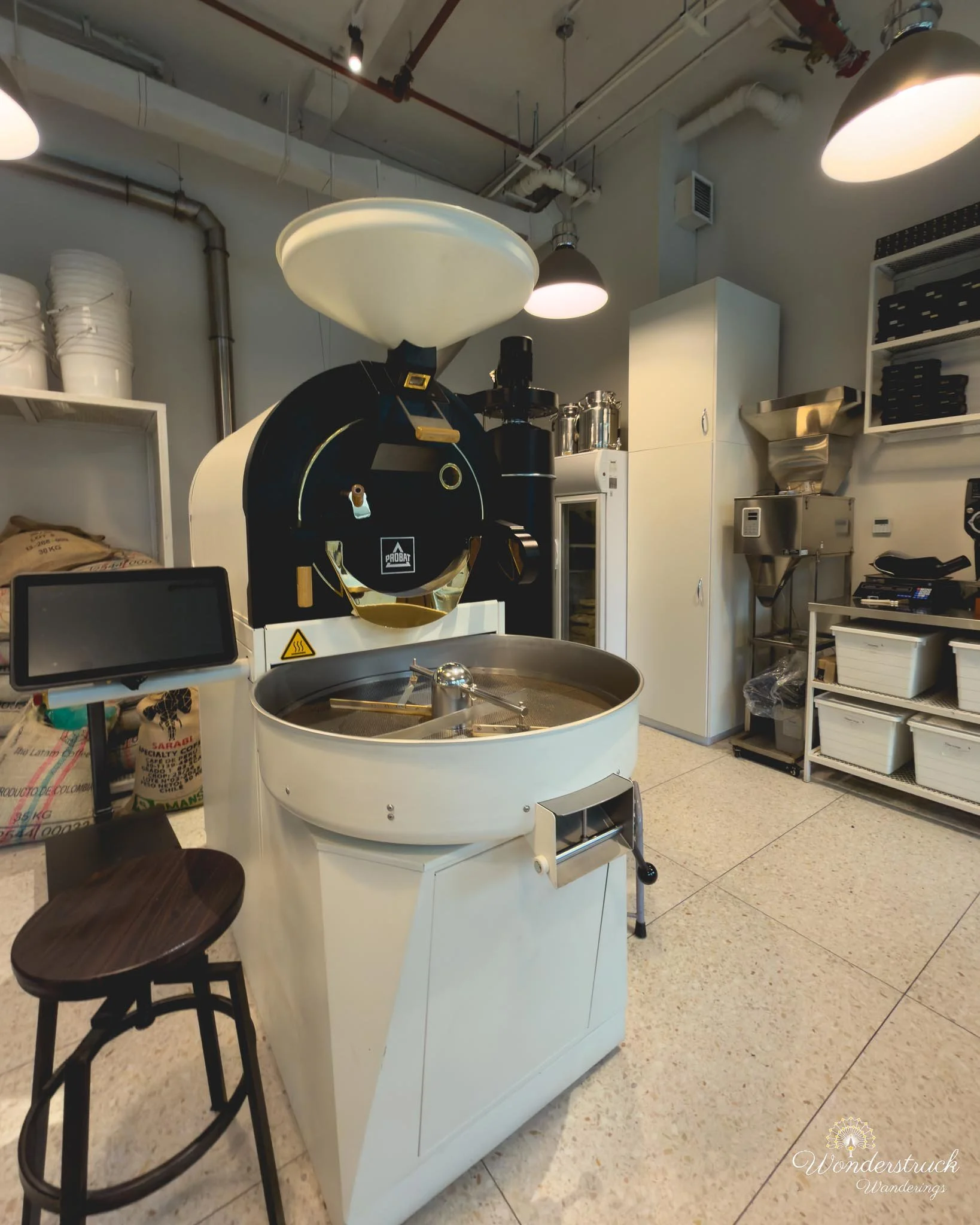
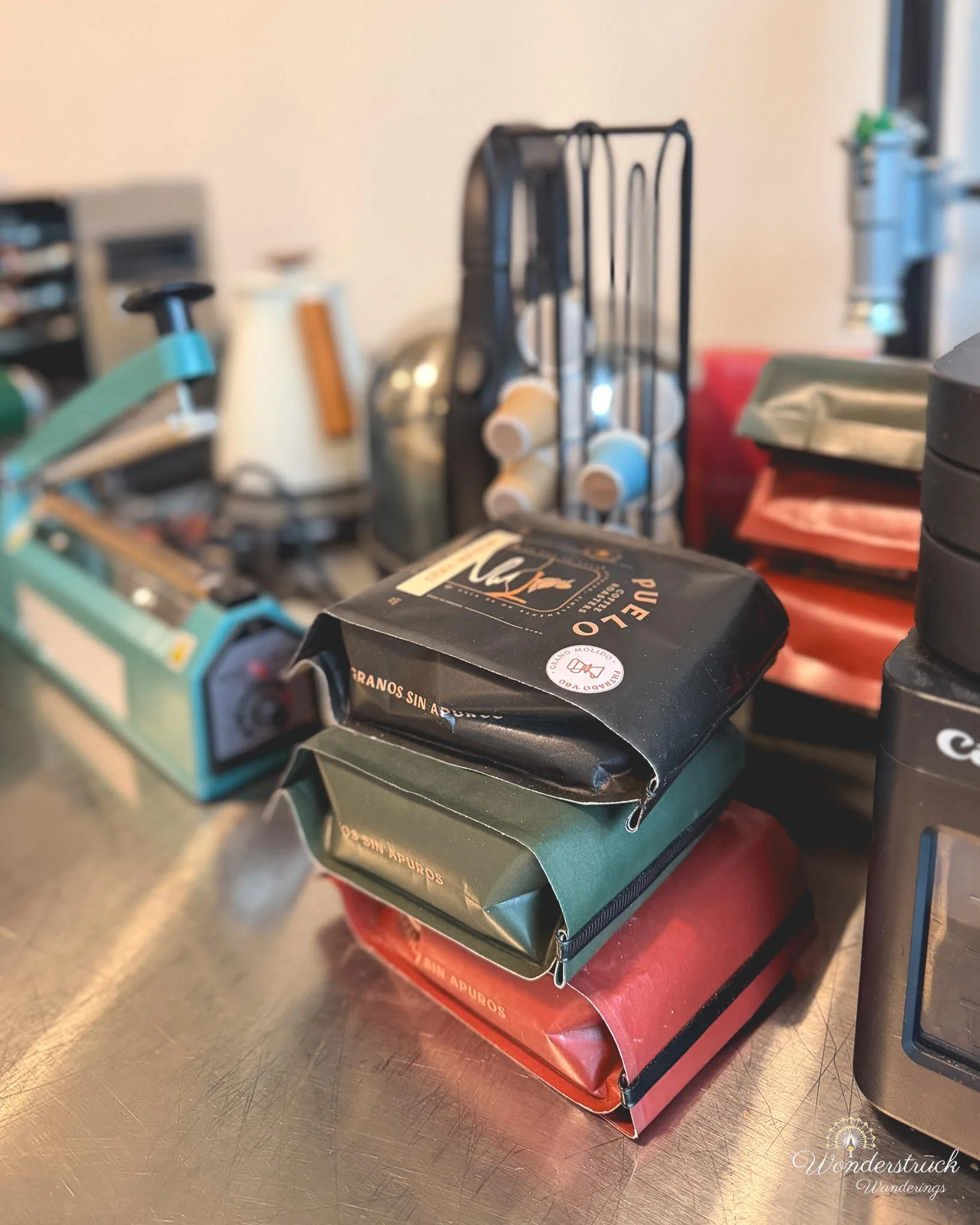
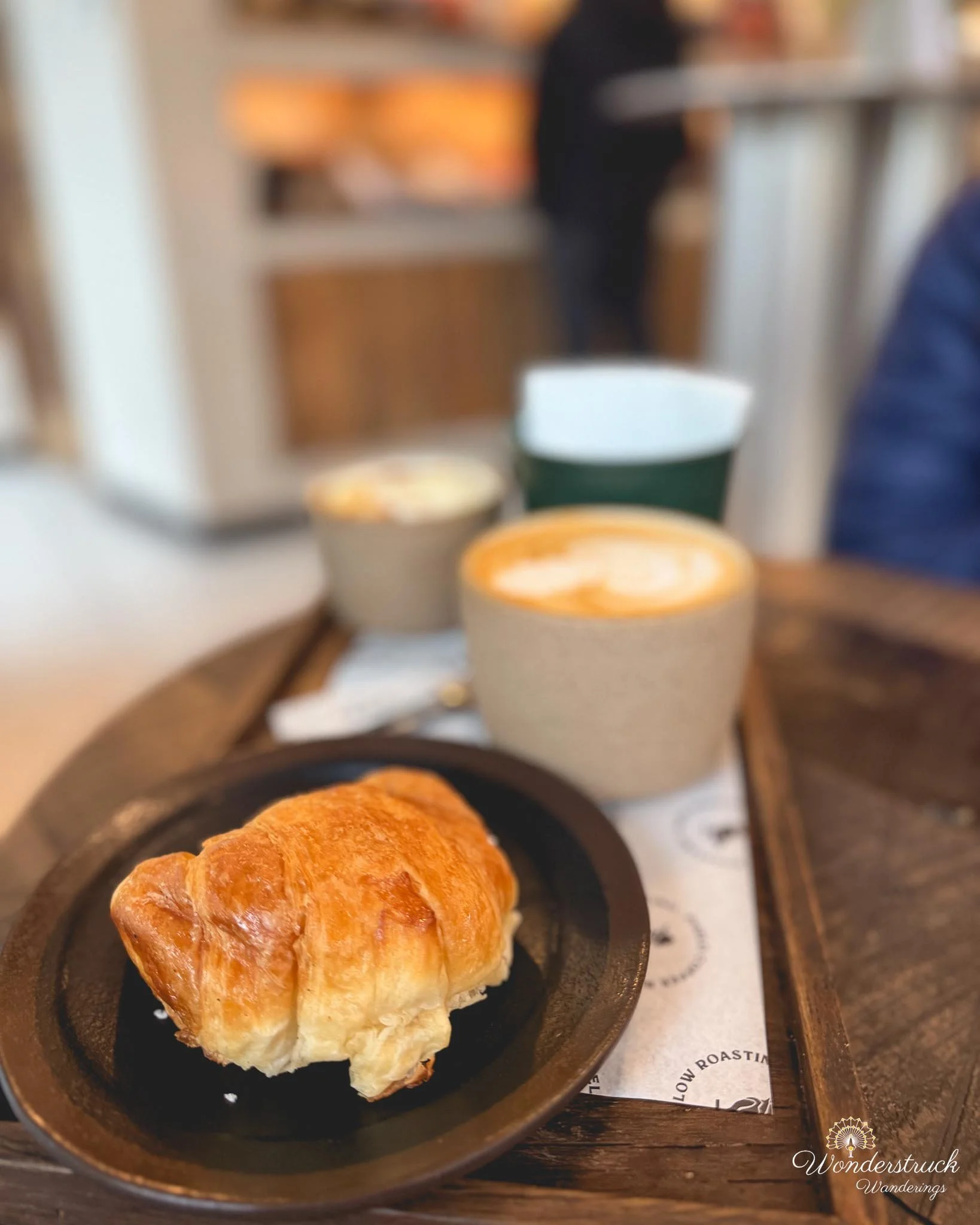
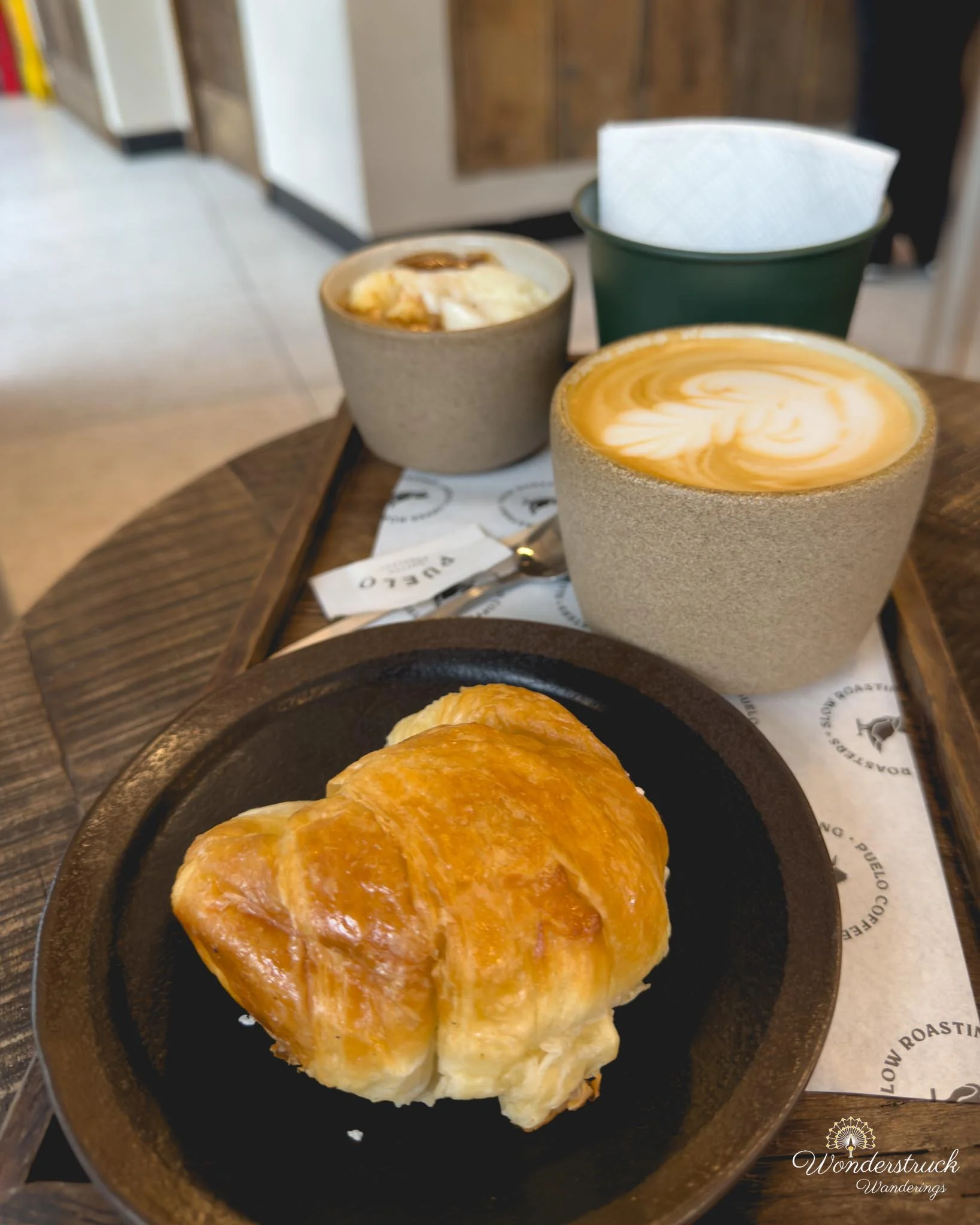
By this point, we had already packed a lot into the day, so we took an Uber back to the hotel. Near Bidasoa, we walked to a small shop called Creado en Chile to look for Chilean crafts. After picking up a few more things and dropping our purchases at the hotel, we headed out again—because apparently sleep deprivation is no match for good coffee. Our next stop was Puelo Coffee Roasters, another recommendation from Mark and conveniently close to Bidasoa in Vitacura. Puelo started in 2019 as a neighborhood specialty coffee shop inspired by southern Chile and the Río Puelo. In 2023, they began roasting their own coffee, followed by the launch of Puelo Coffee Roasters in 2024. Their focus is on traceable specialty beans that they select and roast themselves, with different blends designed to bring out the character of the coffee’s origin. The Vitacura location combines the café with the roasting side of the business, so it felt more like visiting a working specialty roaster than simply stopping for another cup of coffee. Shay had an affogato, which was a perfect bridge between dessert and caffeine, while I went with a regular latte. After several coffee stops already built into our Santiago day, Puelo was another good example of how seriously the city takes specialty coffee—and a much-needed boost before heading back out again.
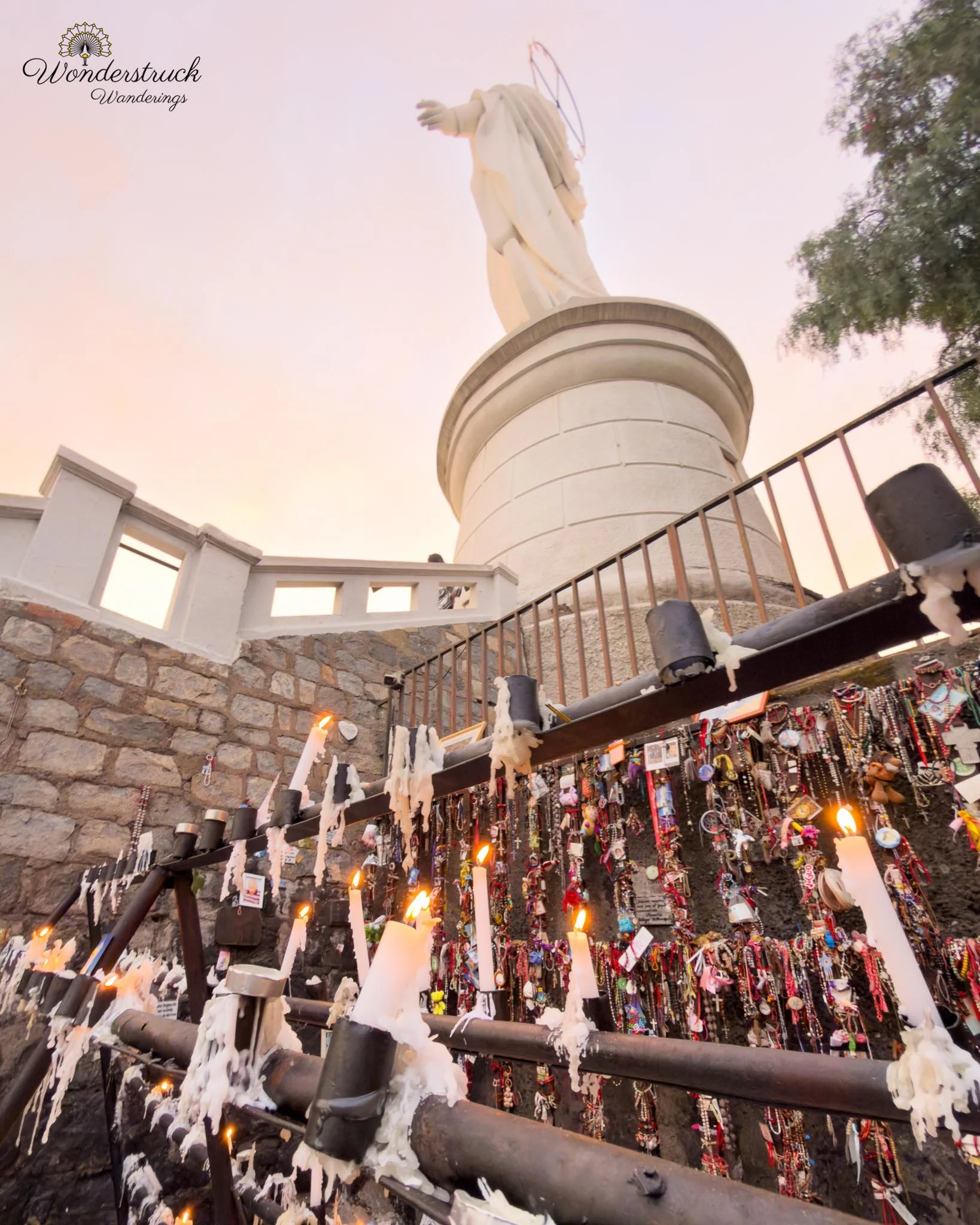
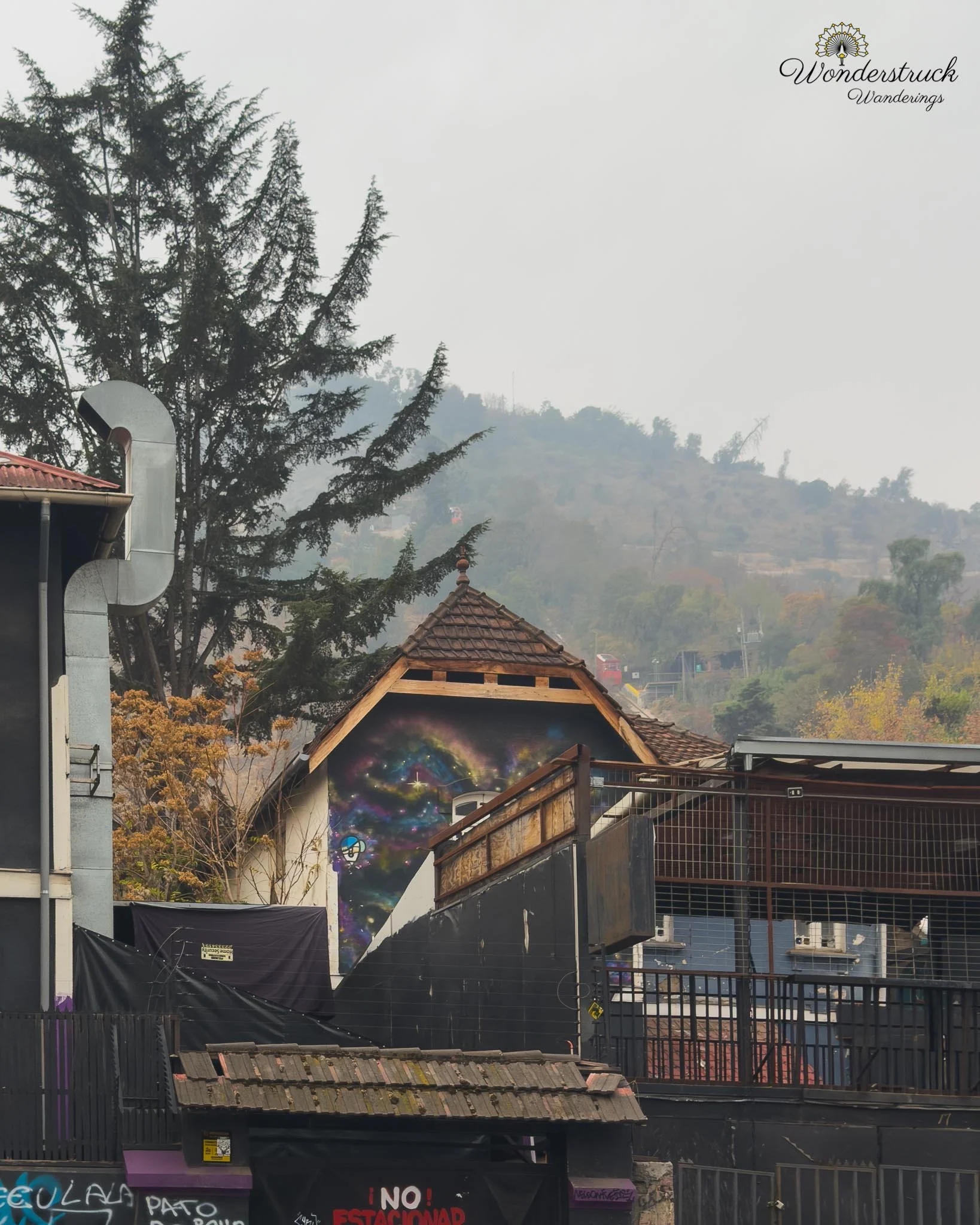
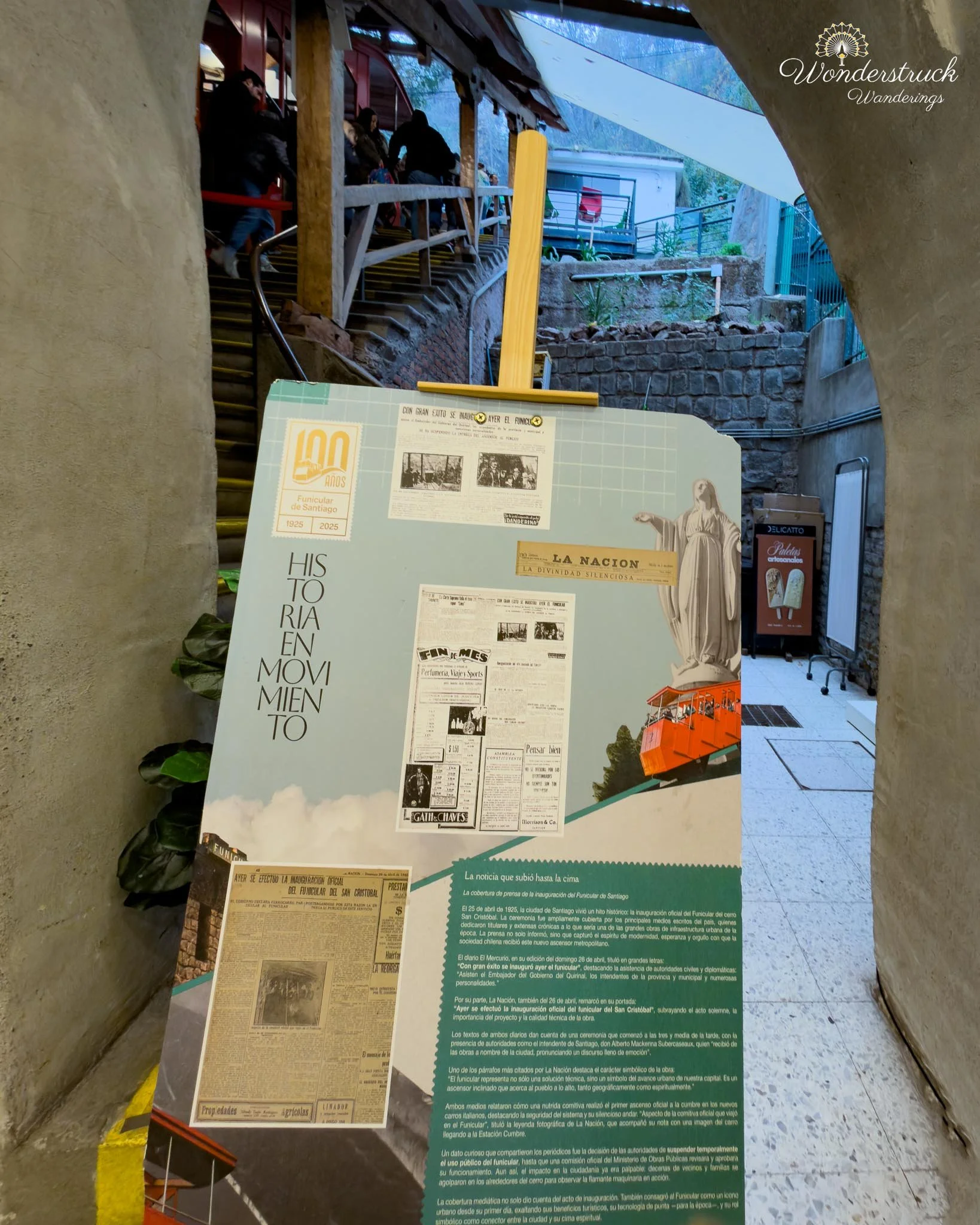
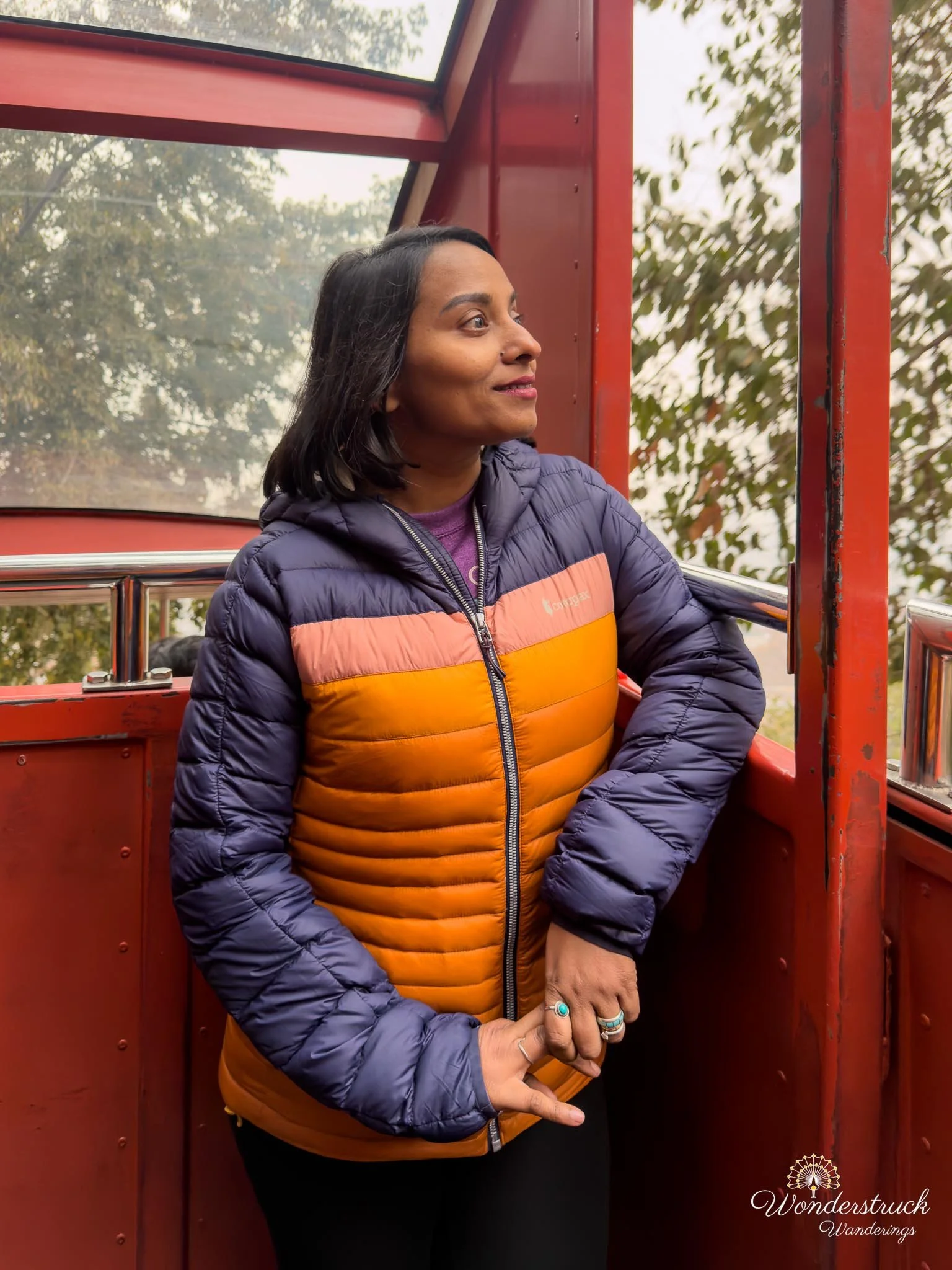
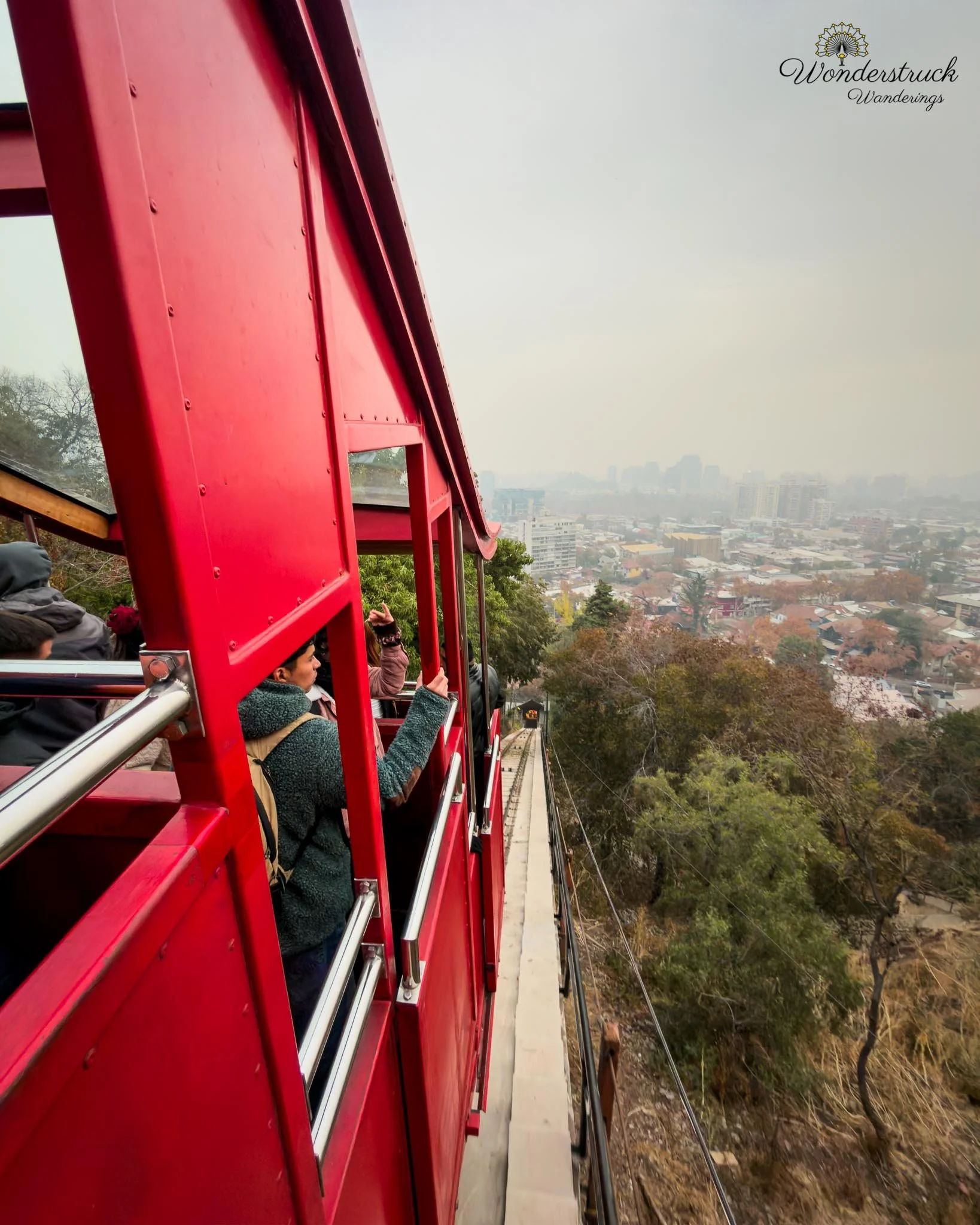
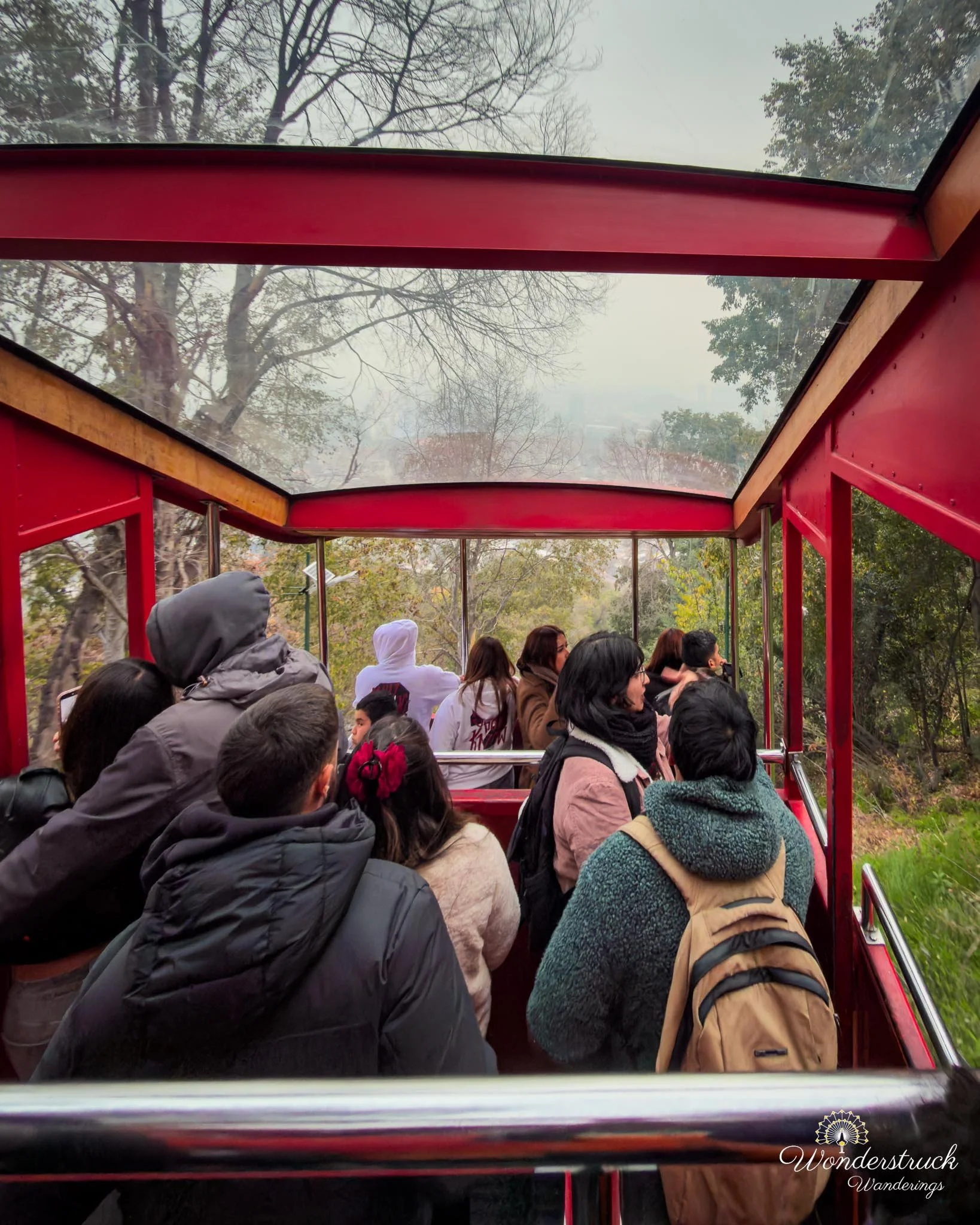
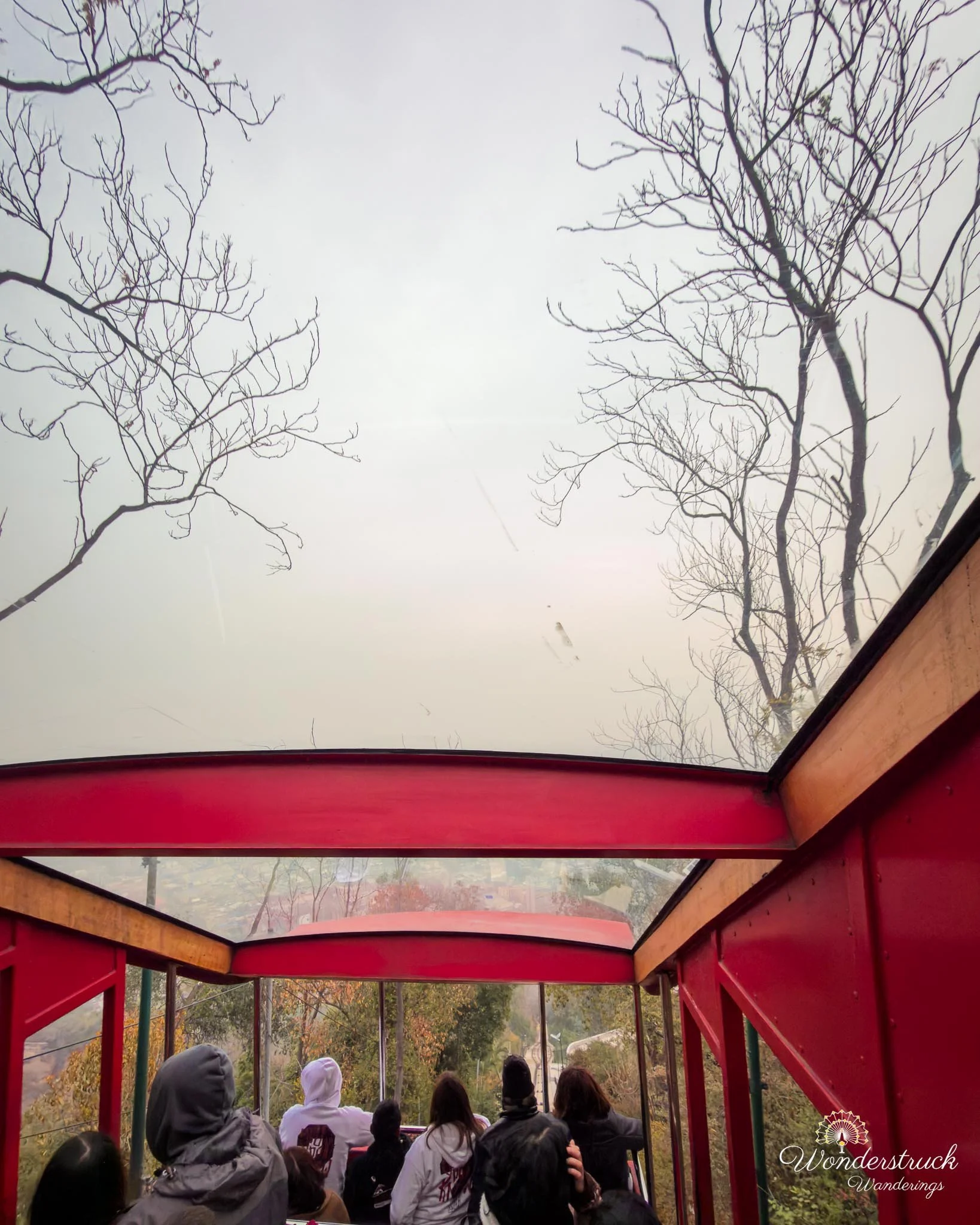
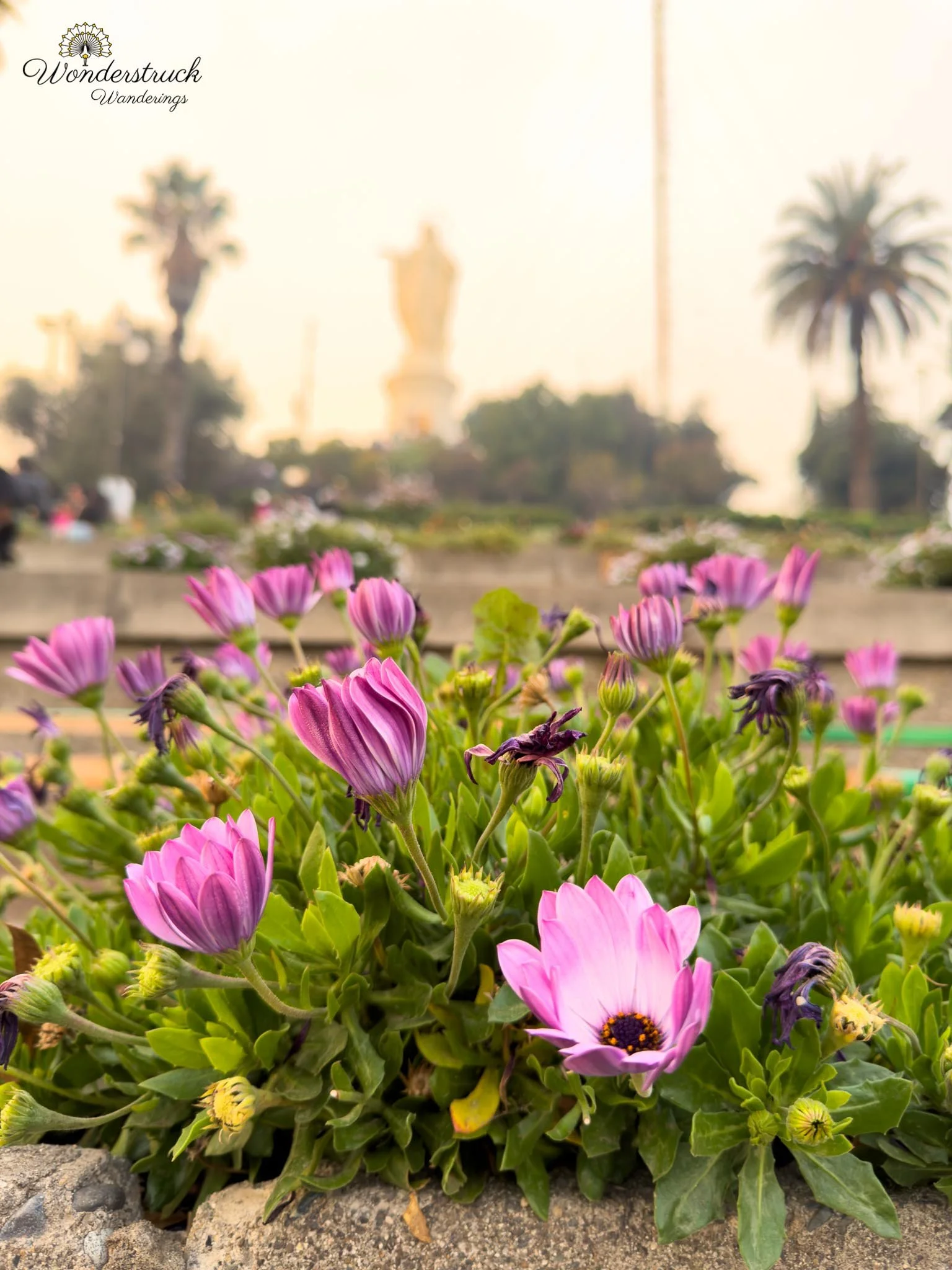
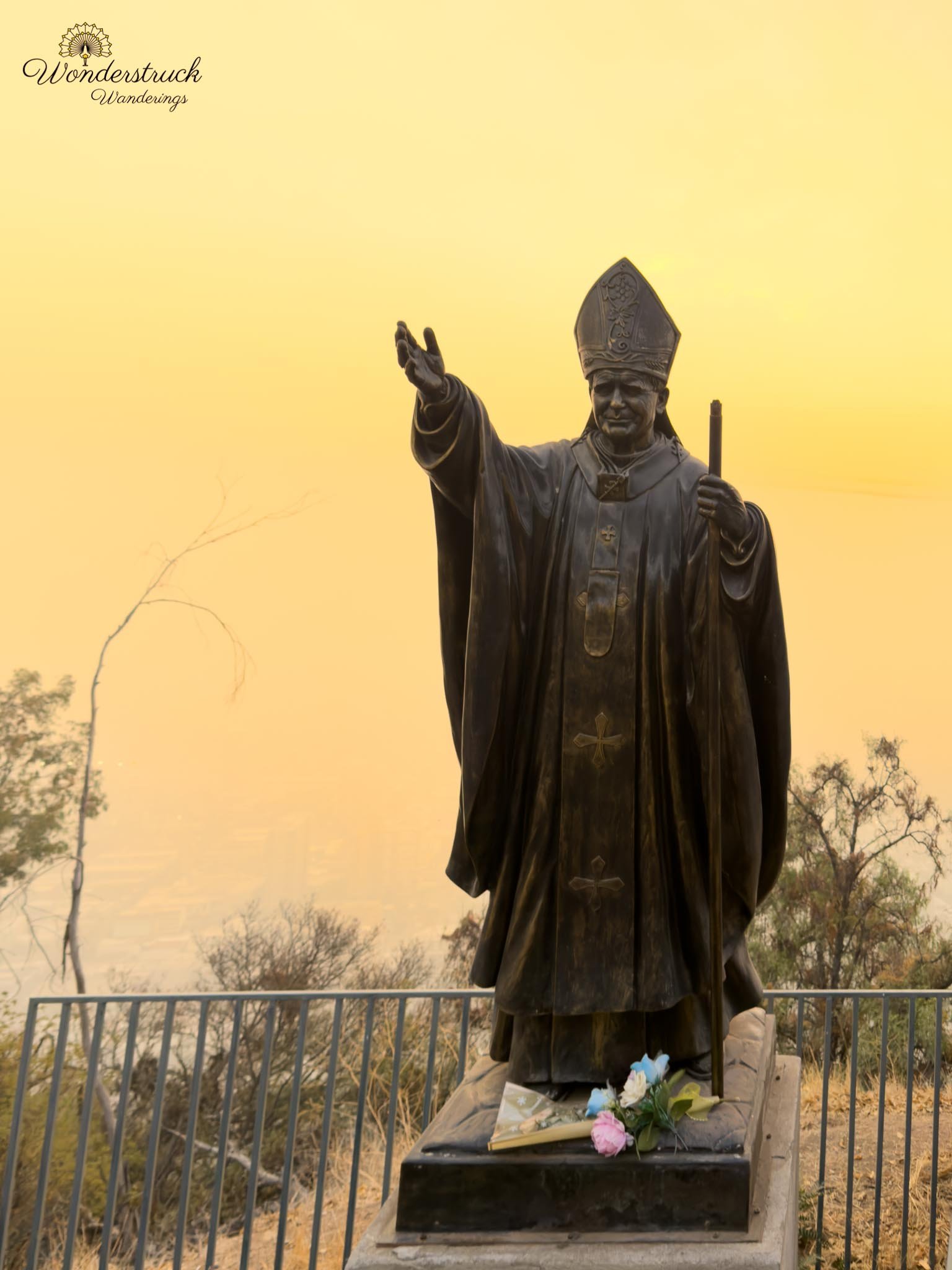
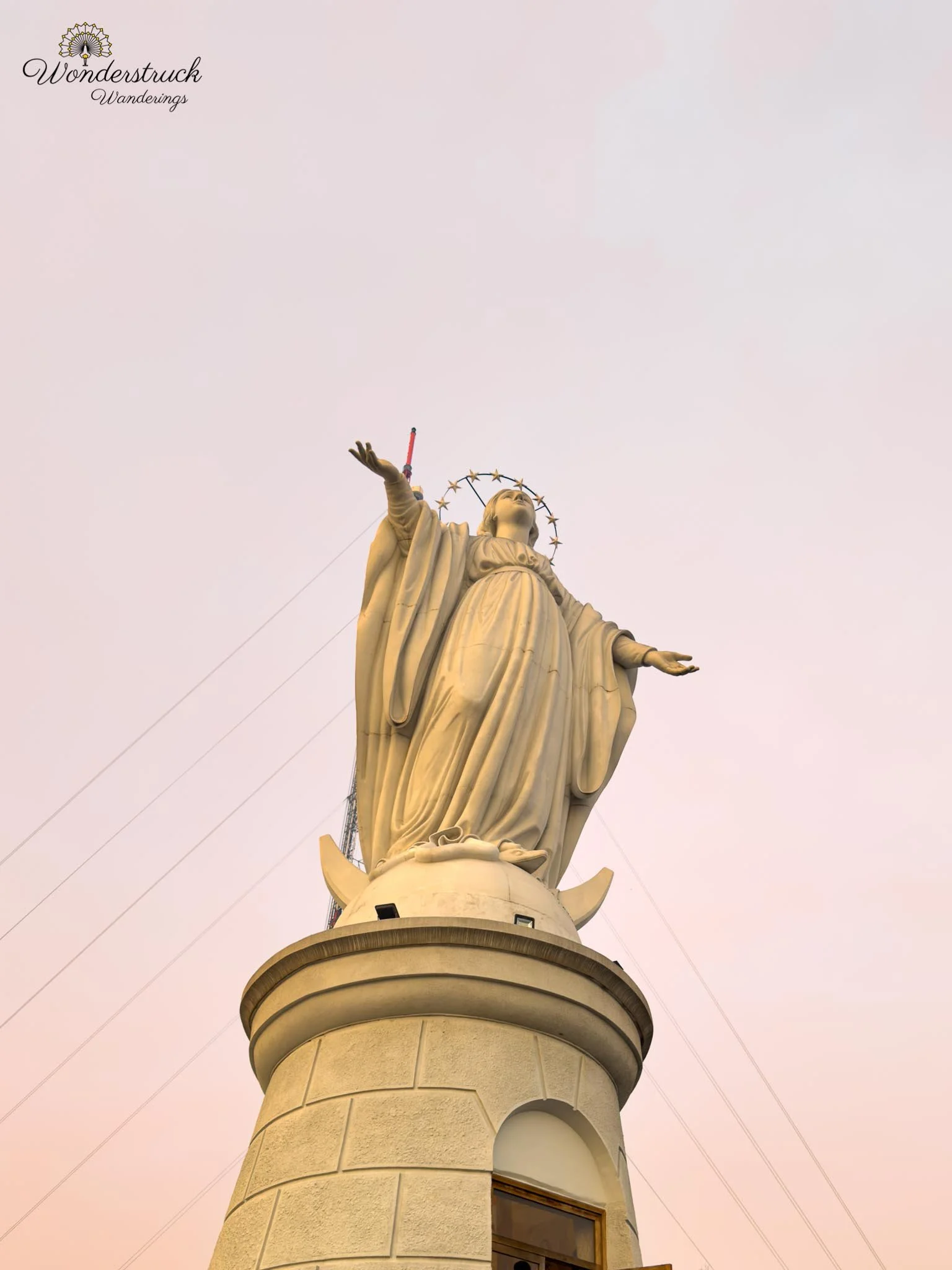
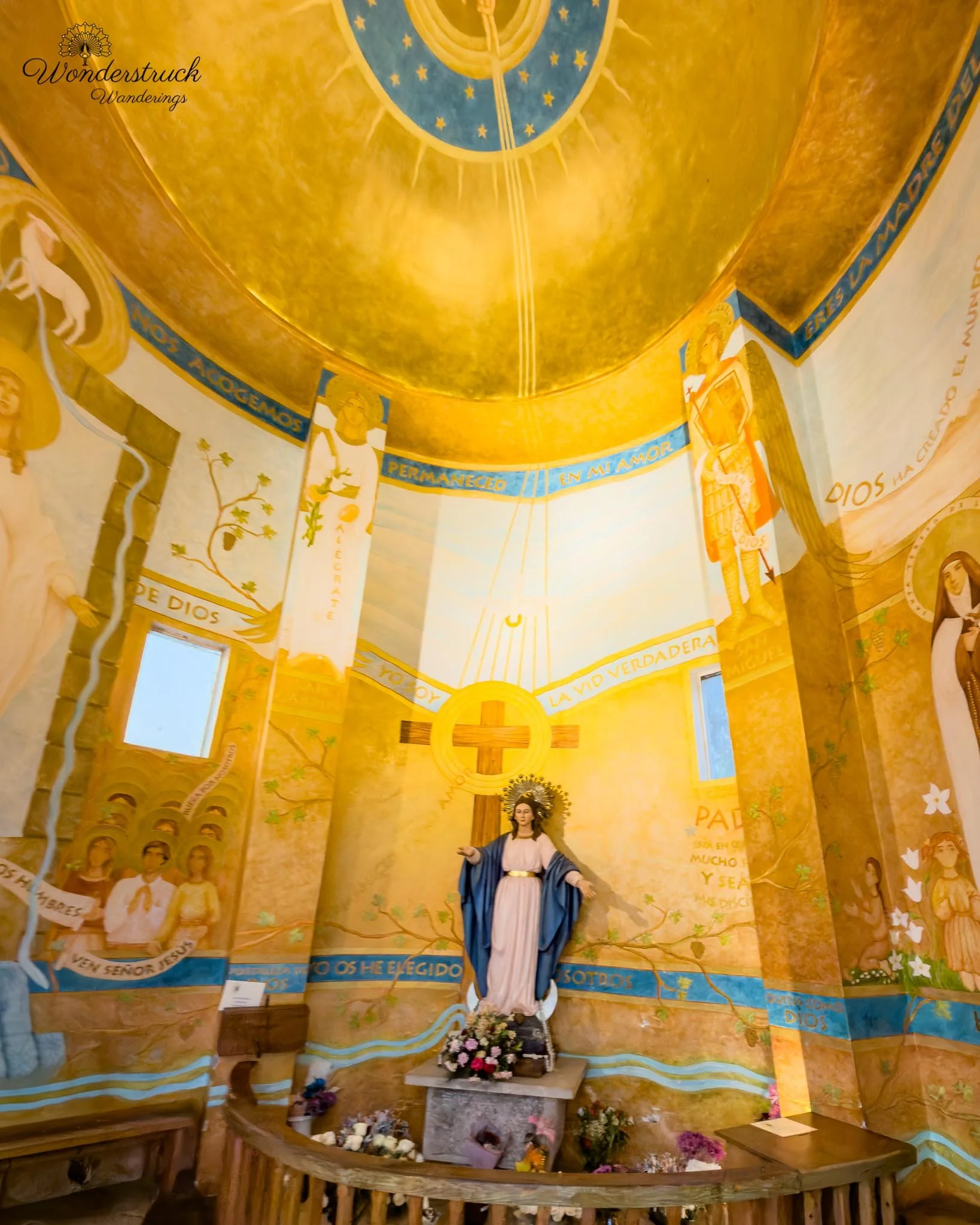
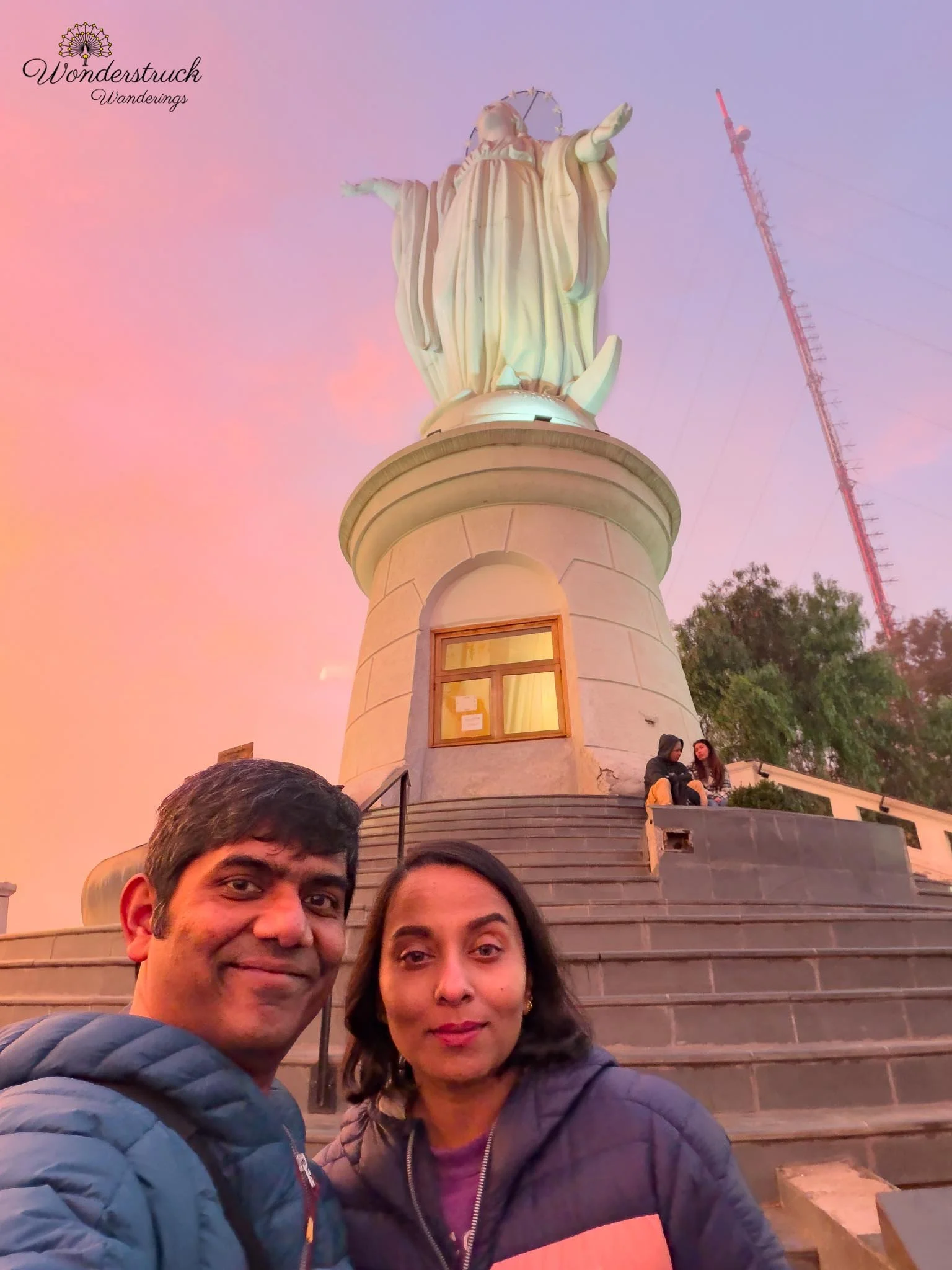
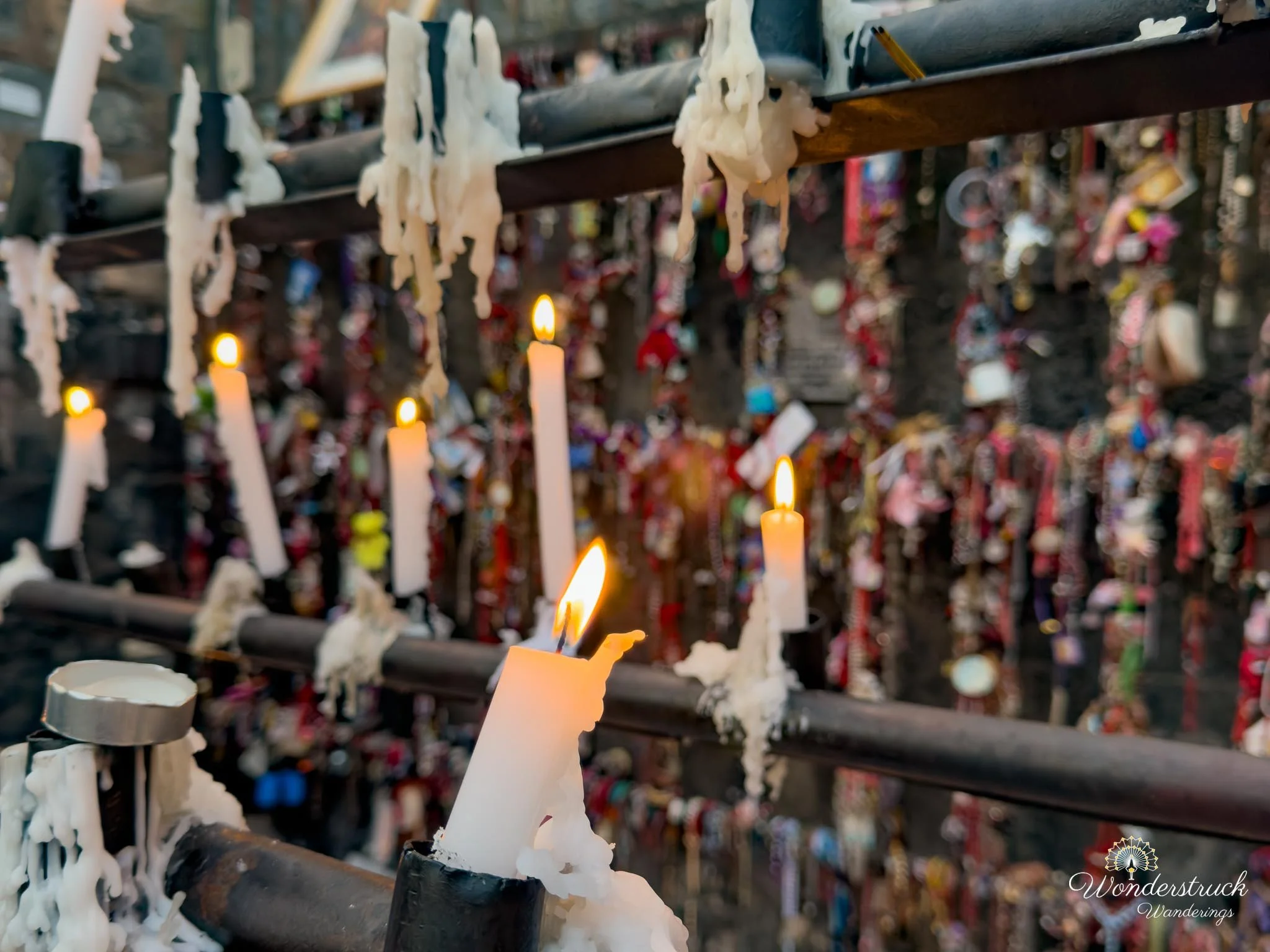
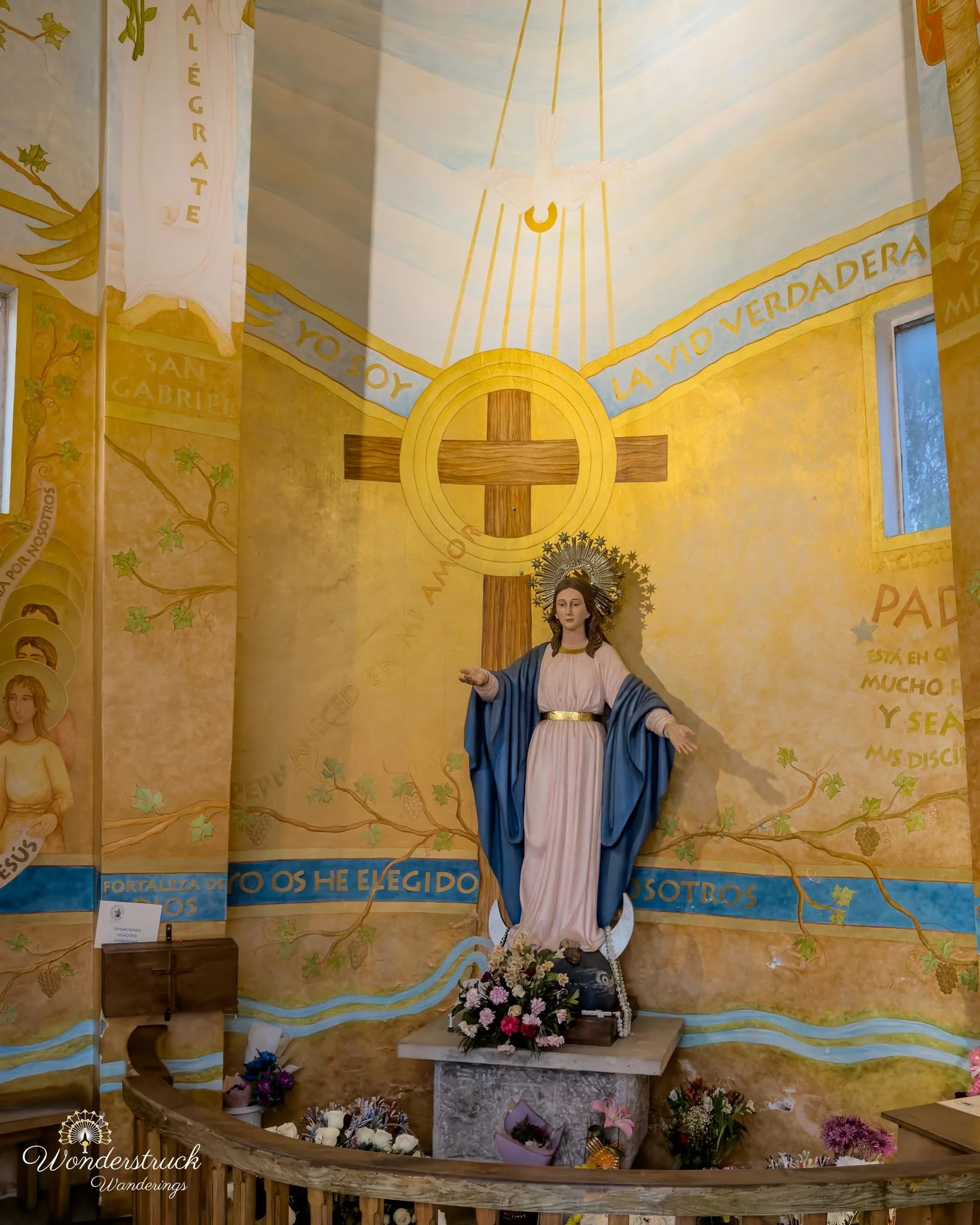
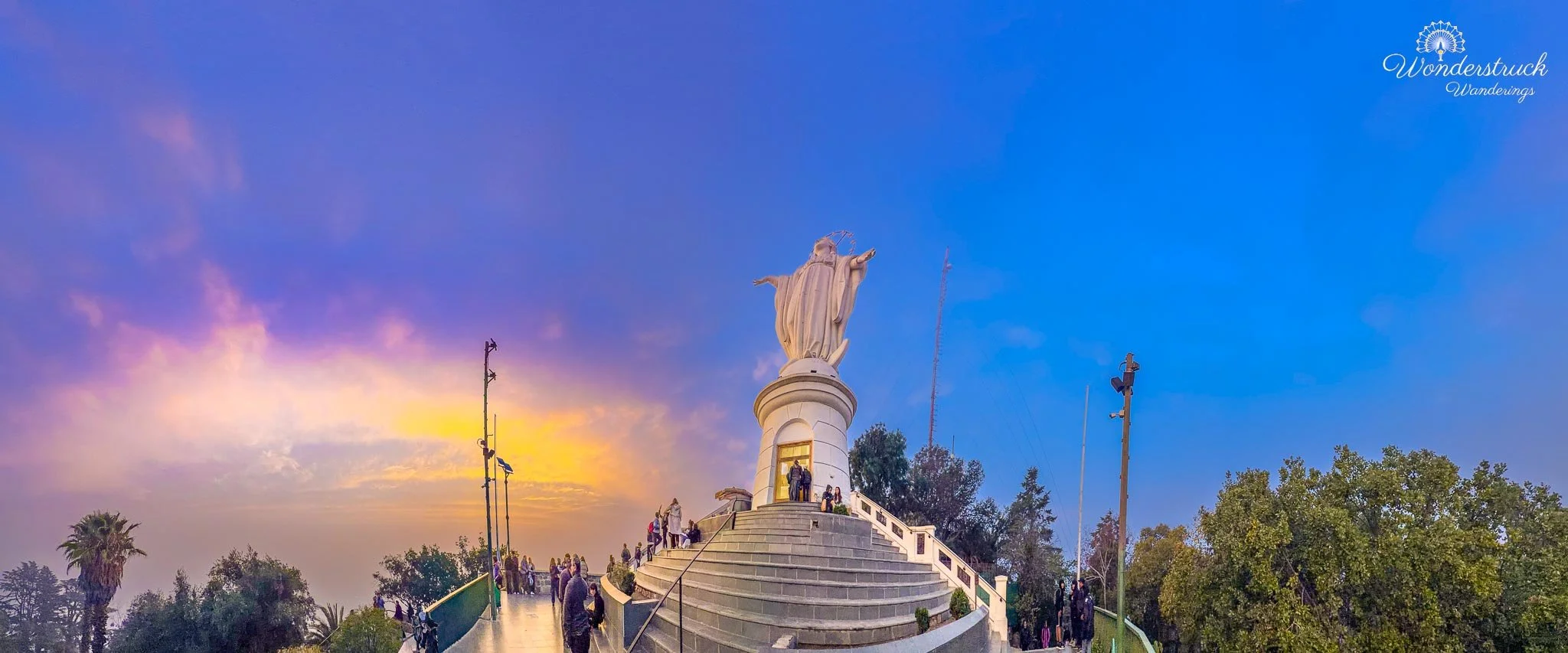
The weather was still gloomy, and part of us wondered whether it was worth pushing for sunset. But this was our only Santiago sunset window before heading north to the Atacama, so we decided to take the chance and go toward Cerro San Cristóbal anyway. We took an Uber to the Pío Nono entrance in Bellavista and joined the small line for the funicular. Cerro San Cristóbal is part of the much larger Parque Metropolitano de Santiago, and the summit is only one layer of a sprawling park that covers the hills above the city. Roads, walking and cycling trails, panoramic buses, the historic funicular, and two separate Teleférico cable-car lines connect its different sections. At Pío Nono, we had a choice. The historic funicular, which has been climbing Cerro San Cristóbal since 1925, runs up the hillside on rails toward the summit. Since March 2026, visitors can also use the newer Línea Pío Nono Teleférico, a roughly one-kilometer cable-car route linking the Bellavista side with Zoológico Station and Manuel Foster Station near the upper sections of the hill. We chose the older option and took the funicular up, saving the cable car for our descent on the other side. The funicular itself is part of the experience. From the castle-like Pío Nono station, the red cars climb steeply through the vegetation toward the summit. It takes only a few minutes, but compared with a modern cable car, it feels wonderfully old-fashioned. Rather than floating above the park, you are pulled directly up the face of the hill on rails. What surprised us at the top was that Cerro San Cristóbal is not one flat summit platform. The Cumbre area unfolds through several levels connected by paths, ramps, and stairs. Around the funicular station are food stands and gathering areas. From there, paths lead toward Plaza México and Terraza Bellavista, one of the principal overlooks across Santiago. Continue upward and the atmosphere changes again as you enter the grounds of the Santuario de la Inmaculada Concepción. The sanctuary occupies the highest and most recognizable part of Cerro San Cristóbal. Paths and broad terraces climb toward the enormous white statue of the Virgin of the Immaculate Conception, inaugurated in 1908. The statue itself is about 14 meters tall and stands on a large pedestal containing a small chapel, bringing the complete monument to more than 20 meters. From much of Santiago, the Virgin appears as a small white figure above the skyline; standing beneath it makes you realize how large both the monument and the sanctuary complex actually are. The grounds are more than just a viewpoint. There are terraces, landscaped areas, religious monuments, seating areas, and the open-air sanctuary used for services and gatherings. Each level opens a slightly different view over the city. Lower down, buildings and trees frame Santiago more tightly; higher up, the city spreads into the basin with the Andes forming the distant eastern wall. The weather, however, was still refusing to cooperate. Santiago remained under a thin blanket of cloud and haze. From the terraces, the skyline looked muted, and the Andes—the view we had really hoped to photograph—were barely visible. For a few minutes, it seemed like our sunset plan might completely fail.
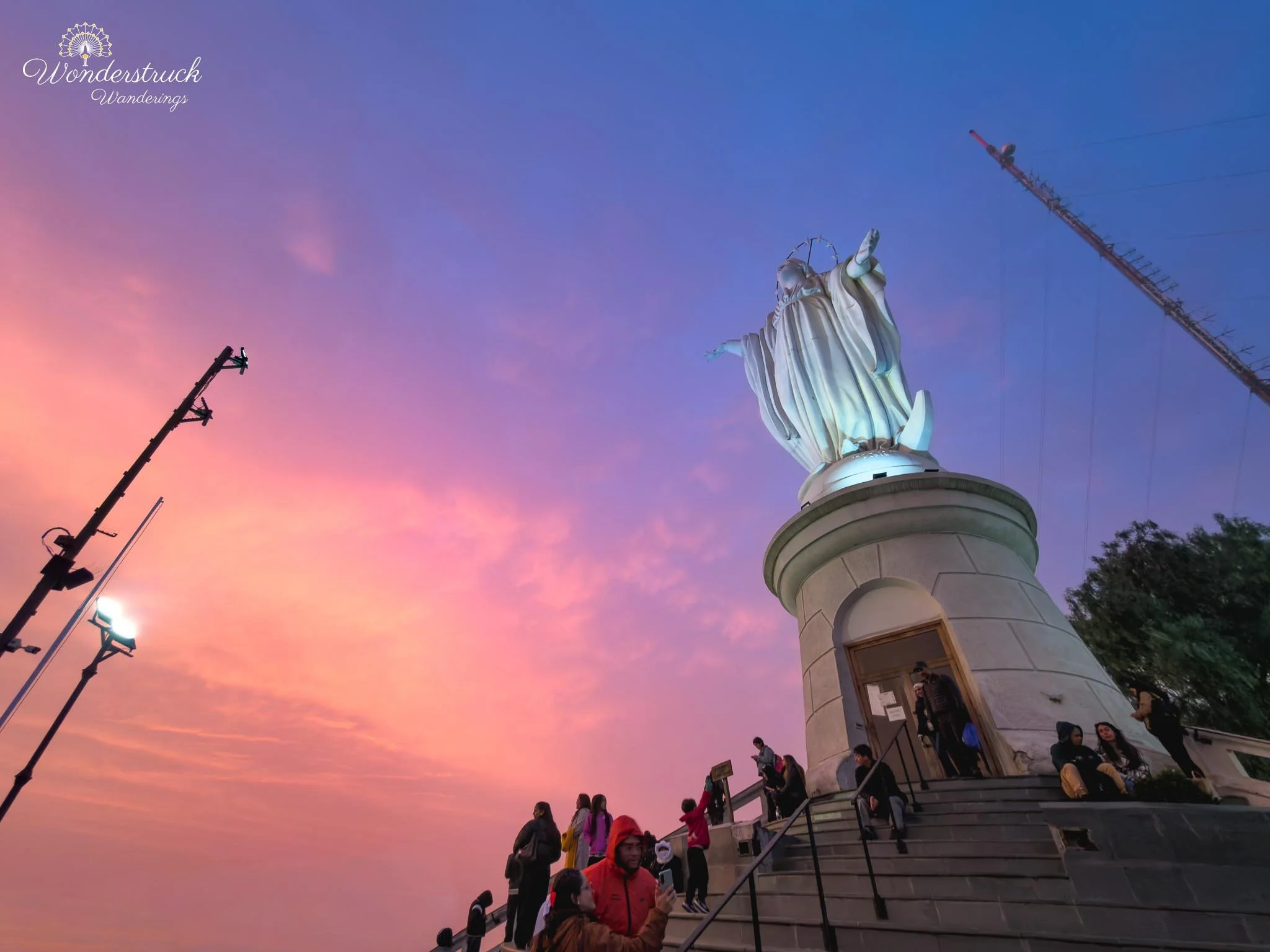
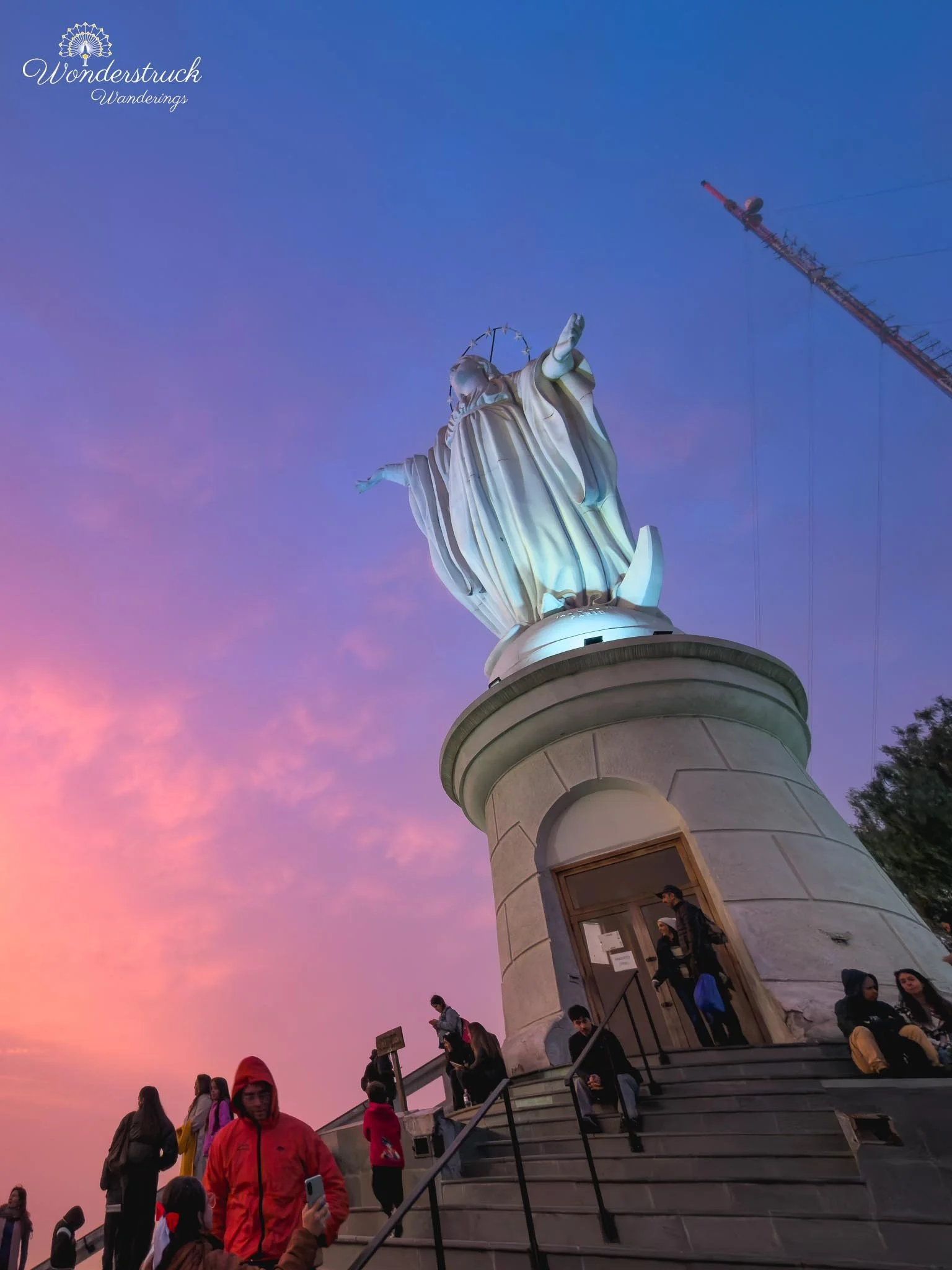
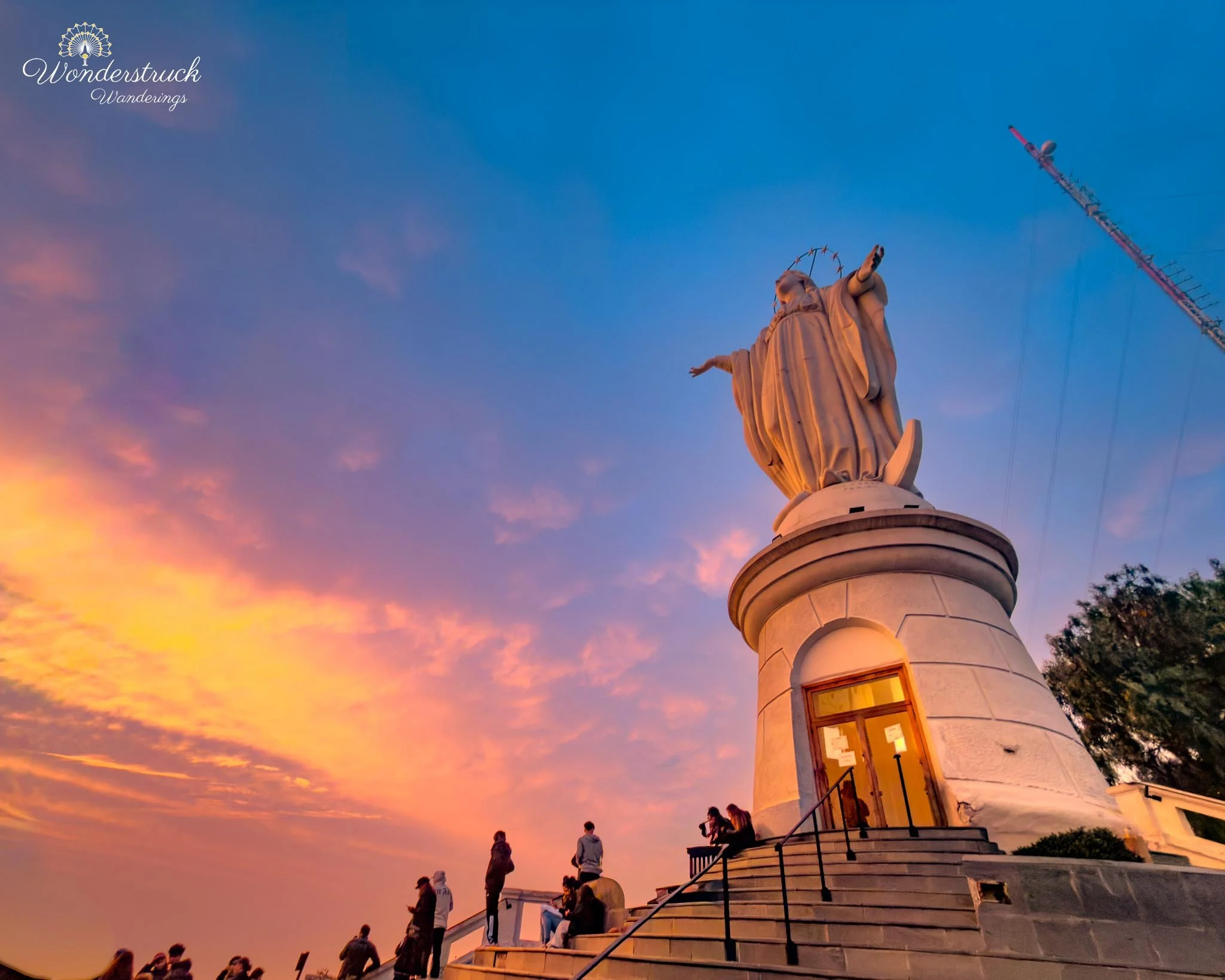
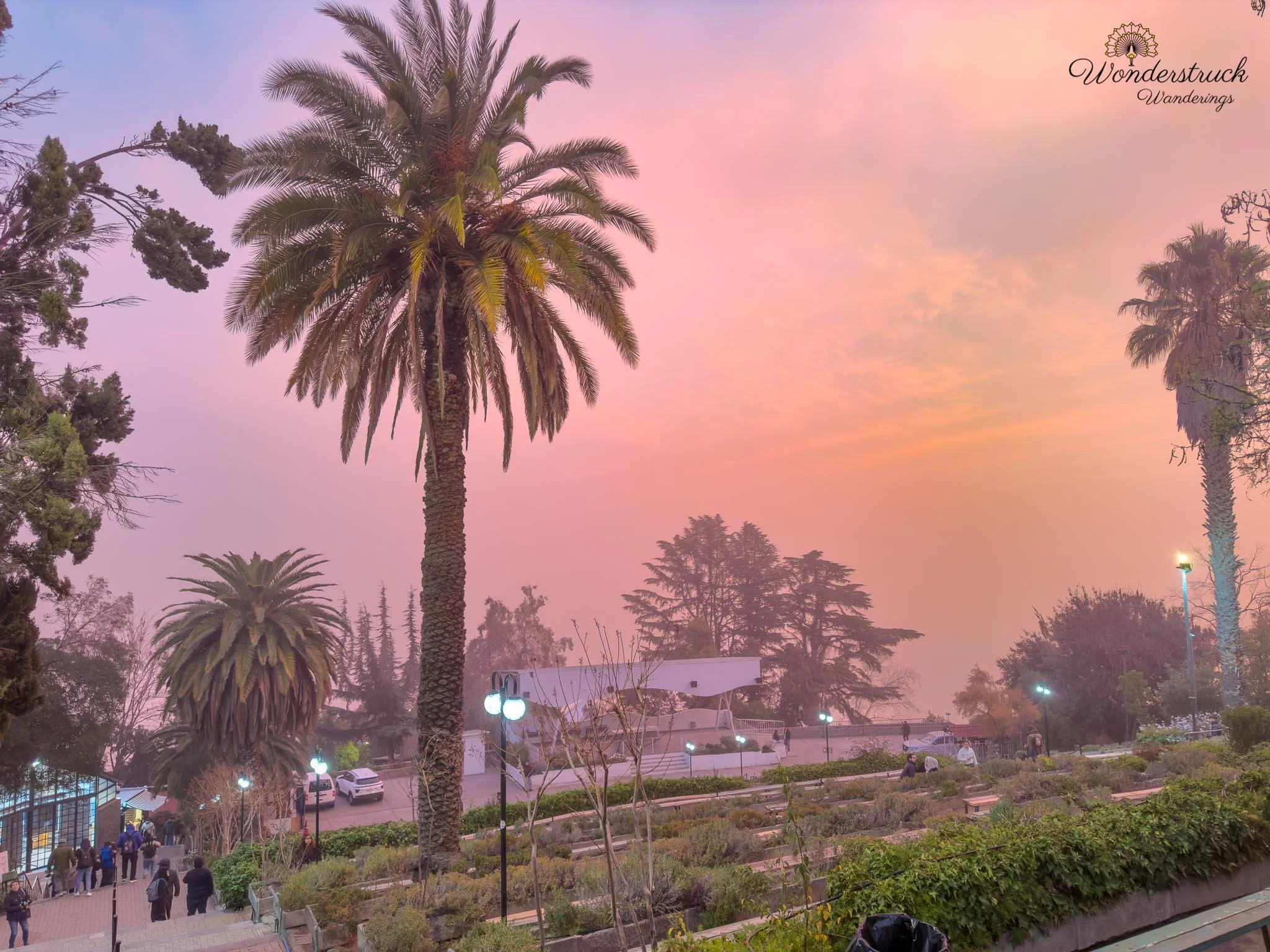
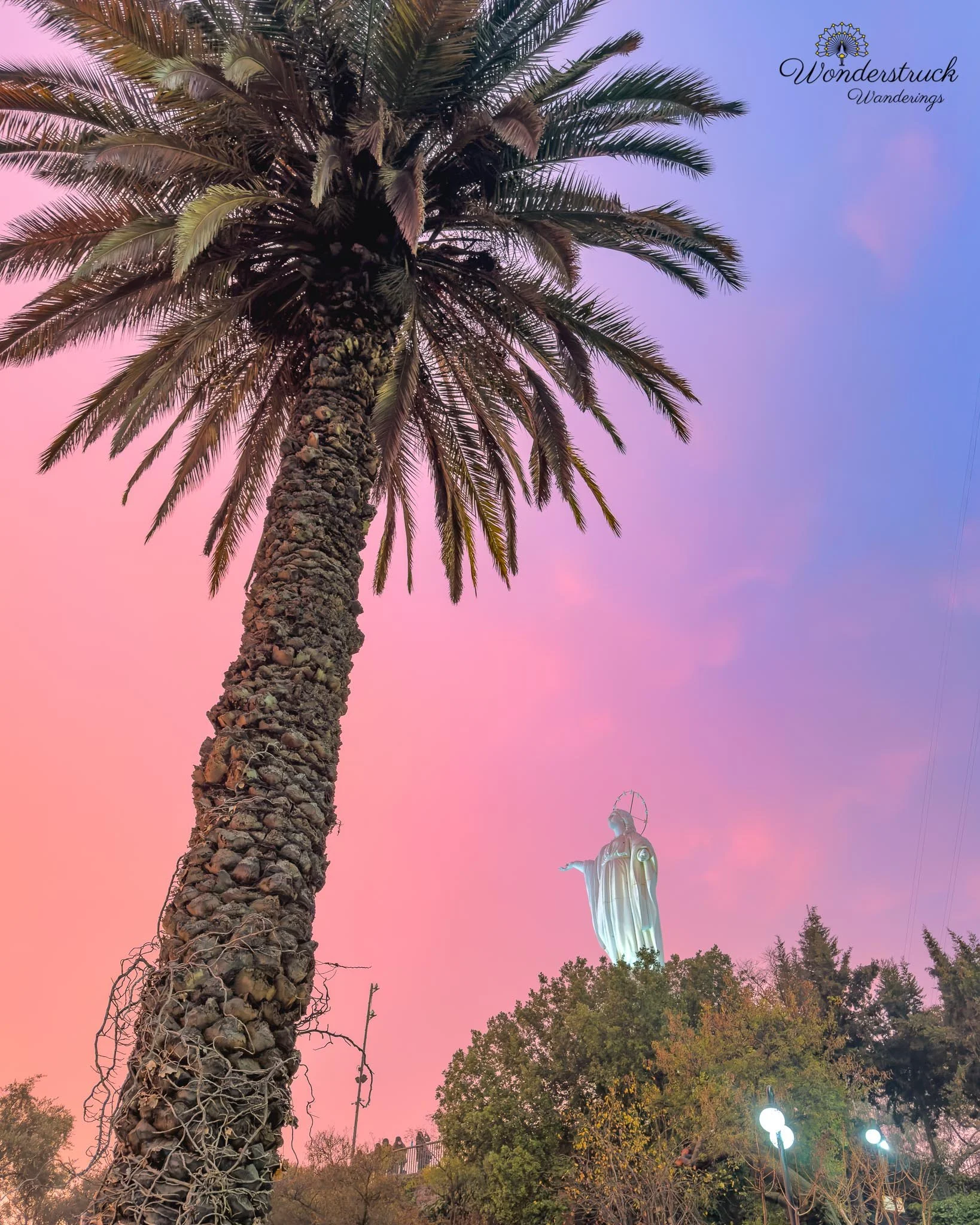
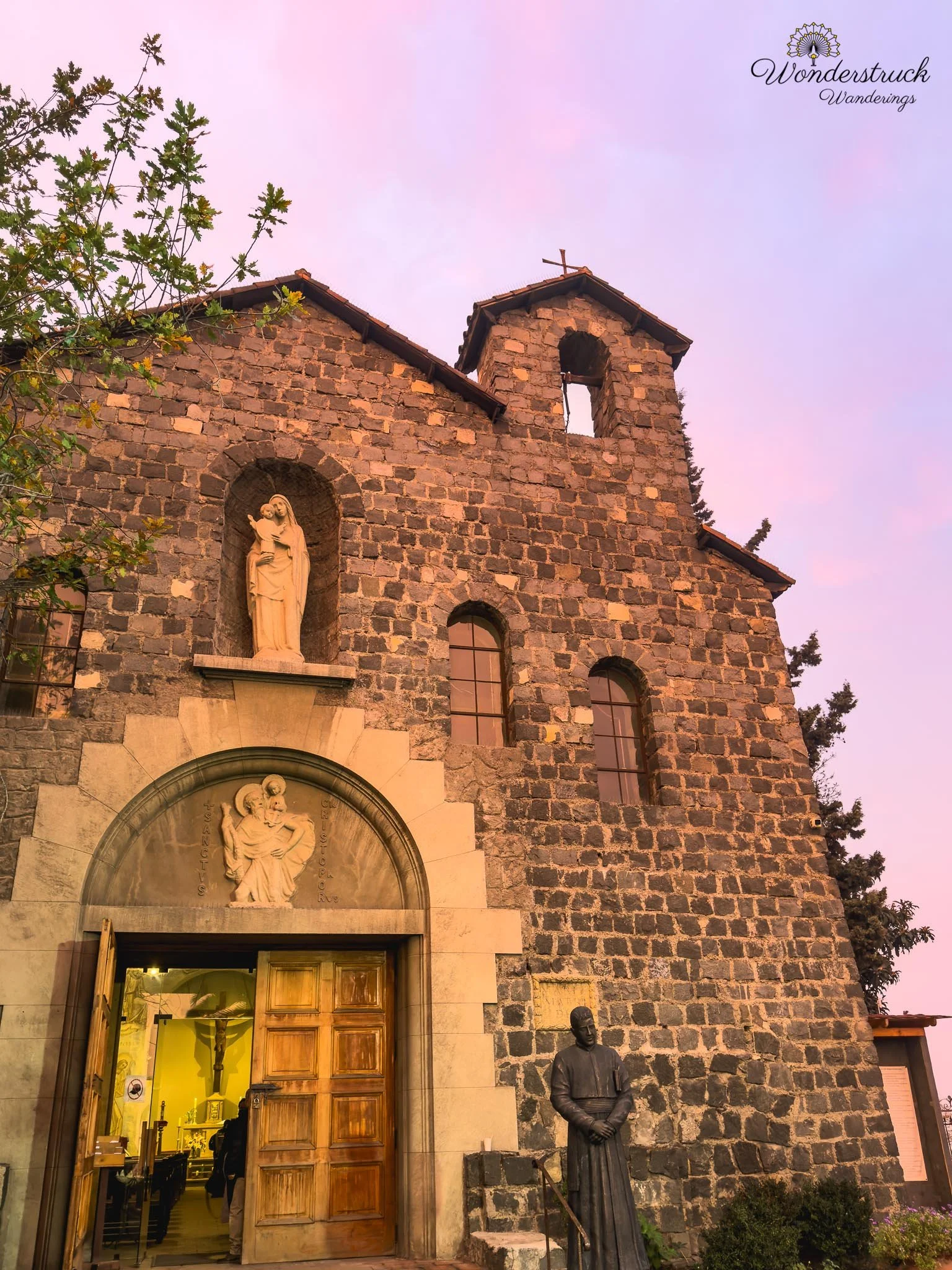
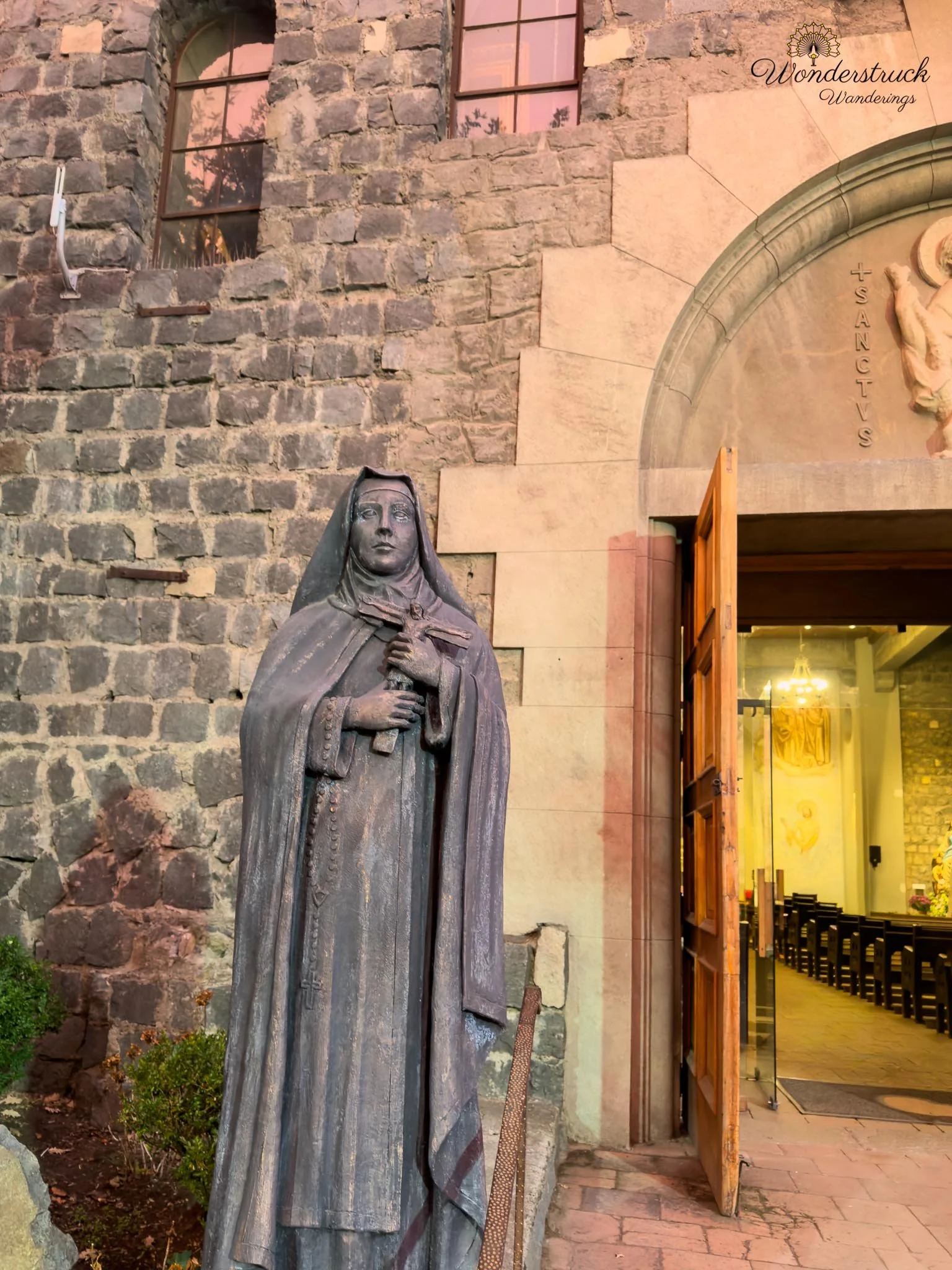
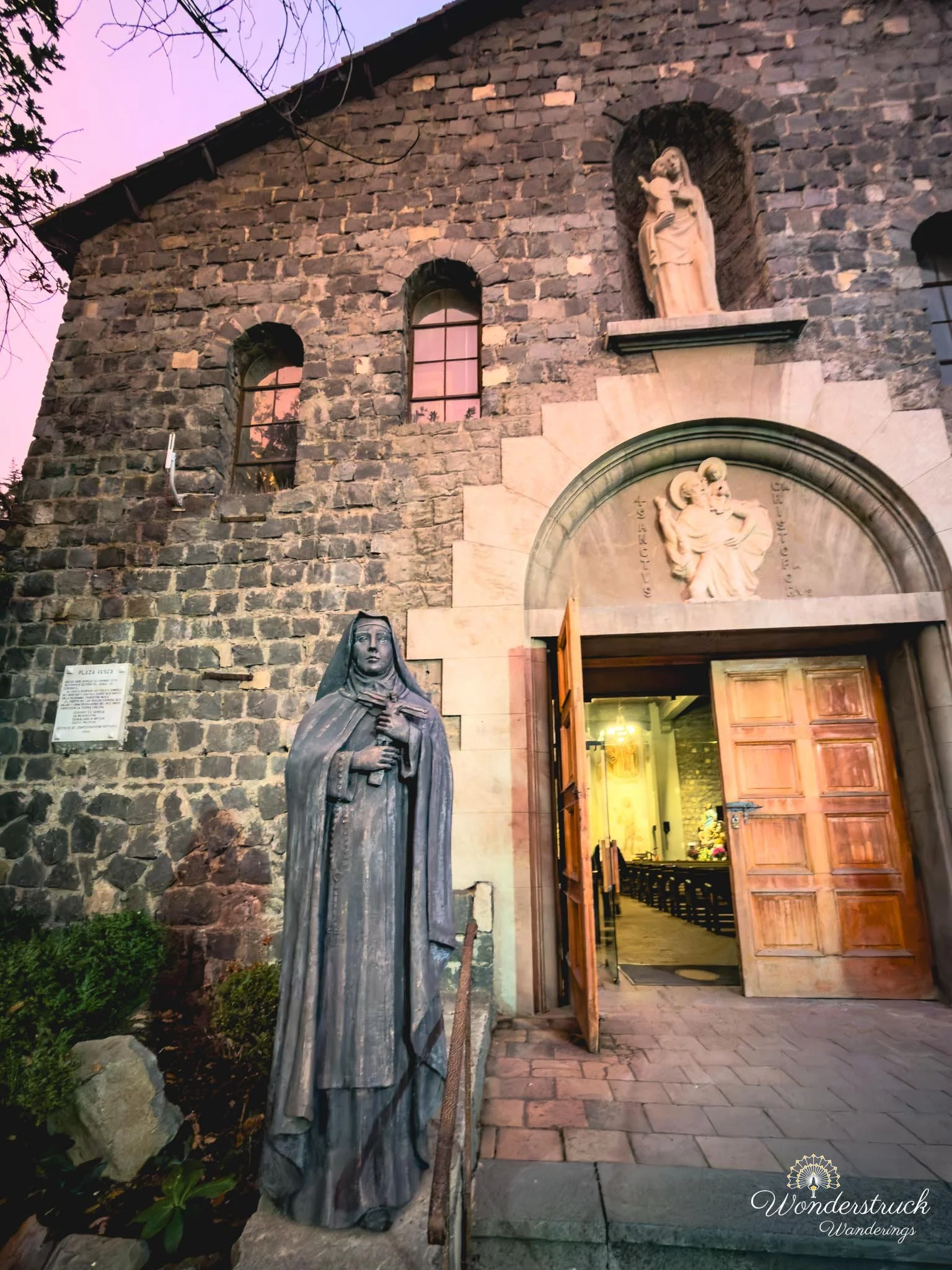
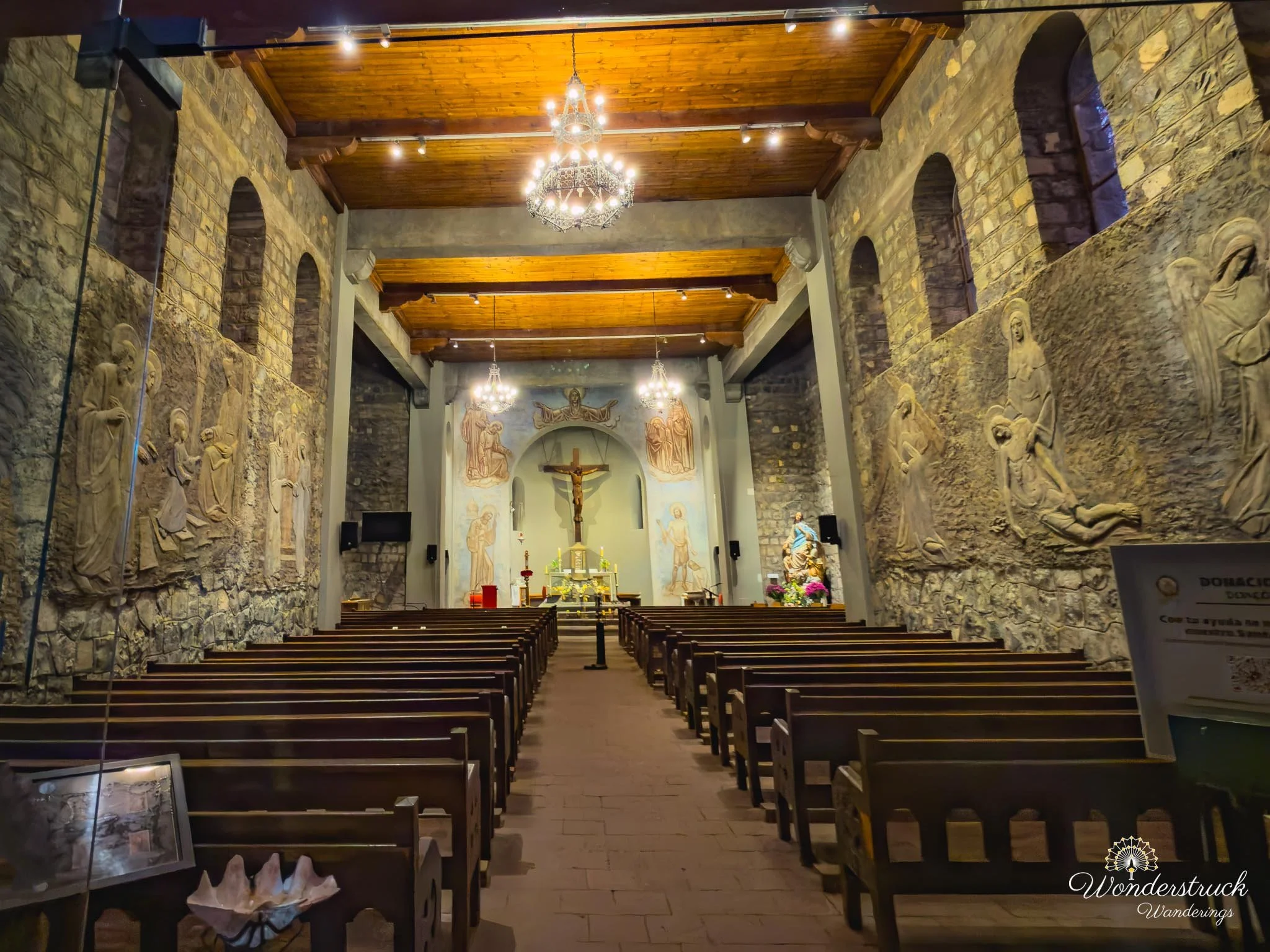
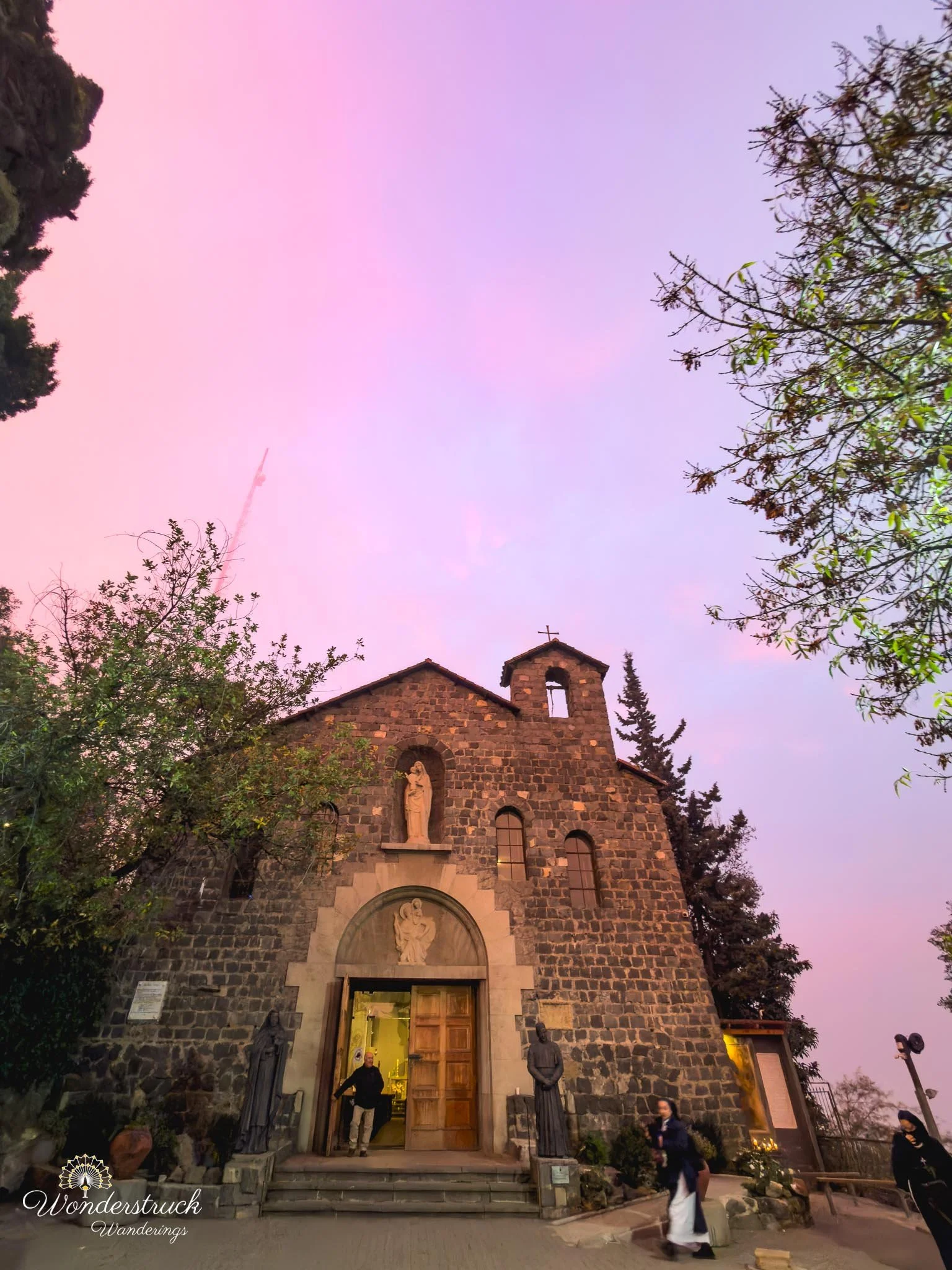
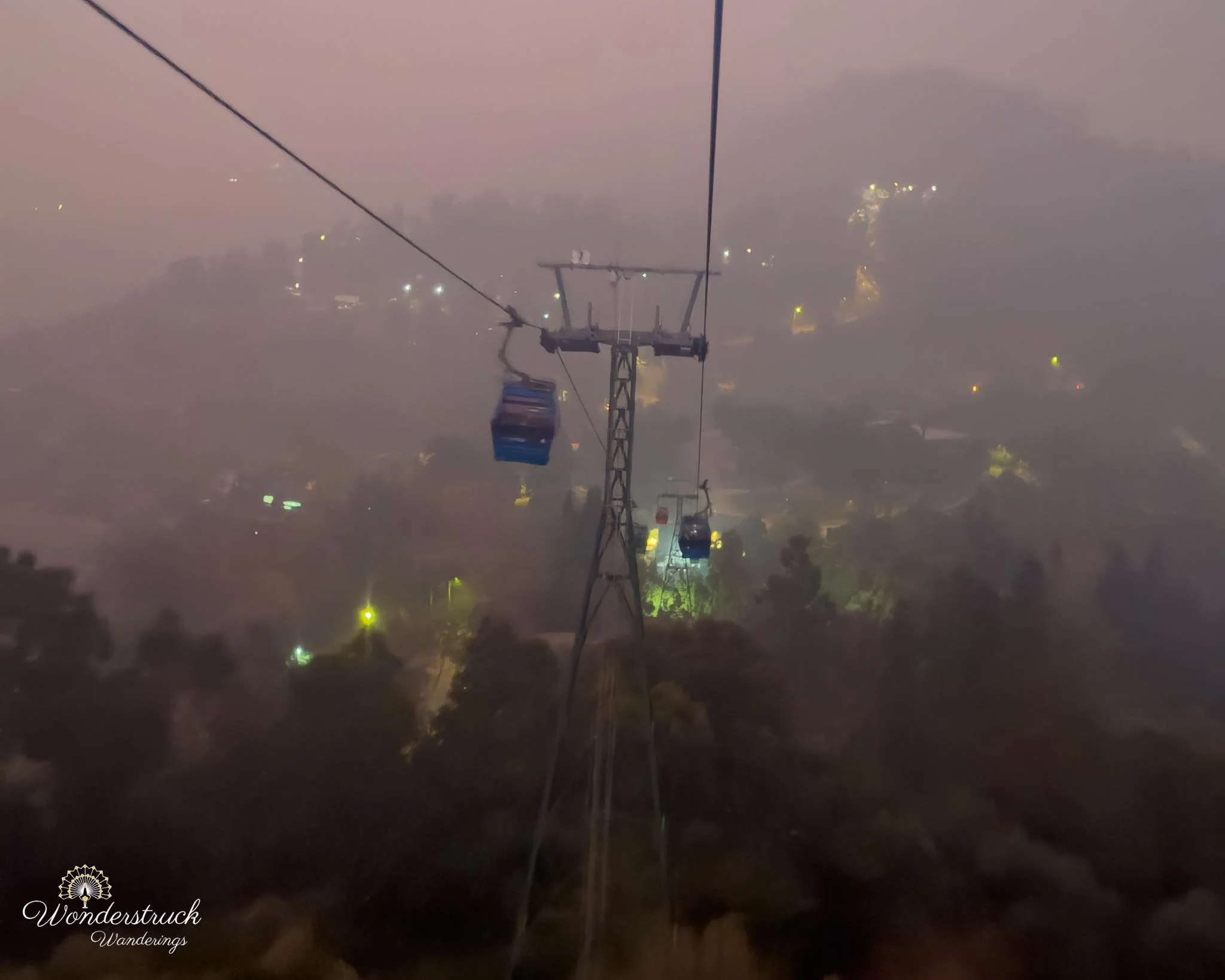
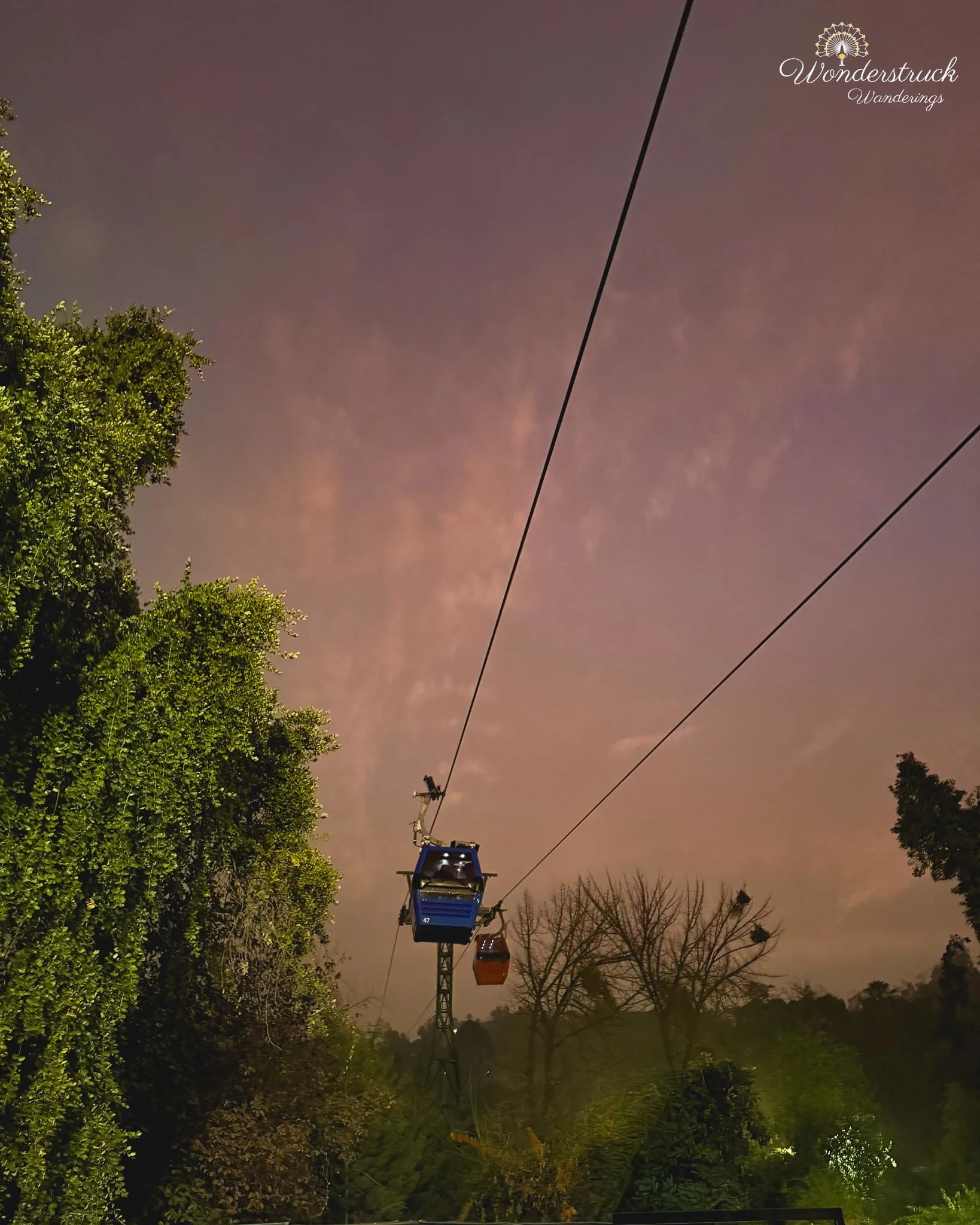
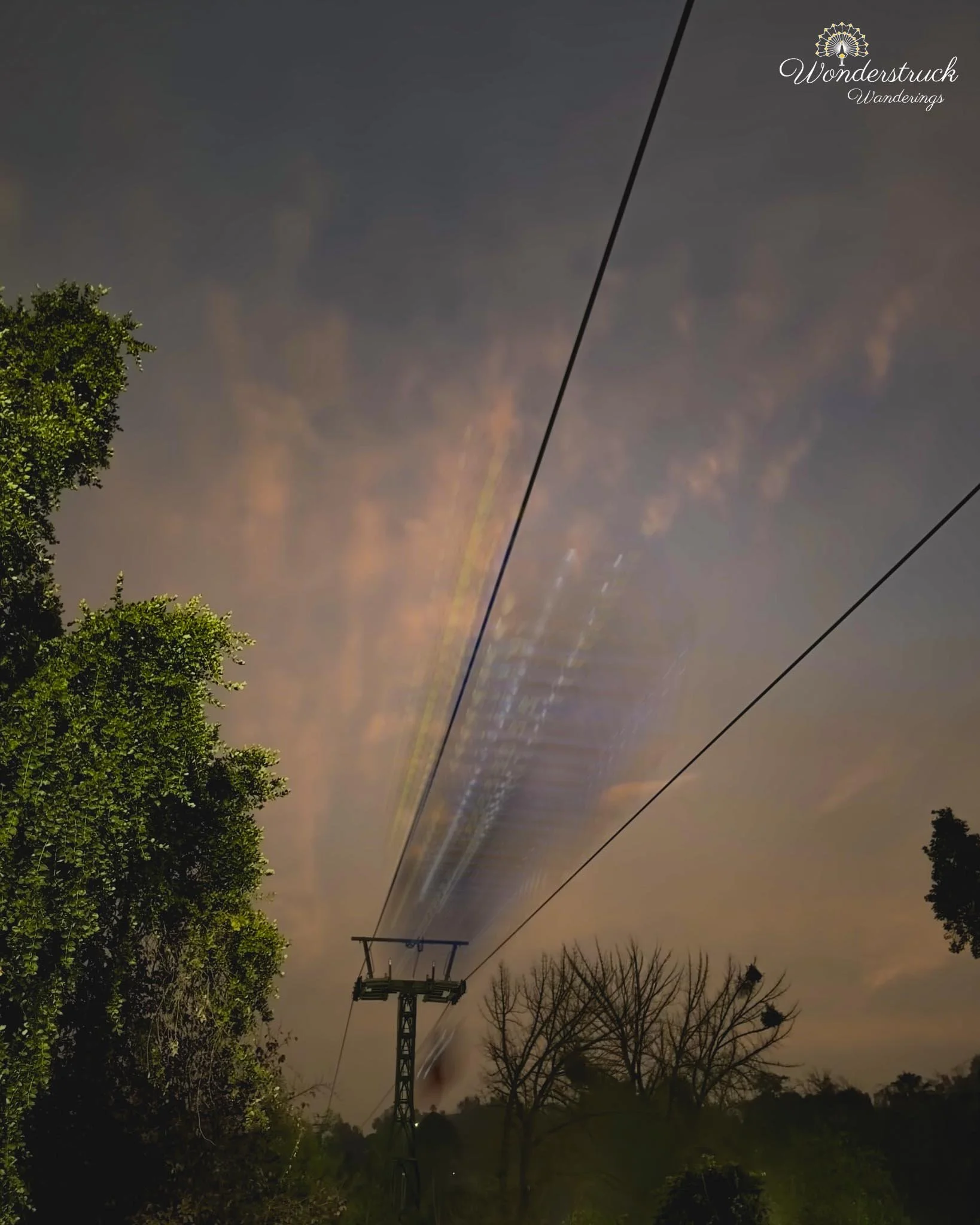
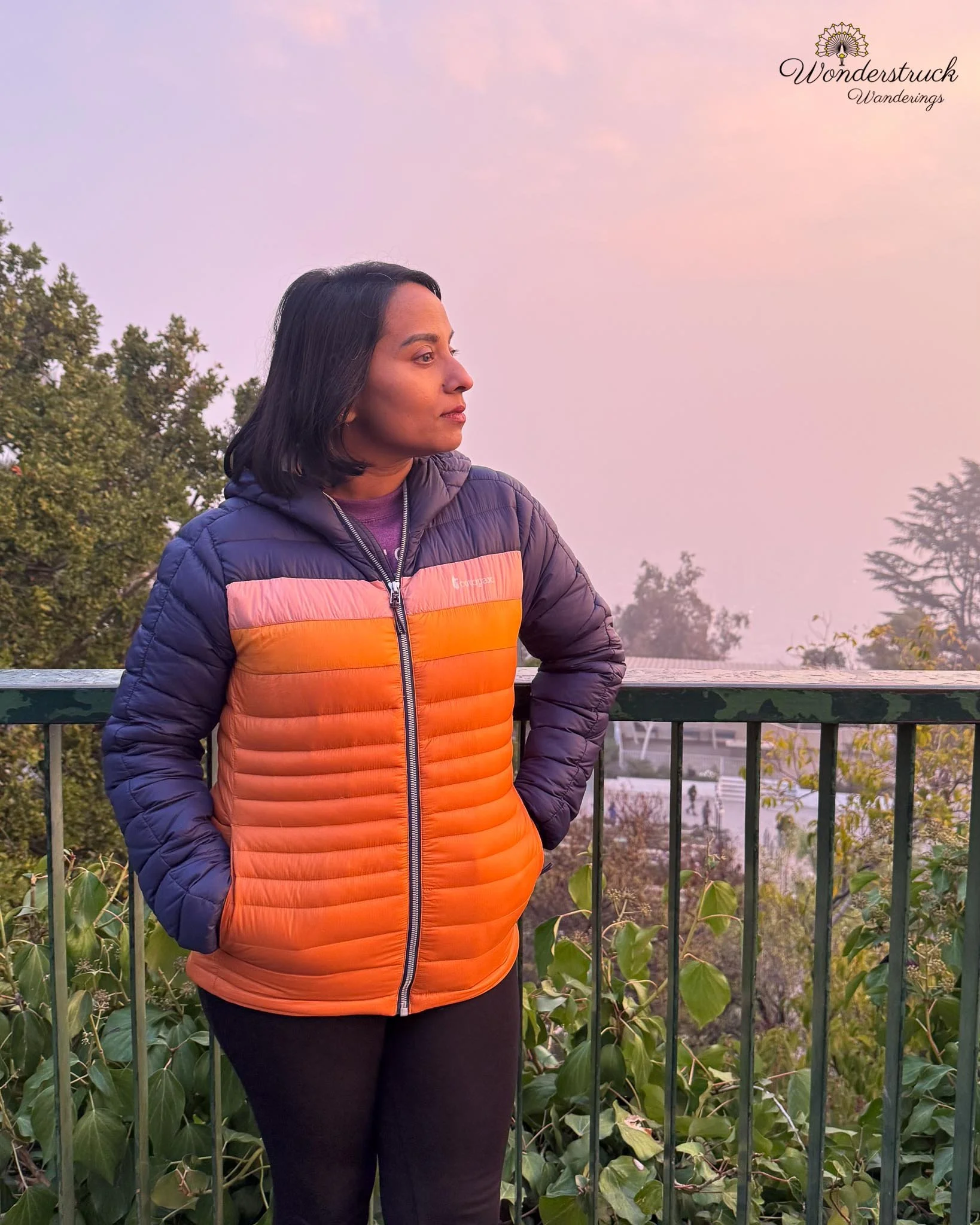
We debated whether to give up and head down, but then the cloud cover thinned just enough. For a brief window, the snow-covered Andes appeared behind Santiago, almost as though someone had pulled back a curtain. It was not the crisp mountain panorama we would have had on a perfectly clear evening. The peaks appeared and disappeared through the haze, which somehow made us pay even more attention because we knew the view might vanish again at any moment. And then a Chimango Caracara appeared near the summit, perched casually in the top of a tree. For us, it became one of the best little moments of the evening—and another Day 1 lifer. There was something fitting about seeing a raptor sitting above the Chilean capital, apparently unconcerned by the people, weather, or fading light, while Santiago stretched out below and the Andes tried to break through the clouds behind it. As sunset approached, we climbed higher around the sanctuary. The statue of the Virgin rose above us while the sky behind it slowly changed from gray to a warmer golden and purple tone. For a few minutes, the light finally came together: clouds and haze over the city, flashes of the snowy Andes in the distance, and the pale figure of Mary against the last warm light. It was not the clean sunset photograph we had imagined, but it had far more atmosphere. For the descent, we switched to the original Pedro de Valdivia Teleférico line. Cerro San Cristóbal had two cable-car systems. The newer Pío Nono line served the Bellavista side around the zoo and Manuel Foster sector, while the older Pedro de Valdivia line crossed the other side of the park between Cumbre, Tupahue, and Oasis. We took that second route all the way down to Oasis, so rather than returning to where we had started, we effectively crossed Cerro San Cristóbal from Bellavista to Pedro de Valdivia Norte. The cable-car descent also revealed another layer of the park. Cumbre Station serves the summit and sanctuary area. The line then passes through Tupahue, deeper inside Parque Metropolitano near trails, gardens, recreation areas, and Piscina Tupahue, before continuing downhill to Oasis Station near Pedro de Valdivia Norte. You do not have to ride straight through—Tupahue can be used as a stop for exploring the middle of the park. We stayed aboard and continued to Oasis. Our plan had been to descend just as Santiago began lighting up beneath us, and technically our timing was right. The city was moving into evening, and from the suspended cabin we could look down over the wooded slopes toward the buildings beyond. The clouds and haze never gave us the sparkling city-and-Andes panorama we had hoped for, but the ride was still worth doing.
Dinner at Bidasoa
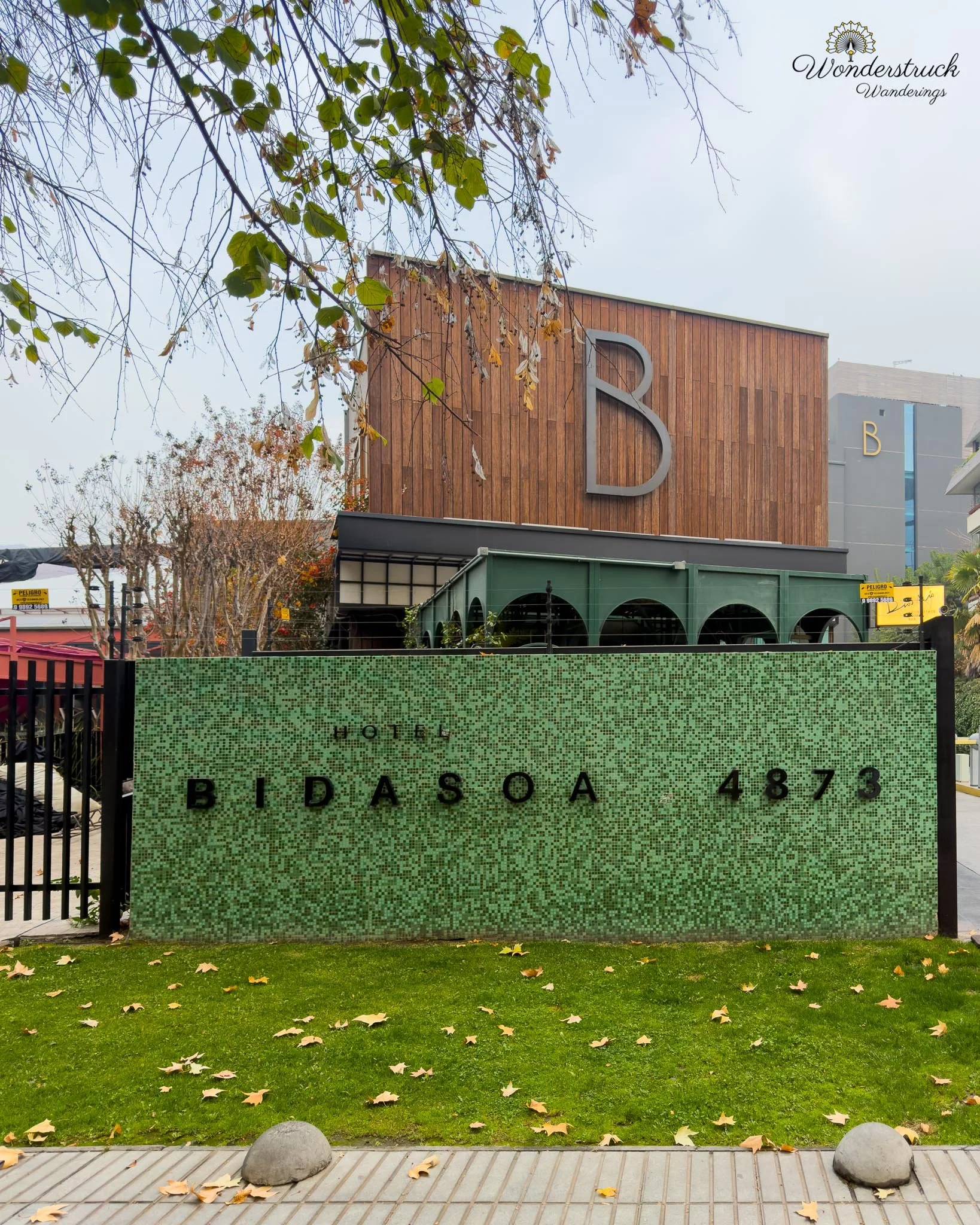
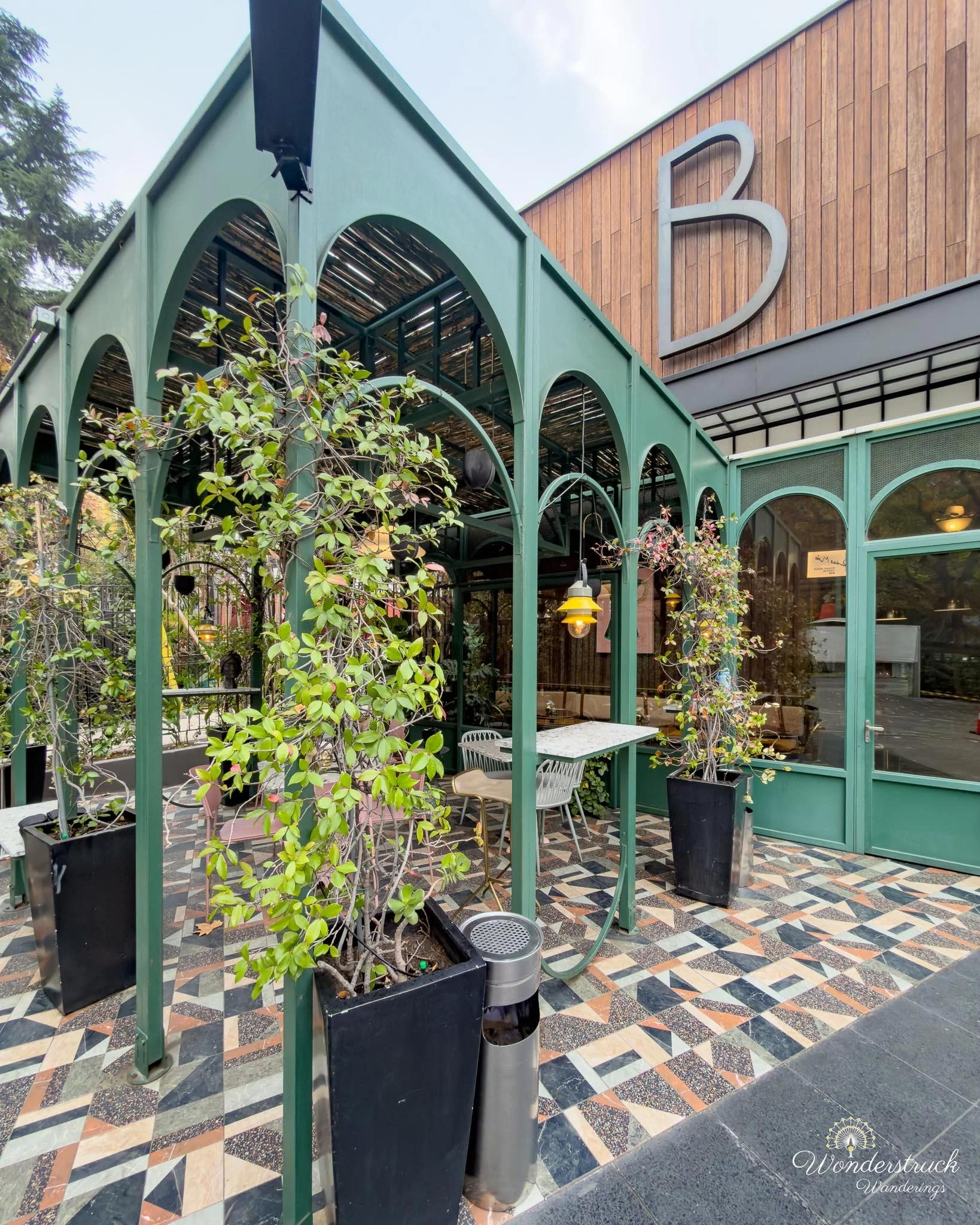
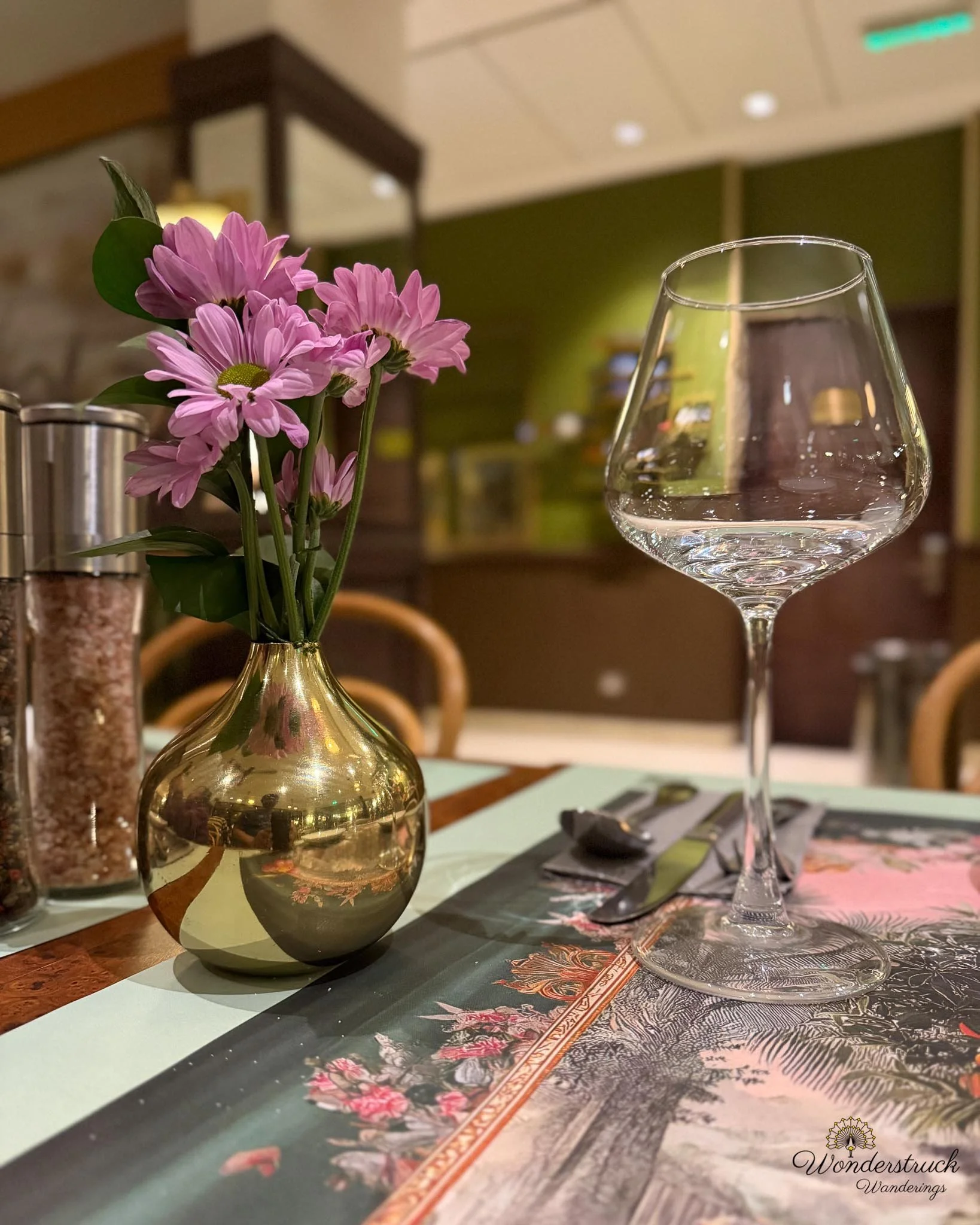
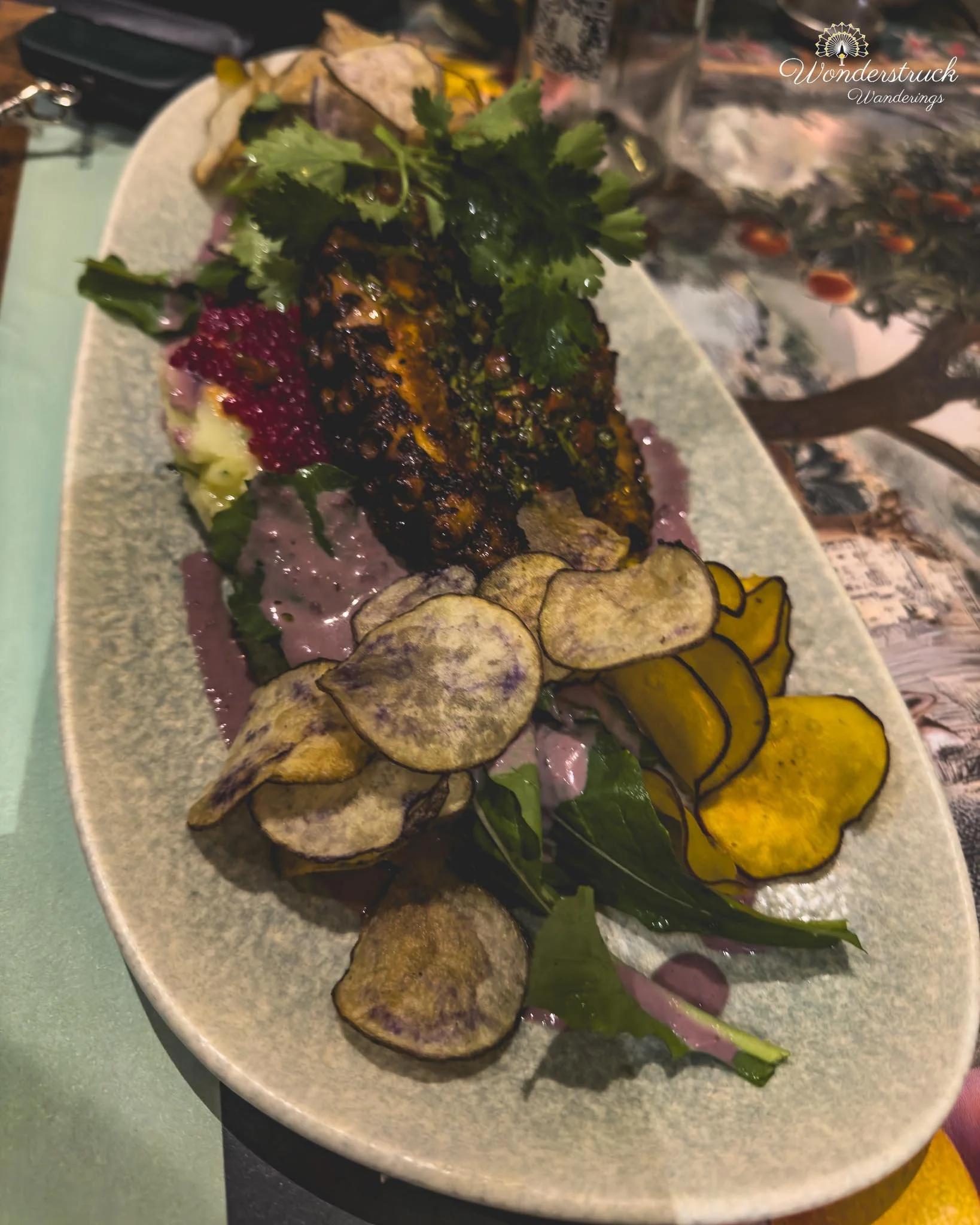
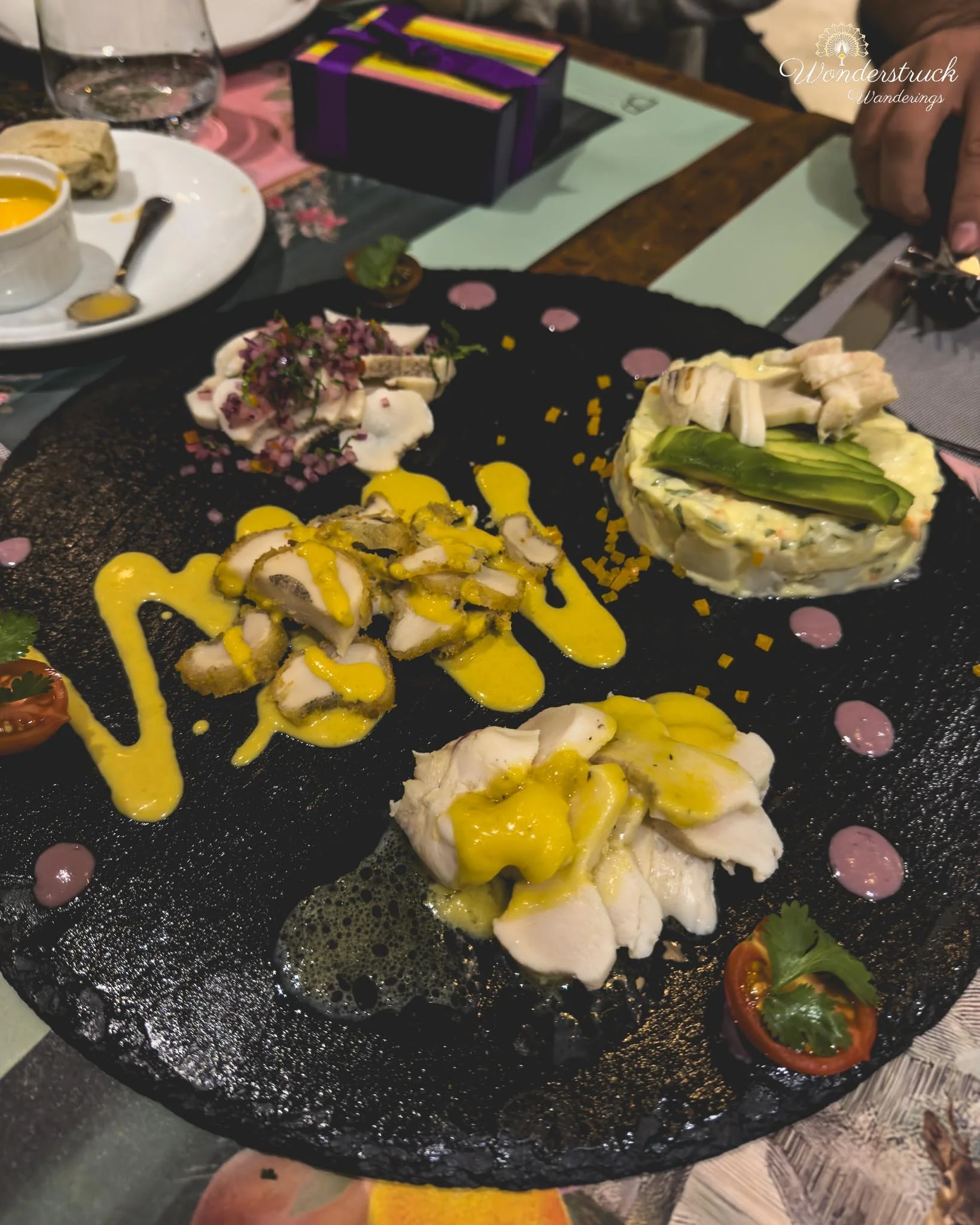
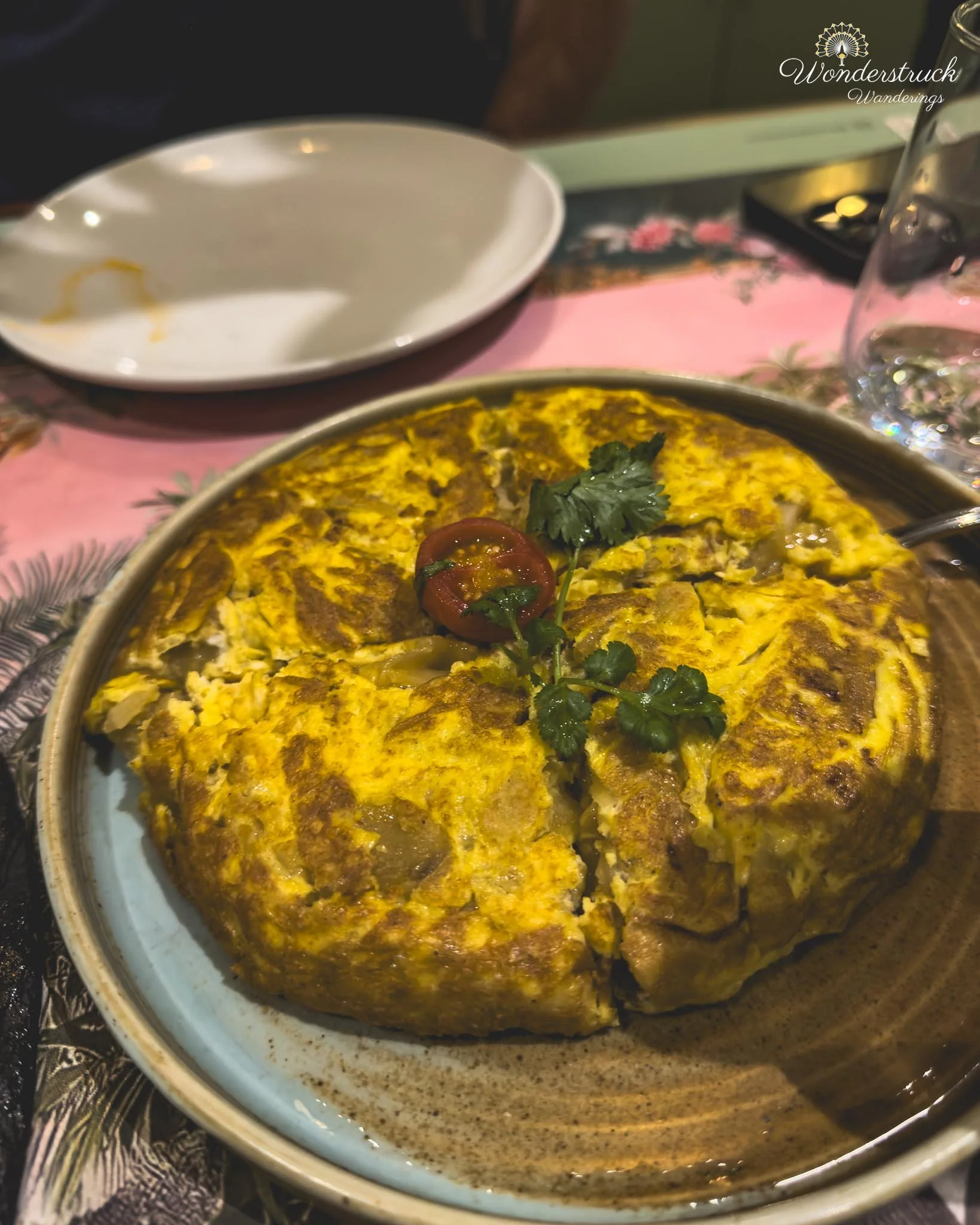
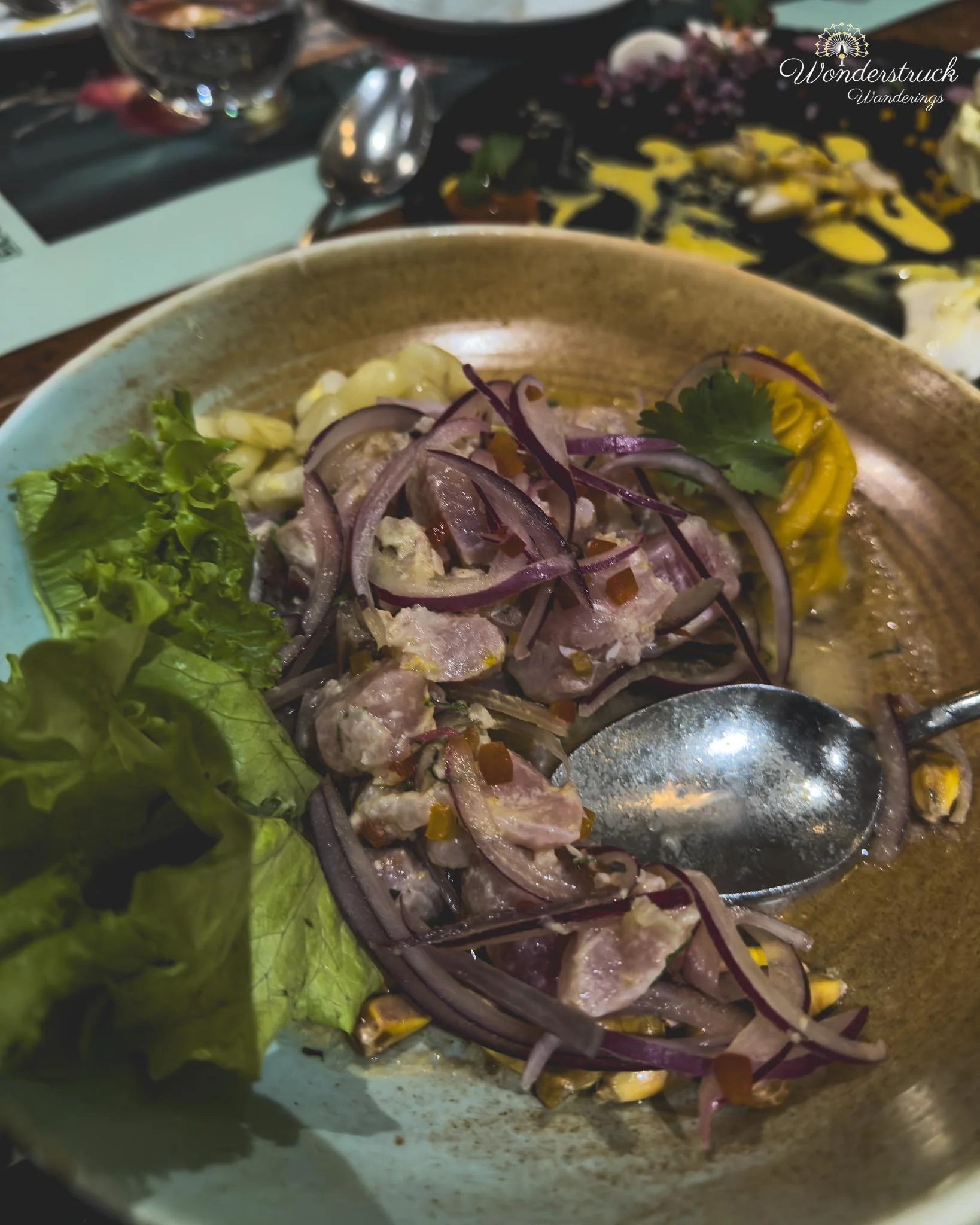
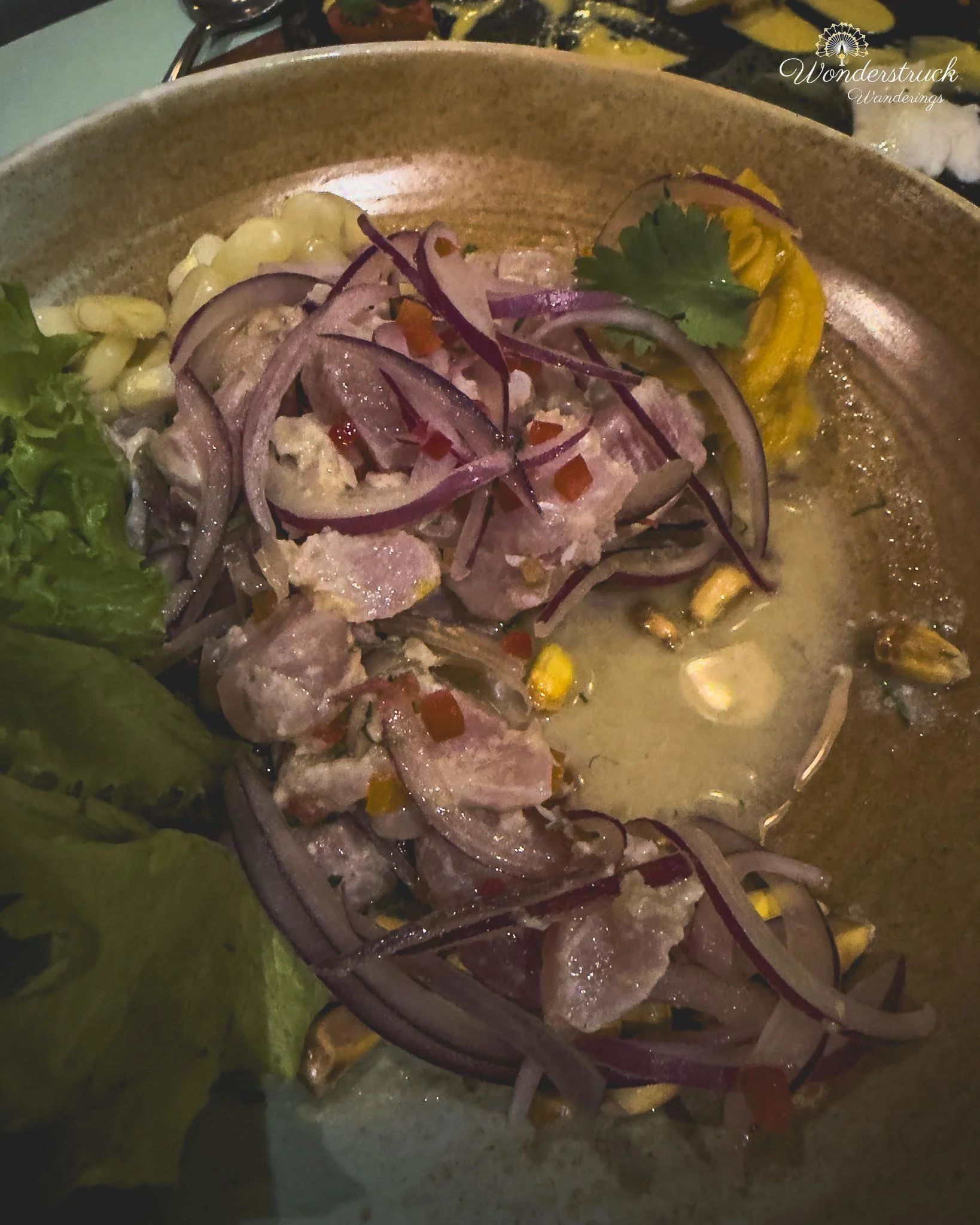
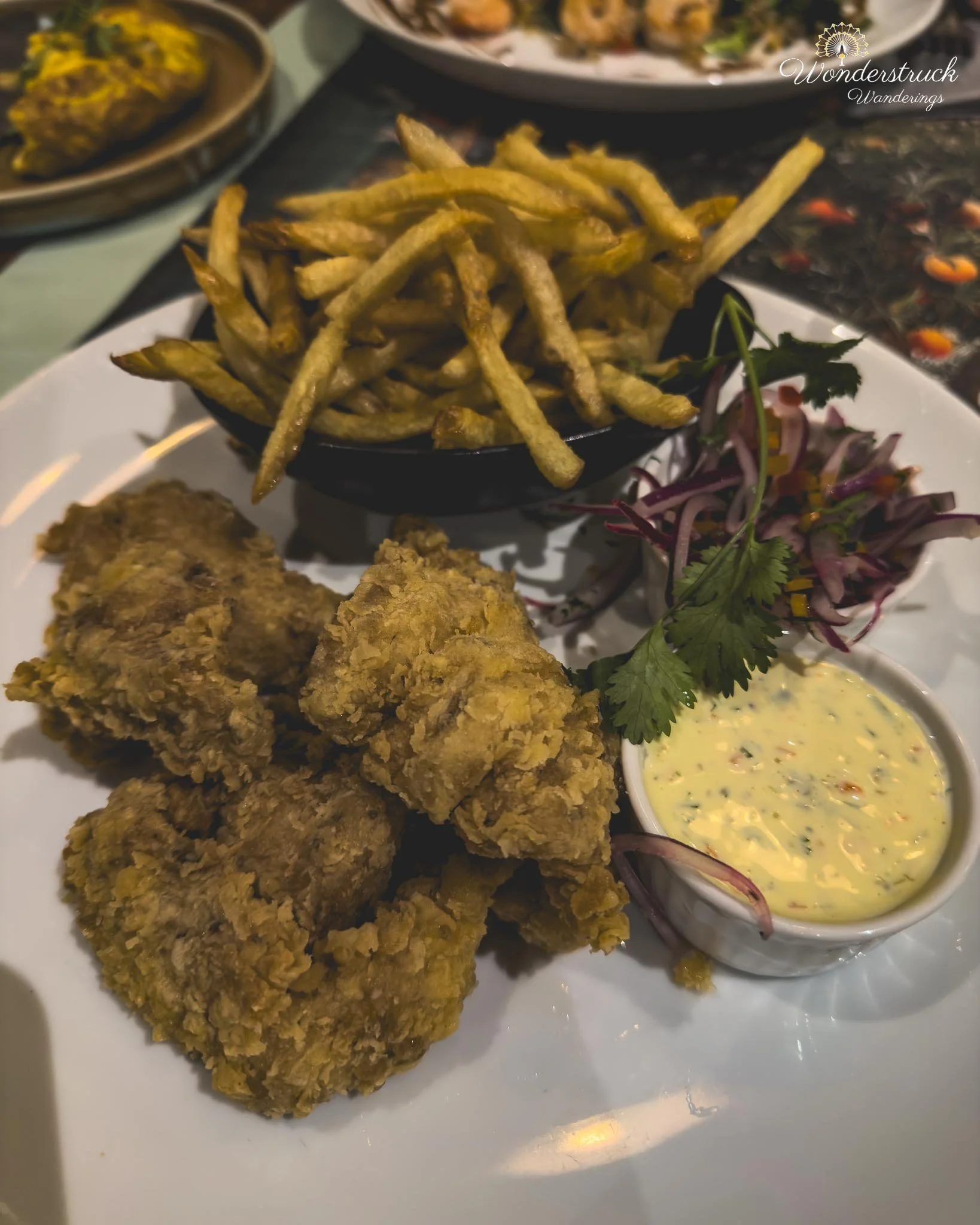
From Oasis, we took a cab back to Hotel Bidasoa and freshened up before dinner. We met our friends at the hotel restaurant, which made the evening easy after a full day in Santiago. Bidasoa’s menu has a strong Mediterranean and seafood focus, so we started with several dishes for the table. The most interesting was the degustación de locos, or Chilean abalone platter. The abalone was served in five different preparations, each with different textures, seasonings, and accompaniments. Some were firmer and more meaty, while others were softer or richer. It was a great introduction to one of Chile’s distinctive coastal ingredients. We also shared the ceviche mixto, with fresh seafood, citrus, chile, and herbs, plus a torta for the table. For the mains, Shay ordered the octopus, which was tender and savory, while I chose the fish and chips, made with the fish of the day. The fish was fresh, lightly battered, and crisp, served with fries without overpowering the flavor of the fish itself. Dinner stretched until around 10:30 p.m. as we caught up with our friends, shared plates, and compared the different abalone preparations. Eventually, we called it a night. The next morning we had an early flight to Calama, and the Atacama portion of the trip was waiting.